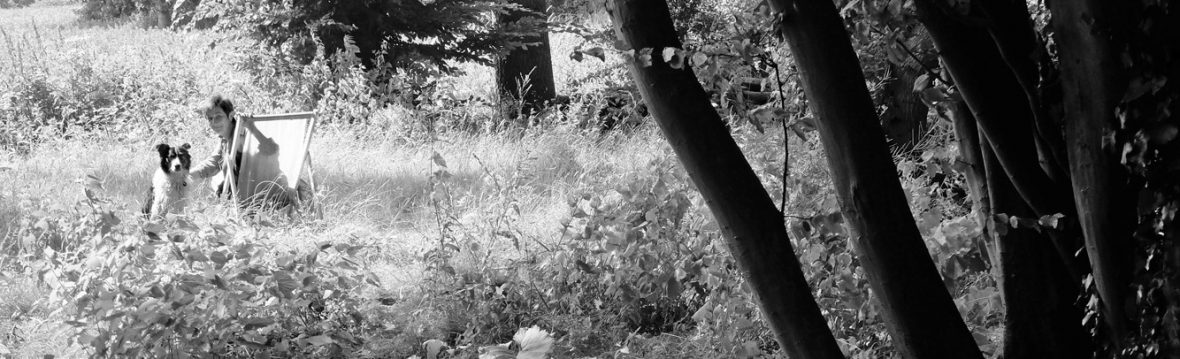
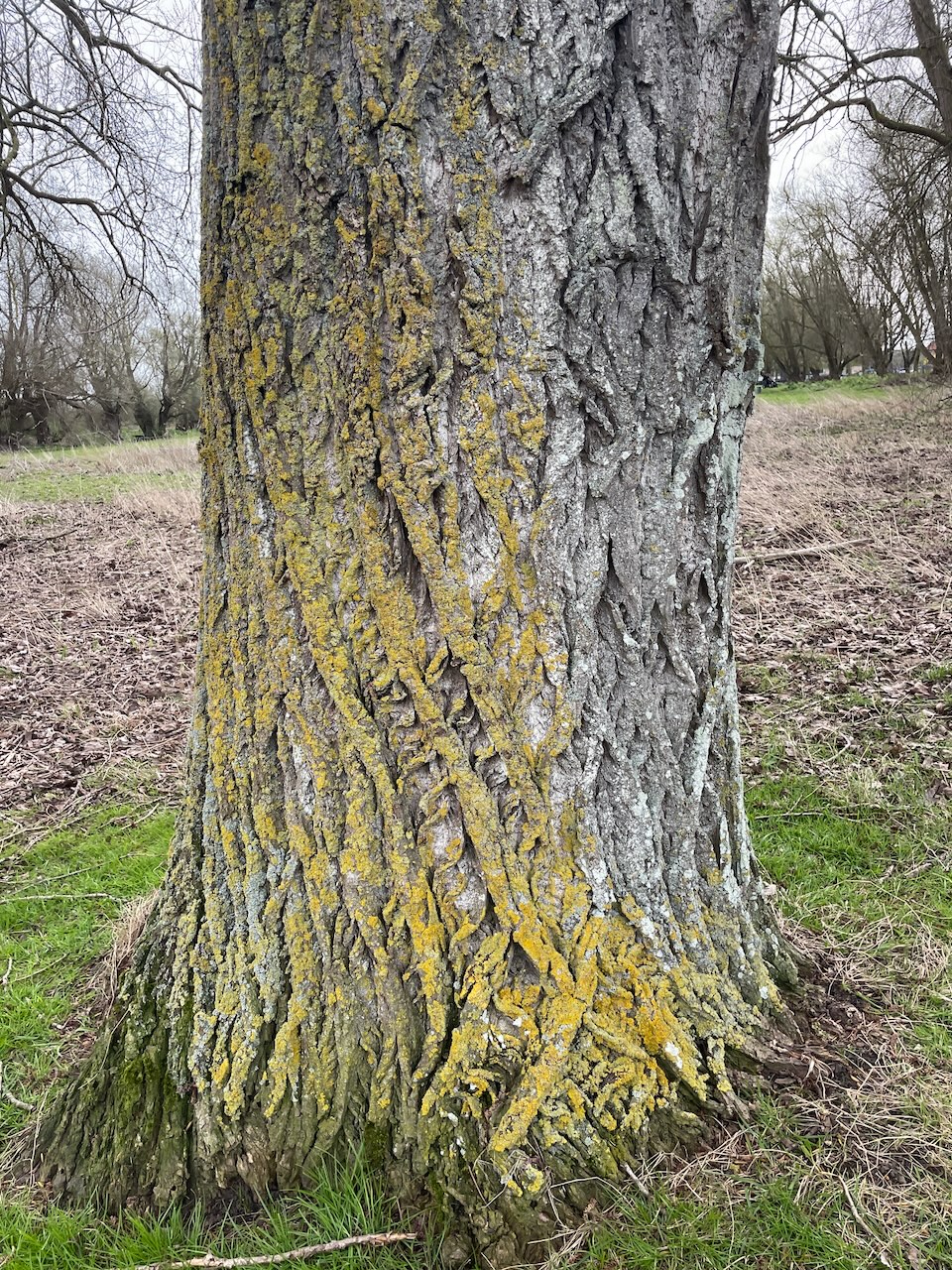
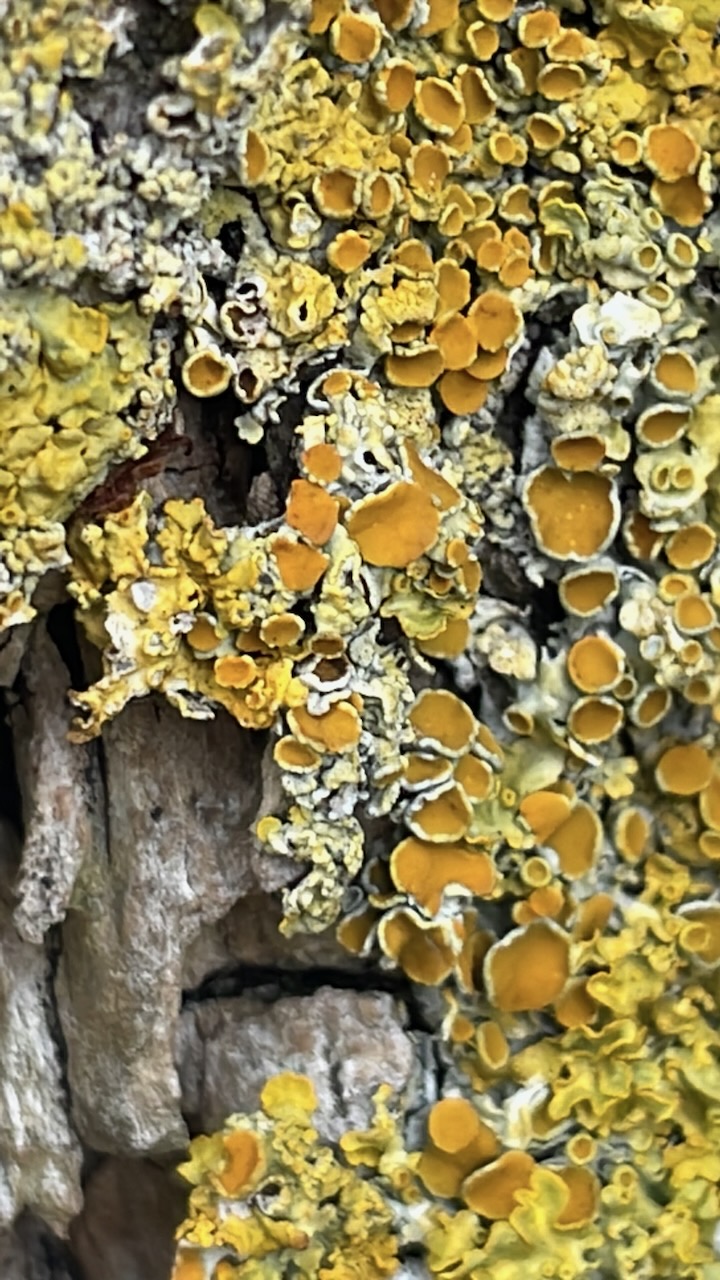
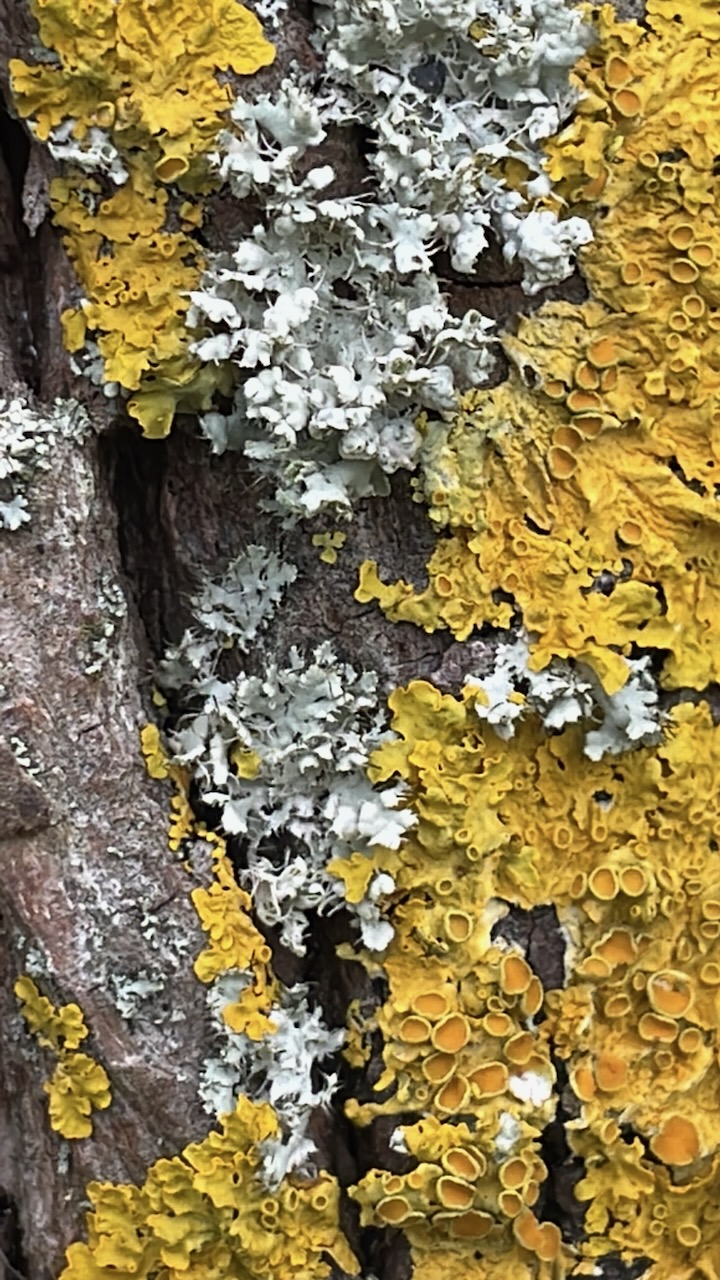
Preparation for a Beccles tree walk, invited by Netta Swallow. After the excitement of finding a rare lichen in Holton Pits by Anthony my eye was caught by lichen on these willow. Anthony Speca has given it a name:
The yellow lichen is Xanthoria parietina, and the greyish lichen is Physcia adscendens.
Willows and Poplars are closely related, have alternate buds and leaves but are easy to differentiate. Willow leaves are generally long and thin (apart from the Goat Willow) and have shorter and fatter catkins. Poplar leaves are triangular or diamond-shaped and catkins are long.
Willows are pollinated by insects (Poplars are wind pollinated). Willows have male flowers on one tree and female flowers on another tree. Technically they are called ‘dioecious’ from the Greek meaning ‘2 households’. The flowers are in the form of catkins. Female and male catkins look different. Willow species easily form hybrids with other Willows. Some hybrids are natural and you may come across trees that have features of both parents. This makes identification very difficult even for experts.
Willow trees identification
White
Grey,
Weeping
Goat Willow.
Crack Willow
The White Willow (Salix alba) is native to Europe (including Britain), Asia and north Africa. It is common along rivers and lowland valleys. It is a large, impressive tree. The leaves are narrow but shorter than those of the Crack Willow and have silvery-white hairs. The tree looks strikingly white in summer.
The Grey Willow (Salix cinerea), also known as the Grey Sallow, is native to western Europe including Britain. It grows naturally everywhere. It is a shrub and rarely a tree. It can be confused with the Goat Willow but it has longer leaves and large ‘stipules’ at the base of each leaf.
The Weeping Willow (Salix alba ‘Tristis’), also called the Golden Weeping Willow, is a hybrid cultivated variety of the White Willow and 2 other willows, called, for simplicity, ‘Tristis’ which means ‘sad’. It sometimes has the name ‘Chrysocoma’ which means ‘golden-haired’. It is a male clone. It is common along rivers and in parks and gardens. It is one of the first willows to come into leaf, in March.
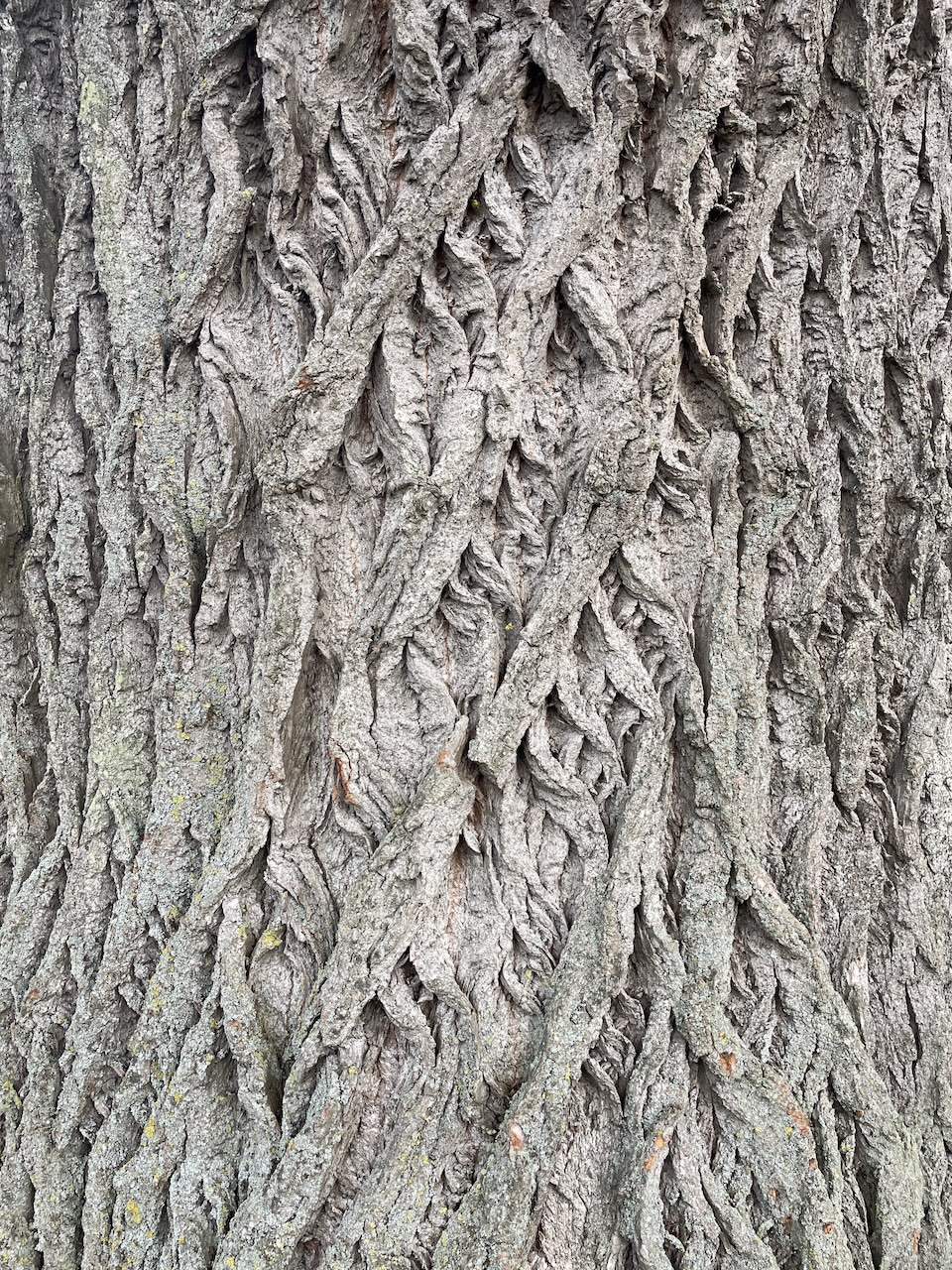
The Goat Willow (Salix caprea) is a shrub or small tree also known as Pussy Willow and Great Sallow. It is native to Europe (including Britain) and Asia. In Britain it is found everywhere in woodlands, scrub and hedgerows. The leaf is different from many other willows being oval shaped and with a tip that is bent sideways.The male catkins are yellow when full of pollen in March and April. The female catkins are green in April and shed fluffy seeds in May. The bark has criss-crossed ridges
The Crack Willow Salix fragilis is native to Europe (including Britain) and western Asia. It is particularly common along rivers. It was often cut at a height of 2 to 4 m, in an ancient practice called pollarding, to provide stakes for wattle fencing. The trees are now pollarded to stop branches falling into and blocking the river. The tree spreads along rivers naturally. Side twigs, if bent, will snap off cleanly with a crack, hence the name. Other Willows do not do this. If a twig snaps off, floats down the river and lodges in mud, it will root and grow. Crack Willow identification is based on its long thin leaves, spring catkins and ridged bark. The bark has criss-crossed ridges
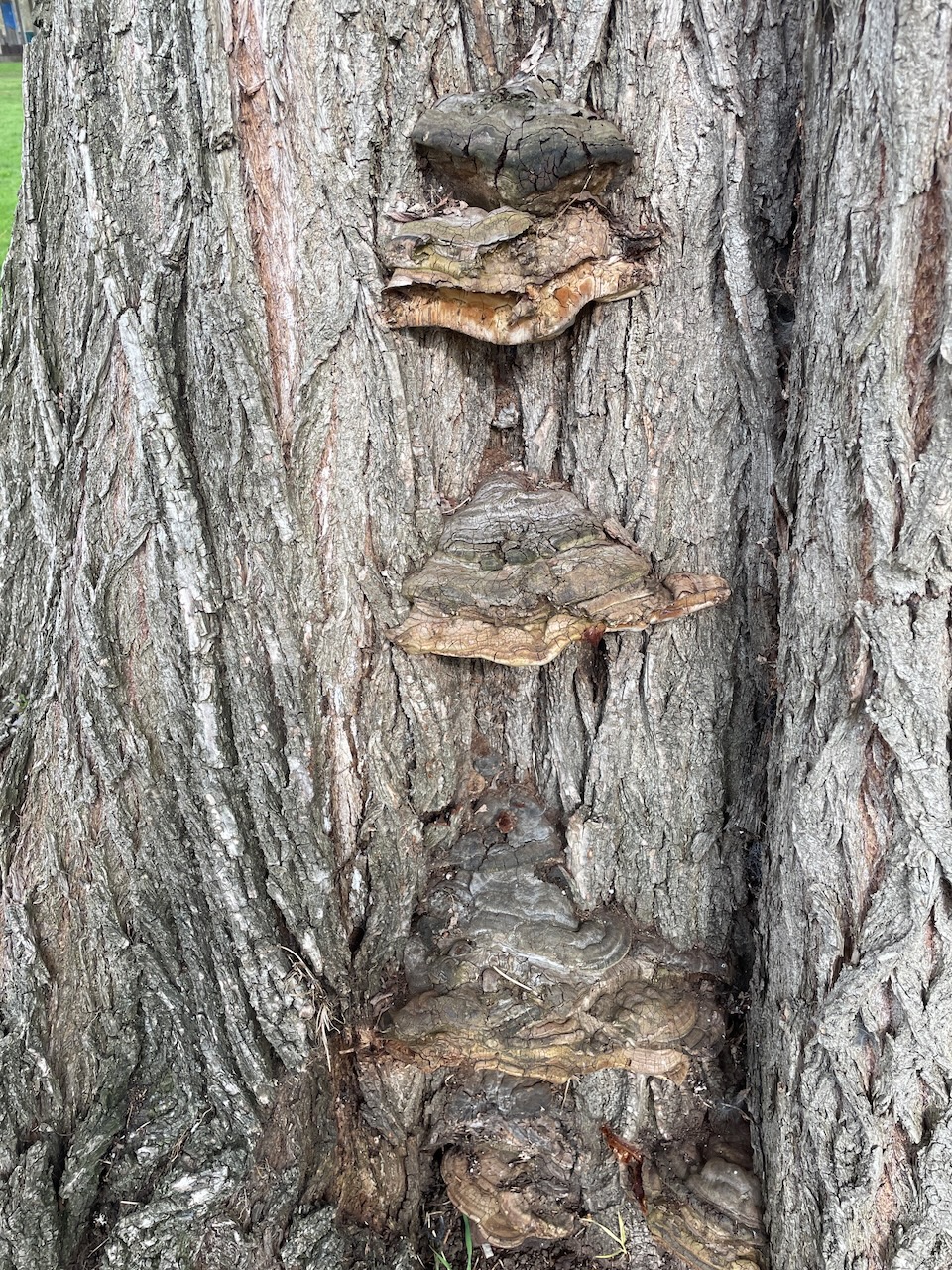
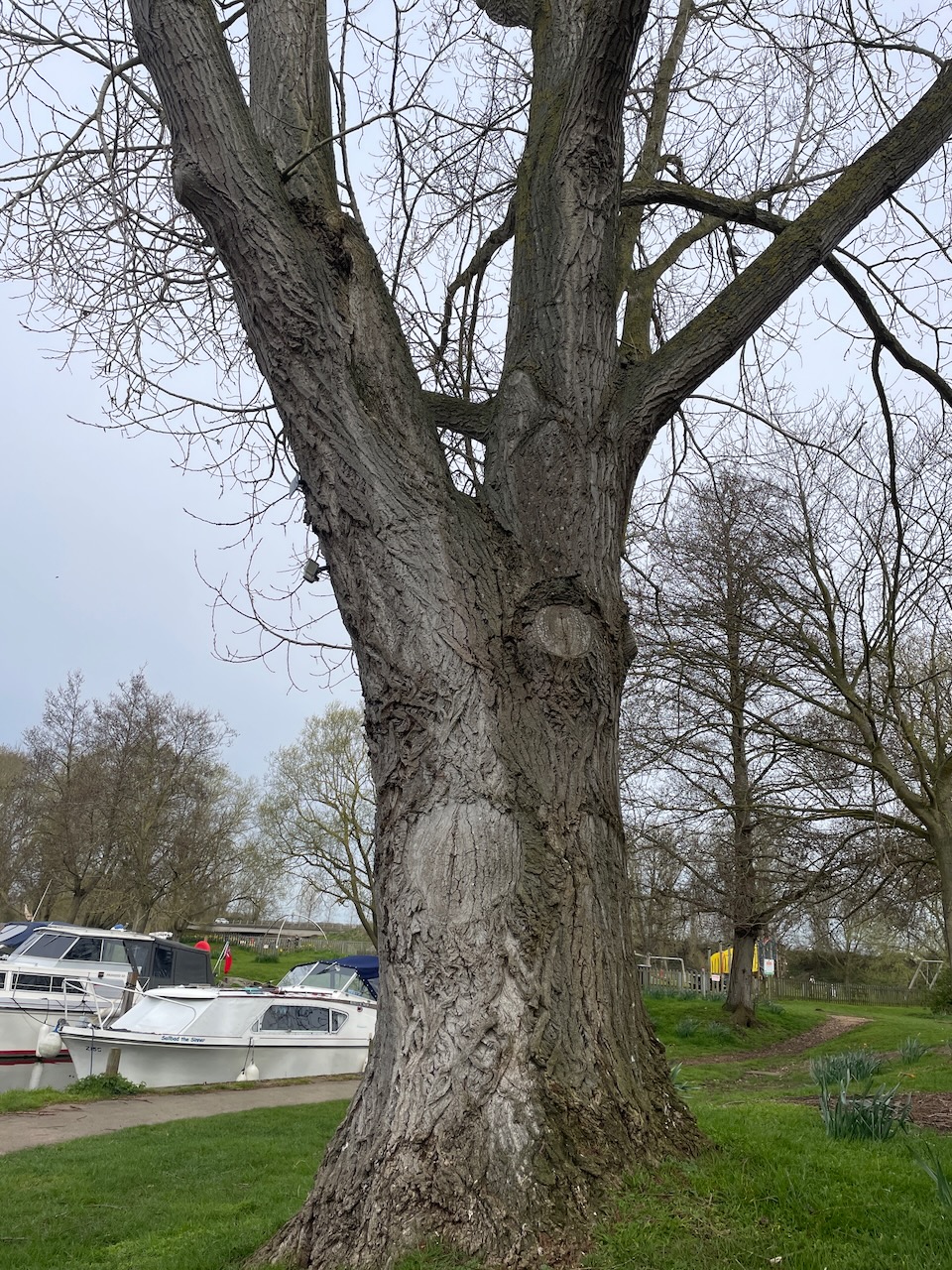
Beccles Heritage Trees
- Recommend a H1 and H2 level of heritage trees, H1 veteran and H2 in need or protection
- Inspection annually of H1 and H2
- Plan for succession
- Work with tree wardens, Paul Bond and Alistair Graham Kerr
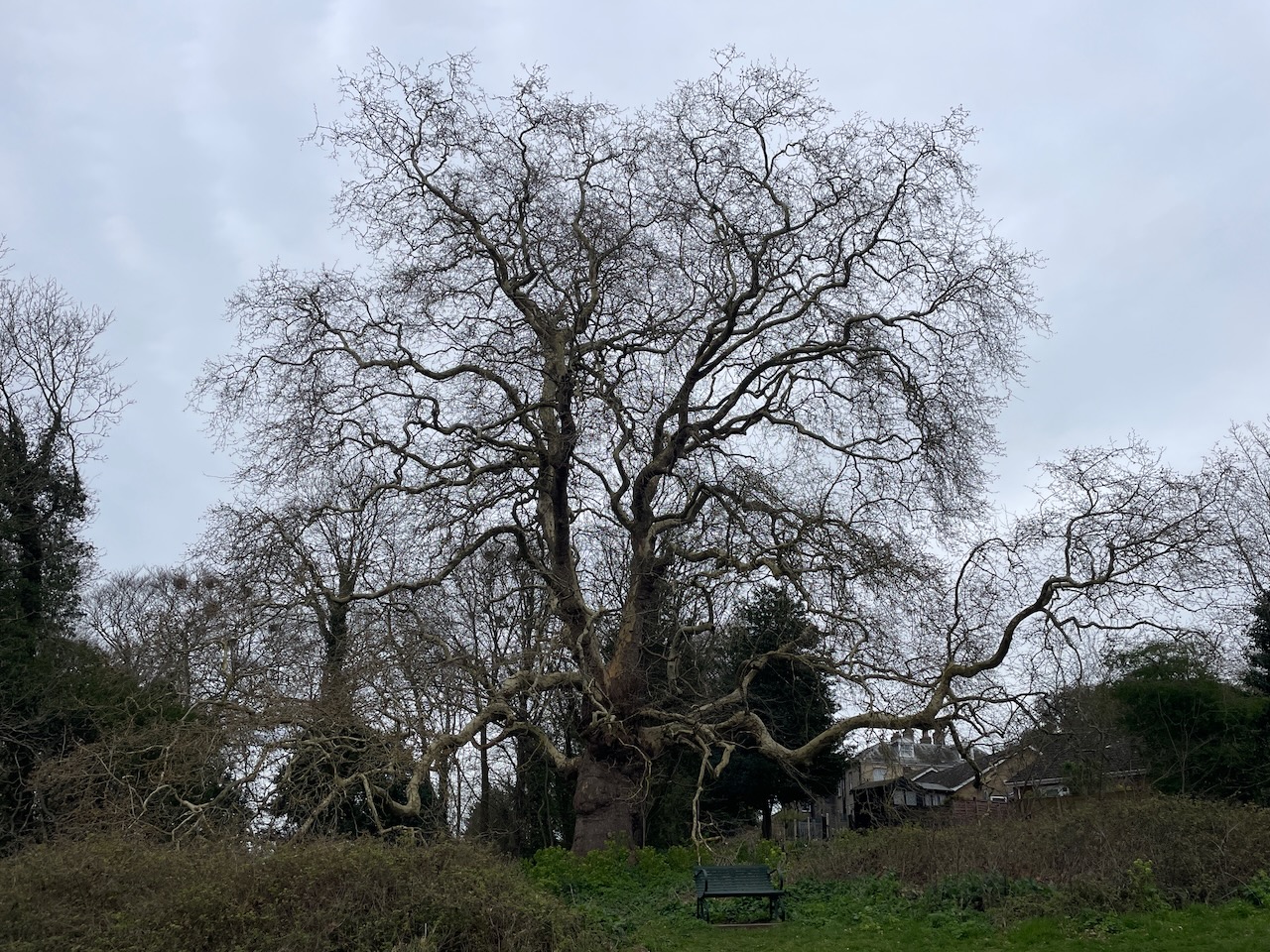
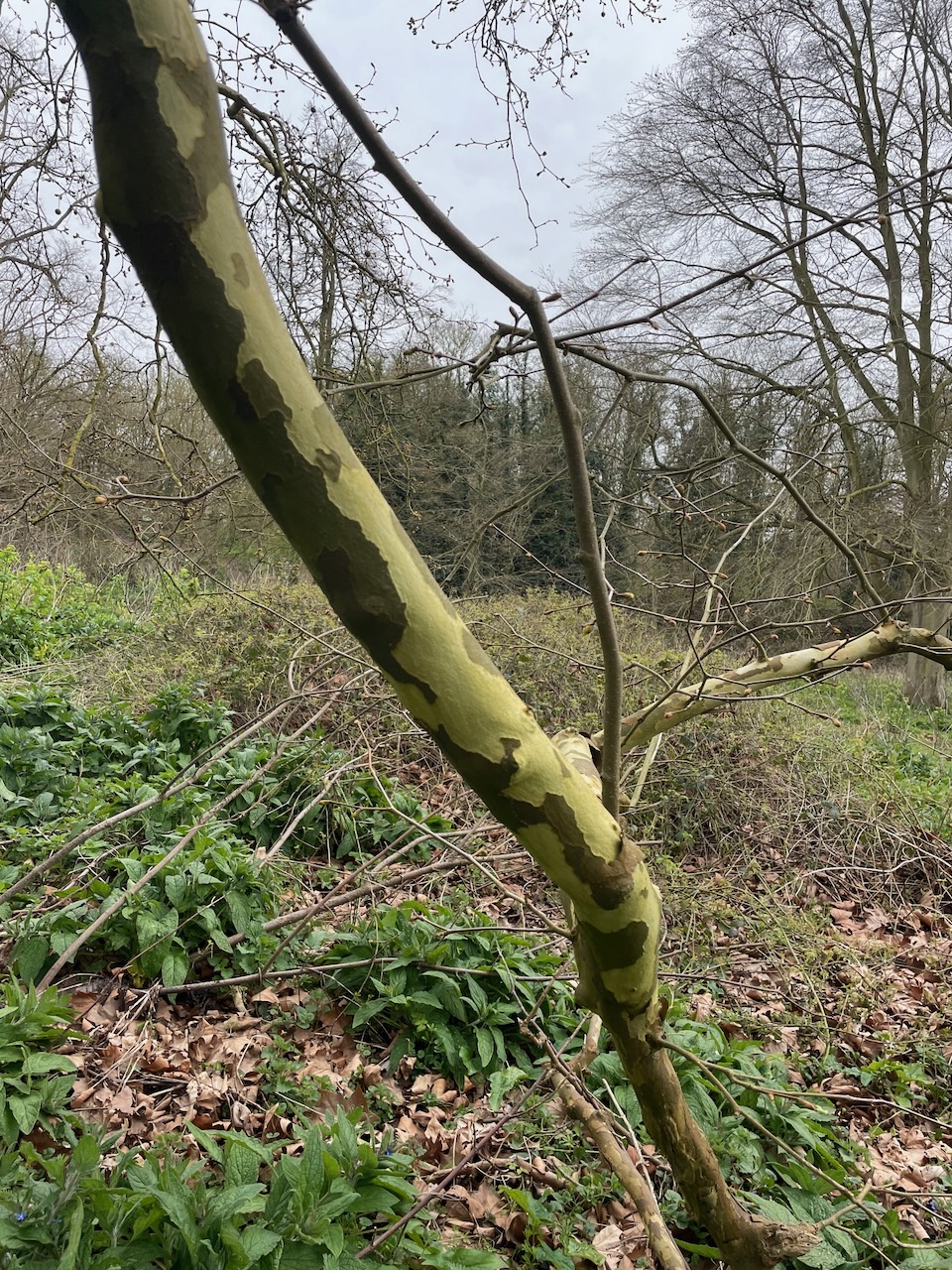
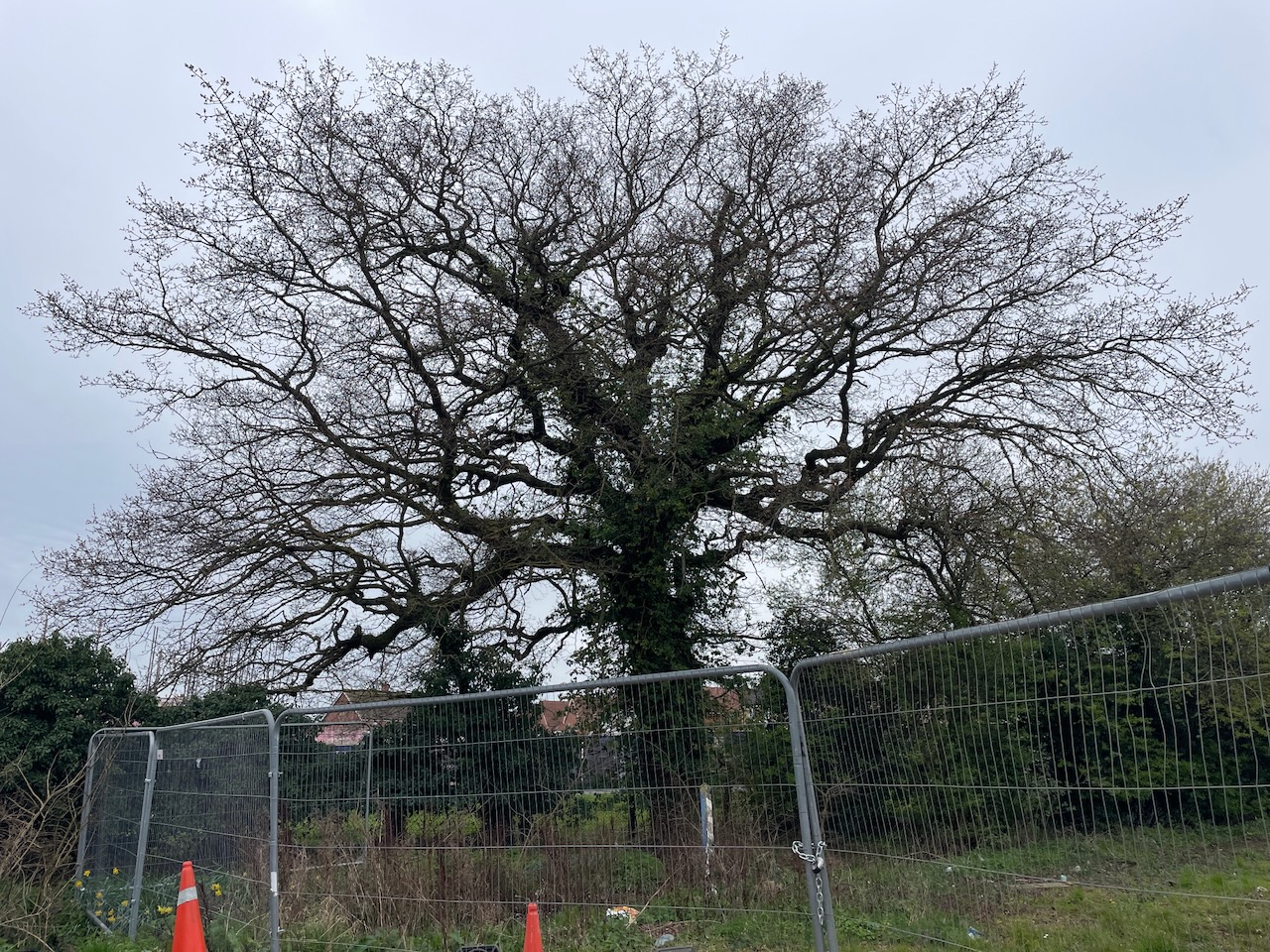
- Recomend two trees to be protected. One amazing huge Plane tree (example of H1) probably within conservation area, the other, an oak (example of H2) beside an area ripe for development.
What3words saved.


