June 2026, the month that East Anglia has had as much rain in as the whole of spring. Glorious green all around as we rocked up at Horringer Community Centre for the annual gathering of Suffolk Tree Warden Network. Richard Frost gave the AGM news for the last time as the chair, and I realised I had only known him as a chair since I joined this friendly group. He hands over to Colin, also from Stowmarket, but remains a key leader. We have over 300 members and have grown between 5 – 8,000 trees this year to spread the seed around our parishes and communities. An increased demand for hedge row trees and street trees. A sweet legacy from one of our members will fund some street tree growing. The black poplar project continues to flourish, with a mapping of all uk and European Black Poplars to see the geography of the different clones, a research project based in Italy. Another, the Elm project is mapping the 50 different types of Elm, for planting particularly in hedgerows. News from the John Innes centre of a possible resilient strain of ash to die back Ash. Woods for Water project in Deben. Apple week in Stowmarket sounds worth a visit, with 15 different varieties celebrated (24 October) at the Food Museum. Attended festivals, like Suffolk Show, Wierd and Wonderful. Colin Lay presented the protype Members pack, to be given to all new members.
Vicky Bolton: Observatree Project
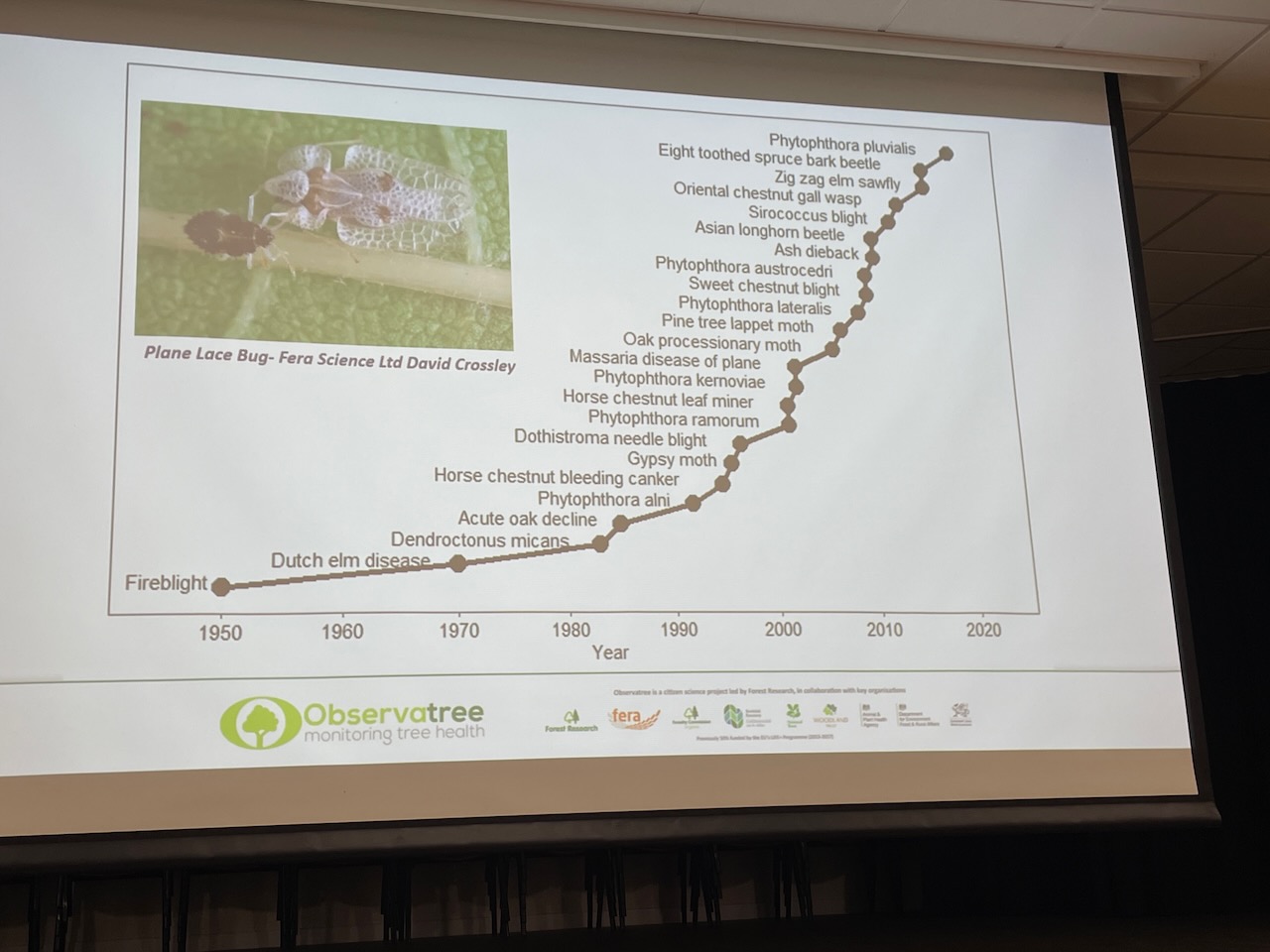
Vicky from Woodland Trust runs this Citizen Science network of volunteers who go out and survey trees and woods in their local areas for signs of pests and diseases. The rise in disease graph was graphic. I immediately spot Acute Oak Decline first defined 1985 – it is of particular interest to me, more on this later.
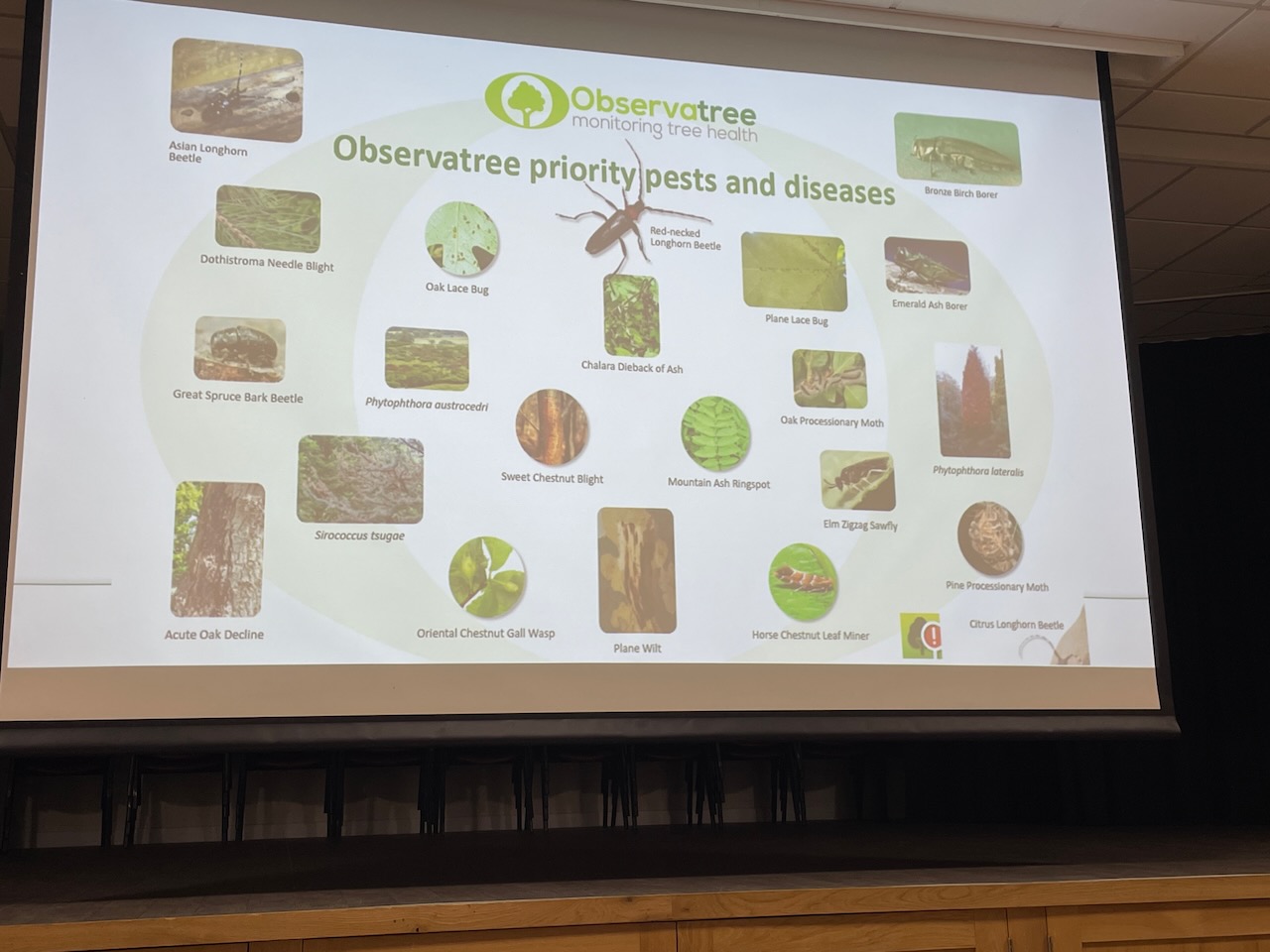
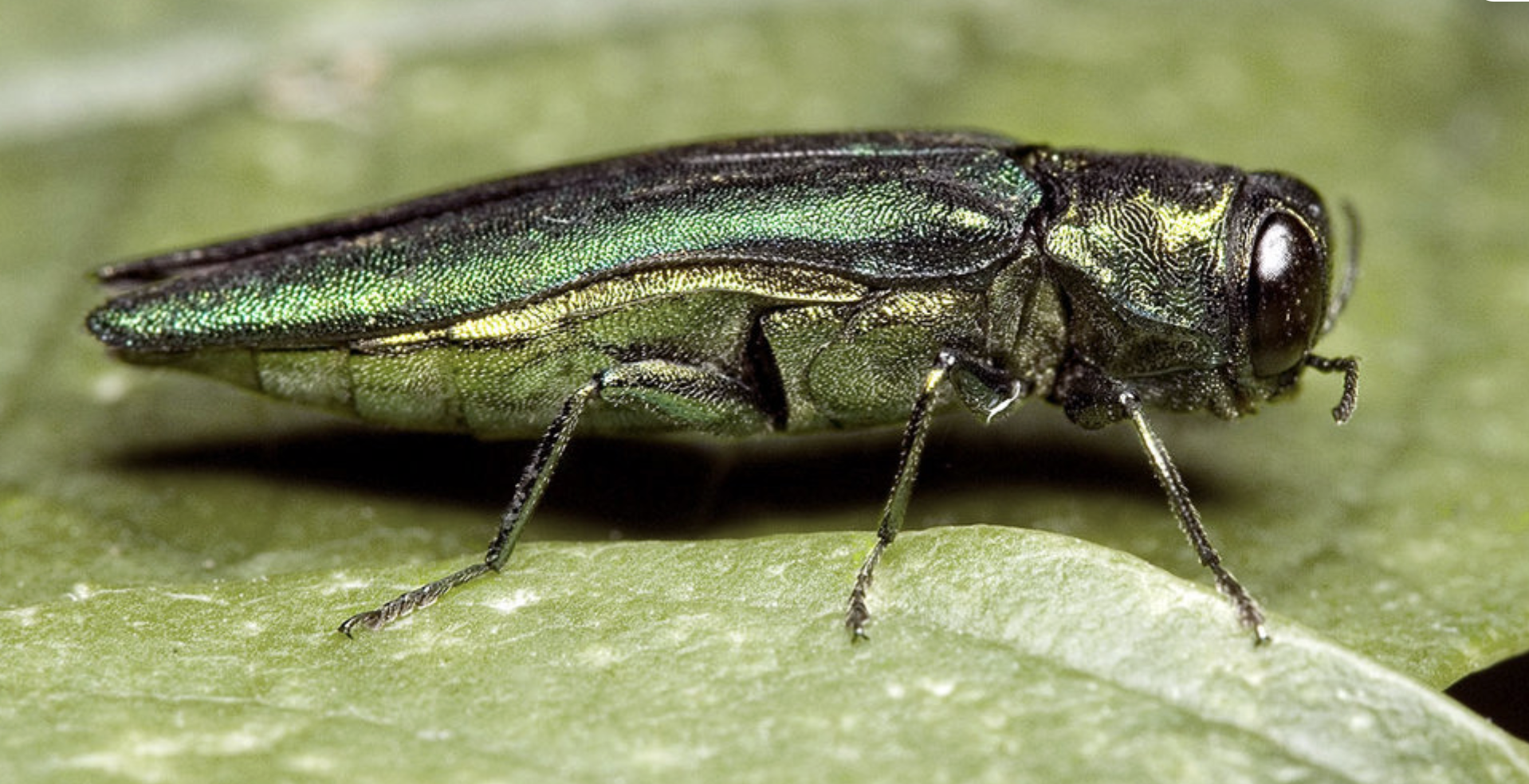
What is the purpose of this I wonder when mostly nothing can be done to halt to the disease? It is basically an early warning system, which helps map the spread around the UK. The 200 Volunteers are given effective training, and do 12 surveys a year, also taking in Sentinal trees. They have 24 priority species for example the Acute Oak decline and Oriental Chestnut Gall Wasp, Asian Horn beeetle, and relatively new on the Ash the Agrillus Beetle – more known for the Acute Oak Decline. A stunning photo of a line of ash trees. The Emerald Ash Borer (Agrilus planipennis) devastated US Ash causing nearly 100% mortality in untreated, infested areas. Larvae bore under the bark, disrupting water and nutrient transport and killing trees within 2 to 6 years. Many are hitchikers, one coming on the backpack of a traveller to London. An alert to take care of our own biosecurity, cleaning out boots and rucksacks!
The beautiful Agrilus beetle:
Trees and the Law
This spontaneous overview was a useful reminder to us in Parish Councils about tree protection. Risk and Reasonable, Likelihood and impact, key concepts.
- the chance of death by tree is 5 to 6 people per year
- the chance of death by car is 1,600 people per year, 4.4 a day
- therefore death by tree is less than one in 10 million.
The recent example of the East Bergholt fatal tree fall is a good case in point. What was the likelihood, could National Trust (owners) have known with a regular tree inspection? No, the weak branch was high in the tree and could not be seen from the ground. We cannot reasonably expect that every tree has to be climbed to be inspected.
Ownership and responsibility. Owners responsibility, (take reasonable care to ensure trees do not give unreasonable risk.) Duty of care.
Planning in development BS5032: 2012 guidelines to come of tree development. National Planning Framework, advocate tree lined streets and to protect veteran ancient trees. Local policy – can advocate an uplift of canopy cover. Statutary expemptions: Highways, and utilities.
Recommended to speak to Rupert Bentley Walls Work Senior Arboricultural Officer, Suffolk County Council.
Walk around Ickworth veteran oaks
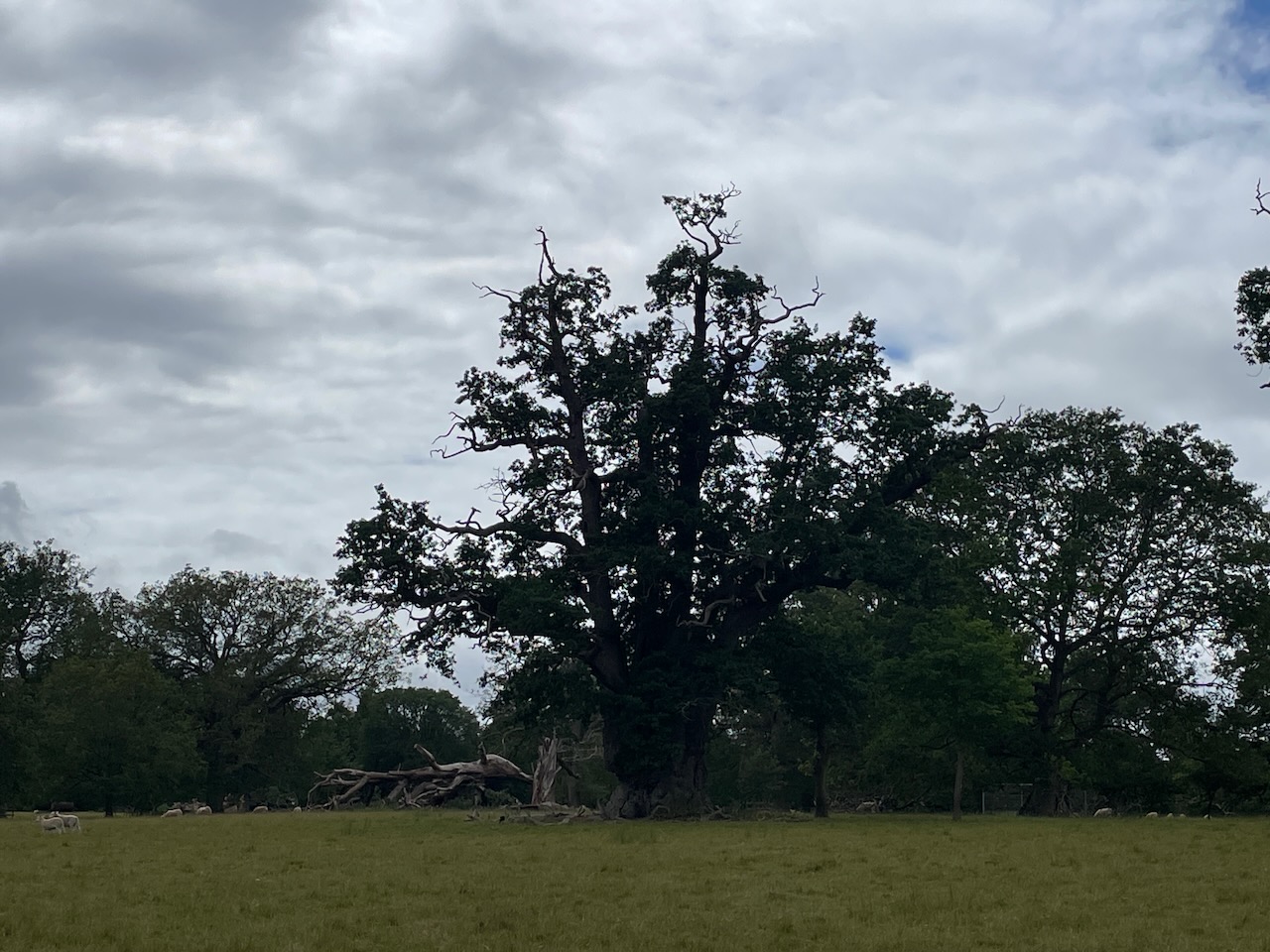
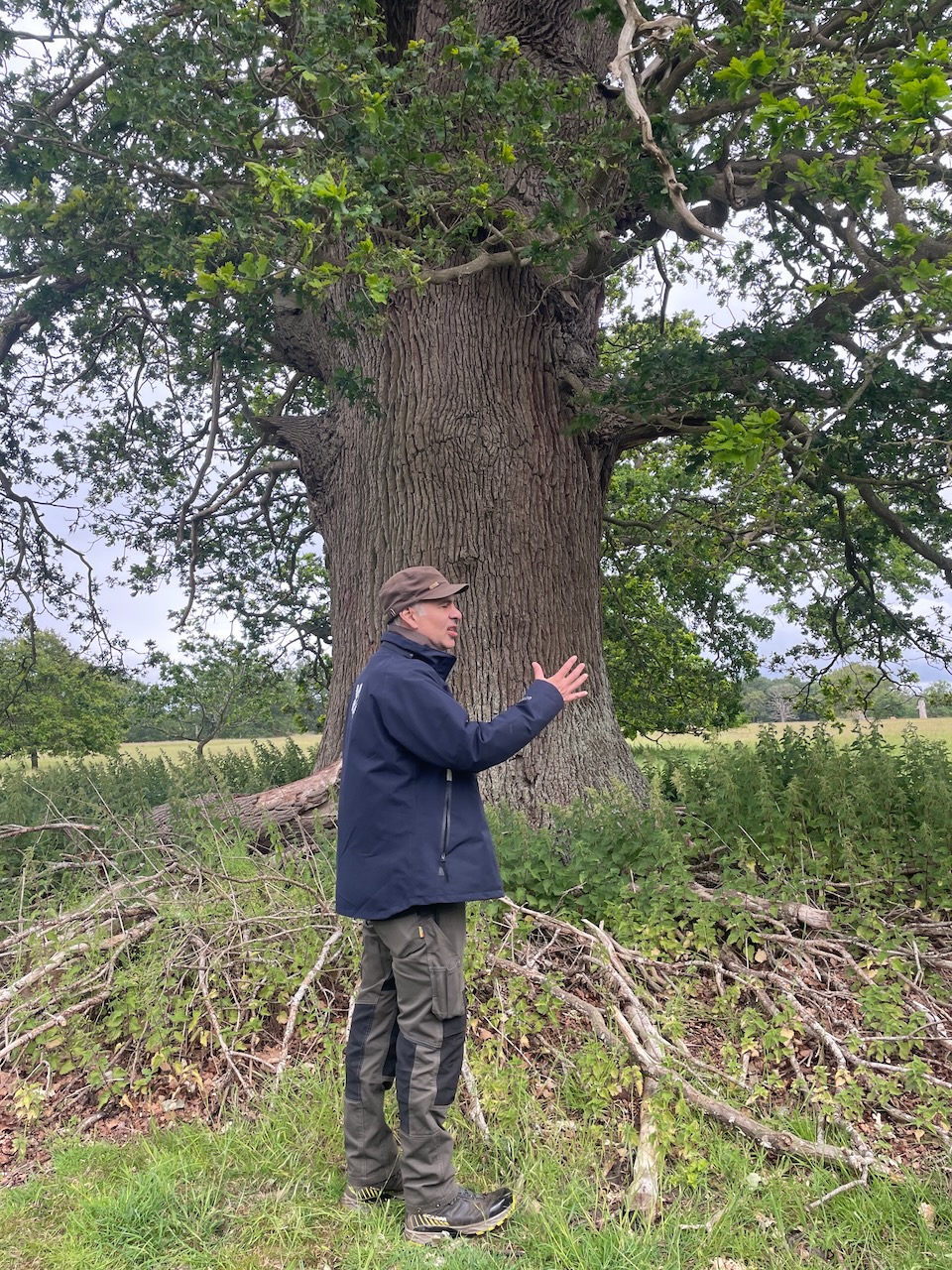
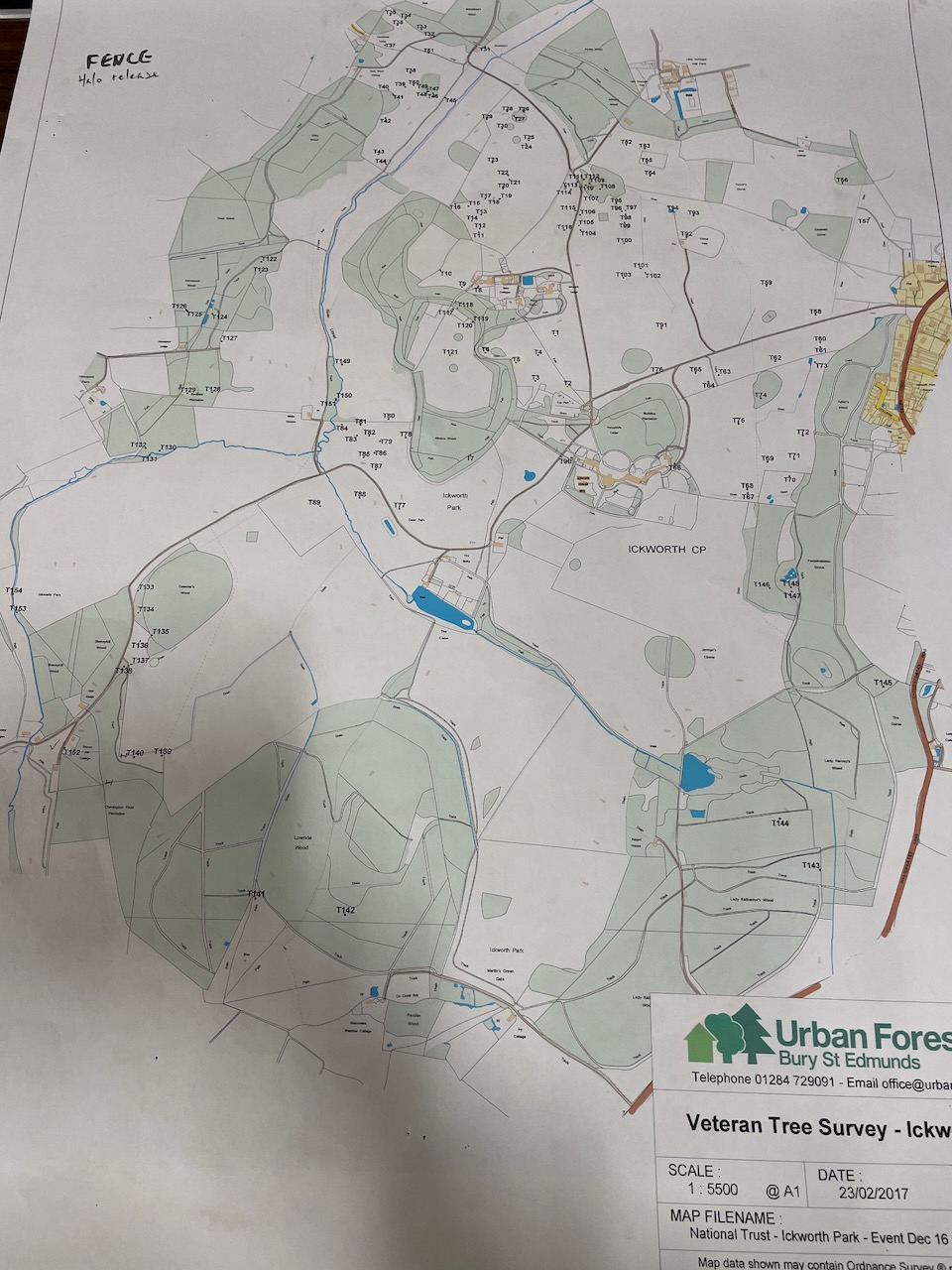
Two men from the Woodland Trust took us around Ickworth. From a map of Ickworth land, they showed us their future plans to replace arable with wood pasture. (EWCO funded) Oliver Rackham – are you celebrating from your grave? We walked across the land to a gathering of Veteran Oaks in the gently rolling landscape, once conceived mainly as a deer park, an aristocratic 18th-century landscape.
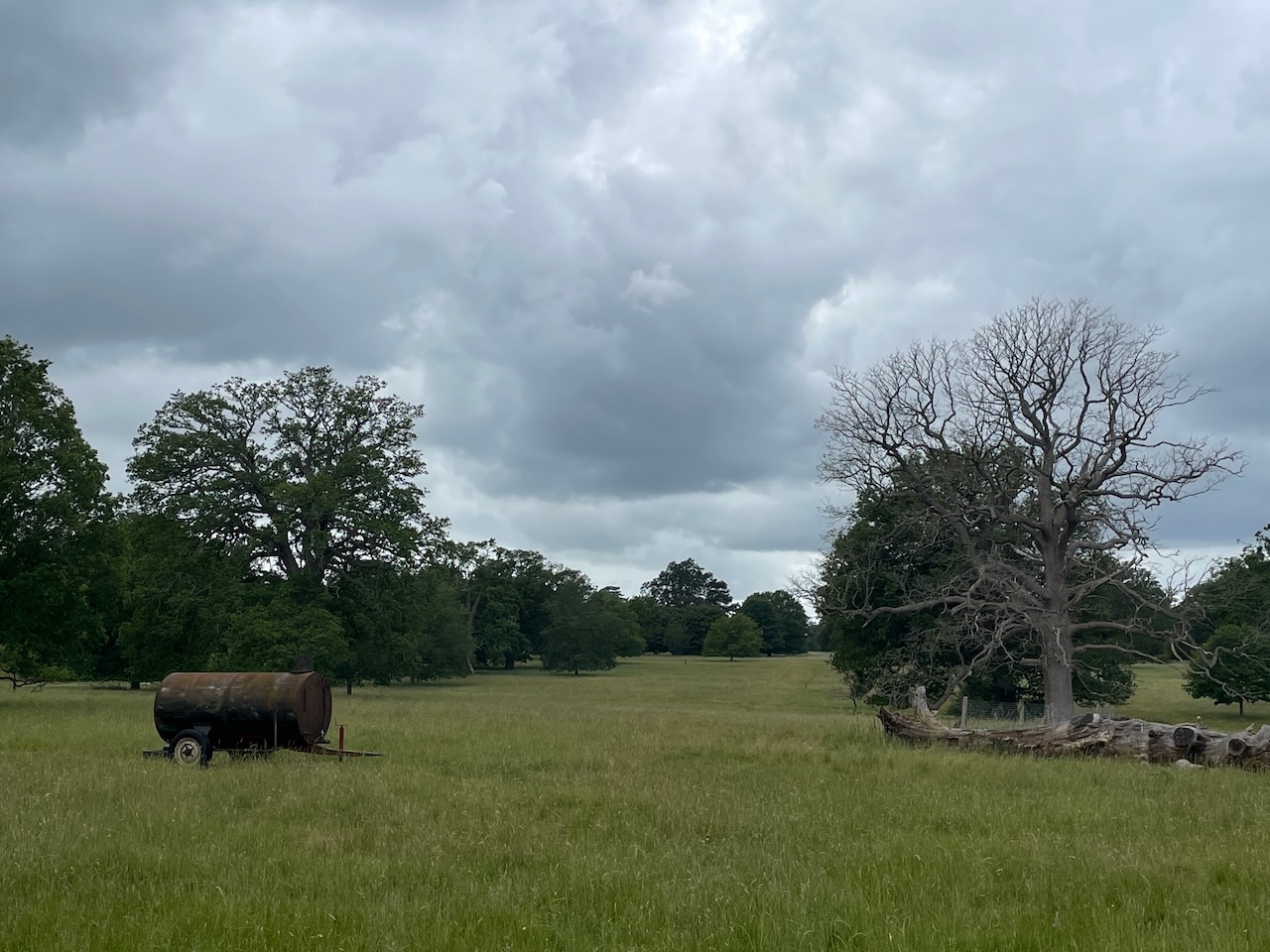
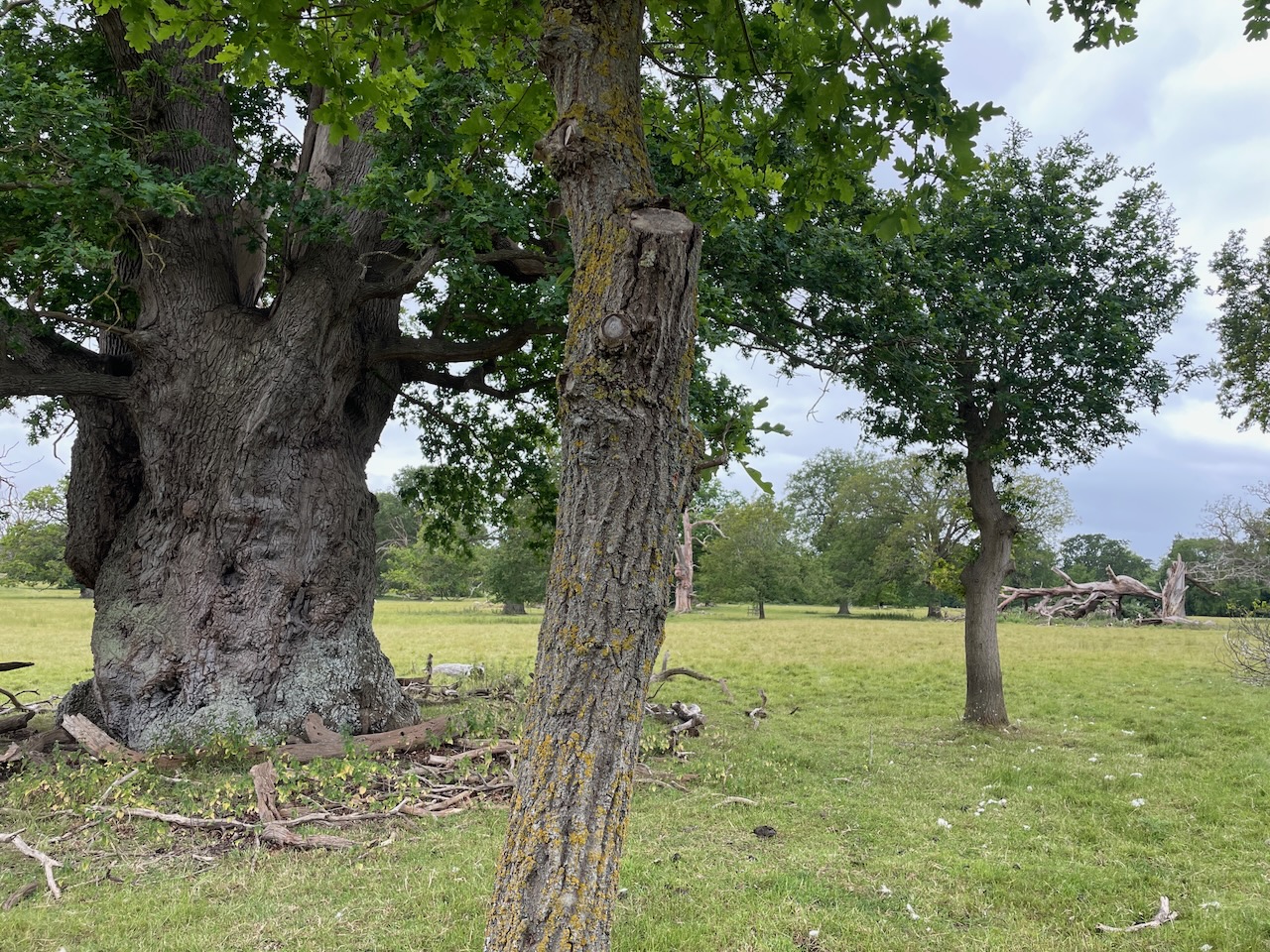
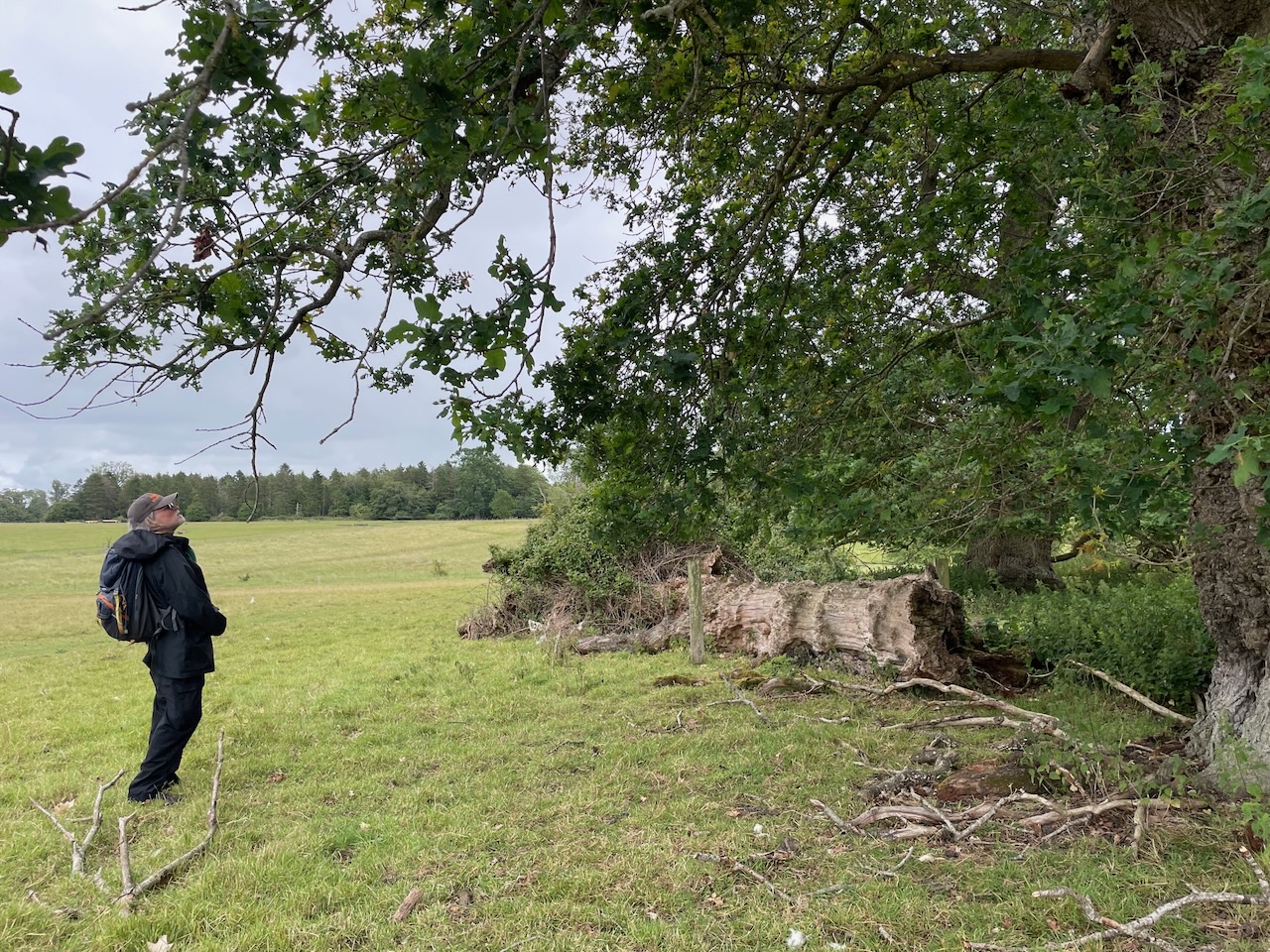
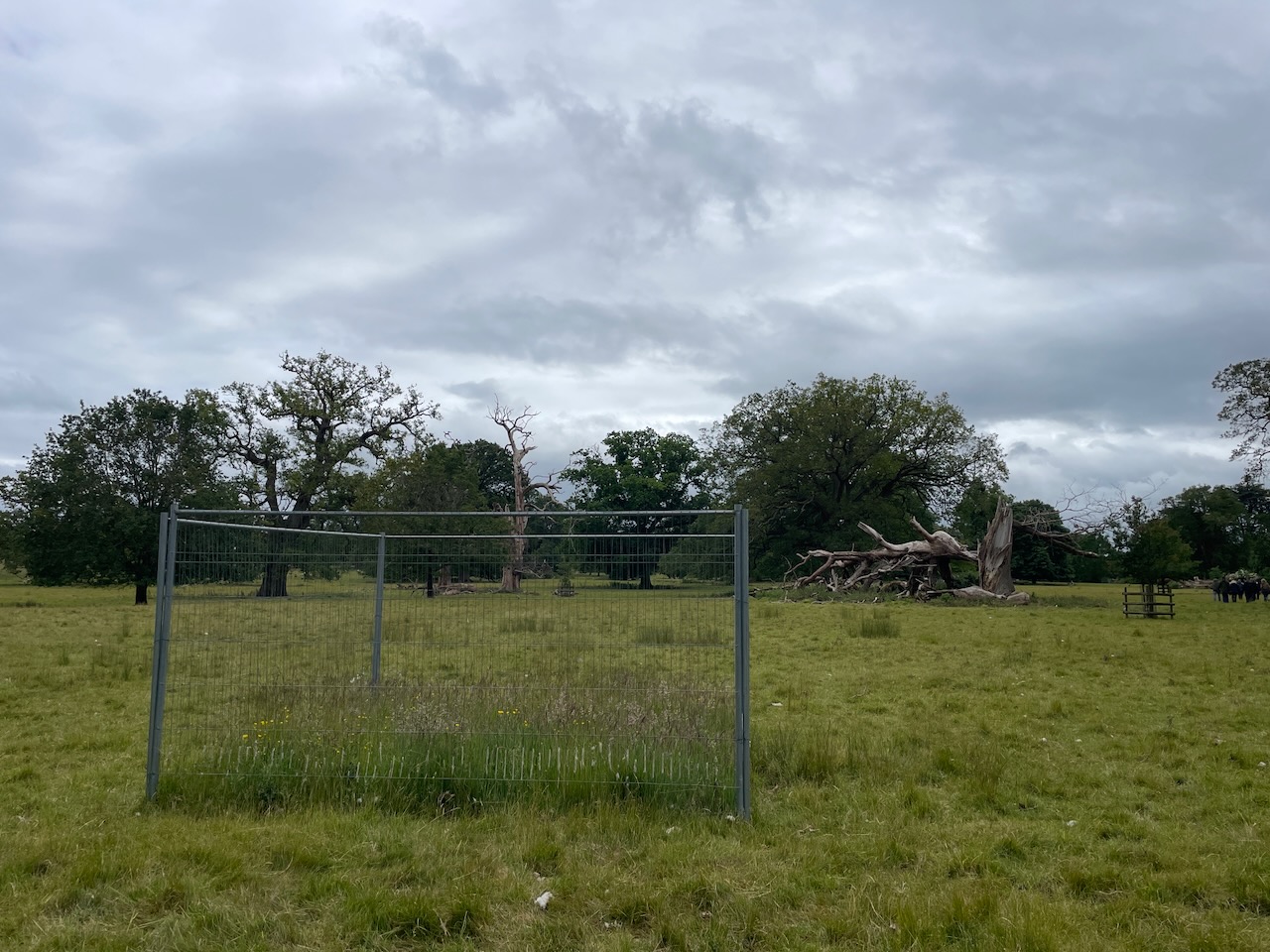
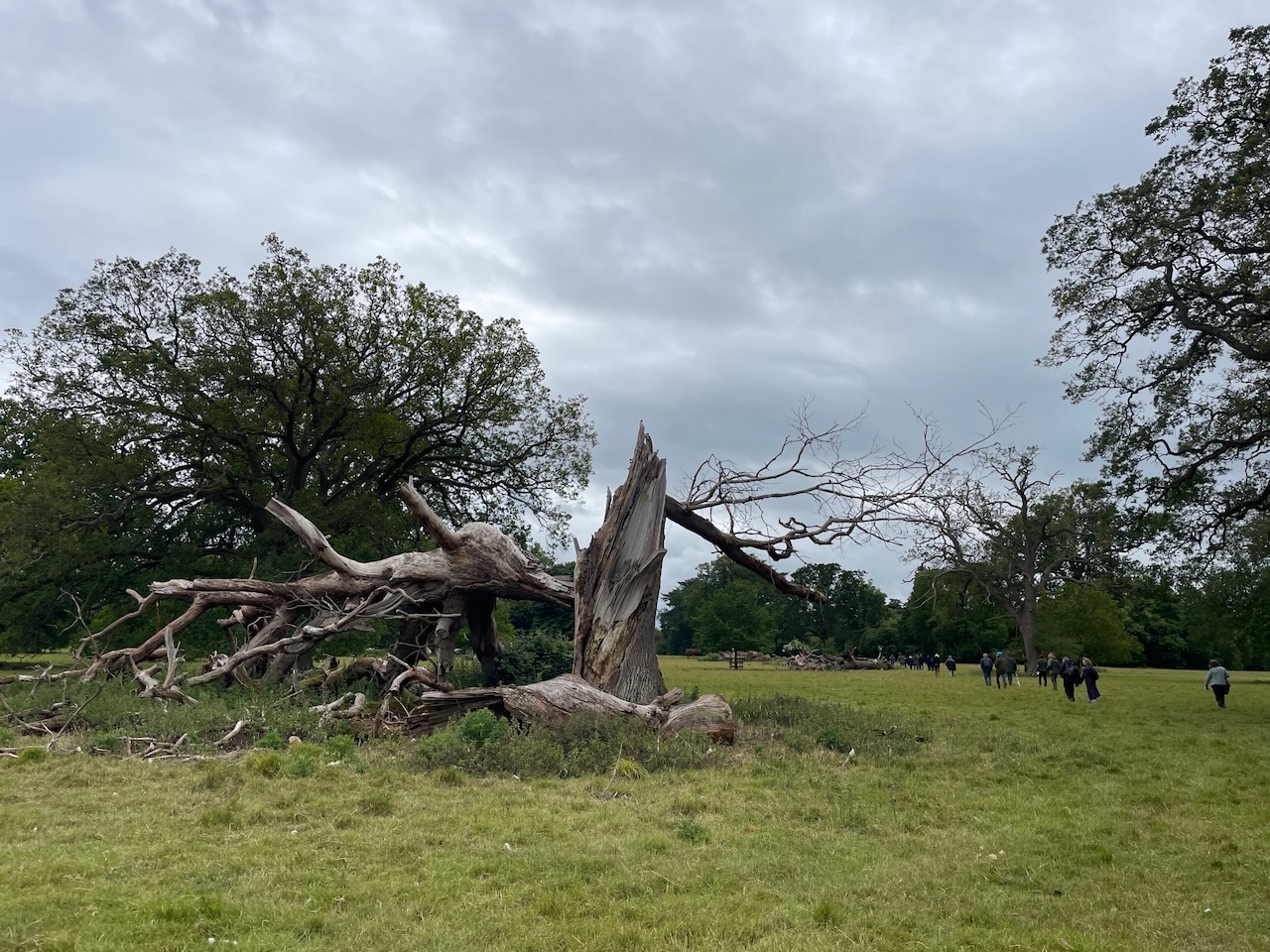
The theme of the walk was the decline of the oaks. The second photograph is of two oaks, one 4 years ago now dead and one two years into decline. There was much interesting interpretation as well as doubt why some oaks and not others are in decline. Oaks have a life (150 grow, 150 live, 150 die), but these great lives were being cut short. The die back happened at the extremities, with epicormic grown on the inner branches gradually lessening until branch by branch dies and looses outer bark. Climate change assumed to be the largest trigger, the stress of less spring rain and drought. Possible lessening of water table. Fields which were land drained in the 1970’s. Anglia water extraction near by? Sheep compacting the ground around roots. Under stress conditions the agrillus bettle arrives, lays eggs, brings a bacteria which in effect blocks the cambian xylem vessels (transport water) and phloem externally (transport sugars).
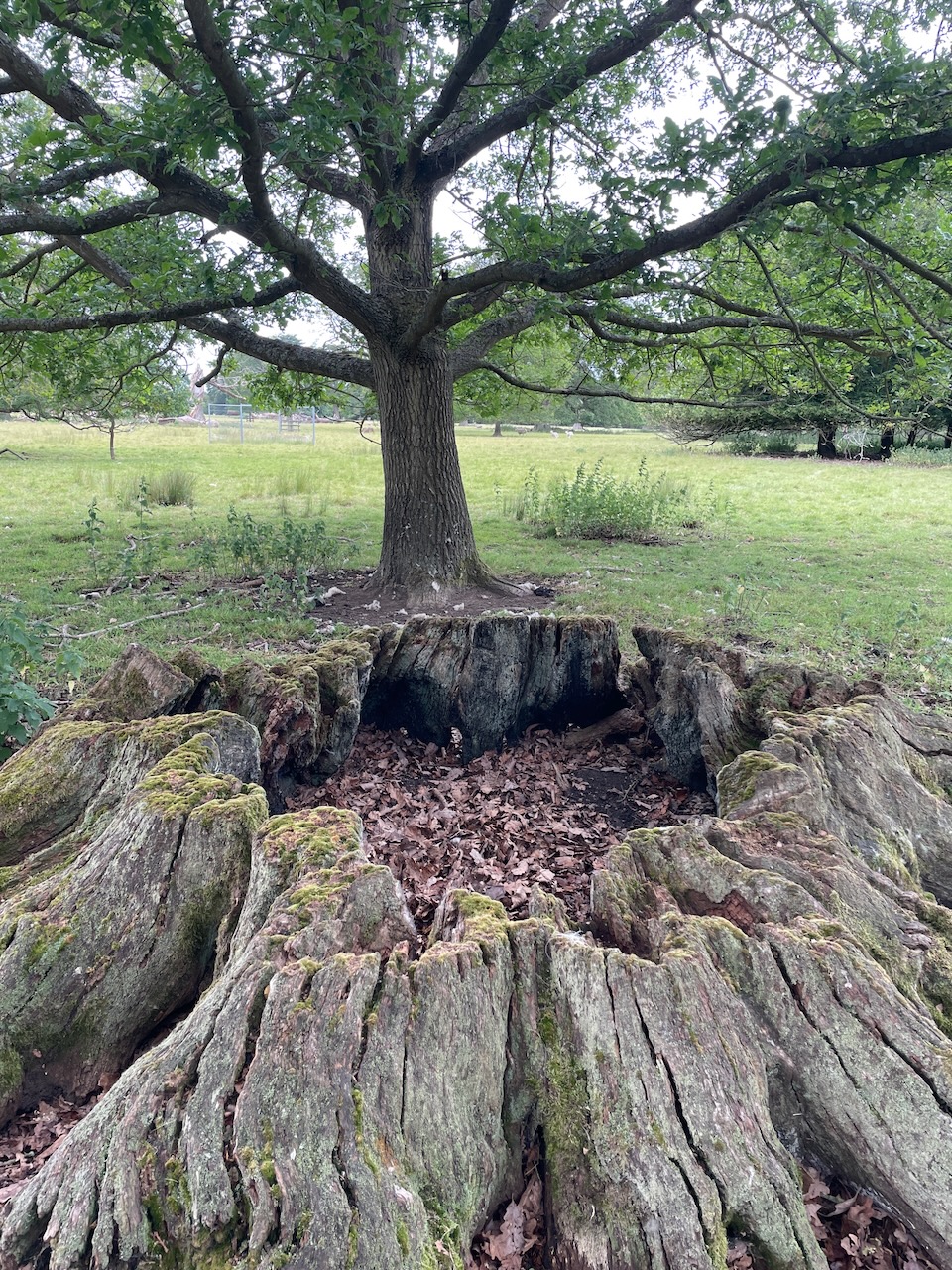
Sometimes they prune the extremities to reduce the stress. Hampton (?) had done some experimentation on reduction and had mixed success. The natural way is the most effective, as we saw with a healthy oak with it’s main huge branches fallen, happily growing from the hollow trunk that remained.
To disuade the sheep from gathering under the tree (compacting earth) they lay the dead bone branches around the base, which acts as an effective barrier. In the 70’s/80’s young oaks were planted too close to the veteran (good intention but wrong place as too close), and the recent inspection suggested felling these. Instead they have been pollarded.
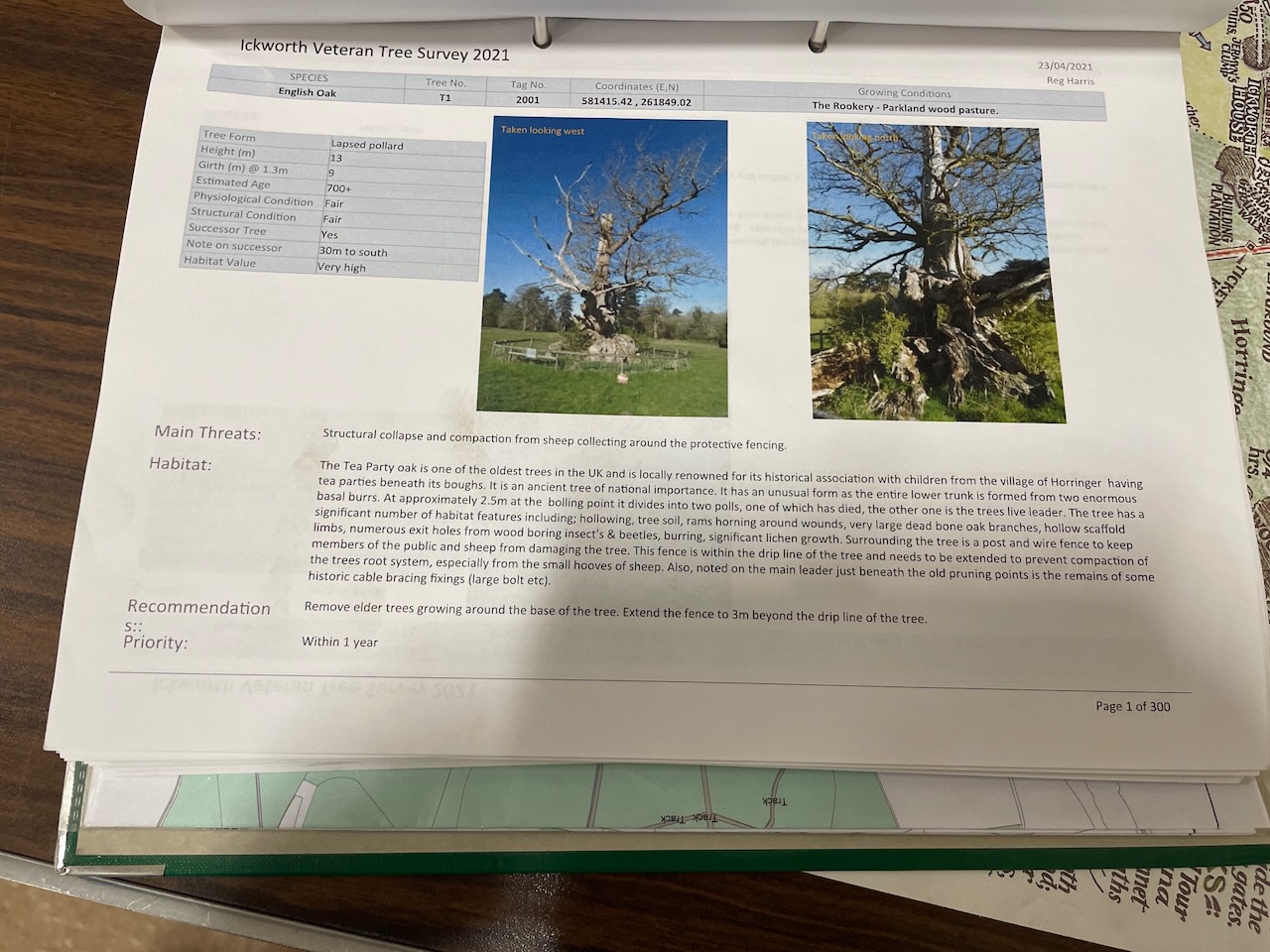
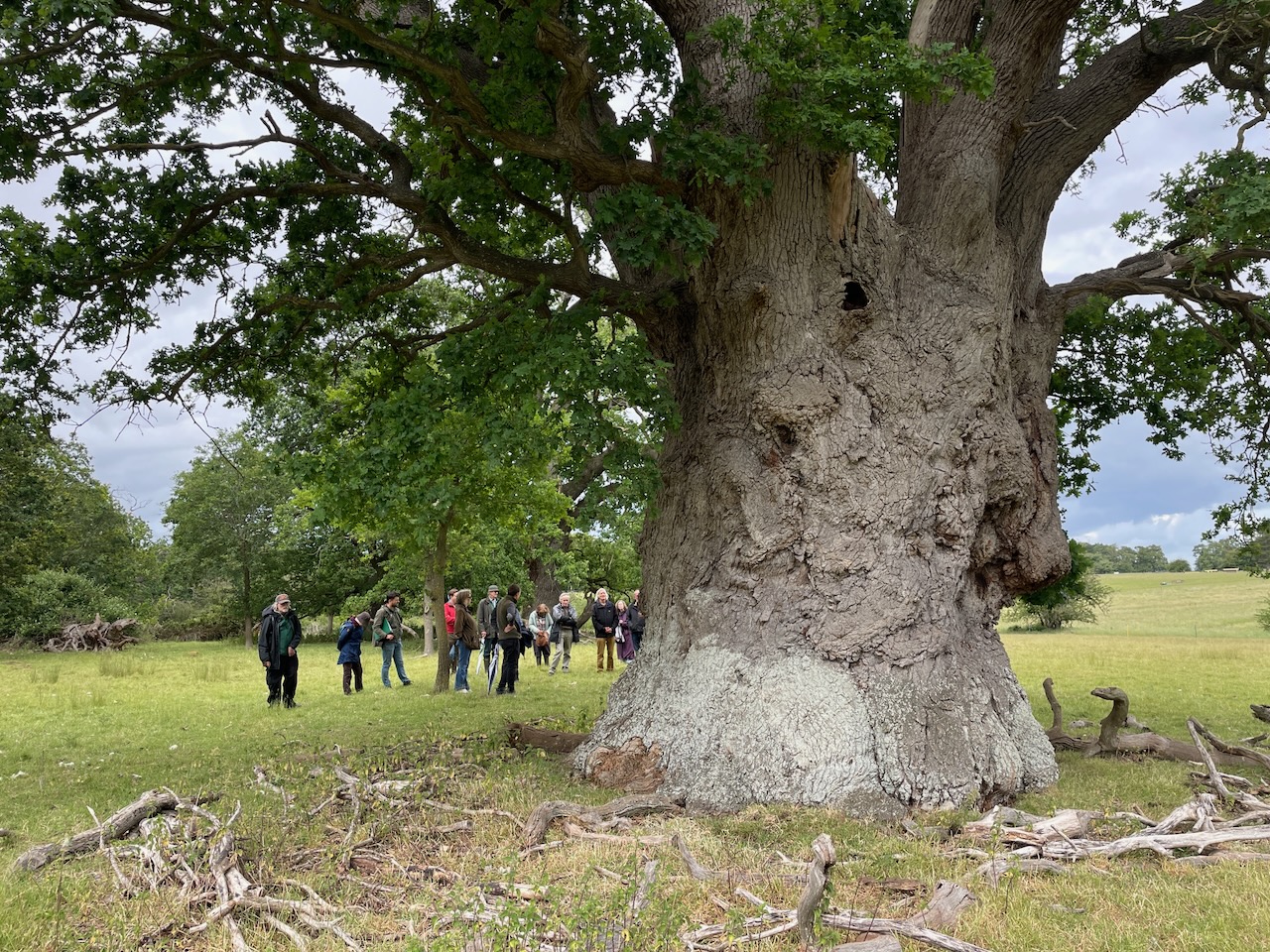
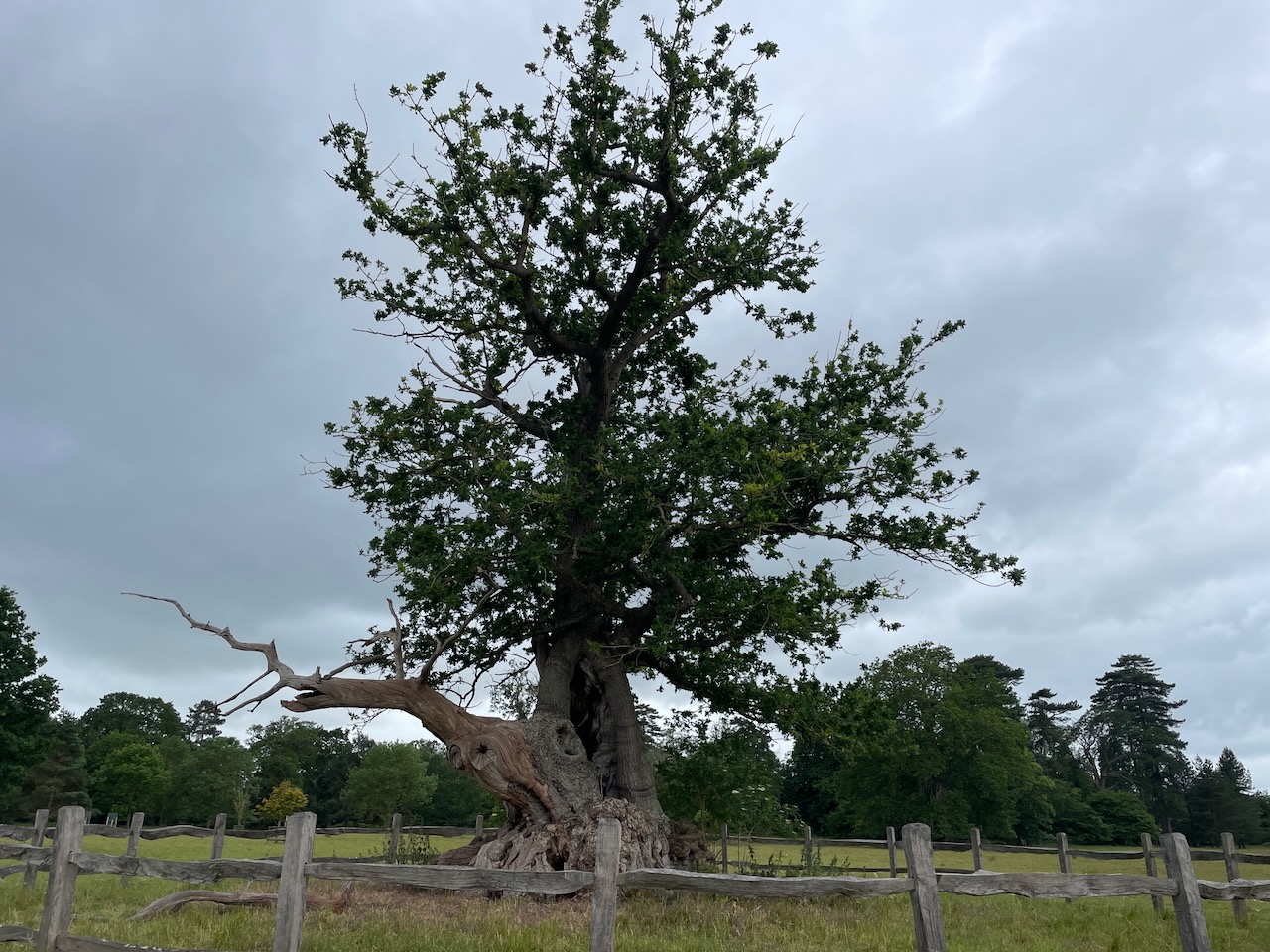
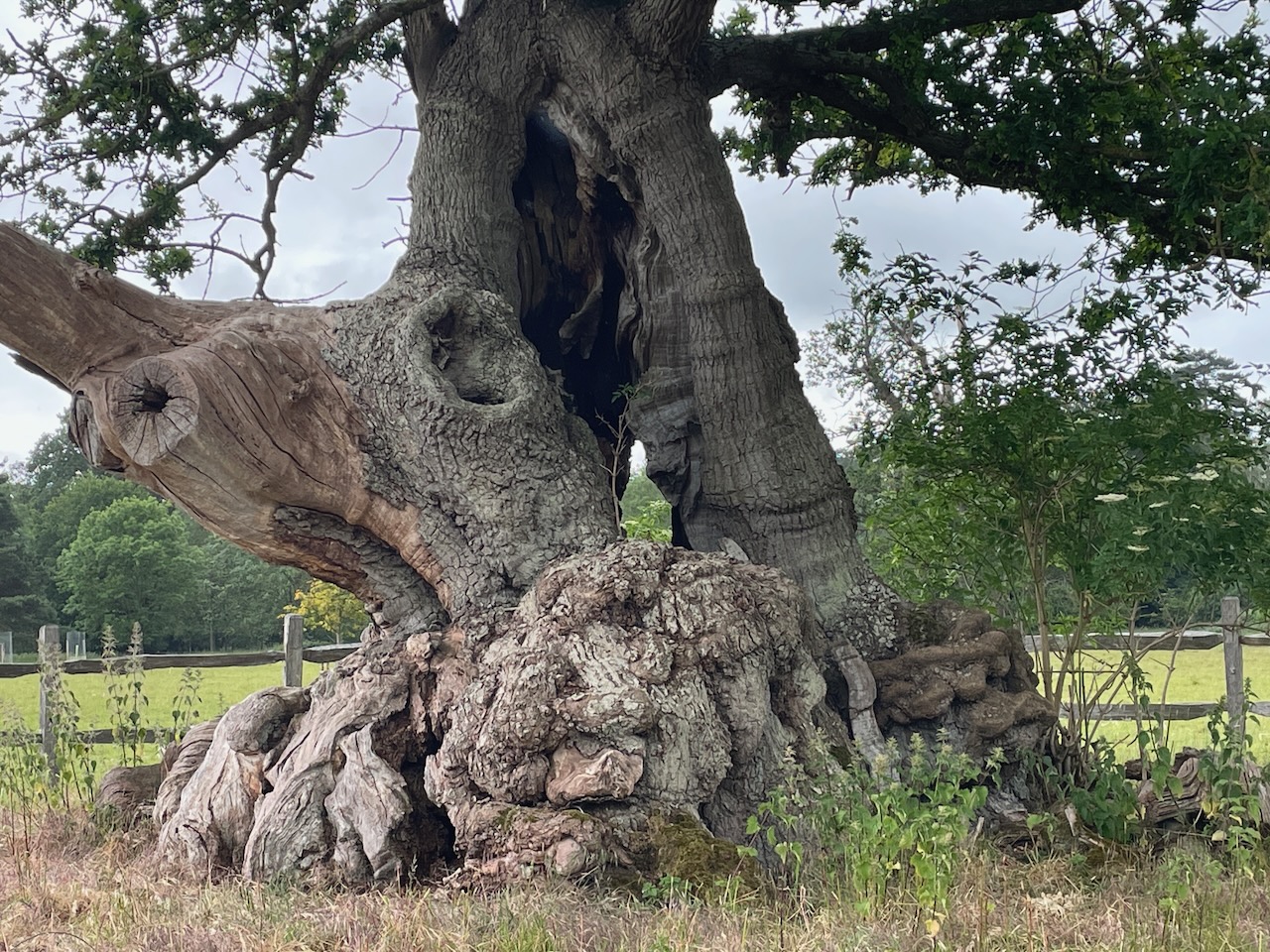
Finally to the famous Tea Pot tree – estimated to be 710 years old, and estimated by Oliver Rackham. A stunning oak hand made fence around it to protect it (cost £5000) I love it’s base and want to dally to sketch it.
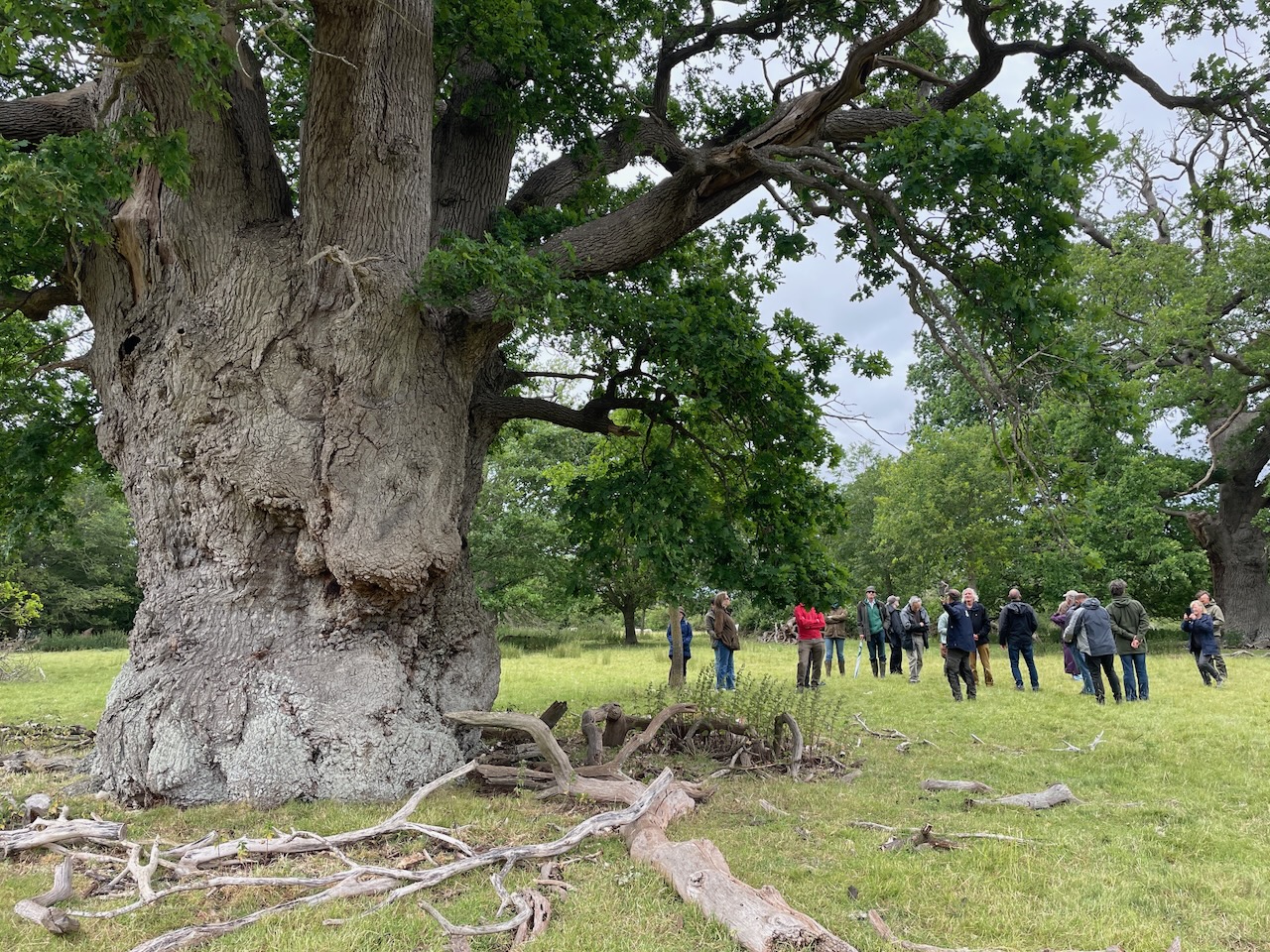
We had our photograph taken under the largest oak with a girth of 7.5 meters.