Proposal presented to HTC Community Services March 2026/July 2026/August 2026
Funding to East Suffolk Trust applied September 15, 2026
To creatively develop Halesworth’s Biodiversity Action Plan (Baseline to 5-10 year strategic plan) and to co-operatively share and support neighbouring parishes with their BAPS
This proposal is for a HALESWORTH BIOME, (a region defined by its climate, plants, and animals). Although it is commonly used to describe a large area (for example the Ngoro Ngoro crater in Africa) it can just as well be used to describe our area in and around Halesworth.
Big picture – Why?
a. Biodiversity threatened
It’s widely reported how depleted our wildlife is, climate change, urbanisation, pollution, intensive agriculture has caused a 41% decline in all UK species since the 1970’s with a real risk of some species becoming extinct in the very near future. The UK is one of the least wooded countries in Europe. Shifting baselines has become a familiar term meaning that each generation thinks that what its experiencing is normal when in fact there has been tremendous change in our wildlife experience over the year
This proposal is written in a heatwave, the 4th of this year with temperatures increasingly exceeding the average, wild fires in Dunwich and Europe, amber and yellow heat health alerts, and finally the Environment Agency declared it as an official drought. Stressed by climate change, our oaks are dying. I doubt my own oaks in my 5 acre oak nuttery wood will survive another 25 years.
It is important, if not essential, that we act to protect what we have of our diverse biodiversity, and what we can do to mitigate climate change, building future resilience. All things are connected, and biodiversity is the life-support system of earth, providing clean air, food, and stable ecosystems. Let us in Halesworth do what we can for this and future generations.
b. Legislative Drivers
Under 2021 Environment Act public authorities (including town and parish councils) must consider what they can do to conserve and enhance biodiversity. Government guidelines published May 2023 clarifies that as a public authority town and councils must a. consider what they can do to conserve and enhance biodiversity b. agree policies and specific objectives based on their consideration c. act to deliver their policies and achieve their objectives.
c. Local reason why Now
As Halesworth Town Council, we are taking over responsibility for a series of our open spaces with an imminent asset transfer from East Suffolk to Halesworth Town Council ownership. We will need to access these and develop a plan for their maintenance. Seeing together with East Suffolk Council, Suffolk County Council land and private land, these will form an important part of our biodiversity patchwork quilt of our town.
Halesworth ASH, a climate action group, which has grown out of Halesworth Town Council and Blyth Valley Churches, is an ideal support for this project. https://halesworthash.com/
d. Working with local parishes
Although the proposed work is formally restricted to Halesworth Parish, the ecological context of the project extends well beyond its administrative boundaries. Like any biome, the boundaries of the natural environment are fluid rather than fixed. The River Blyth, for example, runs through numerous parishes, and efforts to control Himalayan balsam within Halesworth’s catchment—however successful locally—will have limited long-term impact if the species continues to spread from upstream catchments where no equivalent action is being taken.
The project will therefore be rooted in Halesworth while taking a wider, catchment-based and landscape-scale approach, involving directly the 8 neighbouring Parishes. It can also usefully share data with our nieighbouring market towns of Bungay and Beccles.
Baseline policies
a. Biodiversity Policy and Action Plan
Our Biodiversity Policy (V2 Draft) informs the action of a Biodiversity Action Plan. A Biodiversity Action Plan (BAP) aims to protect, restore, and manage wildlife and natural habitats. Key elements include setting conservation targets, tracking threatened species, and guiding local land use.
Partnerships and governance
This will be a Halesworth Town Council project, led by a part-time environmental consultant, working closely with Town Councillor Rachel Kellett, Town Council staff and clerks. The consultant would be contracted for specific tasks eg Baseline, followed by 5-10 year Pathway. In the second year to oversee the pathway workshops with the 8 parishes. Succession planning will be built into the project so that knowledge, systems and responsibilities can increasingly be transferred to the Council and community.
Environmental groups to be consulted:
| Halesworth ASH | Halesworth ASH |
| Halesworth Town Council | Halesworth Town Council |
| Blyth Valley Church | Blyth Valley Church |
| Halesworth organisations | Halesworth in Bloom |
| Halesworth in Boom | |
| Halesworth Museum | |
| Halesworth Millennium Green | |
| Halesworth Millennium Green | |
| Halesworth Millennium Green | |
| Halesworth Millennium Green | |
| Halesworth Swifts | |
| Halesworth Swifts | |
| Halesworth Swifts | |
| Halesworth Tree Warden/HIB | |
| Halesworth Gardening Club | |
| Halesworth u3a Climate Change | |
| Halesworth in Boom | |
| Halesworth Hedgehogs | |
| Tree Warden Network | Holton Tree Warden |
| Suffoolk Tree Warden Network | |
| Council | East Suffolk District Councillor |
| Suffolk County Councillor | |
| East Suffolk District Councillor | |
| East Suffolk Arborist | |
| East Suffolk Biodiversity | |
| Local Organisations | Blyth River Citizen Science |
| Blyth Farmiing Cluster | |
| Wissett Biodiversity | |
| Wilder Wenhaston | |
| Organisations | ORGANISATIONS |
| Hedgerow layer | |
| Spexhall | |
| TCV – Volunteers | |
| RSPB | |
| Suffolk Wildlife Trust | |
| SWT | |
| NCS | |
| Environment Agency | |
| Kevin Suffolk Police | |
| Suffolk Wildlife Trust | |
| Parishses | PARISHES |
| Holton Parish Council | |
| Blyford Southerton | |
| Blyford Southerton | |
| Wenhaston PC | |
| Cookley & Walpole | |
| Chediston | |
| Chedistone | |
| Spexhall | |
| Wissett | |
| Parishes 2 | NEAR PARISHES |
| Westhall | |
| Shaddingfield/Sotterly | |
| Shaddingfield | |
| Bramfield | |
| Bungay | |
| Beccles |
Baseline
The first stage is a baseline study, a map of what biodiversity exists today and how it is connected. We can usefully incorporate the Opergy Baseline report which has a section on agriculture and green space Halesworth. The addition of the open spaces in our asset transfer will be an important element. Land use and ownership in and around Halesworth’s urban and rural community. The breadth would be important to define, with parish boundaries defined but critically will encompass our 8 neighbouring parishes: Spexhall, Wissett, Chediston, Cookley, Walpole, Wenhaston, Holton, adding Blyford). Two of these parishes have active Biodiversity Policies and mapping (Wisset and Wenhaston) Working with multiple existing organisations (see list above) to create a baseline of not only land use, but also specific related projects: Water (River Blyth), Animal (Swifts/Hedgehogs), Flora and fauna; Trees and hedgerows
Blue Sky – 5-10 year plan
A 5-10 year plan for future protection of what exists, and expansion linking corridors for wildlife. For example a maintenance plan, based on Emergency, Preventative and Conservative elements. Including maintenance strategies, insurance, risk, renewal, etc.
Longer term aim to work with local landowners to build wildlife halo corridors around Halesworth. Inspired by Professor Peter Hobson’s talk at our first Climate Conference of a halo mainly of trees around Chelmsford, which will act as an air conditioner depending on which way the wind blows into the town. Clean, filter and cooling the urban air
- Web site shop window
- Baseline of Halesworth BAP. Define Scoping area – parishes including? 5-10 year plan. Biodiversity Policy etc.
- Land use eg Opergy report on land use / Open Spaces in Halesworth /
- Water – eg River Blyth / Lakes / Ponds
- Fauna eg swifts / hedgehogs
- Flora eg surveys
- Trees and Hedgerows eg Heritage Trees / New planting / Hedgerows
- Resources – Link to useful internet resources, including conservation, planning, neighbourhood etc.
Detailed elements Baseline Map of Halesworth BAP
- Opergy Report on Green spaces and their importance
Canopy cover, urban forest’s ability to produce benefits for the community and the environment. Increasing canopy has been identified as one of the most cost efficient and effective strategies for mitigating the urban heat island effect and adapting to climate change. We can measure canopy cover and predict futures with and without planting for the future. Include agriculture, gardens, tree canopy etc. - Open Space Map of Halesworth. Baseline and plan for each open space area.
1. Land use
Agriculture, open spaces, gardens, tree canopy cover
Water systems – Blyth and Tributory/ponds/ ghost ponds
Meadows
Orchards
Arable Fields
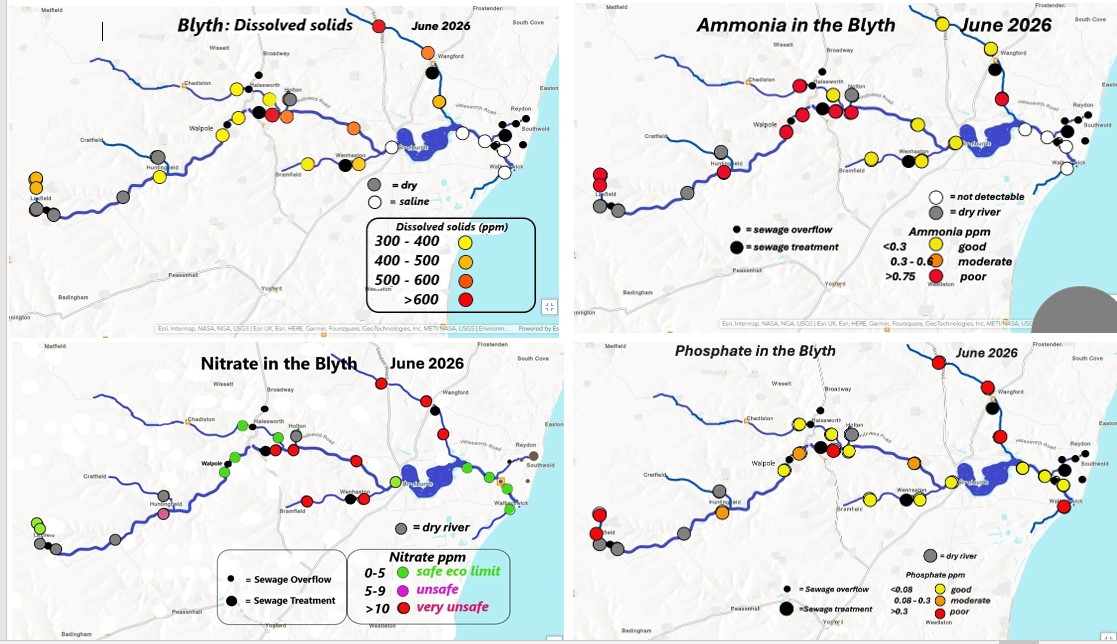
2. Water – River Blyth / Ponds / Lakes
River Blyth and tributaries. Current status and reports / Link in with 4 Rivers Project
Ponds and other water catchments. History maps – historic ponds
3. Trees and Hedgerows
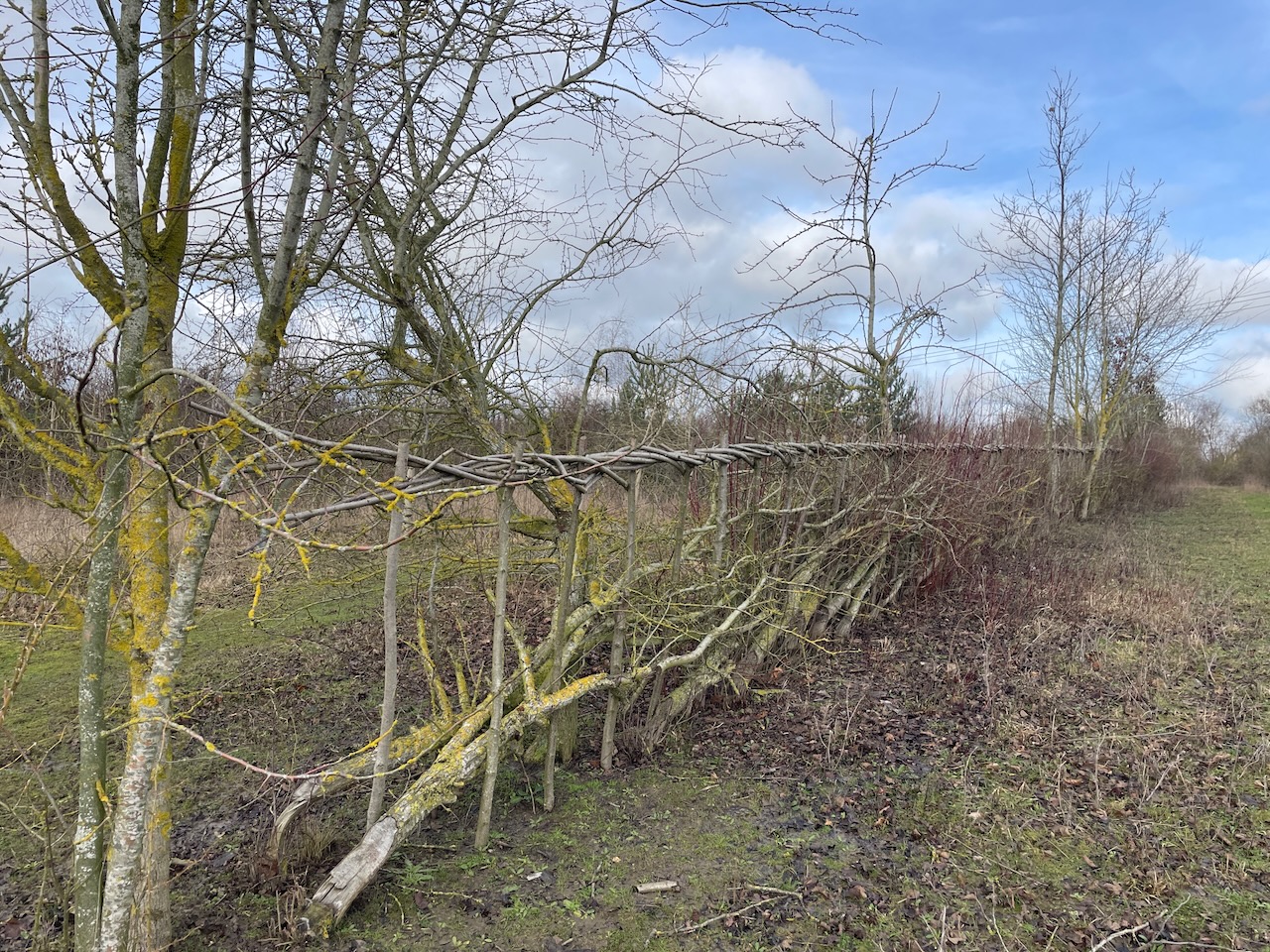
Protection systems
Heritage Tree dataset
New planting
4. Flora
Records of plants
5. Fauna
Animals/Birds / Swifts / Hedgehogs
6. Resources
Link to useful internet resources, including conservation, planning, neighbourhood etc.
- Existing records of trees/plants/animals
- Halesworth Conservation Area plan 2026
- HalesworthNeighbourhood plan
- Waveney local plan
- Halesworth Biodiversity Policy / Halesworth Action Plan.
- HTC Environment policy – drafted and to complete
- HTC Tree policy- drafted to complete
- East Suffolk Tree Hedgerwow
- Suffolk BIodiversity and Information Services https://www.suffolkbis.org.uk/
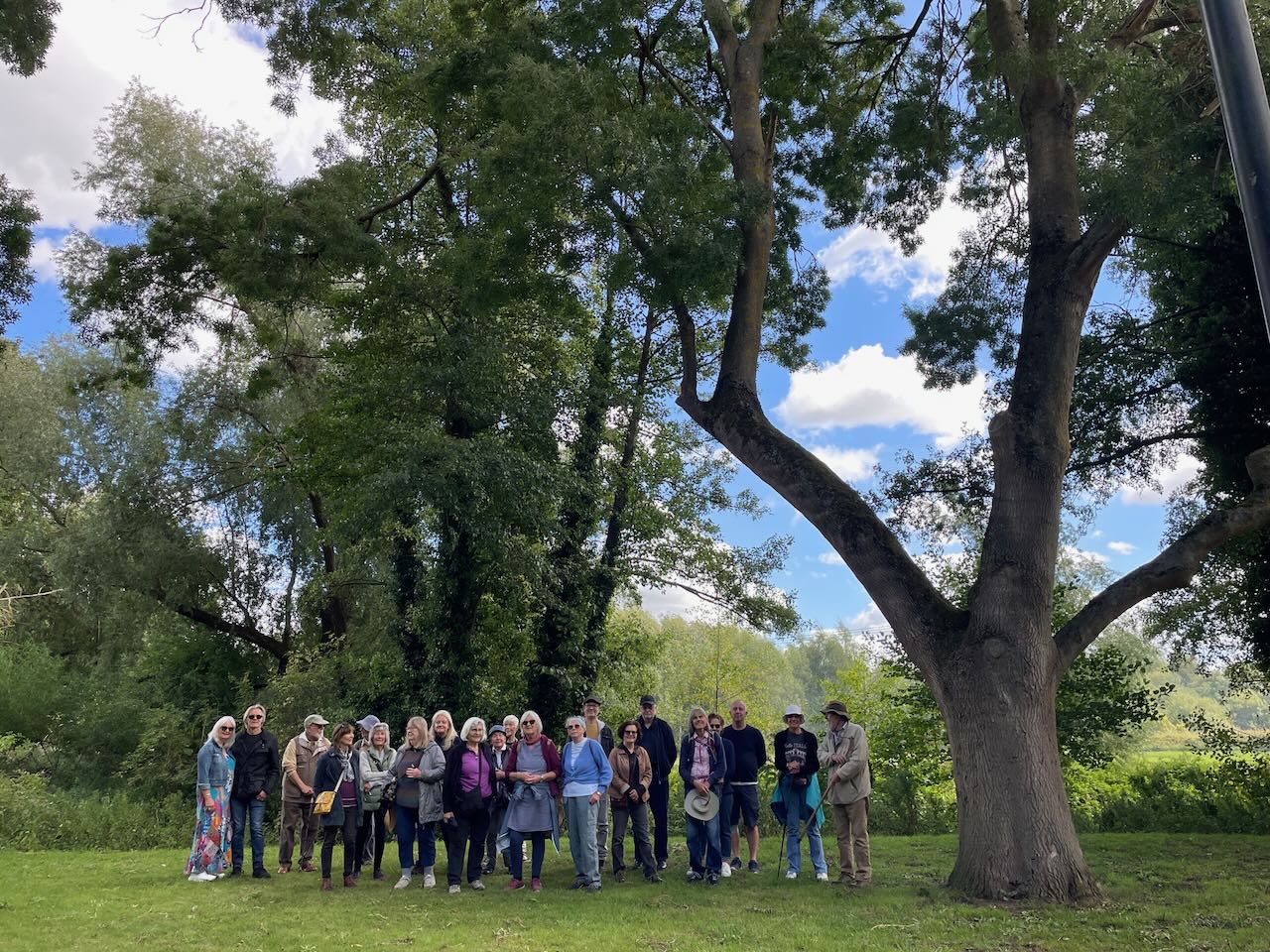
Halesworth Heritage trees 2025/6
See separate page here
END

