Visited a glorious warm September day, part of Beccles Herritage Open Days, this event was organised by Netta Swallow and Barry Darch (the singular organiser of Heritage Open Days in Beccles and one who loves History). They had arranged it with the owners of Worlingham Hall, who very kindly allowed us access to their private estate land. The Marzaotto family has owned and lovingly stewarded Worlingham Hall—a Grade I listed Georgian country house —since 2009.
Barry Netta and I had visited twice before, the first time to see the trees for the first time and work out the trail and the second time more recently to do a risk assessment – and recall the trail.
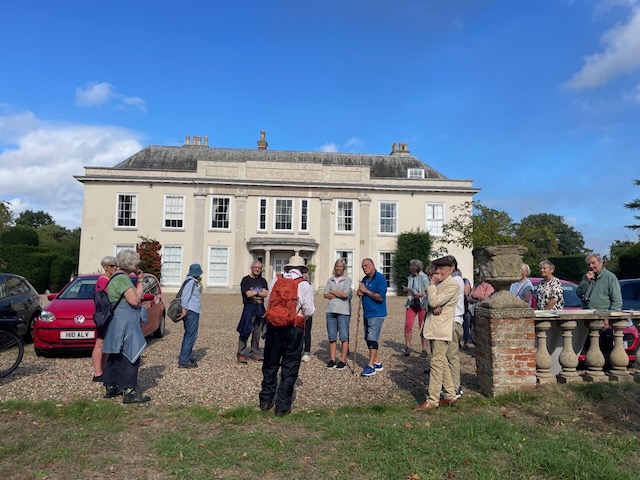
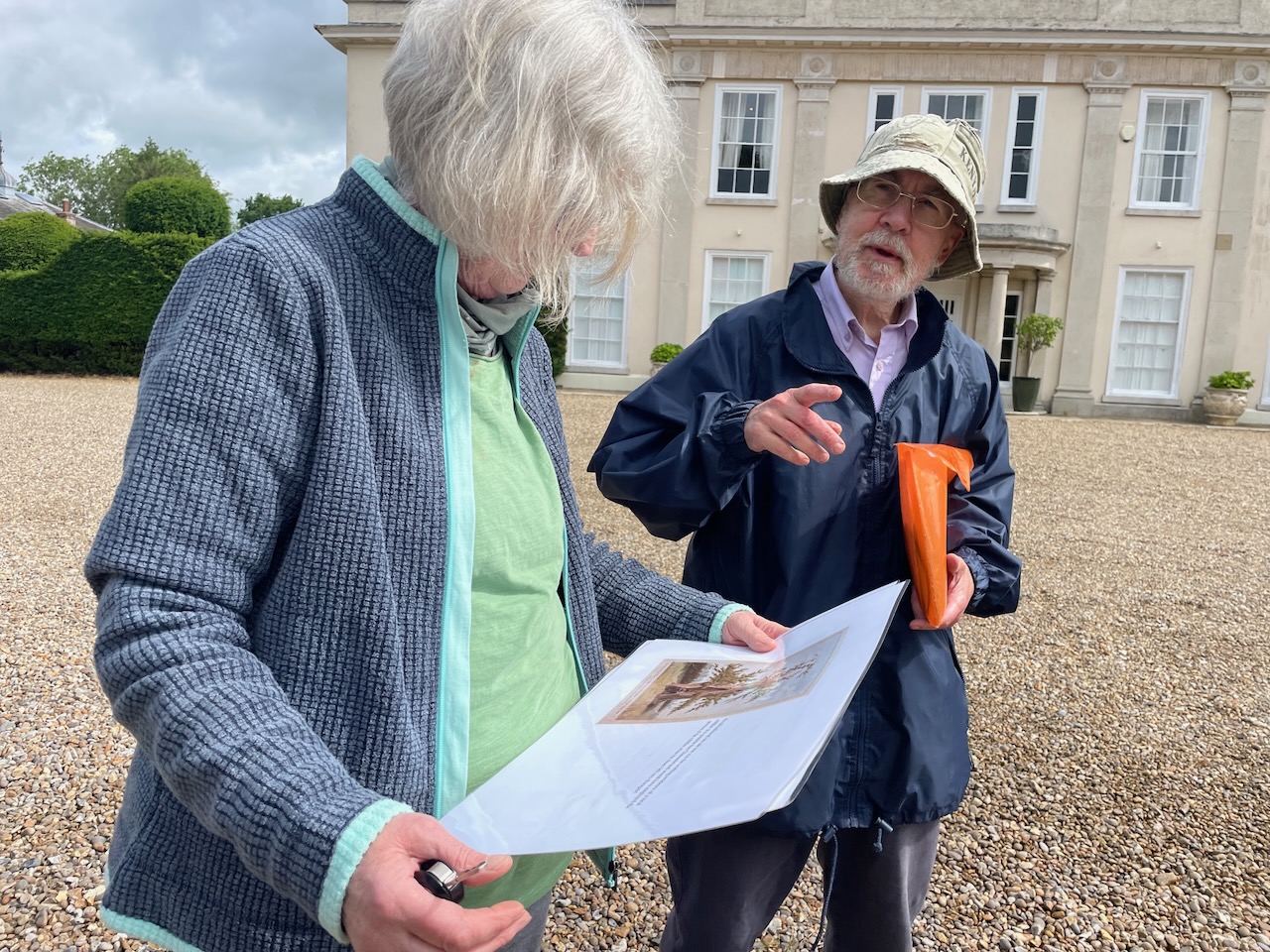
In front of the C18th classically elegant house Barry gave us a fascinating potted history, centering around the Sparrow family (same one as Sparrows Nest in Lowestoft).
Suffolk Historic Gardens and Parks: THE PARK
In the 1780s the park at Worlingham covered c. 18 ha (44a), but the enclosure of Worlingham common in 1787 allowed Robert Sparrow to expand his park at about the same time as the house was remodelled. Most of the common was planted with trees to create a wood, described by Henry Davy in 1827 as ‘…greatly improved by the late proprietor Robert Sparrow (d. 1822), who showed much taste in the arrangement of the plantations and the general disposition of the grounds’. By 1840 the landscape park had expanded to c. 42 ha (104 acres) with an additional c. 50ha (125acres) of woodland adjoining the river marshes.
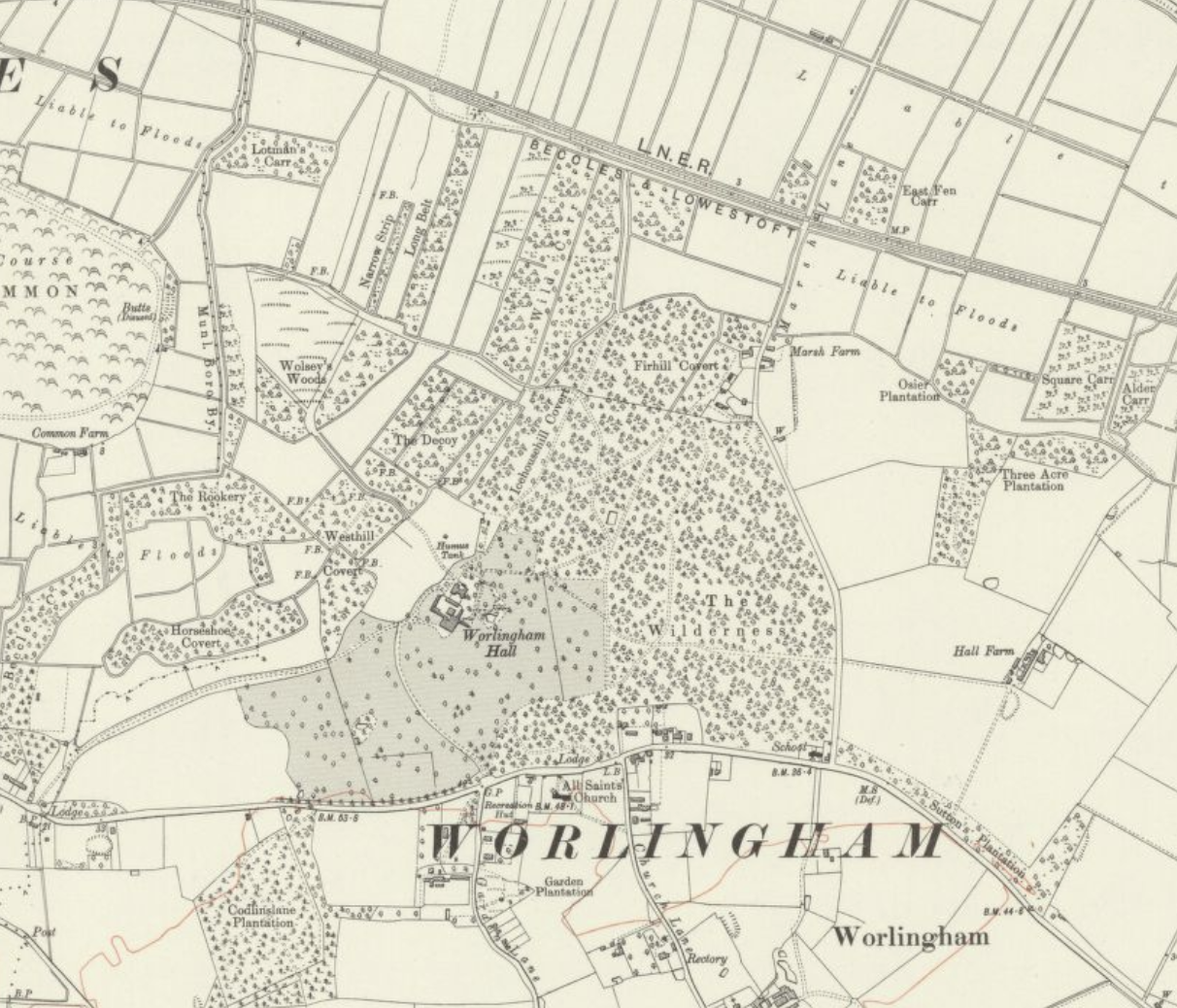
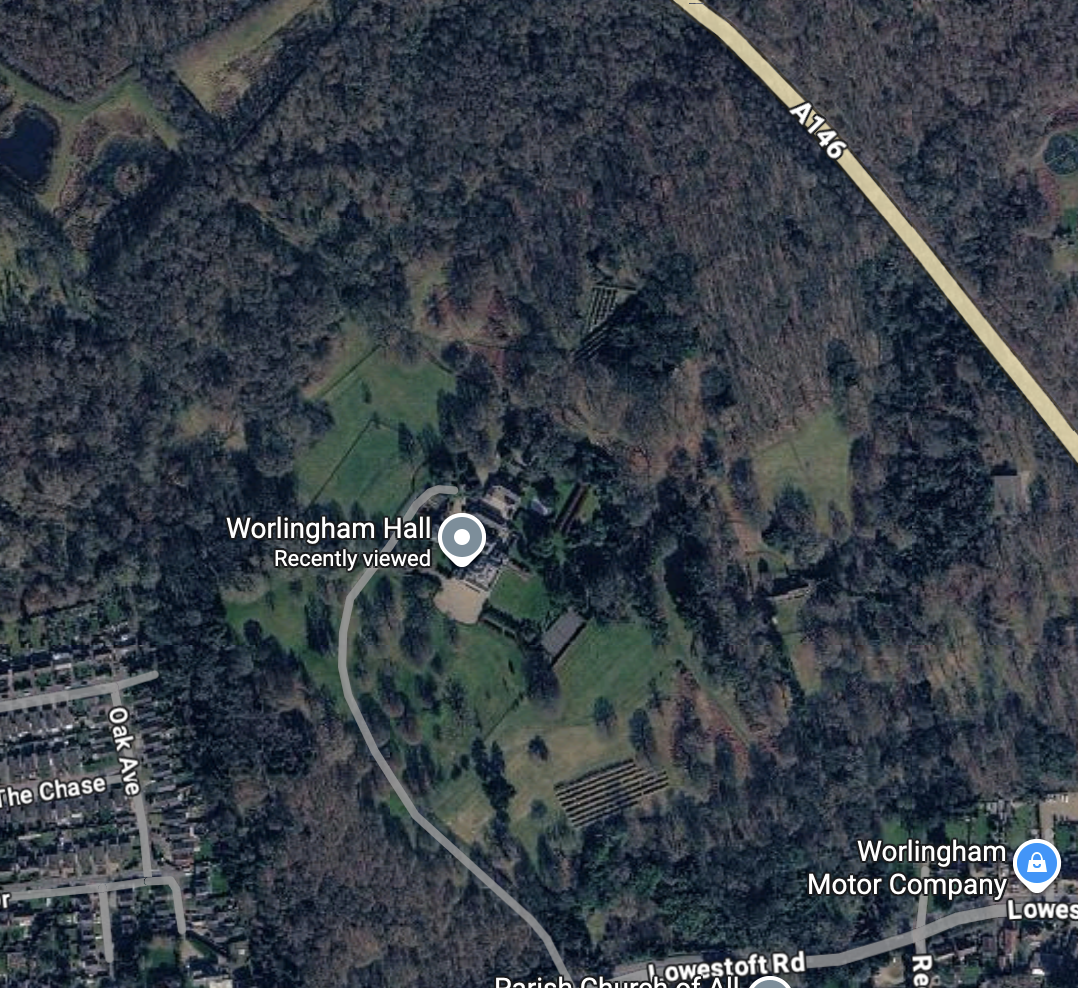
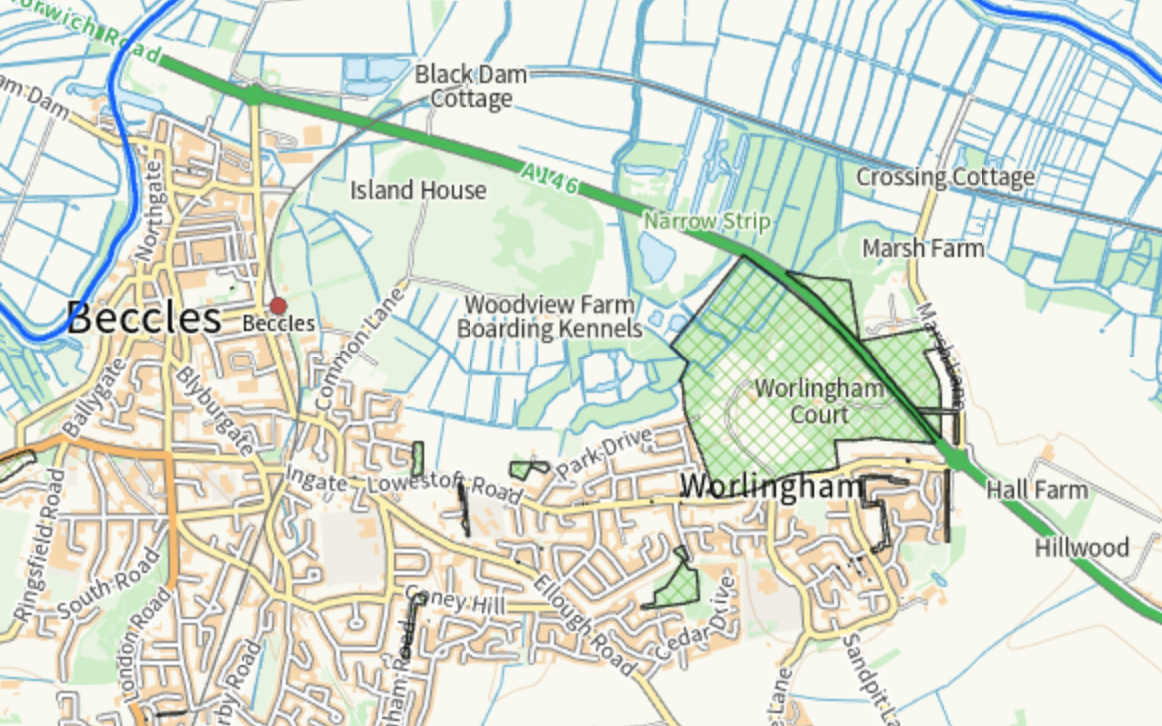
Above – map of Worlingham Hall today.
The TPO Record TPO/112/2021showing the blanket preservation of all trees on the estate.
We began our exploration around the estate with the magnificent Pendunculate Oak in front of the house, next door a Turkey oak (and the consequent Knopper Galls) and the line of Limes.
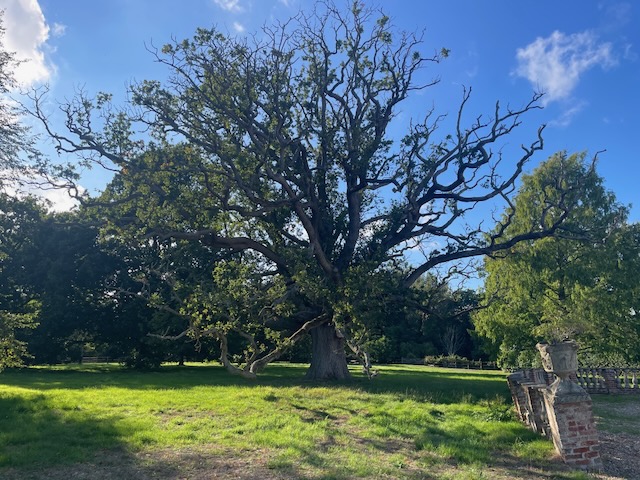
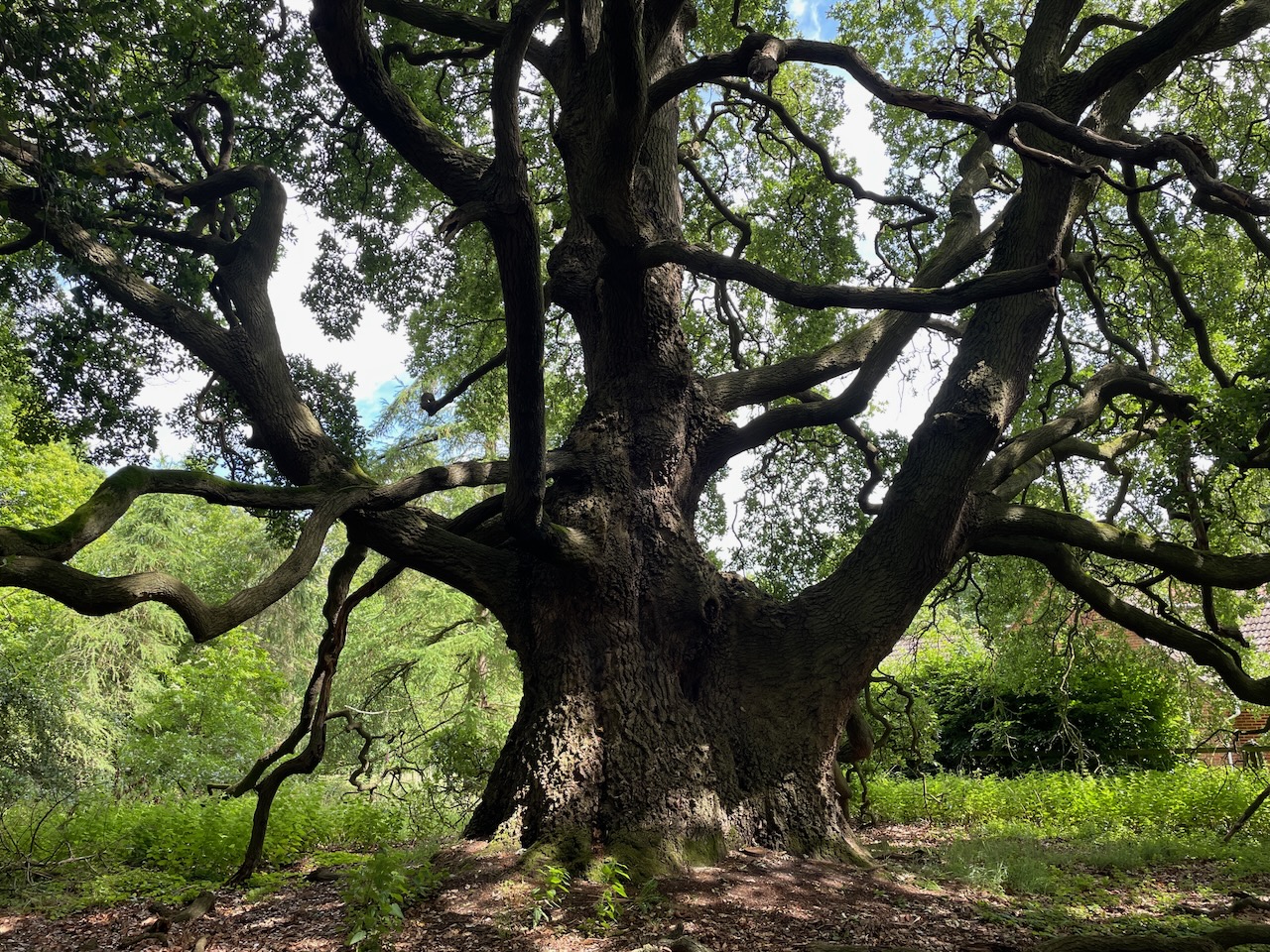
The Pendunculate Oak
Clearly suffering with substantial canopy dieback and dead branches, probably challenged through climate change – no signs of Acute Oak Decline. Prolonged hot and dry spells prevent the vascular system from taking up normal moisture, causing the extremity branches to dry out, turn brittle, and die.
However we noticed that it is a fantastic habitat for diverse lichen and moss on it’s branches, a potential indicator of clean air around
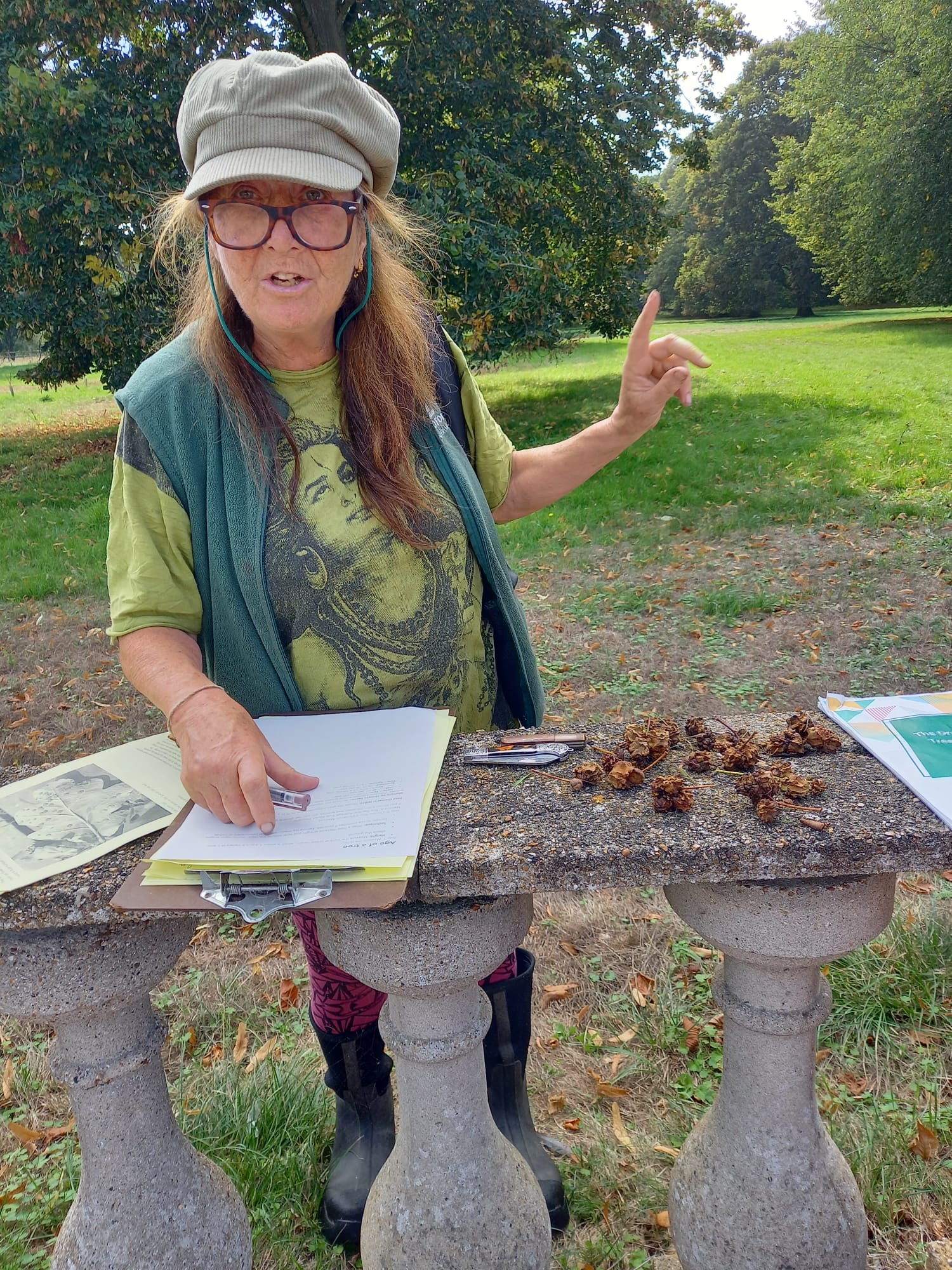
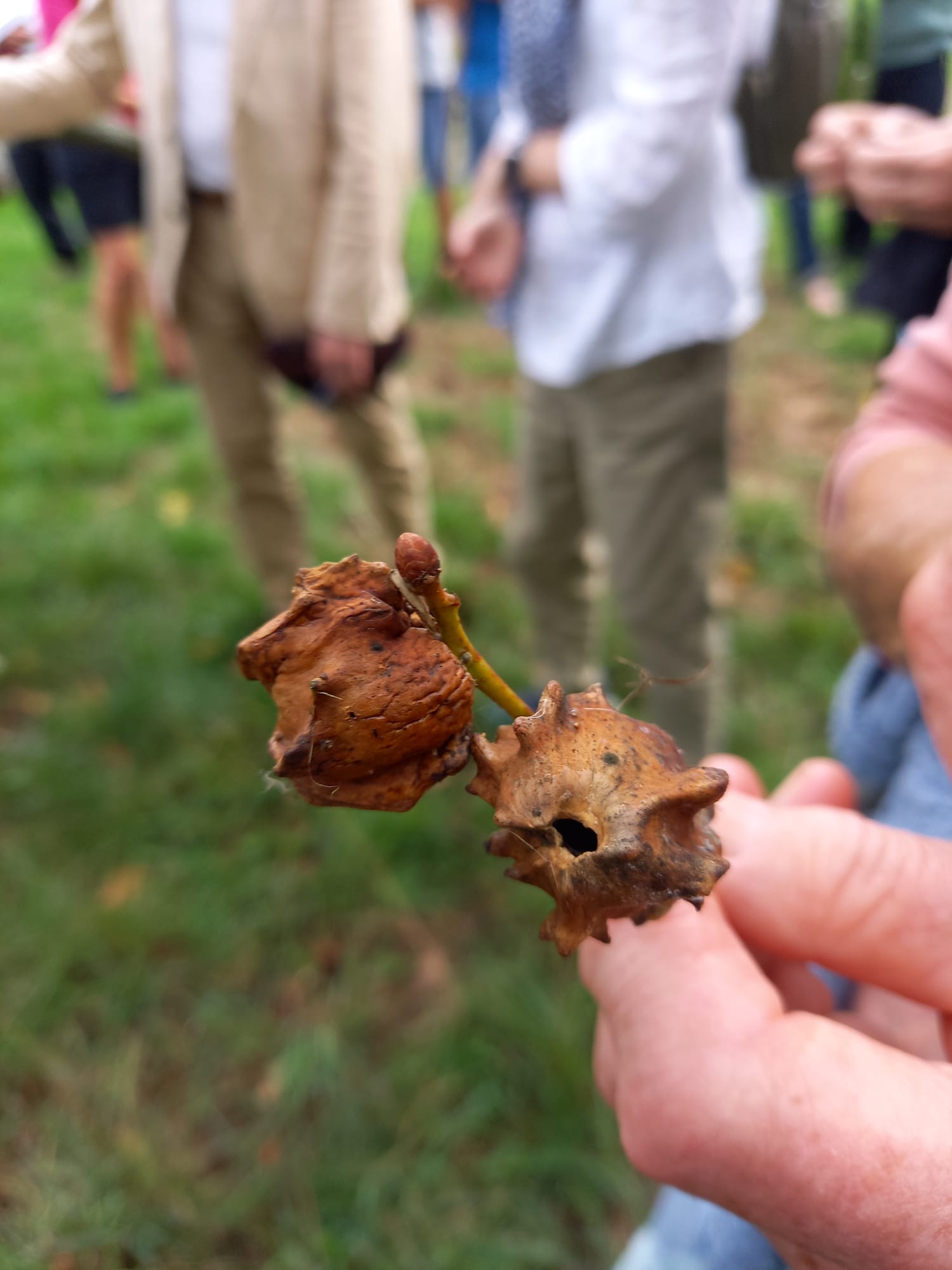
Knopper galls abound – on the oak and on the ground around, so we cut one open and learned a bit about the wasps 2 year cycle.
The knopper gall wasp, Andricus quercuscalicis, inoculates embryonic acorn buds with her eggs. The oak responded in an entirely specific way to this wasp by producing growths known as knopper galls. The name, Knopper comes from a German name for a type of helmet. A Guardian piece on their diversity. Arriving in the 1960’s they were first considered a threat to our great penduculate oak, but they’ve now have joined the rich community of life that inhabits the oaks. The wasp will pupate in the spring and wriggle out of vents in the galls. The emerging wasps, exclusively female, will fly off to find a Turkey oak, Quercus cerris, an evergreen introduced into Britain in 1735, to lay their eggs in its male catkins. This, by parthenogenesis, will begin a second, sexual generation of wasps (containing both sexes), which will lay their eggs in the native oak, Quercus robur, creating knoppers.
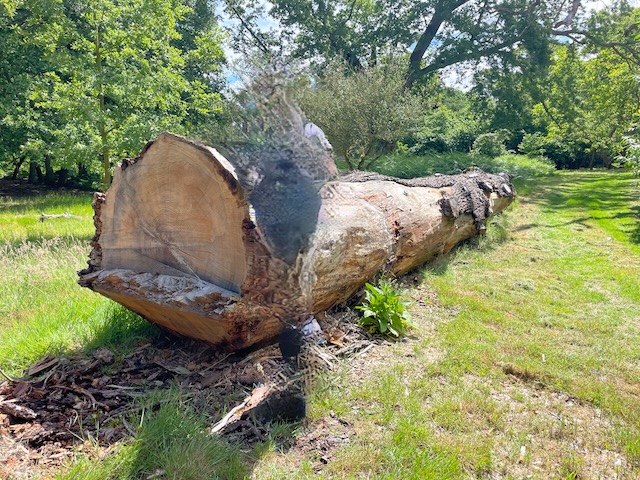
Indeed there is a Turkey oak Quercus cerris just beside. Or is it a Turkey oak? Native to southern and south-eastern Europe. Further on is a large felled Turkey oak, which we counted the rings of – 85 years.
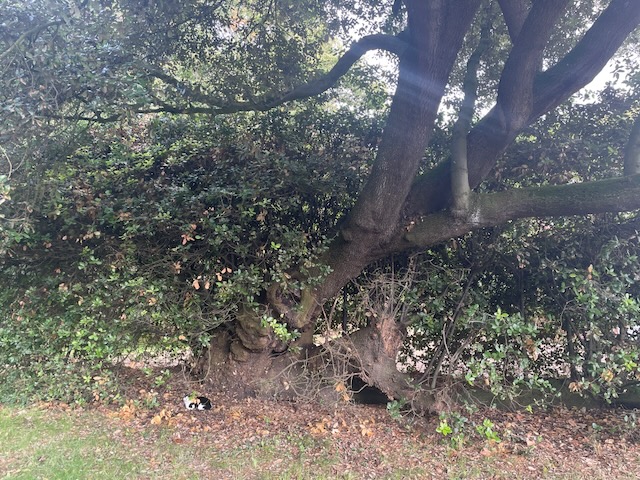
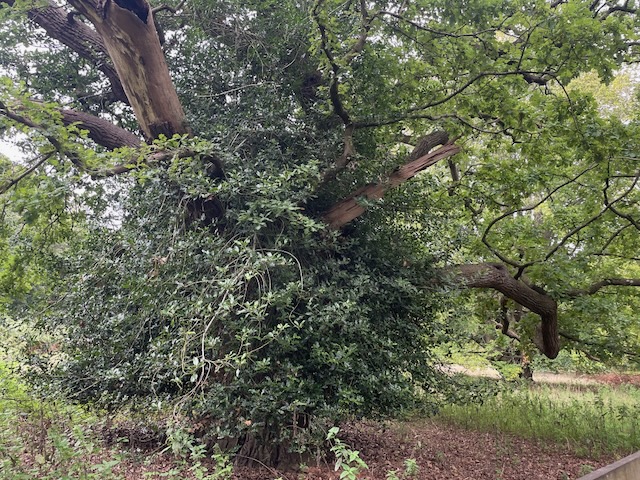
To add to the oak species collection we met a Holm Oak Quercus ilex, evergreen, and also originally from Mediterranean. Both the Turkey and Holm Oak are therefore potentially survivors in this change of climate.
Lime tree avenue
This is a classic lime tree avenue, some planted at different times, Small-leaved Lime (Tilia cordata) and Large-leaved Lime (Tilia platyphyllos). Good climate change trees, as they provide thick shade as well as wood for carving (Grinling Gibbons) and their flowers give us a delicious infusion.
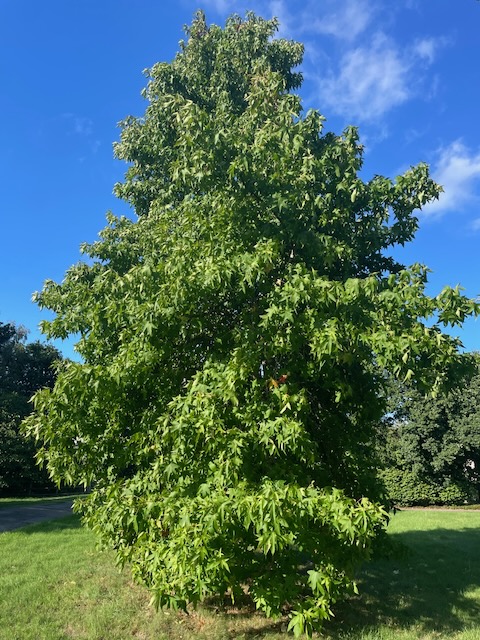
Sycamore Plantation
We estimate is around 50 years old and planted as a buffer when the road was added. In addition there are some older and fine Sweet Chestnuts.
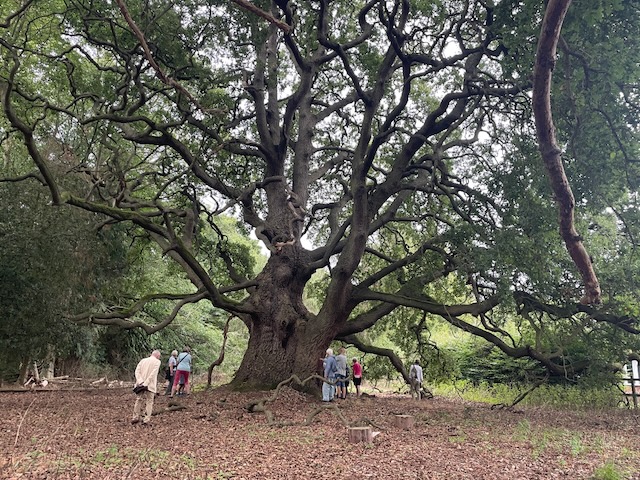
Substantial Turkey Oak
Which we measured, using the following method – and estimated it to be around the age of 380 years, therefore planted in the reign of Charles 1st.
Step 1: Measure the Girth
Measure the trunk at breast height, which is about 1.3 to 1.5 meters (4.5 feet) above the ground.
=650cmStep 2: Find Diameter (DBH): Divide the girth (circumference) by Pi (π ≈ 3.1416).
Step 3 Multiply by Growth Factor
Multiply the diameter by the standard growth factor assigned to that species. Common average annual growth rates (girth added per year) include:
Holly / Yew: ~1.25 cm per year
Oak: ~1.88 cm per year
Ash / Beech / Elm: ~2.5 cm per year
Sycamore: ~2.75 cm per year
Pine / Spruce: ~3.13 cm per year
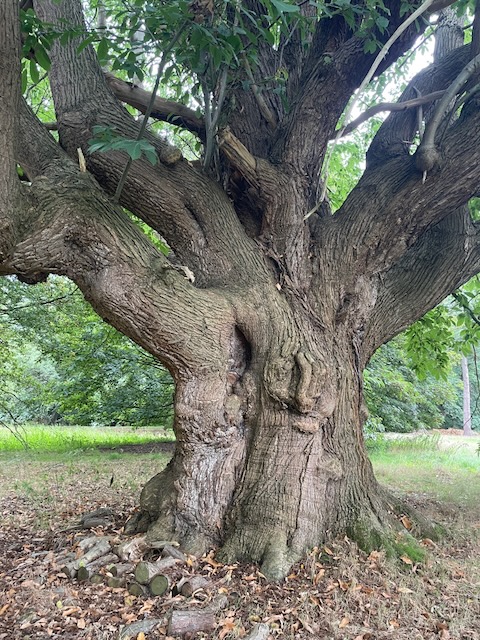
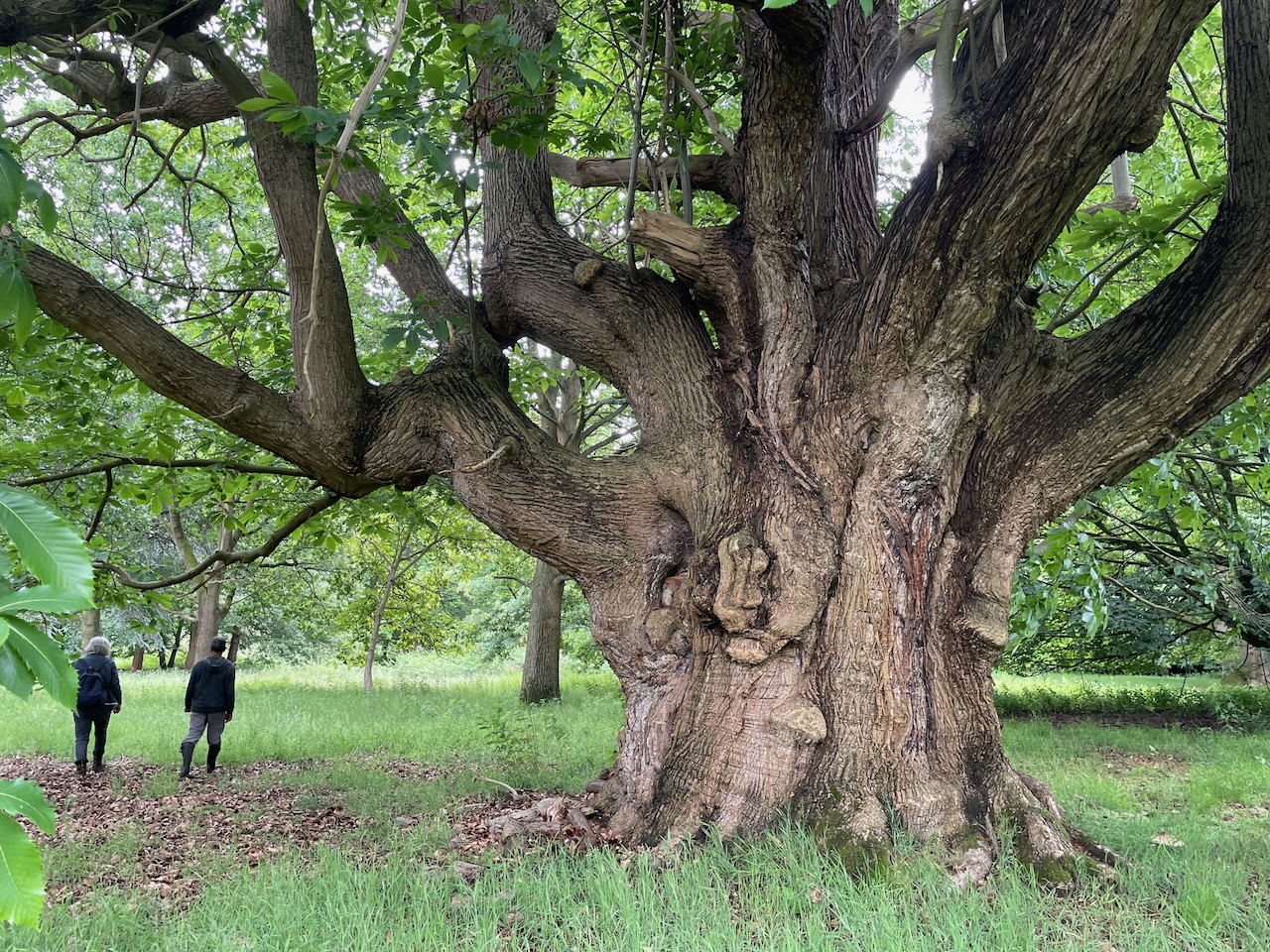
Large Sweet Chestnut
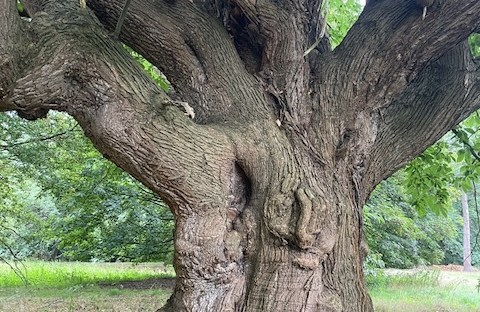
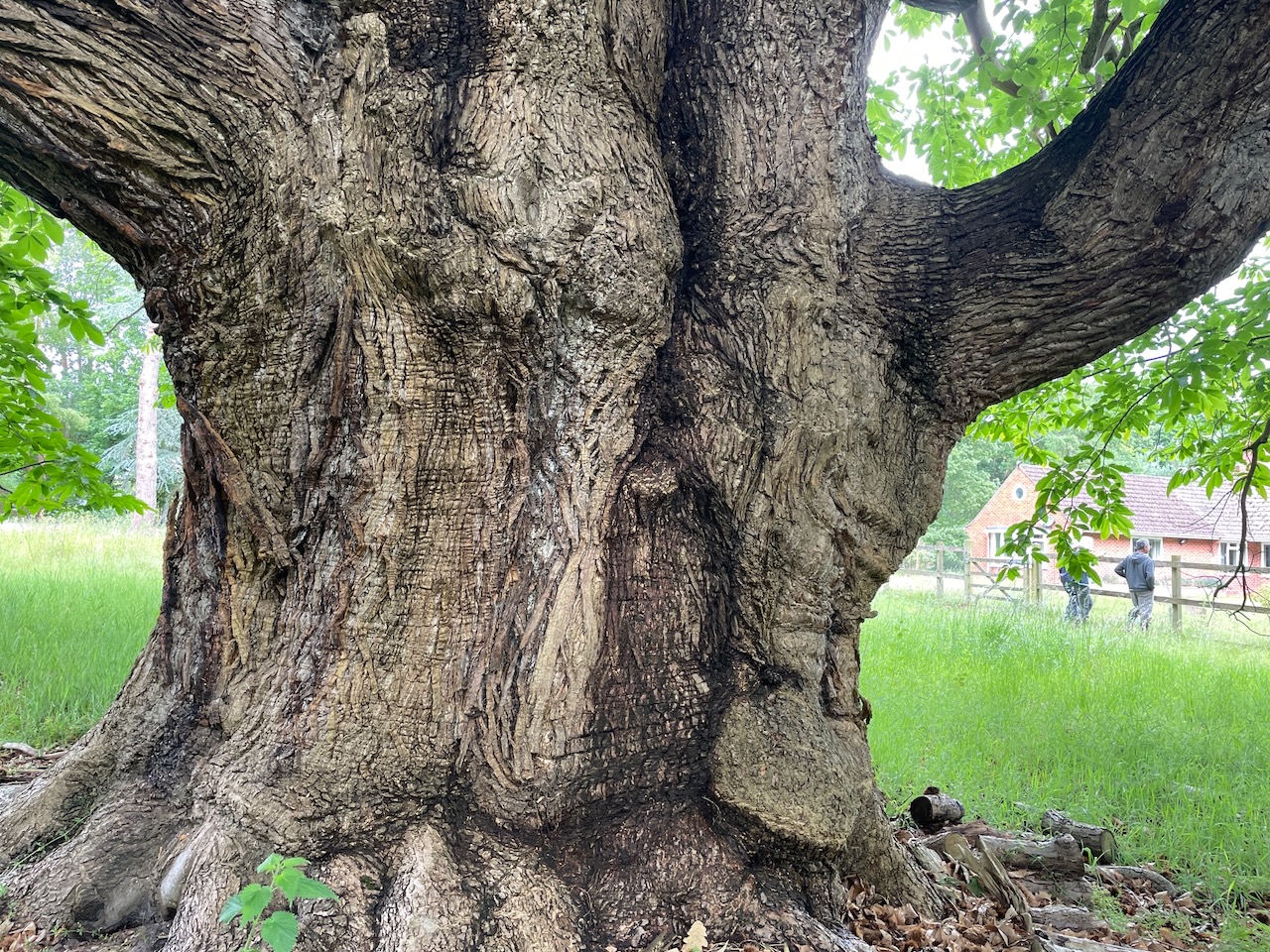
A magnificent large sweet Chestnut with epicormic growths, twists and turns, fused limbs. This could also tell a story or two.
Across the tennis court, into the house, where we were welcomed with tea and cakes in the elegant library. trompe-l’œil decoration and portraits of famous poets and writers, including Bryon, Milton, Shakespeare.
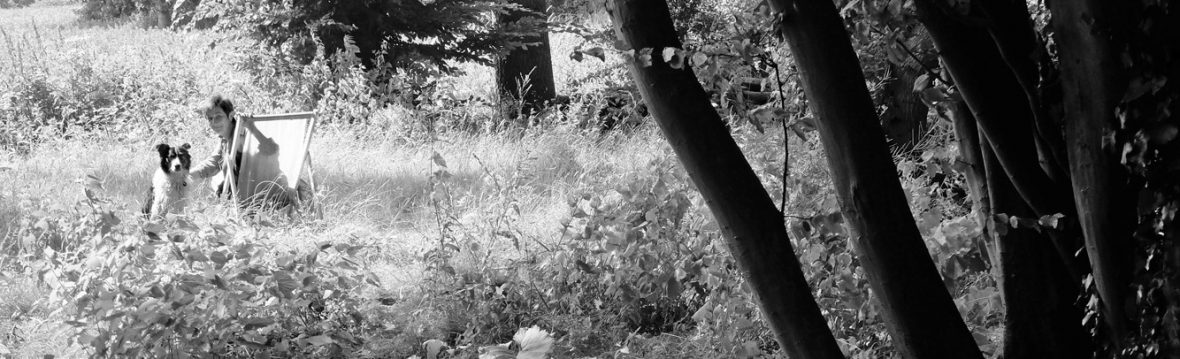
Photos of our reconnaissance visit earlier in the year with Netta and Barry
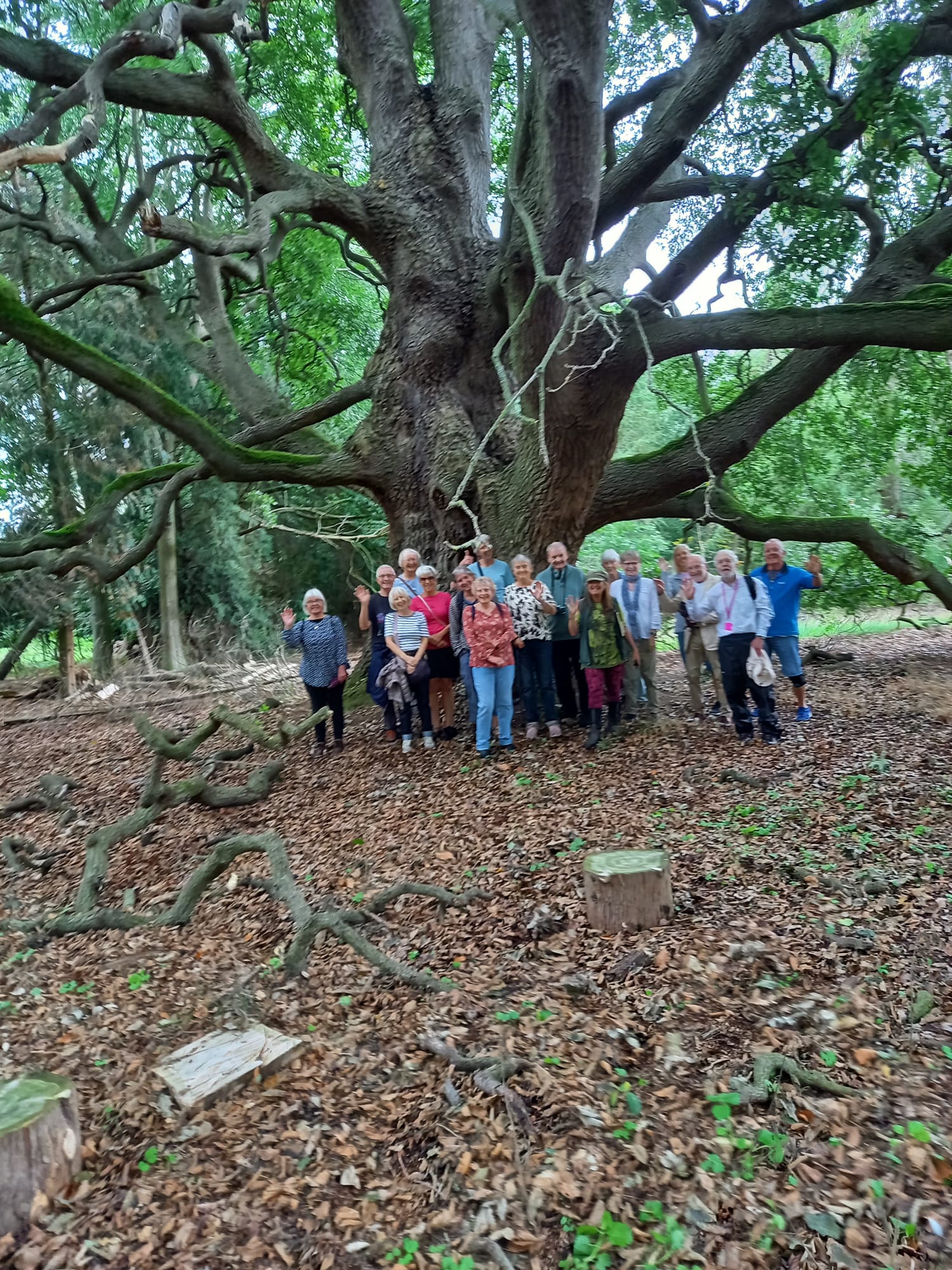
Photographs of our Heritage Open Day visit