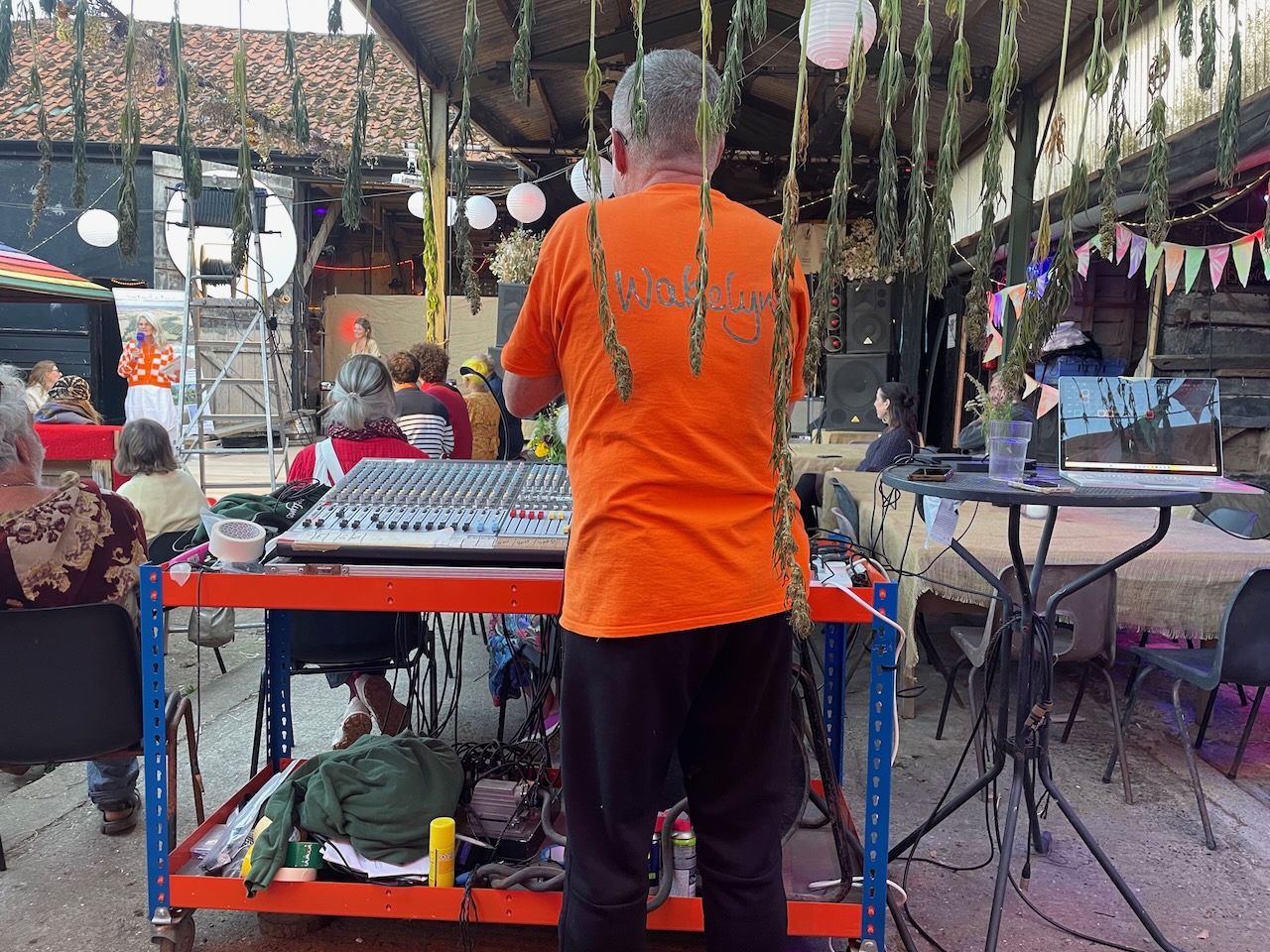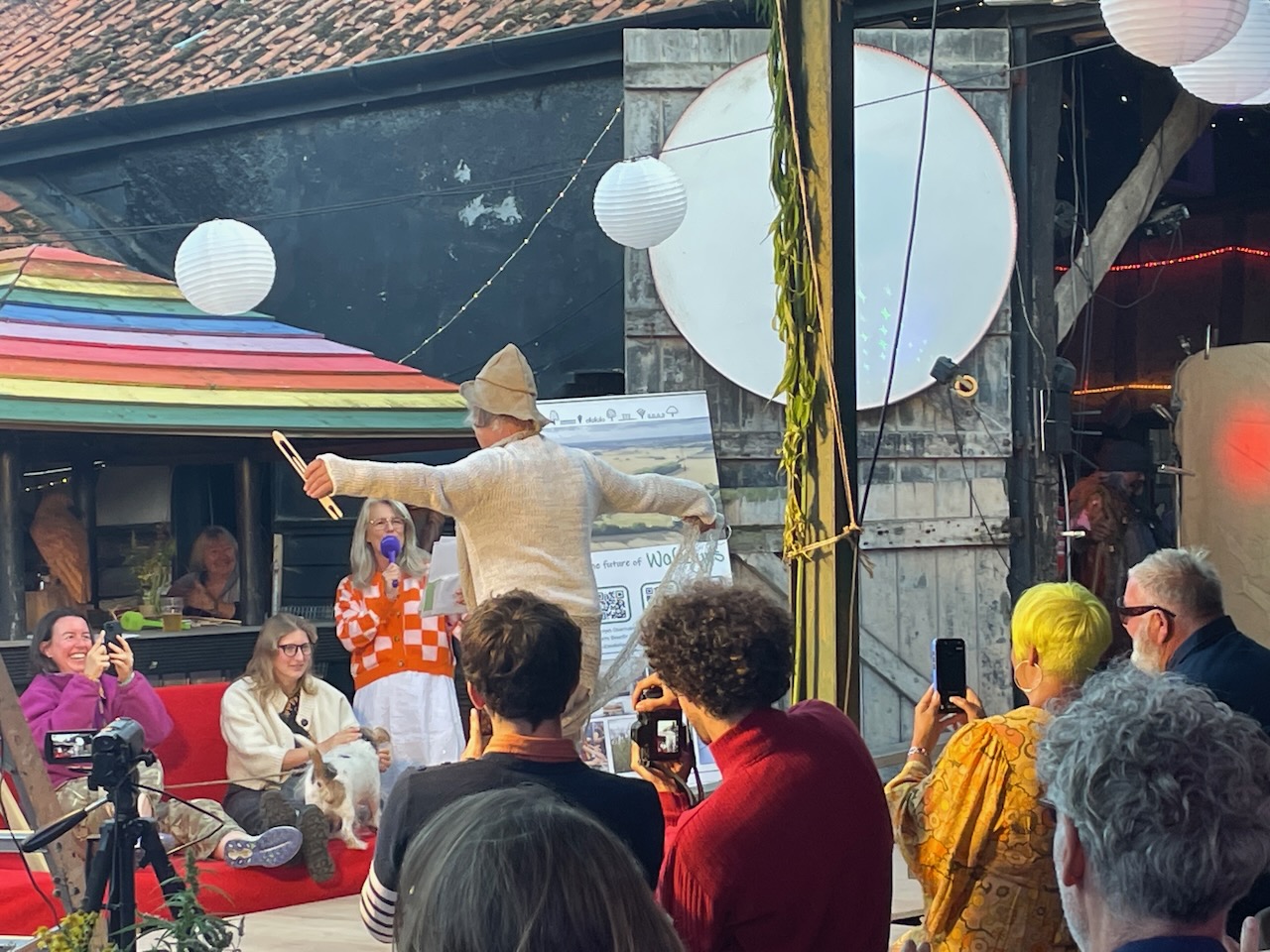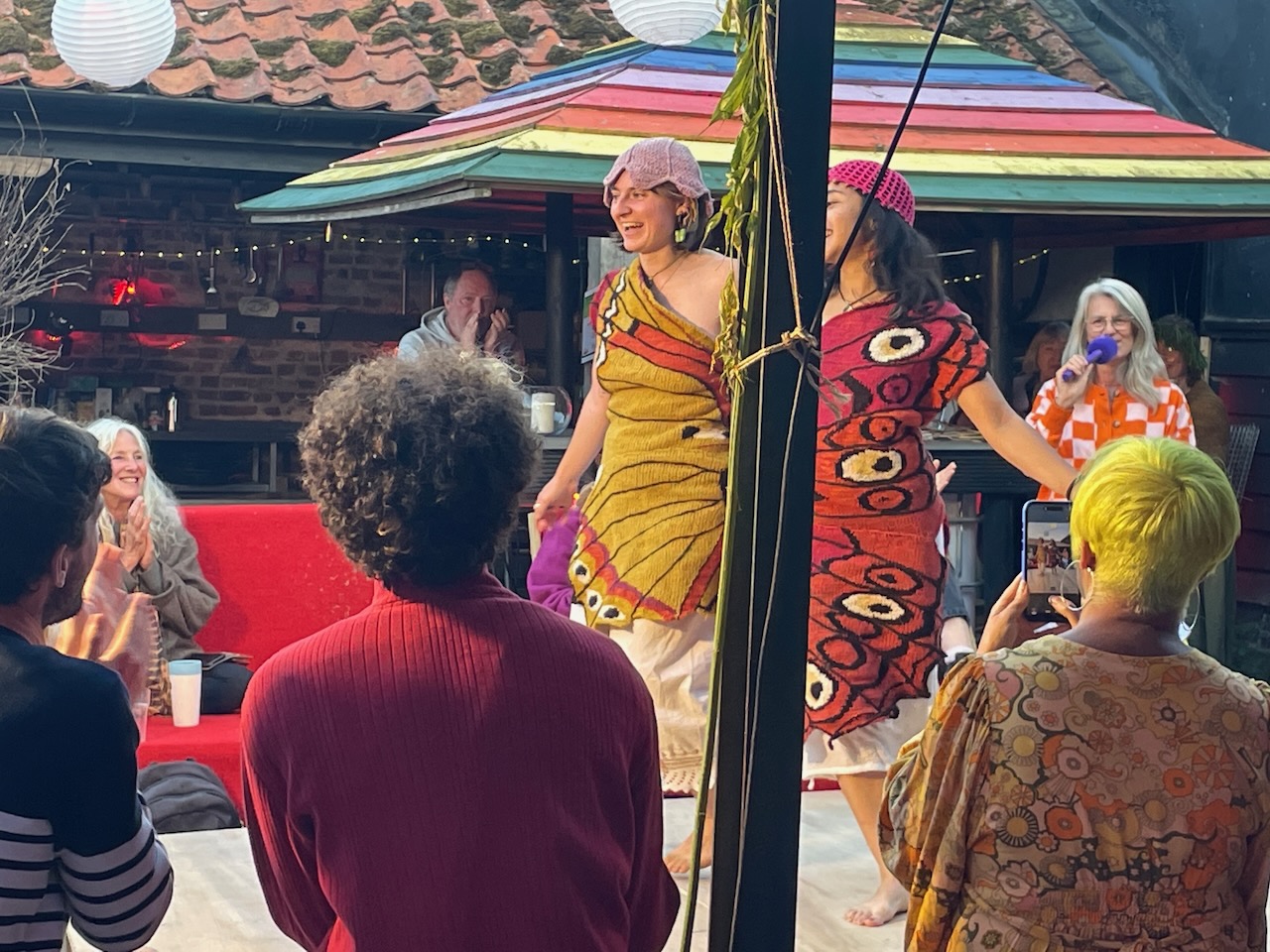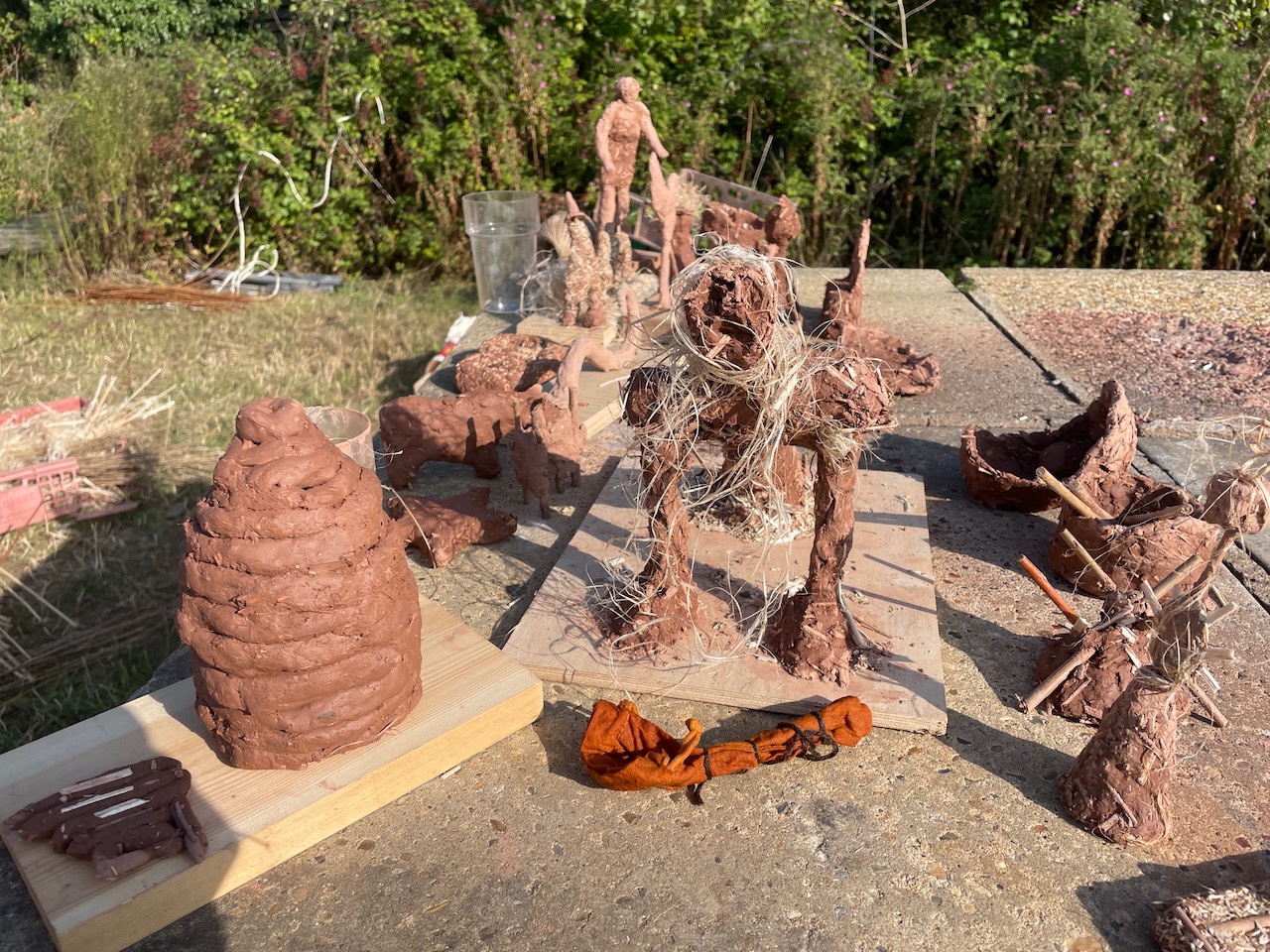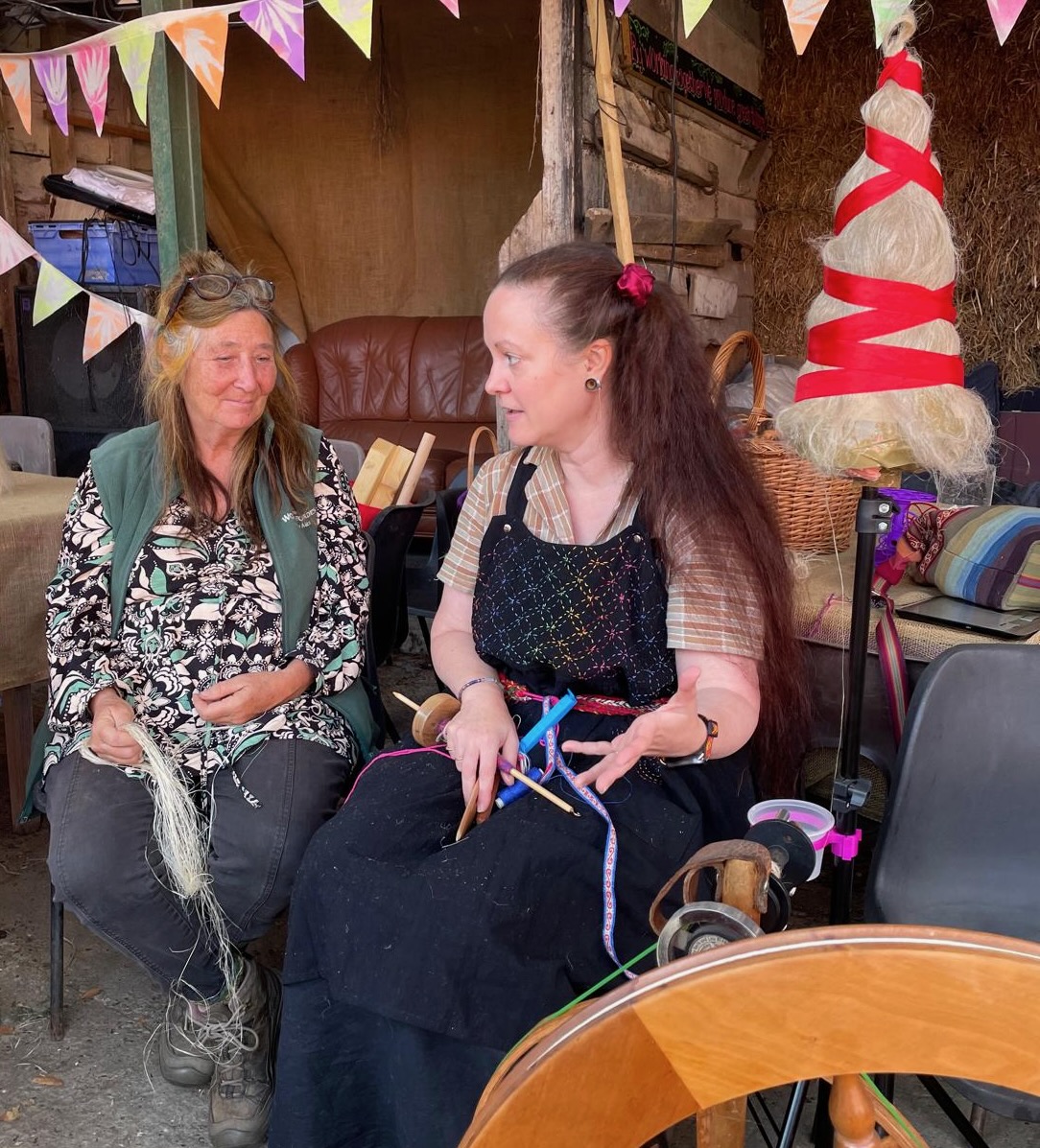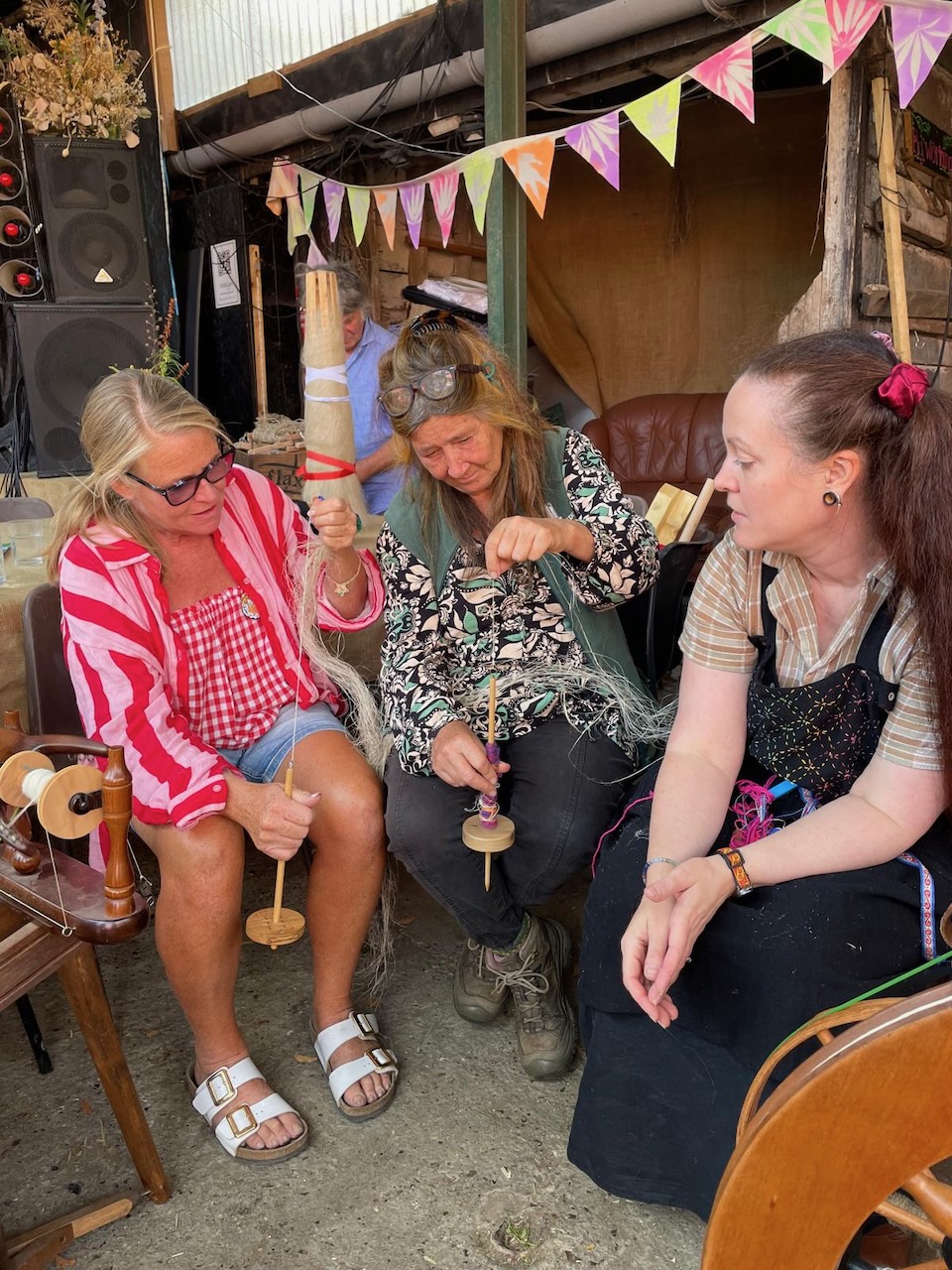
Retreat it was. I didn’t look at a computer or phone screen the whole weekend, and as someone else observed, others found the same, except for taking photos. We were all fully engaged.
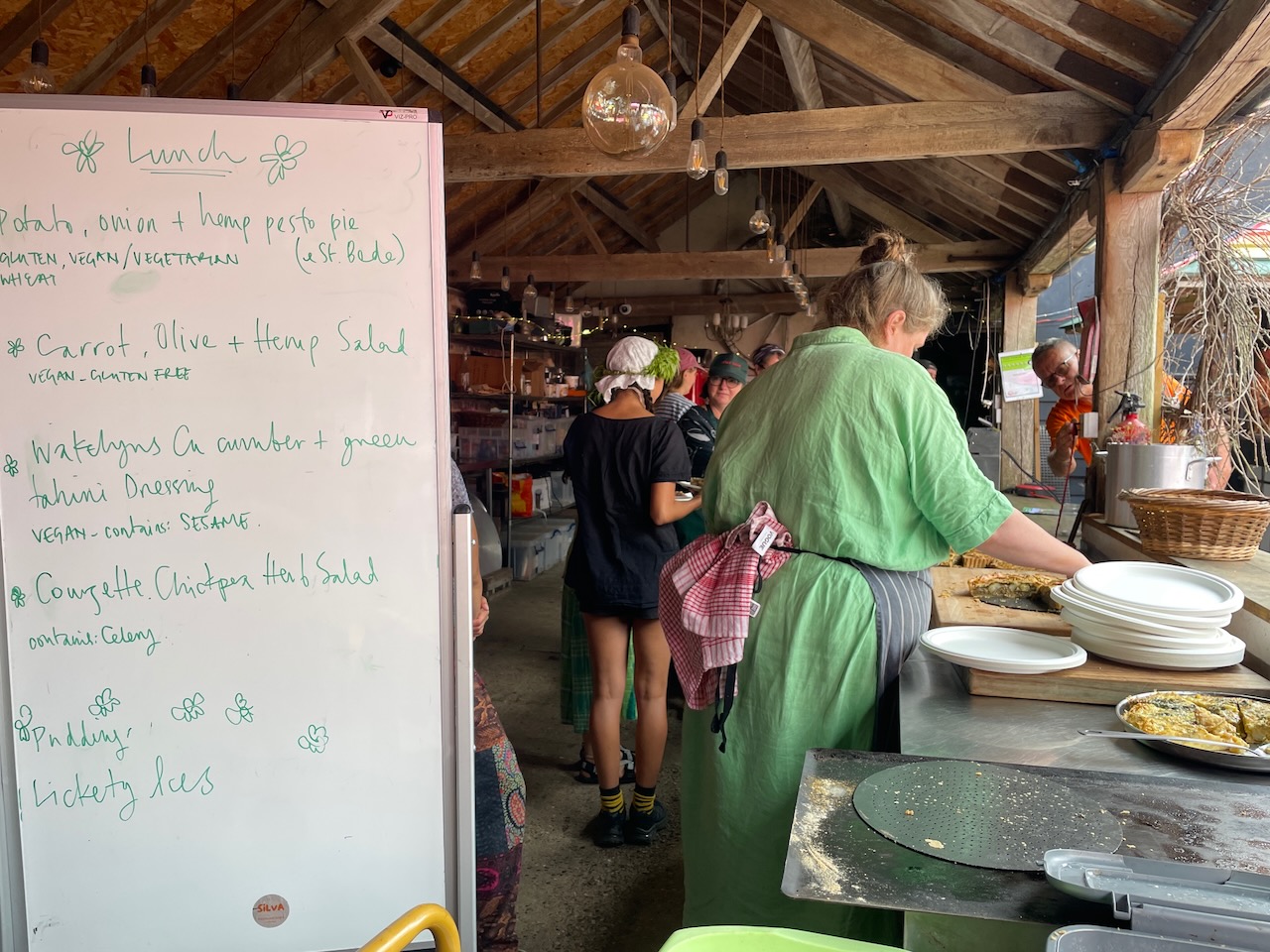
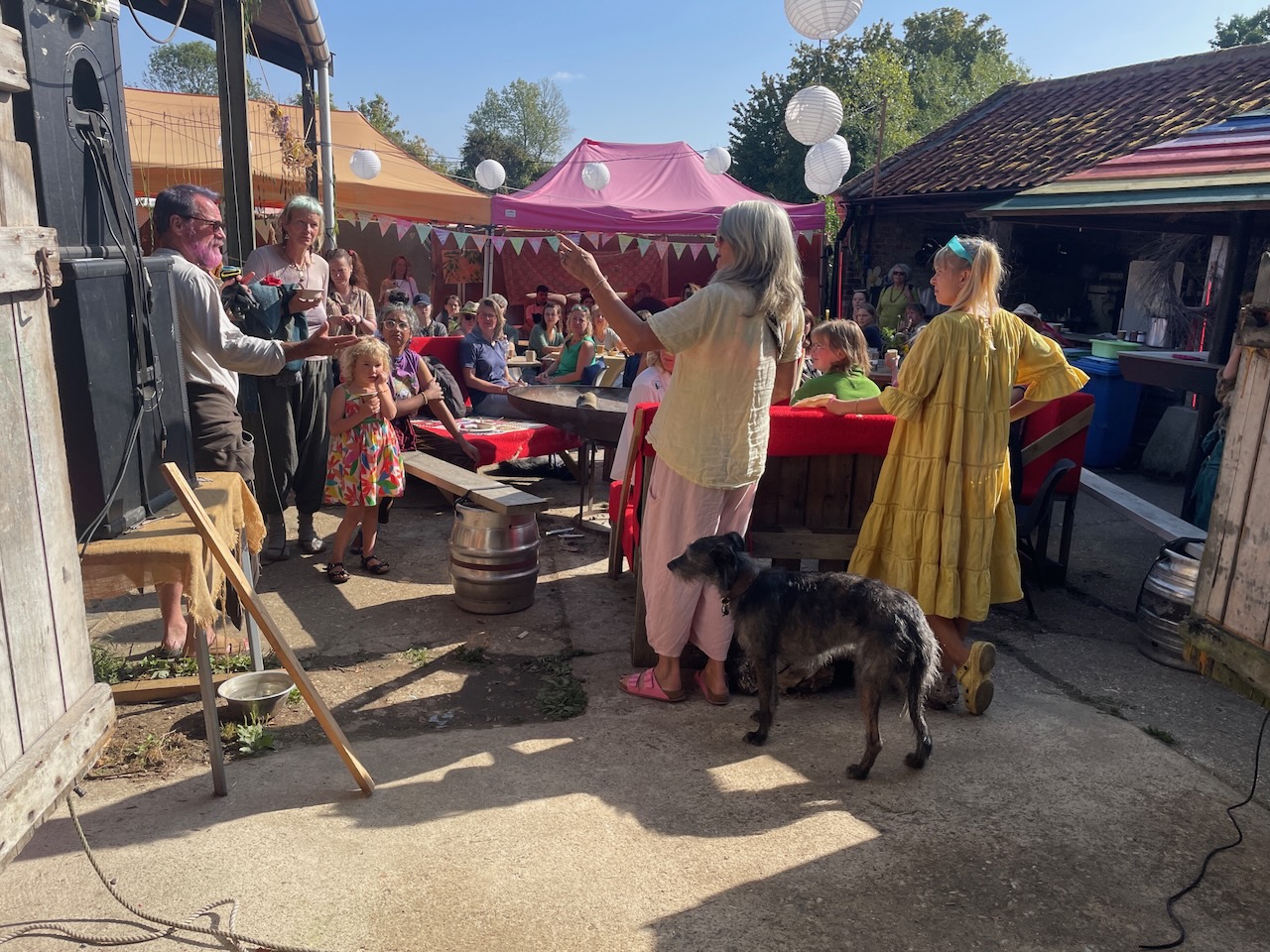
After coming for a day on last years Hemp retreat, I booked to stay all 3 days as my annual holiday. Brilliantly curated by Kitty and Claire, with the most scrumptious healthy 3 meals a day from Lindsay, we were well taken care of. Who could ask for more?
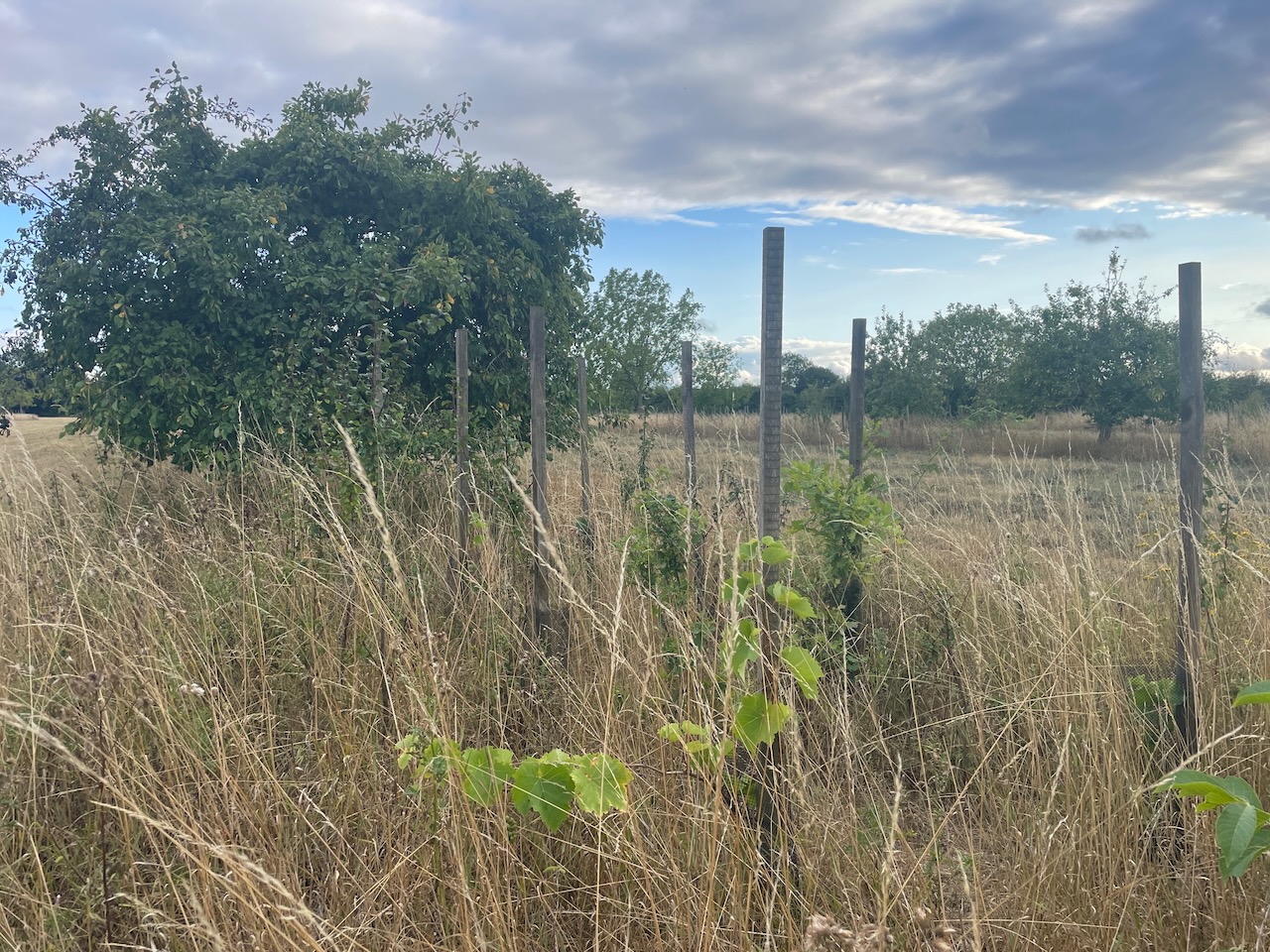
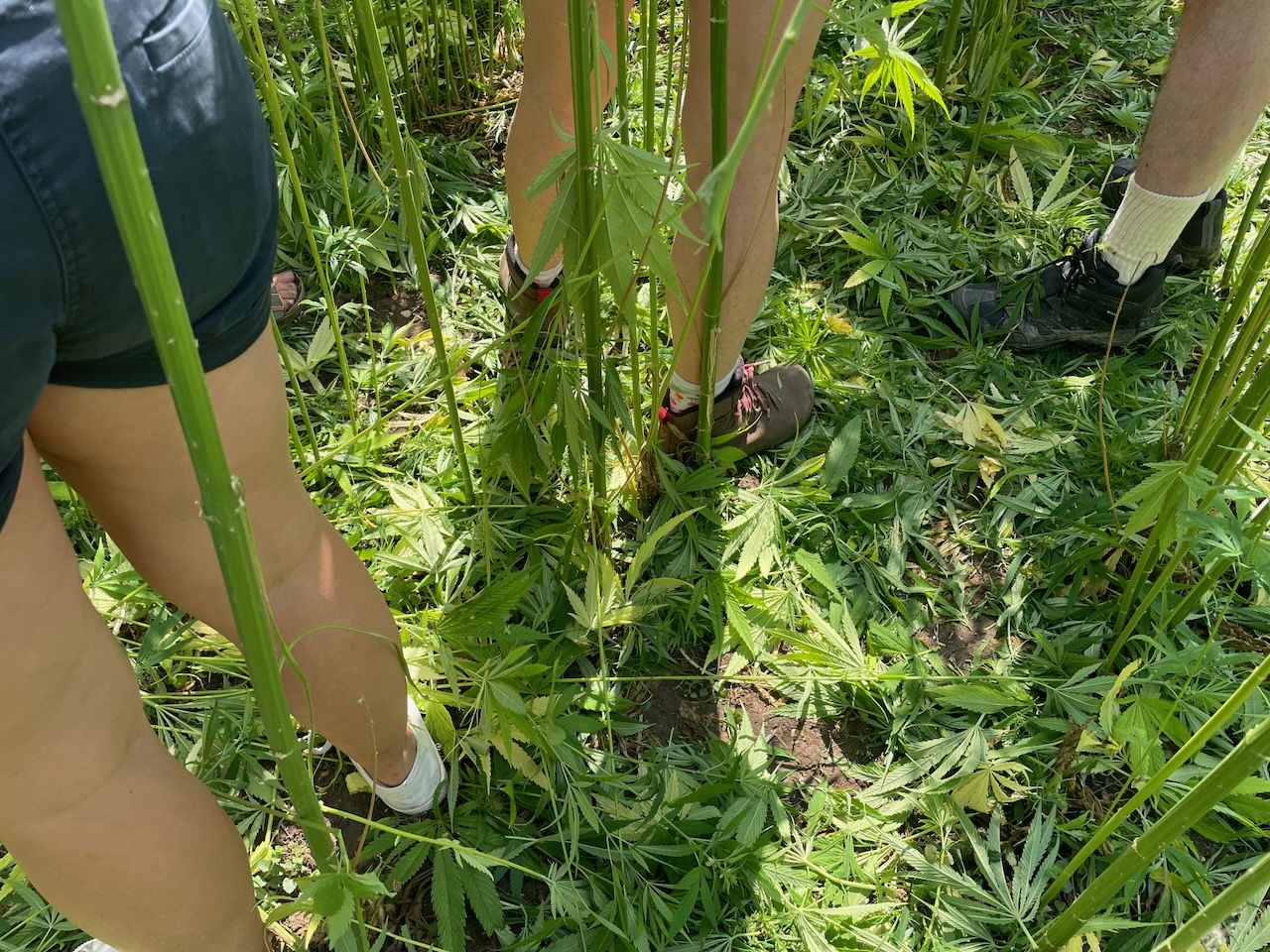
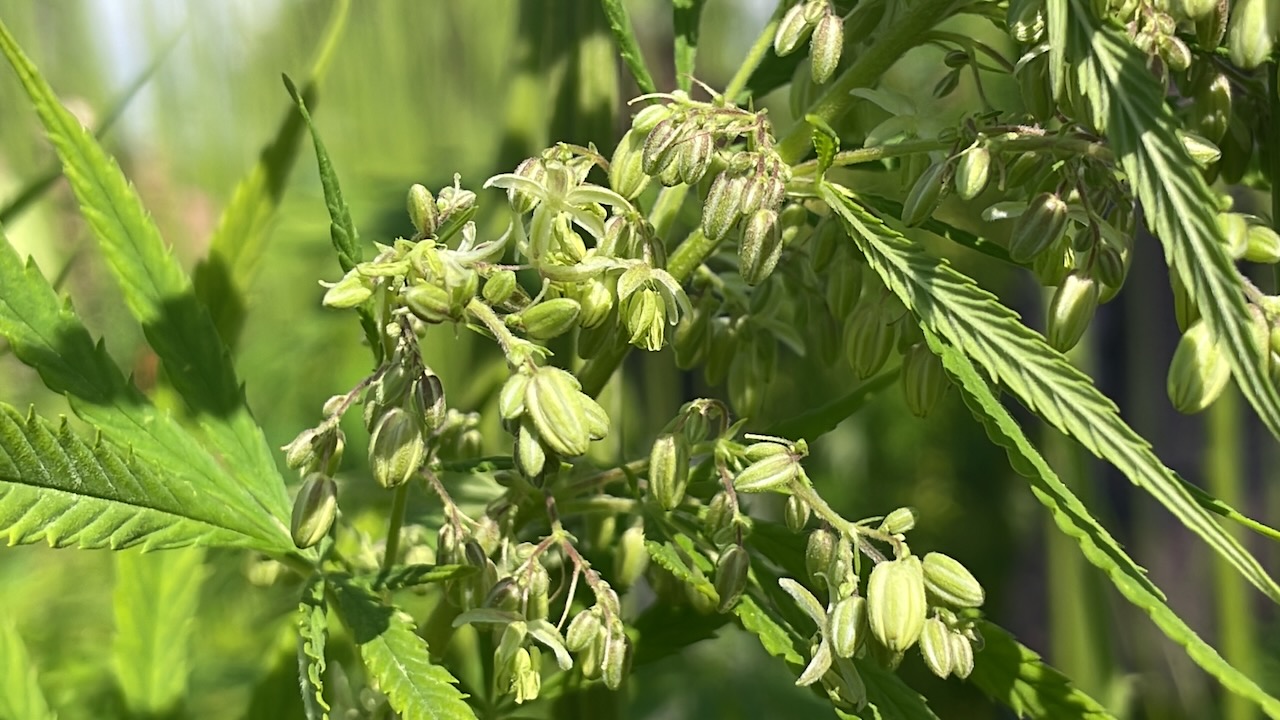
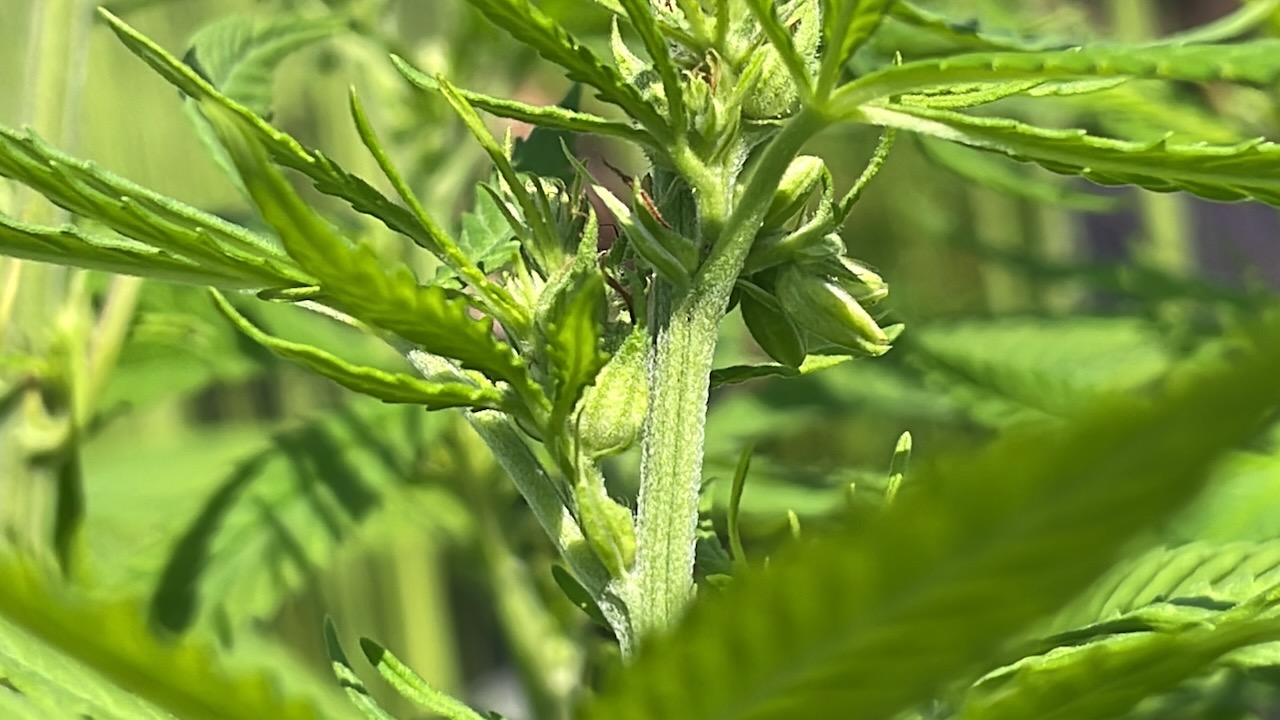
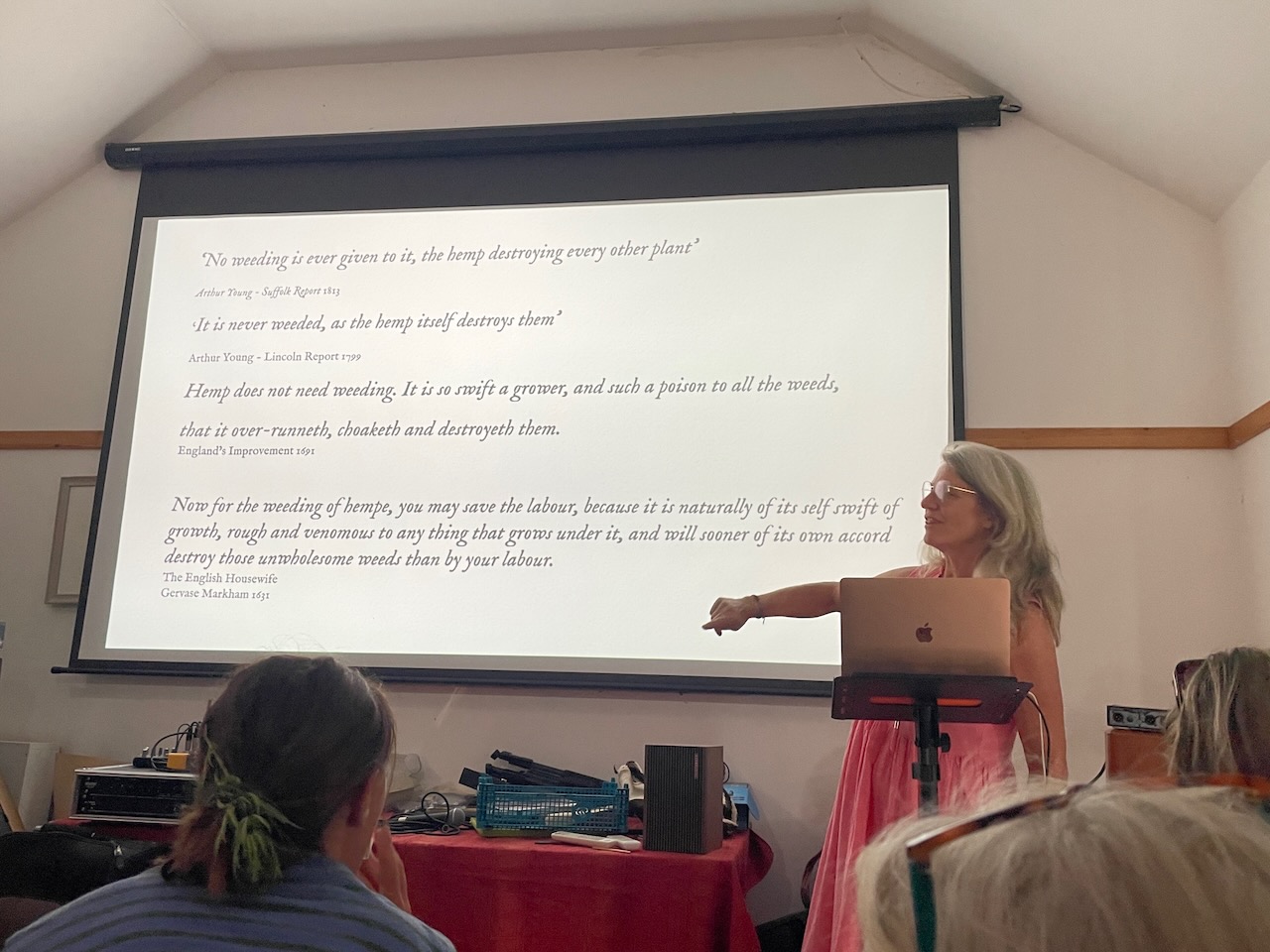
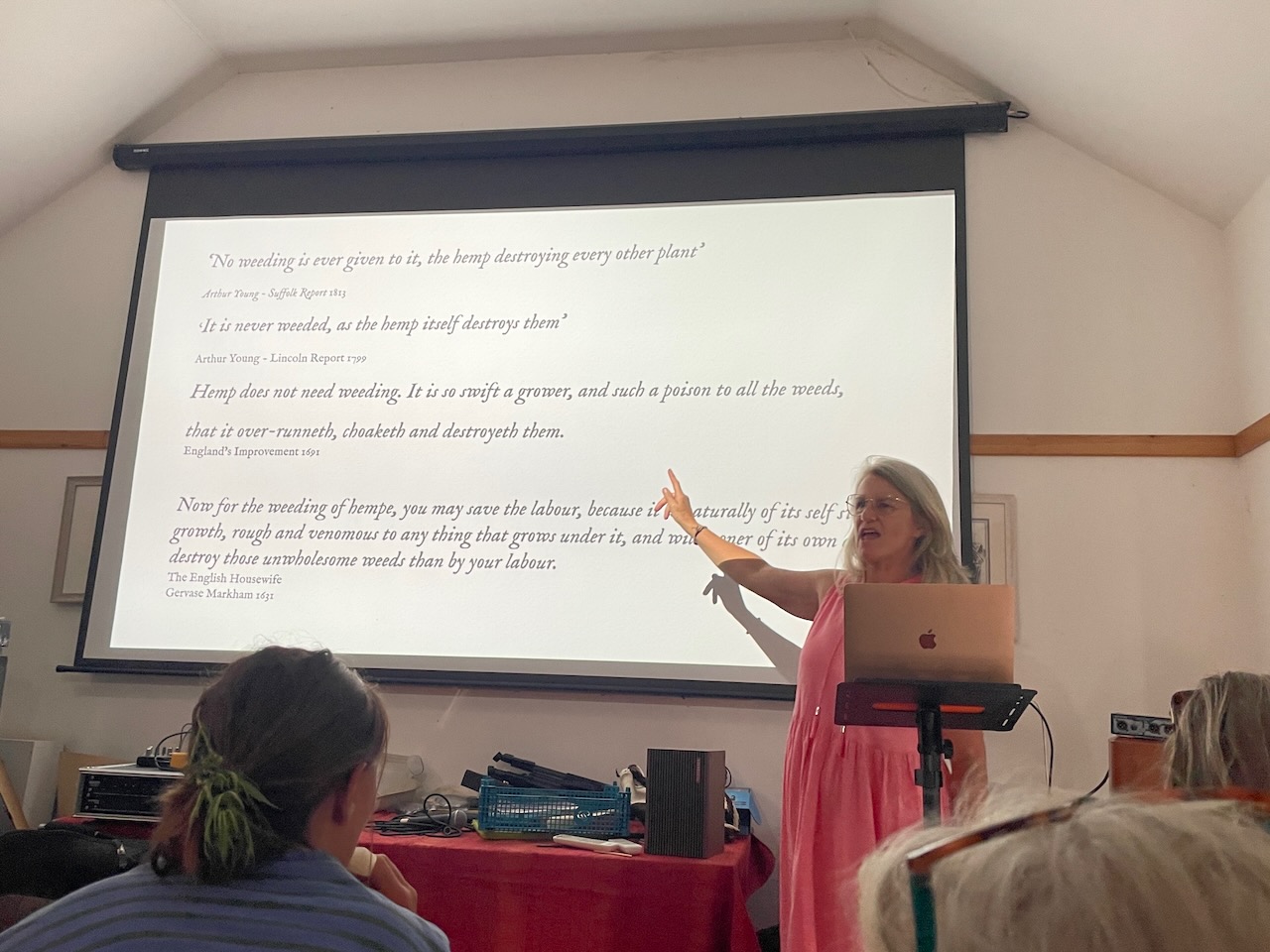
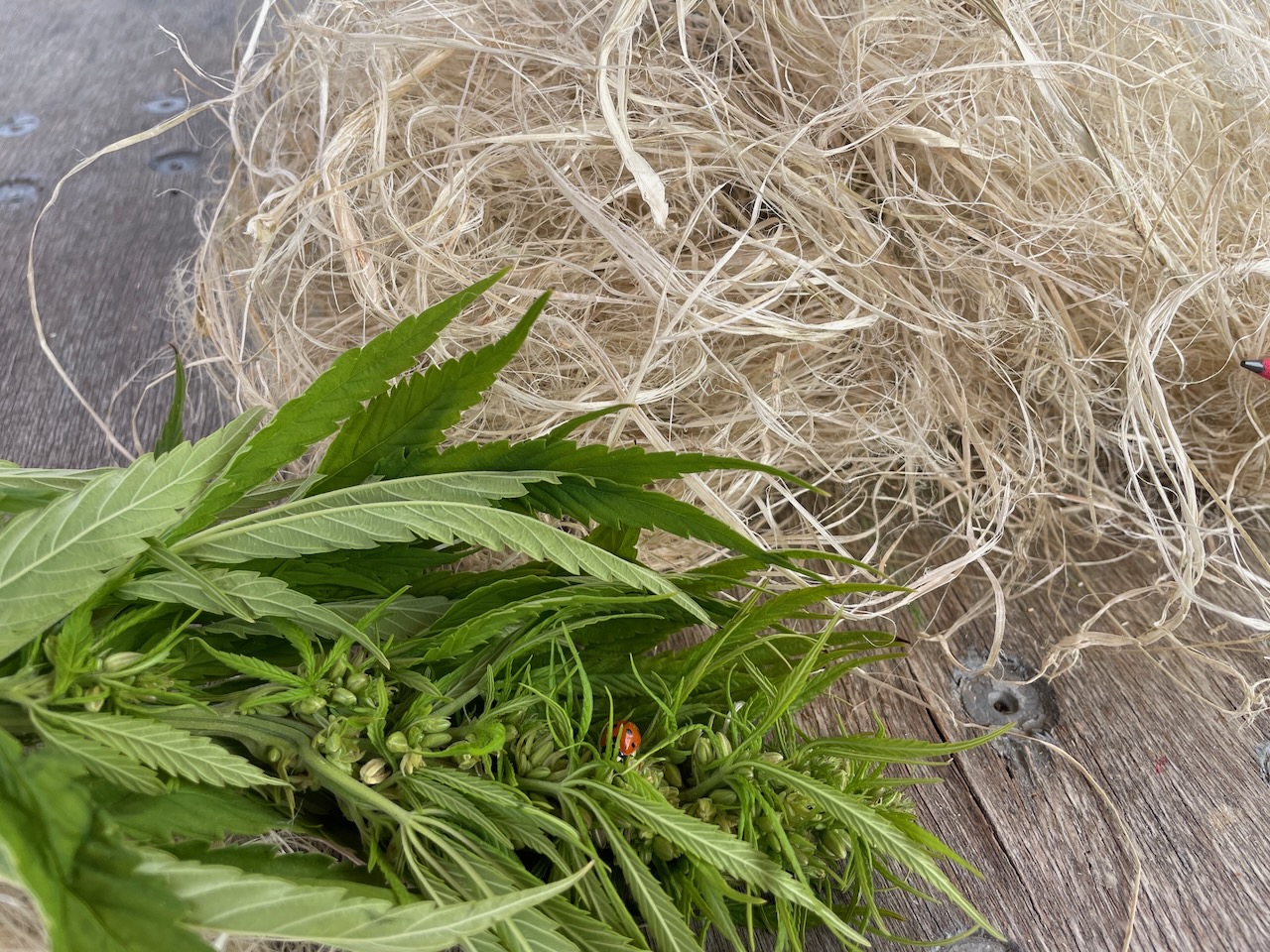
Hemp of course. We became immersed in hemp and through the weekend I touched on all processes, except the sowing. According to Claire, you sow and walk away. It is that untroublesome. No need for weeding, no need for after care. As David happily saw, hemp effectively suppresses all challenging weeds, even dock, under it’s ample foliage. It’s a robust resilient plant. It grew in this drought year, surviving 5 heat waves and no rain. What a trouper.
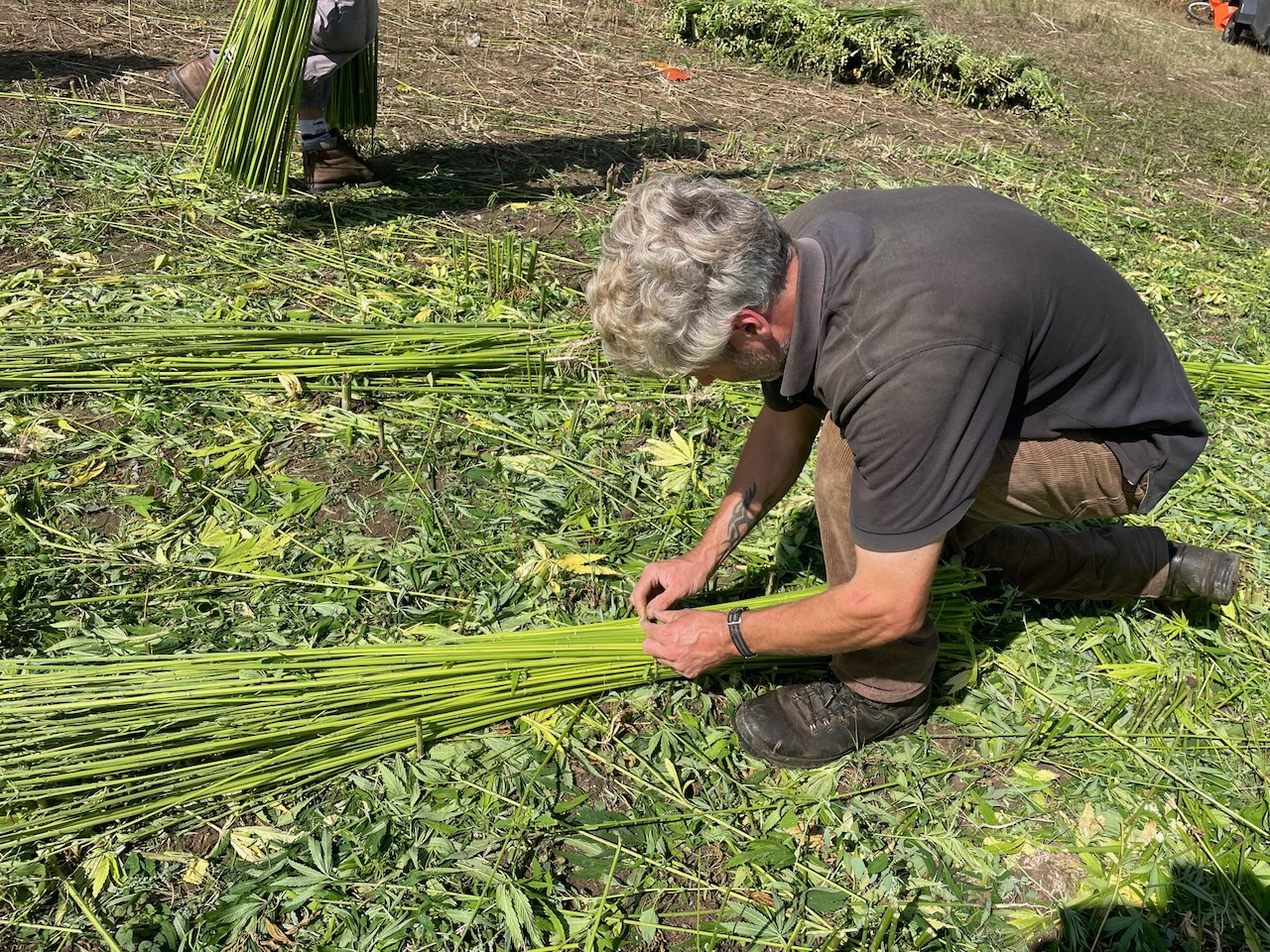
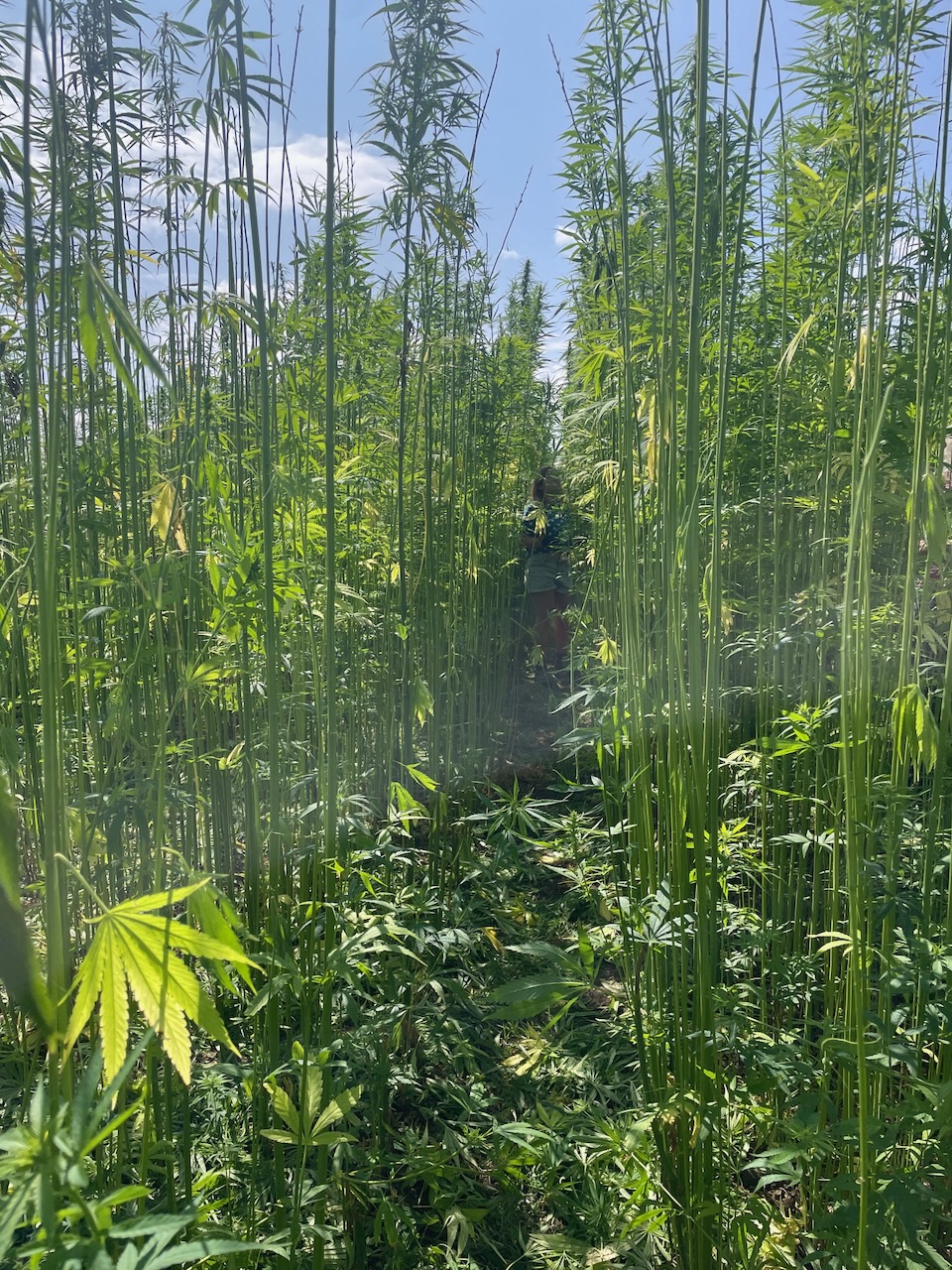
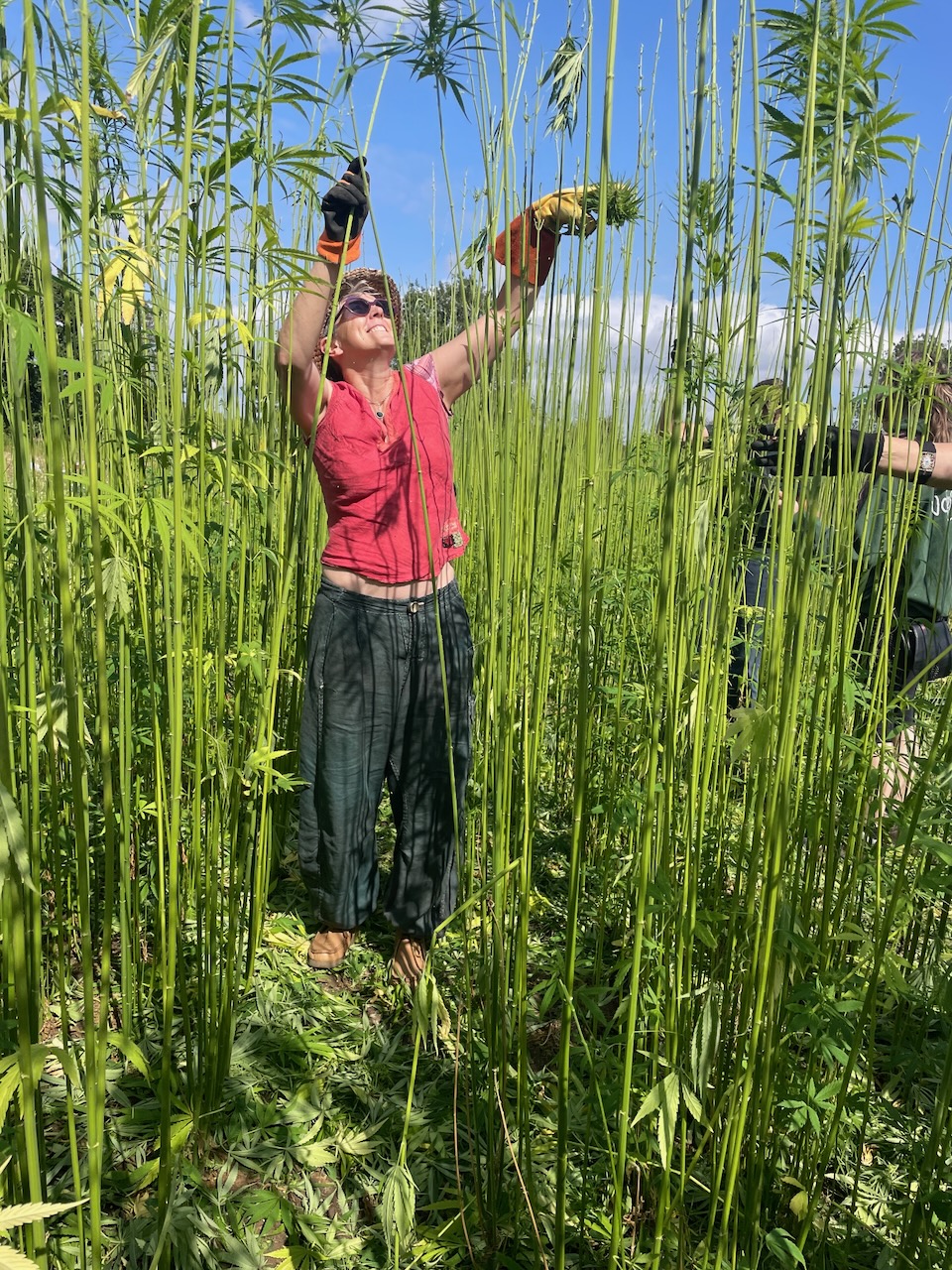
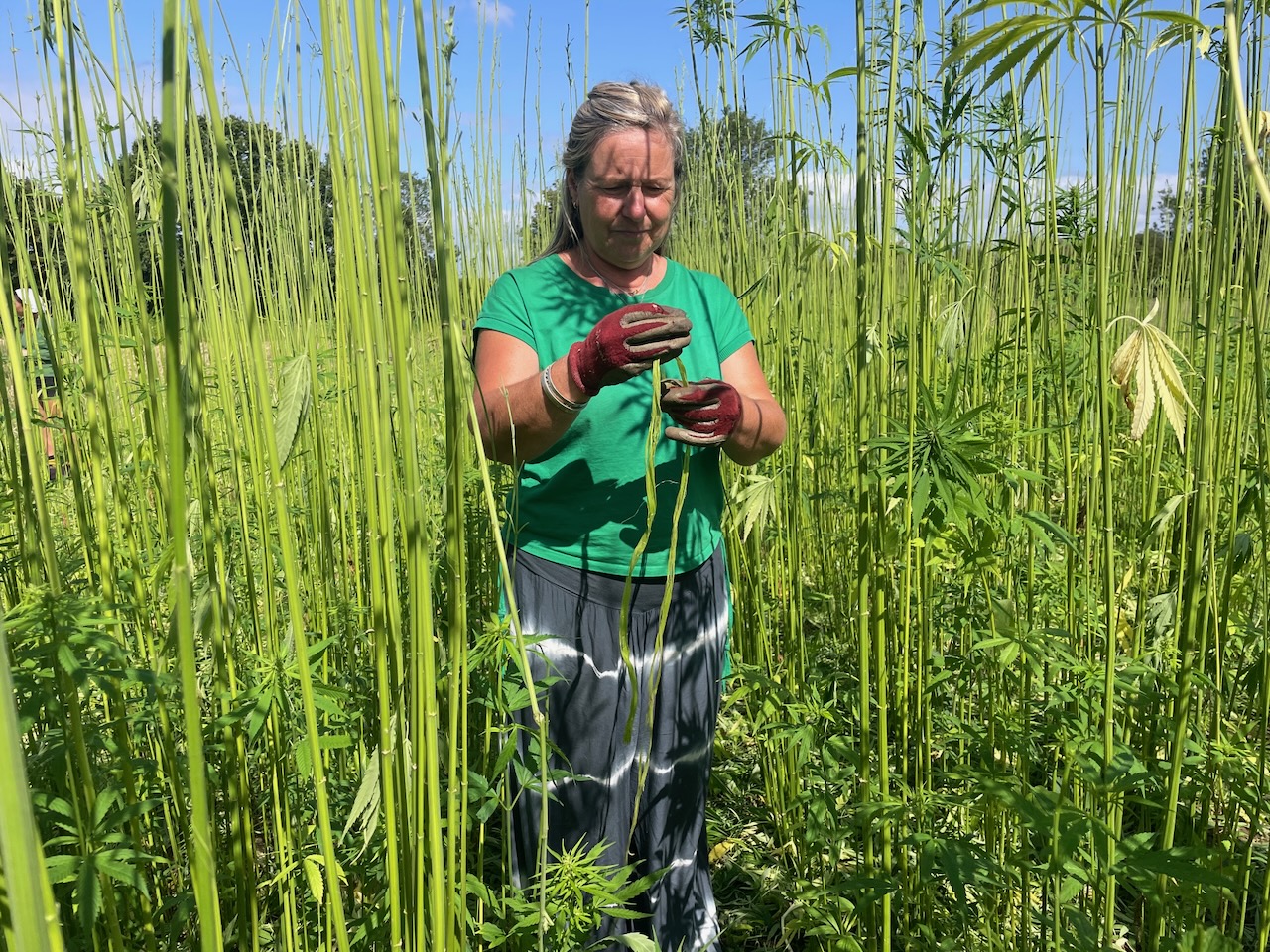
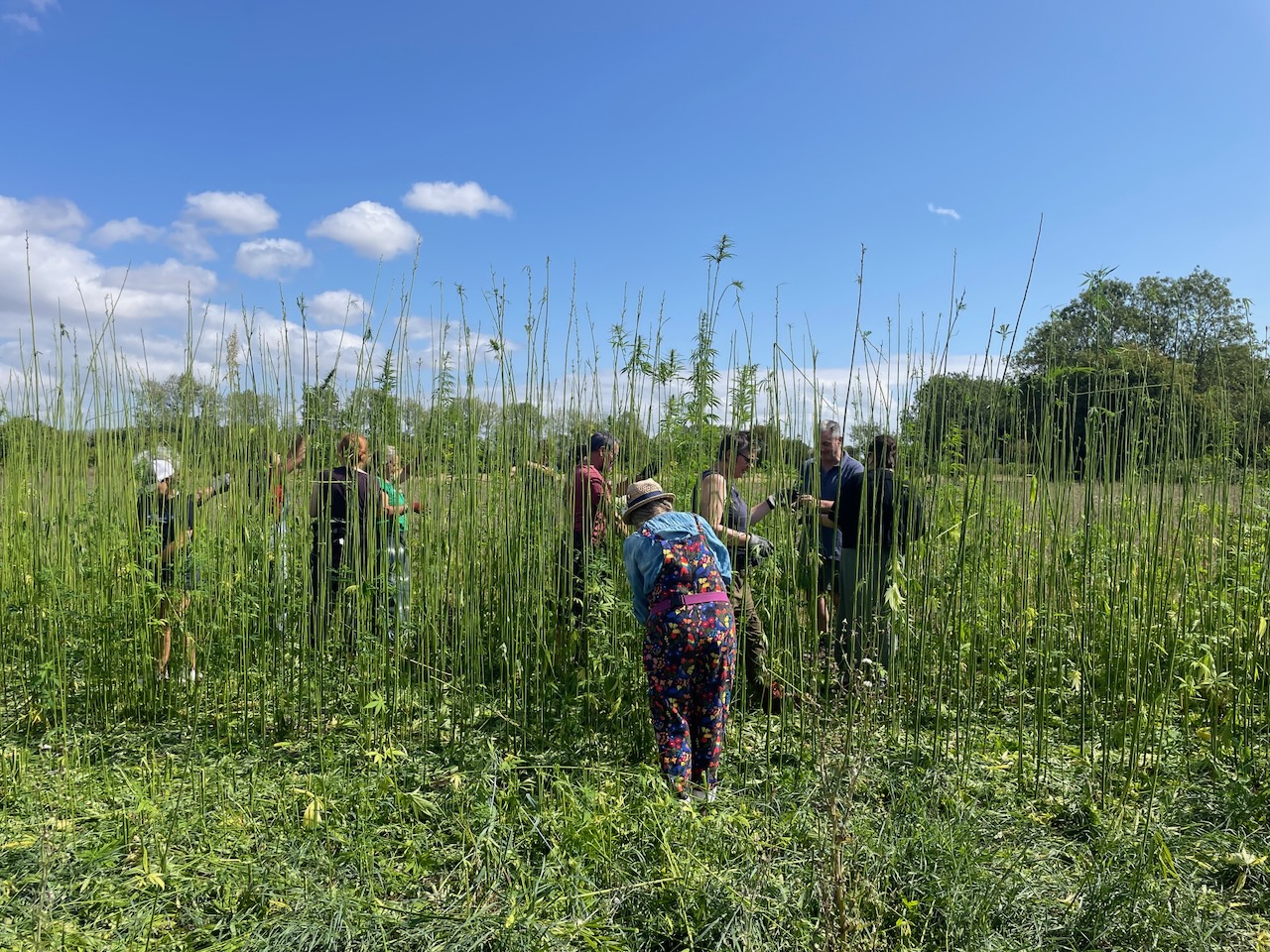
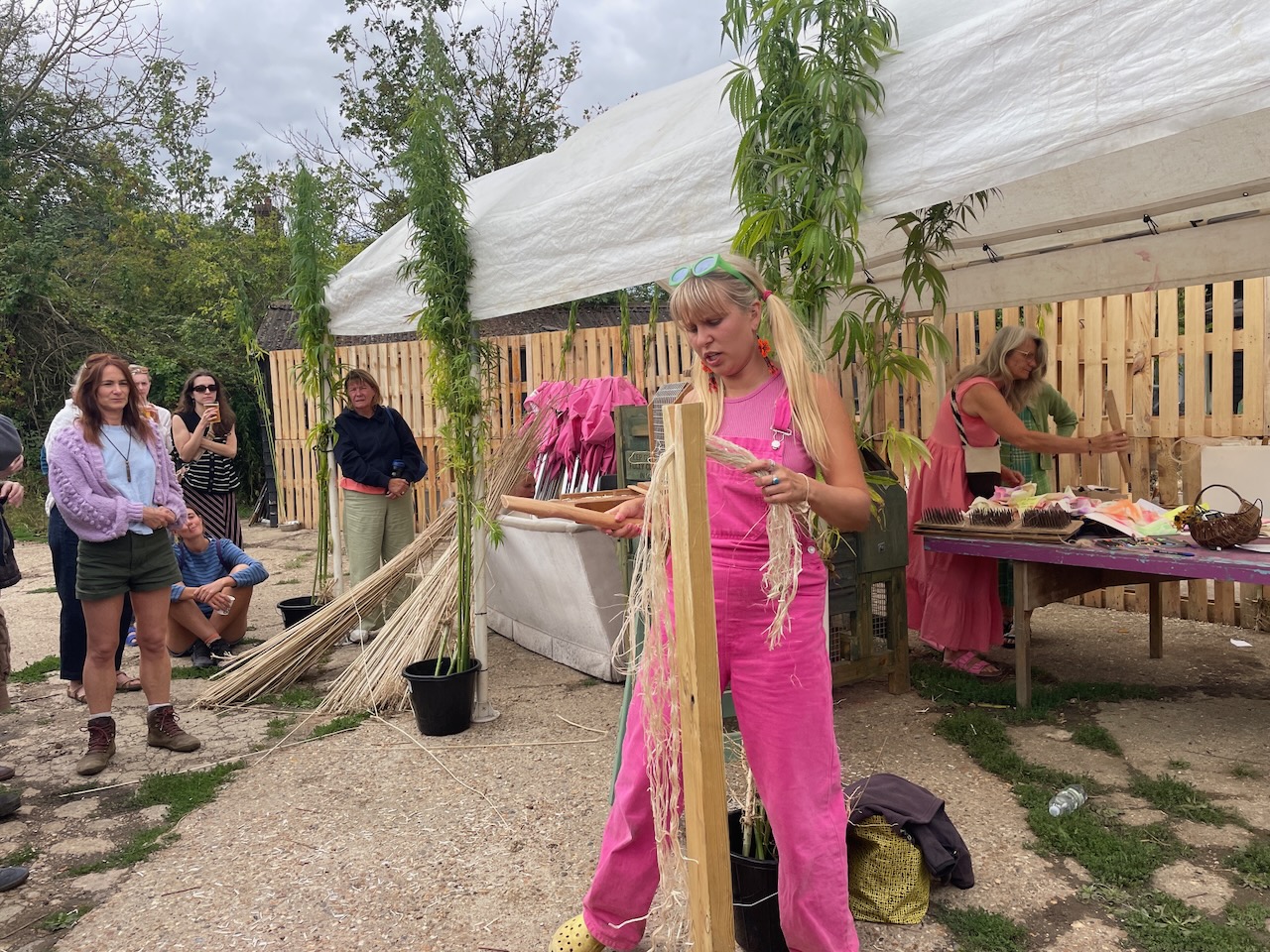
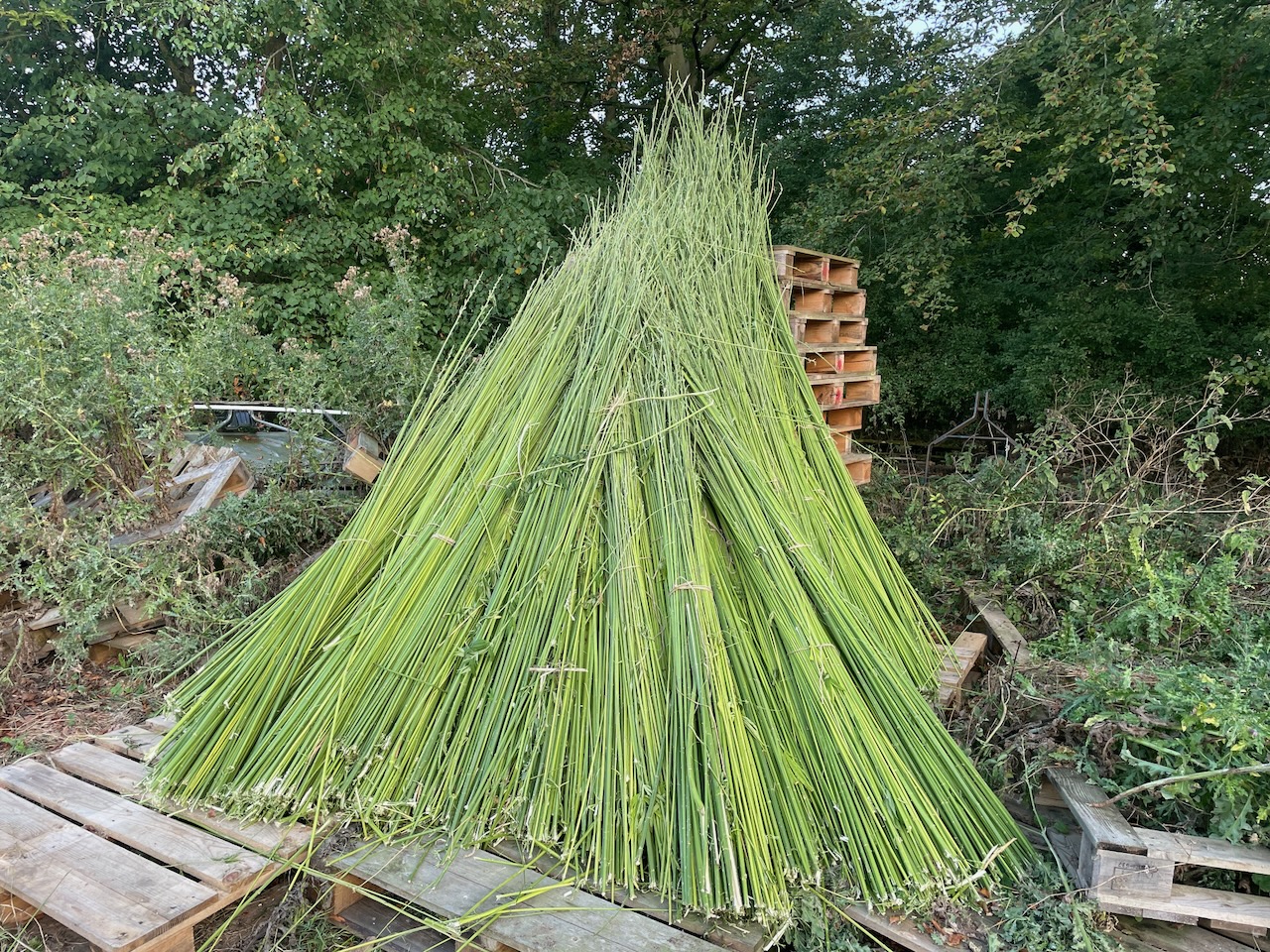
Wakelyns didn’t plant as much as last year, so it meant that when we 80+ people rocked up to the alley of hemp we effectively stripped and harvested it in 4 hours. Ah those conversations in the hemp. I over heard one say, ‘It’s like speed dating!’ We exchanged with strangers our various connections to the material world, our love of fiber, our geographies and connecting points as we moved up the lines, stripping the stem of it’s leaf. Others with an electric chain saw, cut the naked stems. Others bundled in tight bundles to be taken down to be retted. Louise (from Kinda) came and mixed in well. Perhaps we’ll share a cabin next year.
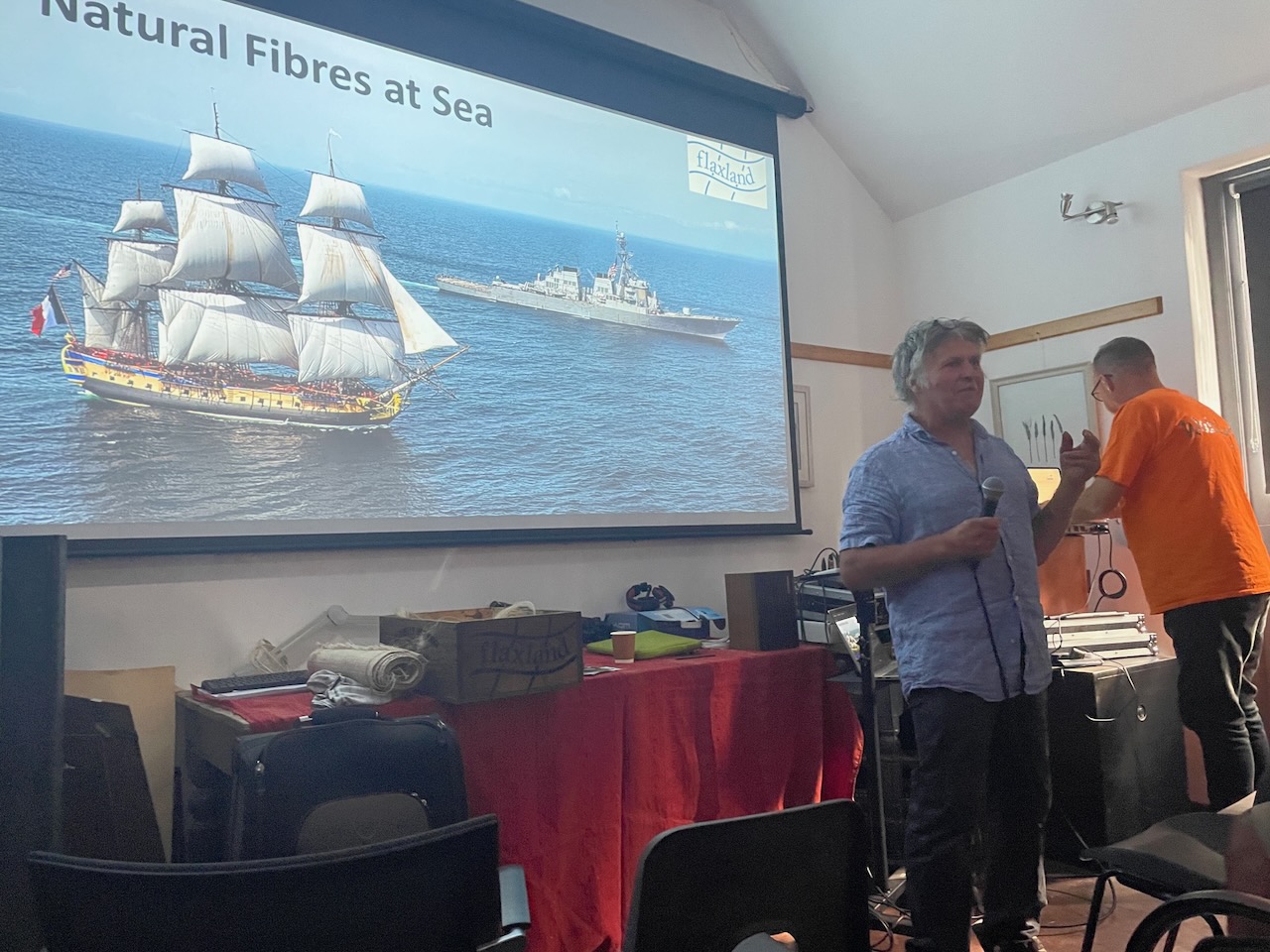
Fittingly, our first talk was mainly about the other fiber, Flax. Simon Cooper – Flaxland – first encountered flax through boats which he built, finding the need for a strong fiber to line an ash and larch made boat. “Now I work for a large scale farm, a farm where Monsanto is not a swear word’, he explained with a rye smile. He romped through the history of natural fibres used at sea: Egyptian, Greek, way back flax, with its inbuilt strength was used to make sails and ropes. A large sail took 3 years to make. With the industrial revolution, came cotton, which took the dye much easier, and in effect heralded the end of the flax industry in the UK, but it is retained in France.
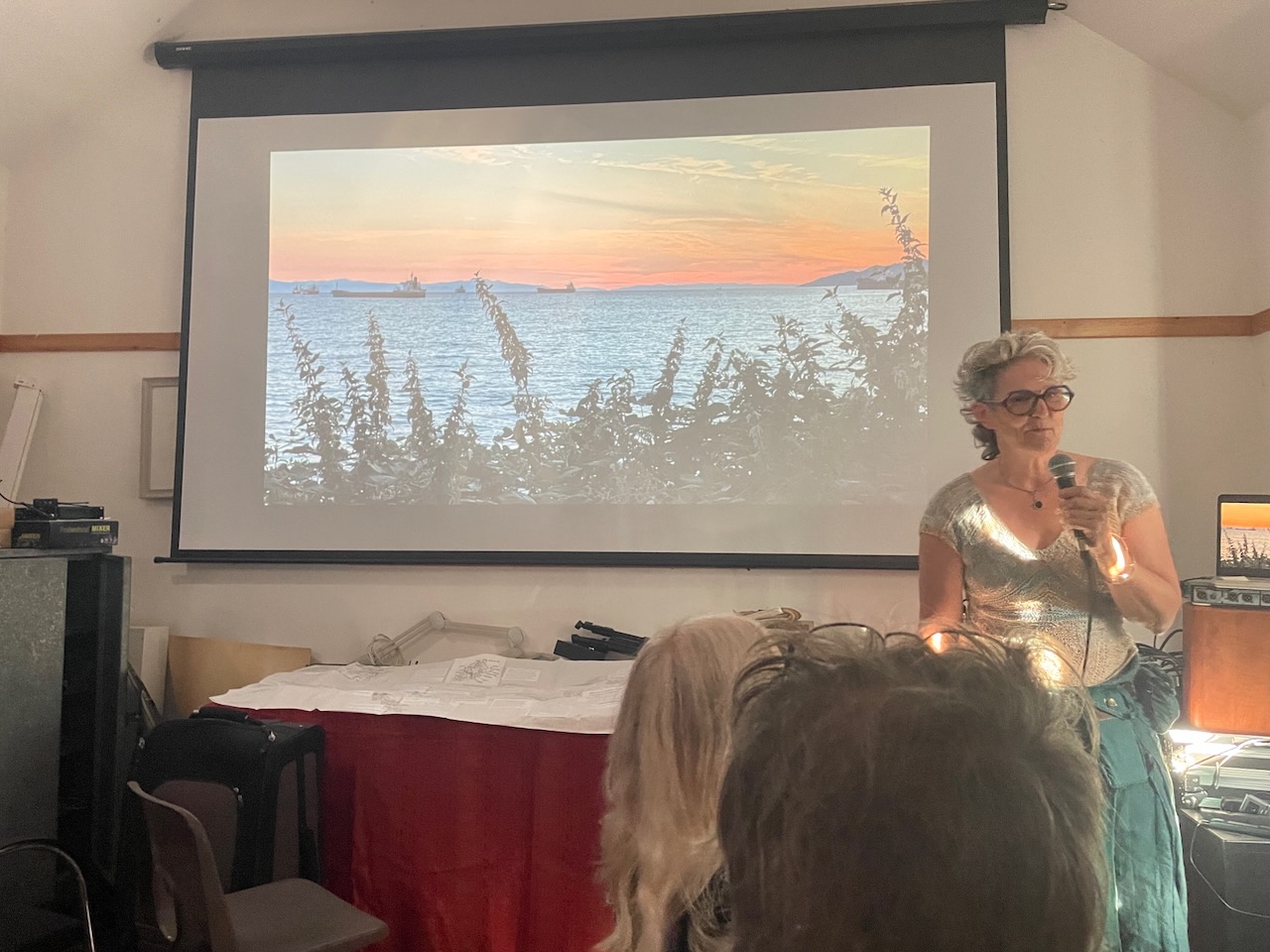
Sharon Kallis from Vancover, British Colombia talked eloquently about ancestral cloth: “I come from ancestors who moved to try somewhere else… Instead of doom scrolling, I studied the ancestral cloth story”. She learned much from the Squamish people, who made textiles using hand spun fibers and geometric patterns. (Her own ancestors were from Scotland). Records of hemp harvest in 1604. The communinity occupation of finger twinning. She reminded us that Spinsters where unmarried women with rights, they avoided being the property of another, they held a respected skill.
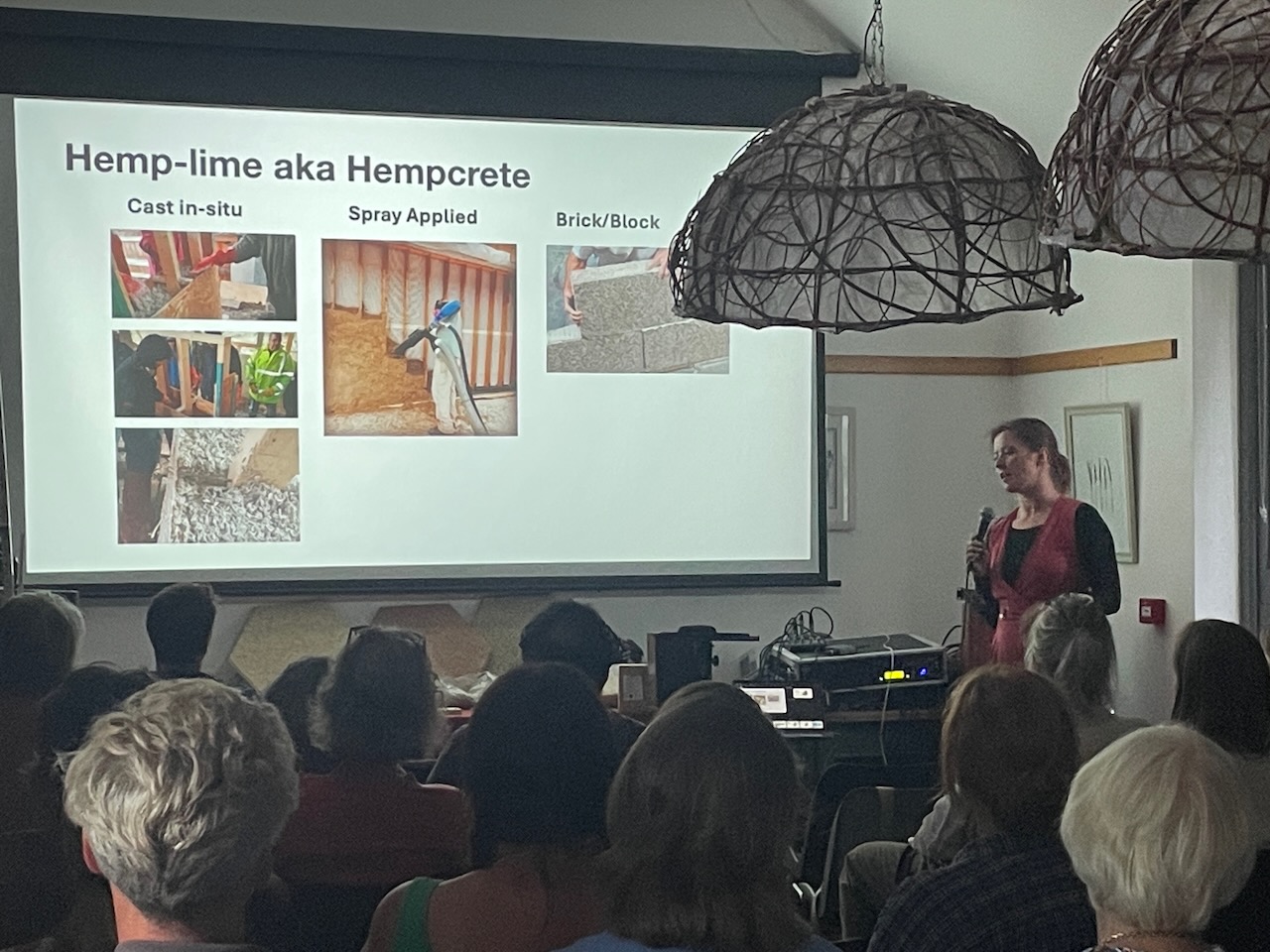
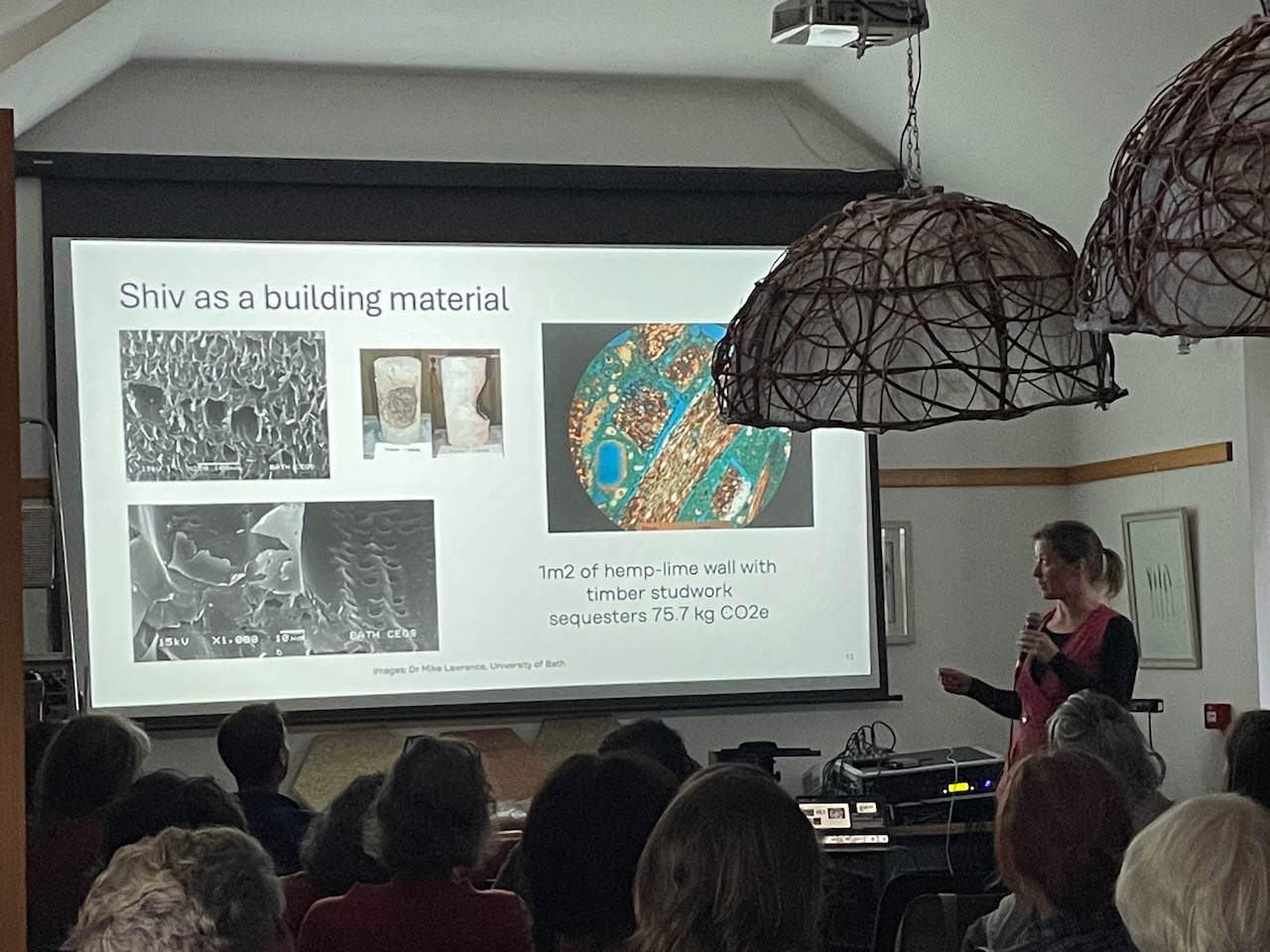
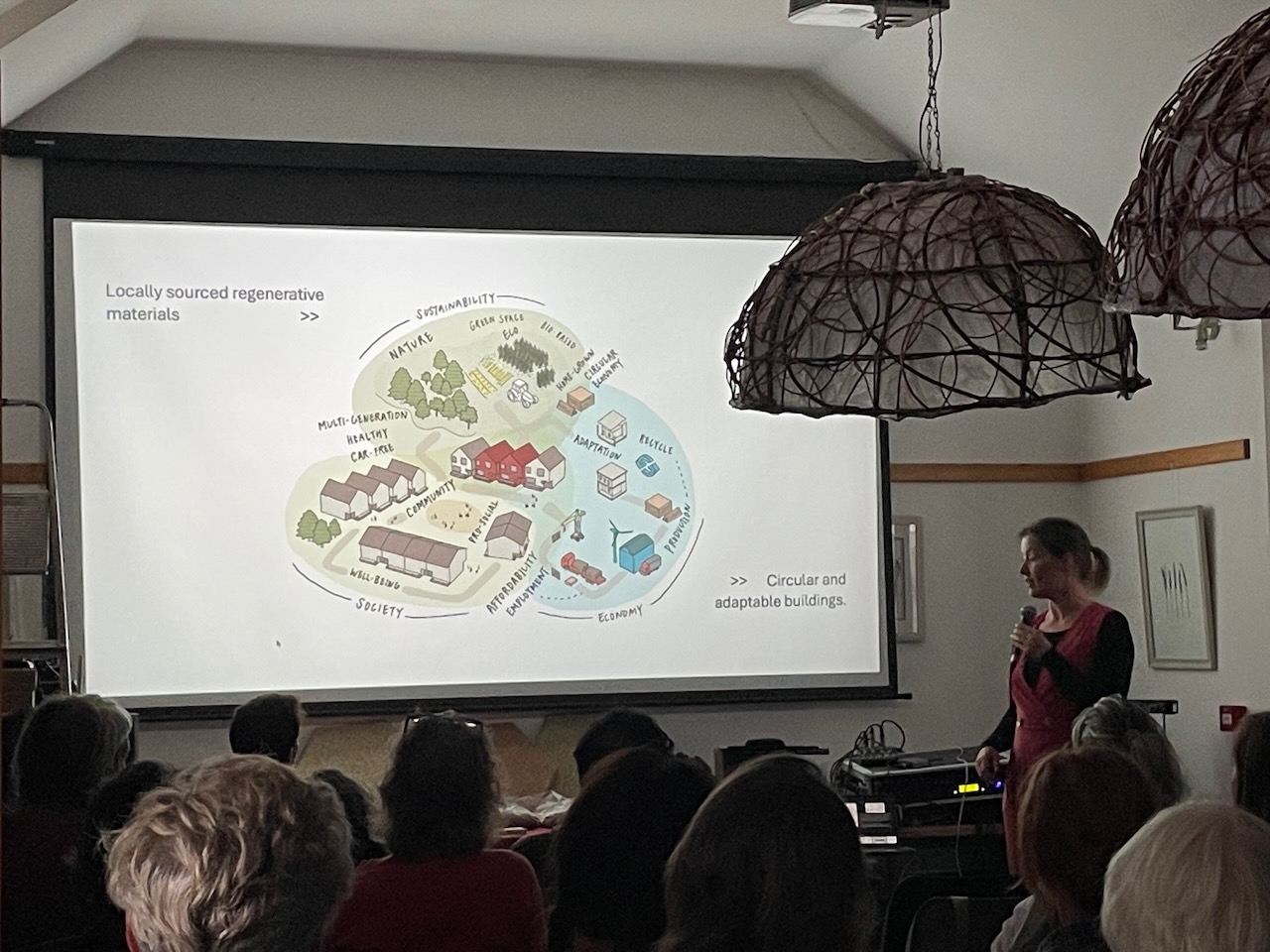
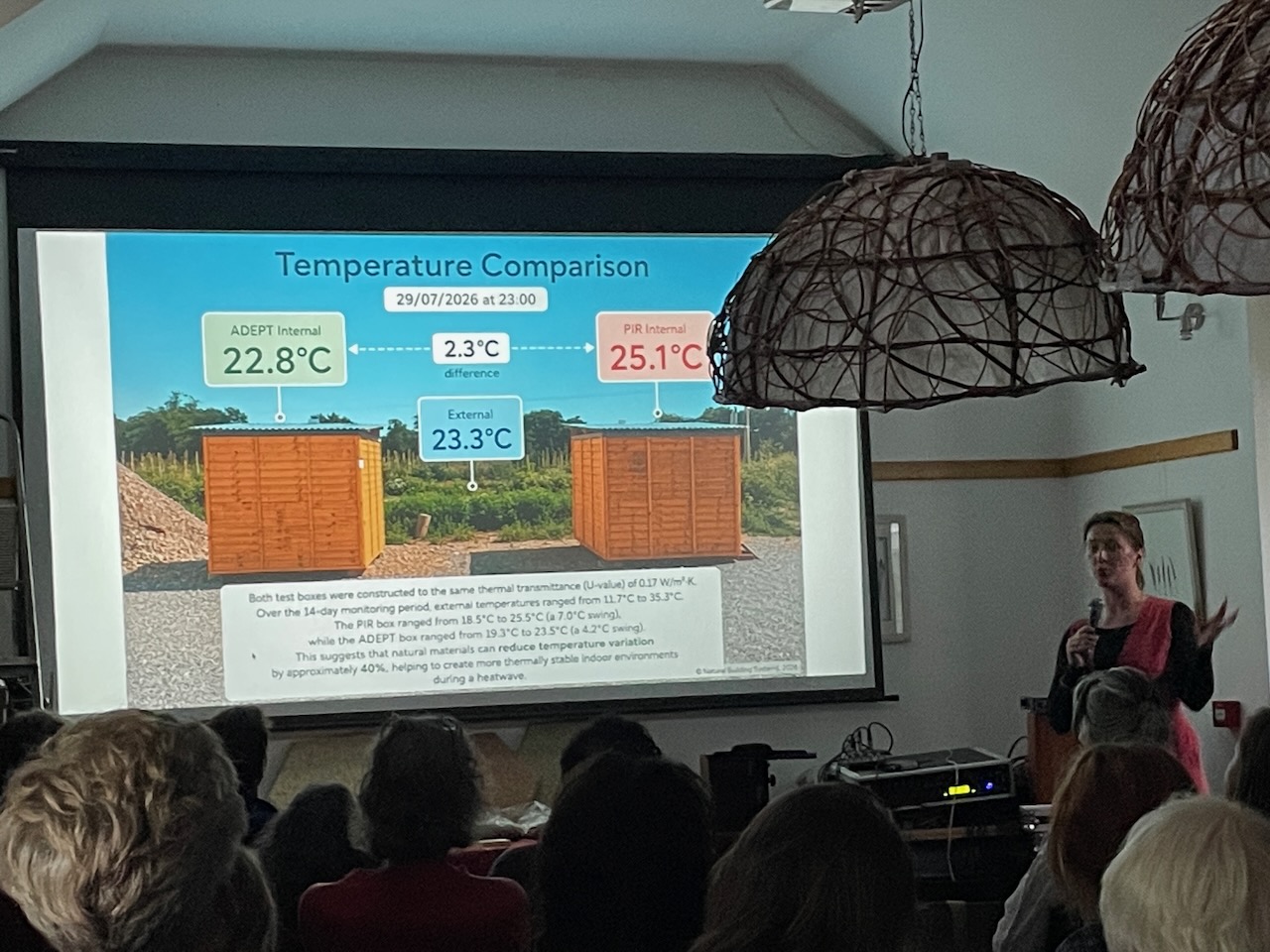
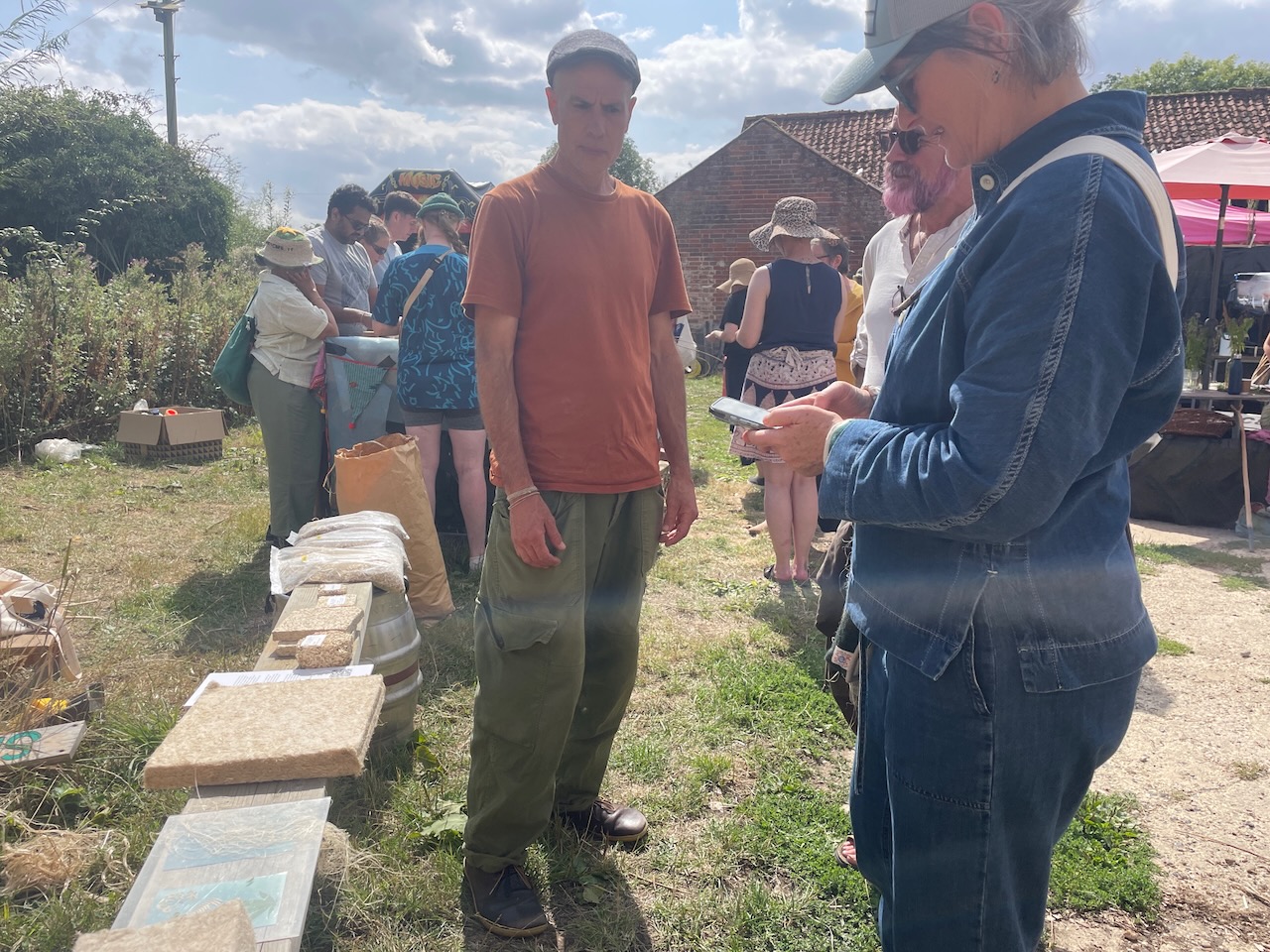
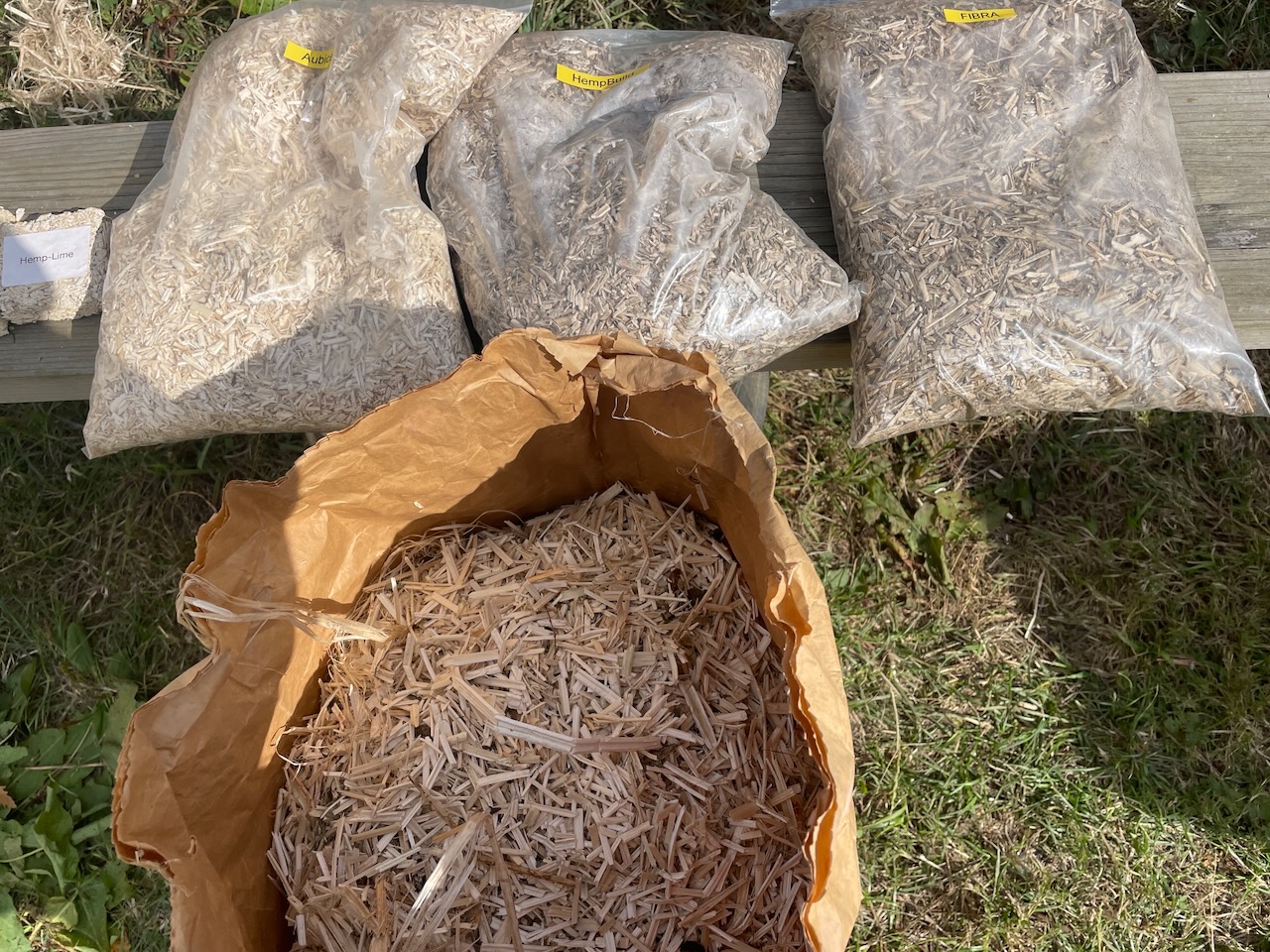
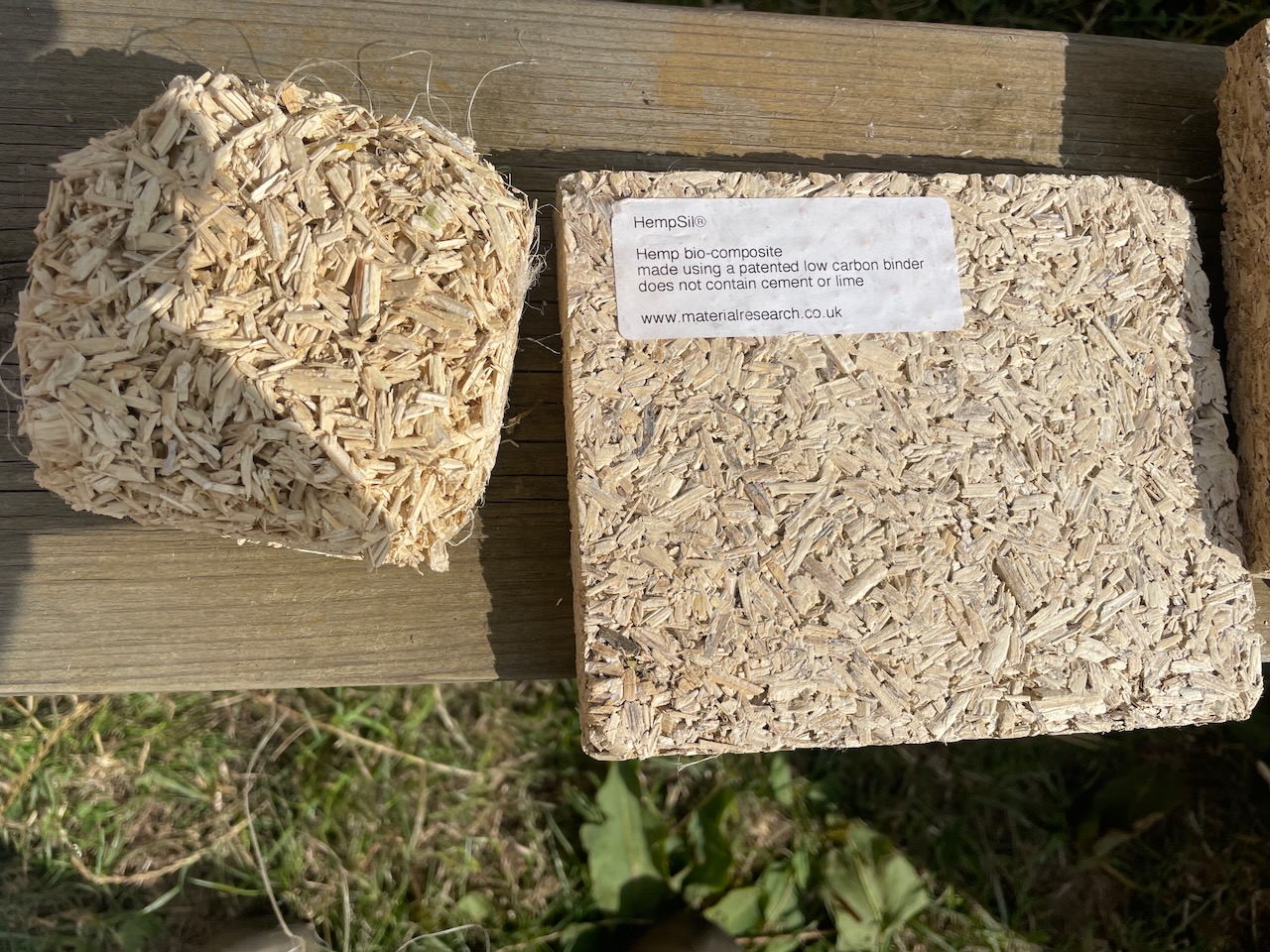
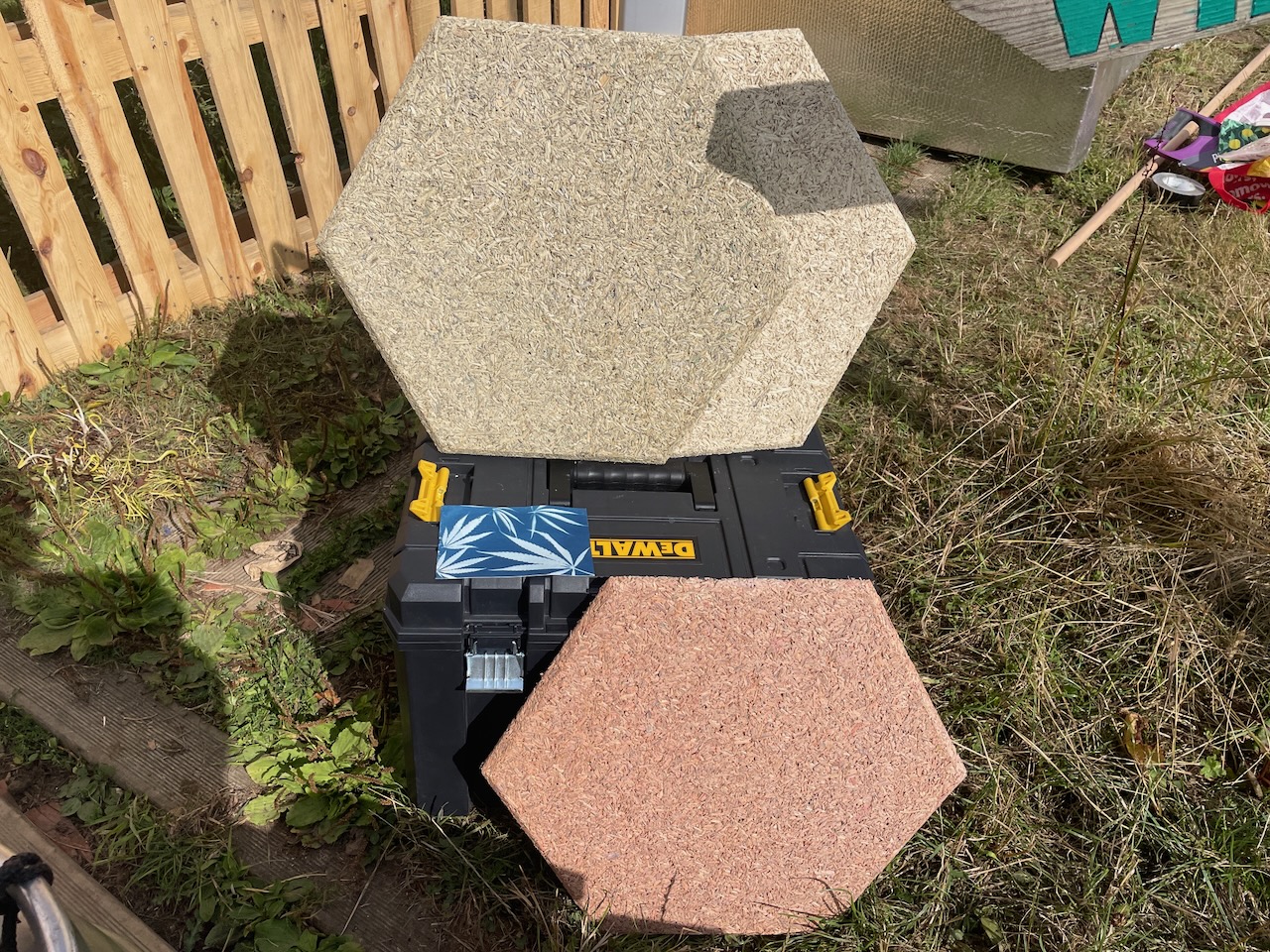
Chloe Donovan – Natural Building Systems- hemp in architecture – is based in Halesworth! Here because the history of hemp is here in the Waveney Valley, C16 and C17 the industry centered around East Anglia. She began: Whereas farmers were now diversifying into solar or glamping, some have retained the soil connection and diversified with hemp. As an architectural material, it is the SHIV, the waste product of the hemp production, which is utilised. She showed us evidence of how, in two similar buildings, an with oil based insuslation one with a hemp, how the hemp stabalises the heat temperature. The shiv is currently imported from France, as we lack production in the UK however, there is a Yorkshire production started up. Uses: Mattresses, dresses, modular panels. Shiv and Lime. Hat, Coat, Boots.
The Red Dress project led by Kirstie Macleod is a 15 year project to create and tour a dress embroidered by 380 women and girls and communities around 51 countries world wide, telling their stories. Many of the women are vulnerable and/or live in poverty. Because of the highly successful funding and marketing of the project, they individual peole still get paid every time the dress makes some income!
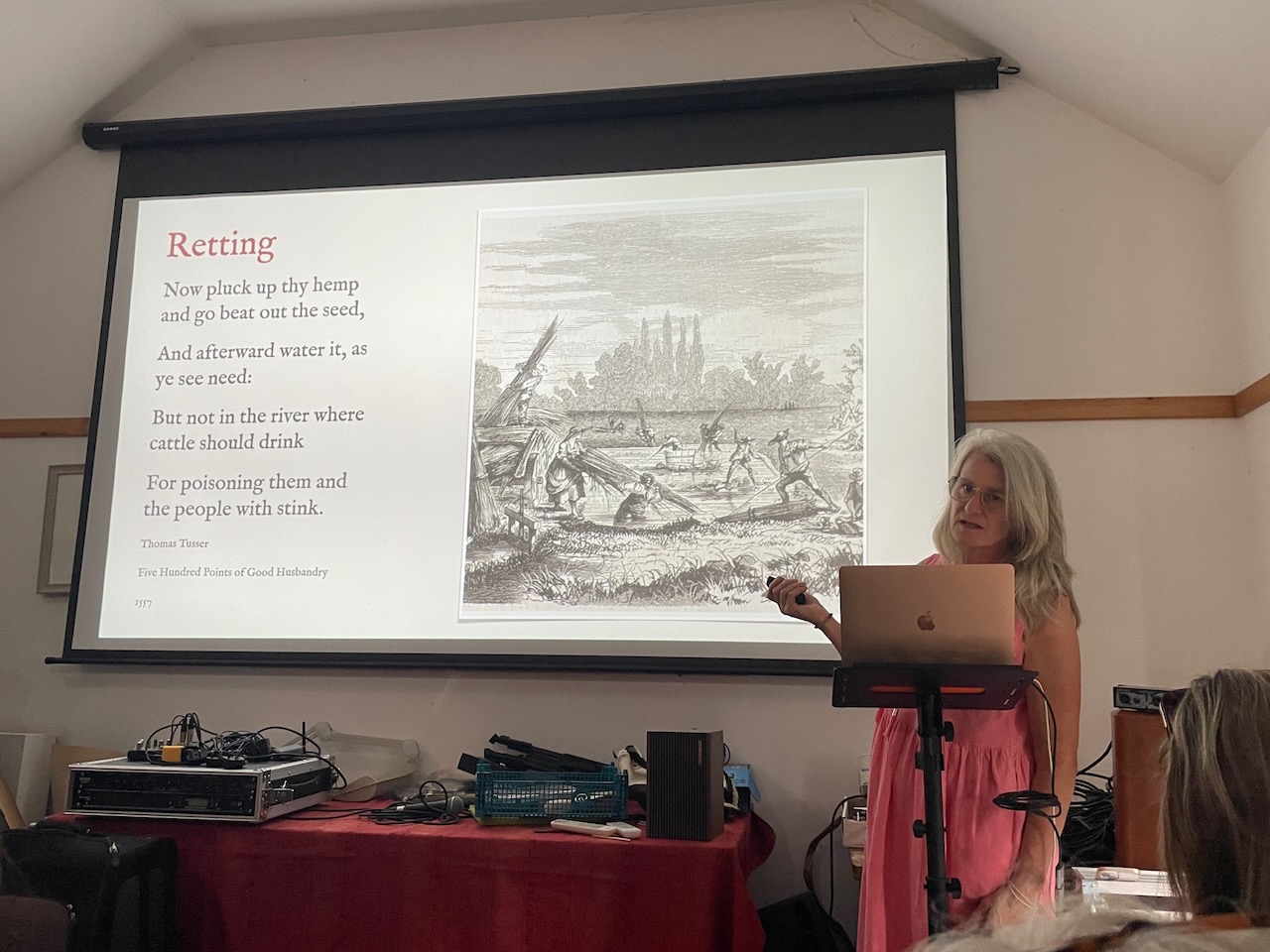
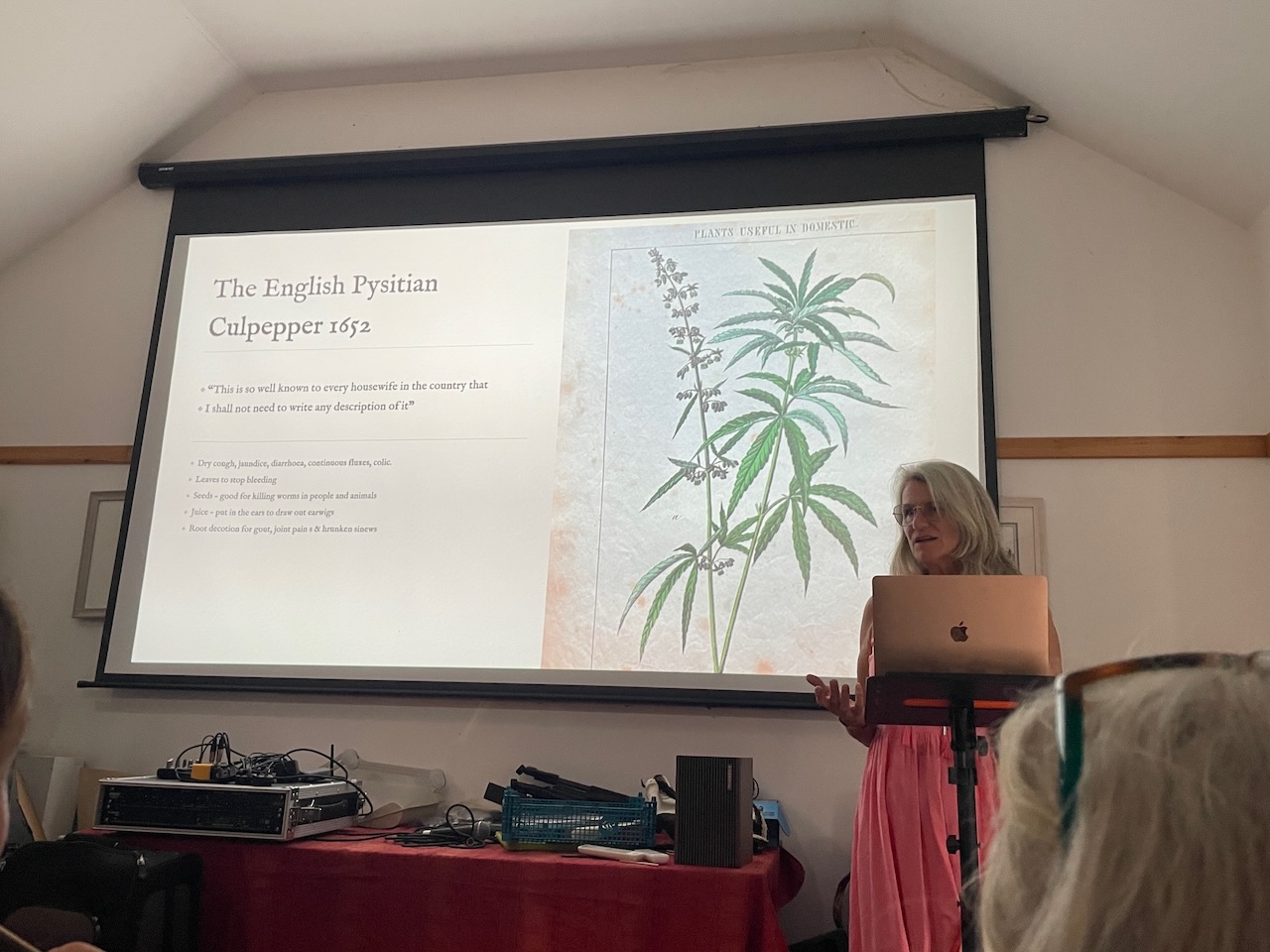
Claire’s Long History of Hemp was fascinating. She reminded us that the mere in Diss and Quidenham would have been used for Hemp. In 406 the Saxons recorded fields of cannabis. 1,000 years ago the sacred seed documented. It is a giving and forgiving crop. It has no insect enemies, put the seed in the ground an walk away. No inputs required. Sow, Harvest, Rett, Break, Scuttle, Comb, bunch. Historic uses included the Hangmans rope, shoes, medicine. Culpepper: ‘It is so well known I shall not write about it here’.
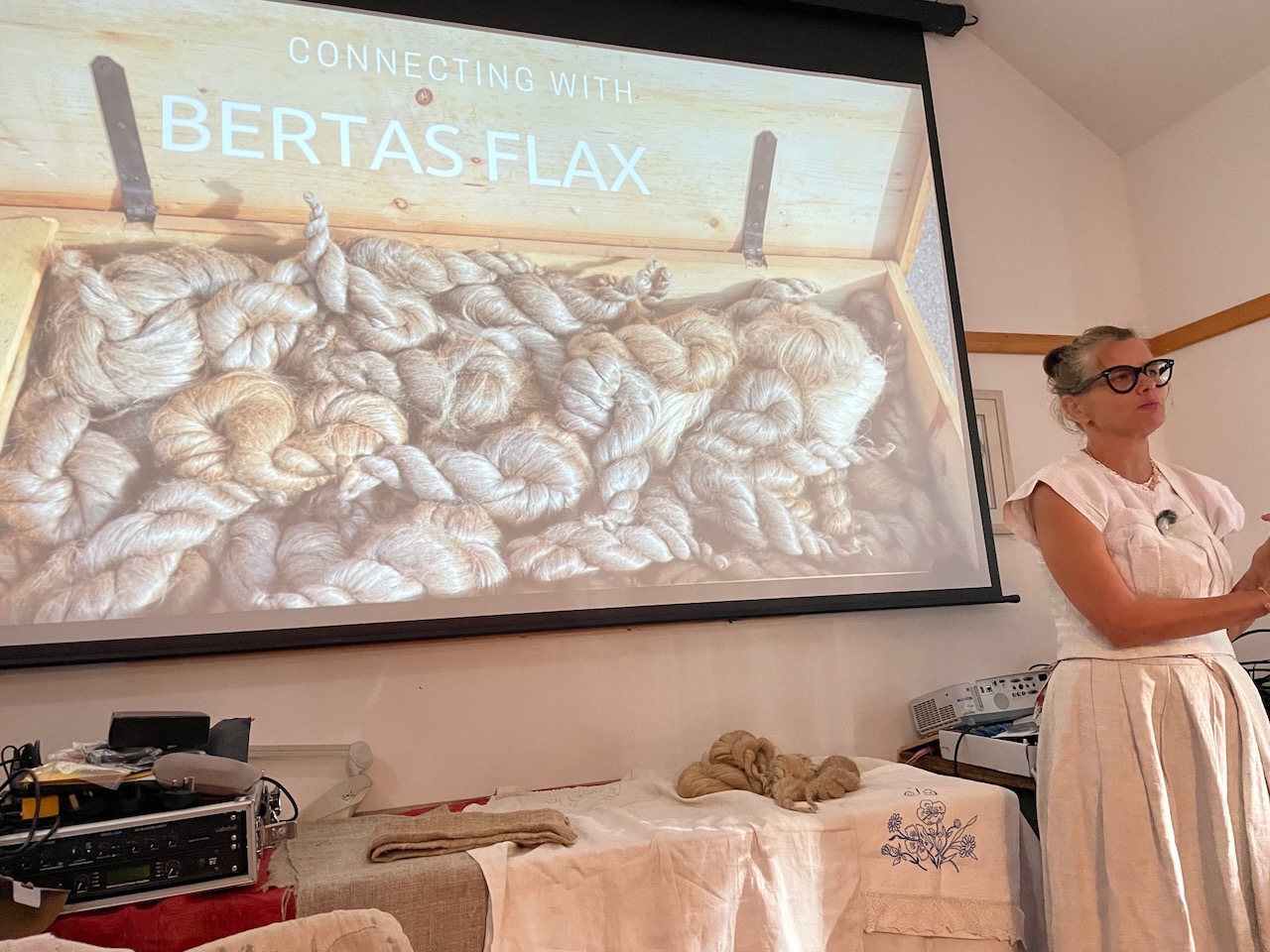
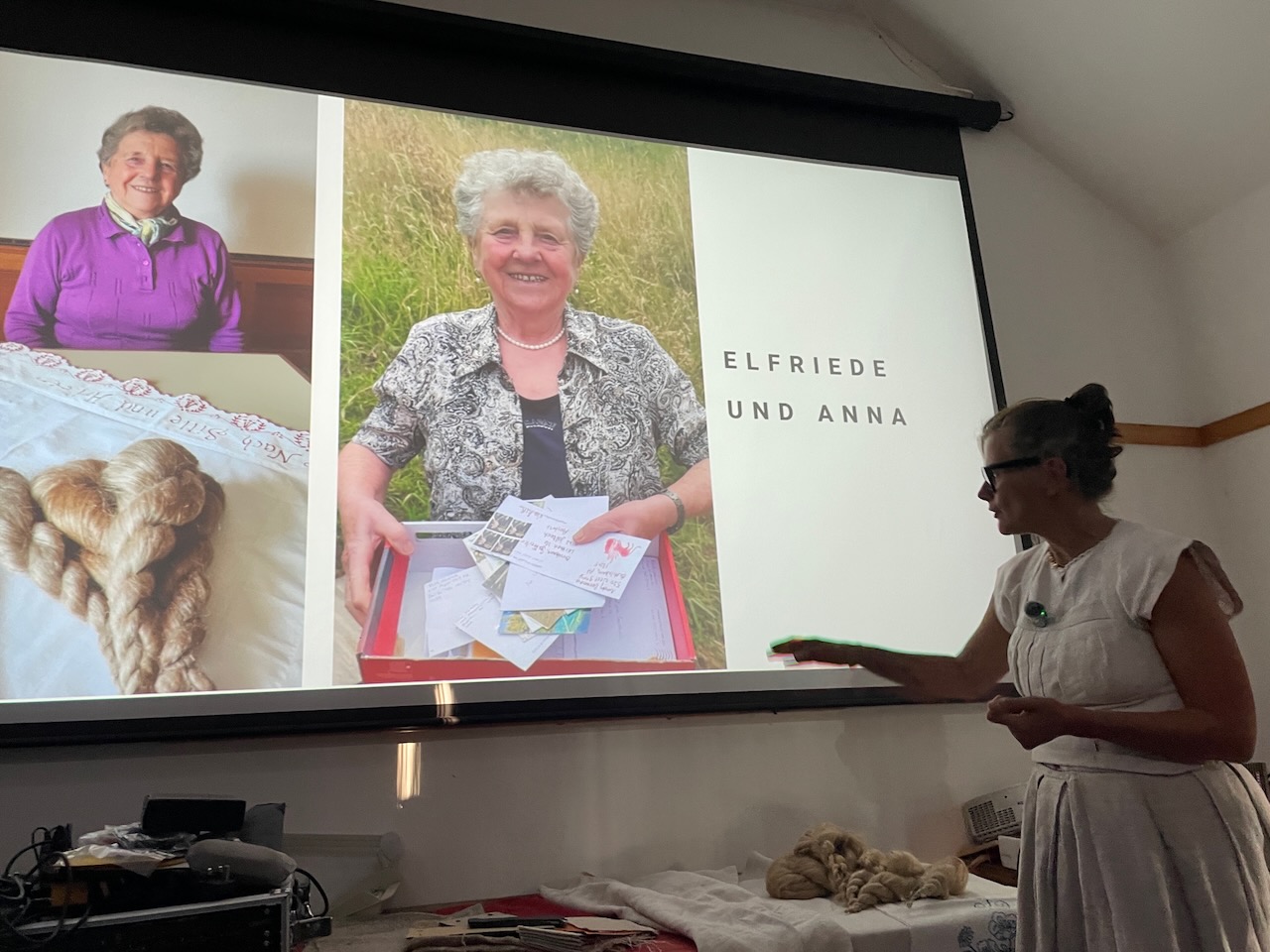
Christianne Suefferlin – Berta’s Flax – was perhaps my most memorable talk. She began by showing us her landscape in northern Austria. ‘See, people live in small communities; the soil is poor, here people lived of potatoes and cabbage. And selling fiber. In the long winters there is time to process the fiber.’ The tradition in this part of Austria is that the woman was given a wedding chest of flax. It was hers alone, and no one could take it away from her. Christianne’s story began when she was given one such wedding chest by a woman called Gerta. What to do with this beautiful material, lovingly prepared. As Gerta could no longer travel, she had the idea of giving it away to people who could use it and asking them to write and tell Gerta what they had made. Gerta received postcards and letters from around the world telling her the story of what her flax had become. Then came: I also have a Flax box. More and more started arriving. So naturally she started collecting the stories, and she gave us 3 of them. I only remember one, of Berta, who terrorized the family, until she became demented, when she regressed into a child again.
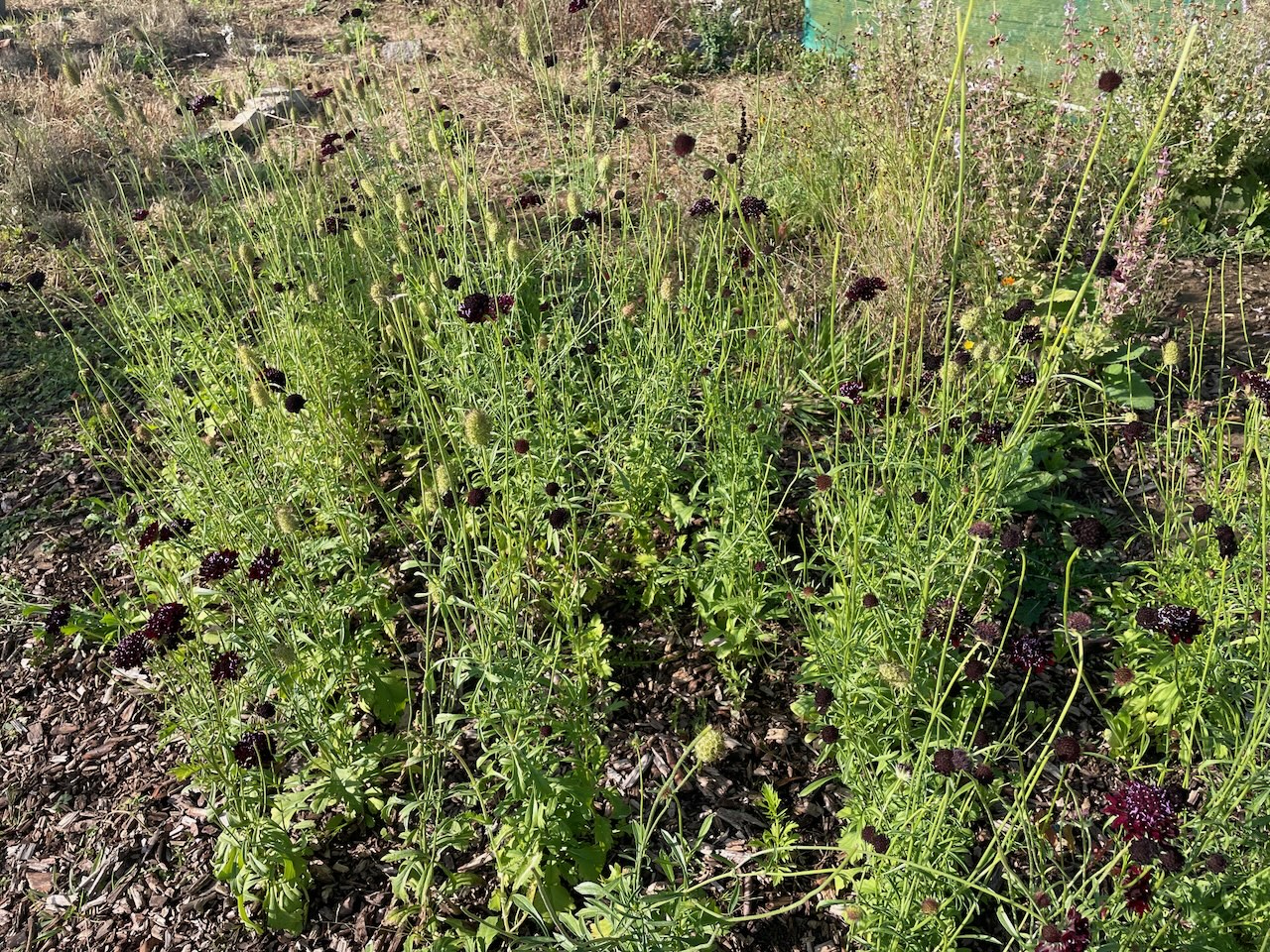
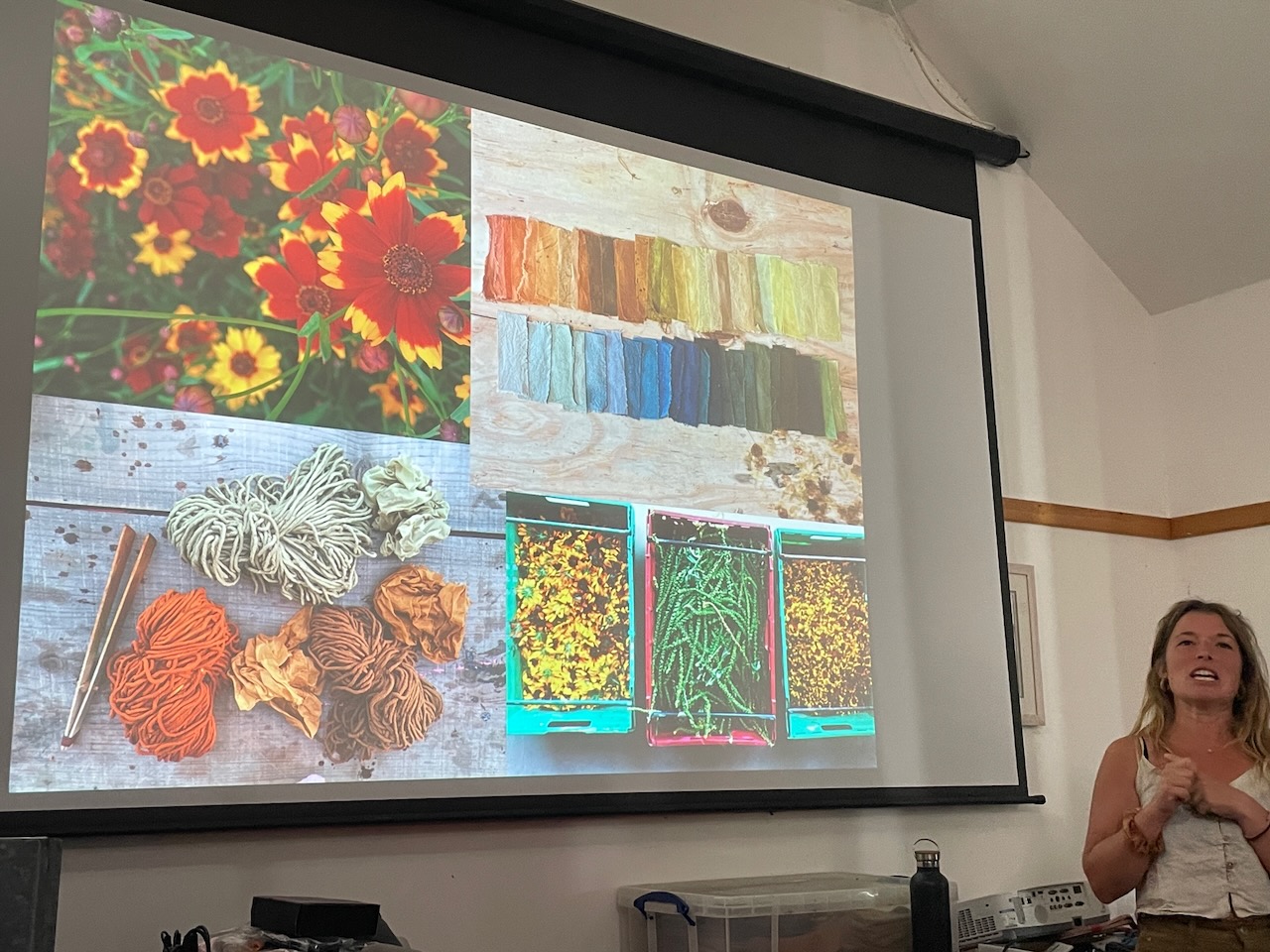
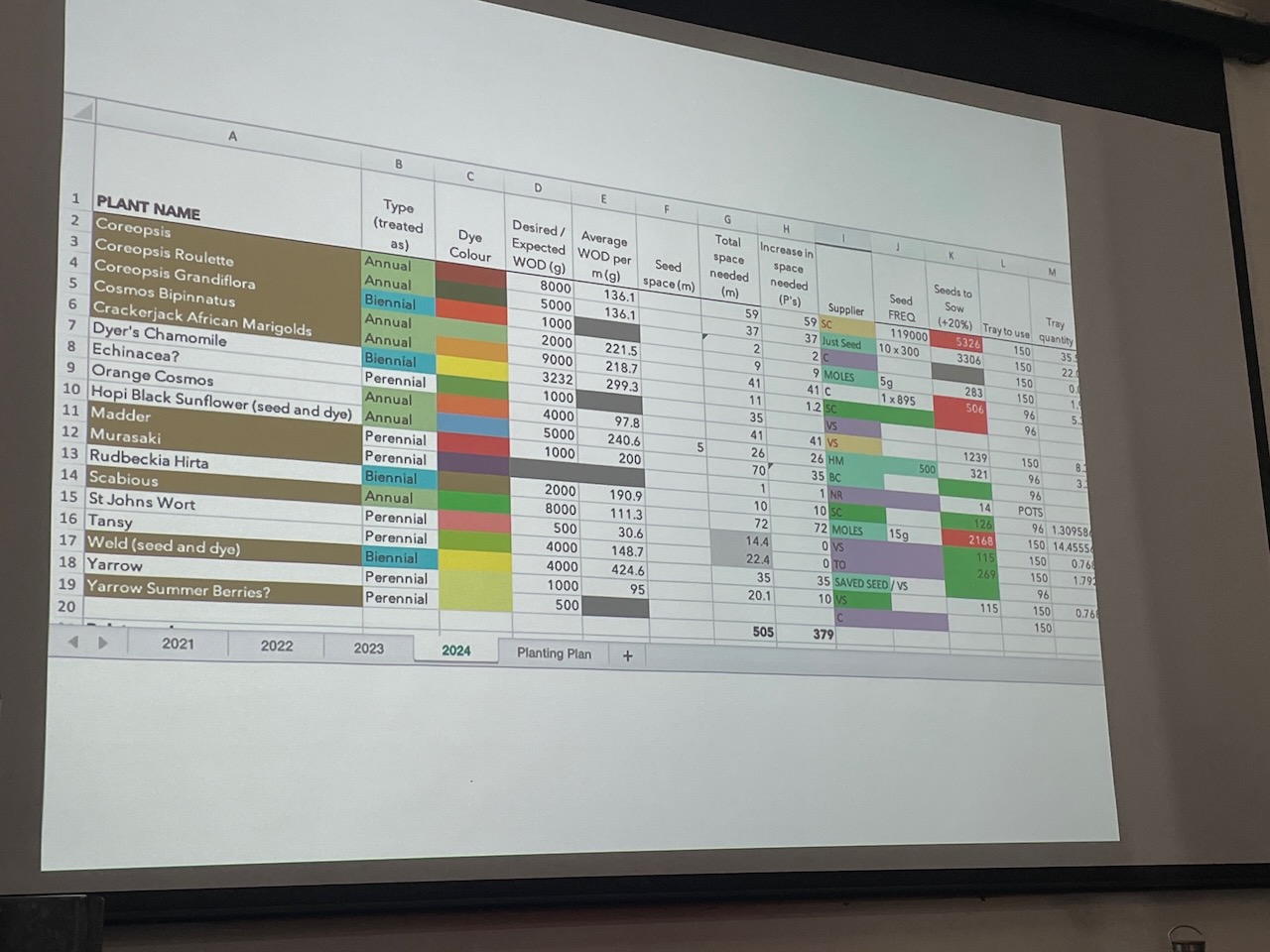
Sophie Holt – natural dye plant – spent 10 years of searching after uni and now has found her journey direction. Riverford (similar to Wakelyns but no accommodation). Organic, collaborative, skill exchange: dyeing, growing veg, artists, reservoirs, bees set in 55 acres. In her garden she grew weld, marigold cosmos, scabious black night, hoppie black sunflower, madder. No indigo.
Benni & Earther. Both from Hong Kong now in Glasgow. HK has a very good transport system, so people use it, and travel with their bags on their backs. They have built up a relation with a Nepalise family to make Hemp bags. I bought one – my note book fits perfectly into it.
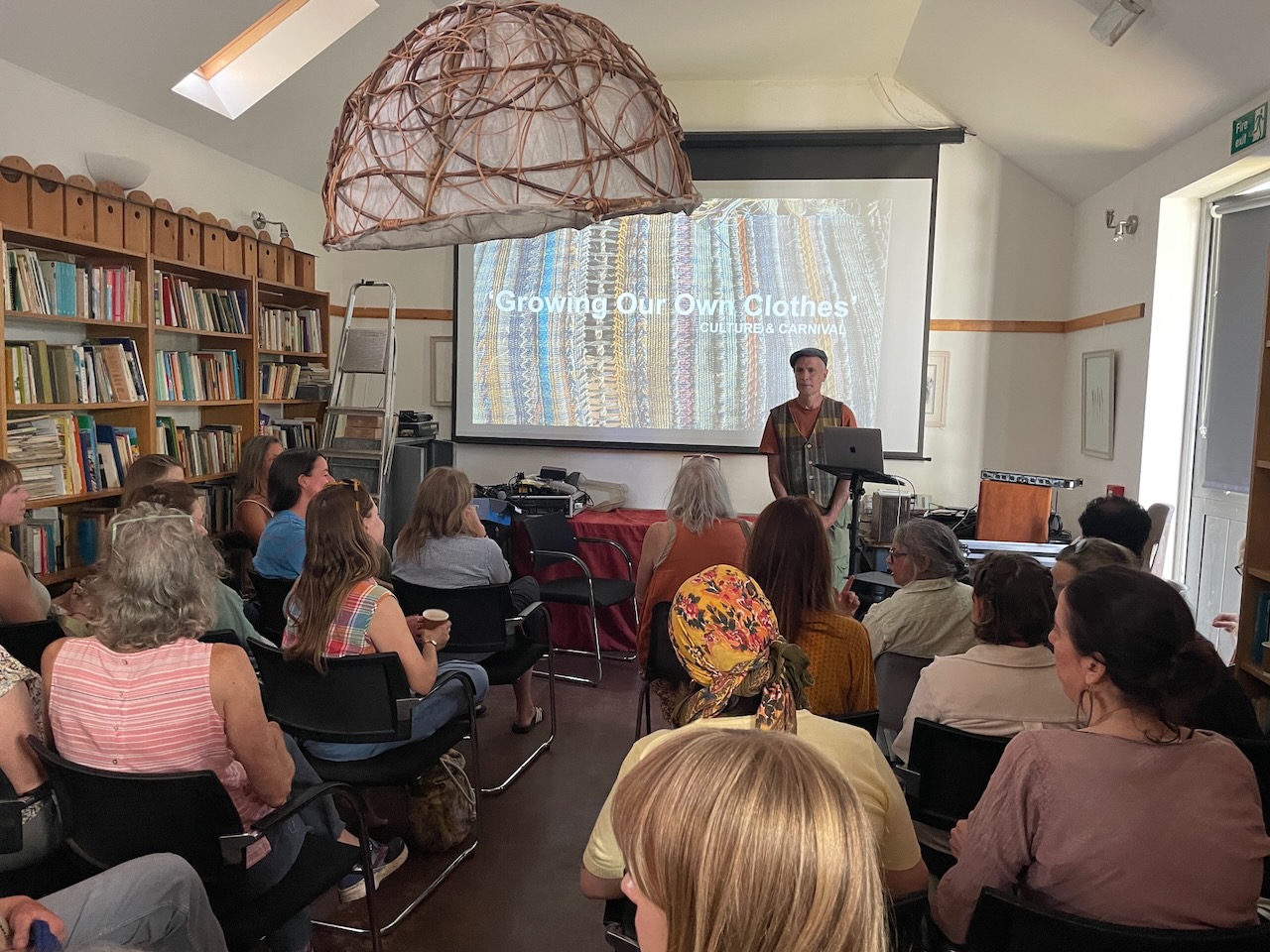
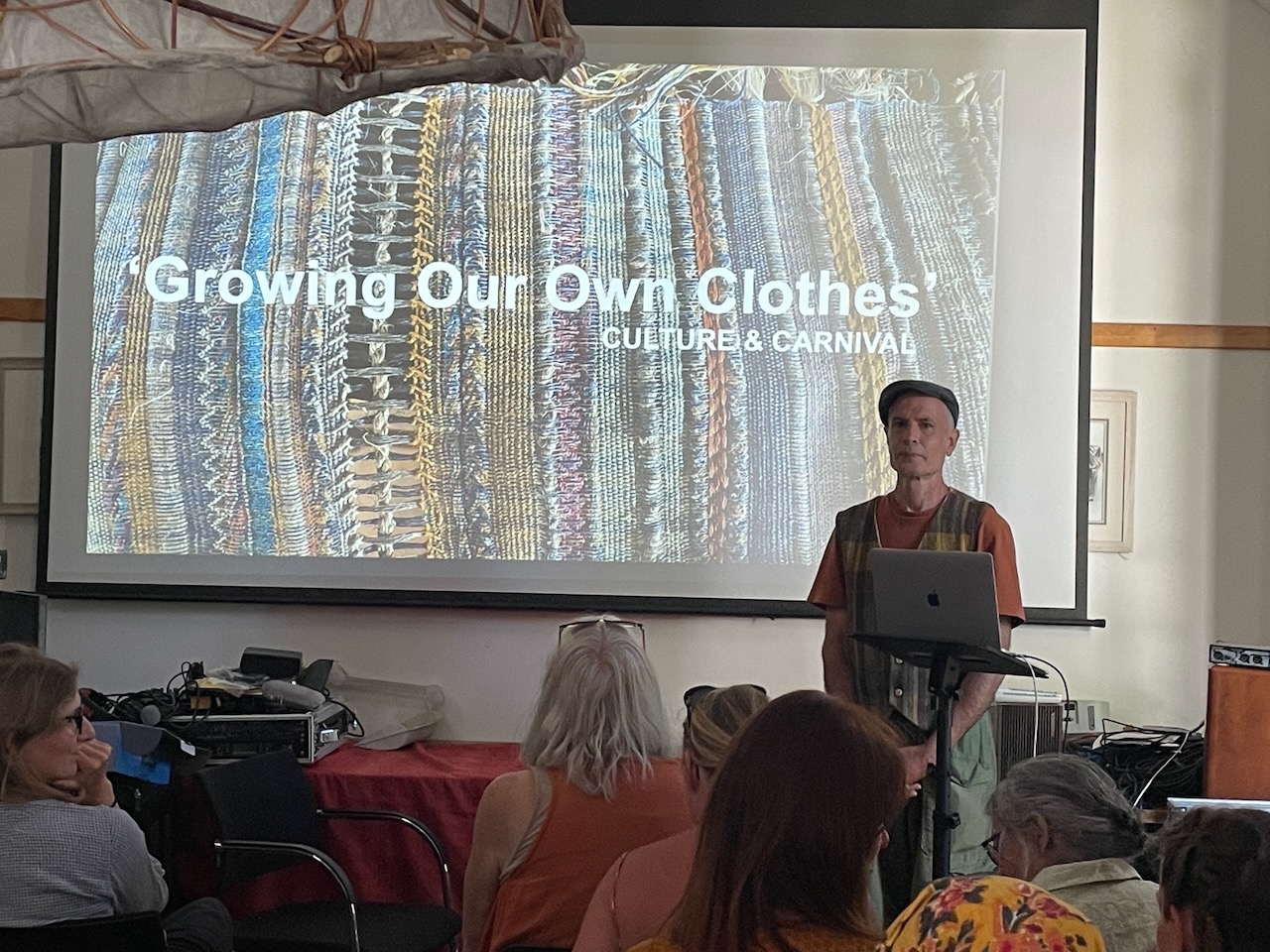
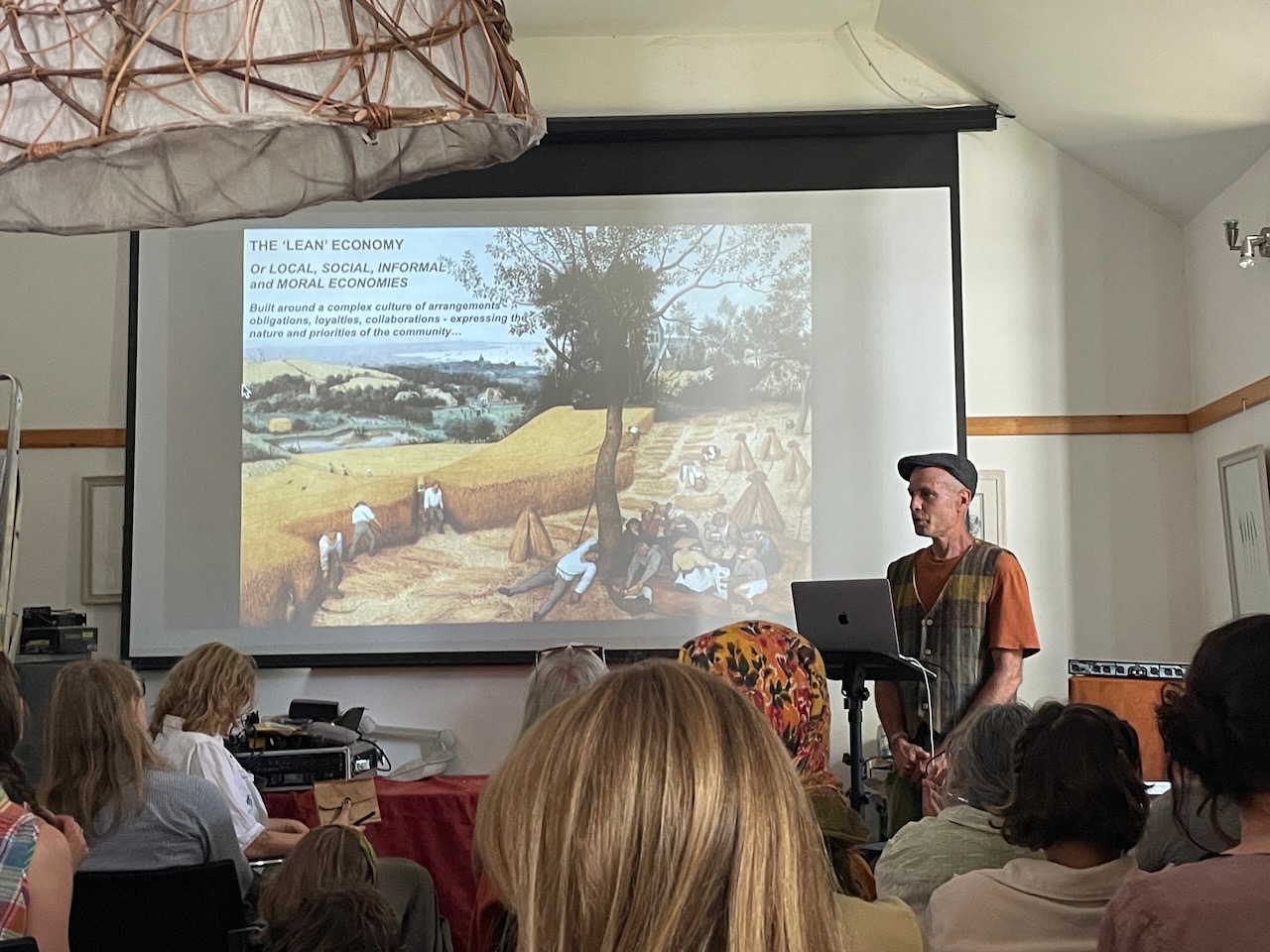
Allan Brown – Grow your own clothes. We are here. Nature is imagination. What is our direction of travel? ‘The Nettle Dress opened up so many doors to so many worlds for me…. I did not know textiles before. I’ve met extrorddinary people who have been open to share (unlike fossil fuel world). One barrel of oil = one person @35 years labour. Needs: Food, fiber, shelter. Pie chart of material usage world wide. 2/3rds synthtic. Wakelyns there is another way. Nettles avoided industrialisation.”
At the end of this talk I feel like going home and recycling all of my synthetic clothes and keep only those essential and made of natural material.
Who knew I’d meet some Kerela Indians who remembered Laloo Prasad Yadav (chief minister of Bihar from 1990 to 1997) famous for a brief interruption in 1995, when he was imprissioned for the animal fodder scam. What a pleasure to talk India, exchange stories. I shared a room with Tessa who fell in love with the story of a fisherman, and it went from there for her as she specialised in photographing and collecting fisher folks stories. We had many over lapping geographies as she worked internationally for Oxfam, where she met Hemp in Laos.
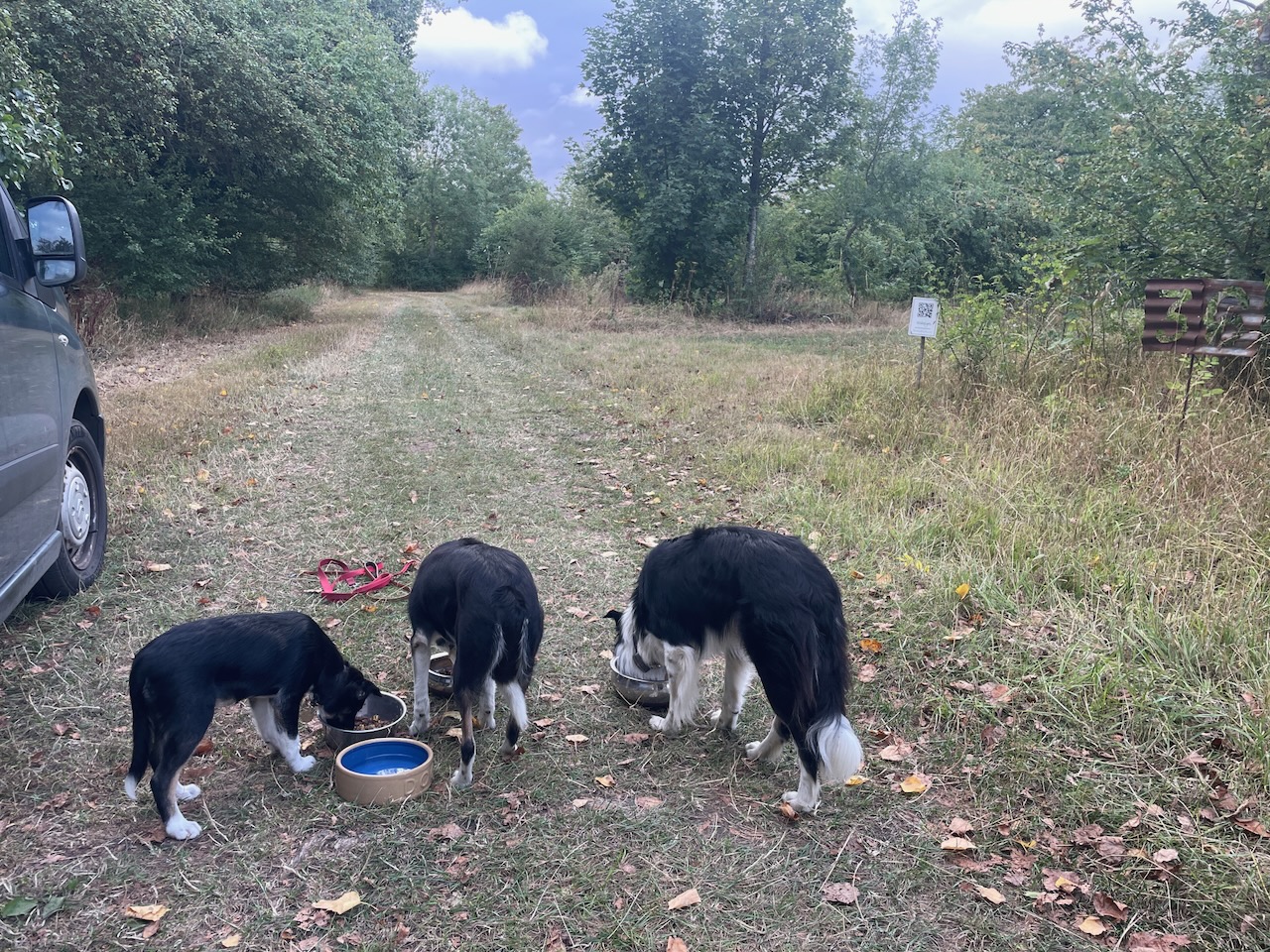
The last lunch. I am late after walking the dogs of course. I sit on the sofa and find the company of two girls, who have arrived for the day. They are local, from Diss and Roydon. One works for the Environment Agency. ‘I have two words for you’ I say ‘Himalayan Balsam!’. She relays news from yesterday that the Blyth may be chosen as a full catchment project for 4 years HB control. “You should speak to Rachel Kellett” she said. “I am” I replied!
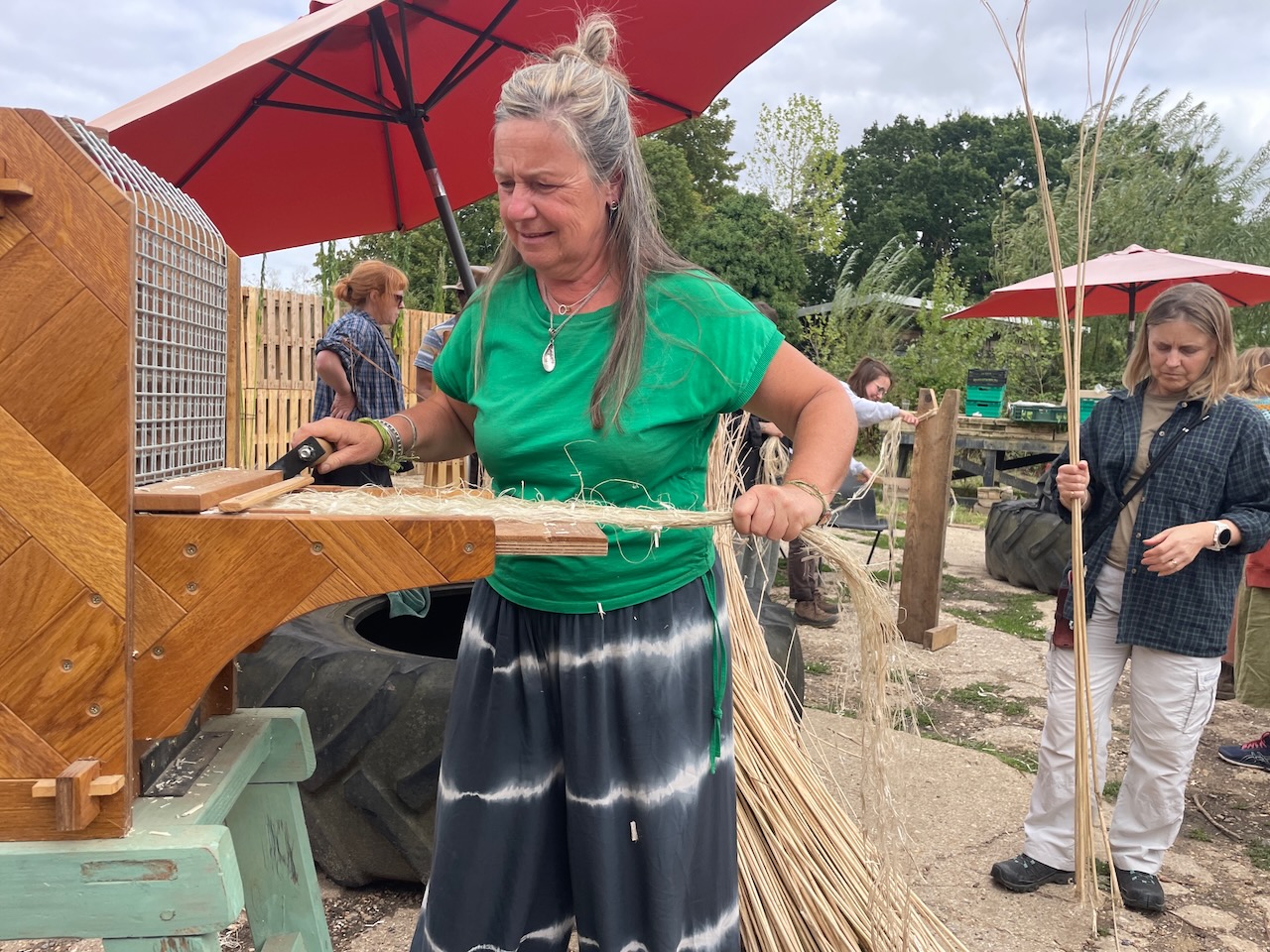
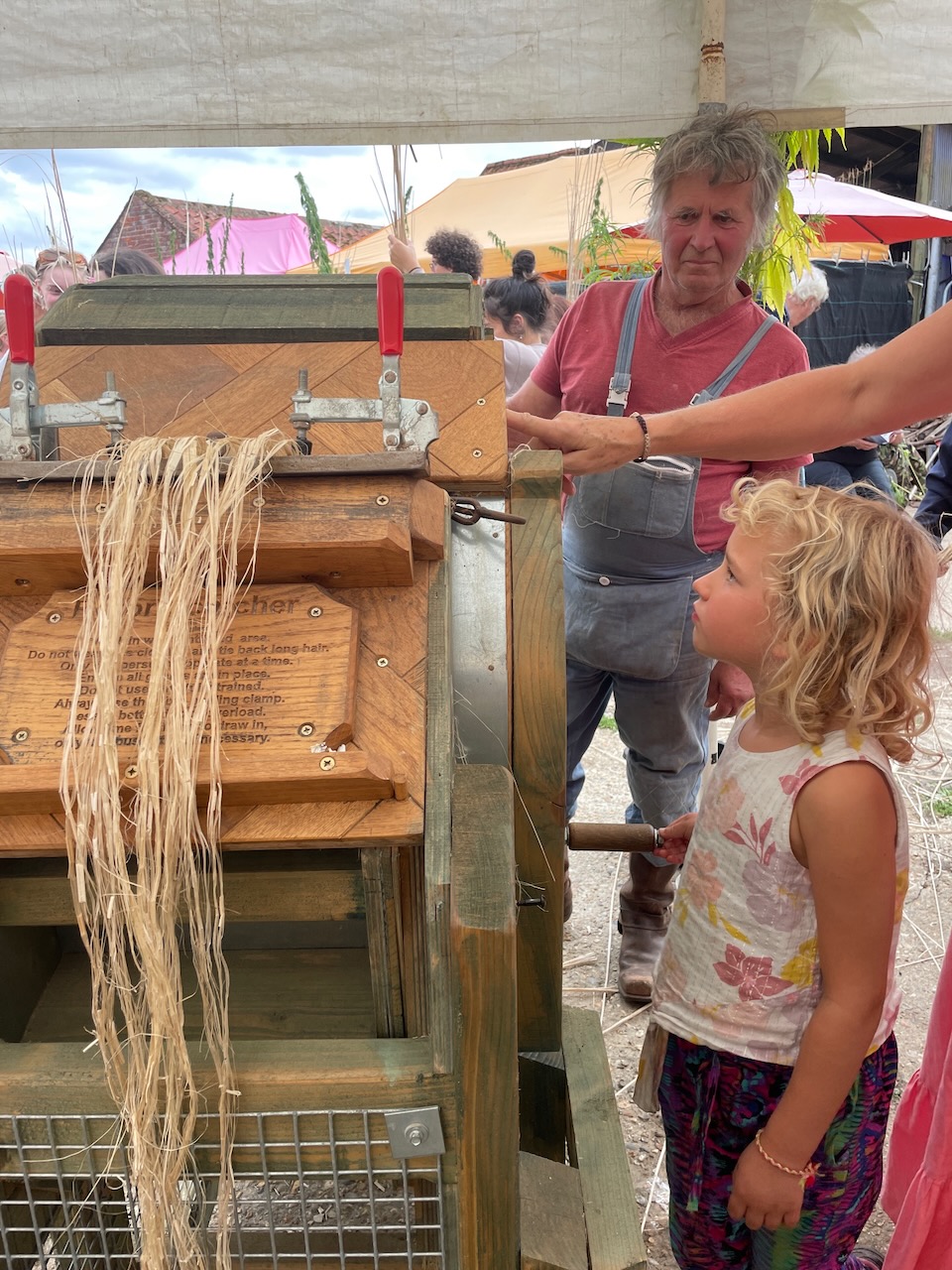
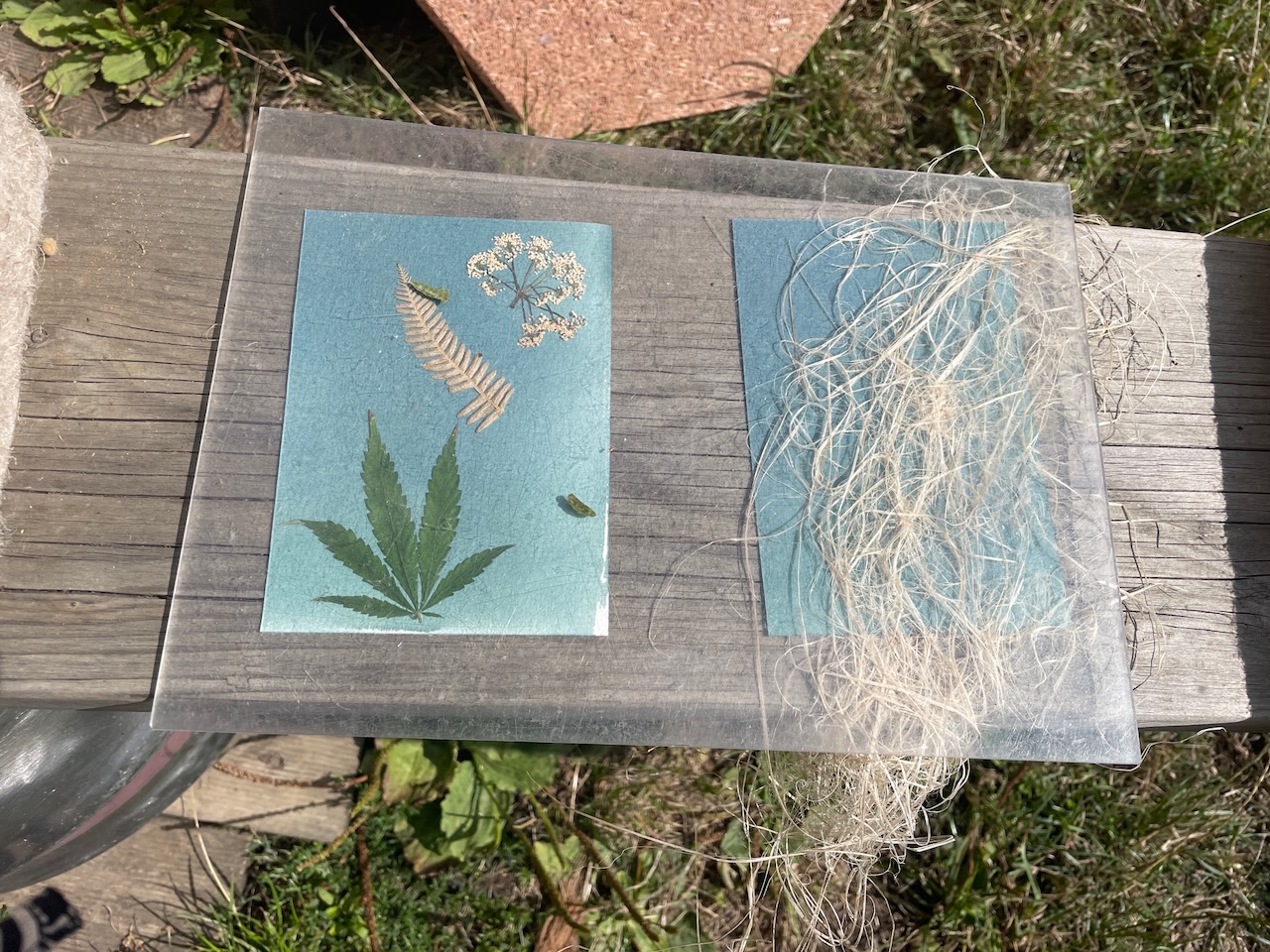
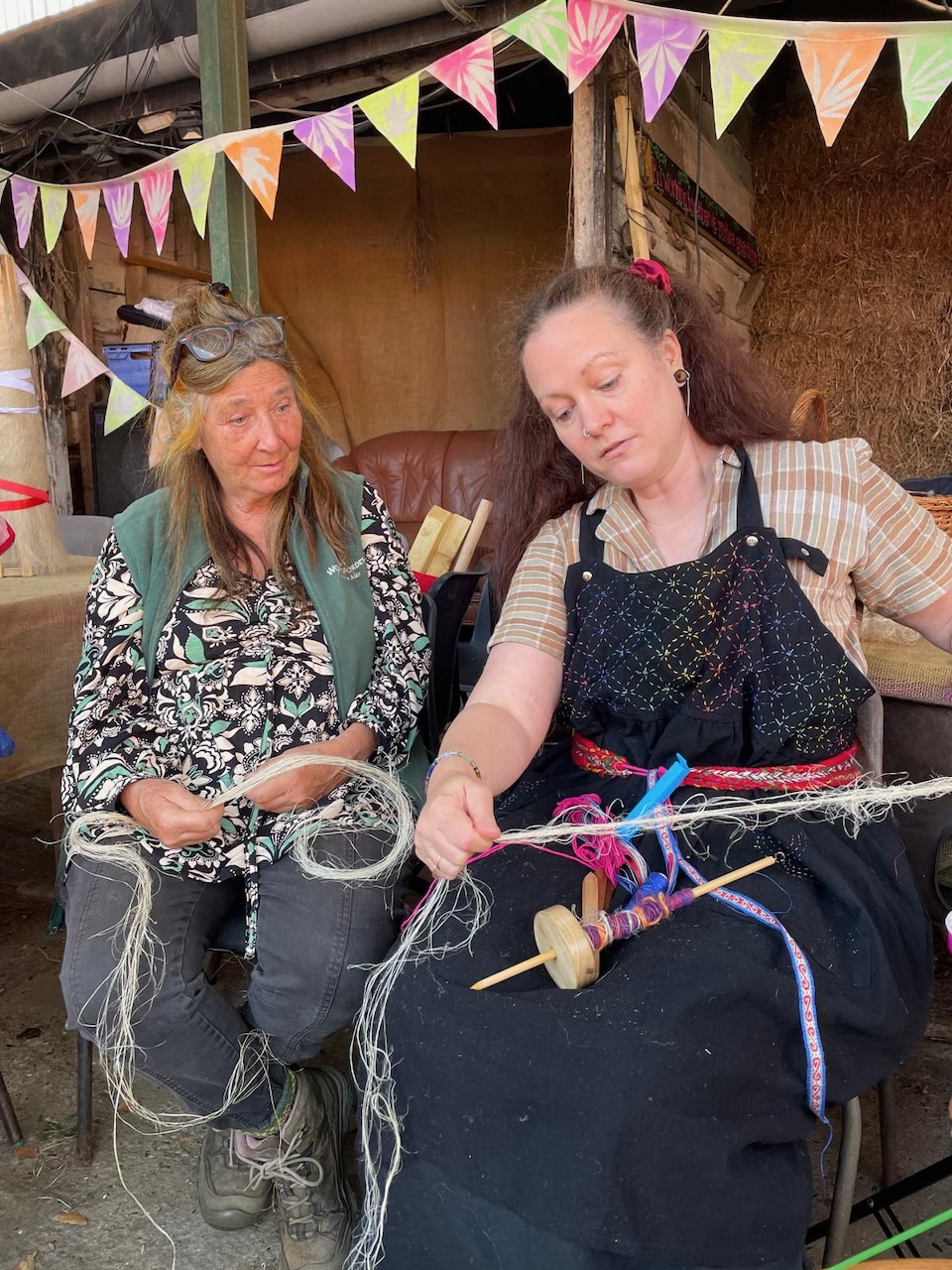
Finally, with the hemp retted from last year, I close 10 stems. Stipped through the breaking machine, bashed on the breaker, combed /carded on the 4 combs. Disguarded loads of tow rope, left with a thin strand of perfect smooth hemp, like a horse tail. With the Norwich spinners, I am taught how to twist and spin the yarn. Not enough to make a dress, but I feel so proud to have seen this process through. Except the sowing of course. That I hope will come on my land in Holton.
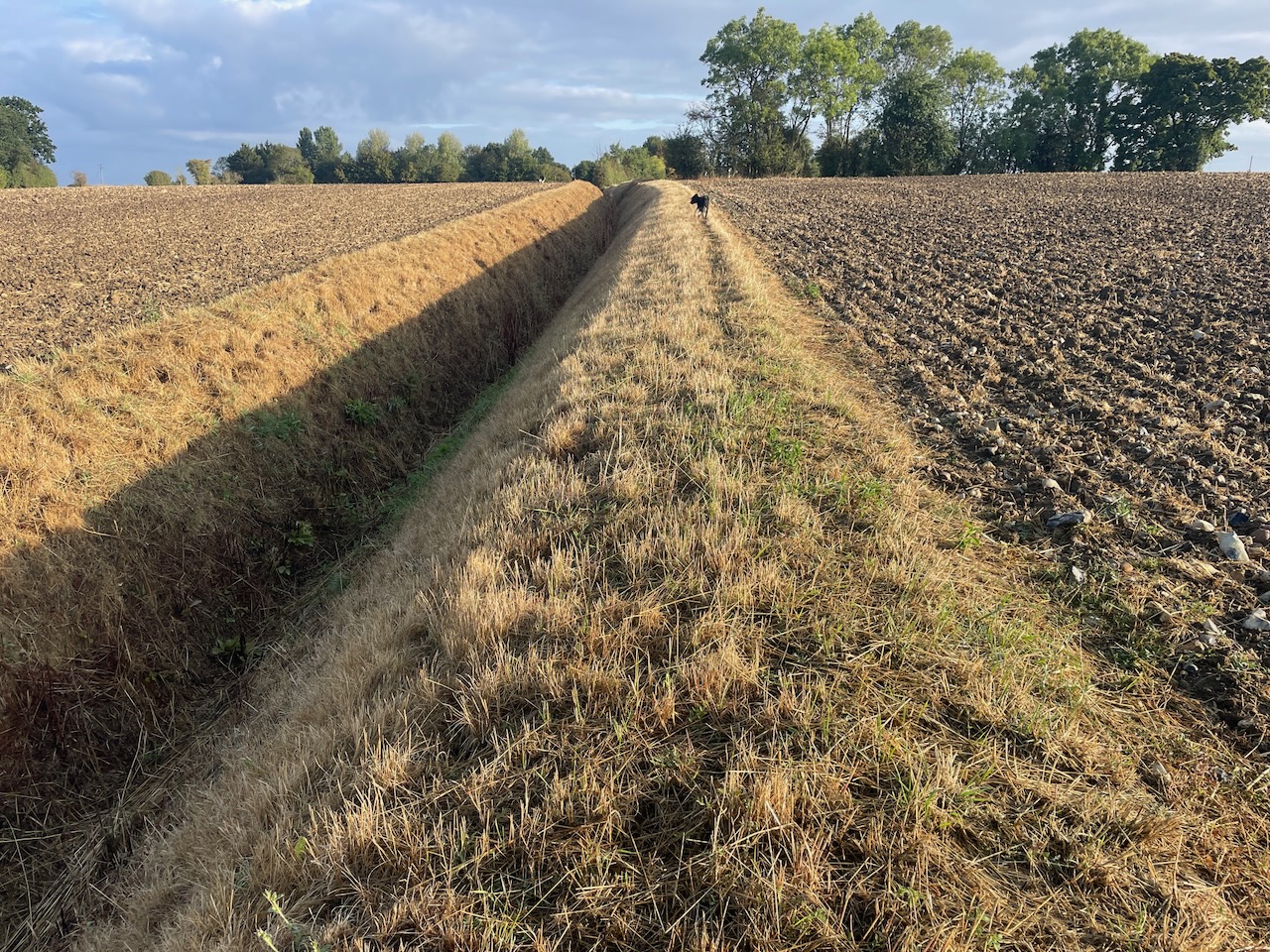
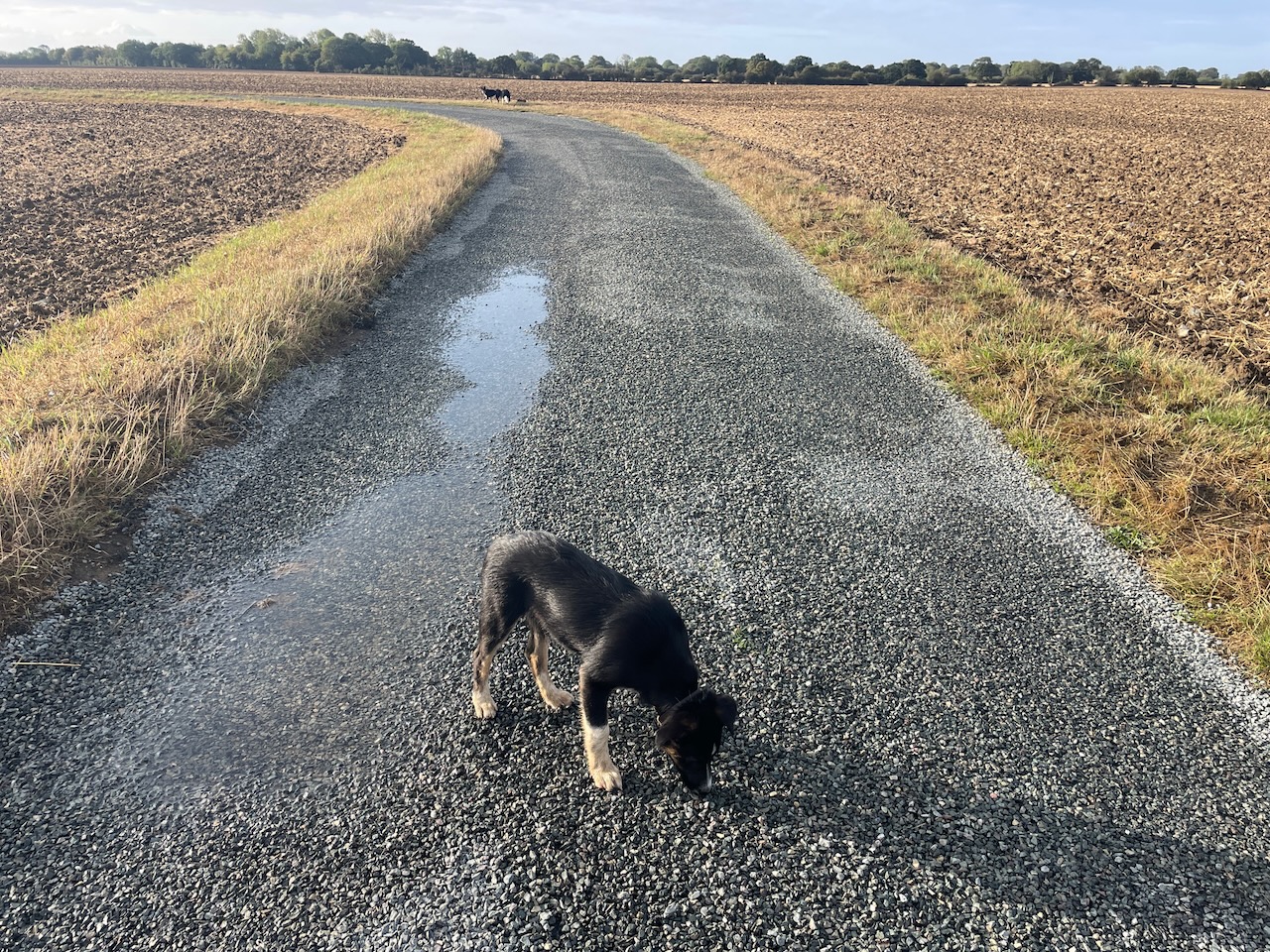
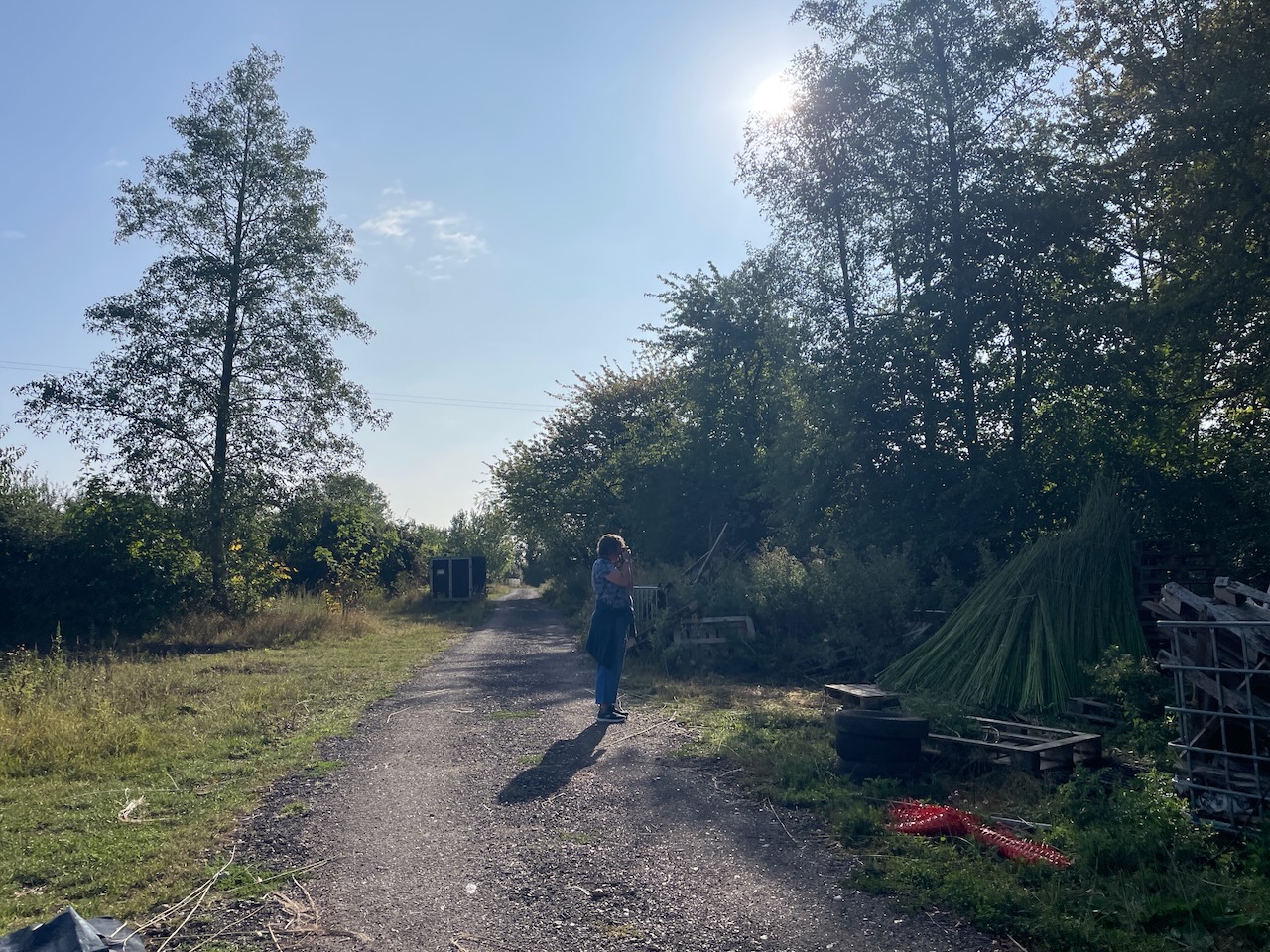
Sunday morning I take the dogs for a walk around the fields beside Wakelyns along with the south Indians and another. I am re-telling Martin and David’s story of agroforestry. Outside Wakelyns is a treeless, hedgeless landscape, of weedless monoculture ploughed up to the field edge. Naturally I judge negatively but I am also grateful for a view across the valley. Kobo the puppy has been well taken care off, much loved and well socialised, as hearts melt for the playful joy she gives. The others content to stay in the van. The ghost of Ann on her tramper making her way down to Metfield Stores to organise the vollies. The ghost of Chris, who did so much work at Wakelyns where he was needed and cared for. The ghost of myself, finding Wakelyns for the first time, walking around the land with Martin, and remembering that realisation: there is another way. This is indeed an inspiring place, and it continues to touch new people as it welcomes us all.