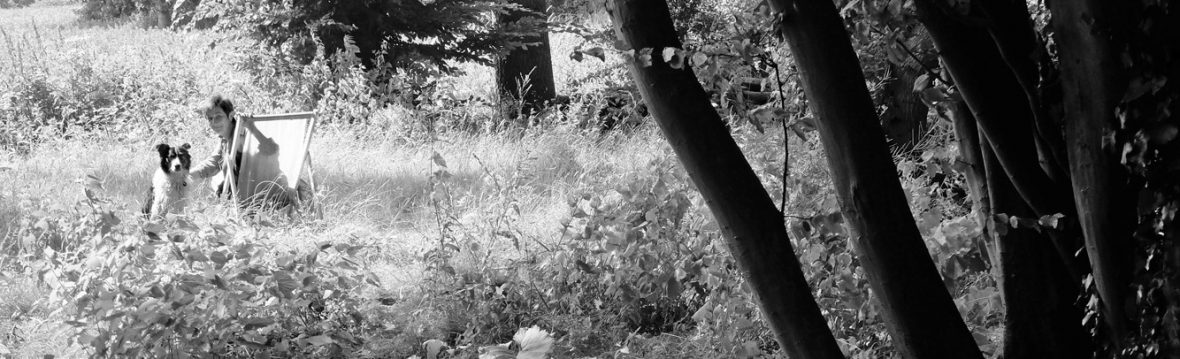
(Written for the Holton Newsletter, after the winter commencement of hedge laying work along the HHP boundary with Beccles Road)


In the dull dark days of January and February, the custodians of the land turn their thoughts to hedges. They are naked now, their form can be clearly seen, the straggly bits, the dead arms, the wayward branches, and they are dormant. The eastern side of the 70 acres of Holton Hall Park, a privately run static home site, borders Beccles Road, and it is here, this February, we began the gentle art of hedge laying, to lay our south eastern boundary hedgerow. We took full advantage of the road being closed for 3 weeks. To prepare we felled our dead trees, mostly Elm, and cut back the briar. We laid what we could, coppiced the rest. The handsome Oak standards spaced down the boundary road are immediately more noticable.
The practice of hedge laying is thousands of years old. Originally mainly thorn would have been laid for the main purpose of enclosing cattle. While barbed wire and electric fences have replaced hedges for cattle control, wire does not provide shelter like a hedge, nor the diverse habitat.
Today our purpose of hedge laying is more multifaceted. It will provide a robust and more secure boundary. While Muntjac will no doubt find a way in, the double layer of hedge- ditch-hedge, discourages jumping deer. While we all like deer, we do not like them eating our tender young shoots of recently coppiced hazel. Above all it will provide a fabulous haven for wildlife for years to come.
It’s a way of managing hedgerows, along with other techniques including coppicing, or hedge trimming. Left unmanaged a hedgerow will continue to grow upwards and outwards and will eventually become a line of trees. Like coppicing, hedge laying promotes regrowth from ground level and will ensure the health and longevity of the hedgerow.
How it works
Stems of hazel, elm, hawthorn, maple – all traditional hedgerow plants – are half cut at their base at an angle down, and with a part of the plant still connected, bent over at an angle. In the traditional method, stakes are used, and sometimes binders along the top, making a more robust and living, stock-proof barrier.
The principal behind layering a ‘laid’ hedge is that when you ‘wound’ certain species, nature responds by exaggerated regeneration. If a sapling is both wounded and then bent horizontally, the regeneration takes the form of dozens of fast-growing vertical shoots, reaching for the light.
This regeneration can be developed over time on three or four different levels – or layers. The profusion of new growth it produces creates a dense and impenetrable barrier, which can provide a rich source of timber over a cycle of about 10 years – as well as greatly improving the environment for birds and mammals of all kinds.
Of the 30 different hedgelaing styles around the UK, I cannot find an East Anglian style, and we have employed our own ‘natural’ method, not using stakes but using the upright standards already growing. We’ve used dead wood in the hedge to protect the regrowth from being browsed by deer, and which also provides good habitat.
This is a 10 year project for us, with our objective to hedge lay all around the Park. Now we will watch for the vertical re-growth.
I am new to this practice, and was keen to learn. I was (briefly) taught by Alan from Wenhasten, who goes in for hedge laying competitions, and then by Paul Jackson from Bungay, who worked with us along the Beccles Road, and has become my all round woodland teacher. I practiced the gentle art on the boundary of my own 5.5 acre wood, on the opposite side of the road last year. So I know it works!
For further information: http://www.hedgelaying.org.uk
Rachel Kellett
4 photographs
Elm Lay
Elm Lay pushing larger elm over
Hawthorn first cut
Maple Lay
………….
Finding a photograph of a woman, linked to Hedgelaying, naturally attracted. Miss Valerie Greaves. Here’s an expert from Hedgelaying.org.uk:
‘Hedgelaying declined after the 1939-1945 war due to many factors such as the availability of labour, the introduction of machines to cut hedges, wire fences and changes in agriculture that placed emphasis on production.

By the 1960s hedges were declining at an alarming rate. Lack of maintenance meant that hedges became tall and gappy with sparse growth at the base; in effect a line of trees. Many hedges were grubbed out to make larger fields that could be more efficiently managed by larger machinery.
In 1978 three hedge layers – Mr Fred Whitefoot, Mr Clive Matthew, and the late Miss Valerie Greaves (pictured right) realised that soon the valuable skills of hedgerow management that had been acquired over hundreds of years would be lost forever.
These founder members conceived the idea of setting up a national society to enable the skill of hedge laying to be documented, and passed on to others. Competitions were organised all over the country. A national competition is now held every year. The Society has members who are drawn from all walks of life, professional and part time hedgelayers and others wishing to support the aims of the Society’
She was called to speak to a parliamentary sub committee:
https://www.publications.parliament.uk/pa/cm199798/cmselect/cmenvtra/969/8072107.htm
She died 2013.
Details of the deceased
Surname:Greaves
First name:Valerie
Date of death: 24 December 2013
Last address of the deceased17 Sandhills Road, Barnt Green, Birmingham B45 8NP. Teacher (Retired)


