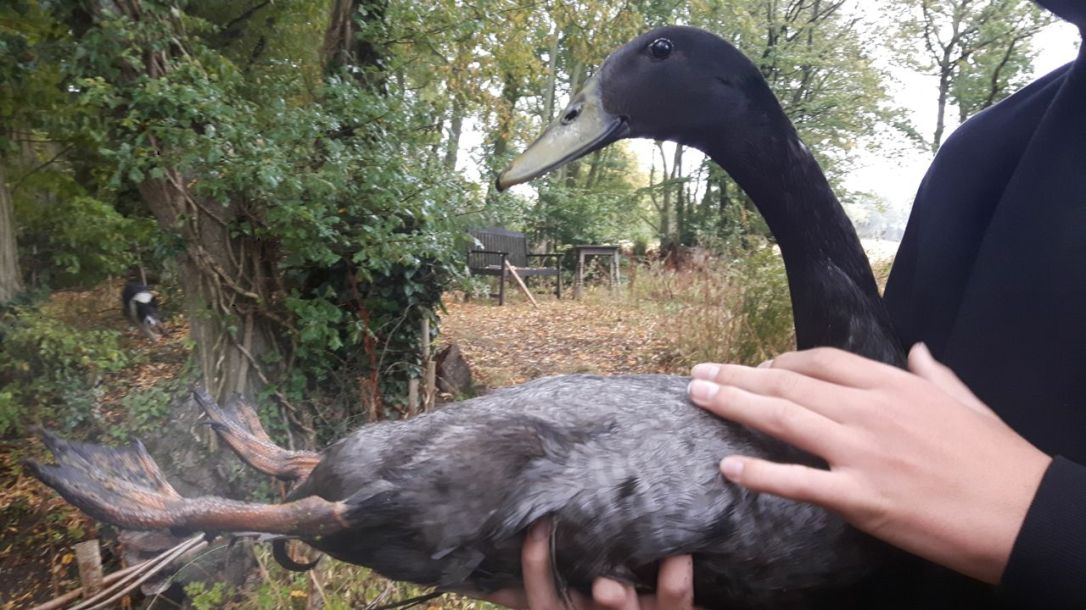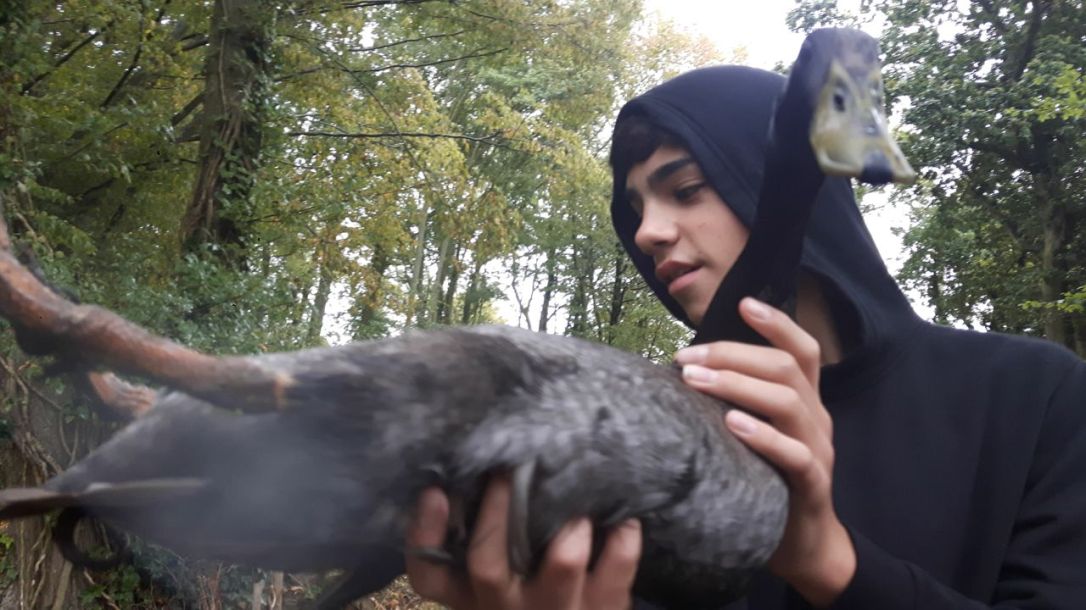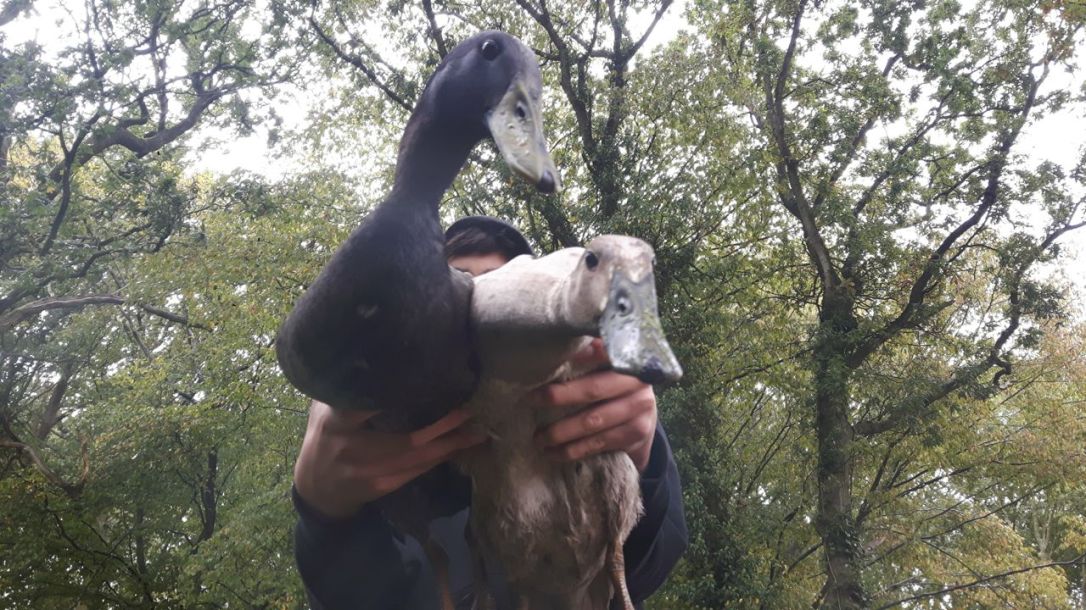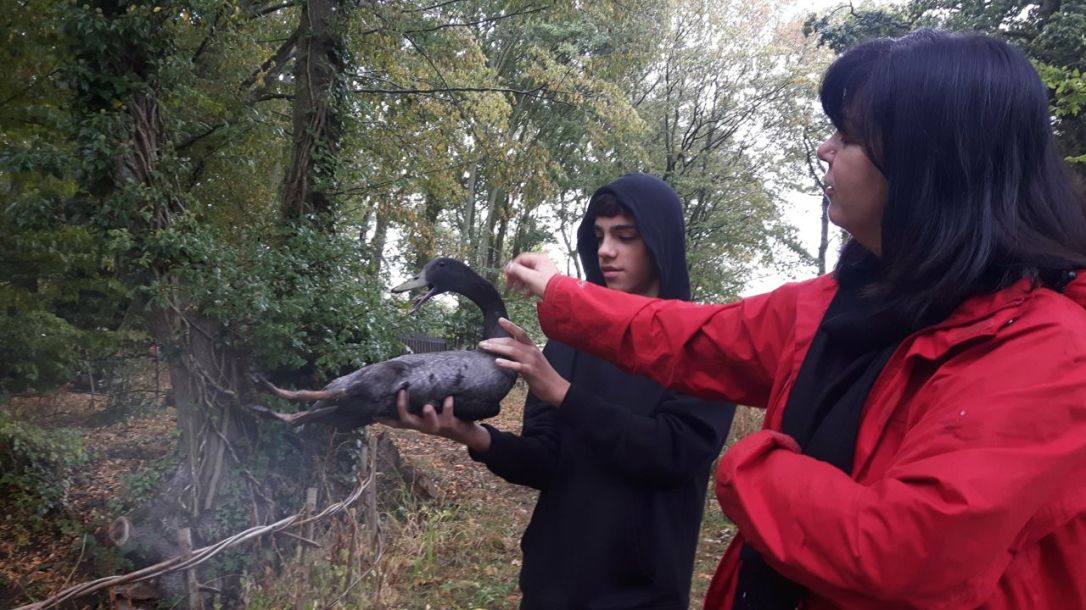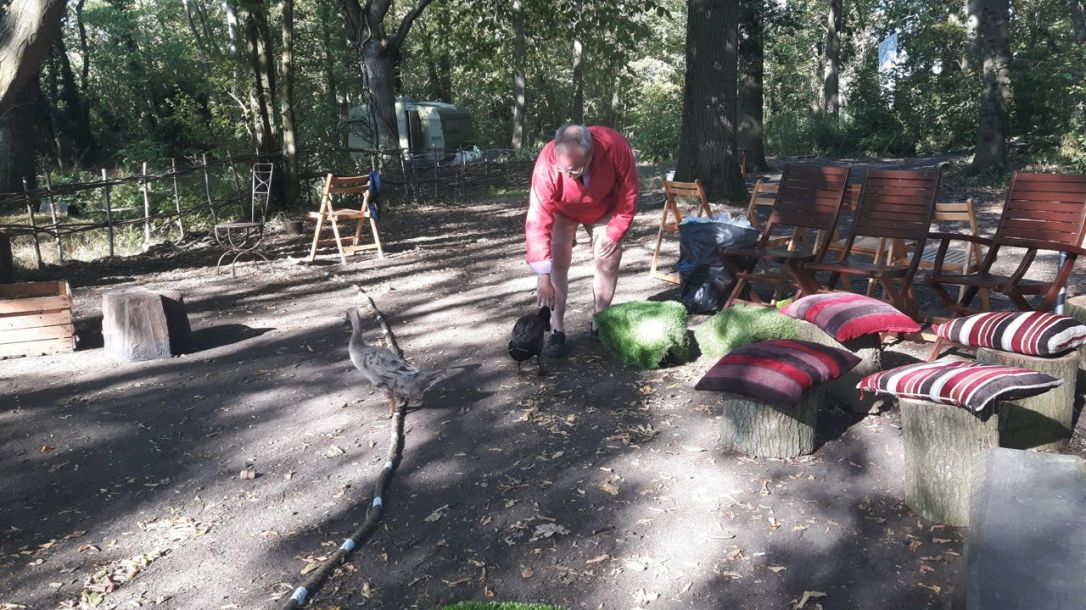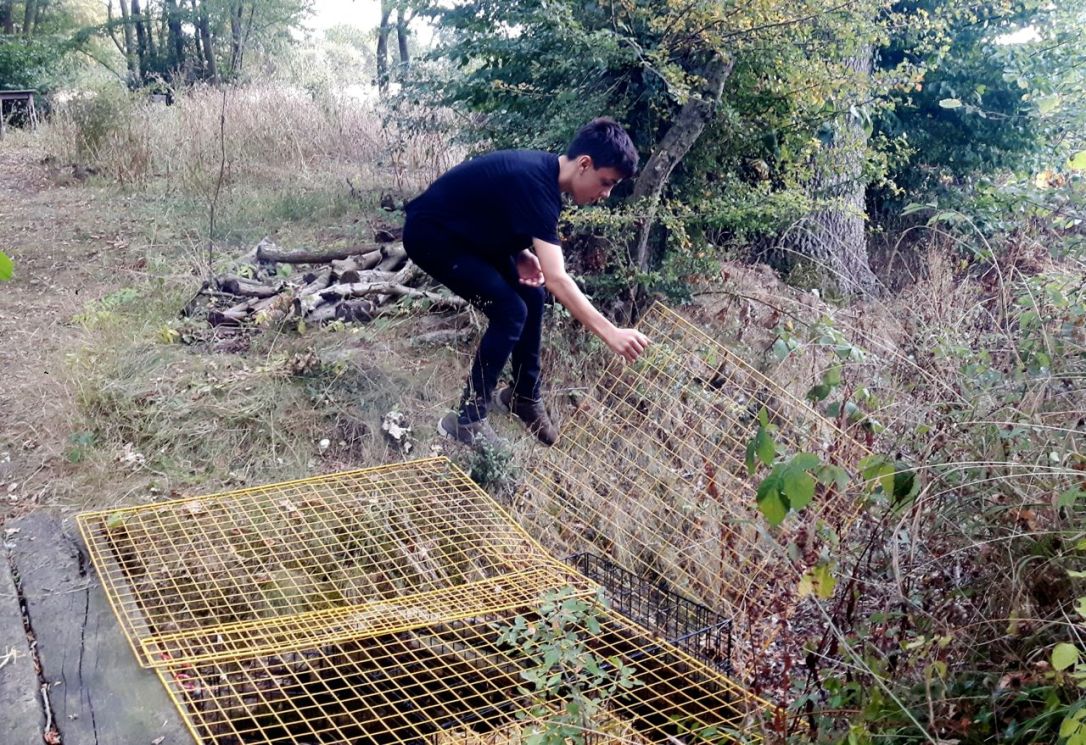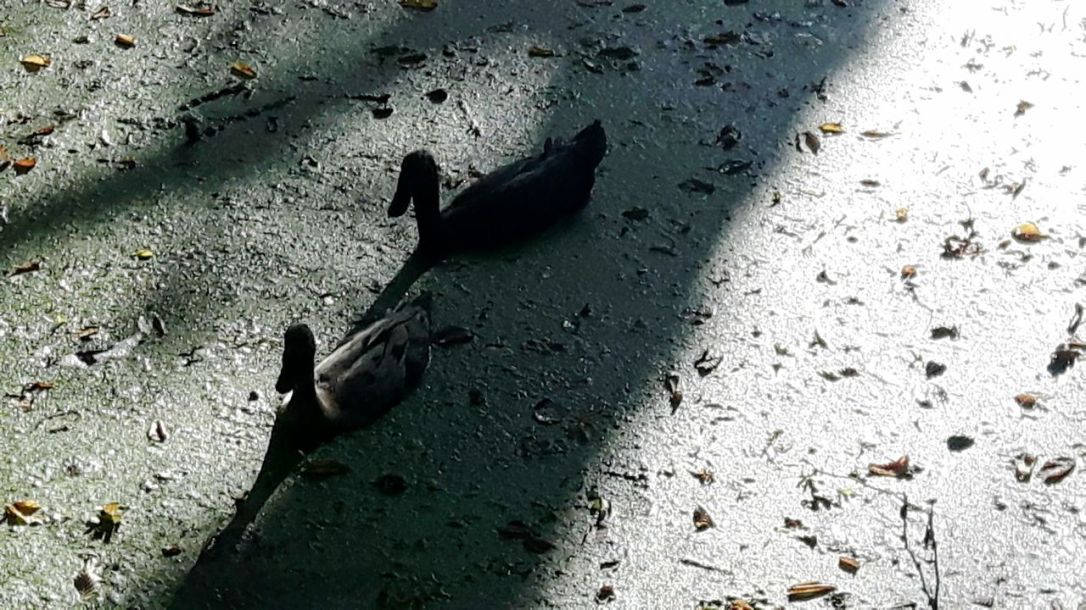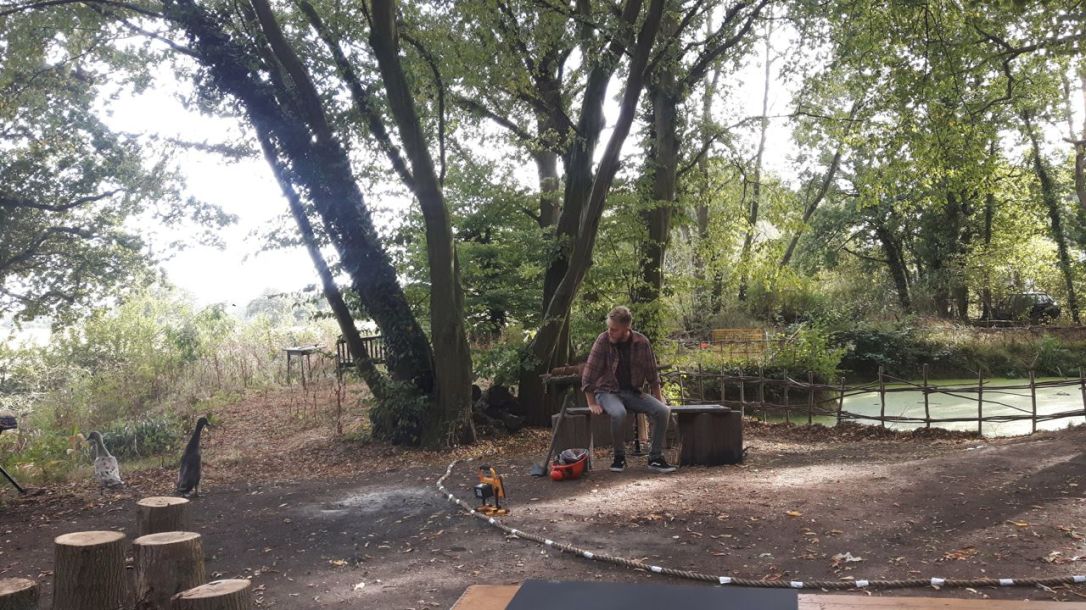
Cosmo and Lucky came to Kaliwood. They are both roughly 15 weeks old. We’d seen Cosmo as a youngster – Luis bought him to Forest School. He’d outgrown the back garden and paddling pool and Luis was generous in his giving of them to the wood. Kali’s old dog cage modified with straw and a plastic tarp top did as their first home.
An early Cosmo at Forest School
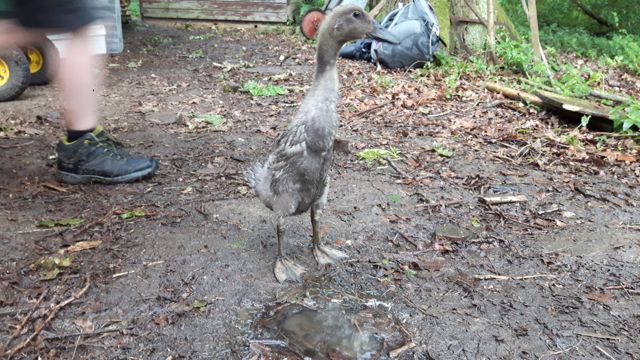
Here’s their background from Luis:
Lucky was incubated alongside a pheasant egg, (given by teh game keeper of Ravingham estate. Poppy helped to rear both of them with Luis. There were 6 runner ducks laid at Sotterly. These are the only survivors.
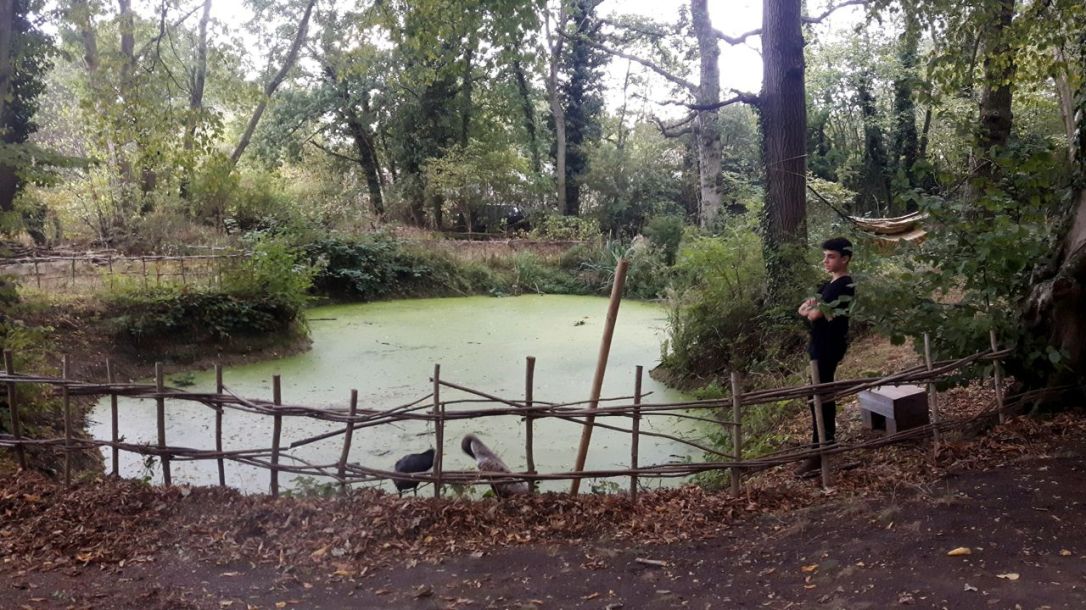
Luis and Sarah were waiting in the woods, when Rupert and I arrived back late from something. The ducks were in the water.
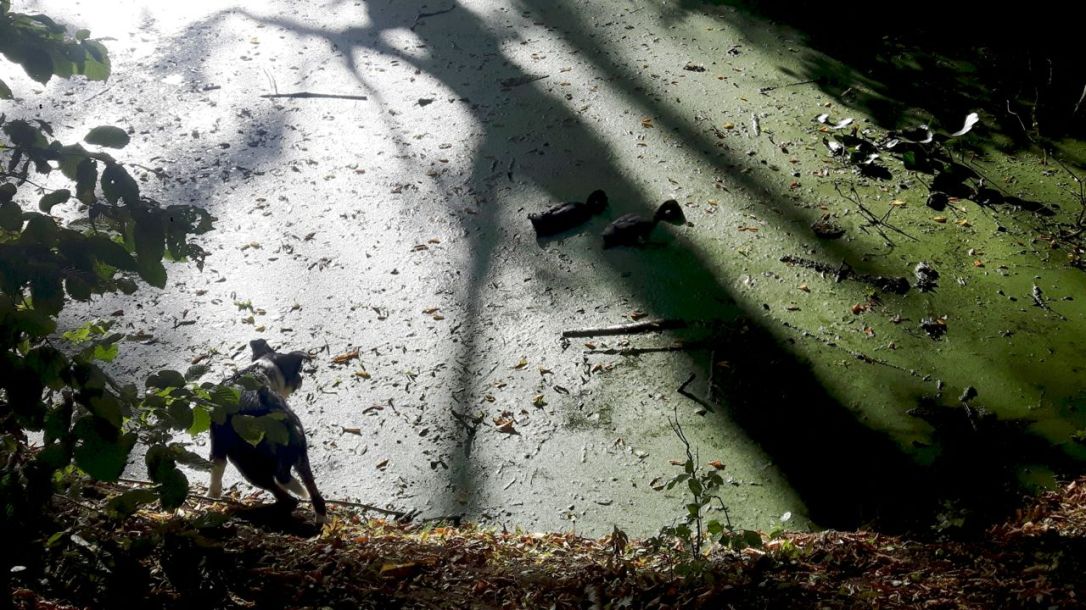
‘Like charlie in the chocolate factory’, I said to Luis, ‘They are gobbling up the pond weed’. In fact that first day Luis had a problem getting the ducks out. Dusk was falling. Dinner needed cooking.
‘They will come out soon,’ Luis said. ‘Look they are putting water over them – they do this before they come out’. He was dead on. He caught both and we put them safe in the improvised Kali dog cage, their first home.
Fox protected ducks, the dogs, Rupert and I stayed the first night in the wood, and let the runners out early morning. Rupert was a natural. He imitated their quack.
It is thought that all breeds of duck with the exception of the Muscovy originated from the wild Mallard and sports, that threw up occassionally, were used by breeders. (The Muscovy fromSouth America came from a different line)
The Khaki Cambell was one of the best breeds for egg production bred by Mrs Cambell from Ulay in Britian at the turn of the century. It has Mallard, Indian Runner and Rouen in its make up. Before the Khaki the Indian Runner was oneo f the most widly kept breeds. Introduced to Britain from Malalya around 1870 and spread from there to her countries all over the world. They lay an average of 180 eggs a year