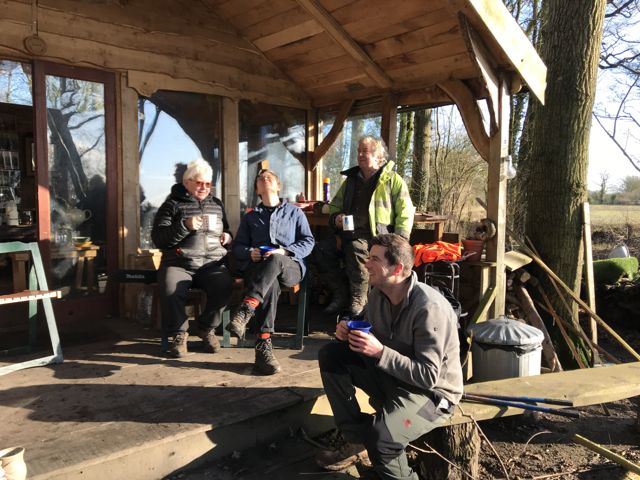
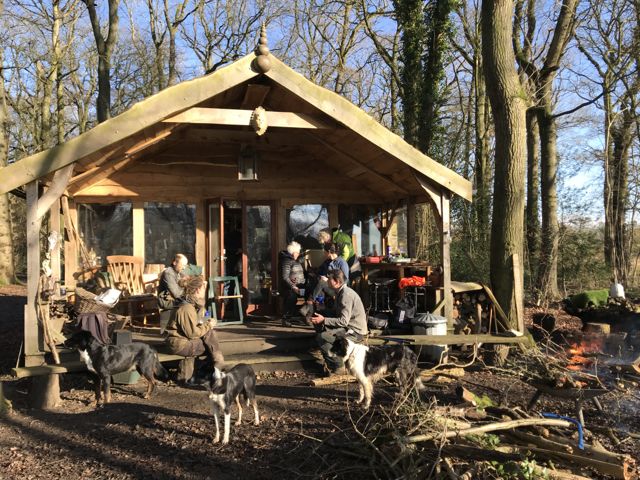
Gifted with good weather contrary to the forecast, ice bright blue days, warm enough to sit outside for hot drink breaks.
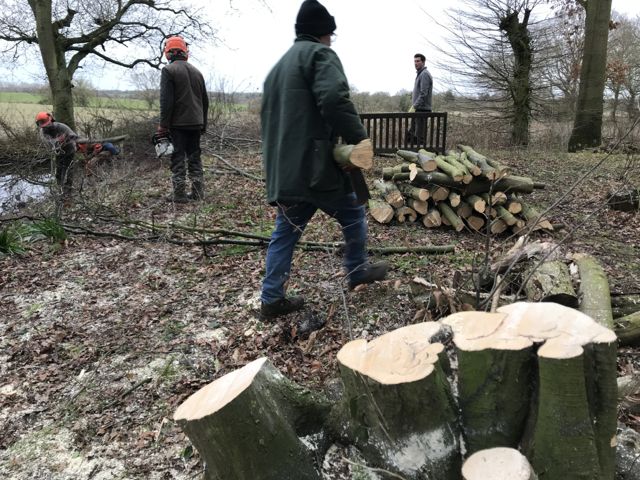
Led by Paul with Jim (on chain saws), Monday working with Jon, Mark, Pauline (regular coppice group) Pauline’s friend, Sam, a workaway staying with me, MJ (and Jo for a while to make sure the fire was active) and Phil who came looking for some hazel weavers (via the East Anglian Coppice Network) 9 in total of which 6 men to 3 women. We began on the south eastern boundary, away from Forest School taking place that morning. At noon Eloise bought the kids along to see what we were up to and it was delightful to see the little people arrive.
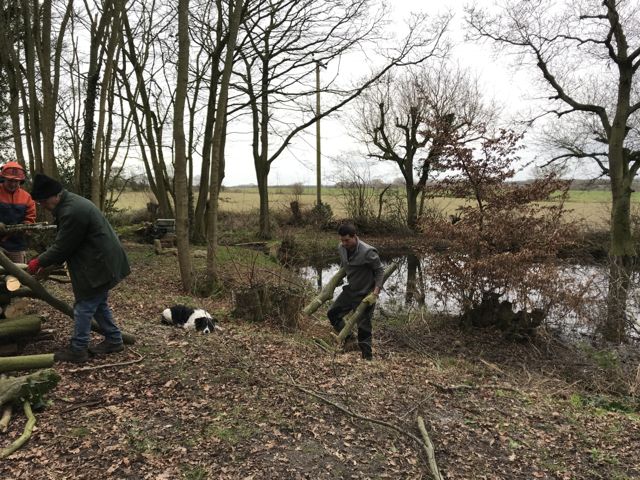
For the first year both Paul and I noticed some deer grazing – we’d been free for 5 years but news has spread, so for the first time we covered each coppiced stool with brush. Collected poles to make stakes, and weavers to weave, we got most of the area coppiced by the end of the day. Delicious lunch of butternut squash chilli and coconut milk soup. We talked of of how the tree planting at Wakelyns went at the weekend when Toby and David organised for 70 people to come and plant trees there. A new avenue and more fruit trees. They are taking ownership of this remarkable land, nurtured by Martin and Ann for 20 years, to show to inspiringly the alternative way, diversity their key.
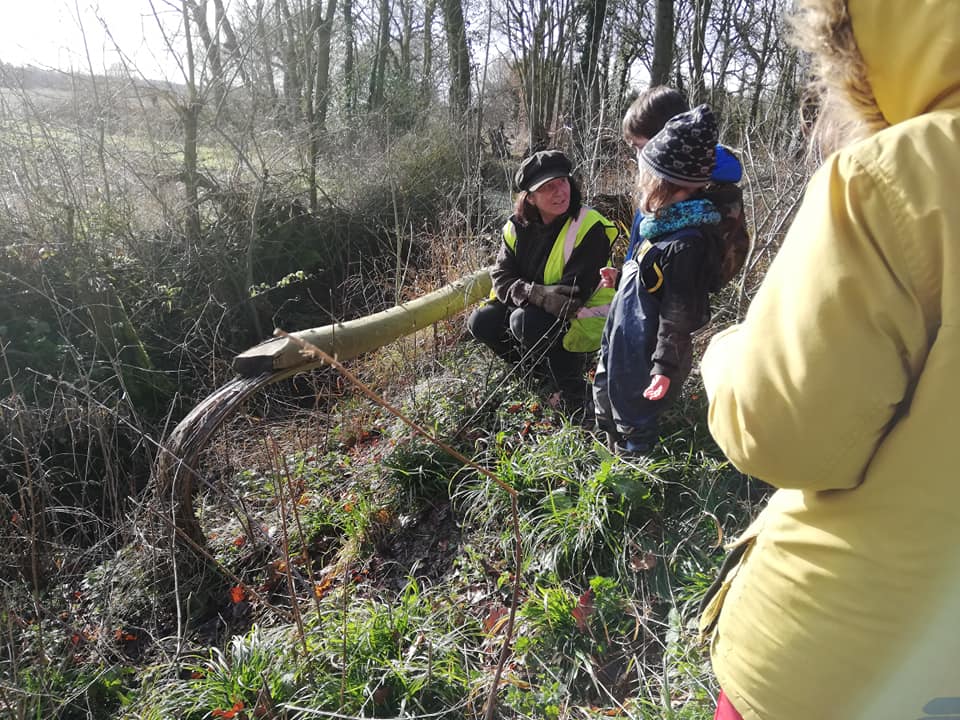
Showing the kids the remarkable bending of Ash along the southern ditch, and how it was growing along its lain trunk. 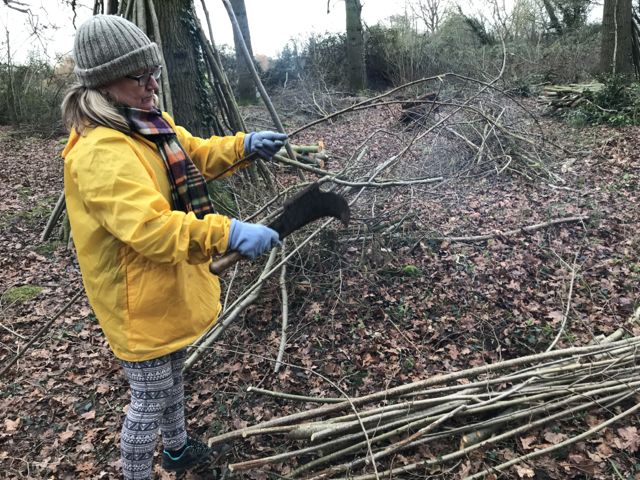
Pauline’s friend with the billhock.
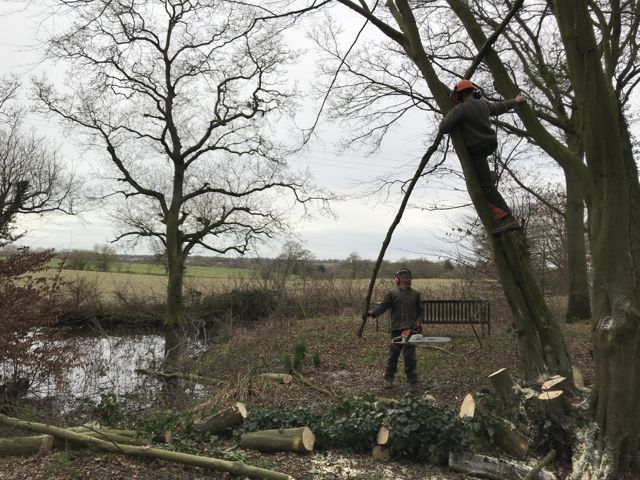
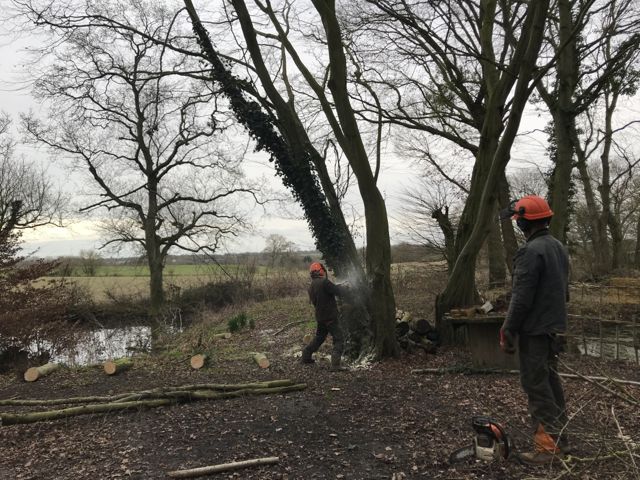
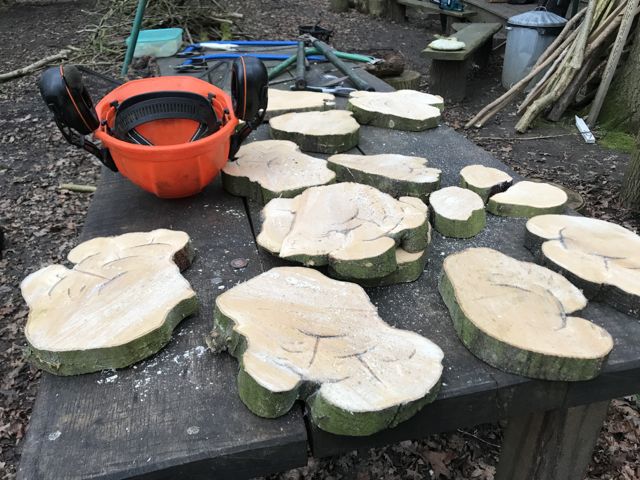
Coppicing the old coppiced hornbeam. It took 5 years for me to agree with Paul’s view to coppice this. I am more confident now and understand ‘If not now when?’. The hornbeam wood was beautiful, white, waxy, and sported. Paul cut us all some slices for the memory.
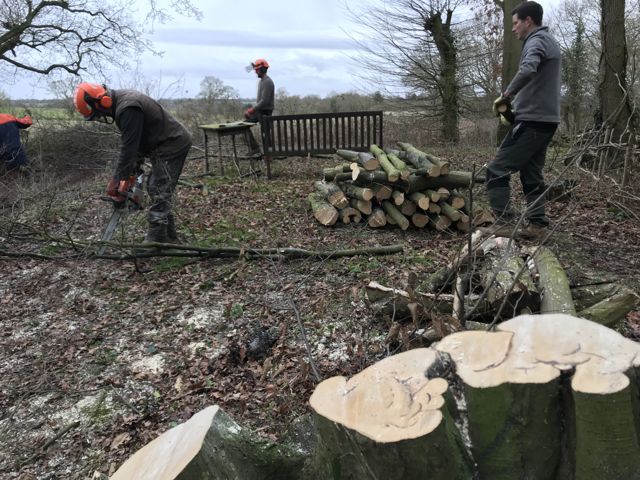
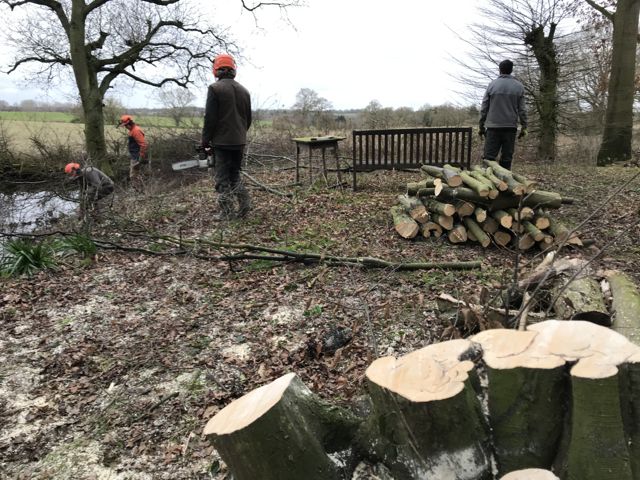
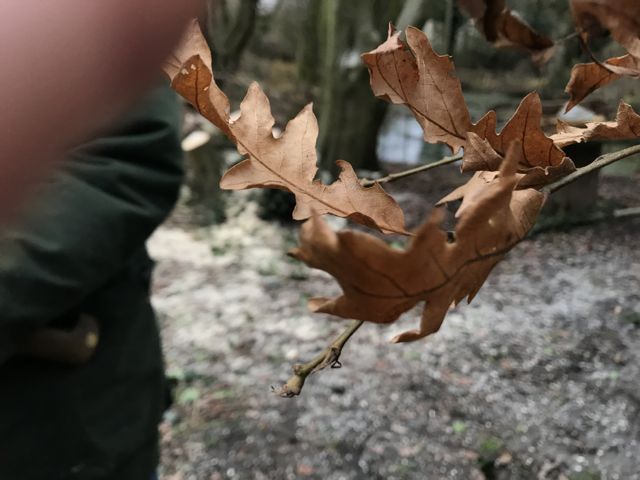
End of day discussion on the difference between English and Turkey oak. The tip.
(Quercus cerris)A pretender to the throne, the Turkey oak was introduced to the UK in the 1700s and is now impacting our native oak populations. It’s less valuable to wildlife, but much faster growing and a host of the knopper oak gall wasp.
Day 2
Paul, Jim, MJ Sam and I, were joined by Elly and Val with Beryle in the afternoon. We completed the work in the south eastern section, and altogether I’d say an acre was coppiced over these two days. The first dedicated coppicing work in the wood.
Break discussion was What to do in the event of a snake bite? Drink coffee or not? the gentle rush to starbucks. Michael came to lunch, bringing a whole course of food for us to share. Lunch discussion apropos the muntjac munching of hazel here was around the rewilding theme, in particular the reintroduction of predators such as polecats and wolves into the British landscape and re balancing. The farmers would have to be compensated, said Paul, pragmatically, for their livestock may be effected. Wasn’t there a moment on Little Big Farm that lynx arrived, but getting dogs was better than any fence?
We are surrounded by such broken relationships, truncated natural processes, cauterised ecologies. In Britain we lack almost all large keystone species: ecological engineers that drive the fascinating dynamics which allow other lifeforms to flourish. Boar, beavers, lynx, wolves, whales, large sharks, pelicans, sturgeon: all used to be abundant here; all but for a few small populations or rare visitors are missing. Our countryside preserved like a collection in a museum. An ecosystem is not just a place. It is also a process. George Monbiot

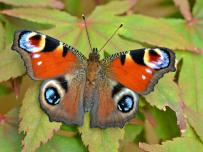
A peakcock butterfly landed on a log baske. Sam saw a tree-creeper earlier. An ash full of woodpecker holes.

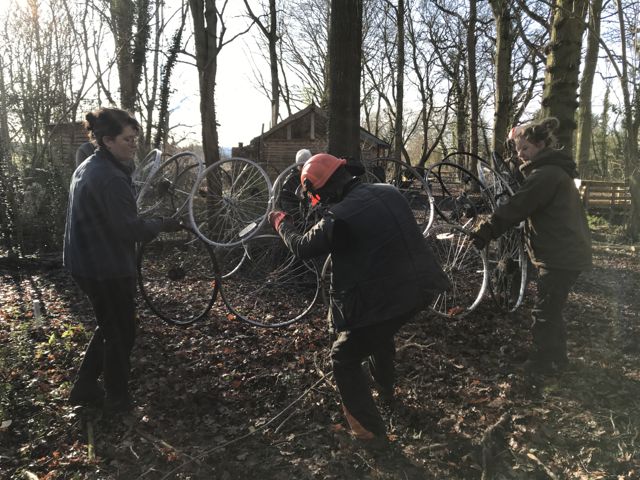
We moved Saturn! in order to fell a stragly maple and give light to a beech.


Black Jelly like fungi on Maple.May be Exidia Plana
May be Exidia plana is similar to (and very often confused with) Exidia glandulosa – commonly referred to as Witches’ Butter or Black Witch’s Butter, because of its butter-like consistency when wet and its sombre colour; however, Exidia plana has brain-like folds rather than being made up of irregular blocks with flattish facets. This jelly fungus can occur throughout the year; it appears on dead hardwood, particularly Beech, Ash and Hazel, but very rarely oaks. (Oaks are the favoured host of Exidia glandulosa.)
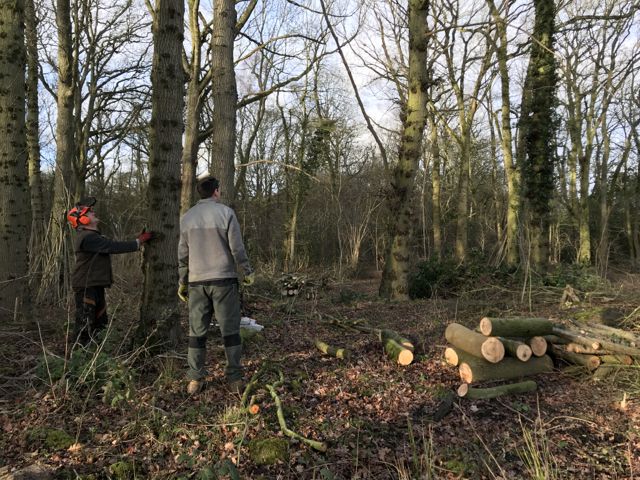
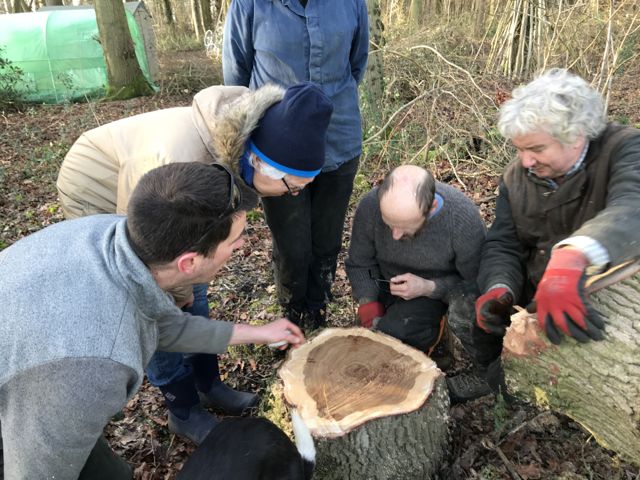
Towards the end of the day Paul felled a thin oak, which took the branch of another, so that came down too. They will both be planked, may be with Ben’s news mobile chain saw. We smelt the scent of fresh cut oak, earthy, sweet, then attempted to count the rings. More sap wood than I had seen on the other oaks felled. Does the oak grow from inside or outside, Paul challenged us. The cambium is so thin.
A cambium (plural cambia or cambiums), in plants, is a tissue layer that provides partially undifferentiated cells for plant growth. It is found in the area between xylem and phloem. It forms parallel rows of cells, which result in secondary tissues.


Above, Paul and Jim, on last cup of tea (earl grey – better than yesterdays old mix). Elly was staying the night in the cabin, which was cosy and warm after fire on all day.
At 6 Sam and I walked down to her, bringing wine and humus, and as the night was clear and stars bright, we went out to the see the night sky – Sam showing us Venus close to the Waxing Crescent moon. (A Waxing Crescent is the first Phase after the New Moon seen in setting in western sky). Through his binoculars, and instructions, (left of Cassiopea) I saw my first ever glimpse of the Andromida galaxy, my first look into a galaxy beyond ours, approximately 2.5 million light years away. Is Betelgeuse, dead now, that we see it so may years away?


