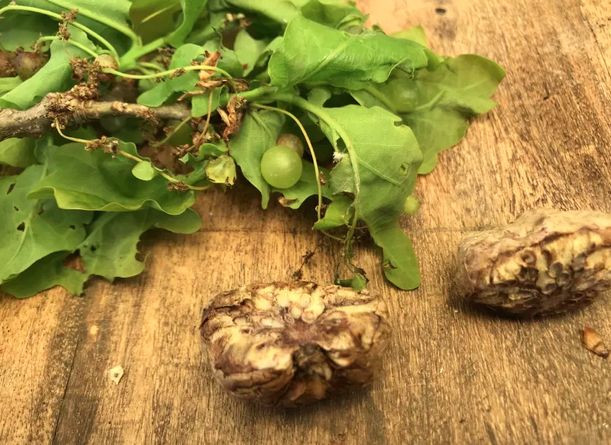
It is a year of seeing Galls, and learning about them. The Knopper galls abound. A photo of 3 growing on one acorn.
I have yet to collect enough oak galls to make the ink, but keep looking. This photo from July of fresh green galls forming, and an old gall cut in two. The female oak apple gall wasp lays eggs in the central vein on an oak leaf. When the larvae hatch, chemical and hormone interaction between the wasp eggs and the oak (like a tumour forming) causes the tree to grow the round gall. The gall provides a safe home as well as food for the young wasps. Each gall contains only one young wasp. Starting green and rubbery when young, when the galls dry out, the oak apple gall wasps fly from small holes in the galls.
Spangal Gall
Structures formed when the wasp lays eggs within the leaf. The egg releases chemicals which forces the plant /oak to make these structures. This year the wood path was covered with them, like confetti.
They fall onto the ground and the next generation of wasps form Red Currant Galls on male oak flowers and then the cycle repeats itself. They don’t harm the trees and can occur in huge numbers or not at all.
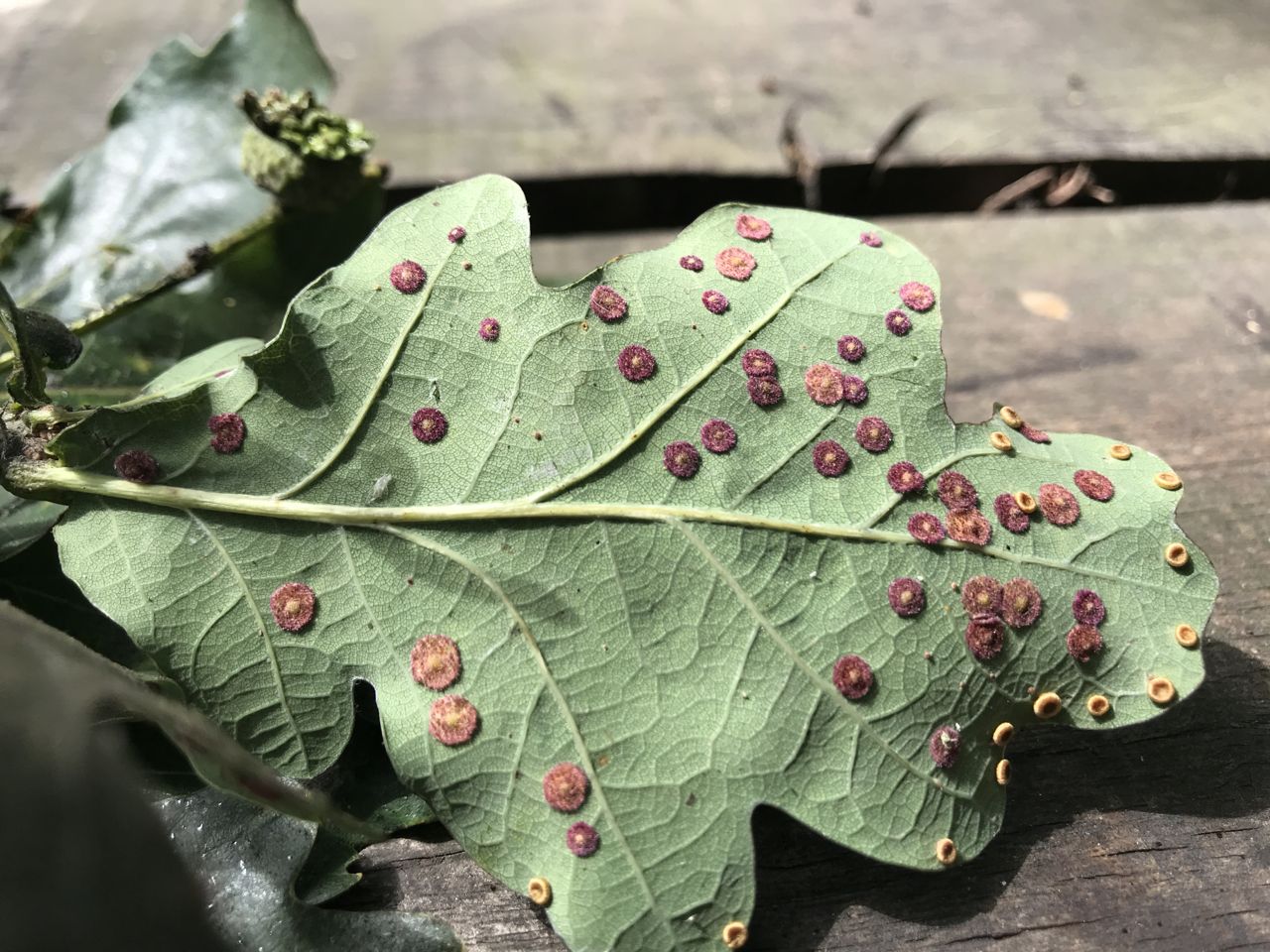
Silk Button Gall
Some above on the Spangle Gall oak leaf.
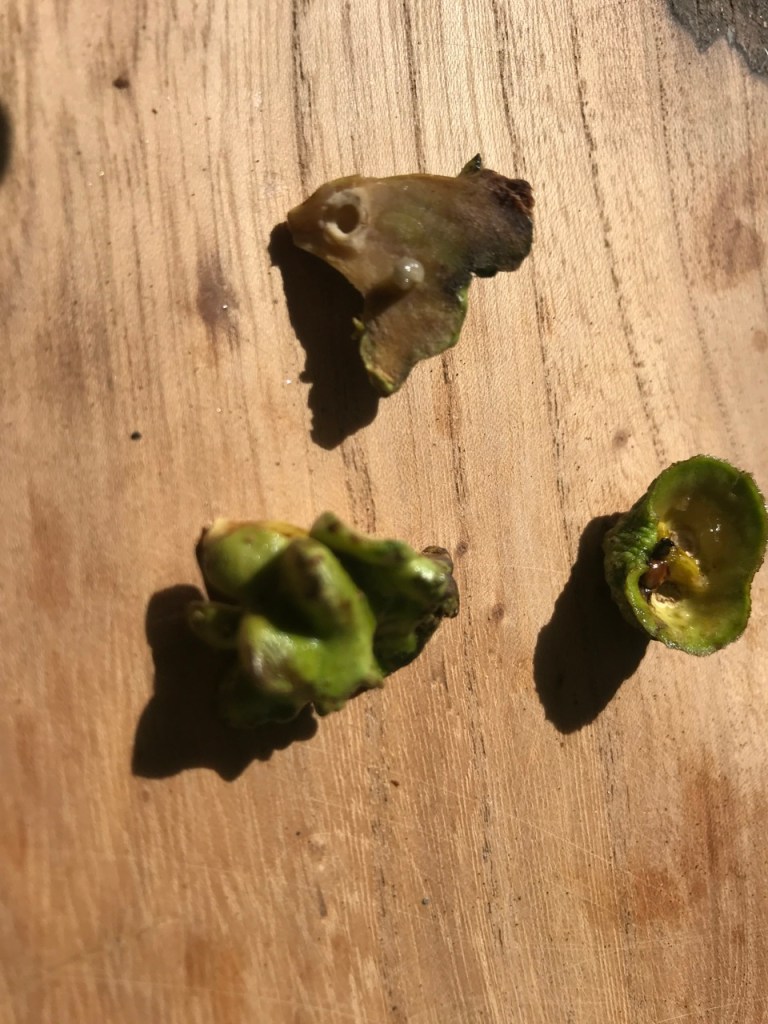
Knopper Galls
The knopper gall wasp, Andricus quercuscalicis, inoculates embryonic acorn buds with her eggs. The oak responded in an entirely specific way to this wasp by producing growths known as knopper galls,(Mark Cocker) from a German name for a type of helmet. The Guardian piece on their diversity. Arriving in the 1960’s they were first considered a threat to our great penduculate oak, but they’ve now have joined the rich community of life that inhabits the oaks. The wasp will pupate in the spring and wriggle out of vents in the galls. The emerging wasps, exclusively female, will fly off to find a Turkey oak, Quercus cerris, an evergreen introduced into Britain in 1735, to lay their eggs in its male catkins. This, by parthenogenesis, will begin a second, sexual generation of wasps (containing both sexes), which will lay their eggs in the native oak, Quercus robur, creating knoppers.


1 thought on “Oak Galls and Knopper Galls and Wasp eggs on oak”
Comments are closed.