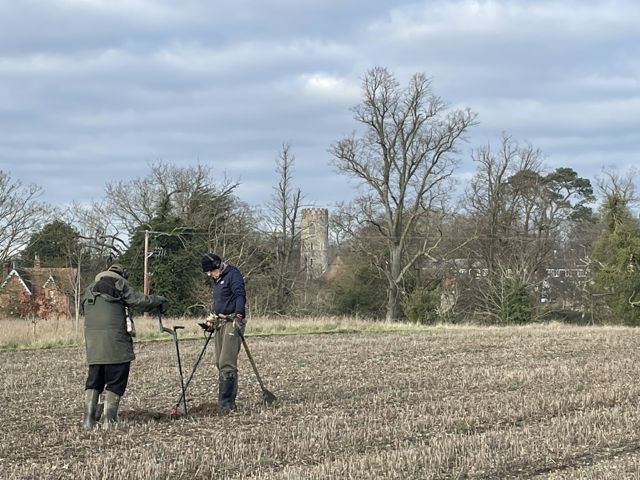
It started with our last day of the year walk around Holton Pits, when Nat invited a Detectorist, Nick, to join us. He introduced me to Cheryl, who once contacted, inspired confidence and sorted. She arranged for a group dig of the land, mine and Alans (with his permission) on Wednesday for Sunday. Total would be around 30 acres, one or two per acre, would mean around 60 would come.
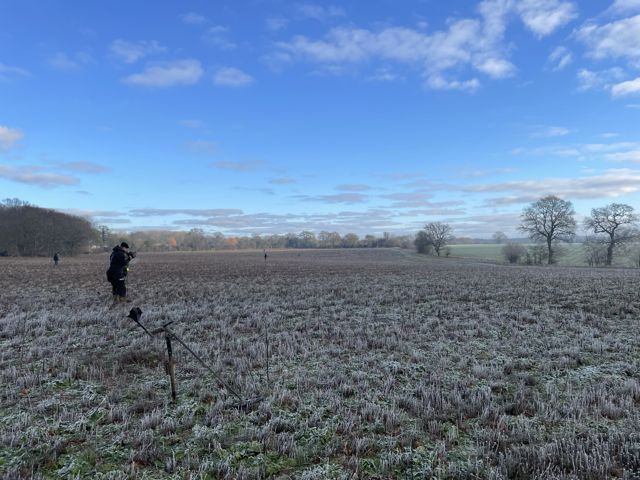
It was a frosty morning, minus 4 degrees when the sun arose at 8, and around 50 cars parked on the field.
The ground was rock hard, one detectorist gave me her spade to try digging myself and I failed. At least two spades were broken that morning. But by noon, the sun warmed the earth as the waft of bacon sandwiches pervaded the land.
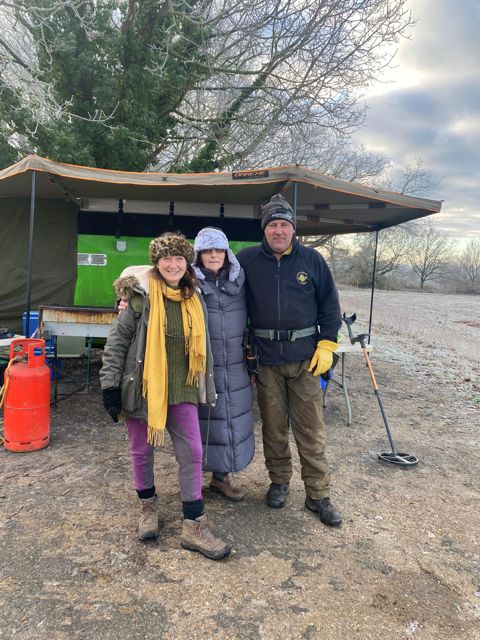
Here I am with Cheryl
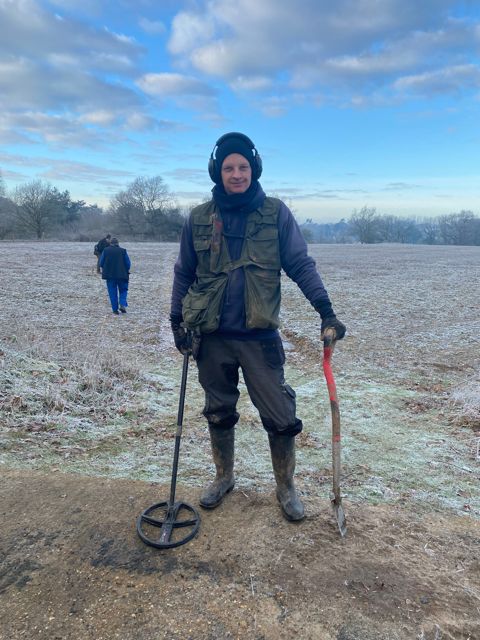
A man who’d driven all the way from Rotherham, a Polish man, invited me a try on his detector, and taught me some basics.
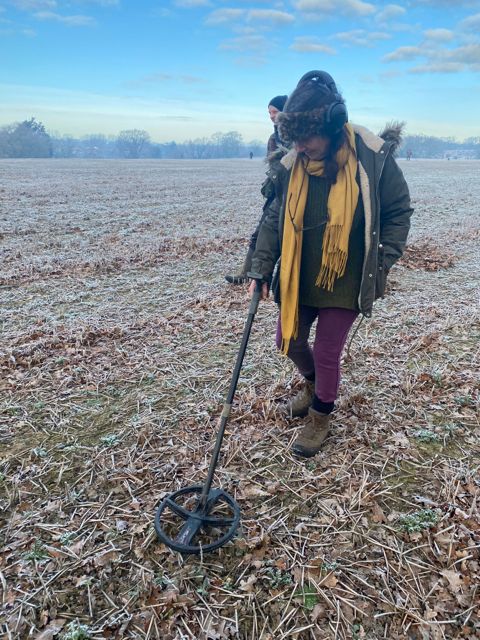

The first phrase I learnt was shoddy. From early on they used to bury old cloth in the field to give the soil more body, and of course, the cloth was organic then. The land was known as shoddy land. (Shoddy was a sort of cheap cloth made by pressing together scraps of reclaimed wool) So it is we often find plenty of buttons, and Jo found one almost immediately as she tried out the Polish mans metal detector.
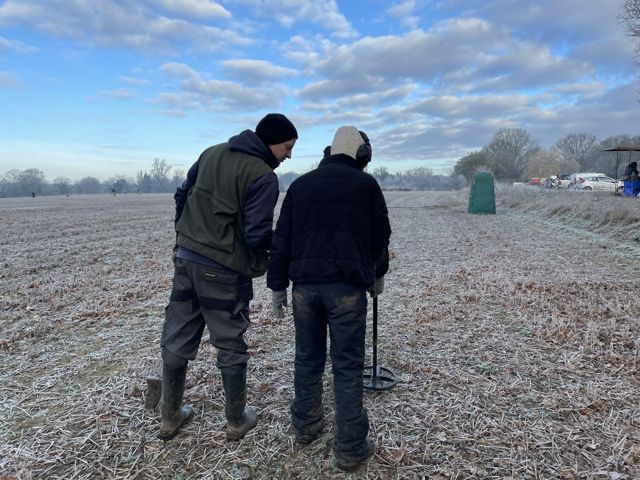
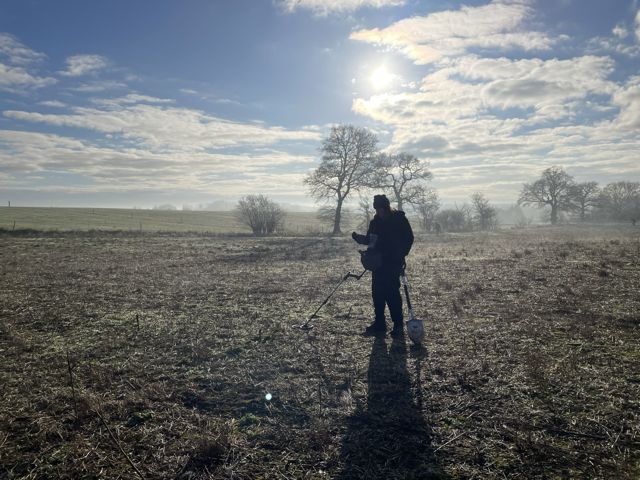
The light on my field.
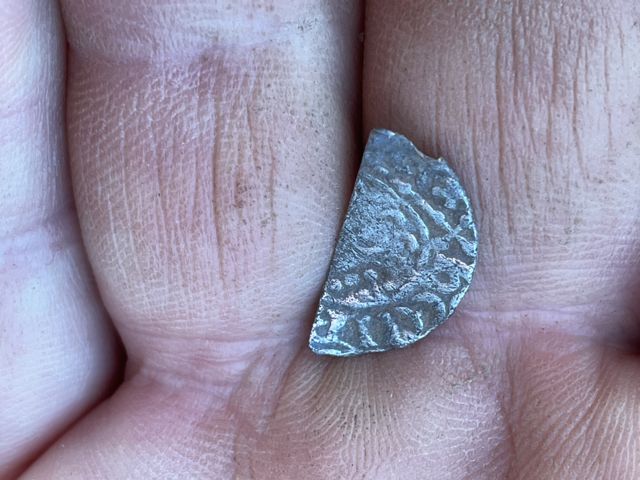
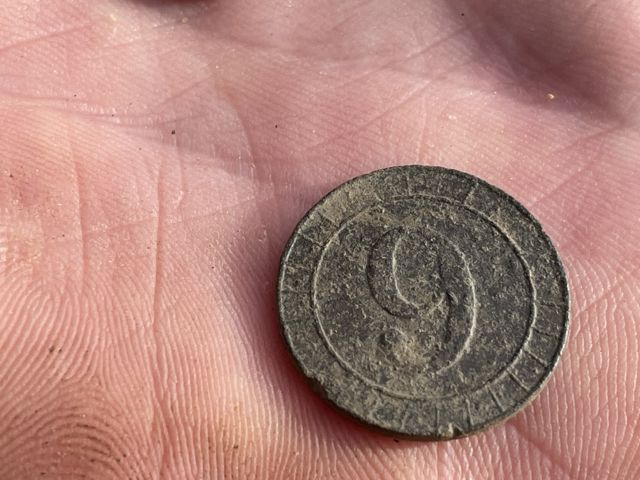
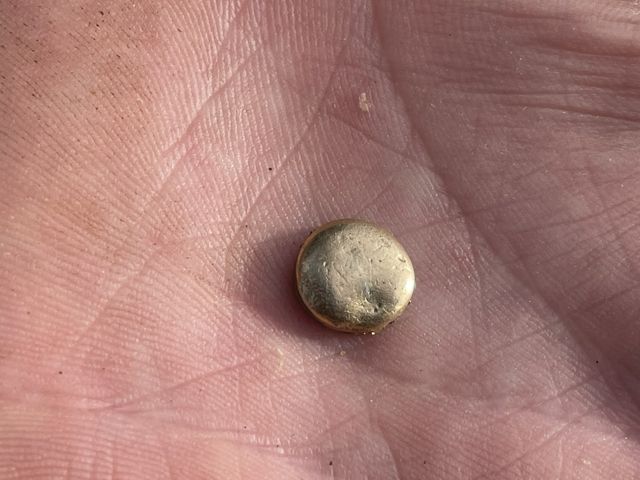
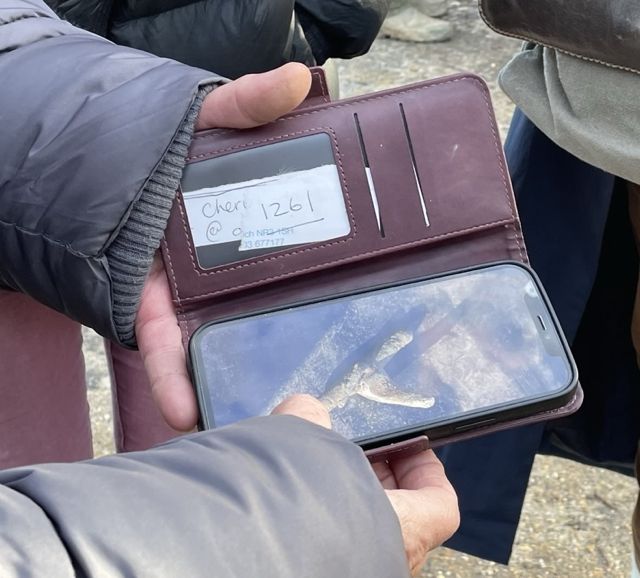
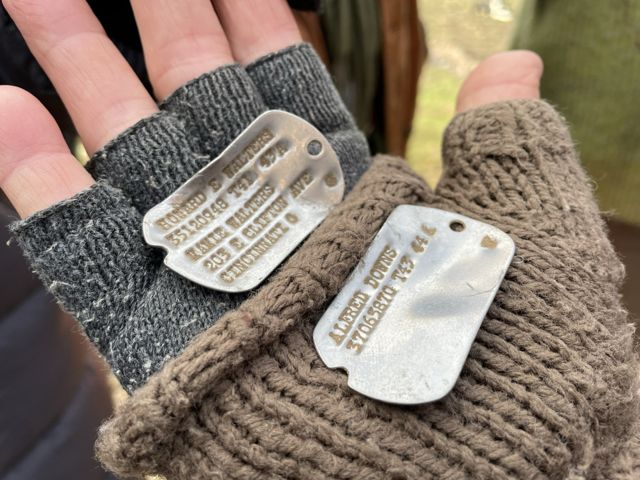
Some of the few finds today. The first was gifted to me, a Henry 3 half coin. All found on this day will be cleaned and photographed and sent to Cheryl who wll to me, and this will be the evidence of those who passed through this field through Holton Pits. Evidence of the cultural heritage of his land, from Roman settlers, to European traders, middle ages to Tudors, Cromwells Commenwealth men and women, Victorians, a copper pennies from when I was born 1957. One piece of gold was found, and as news spread, a gathering of detectorists swept that land.
I held in my hand a piece of metal which was last touched by one 800 years ago.
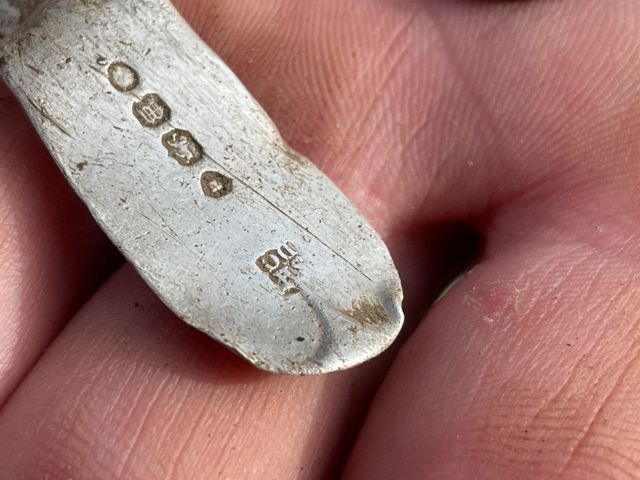
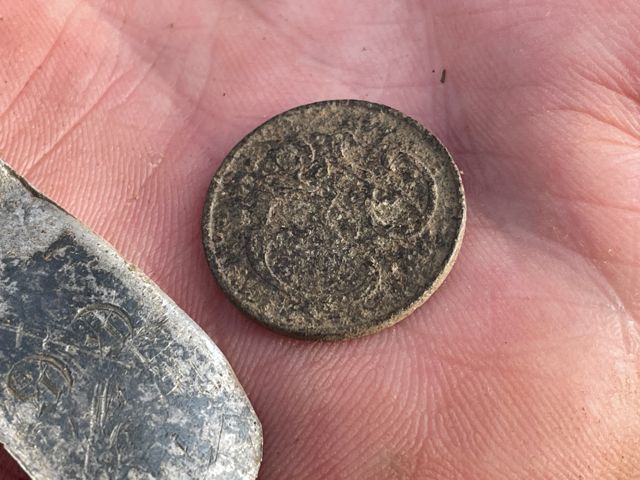
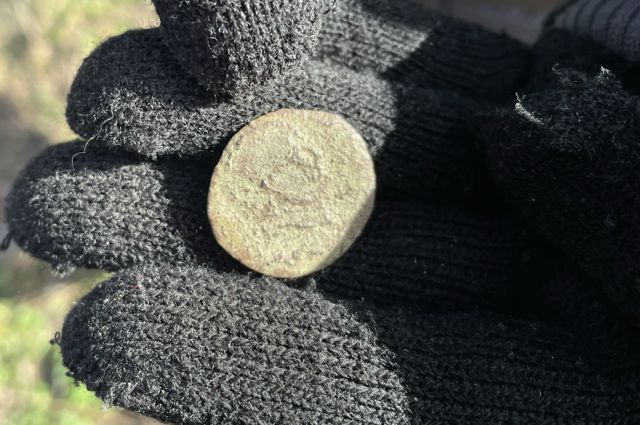
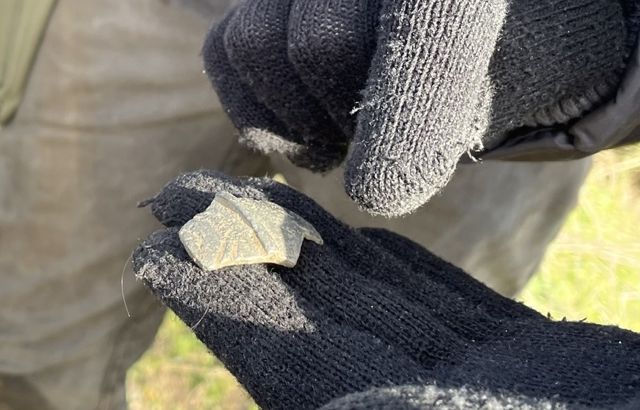
.
.