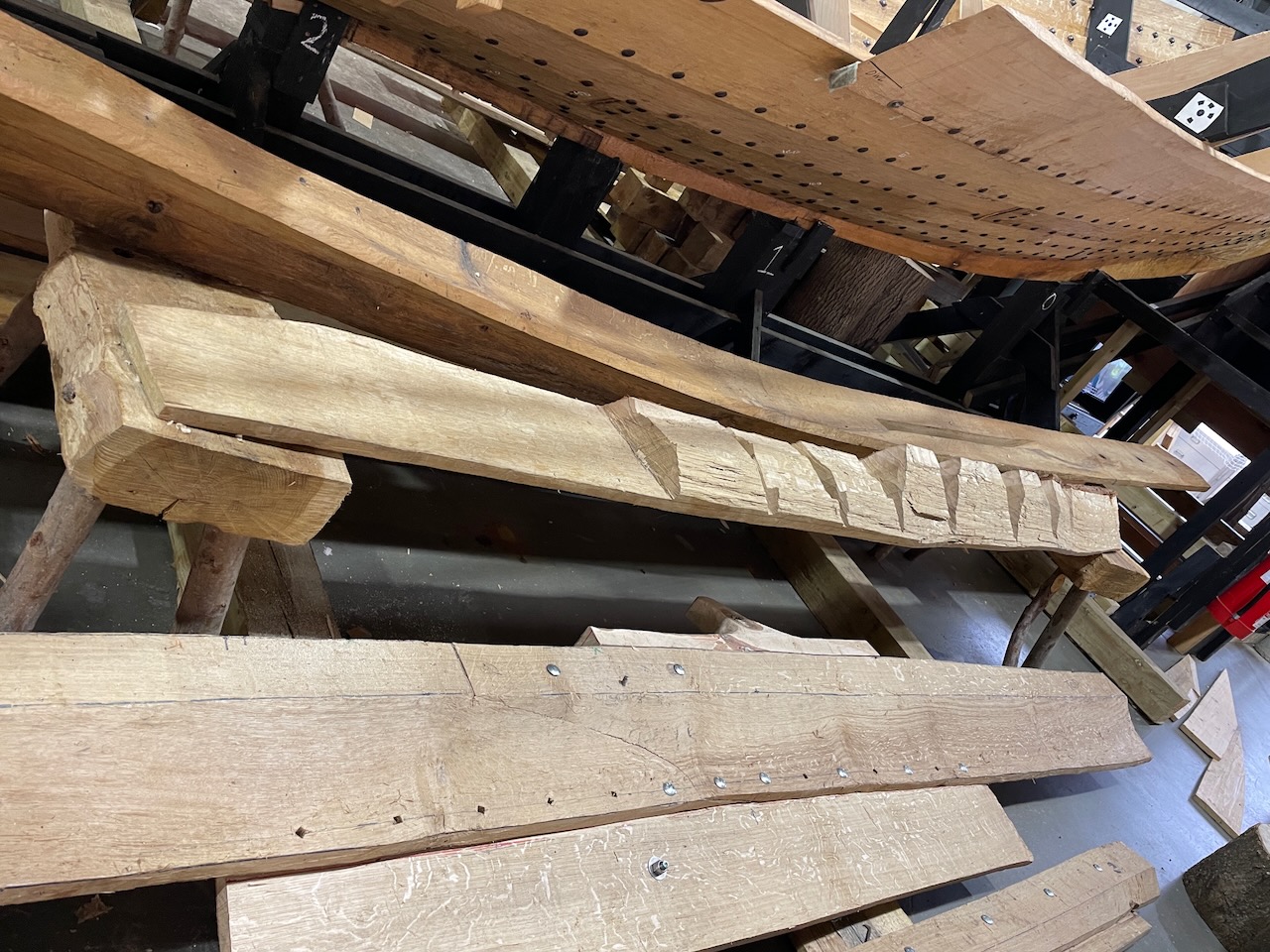
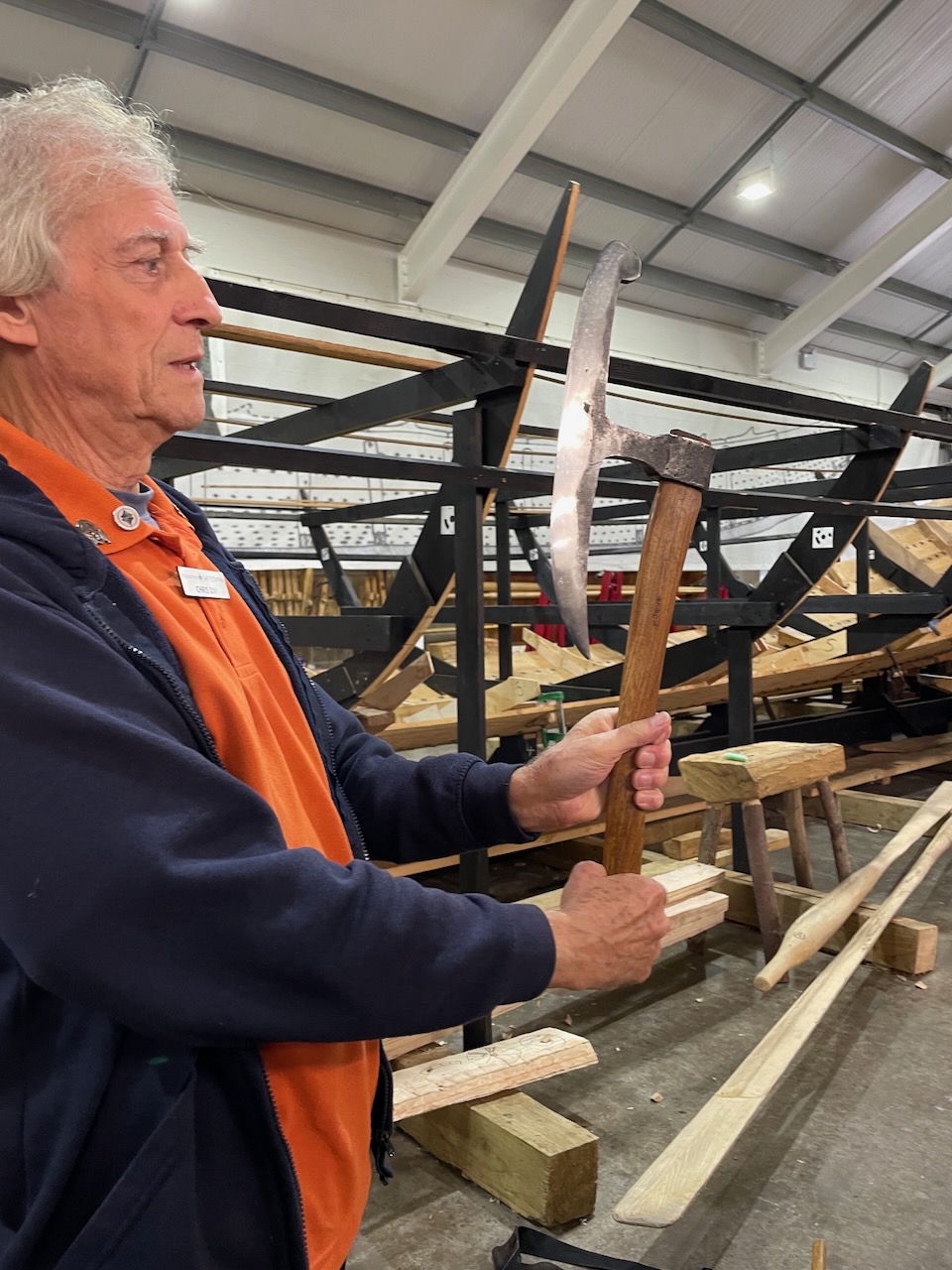
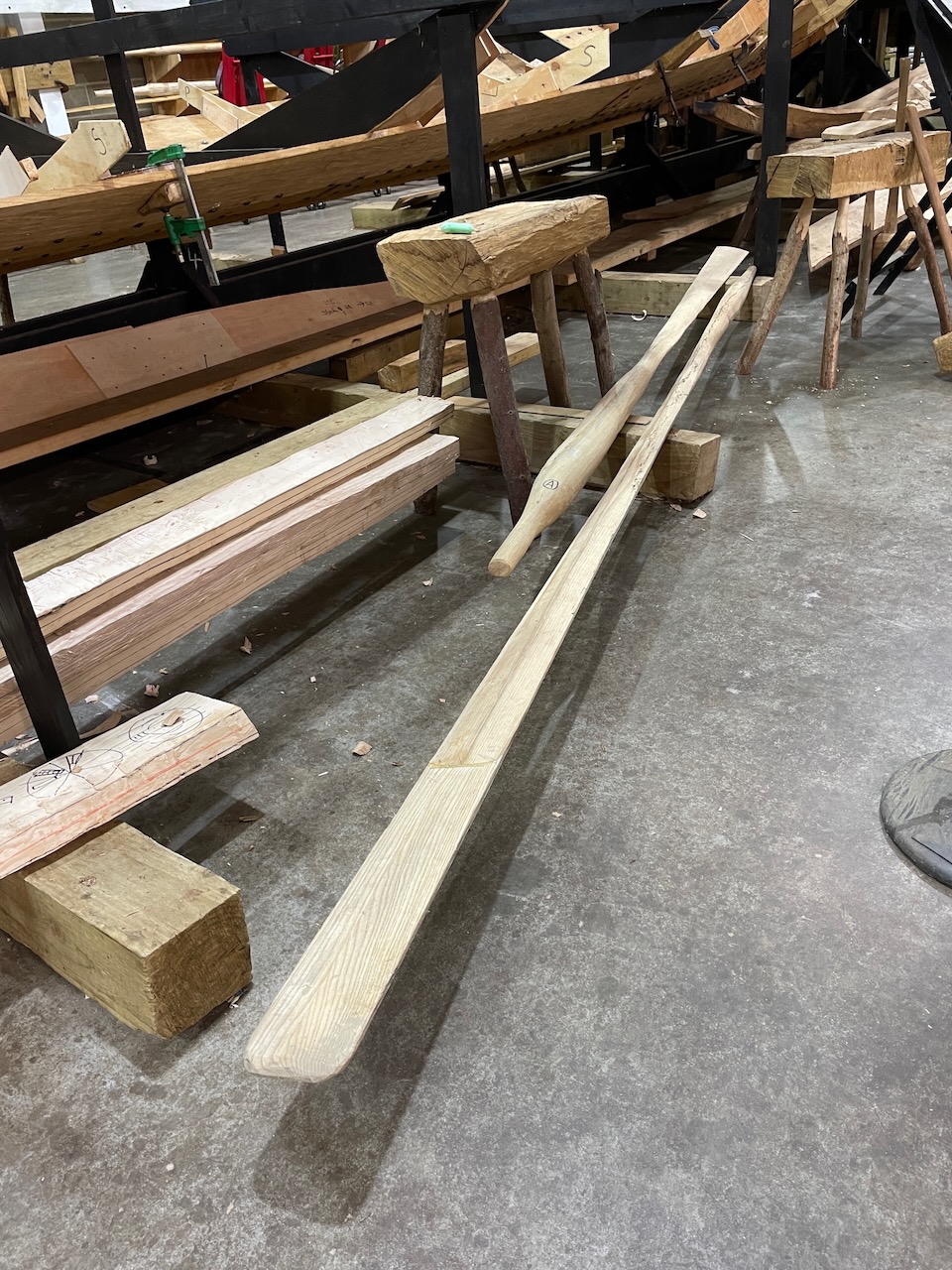
An unusual element of this project is a fitting ending to our National Coppice Gathering in Wakelyns: they are using only the Anglo Saxon techniques and tools to create a replica of a Saxon long boat – most of which are familiar to us coppicers. But not a saw in sight. All based on cleaving oaks, into half, quarters sometimes eights, as opposed to sawn through and through. Cleaved is much stronger than sawn as it follows the grain of wood. The major tool is an axe, and in addition a finishing axe – sometimes known as an Ice skate – and a spoon auger for the rivits.
The Ships company are using the footprint of the Sutton Hoo boat (buried just across the water to Woodbridge) as the model. This boat was the summit of Anglo Saxon boat building achievements, but nothing was written down, just opinions coming after. Why is it so big, for example. The one at Sutton Hoo, the only surviving, albeit a ‘ghost ship’ was excavated prior to WW2. Amazingly it was photographed by 2 women, Mercie Lack (1894–1985) and Barbara Wagstaff, while on holiday and the evidence from their photographs are the foundation of this reconstruction. (Their Agfa film was developed in Germany despite war declared.) Also using Coppenhagen bog boat as a design reference.
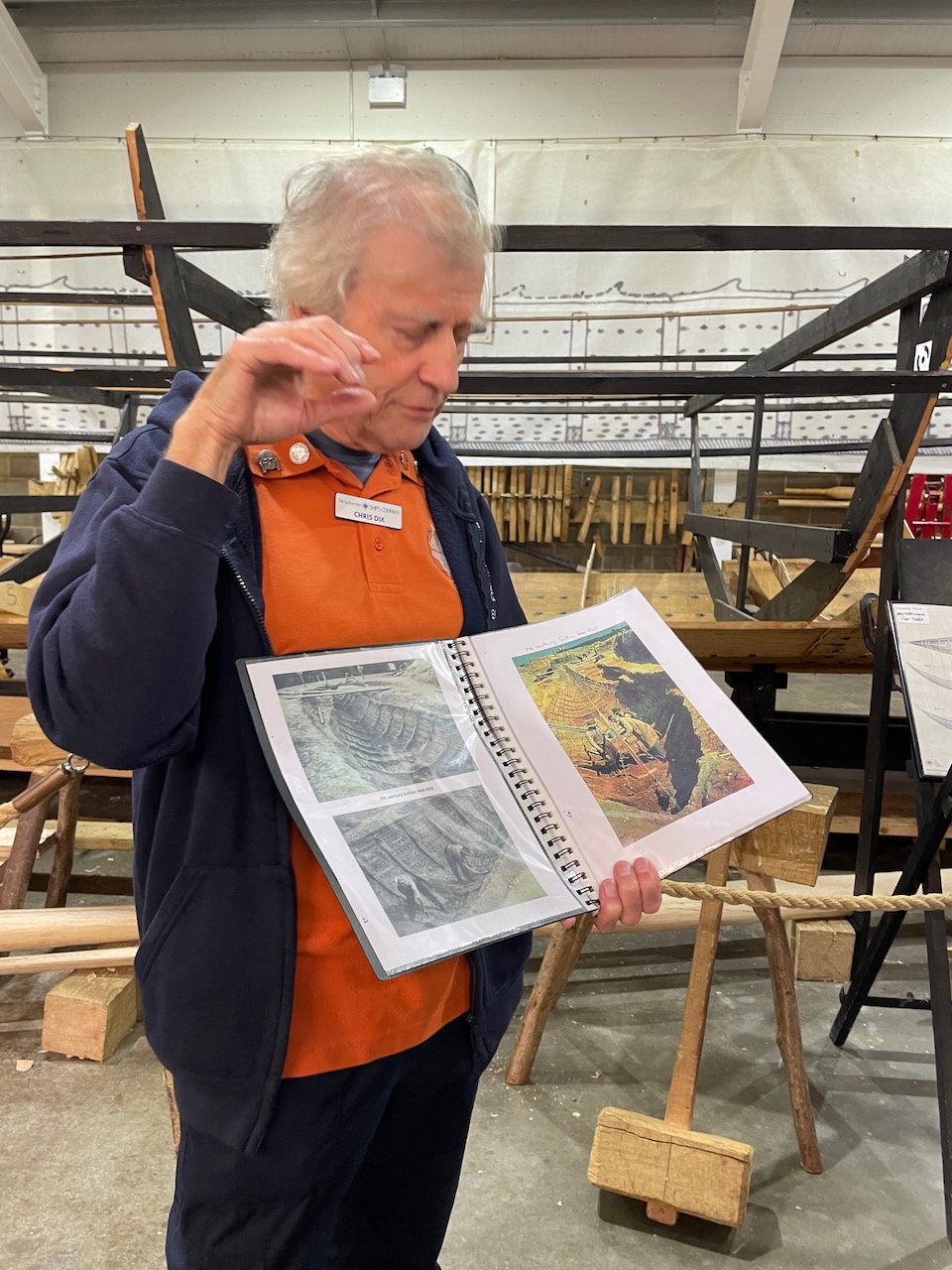
Probably date of burial 623, but originally built around 600, it was designed as a creak boat, flat bottomed for plying up and down river creaks, sitting on the mud at low tide for ease of loading. Was it stable to sail? Probably due to the subtle curve of the whole long length.
Remarkable wood chunnels, made of willow – which absorbs water, with an oak wedge at the base to secure. Caulking Cloth made of various local ingredients to waterproof. Today strips of woolen fabric are saturated in melted beef fat and bees wax.
Over 150 people – volunteers – working on the project. 4 paid, including 2 Maritime Shipwrights. Aiming to get it built by 2030 fit for sailing.
It would take between 10 and 20 oaks to make one boat. Trees chosen for bend or straight qualities. They are actively seeking a 14 inch side, from a 4 foot diameter oak, with 18 foot straight trunk. Tough ask. Working with the Woodland Trust, they are planting many oaks in the vicinity to replace those felled for the project.
Our personal tour was given to us by Chris Dix, a physisist by training, and who was brilliant. To see in transit this inspiring project, just down the road from us who gathered, but it took the NCFed to get us there.





1 thought on “Longshop Saxon boat”