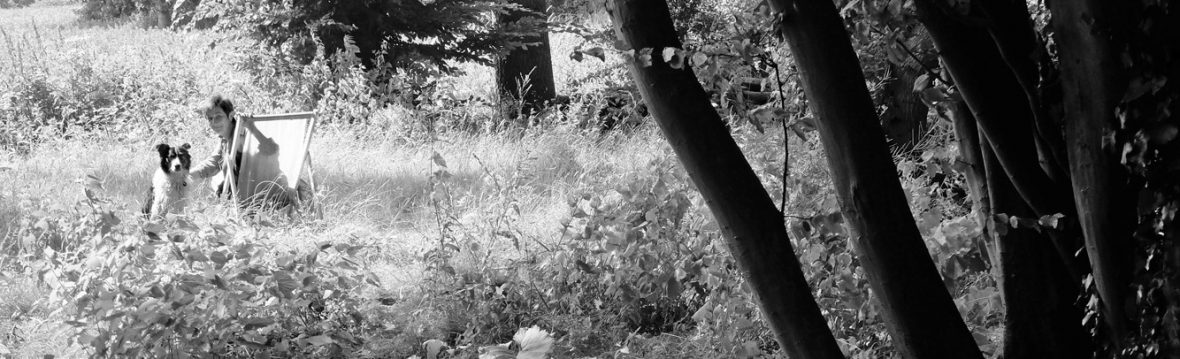
27th January 2015 Visit of Sid Cooper to the wood.
Sycamore – The marmite tree – potentially will replace Ash if die back gets hold, as it seems to be dong. All over England now. Sycamore never regenerate under their own canopy (sycamore don’t regenerate freely under their own canopy)
Ash die back
Lesions – when fungus girdles the stem, die back beyond.
Asexual stage – black leaves
Sexual stage – the following summer
Worst examples in plantations, monoculture, narrow genetic seed pool
Hornbeam – Near pond, probably one stem coppiced, in which case about 200 years old approx. Measurement 1.5 up from base, each inch each year. Roughly. (see attachment on estimating the age of a tree)
Honey Fungus bootlaces – Magicians using honey fungus for luminous quality of wands. (Honey fungus (Armilleria mellea) does have a natural luminescence (again Google is useful) This luminescence was noted by Aristotle; in medieval times they lit hay barns with clusters of rhizomorphs and roots covered with rhizomorphs were considered to have medical power. These were the original magic wands from whence the traditional black stick with white ends was derived)
Picea sitchensis, the Sitka spruce – Planted. Probably not live for much longer. Likes wet soil. Popular in Scotland
Components of ancient woodland, like Dog Mercury. Lots of information on woodland field layers and indicator plants via the NVC field guide to woodland available via http://jncc.defra.gov.uk/page-2656
Management of Small woodland
Break down the two hectars in to areas depending on cycles eg hurdles 7. They will be small areas.
1. Coppicing
Cycles: Hazel – for hurdles traditionally 7 year cycle. For wood 10-15 year cycle.
Firewood
•Roadside standing £10 per ton = meter3
•Cords £40 meter3
•Cut firewood £100?This is a likely average for a cubic metre load (which would contain a lesser solid volume. Some conversion factors are attached but a ball-park ration is 1 : 2 solid to stacked/loose voume). Unfortunately there is no empirical load value!
Must protect after coppicing – thatching offers some protection.
Laying (layering) Hazel – use young stems, bend down and hock into earth. Good near Ash
Birch – Pioneer species, short lived, the mother. Microclimate. Coppices well
2/ Enclosures
Traditionally 4m x 4m (rather than traditional this is the standard size used for FC grant aid) – but can be any size.Good for seeing regeneration within the protected (deer etc) area. Light essential. Between triangles of oak./ash
3. Oak thinning
Today, 12 – 15 stands per hectare (this is the specification often used by Natural England’s for SSSI woodlands). Tudor for boat building 30 stands per hectare – equiv 12 per acre.
After thinning then coppice.
CONTACTS – David Mitchell – Ex Mid Suffolk District Council (Forestry) – has his own woodland for 20 years, manages it. Invites different skilled people in to work it.
Crispin – Hornbeam regeneration / Chestnut introduction?
ACTION
Get temporary tree felling licence – free – thinning 30%, 40m2
Rod Pass to advise
Fill out Small Woodland Management plan
Map
Dear Rachel,
Thanks for your email and follow up notes. To reply to your initial questions:
a) I have ordered maps for you this morning, which will be delivered to your home address. You can take further copies of these as necessary.
c) Guidance on managing Ash Dieback is available from http://www.forestry.gov.uk/forestry/INFD-92PJKX ; aGoogle search may yield further results and advice from the Woodland Trust and Royal Forestry Sciety, for instance. The FC guidance states that if disease levels are low, selective thinning of diseased and suppressed trees is recommended.
d) For the Horringer (Suffolk) seminar you need to respond to my colleague Teresa Betterton via email: teresa.betterton@ forestry.gsi.gov.uk
I hope you don’t mind, but I’ve had a quick read through your notes and added some annotations.
One other thing that crossed my mind – it may be interesting for you to contact the Landscape Group of the University of East Anglia regarding the history of Holton Park; they have done some excellent work on landscape history and also have a chap who specialises in military stuff. Your best initial contact would be Dr Gerry Barnes on 01603 506882.
Sid Cooper
Woodland Officer
Forest Services East & East Midlands


