I found Jonathan Shearme and the most handsome hornbeam wood via the East Anglian Coppice Network. Exploring local woods this lockdown time, I remembered his description of managing 32 acres of hornbeam I’d recorded on our web site, and gave him a call. He invited me over – a mere 20 minutes from my door. Ah this lockdown time that gives openings.
Here’s how he describes what he does on our web page: ‘A smallholder growing willow and sheep on Waveney valley water meadows. I have been helping to manage a friends 32acre wood near Denton for 6 years, it is mainly unmanaged over-reached Hornbeam coppice with Oak standards that have been over shadowed by the Hornbeam, my task to date has been to halo clear around the surviving Oaks in order to give them back some light and help them to survive. I am now planning to re-introduce a coppice management plan and utilise the harvested wood to produce charcoal and bio-char, it’s still early days, so would welcome any advice from the group to take this forward.’
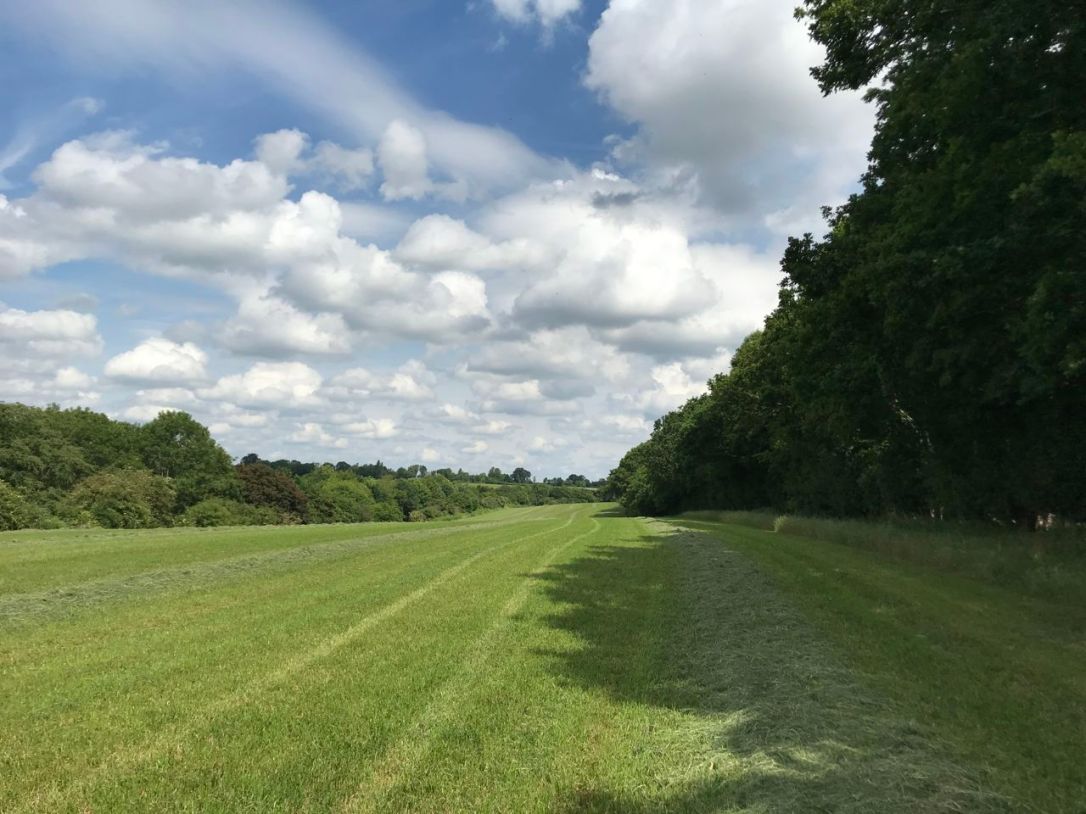
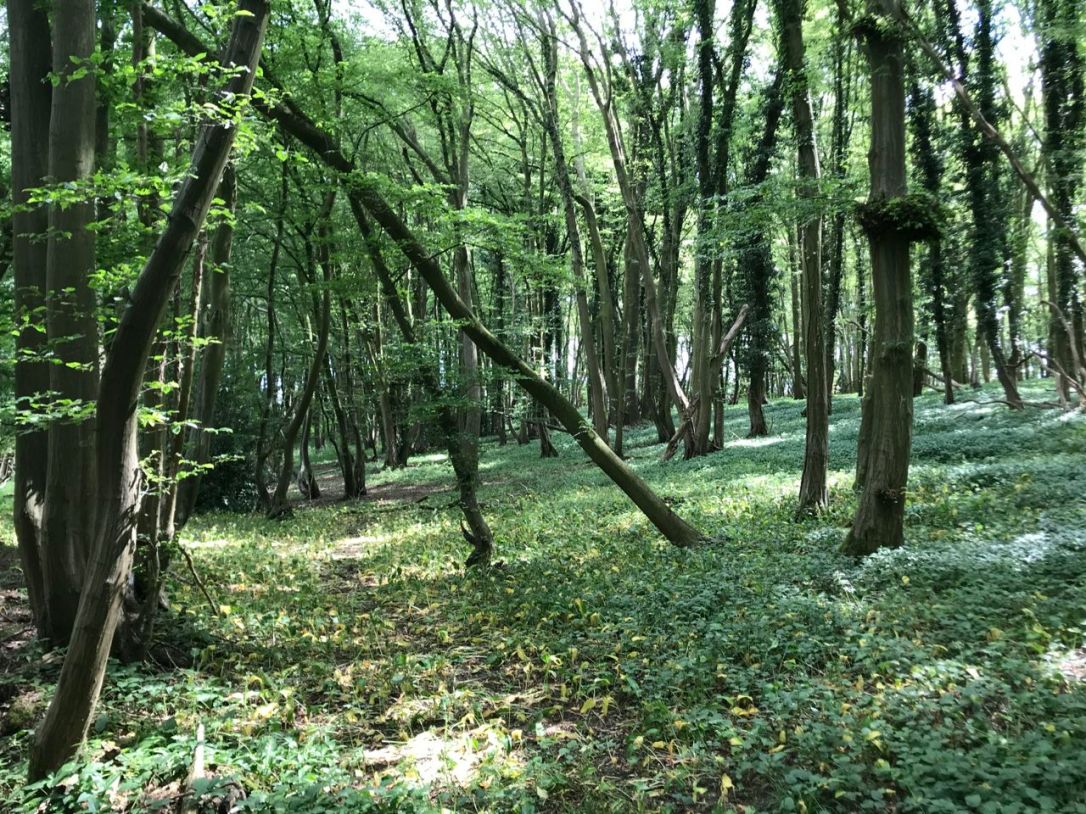
On the gentle rise of land the north side of the Waveney, near Bungay. It is 32 acres of planted coppice Hornbeam, hundreds of years old.
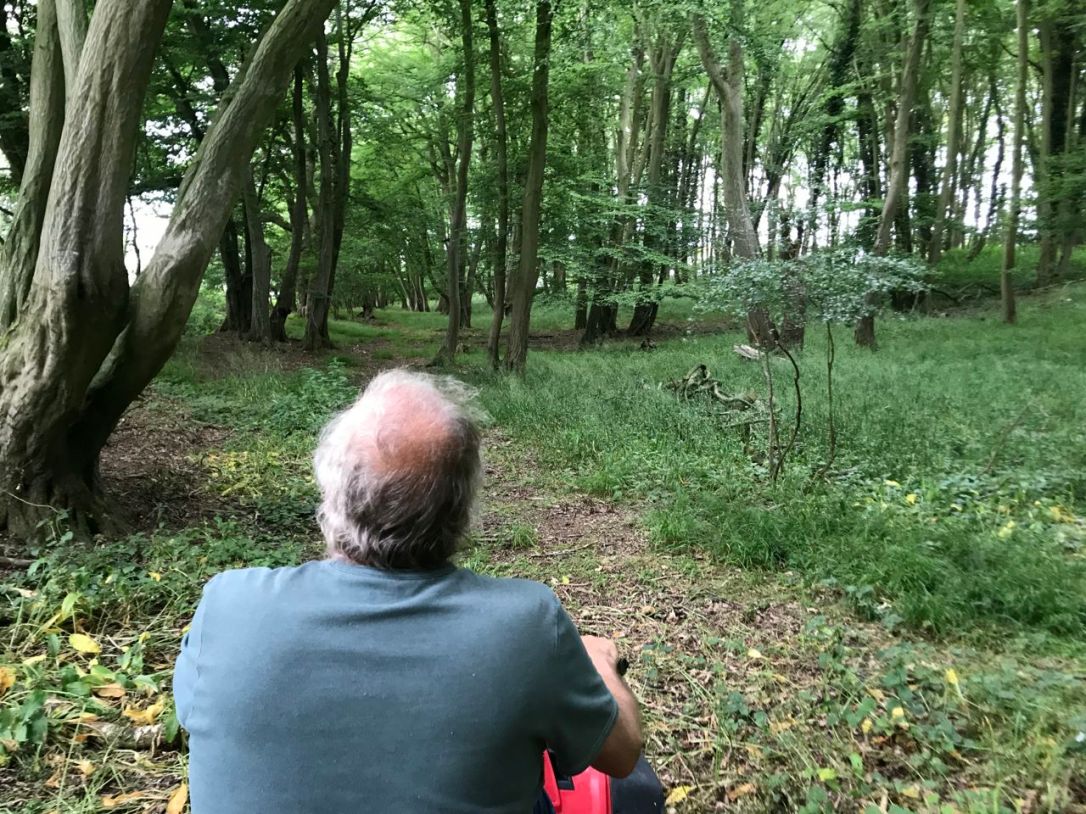
Riding on the trailer behind quad bike (surprisingly enjoyable) over the fields up to the top of the wood, the first place Jonathan took me to was an old charcoal pit, now used as a wallow by the deer. The old earth works were clear to see, and the feel of being in an ancient woodland takes hold.
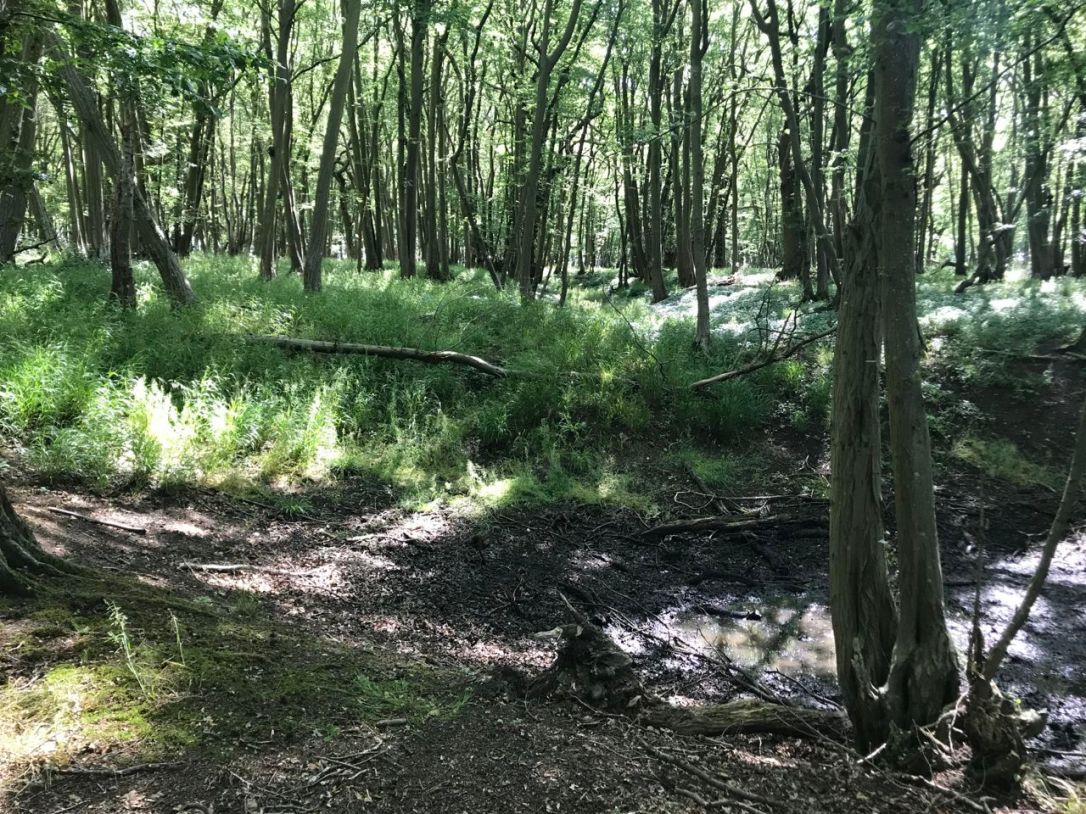
We walked through the limbs of overstretched hornbeam drawn to where the light came in. The area Jonathan has begun to copice.
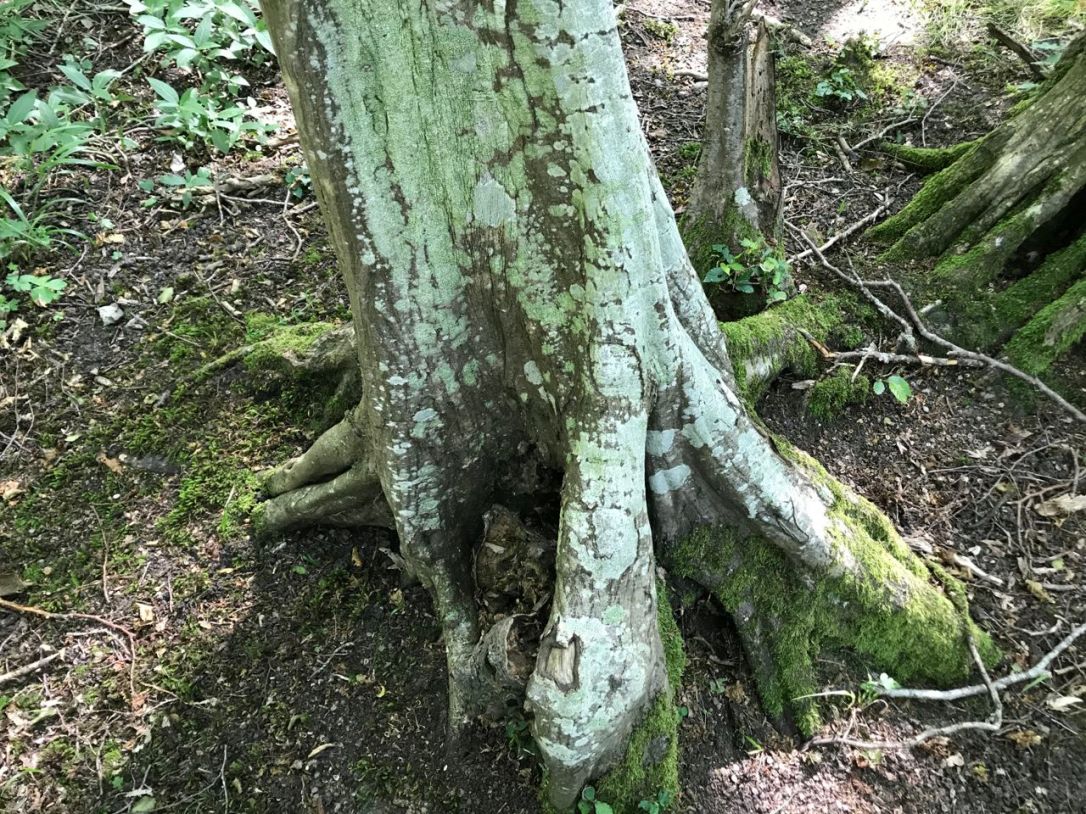
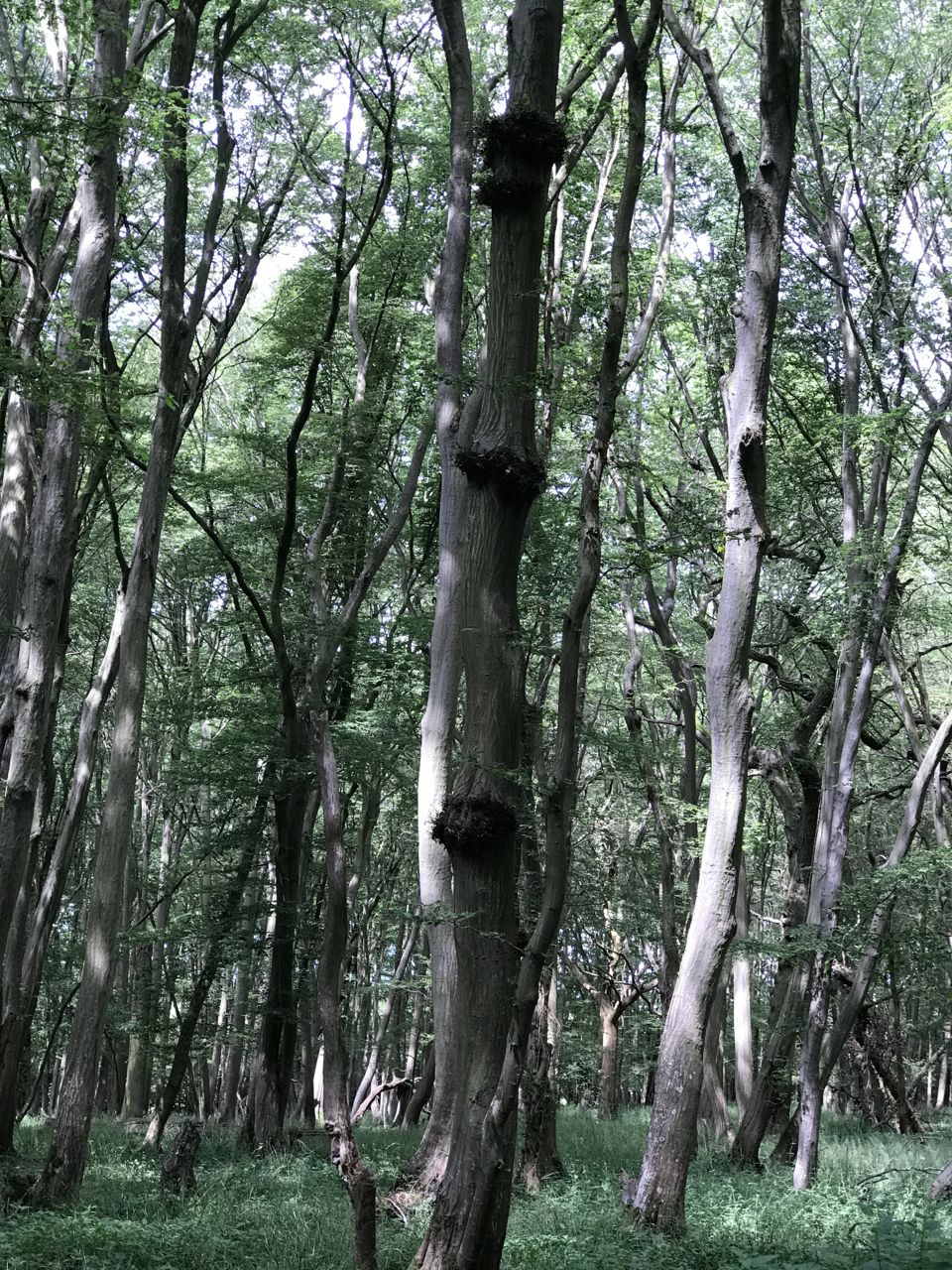
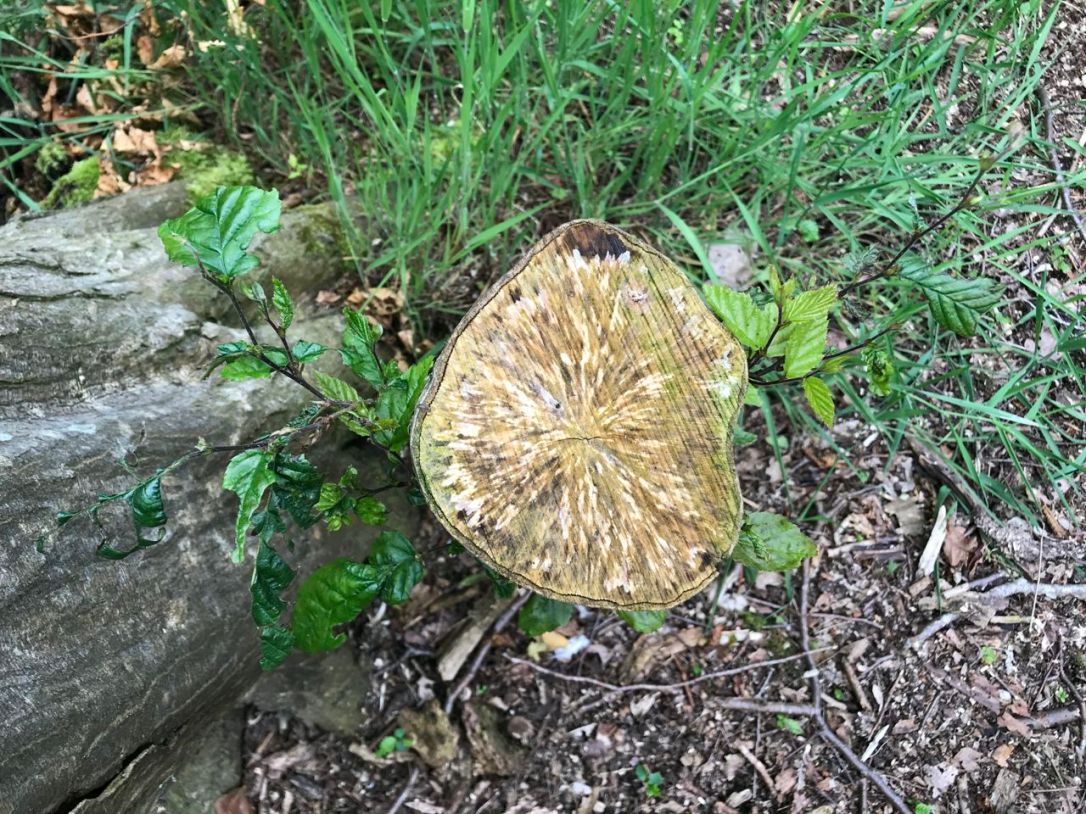
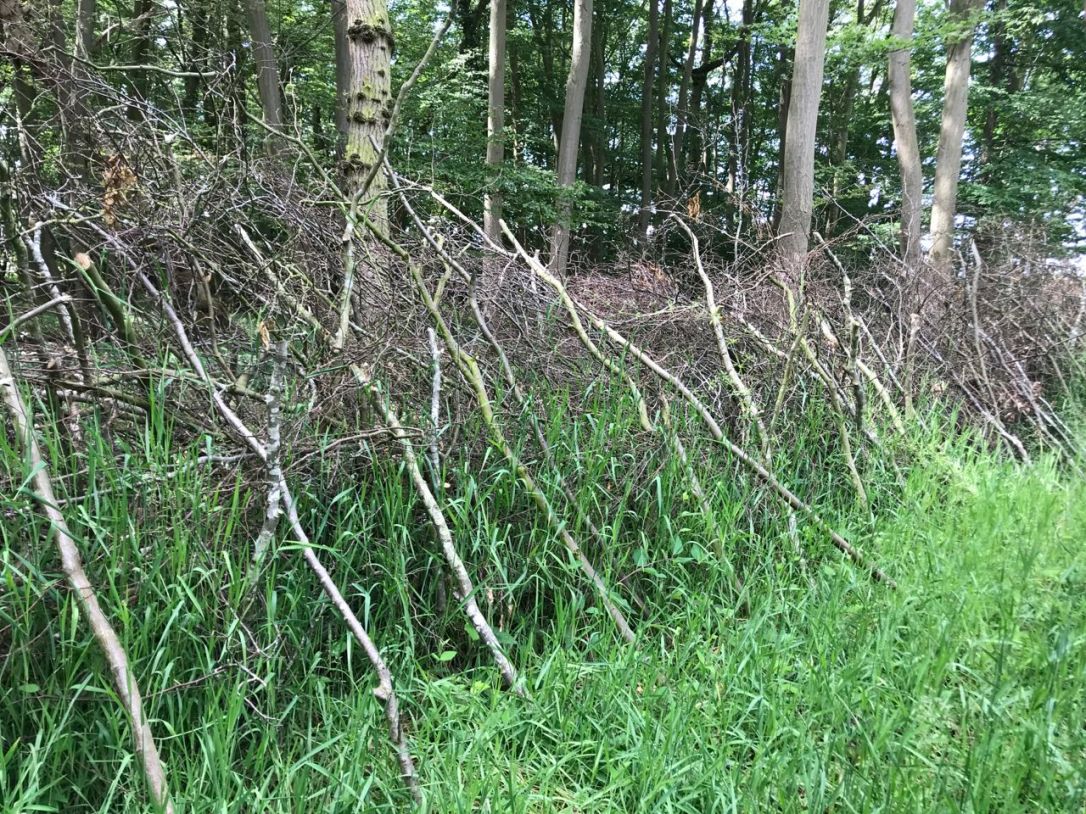
The Hornbeam wood is spotted with oaks currently being suffocated of light by the over reaching and quicker growing hornbeam. As Jonathan says his first task was to save what oaks he could by hallo copicing the hornbeam around. But how to save both and protect the hornbeam from being eaten by the muntjac or deer? His first attempt was tying perspex roofing sheets around the coppiced hornbeam stool. 1 out 3 survived, the others died. With a gift of unwanted fencing, two years ago he fenced off a ‘ride area’ and began the coppicing in earnest, ostensibly around some of the oaks. It’s effect is dramatic. After 2 seasons, not only are the struggling oaks greening up and the old hornbeam vigorously sprouting fresh growth, but with the light streaming in, the woodland floor is rich in diverse grasses, flowers and insects. The evidence of the wealth created by coppicing is so clear here. It’s all about light – oh and protection.
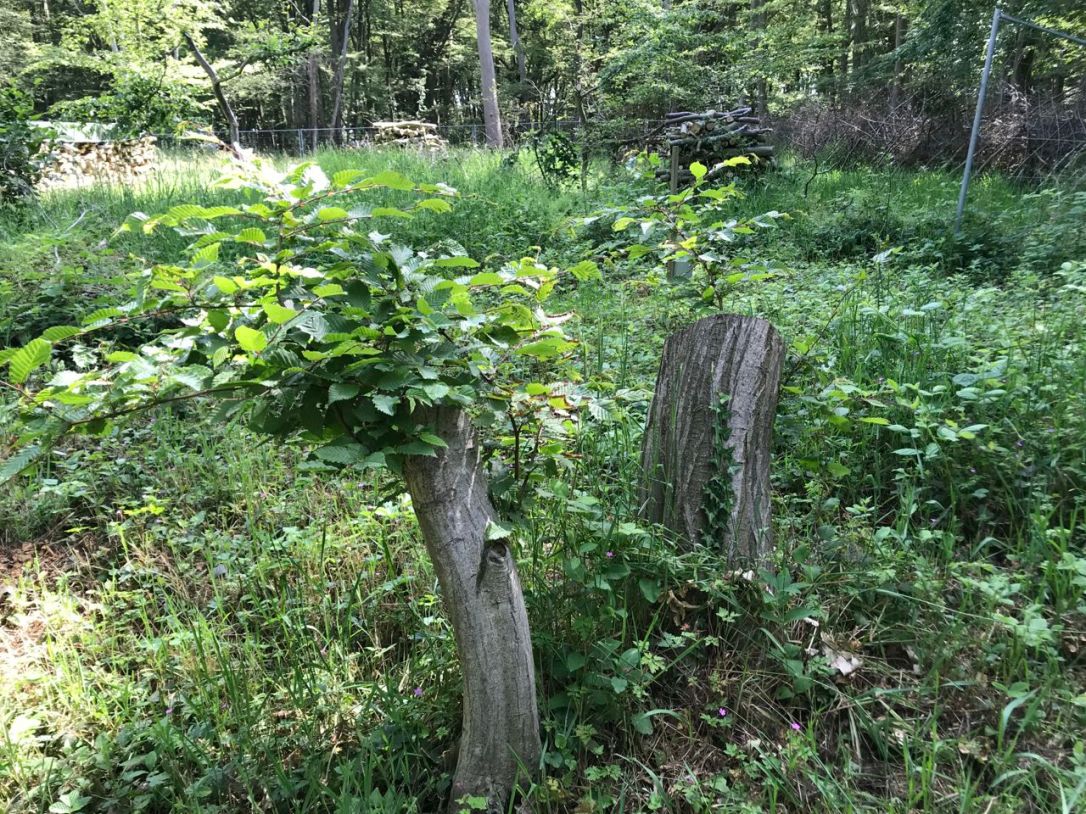
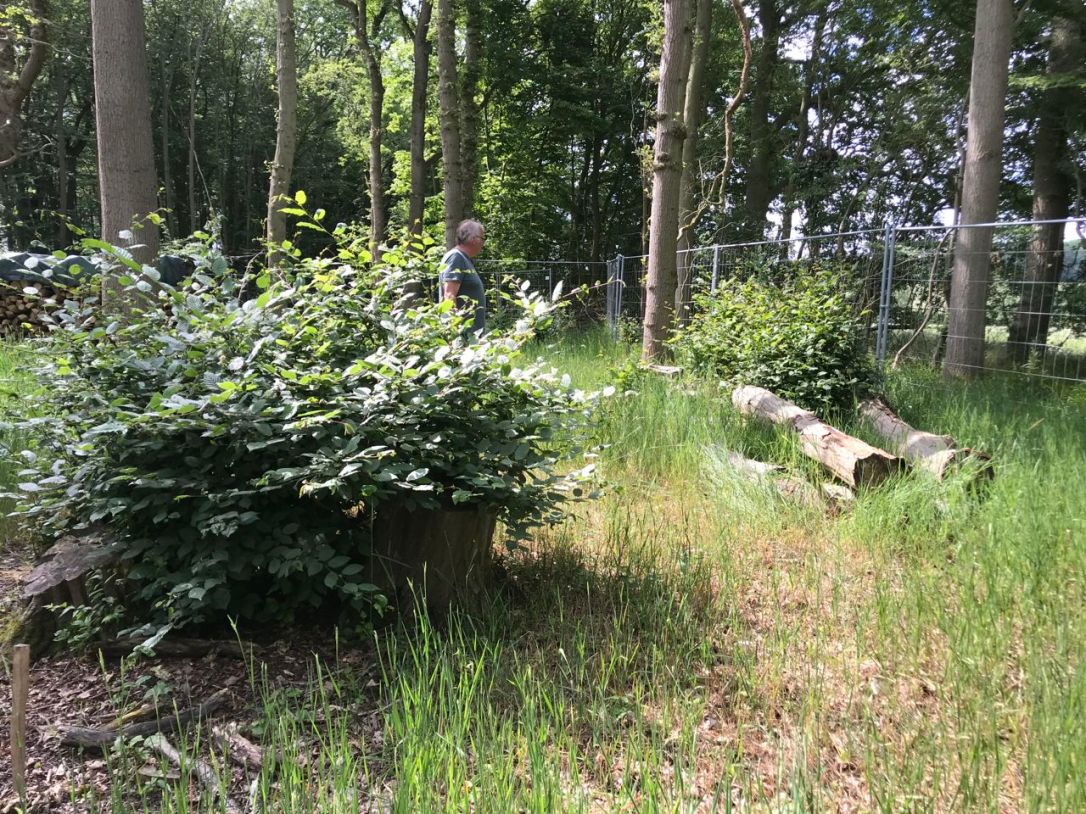
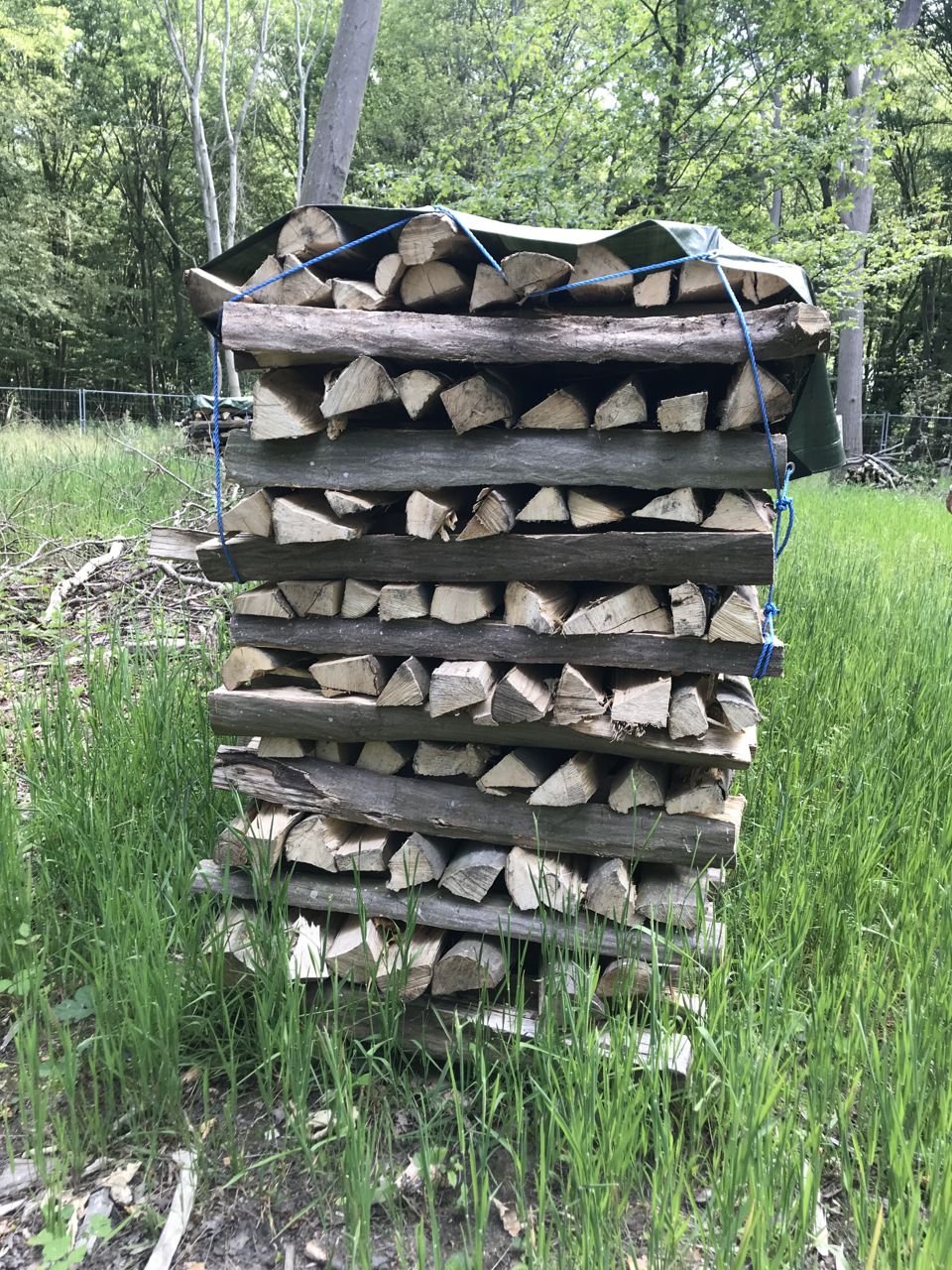
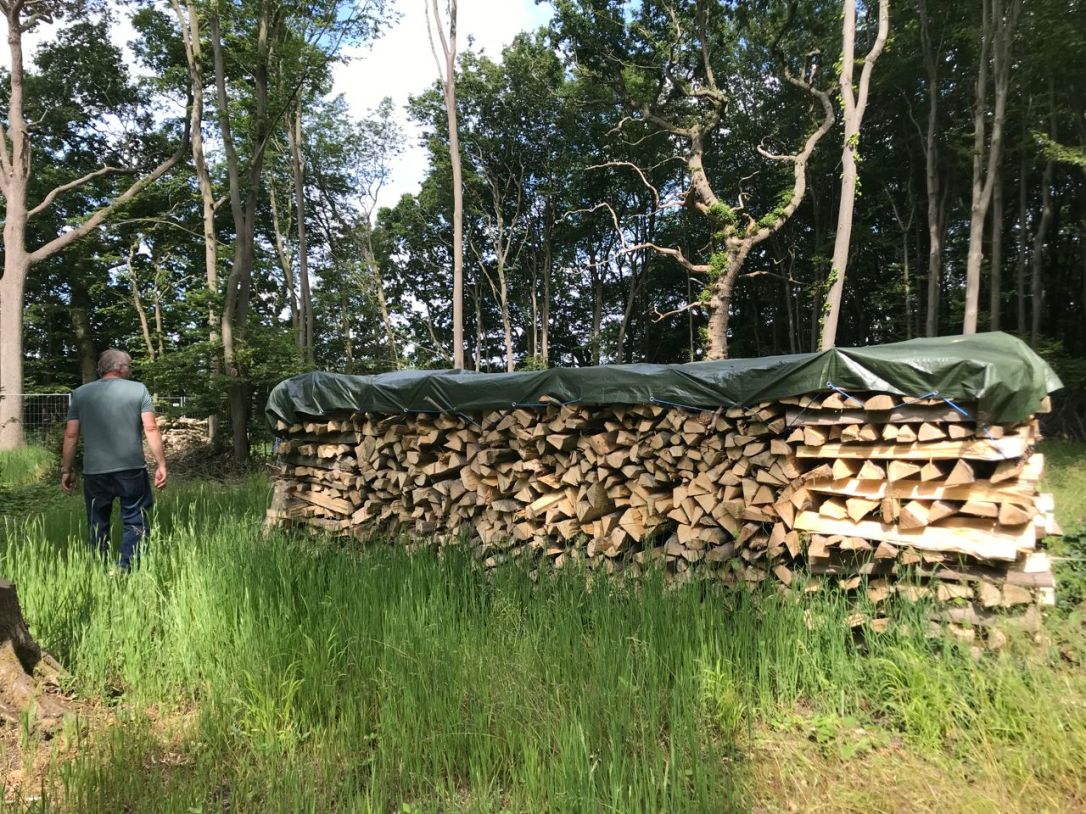
With some volunteer helpers he has got an effective system working. With Jonathan on the chain saw cutting and cording, an enthusiastic helper on splitting on a petrol driven splitter, and another on brush clearance, they have coppiced 1/4 acre of 80 foot high hornbeam and converted it into what I recognised as the European style of wood stacking (from Springe last spring). Staked in split cords, it effectively renders wood fire ready with only 20% of moisture after a year of leaving. I said I’d introduce Jonathan to Ben Loughrill for planking, although there was a sensitivity of not getting heavy machinery on to the already compacted clay land.

Back on the Quad Bike, we went down to an old ditch that runs in the winter, dry as a bone now, for here was the landmark Hornbeam Jonathan had told me about. They are known as marker trees, as they not only mark boundaries, but were also the tree on which they would hang miscreants. Leaning over the ditch, it was a magnificent form, of twisted and turning limbs. ‘I’ll definitely pollard this next year’, Jonathan said with determined feeling.
‘Not for me now, my back is no longer strong enough, and the years ahead are no longer long enough, but I’d like to make this woodland pay for itself, to be sustainable for the owner to understand and afford the labour to save it. Already some oaks are saved, and some are lost.’ 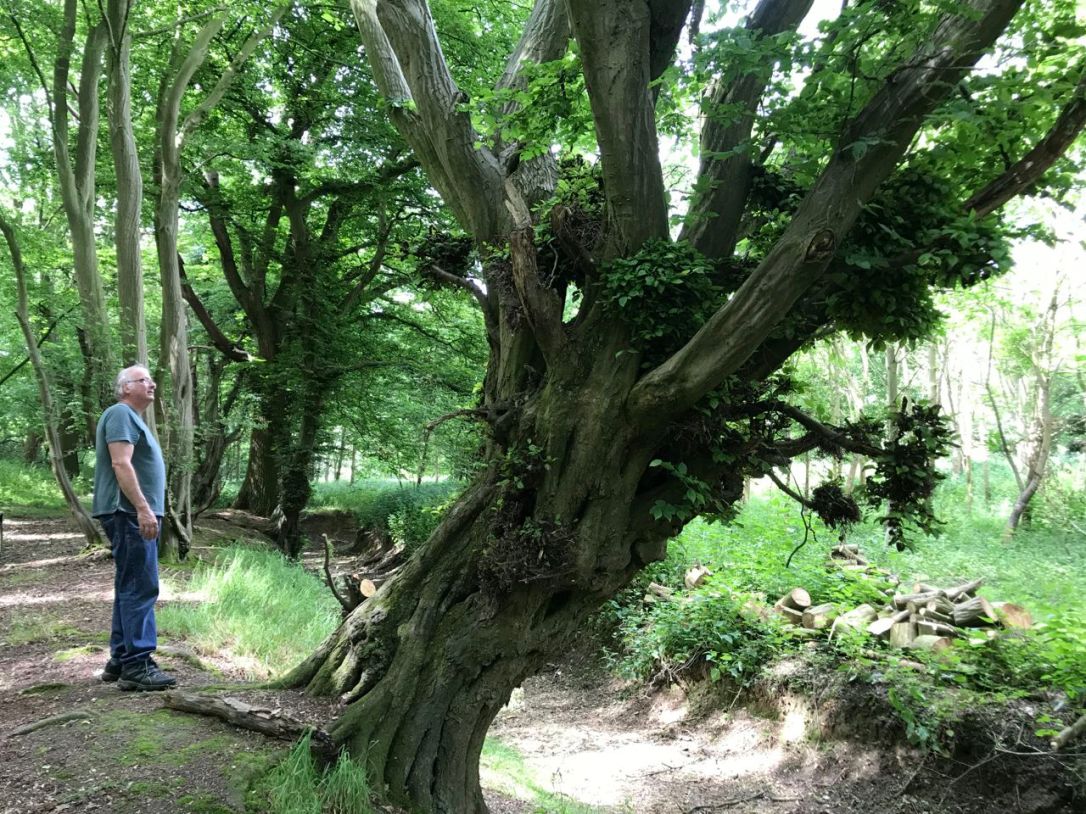
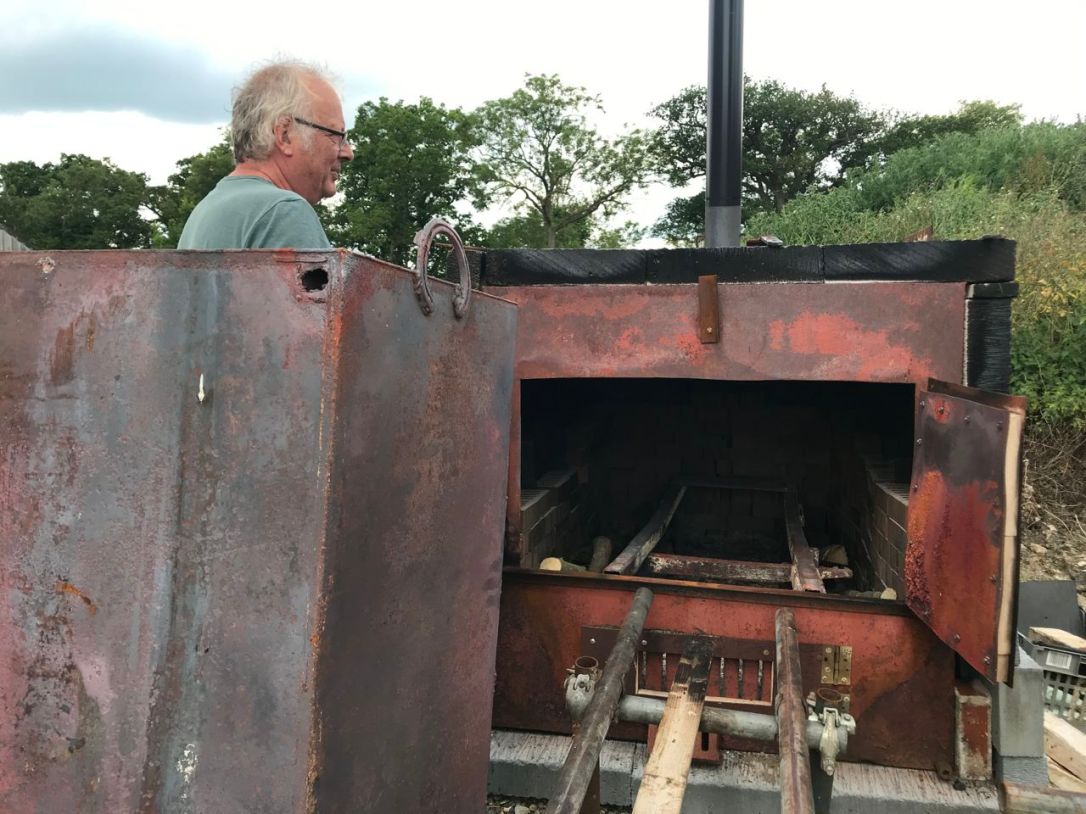
Back at the farm base, Jonathan showed me the charcoal maker – something he’d been wanting to do for a long time was investigate the making of charcoal. Made out of steel and bricks, with a steel Retort box to put the hornbeam on to covert to charcoal, it was an impressive build. It is a labour intensive business with slim profits lowered by B&Q sacks of third world charcoal at rock bottom prices.
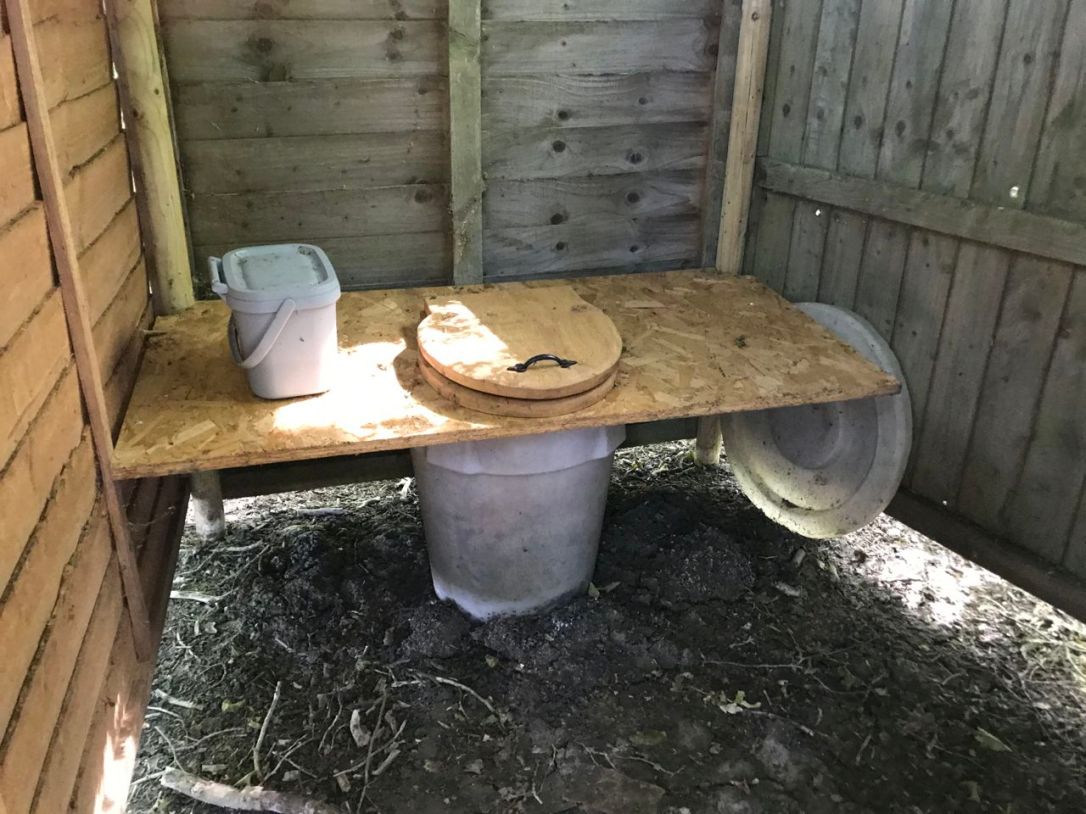
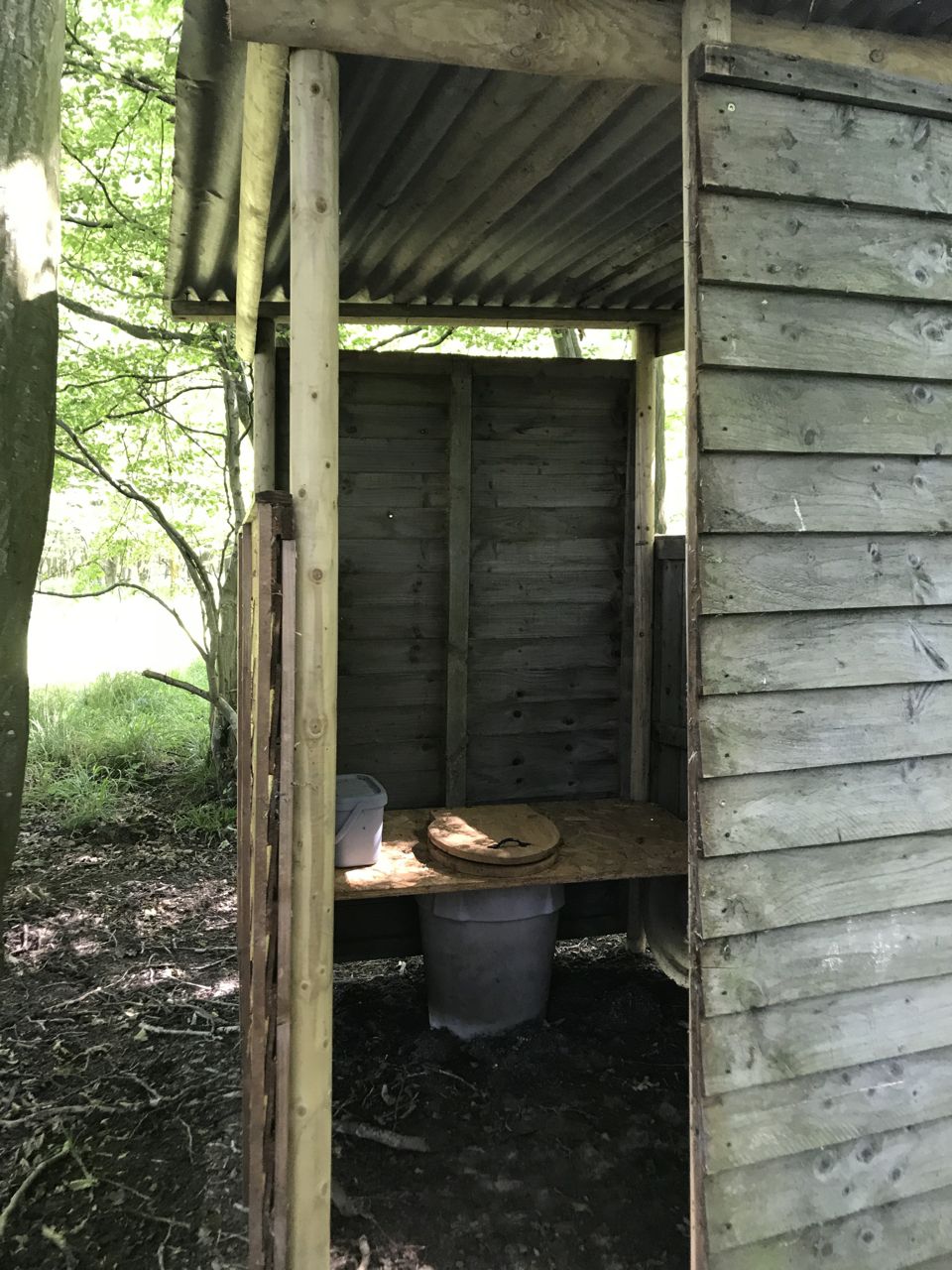
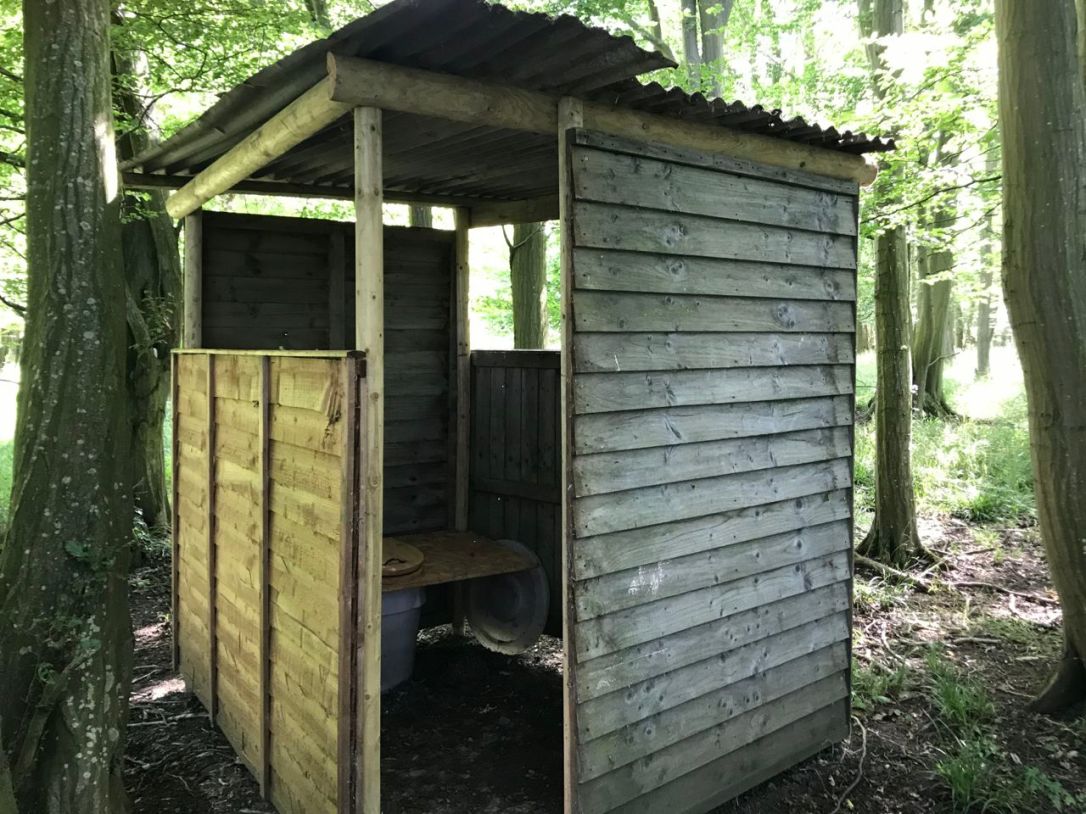
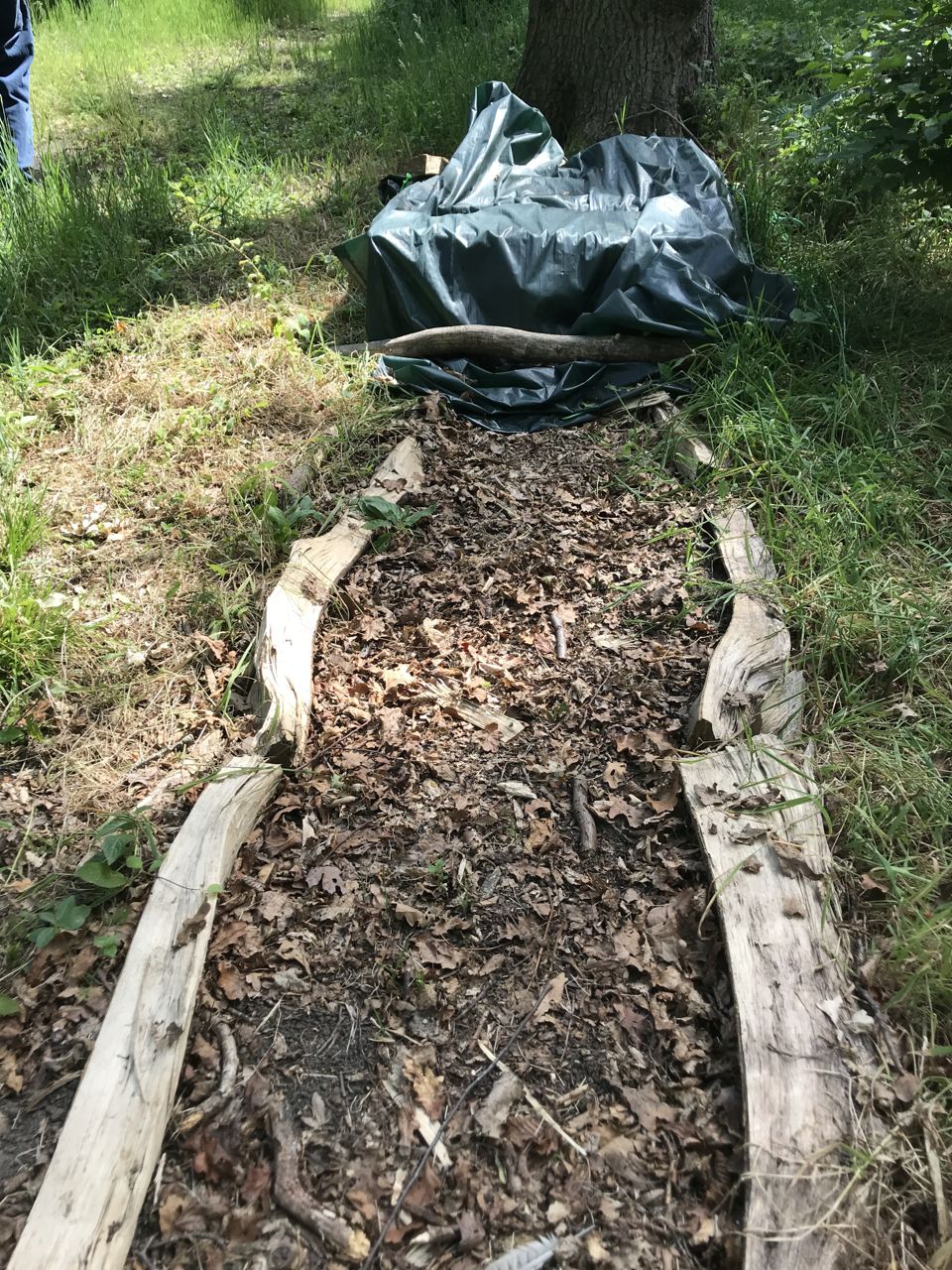
The first thing I photographed – was his woodland toilet – we want to build one like this for the forest school and it’s simple structure made out of posts and fence panels gave me some ideas.