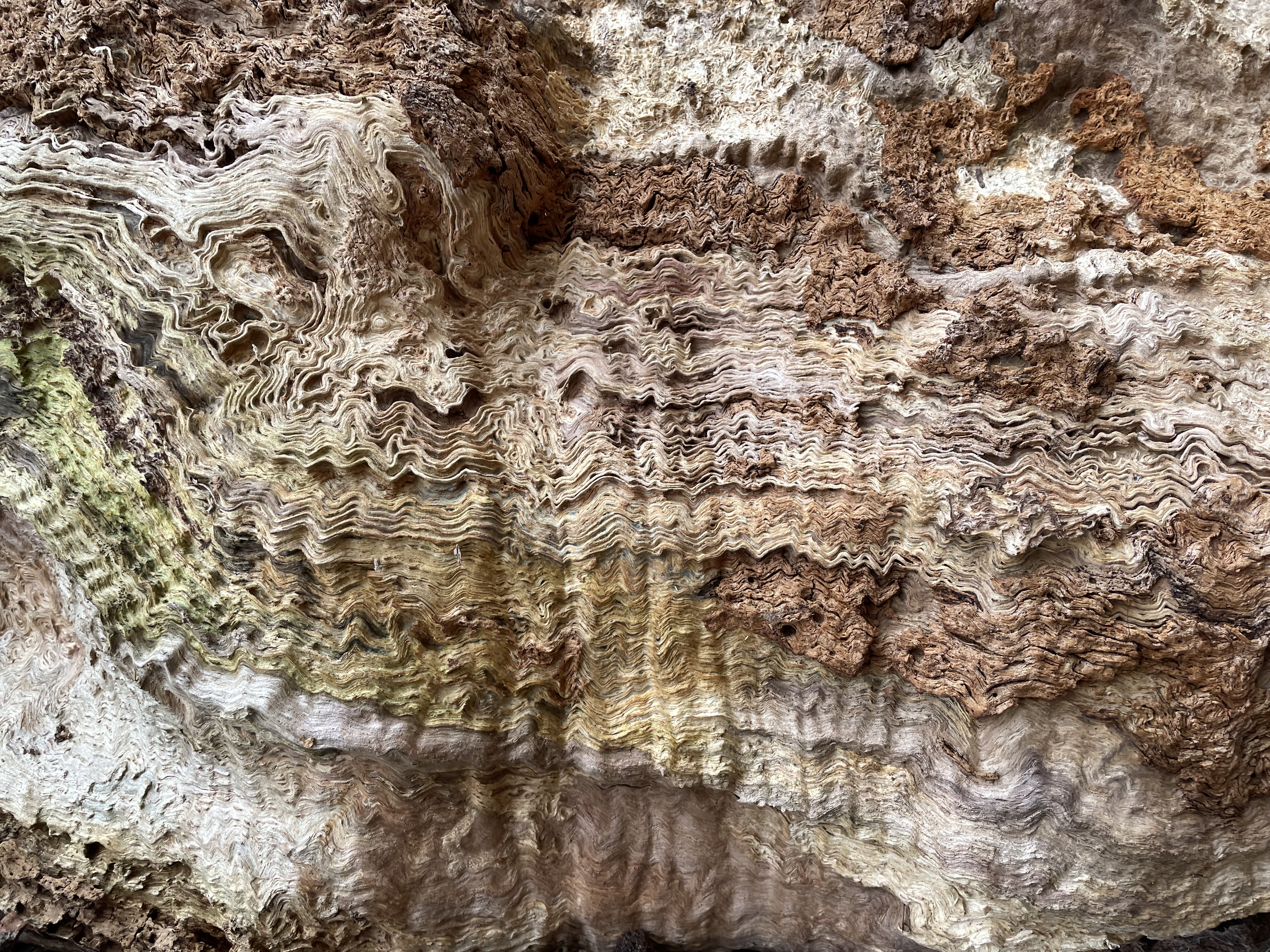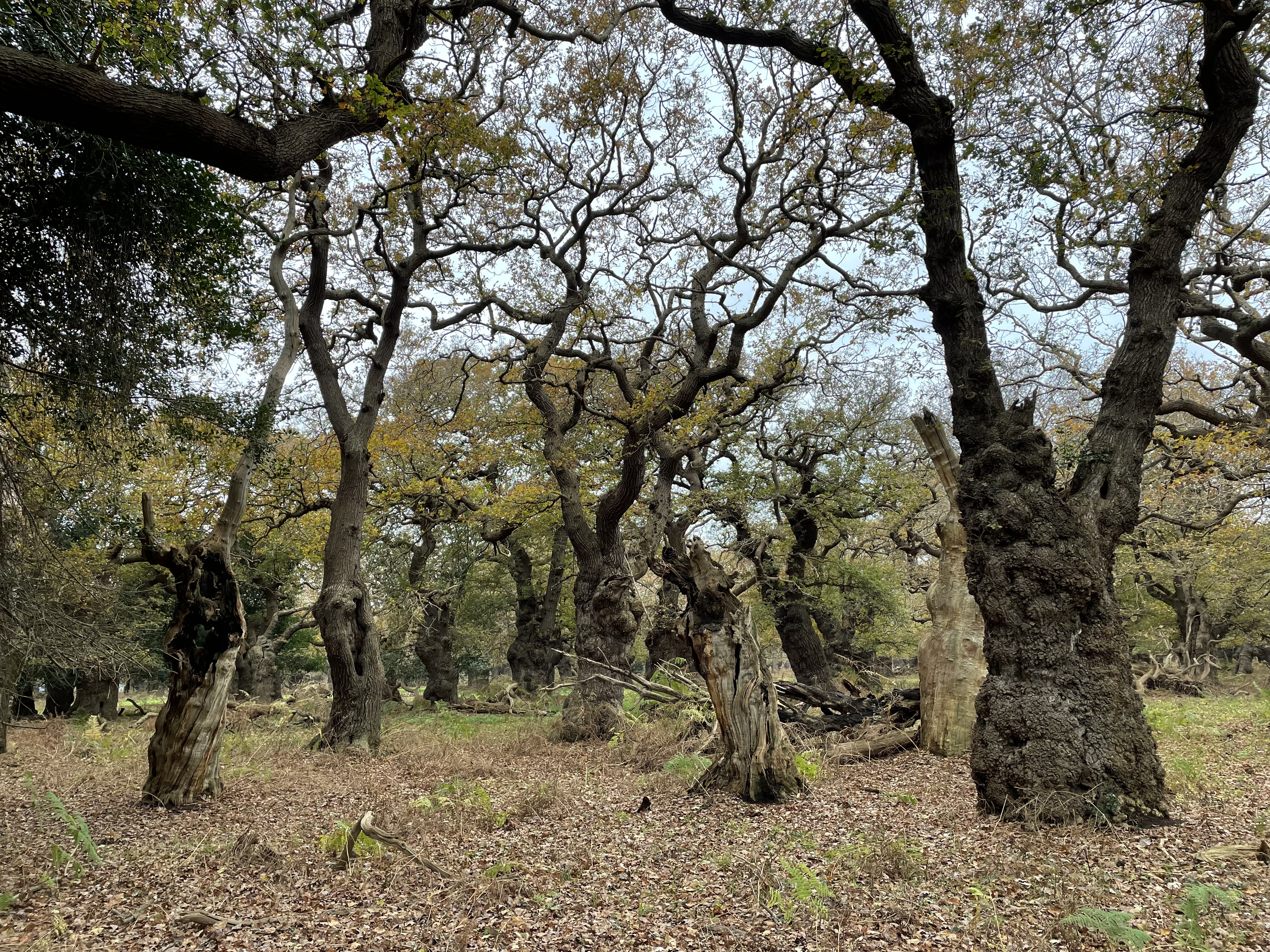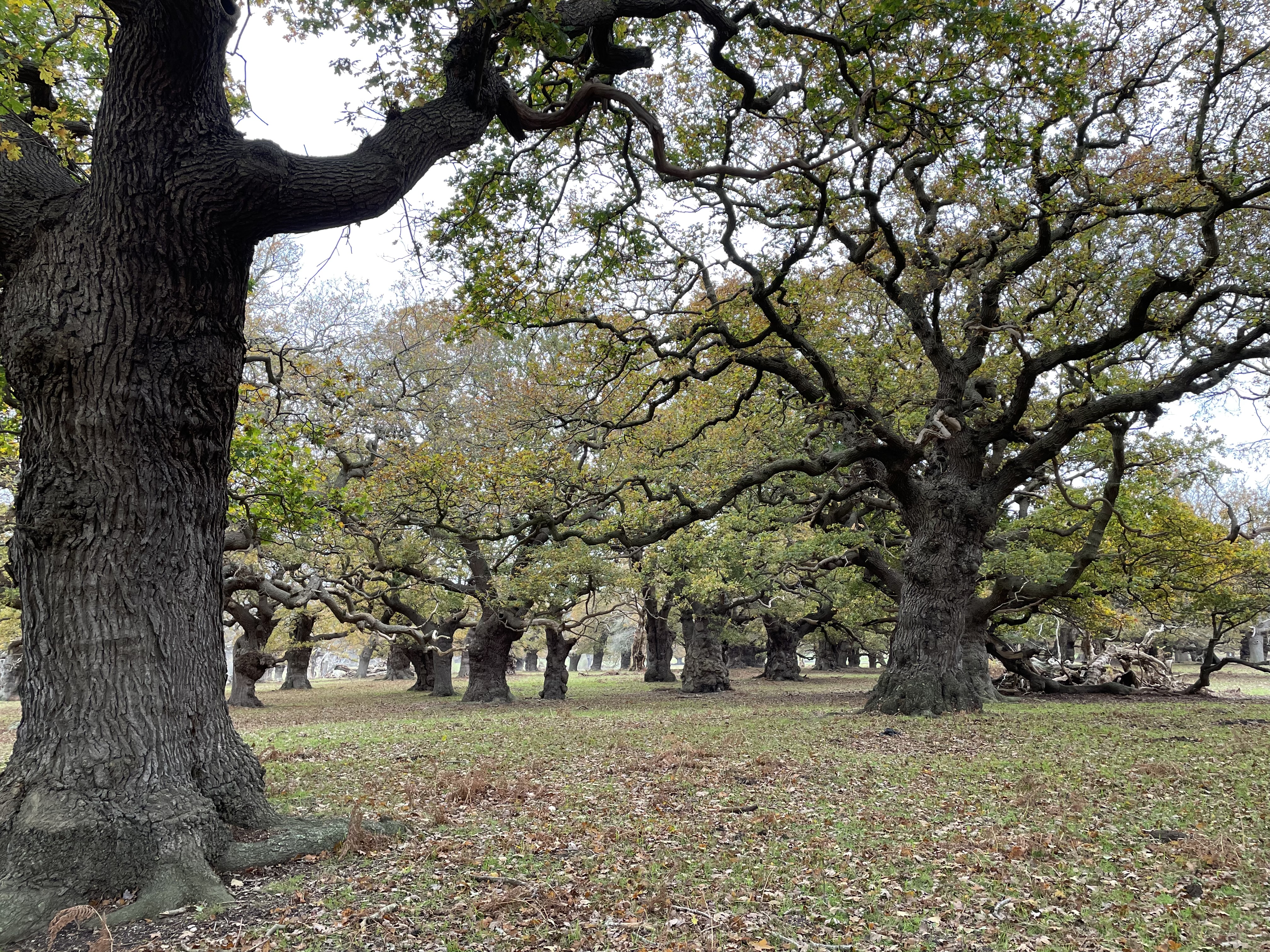
‘a famous and awesome place of Tolkienesque wonder and beauty’, and ‘one of the best-preserved uncompartmented medieval parks’.
Oliver Rackham, The History of the Countryside, 1986
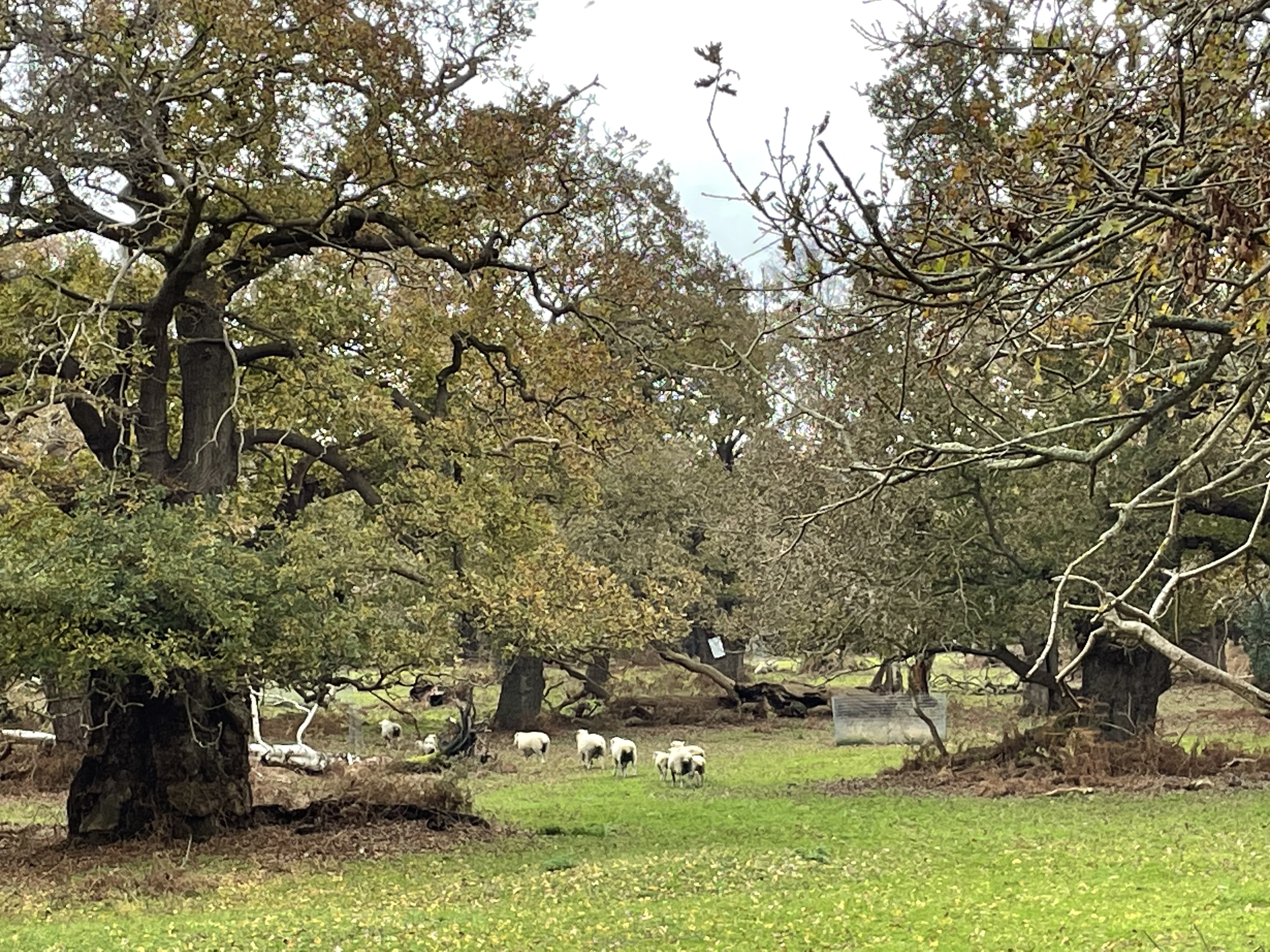
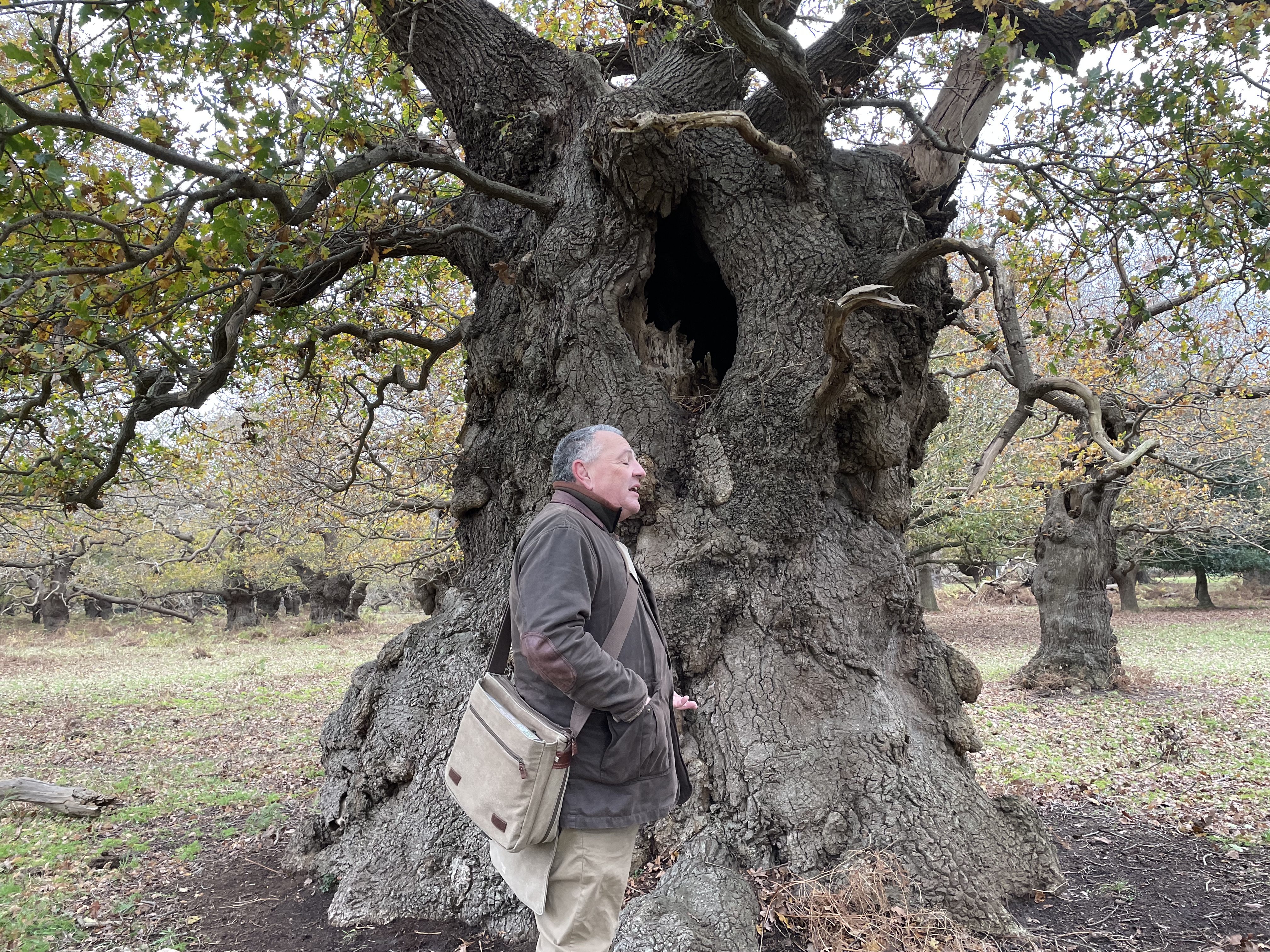
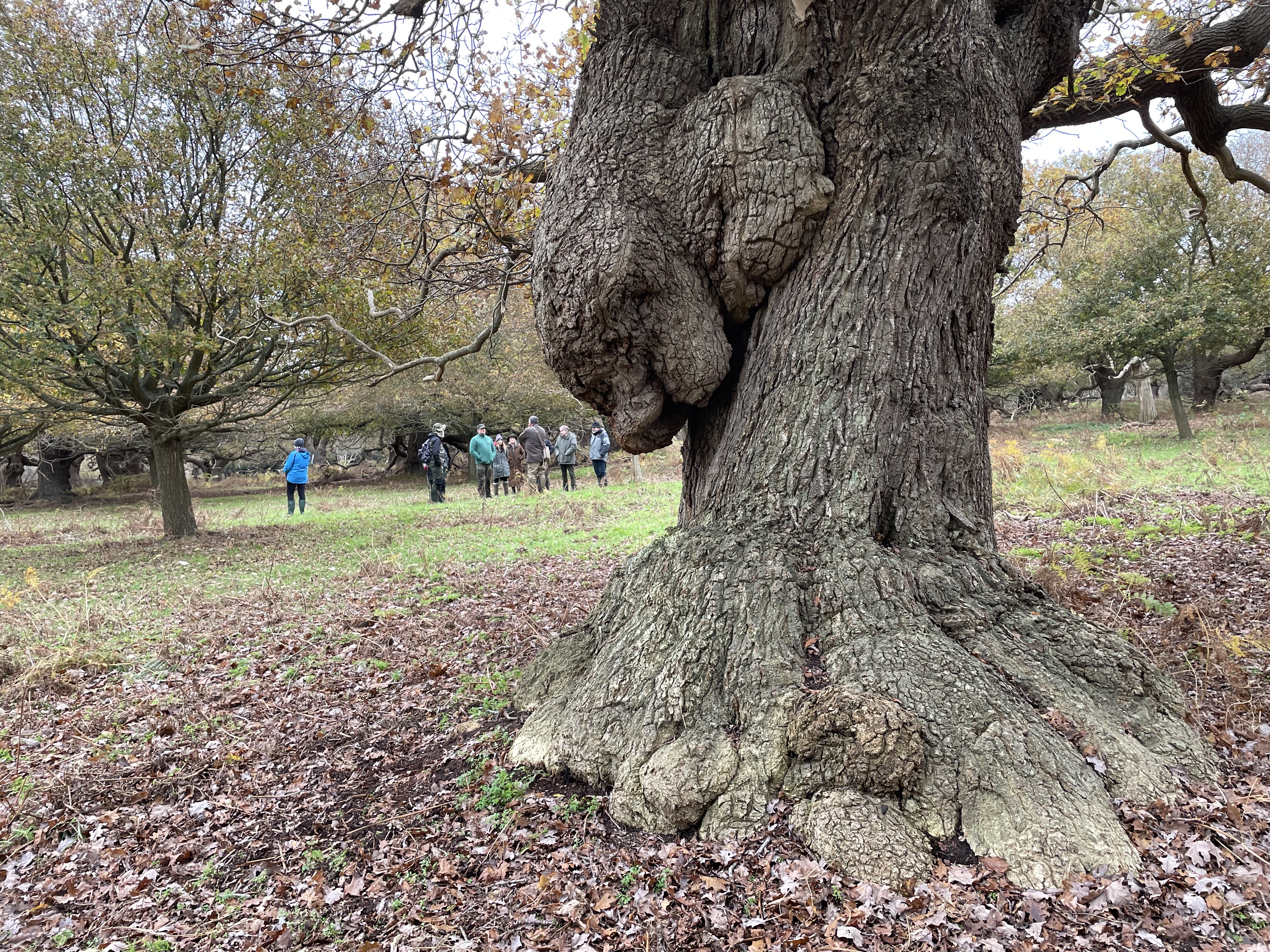
As I drove away from Staverton at the end of the day, I felt I had walked among the ancients, not as grand or huge or well known or ancient as the pyramids, but I’m not in Egypt. Nor as ancient or well known as Stonehenge, but I’m not in Wiltshire. Here in Suffolk I walked in a medieval woodpasture, among oaks planted by the Tudors. And with a guide, Gary, who loved the place, and knew each one.
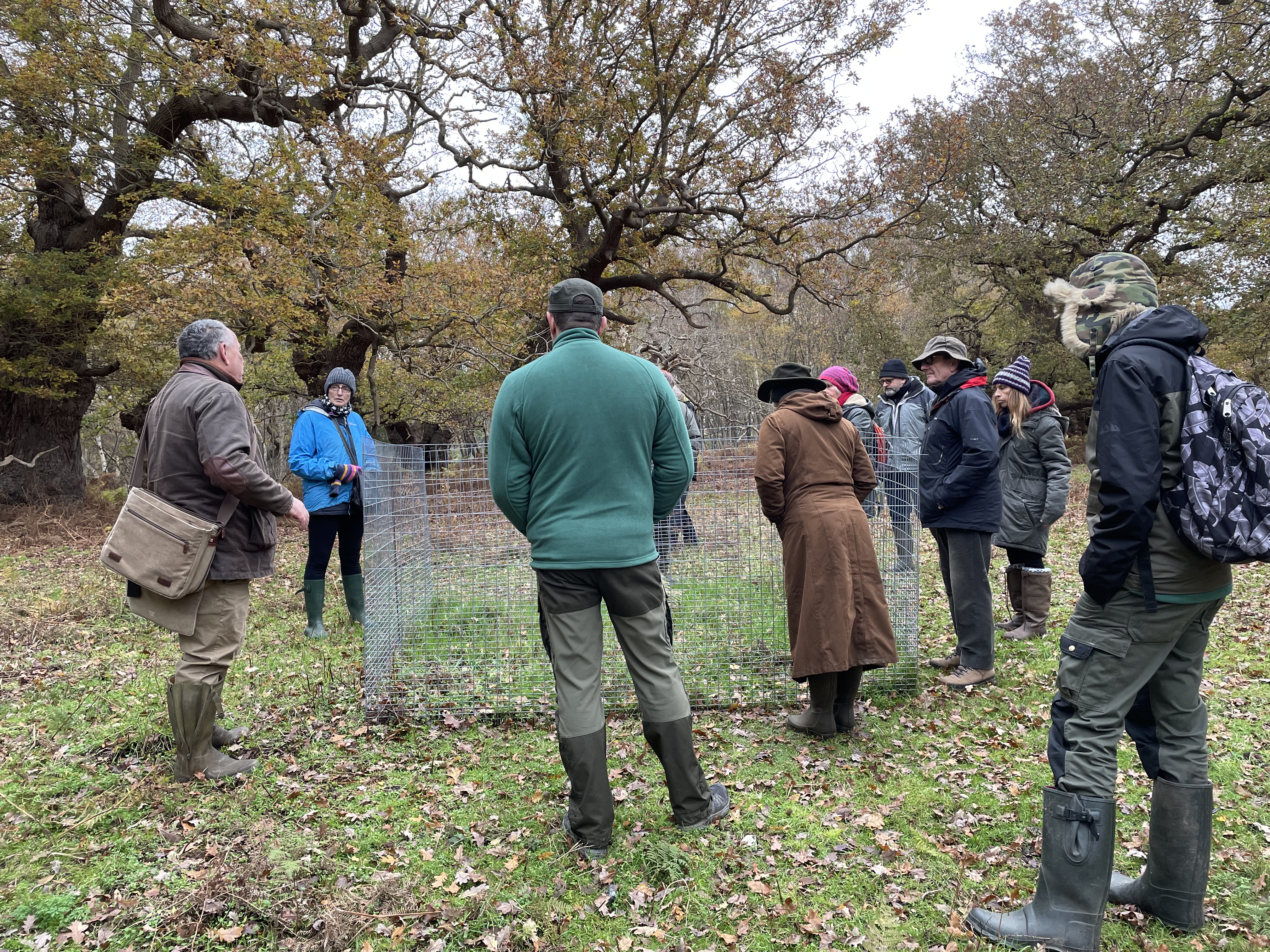
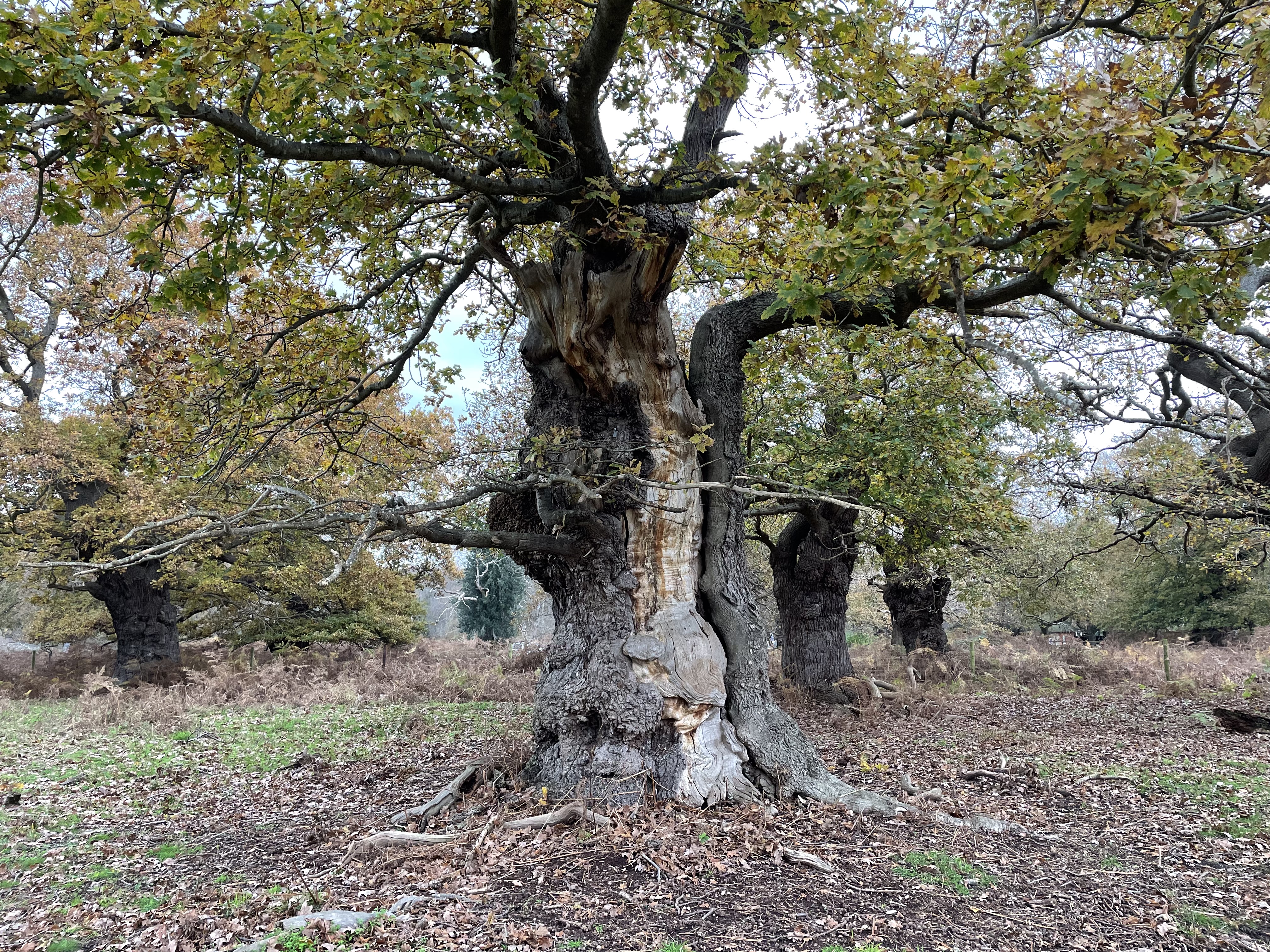
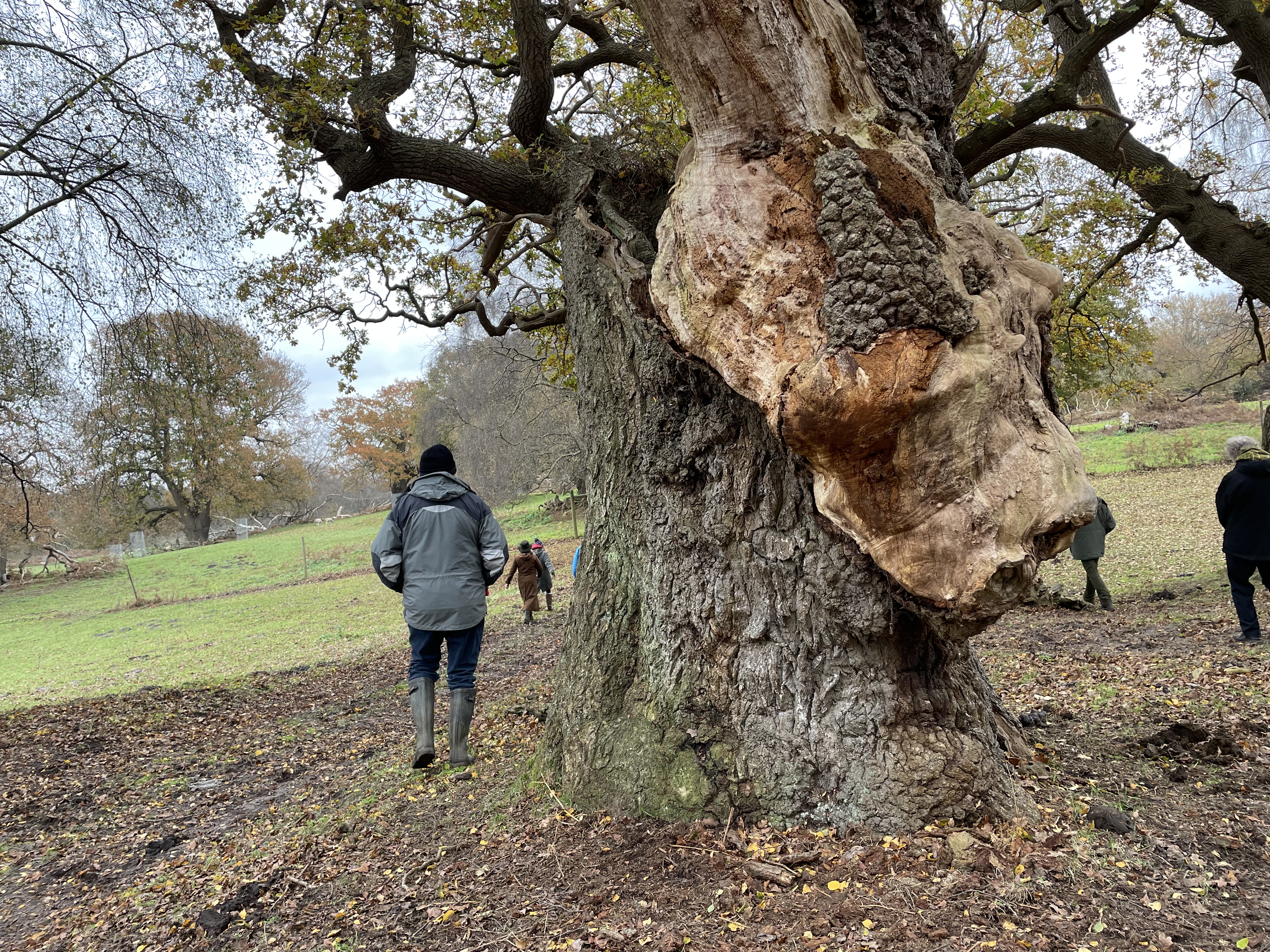
It was Oliver Rackhams favourite place, said Gary at the beginning, and I’d imagine also talking of himself. A remarkable invitation, through Suffolk Tree Warden network, with Gary taking us around the private estate of Staverton Thicks, courtesy of the Kemble family. Gary had been closely involved in the management for the last 40 years – a short time in the trees life span but large in a life. Having said do nothing for years, he’d come round to retrenchment, and throughout the journey around the wood pasture, we saw oaks with labels R45 and C45 – Retrenchment45 and Control45. Retrenchment, a word I’d previously associated with war, means by origin cut off, cut down, pare away“. Exactly that with these oaks. To lessen the distance the water and nutrient has to travel, to give the oaks a new lease of life.
Look yourselves, said Gary, be a detective, interpret. He also spoke of love. What is love? he asked at one moment.
Staverton – the name, either Saxon for place of Slaughter or place of Staves. Doomsday it was land that supported 30 swines. Probably created as deer park C11-C13. The Bigods arrived, with castles in Orford and Framlingham, By 1352 sheep were on the land. Elizabeth came to the land, picniced under one of the oaks, and may have lost a ring – one found near by. John Norden map of Timber (estate then 380 acres, now 220). 1764 Hodgekinson Map. Staverton stood as Ely, 1879 Holly introduced. 1860 last pollard. 1946 Decaying deer park.
Retrenchment will save the deminishing oaks. By cutting off the outer limbs. Each separation a complex union, above 3 complex unions, cut.
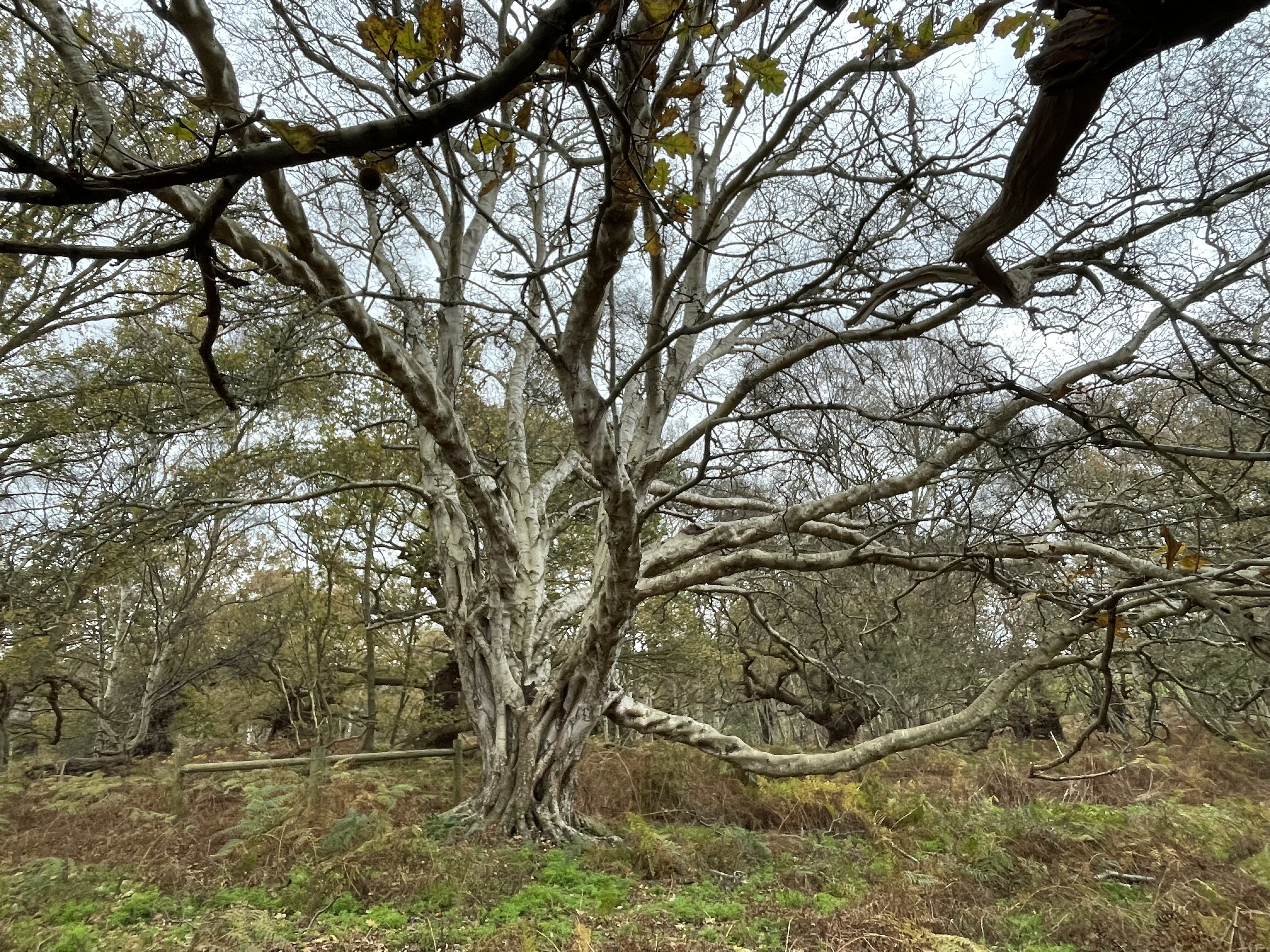
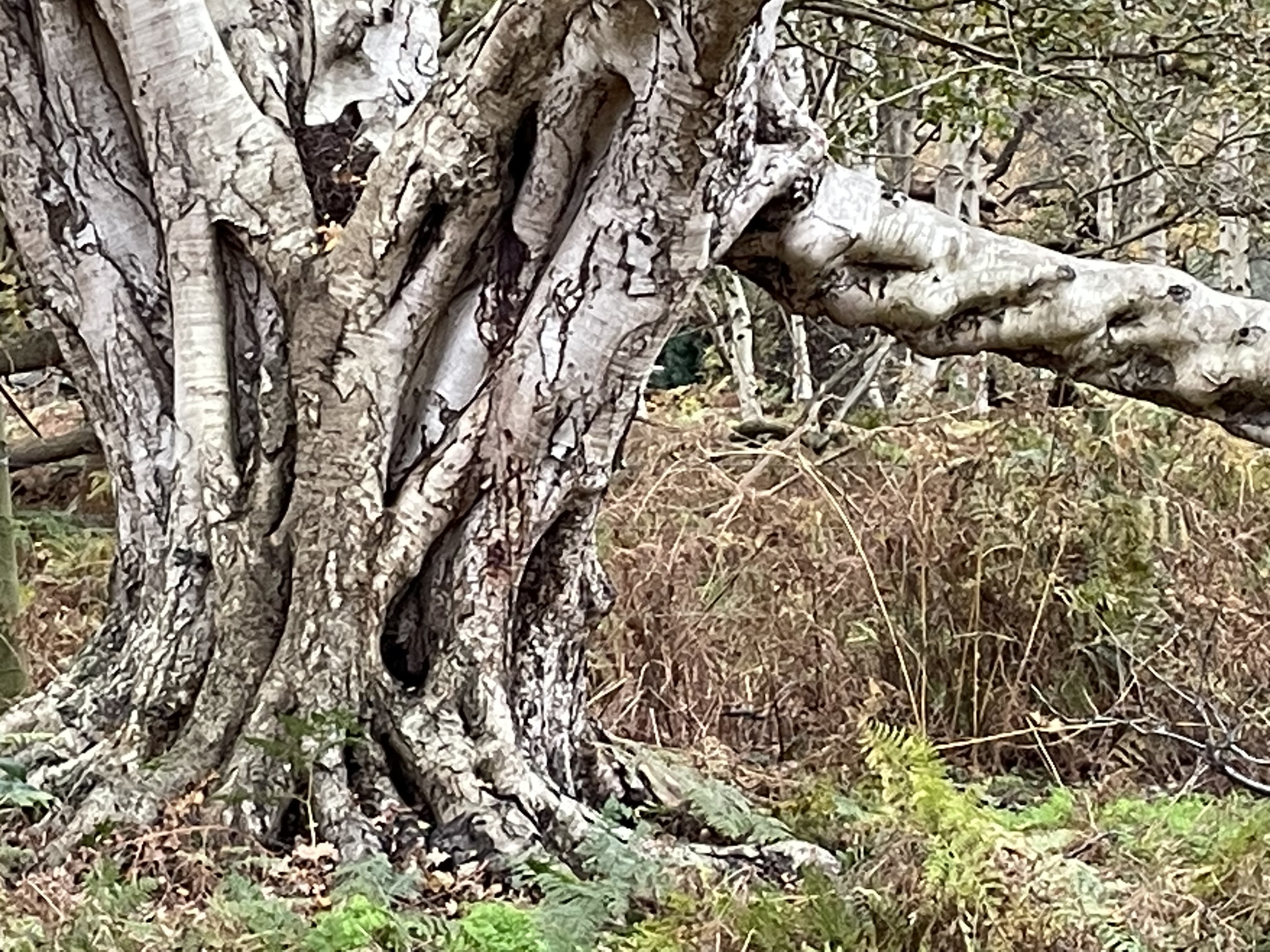
Birch a valuable co-habiter with oak. Provider of chemistry
They were pollarded 3 times, with 50 year intervals, the last one being 1770
Little evidence of Agrilus bettle more likely Phytophthora (plant destroyer)
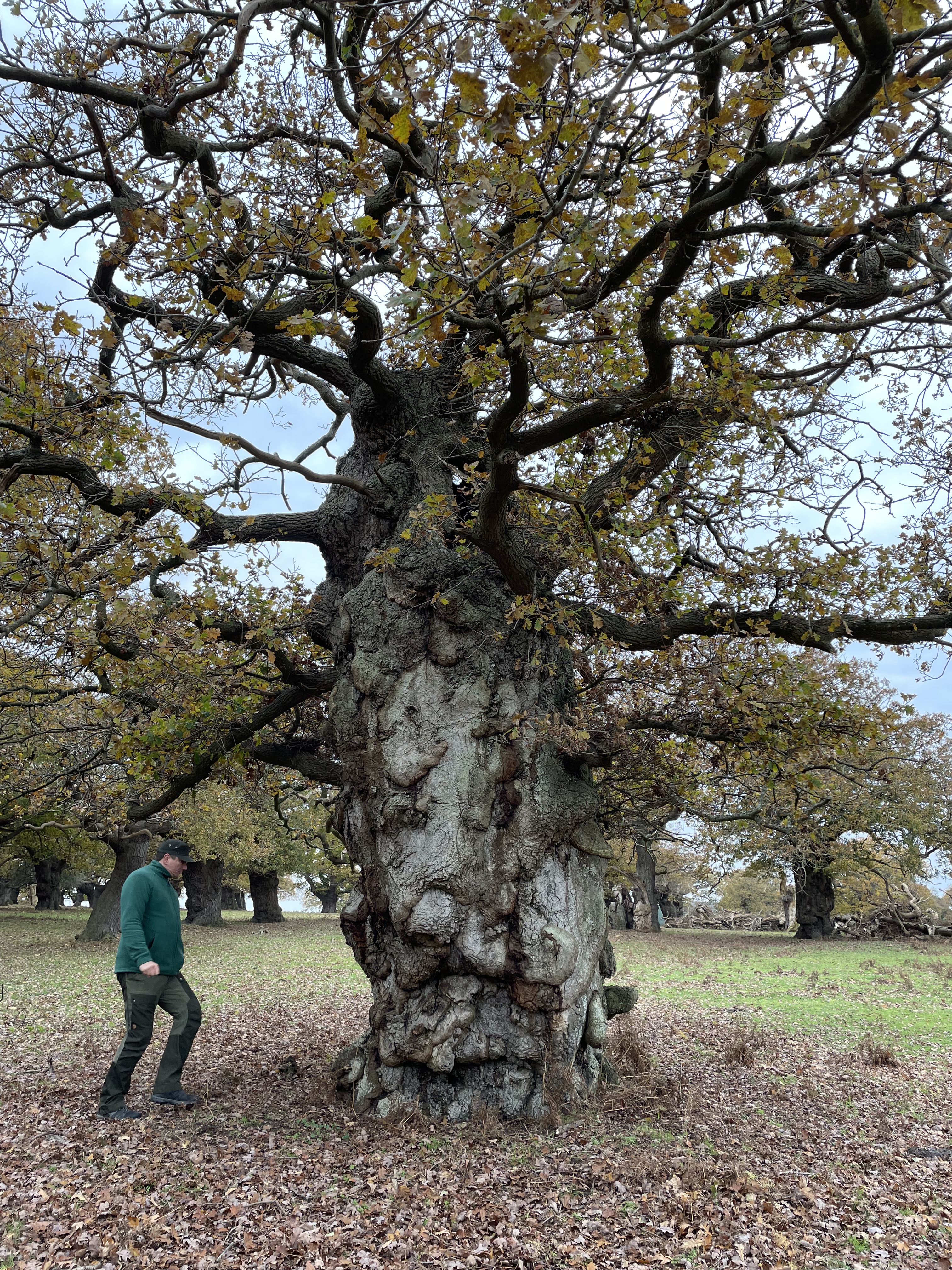
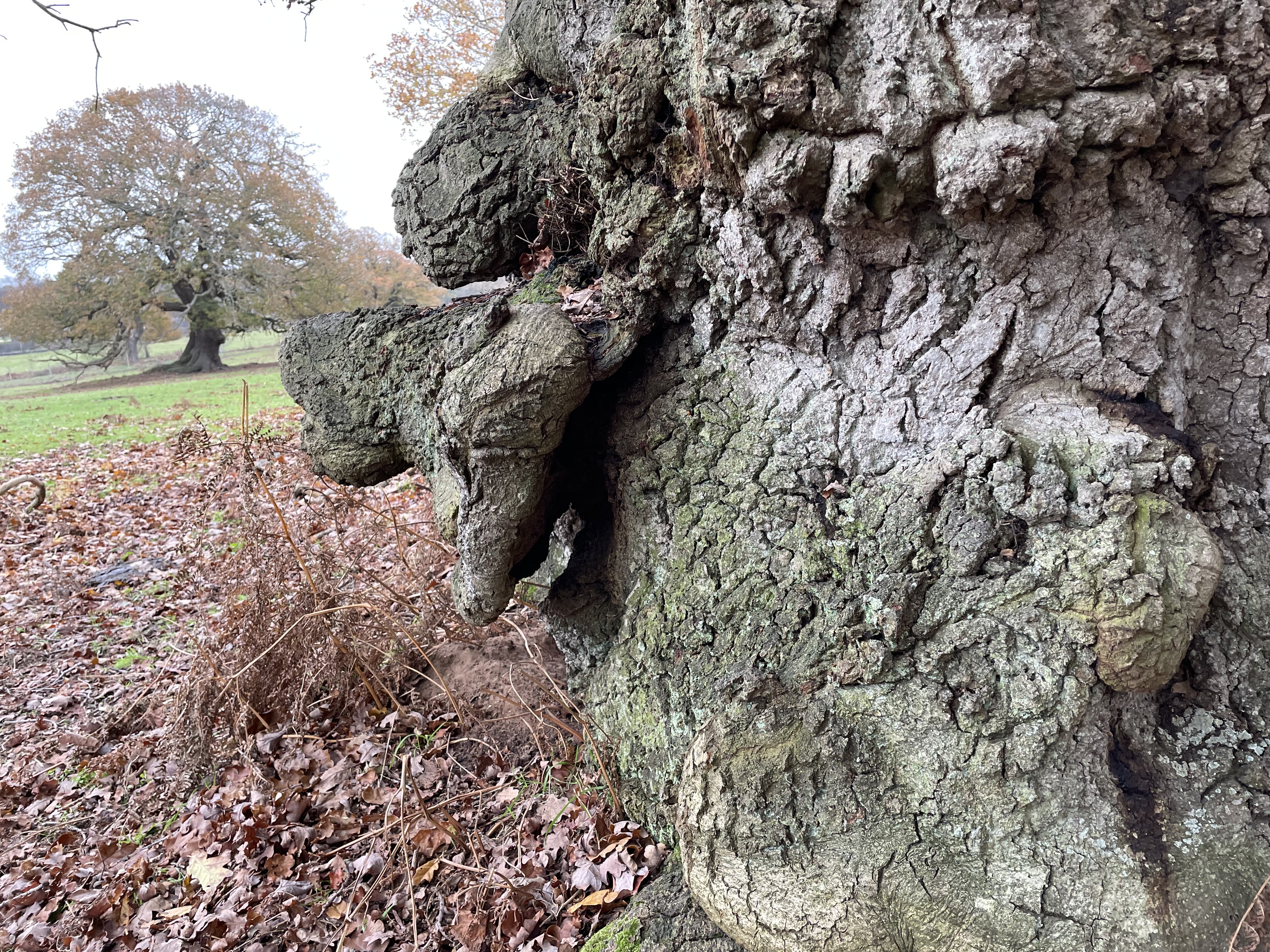
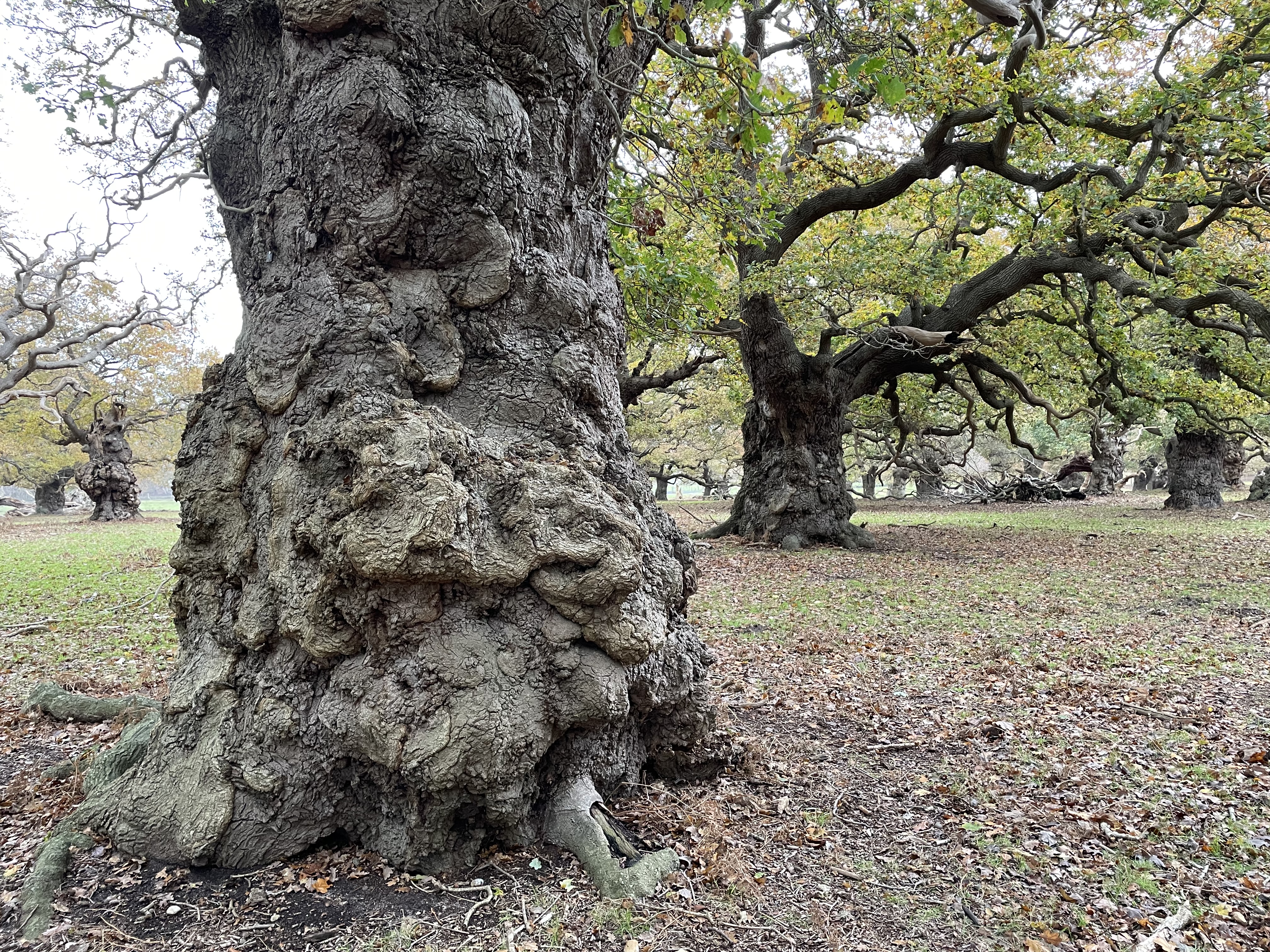
The bark of the oaks, reminded me of The Ugly Duchess, with her wrinkles and folds. Result of cattle munching over the years.
Gary’s nursery, with air pots, hundreds of Staverton Oak acorns about to become oak trees.
Delicious lunch of cheese and conversation.