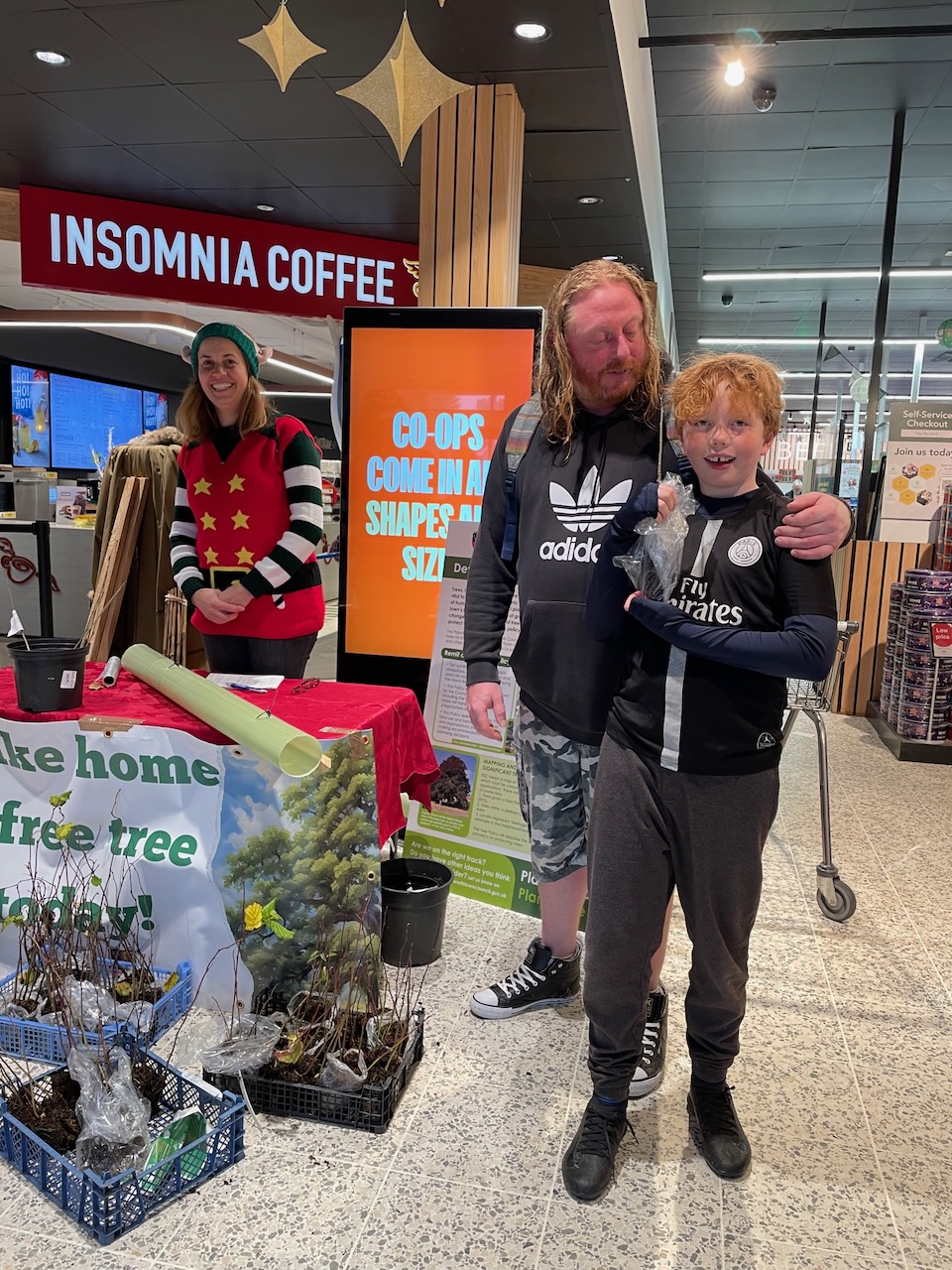
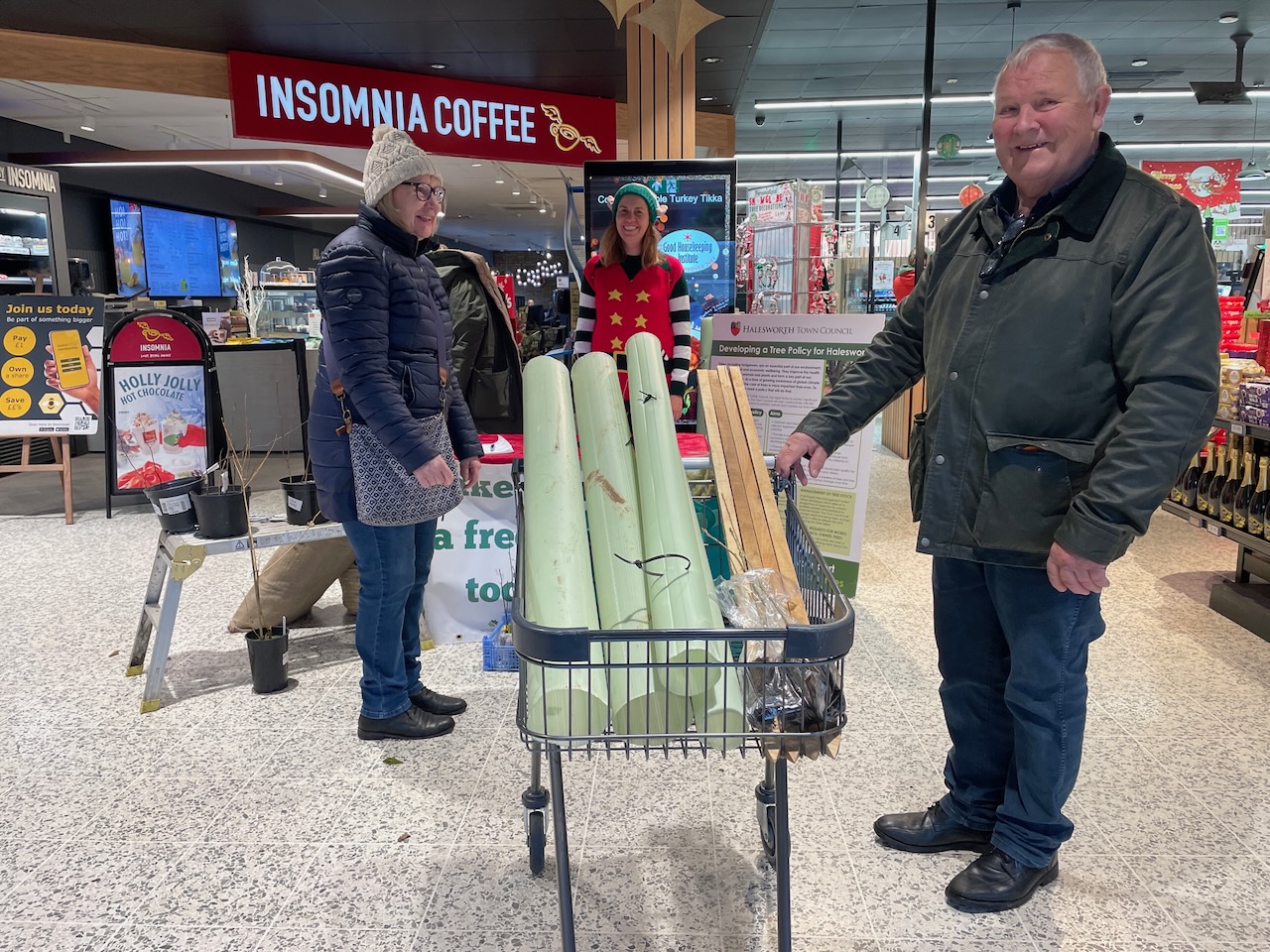
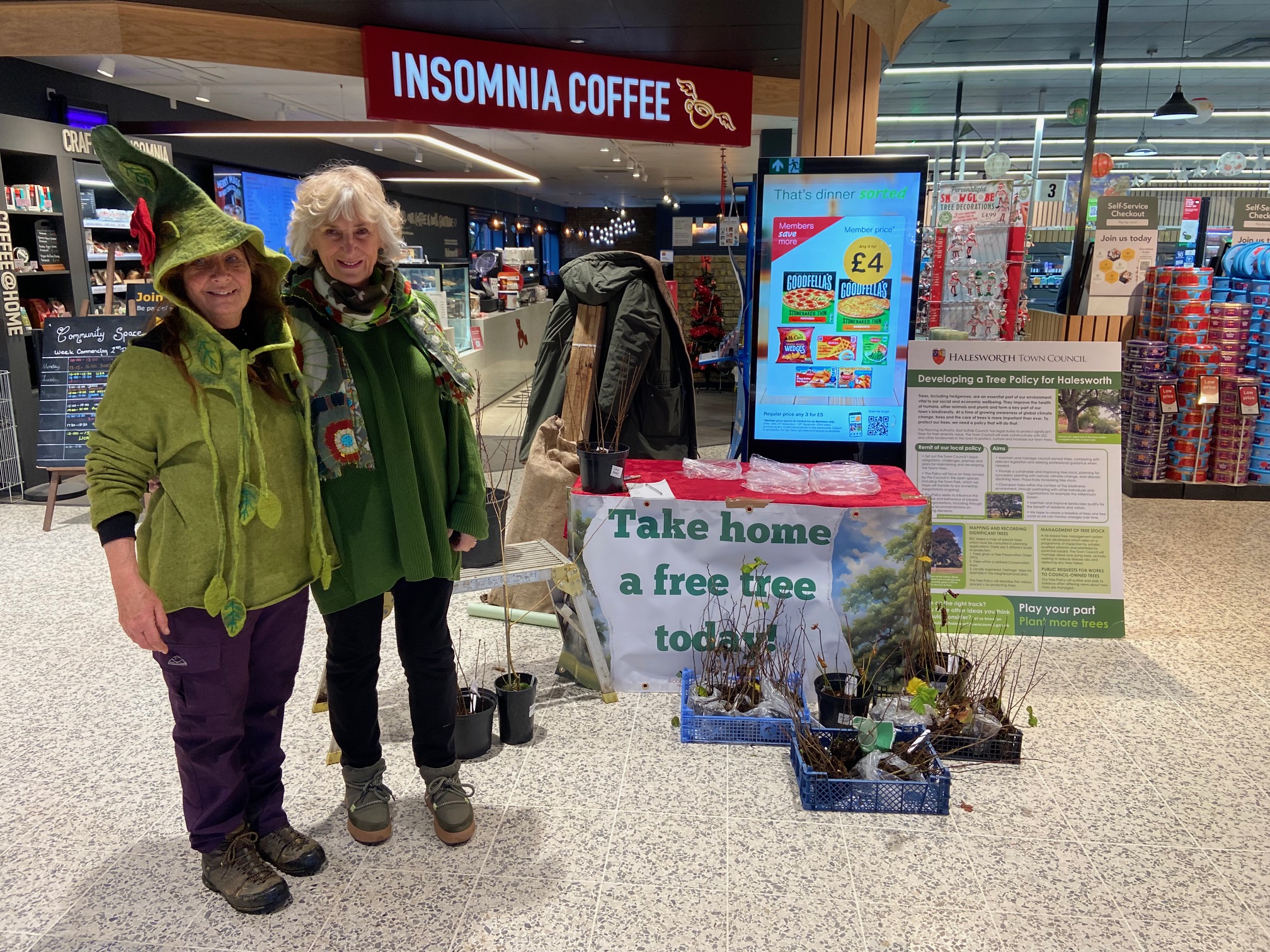
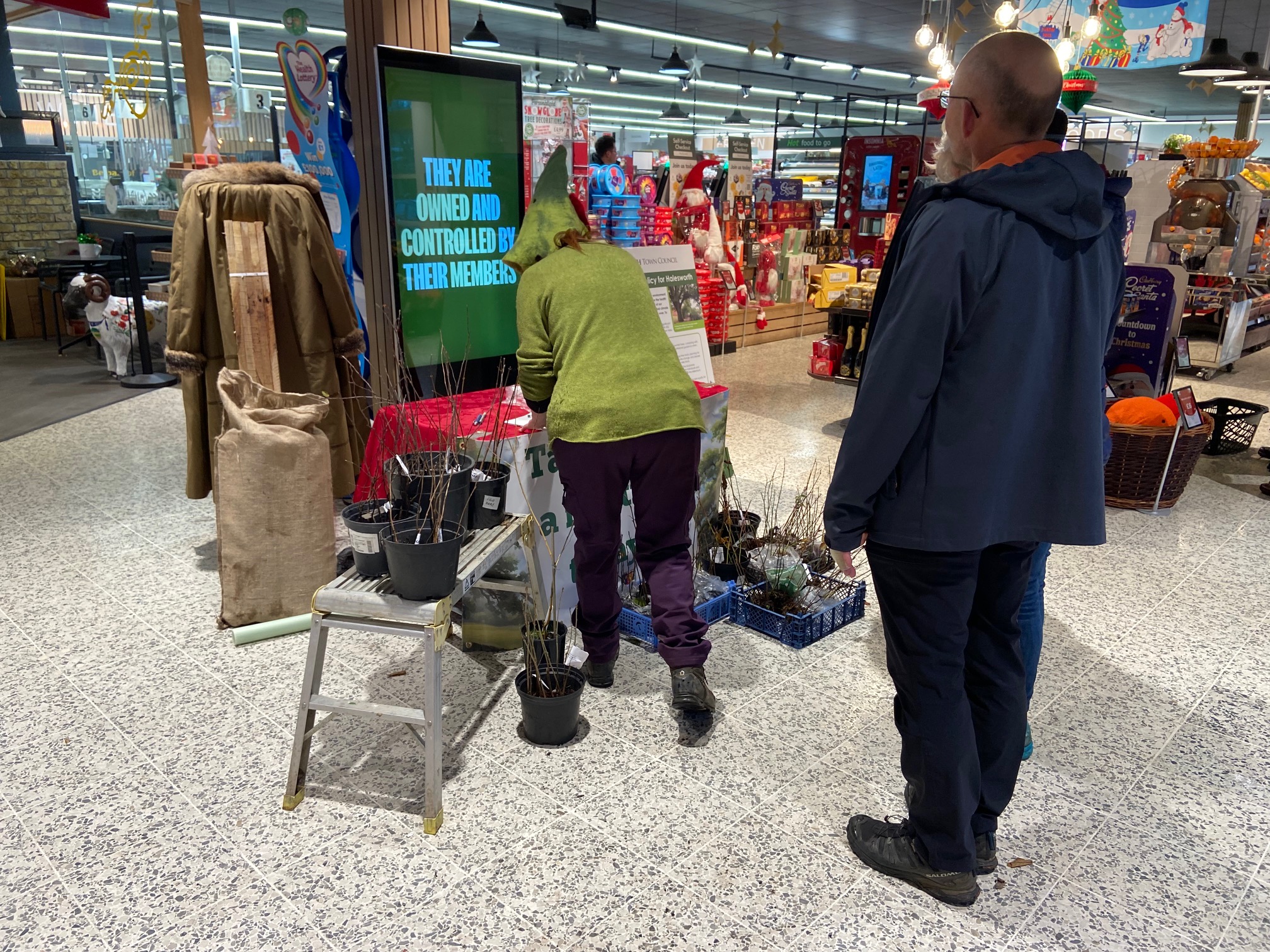
December 2024, Halesworth Town Council gave away trees. Yes, FREE TREES. Sourced and bundled by Lisa Simmonds from the Suffolk Tree Warden Network who grow their own (from local seeds) and also source from the Woodland Trust, the selection included trees and hedgeplants suitable for clay soil, which is the dominant soil type over our Halesworth area.
- Oak
Maple
Dogwood
Hazel
Crabapple
Hornbeam
Wild Cherry
Willow - Hedgerow packs of Hawthorn, Hazel, Hornbeam and Blackthorn.
Most popular was CrabApple which is suitable for smaller gardens:
Crab apples are great garden trees. They look good all year round, with pretty blossom in spring, followed by small, ornamental apples, red or yellow in colour, and the autumn foliage also puts on a good show. The tiny apple fruits are edible, although not in their raw state, but make good jellies and sauces. Crab Apple trees are also quite compact in size, which makes them one of the best trees for small gardens. They are hard-working trees: attractive, productive and good for wildlife.
Although we did find a home in a larger garden for 3 oaks. Two young people eagerly took a tree, aged 11 and 12, they would be in their 20’s when fully grown, and could witness the growth of the tree as they grew.
One person offered additional oak saplings for the tree nursery in Holton
The stall was set up and organised by Halesworth Town Council, with the chair of the council, Joyce Moseley, the deputy clerk, Phillippa, and both of Halesworth/Holton’s tree wardens and councillor, Rachel Kellett and Lisa Simmonds.

Woods and Climate Change
The importance of trees in mitigating climate change is
enormous. Trees are the ultimate carbon capture and storage
machines. Like great carbon sinks, woods and forests absorb
atmospheric carbon and lock it up for centuries.
- Trees filter the air we breath, through photosynthesis,
respiring oxygen essential for us to live. - Trees are an effective air cooler. With temperatures set to
raise to an average of 40 degrees in 2050, trees are an
essential microclimate. - Trees, particularly deciduous trees, create alkaline humus that can effectively store water.
- Trees shade the soil.
- Trees have an essential relationship with people
- Trees are the fruiting body of all the communication that
goes on underground, the mycelial network. Dead and
decaying wood provides a nutrient-rich habitat for fungi, a
nursery for beetle larvae and a larder for insectivorous birds
and other animals.
The felling of a tree
It is a question that must be carefully considered, both to build a road, a house, and because leaves dirty the roof and block the sewers.
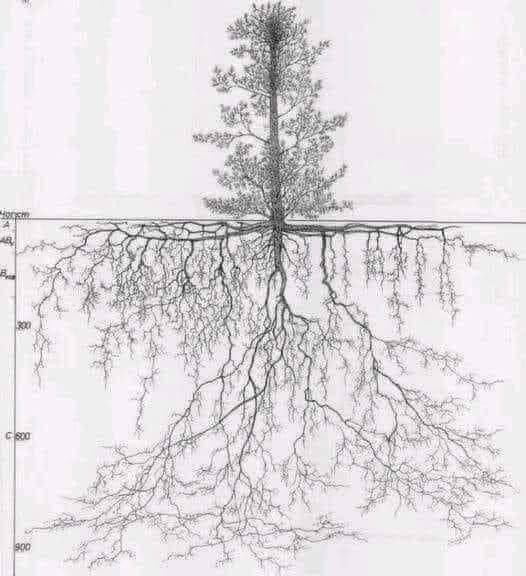
A tree: Absorbs “problematic” CO2 to produce “vital” O2 and stores carbon C, fills the blades of earth with its vertical roots serving as a guide, reflcts and absorbs part of solar radiation, maintains local freshness and contributes to the formation of clouds with the phenomenon of vaporization.
It produces leaves: food for the earth and for you, the horizontal roots serve to recover nutrients, it gives sugar to the mycelium in exchange for nutrients it absorbs dust and polluting gases, it provides habitat and food for birds, insects and rodents, it can serve as a sound barrier and visual…
In short, in addition to capturing CO2 a tree produces: fresh! Waterfall! Oxygen! The only technology that can save us
Plant trees, plant.
Stories from those planted
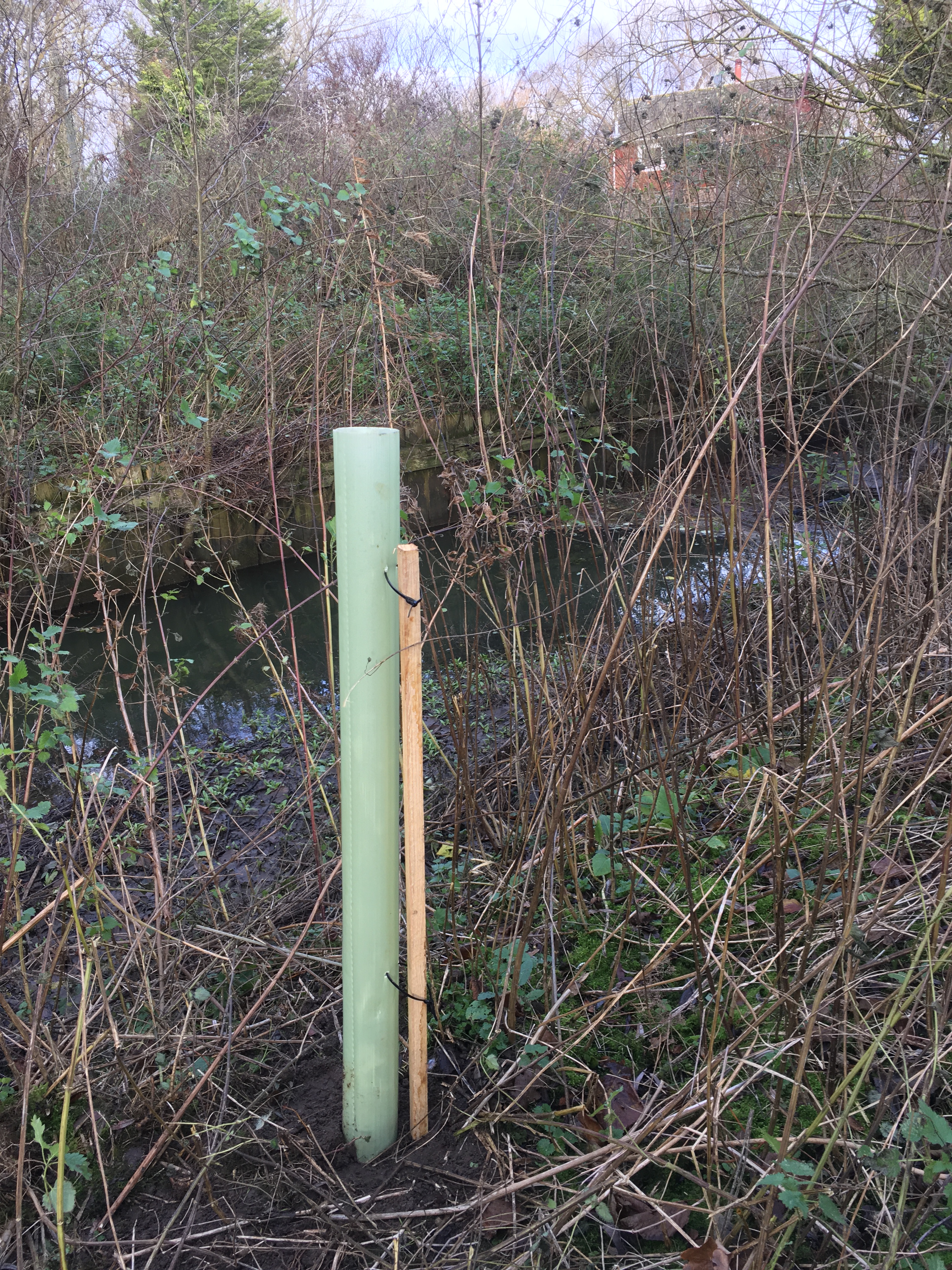
Weeping Willow: Walpole, Chris L: I have planted the Willow. Its position is chosen to continue the previous environment agency plan, that is to keep the river channel clear of growth by creating shade. The willow is planted so as to create shade that will inhibit the continued spread of Himalayan Balsam along the river bed. Thank you for your most useful contribution.