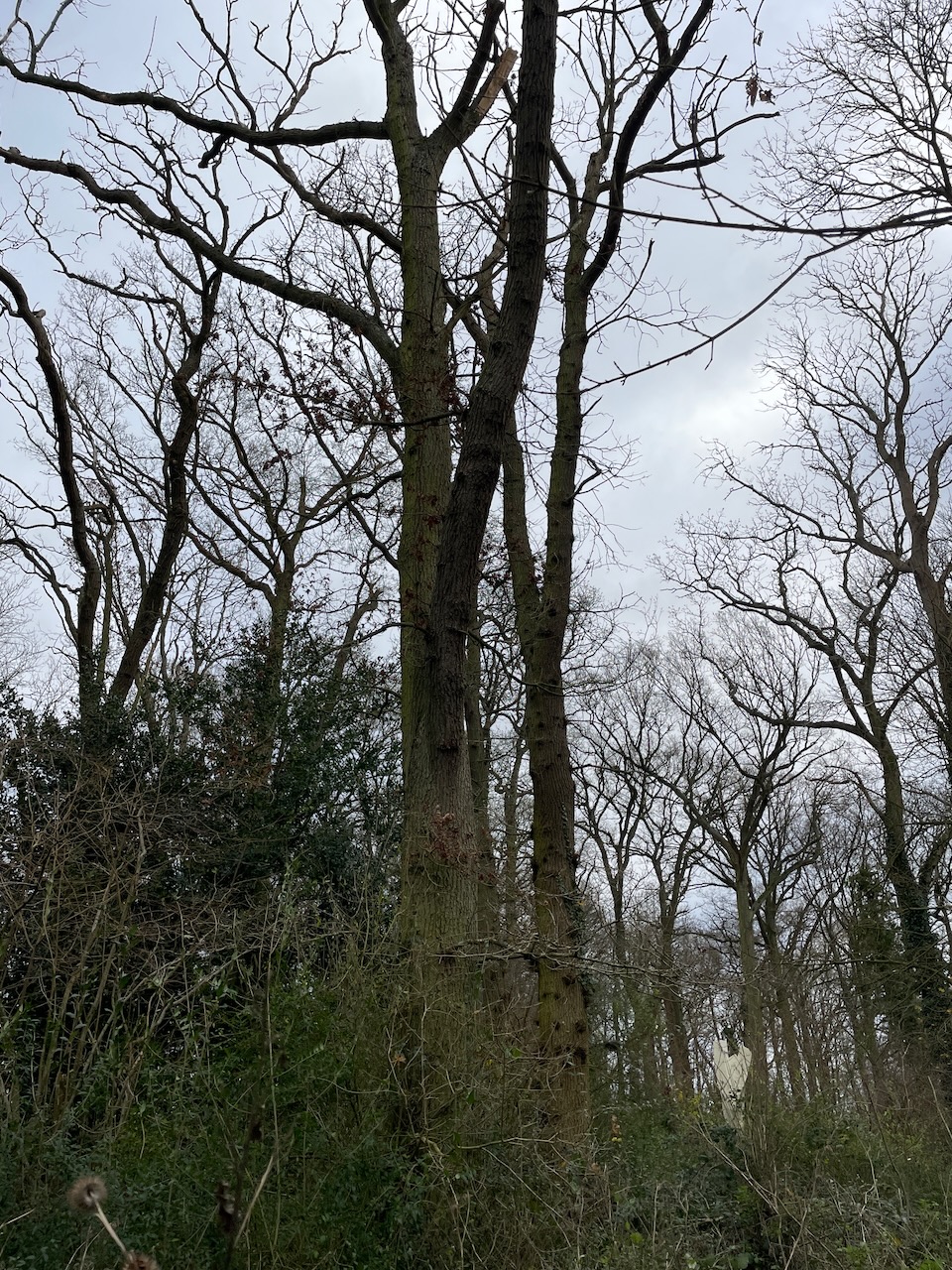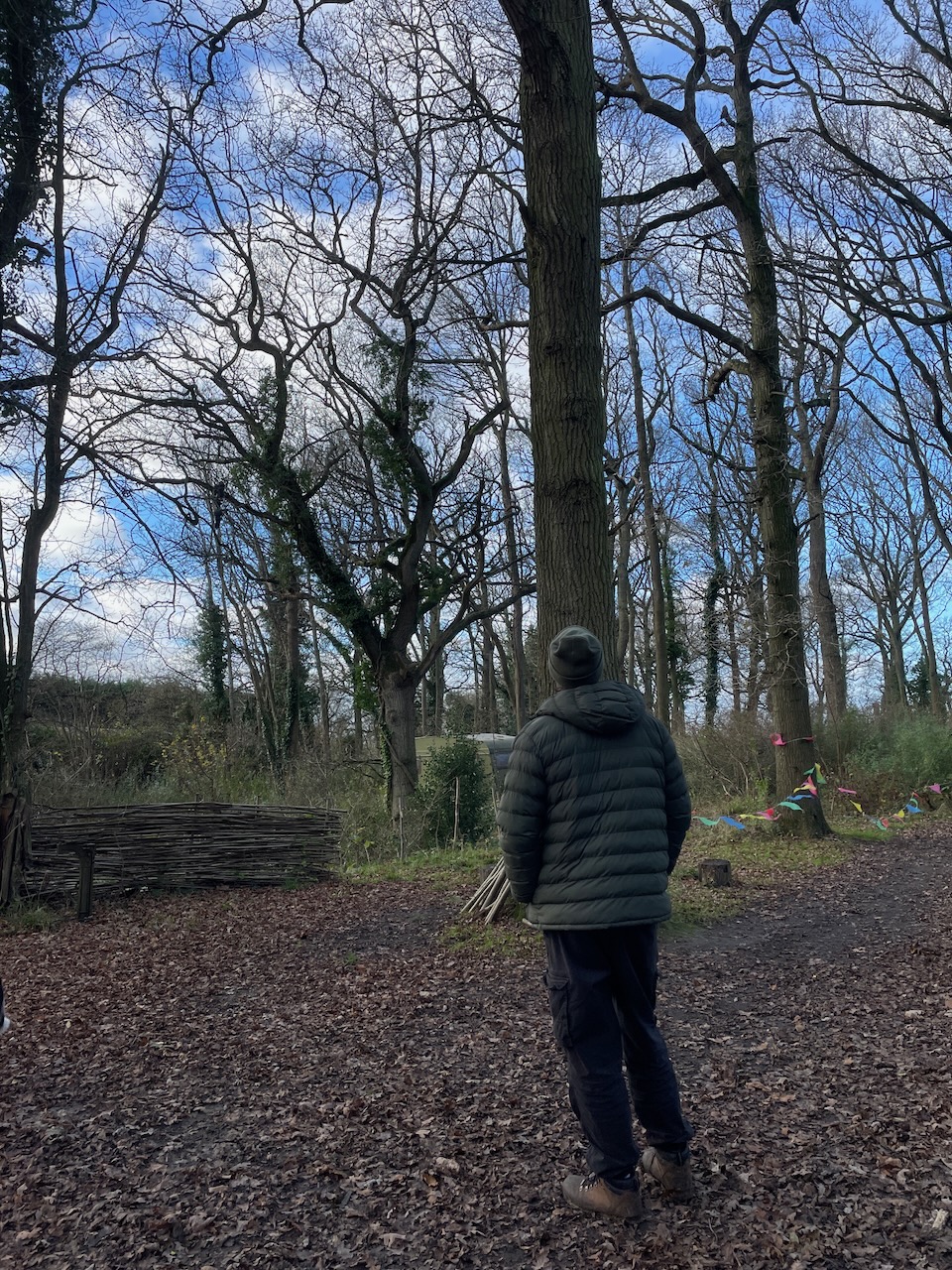
Woodland work planned January with George Watts/Paul Jackson and other supporting people. Estimate 5 days work to fell the trees and further to process them on a mobile bansaw, prefereably to a cutting list.
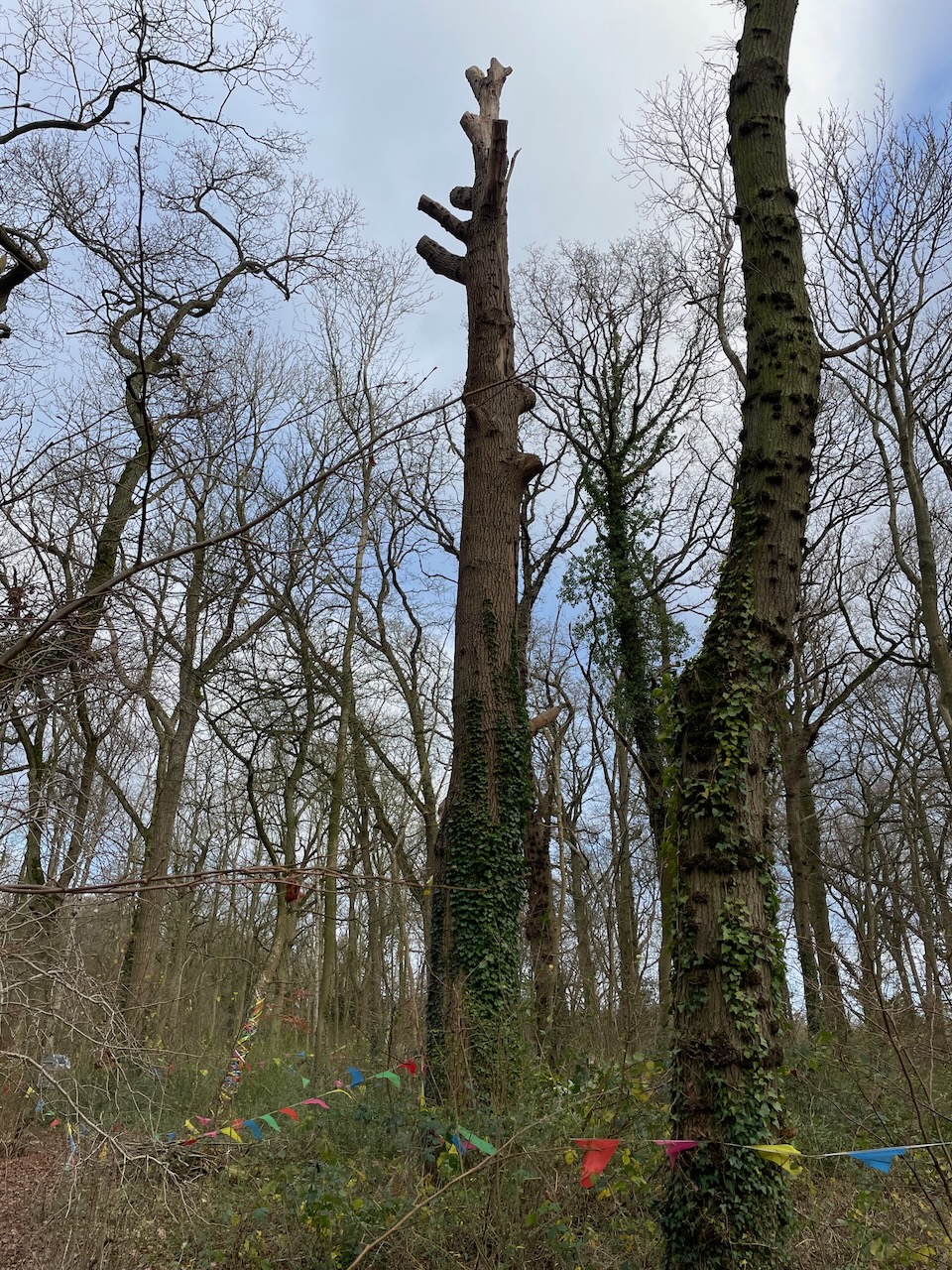
About 16 oaks are seriously affected, all with Acute Oak Decline (AOD)
The purpose is a. to make safe the site and b. to use the timber, in the same way as we did for the cabin, to potentially build a barn at East Lodge.
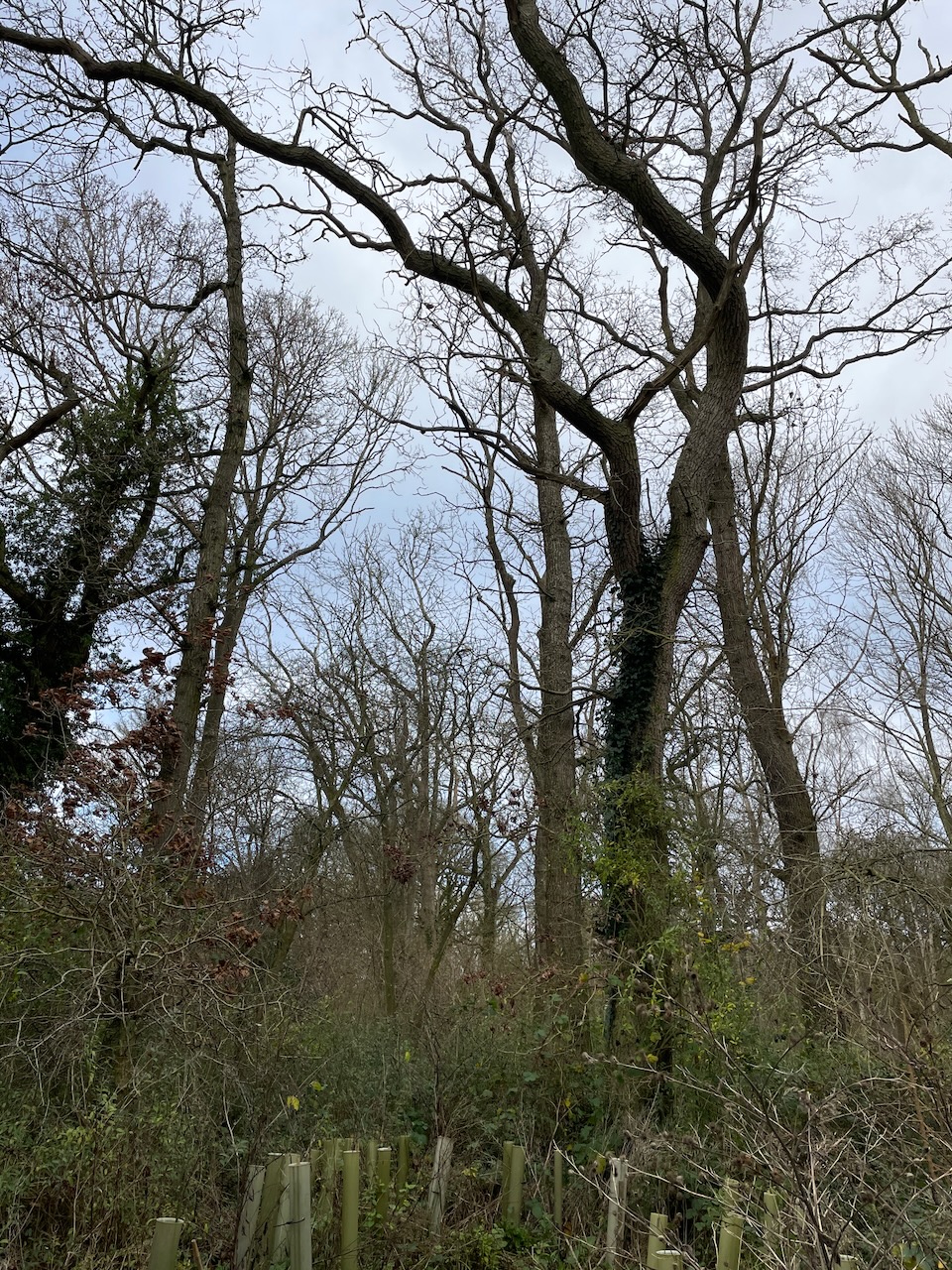
Acute Oak Decline, was diagnosed in kaliwood by Garry Batell 3 years ago, when he came to look at my land. There is a distinct group by the entrance which is particularly bad, where 12 oaks next to each other all have the disease and exhibit clear die back.
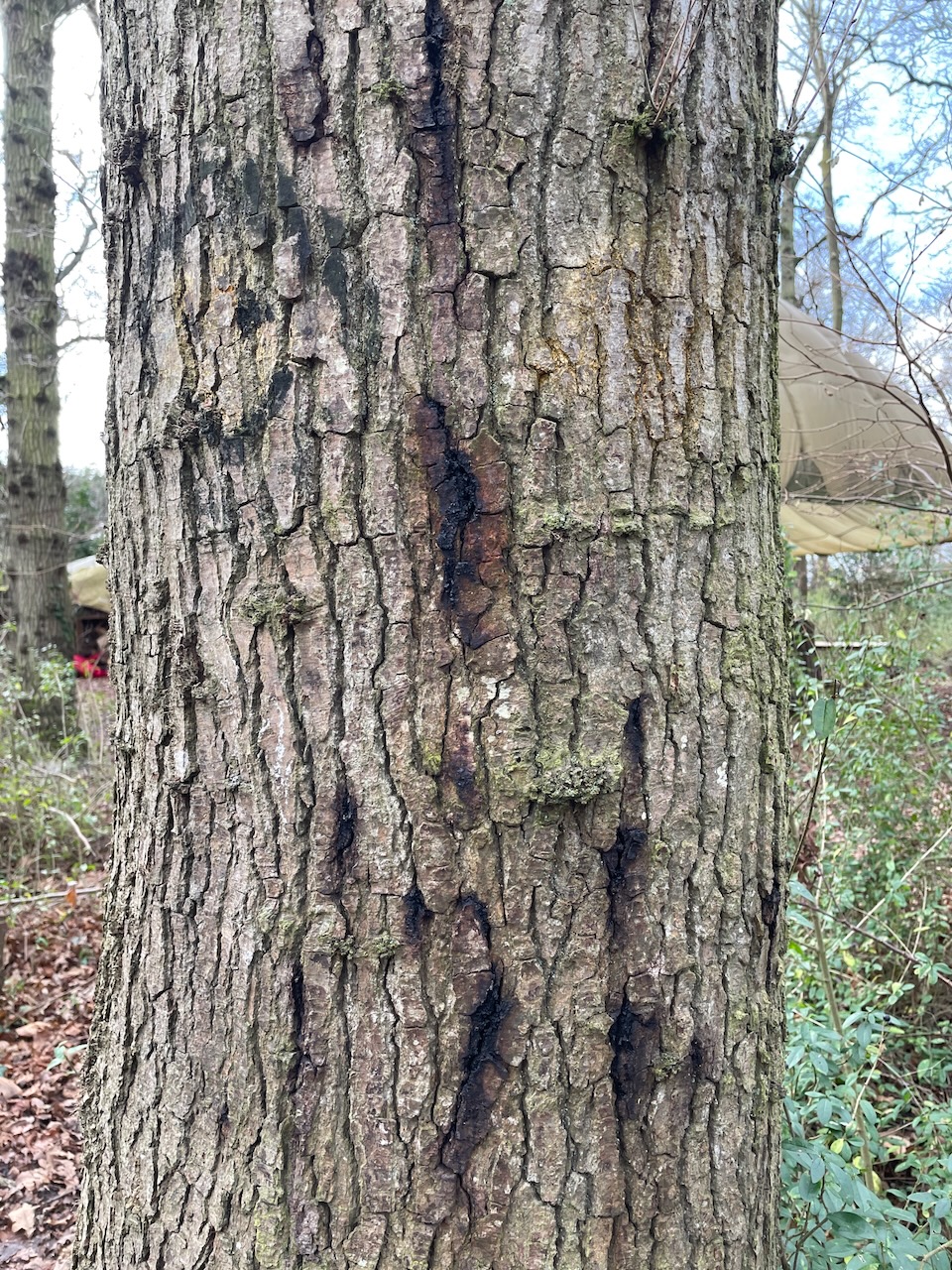
The disease is characterized by dark, sticky fluid oozing from cracks in the bark. The cankers can girdle the tree, preventing it from moving nutrients and water. It can kill oak trees within four to six years of the onset of symptoms. The disease is found mostly on mature oak trees, but younger trees can also be affected. It is caused by multiple agents, especially bacteria, and thousands of trees are affected. The disease is present in warm, drought-prone parts of the UK where there are also high levels of airborne nitrogen pollution and low dry sulphur levels. It is found mostly in south-eastern, central and eastern England
D-shaped exit holes (above left) made by emerging two-spotted oak buprestid beetles (Agrilus biguttatus) might be present in the bark plates of affected trees – about a third of cases show this.
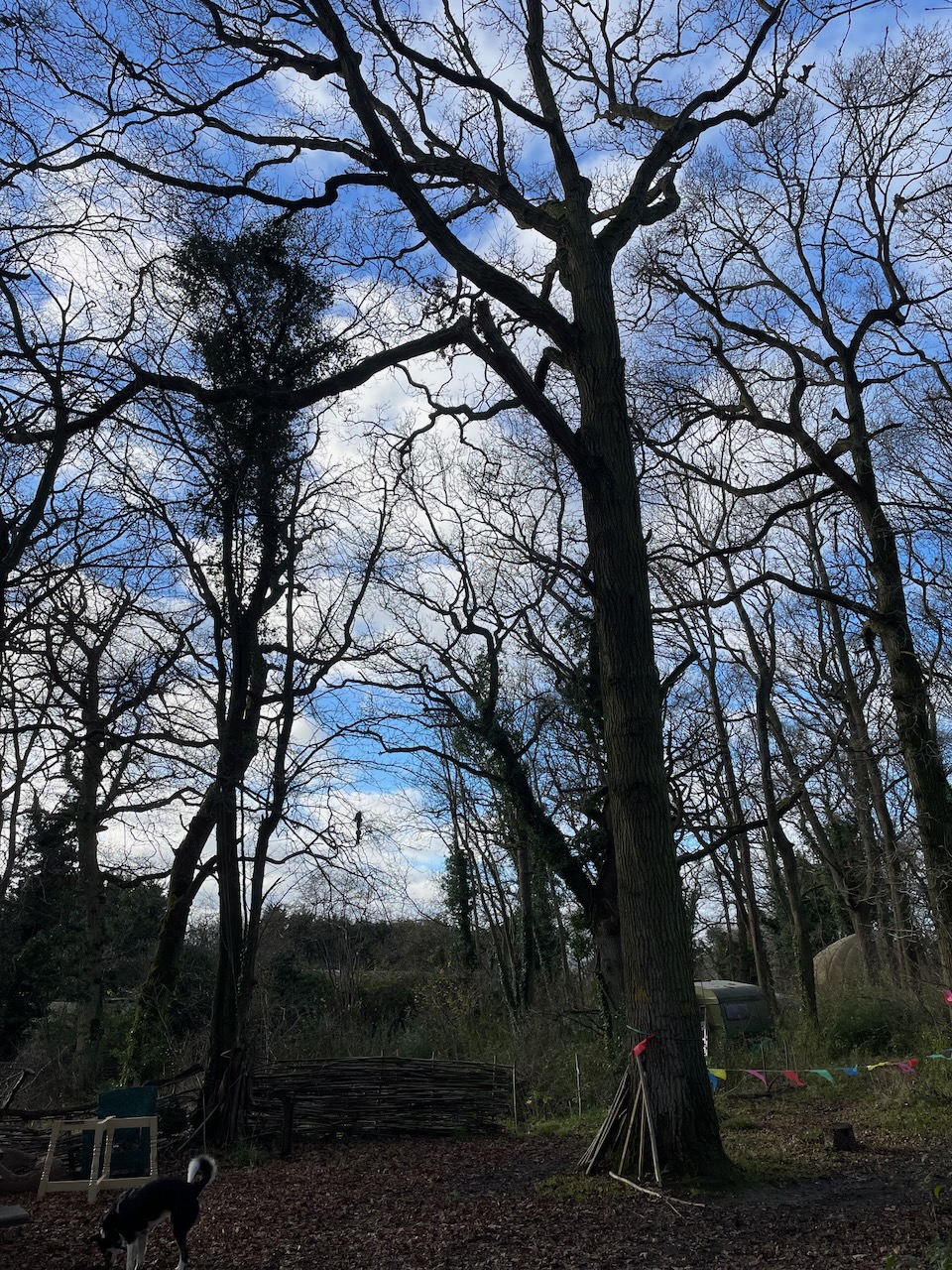
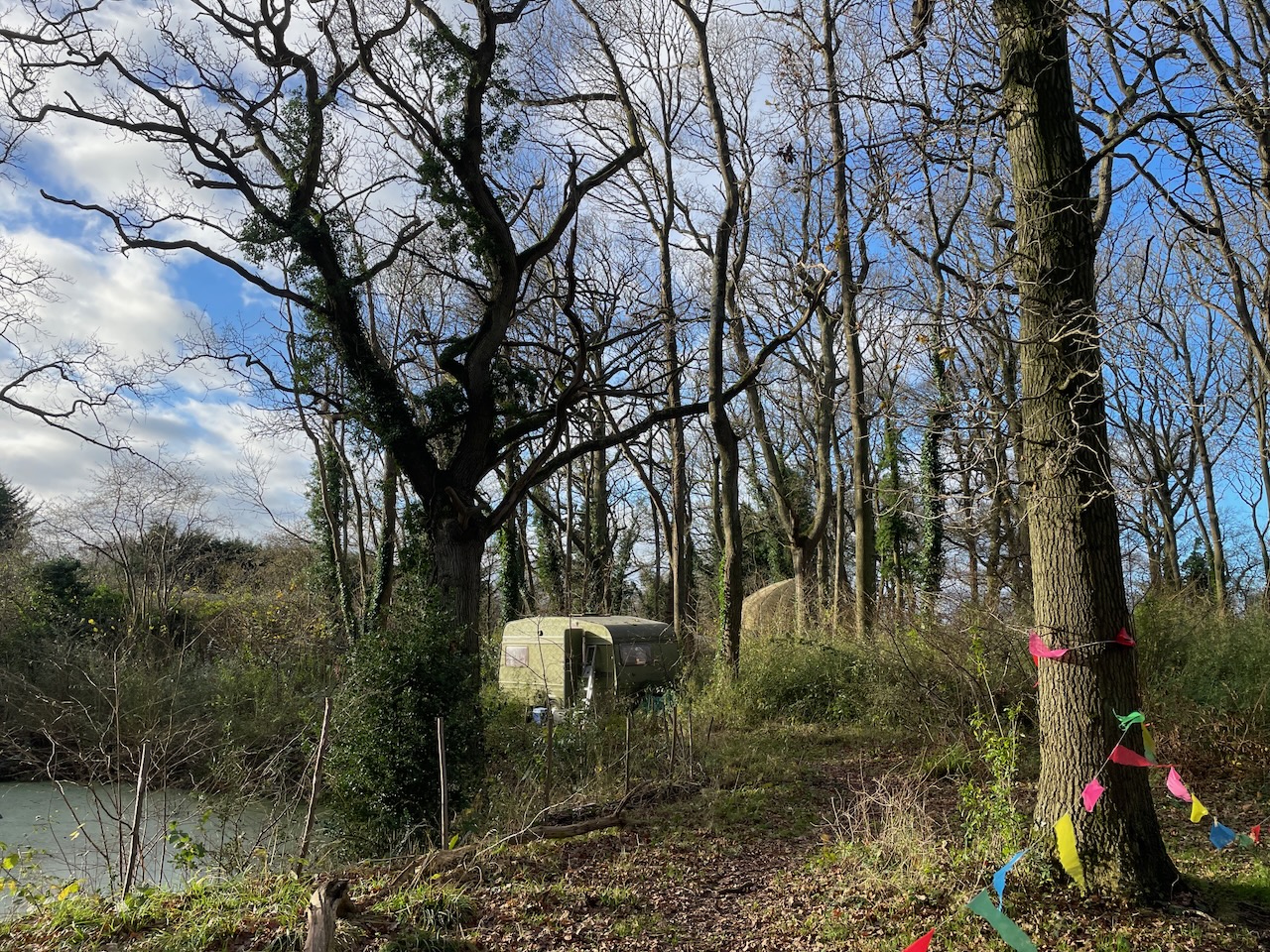
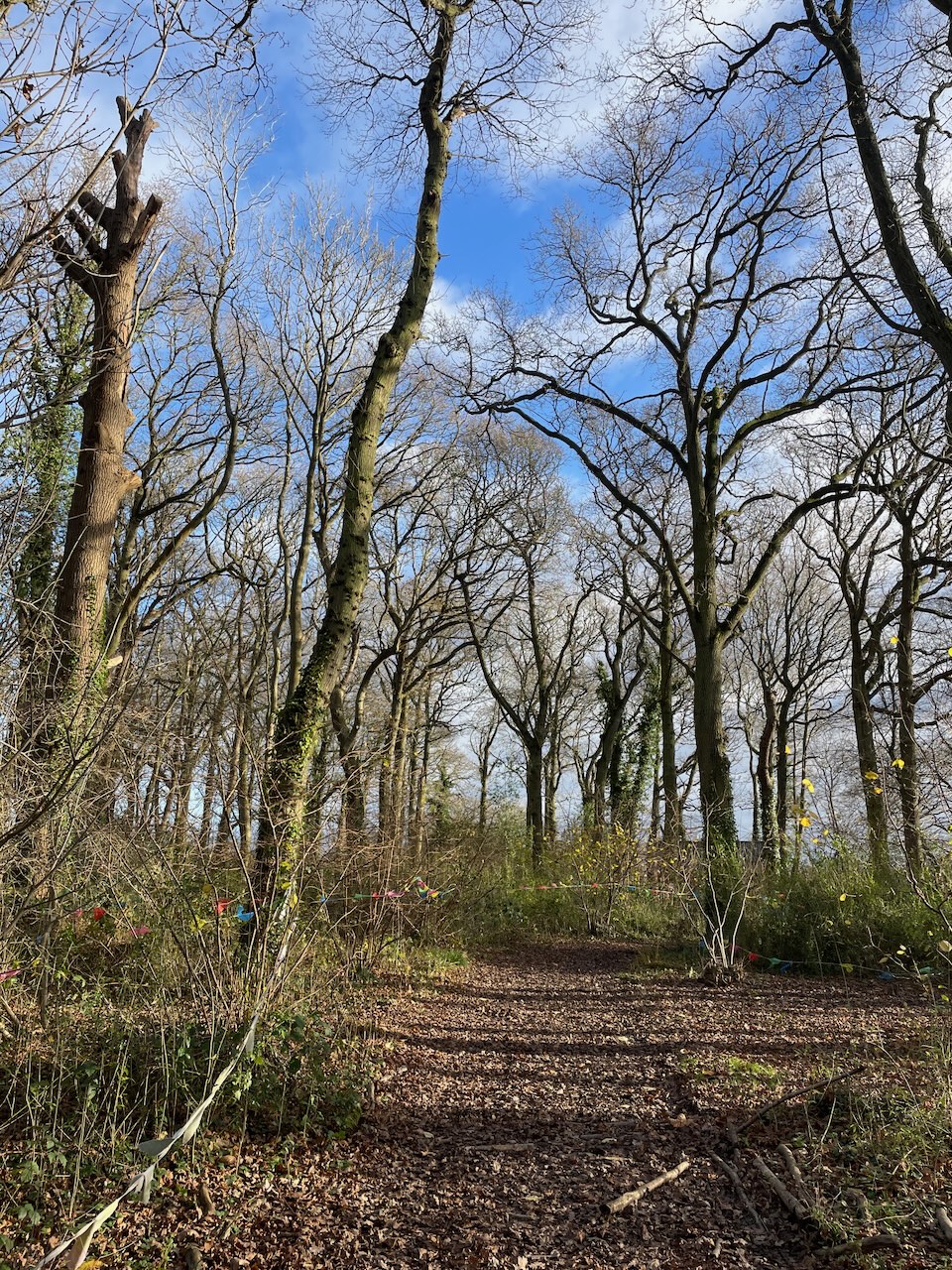
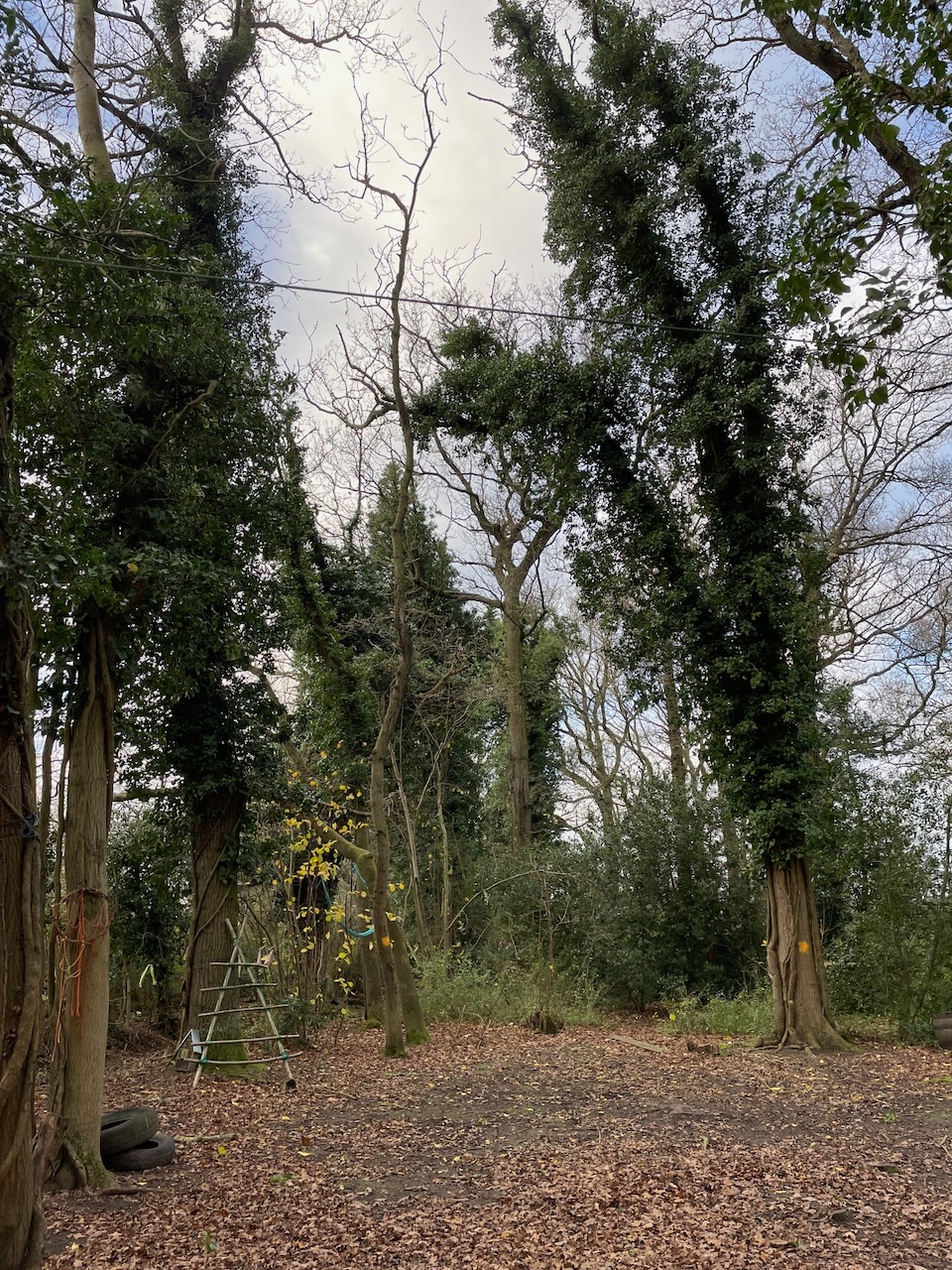
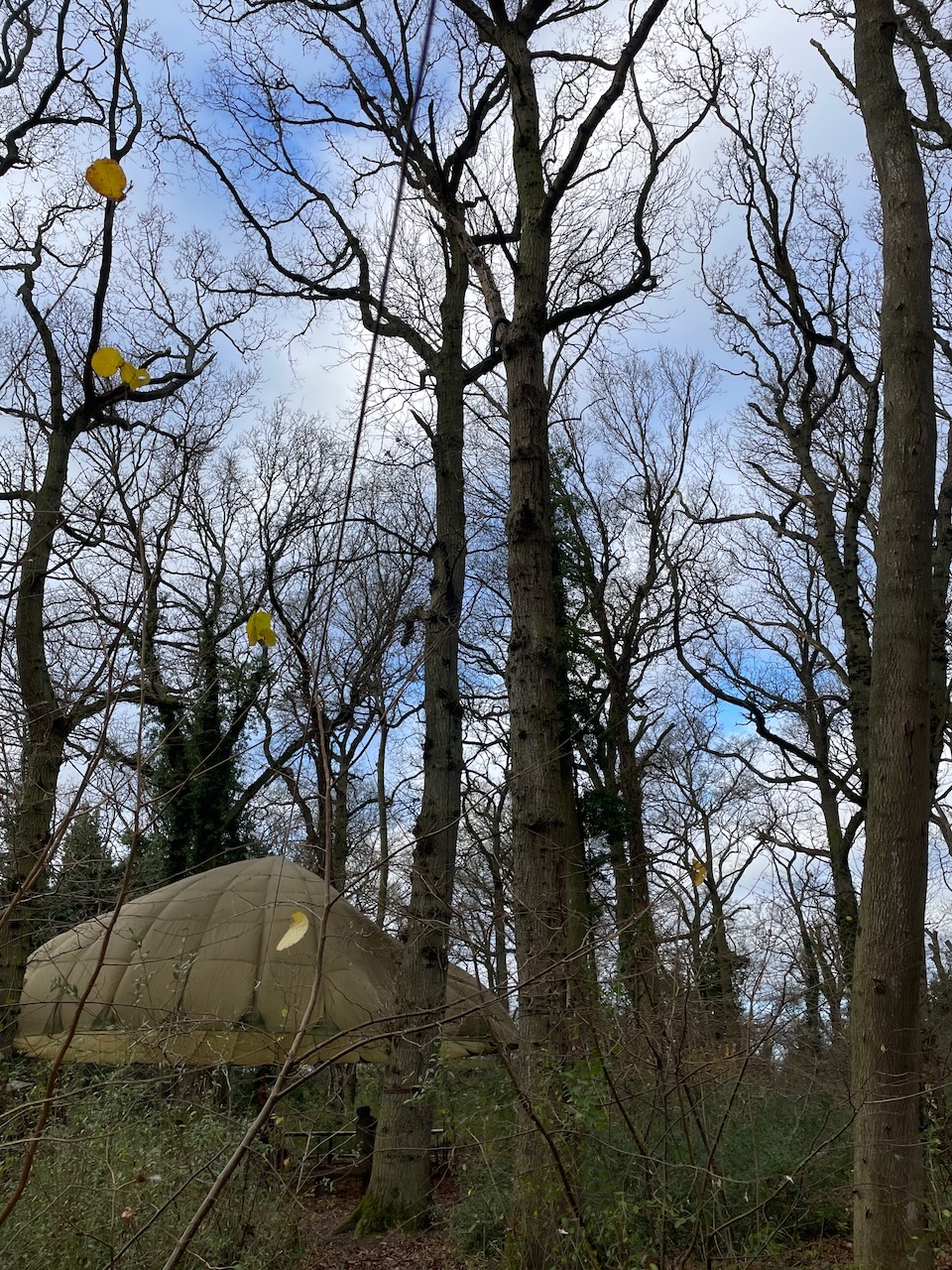
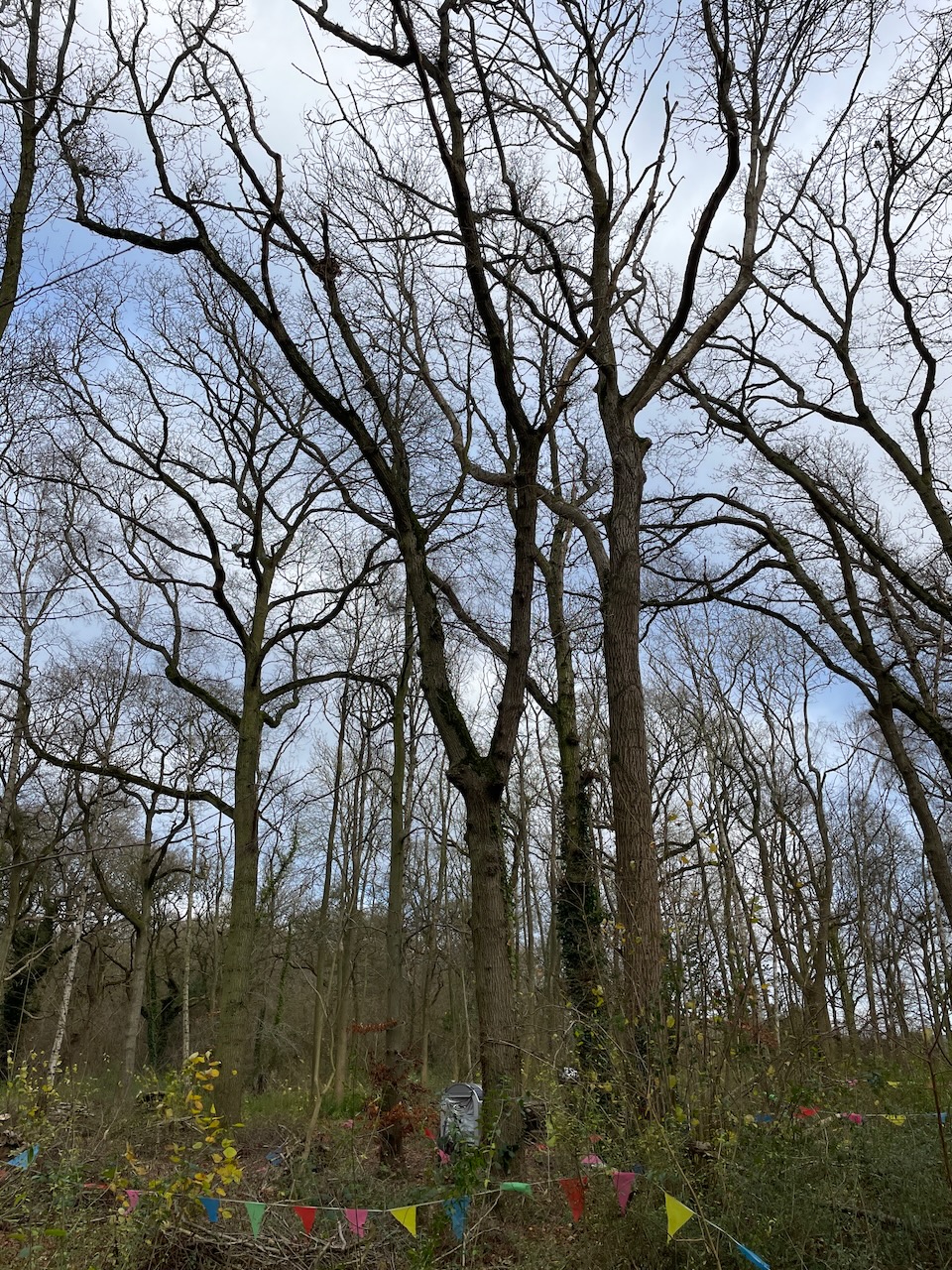
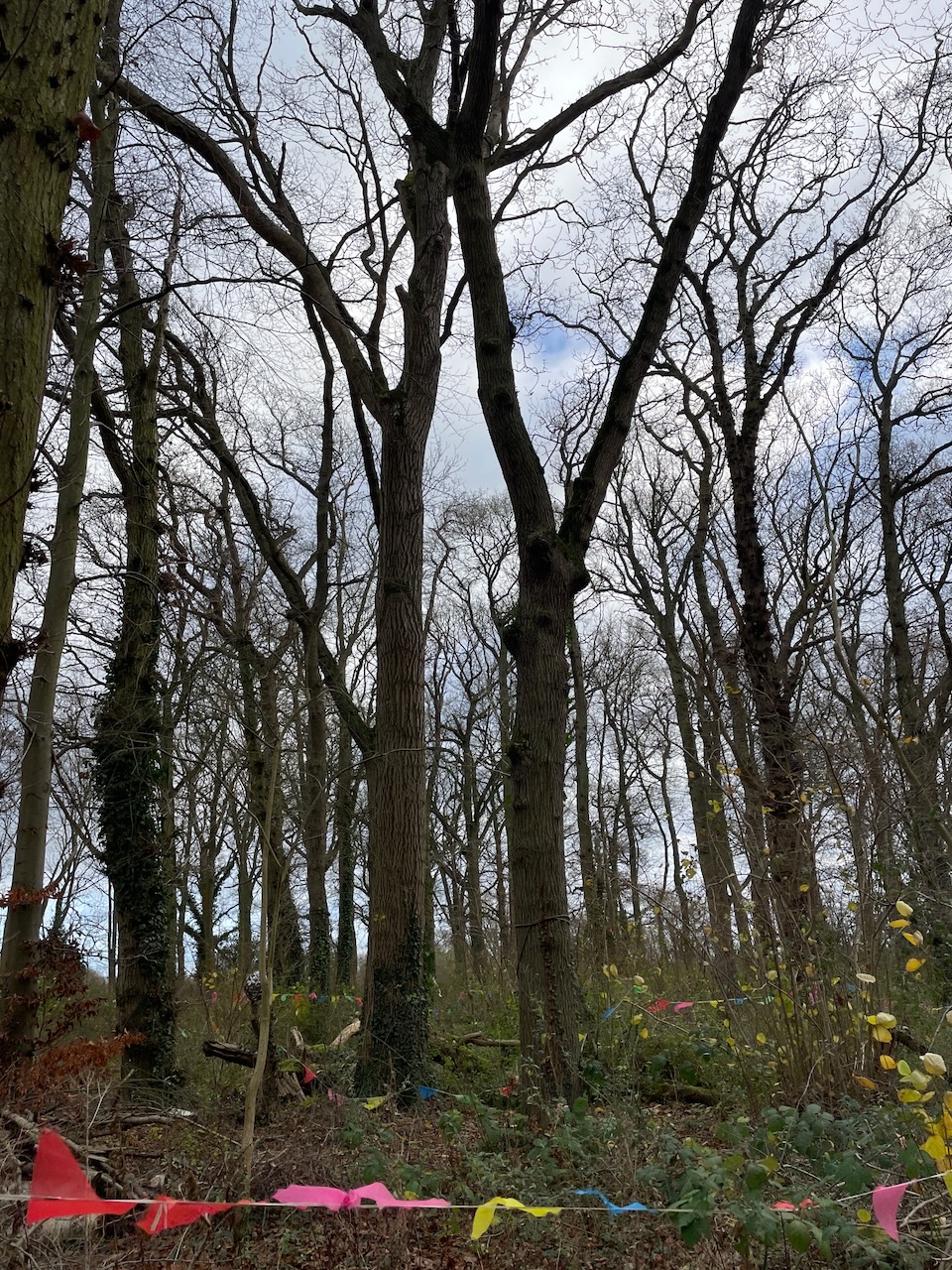
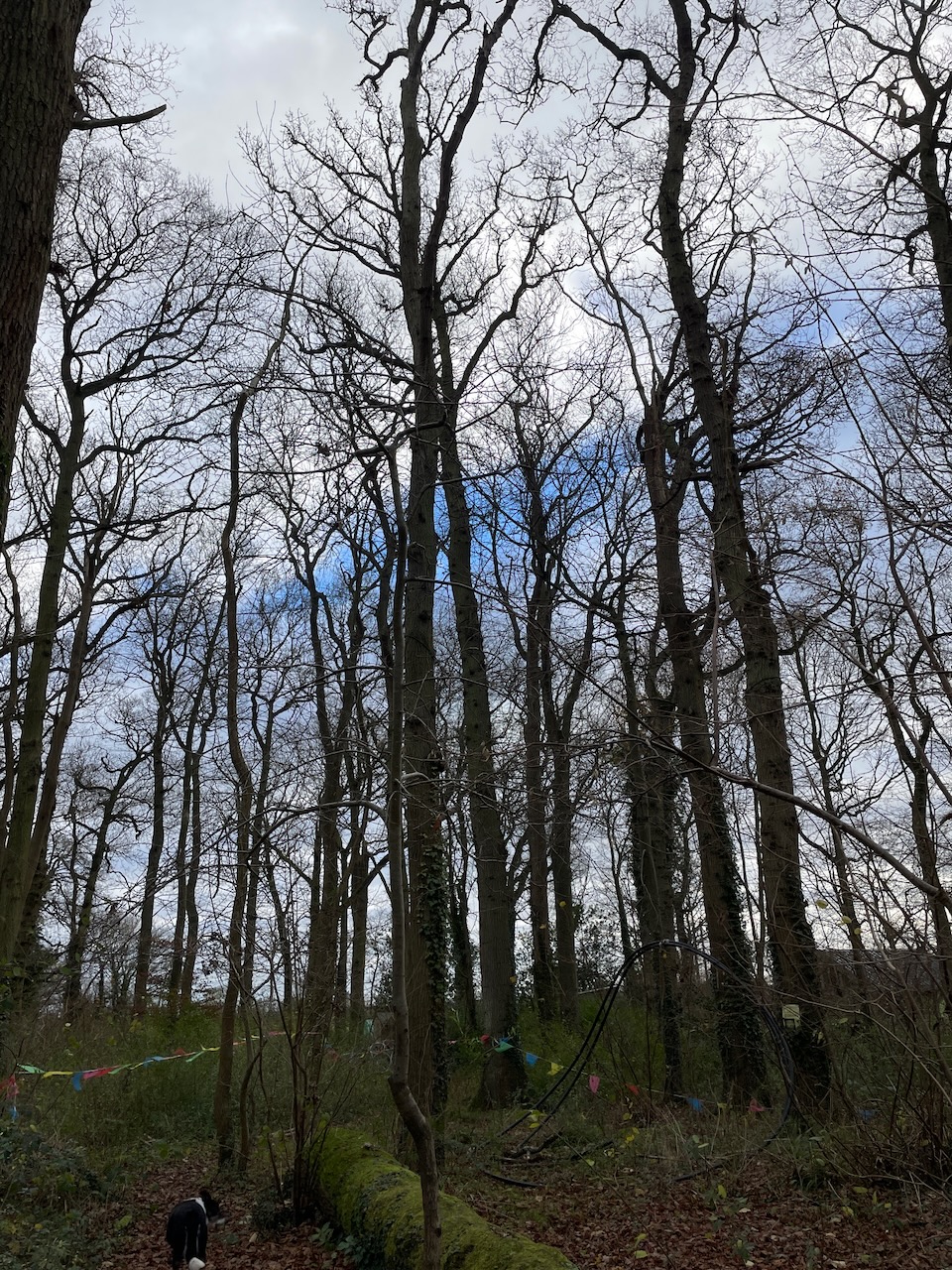
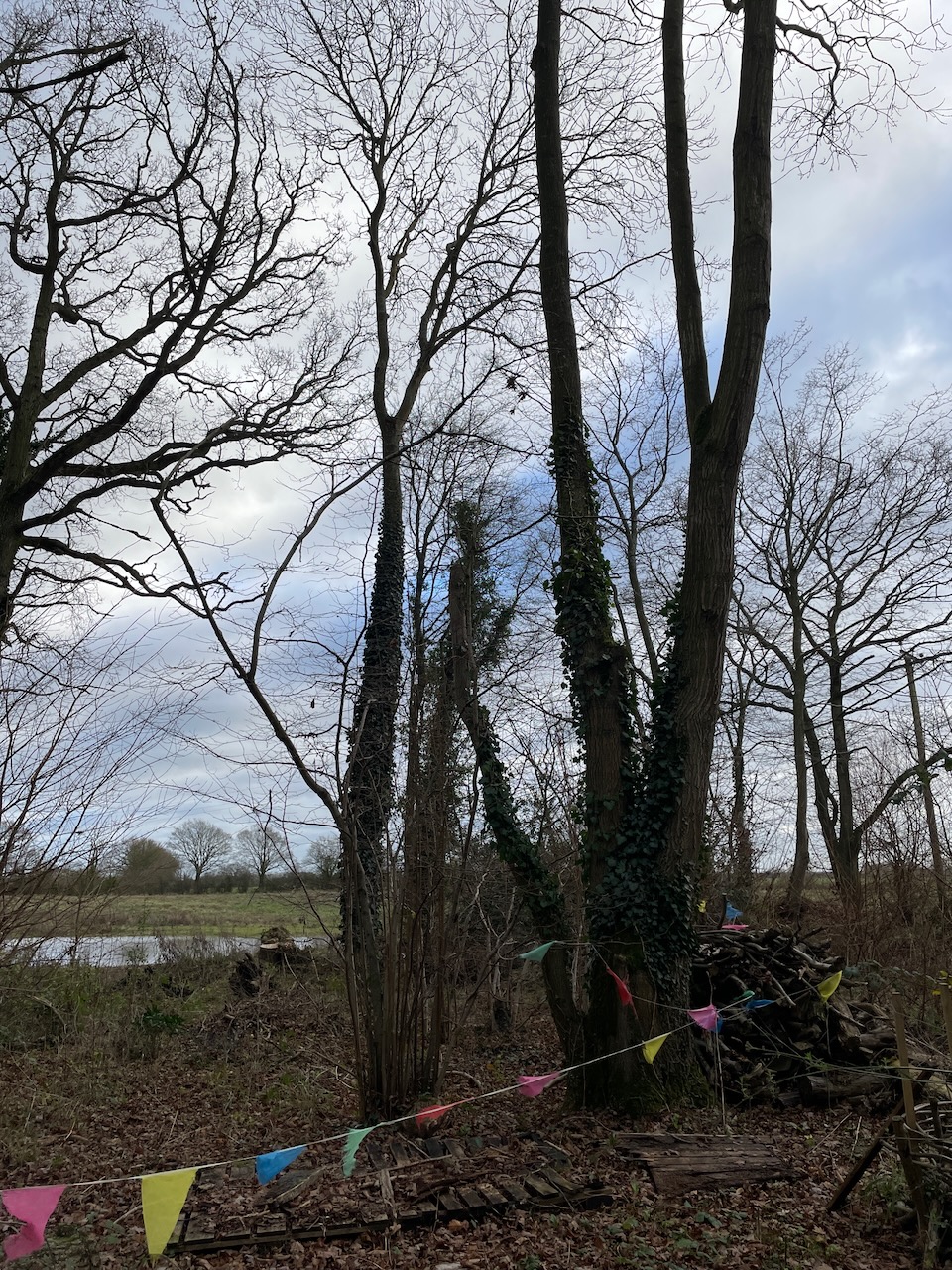
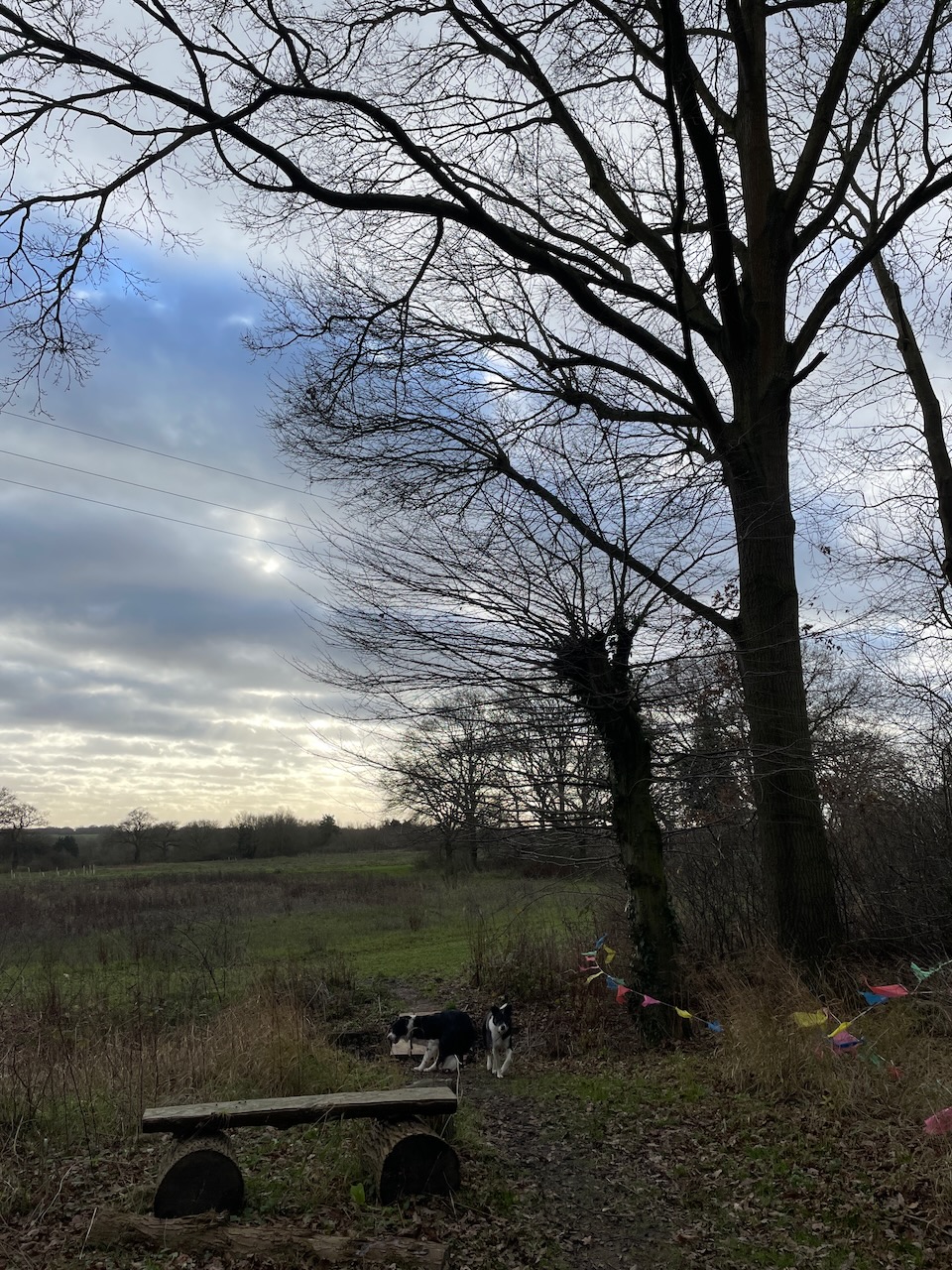
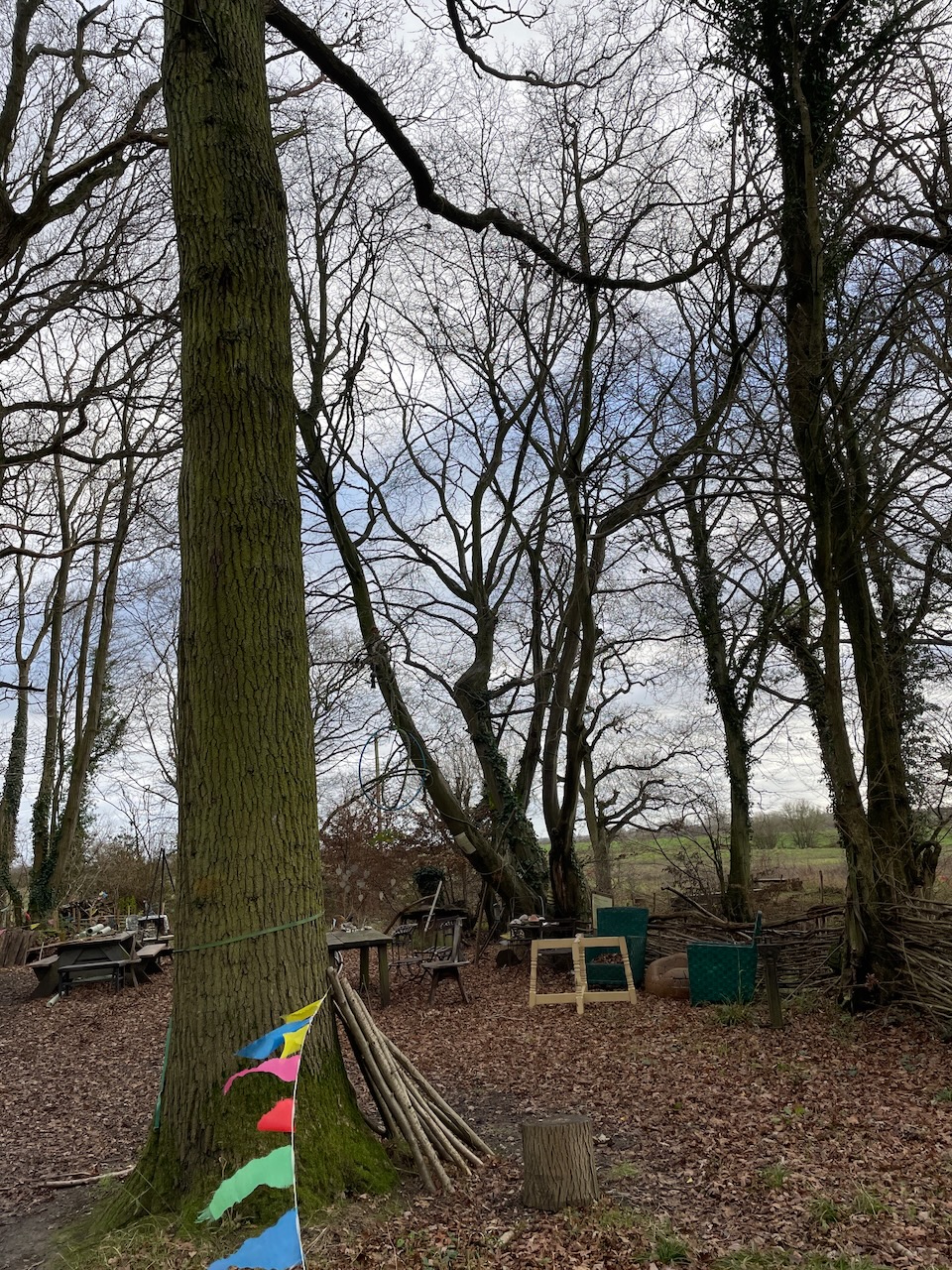
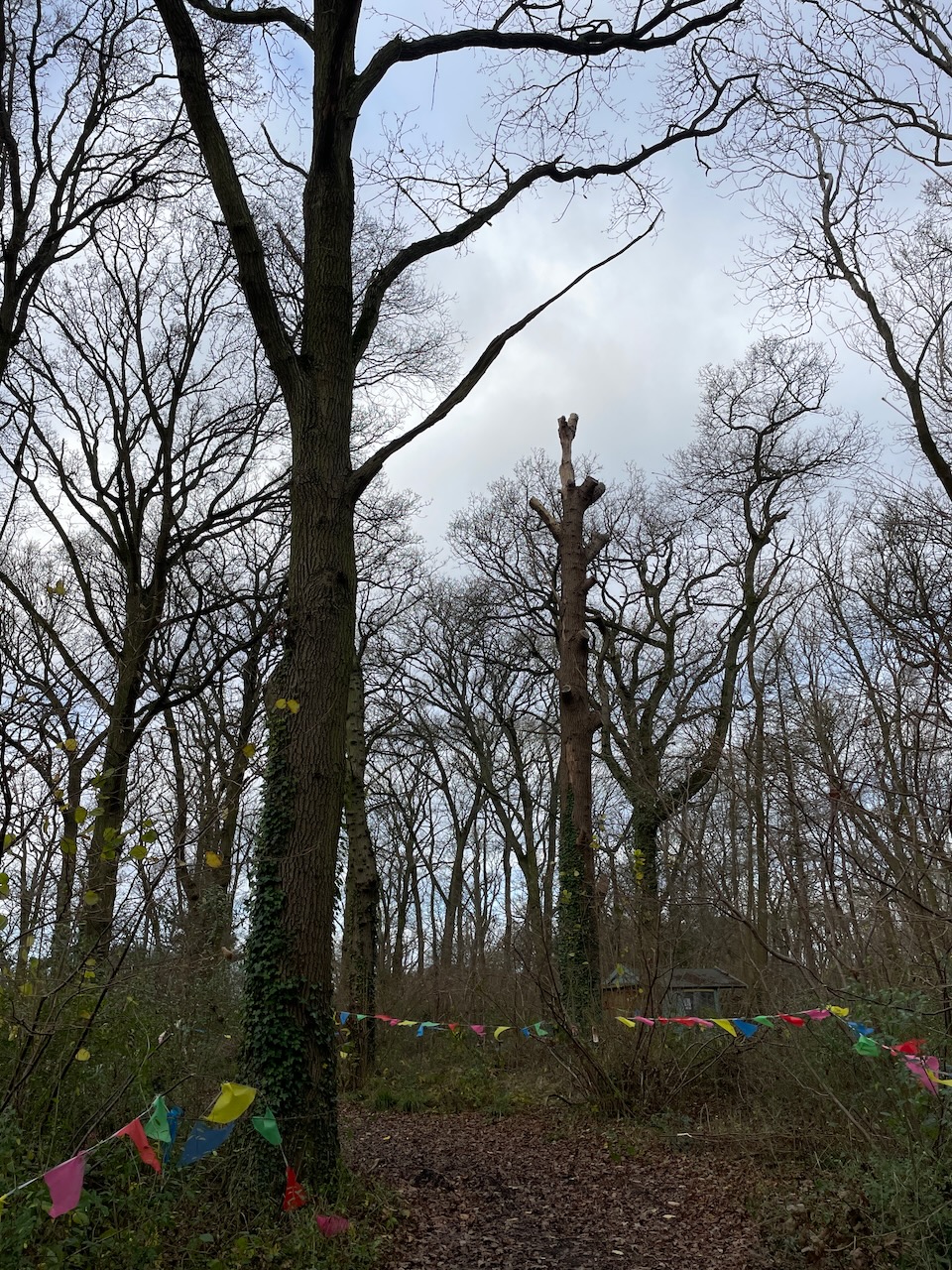
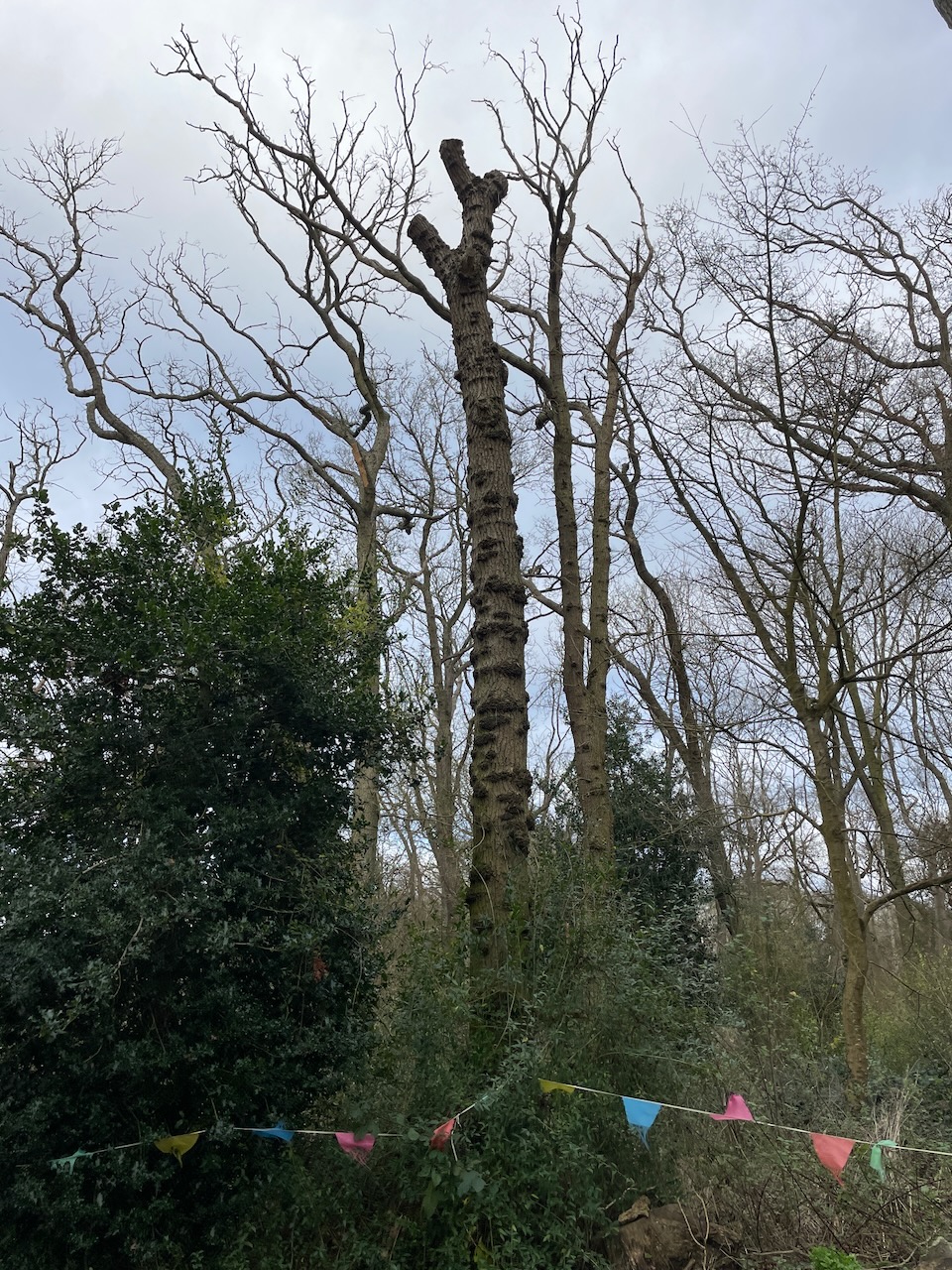
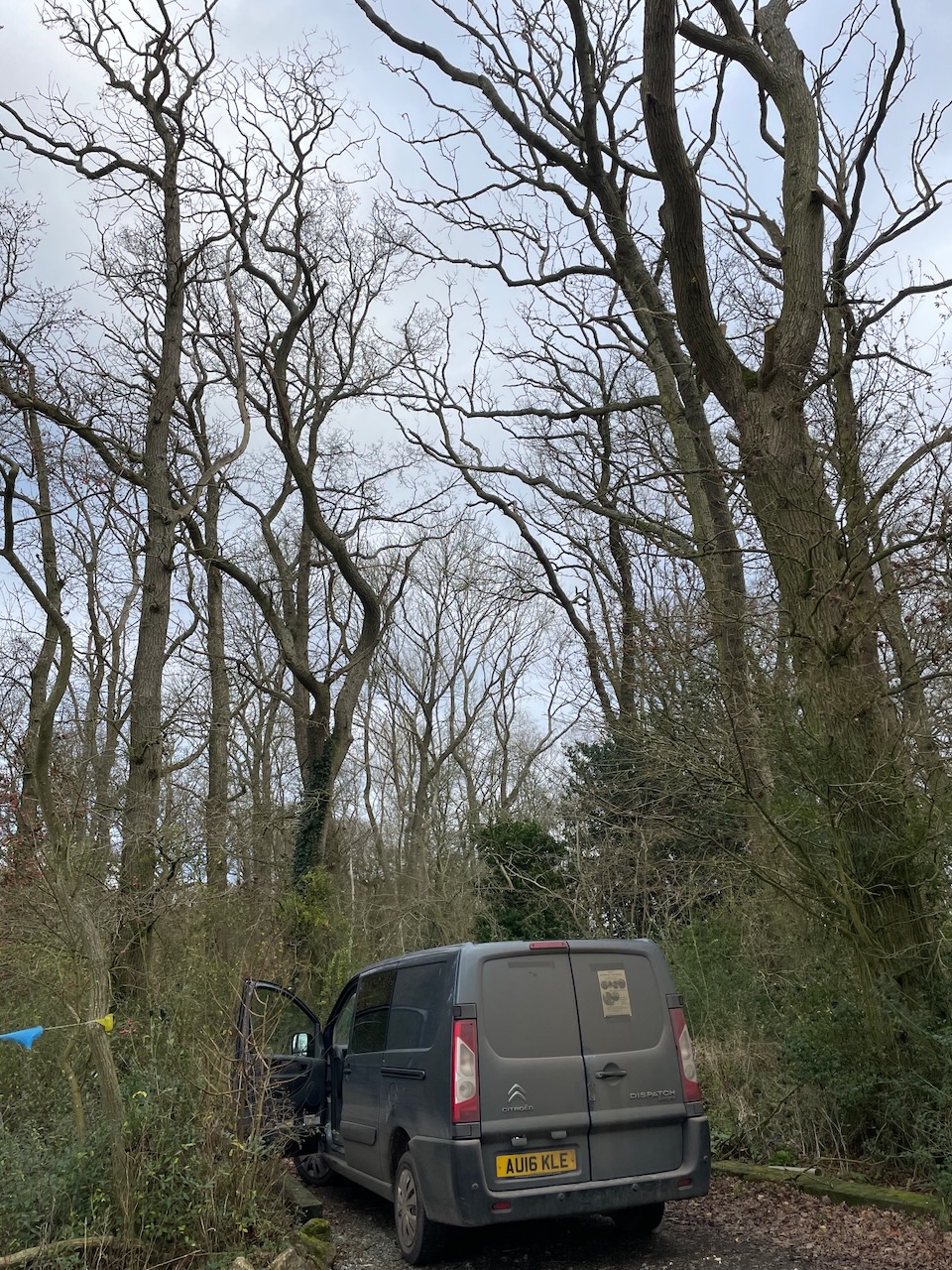
Here’s the list and photographs
- Entrance: 12 dead oak (easy access for Cherry Picker)
- 3 ash with die back KFS centre south
- 1 oak with falling branches KFS centre
- 2 oak near plant earth
- 1 oak branch over pond
- 1 oak branch split over pond
- 2 ash near cabin
- General maintenance of oak branches over main track