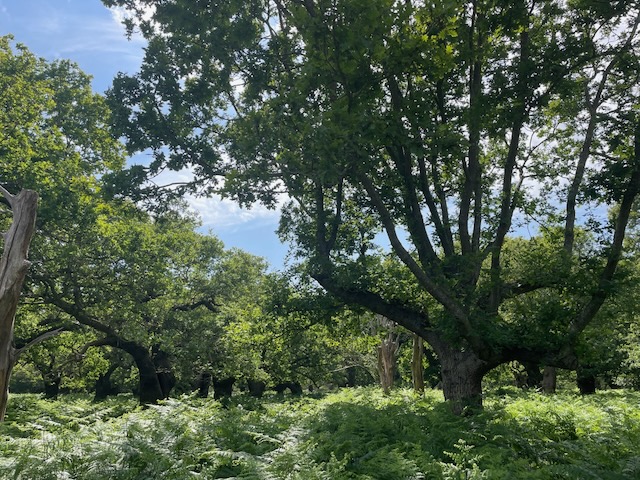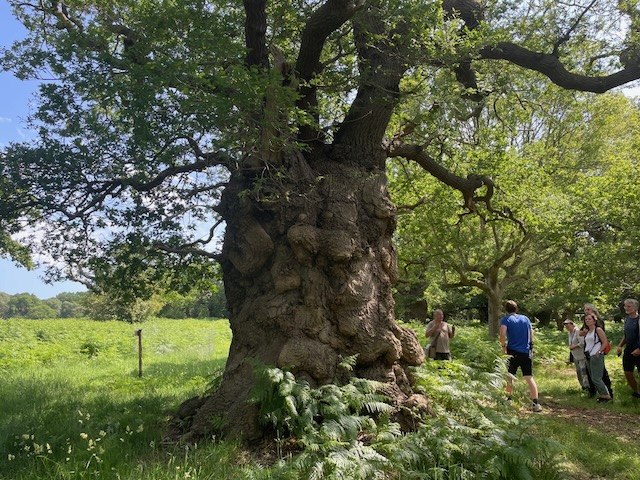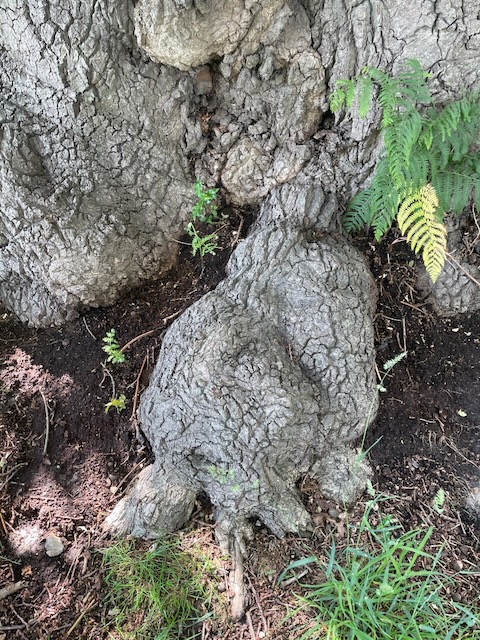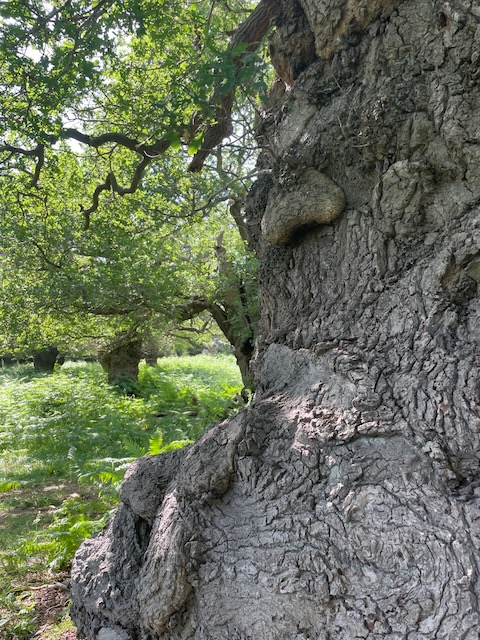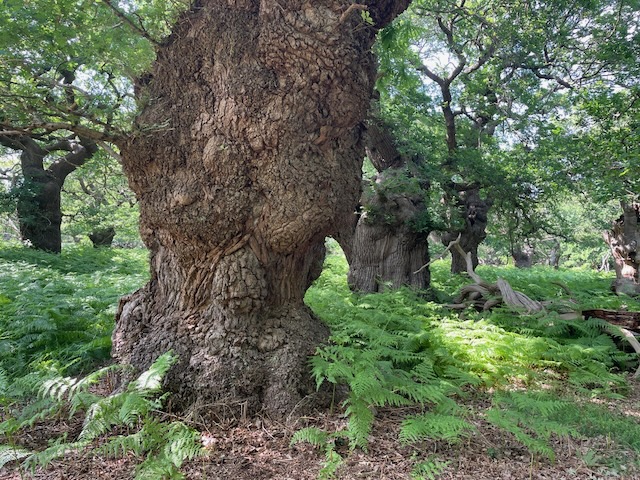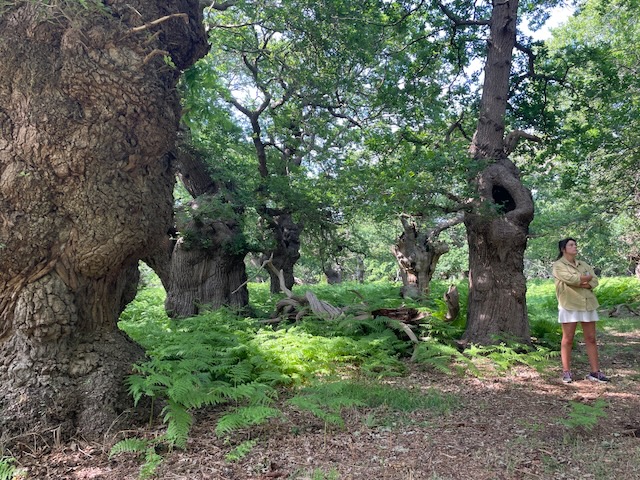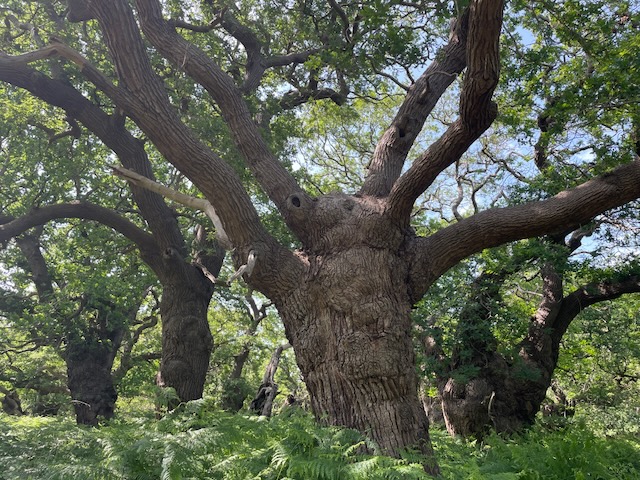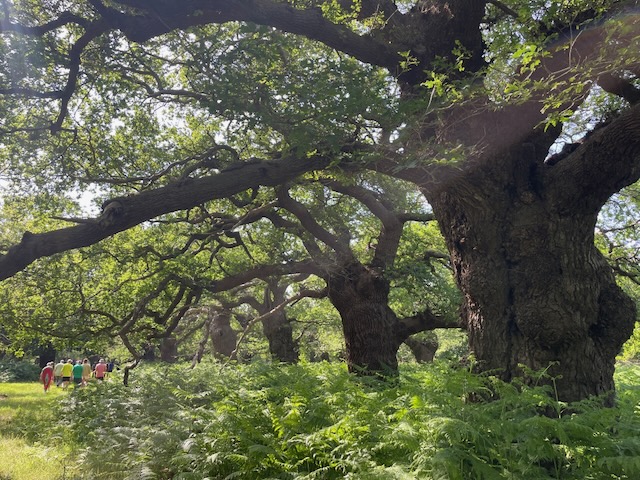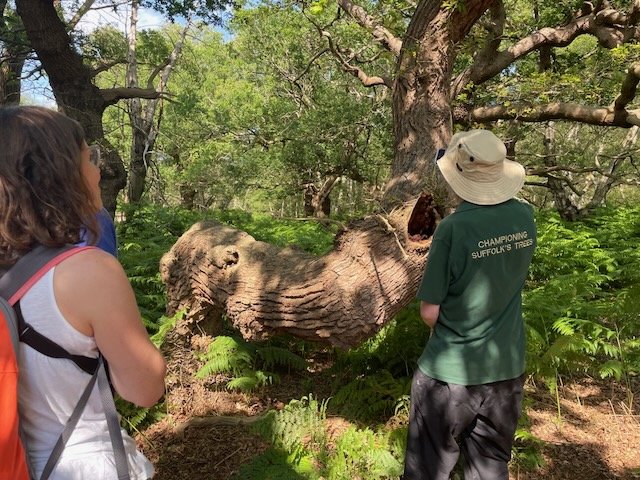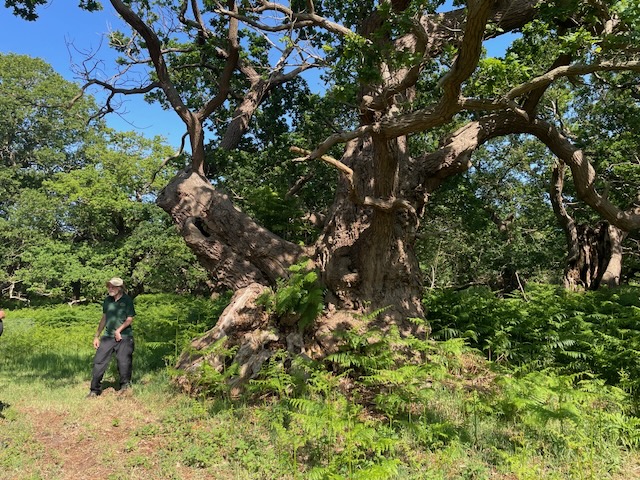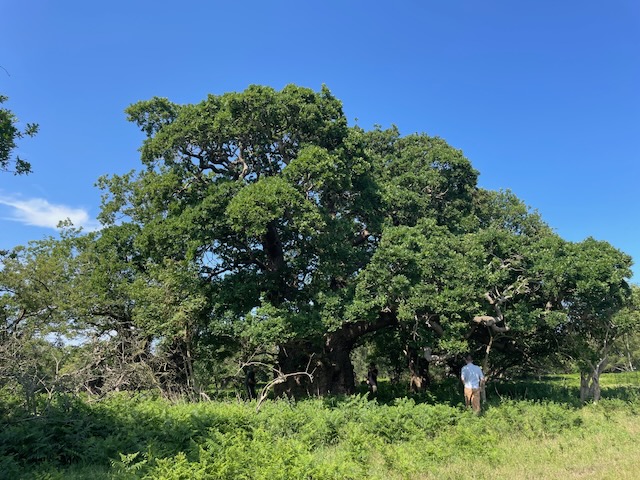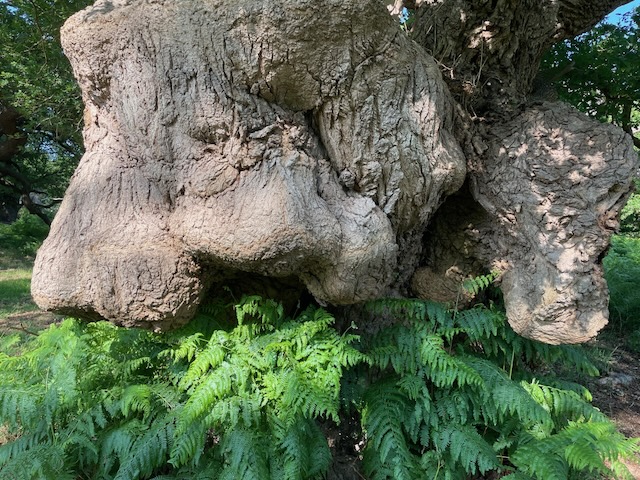
With the Suffolk Tree Wardens, a good turnout, with many who had never visited Staverton before. Ah Staverton virgins. A mid summers day, after a thunderstorm. Some notes from Gary’s talk:
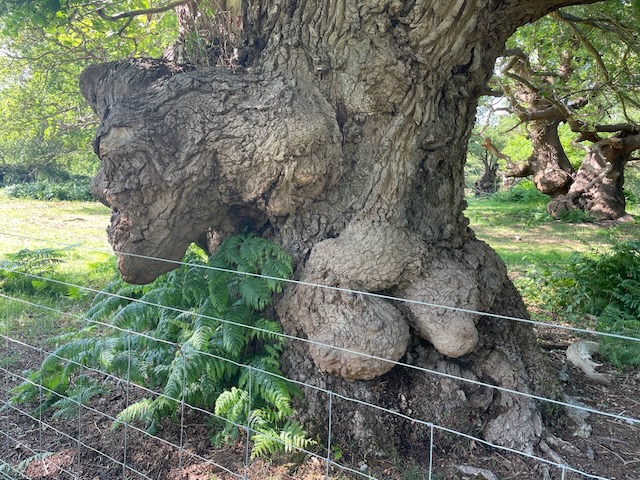
3,000 oaks here at Staverton, probably the worlds best Quercus robur woodland. Garry has been here 33 years. Staverton the name: Saxon, the place of slaughter or the place of staves. Bracken used for human bedding. Garry nipped through the history. In 1601 the woodland was mapped, then in 1766 fell into anonymity – peaks and troughs happens all the time, like Heavingham today will be dust tomorrow then rise again. 1881 Thicks first mentioned. 1900 pollarding ceased. In 1946 it was put up for sale, where it rested for 2 years, the particulars most discouraging – a diminishing asset in decline. 1984 SSSI.
Are they in decline now? Yes. Natural end of life, high nitrogen leading to “high phyto,” or high plant growth and potentially increased susceptibility to diseases, climate change, over 25 degrees the plant shuts down. Over 25 degrees Phyto becomes more aggressive.
Rings: Ring Diffuse-porous trees, same ring size throughout, eg birch, suffer the most
Ringporus trees, which has spring and summer growth ring, stronger
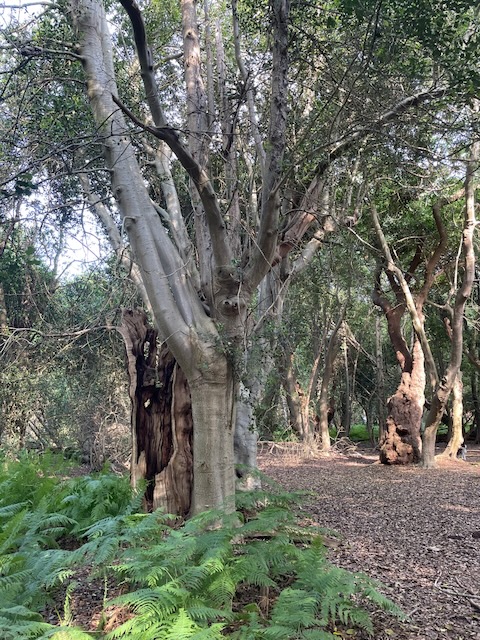
Retrenchment: outward branch die back, indicative of a struggle.
1946 Oaks planted then pollarded (don’t mention Natural England)
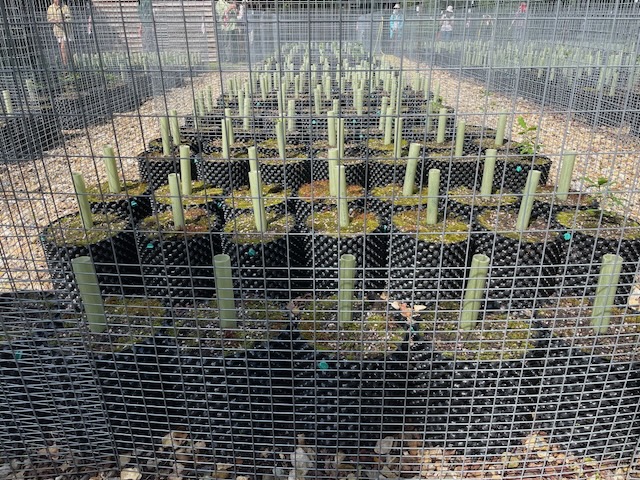
1996 planted oaks, beside the perfect oak, squat, green no retrenchnment
80% of trees in a hedgerow are pollards – I do love a good pollard