I’d never been to a ‘Gathering’ before last year, when I found myself part of the organising team for that years gathering at Wakelyns Agroforestry. I was so inspired by this collective coupe of coppicers (the collective noun suggested by AI), with diverse skills to embrace (I did lime cordage with Fay), conversations rich and easy, that I signed up for the Sussex gathering this year without hesitation.
The South Downs was glorious in the early fall, leaves turning, hills gently rolling, the oaks far healthier than those left back in Suffolk – so many suffering die back with the years of drought.
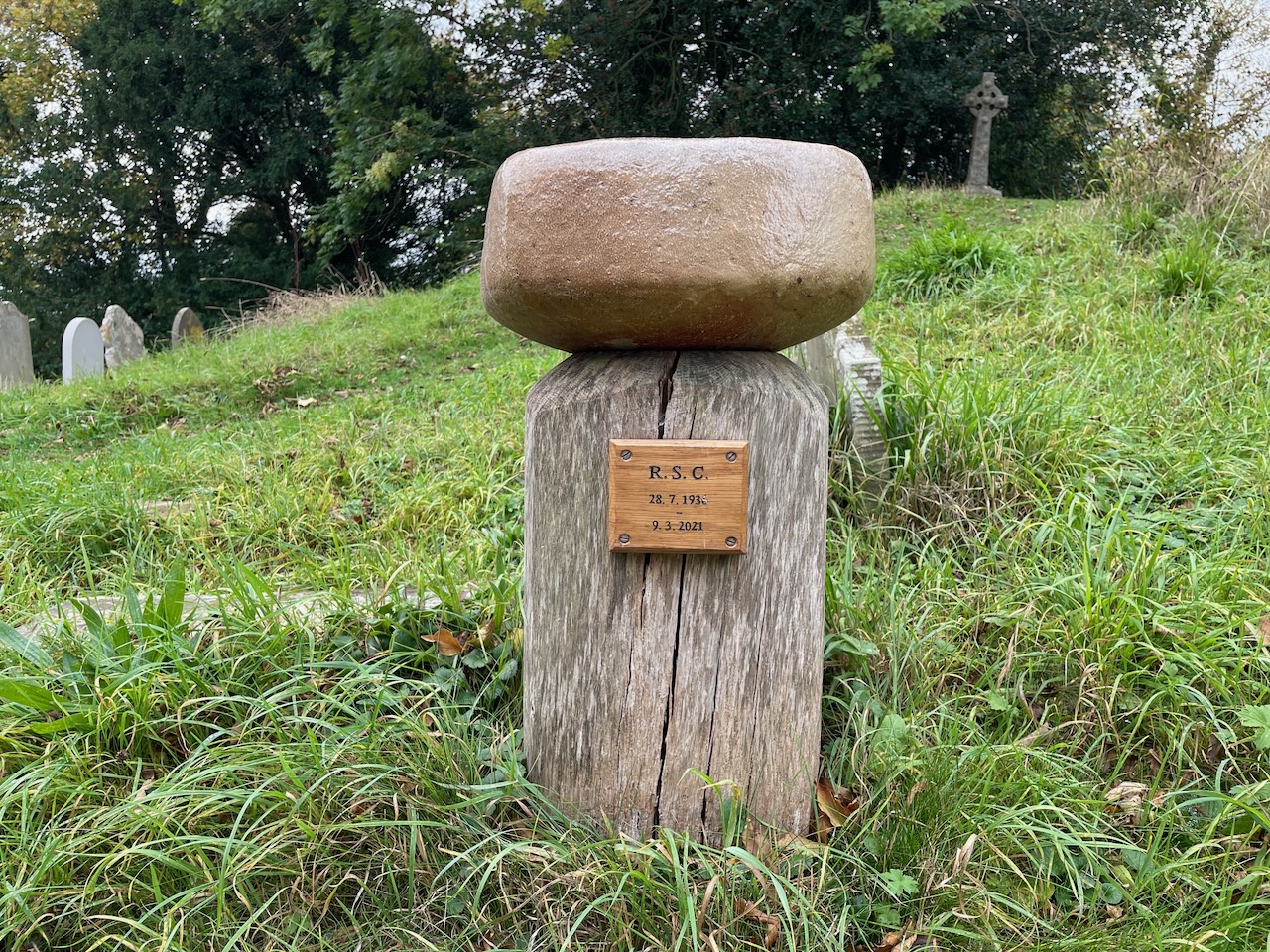
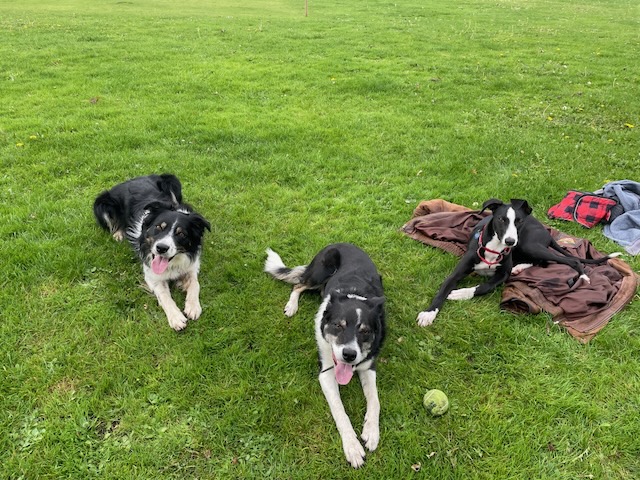
It was a road trip. On the way down, a funeral of Nun in Chelmsford, and a night with Nicky and her glorious dogs. Finally, I made it to the home I never made it to in Roberts life: I stayed with Richard, who now occupied his space, and through this connection I am here in Petworth. Our story here.
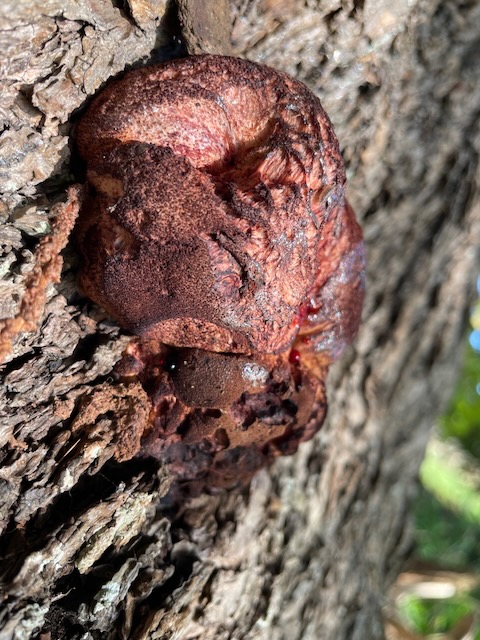
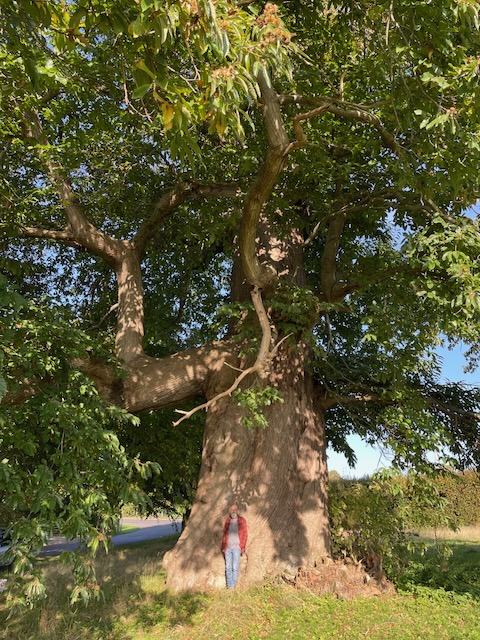
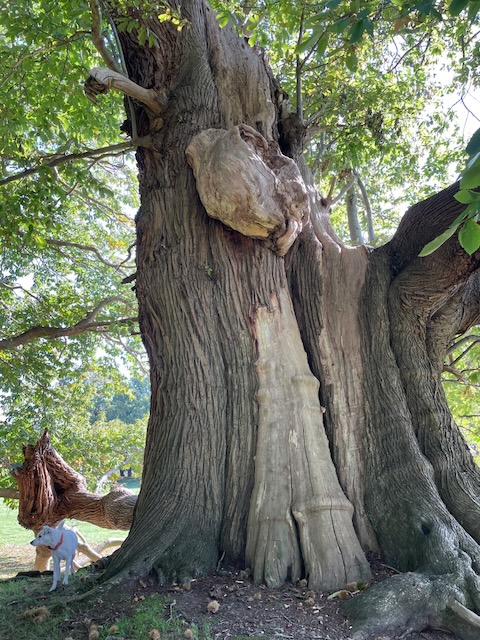
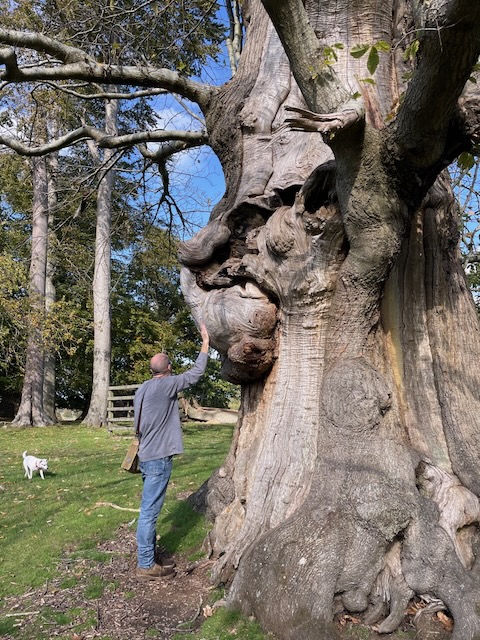
As a retired arborist who works as a volunteer on the Petworth estate, and I could not have wished for a better guide to trees of the neighbourhood, first seen in photographs Richard sent. The first he took me to was a massive Sweet Chestnut, with that tell tale sweeping swirl up the trunk, some bark cross hatching on the north side and under the branches, I presume a natural way of offering greater support. A small bleeding fungi on its base.
As we walked into the Cawdry park arboretum, to find the Elizabeth 1st oak, we found diverse species of oaks: a willow oak, a northern red oak and Swamp White Oak, with huge leaves (two taken to press).
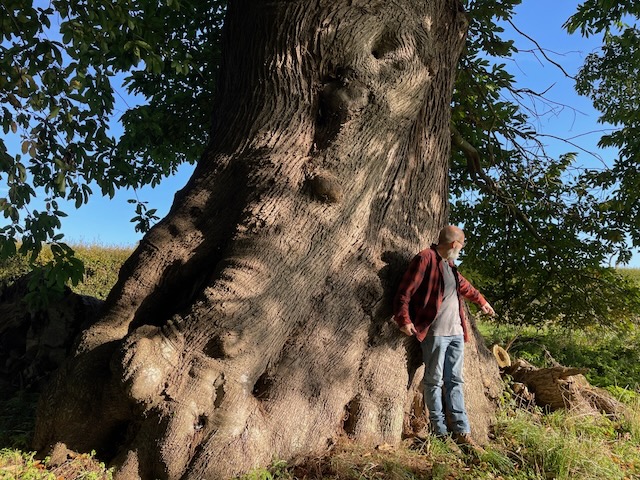
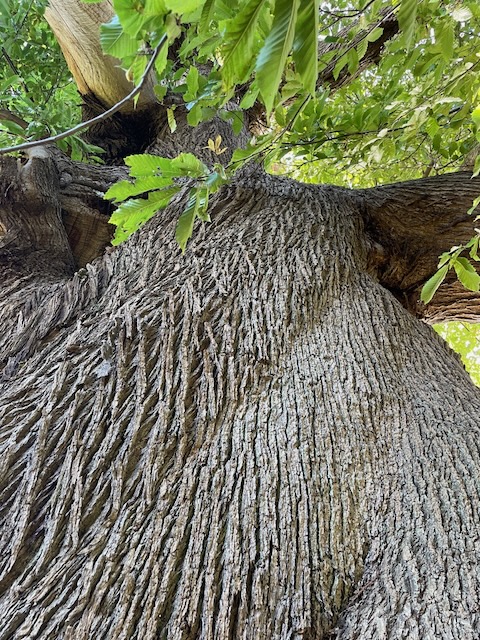
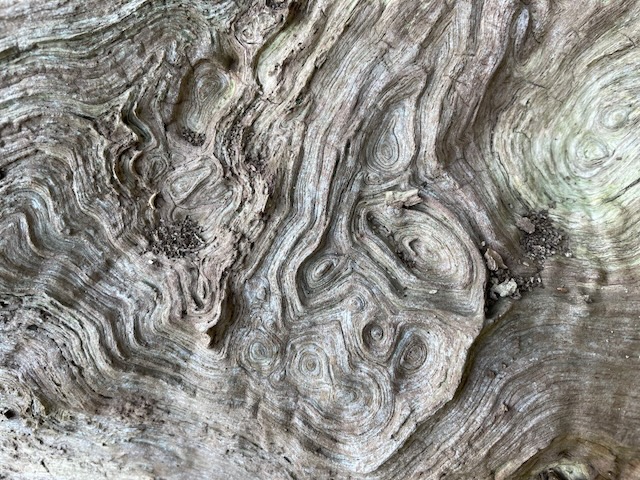
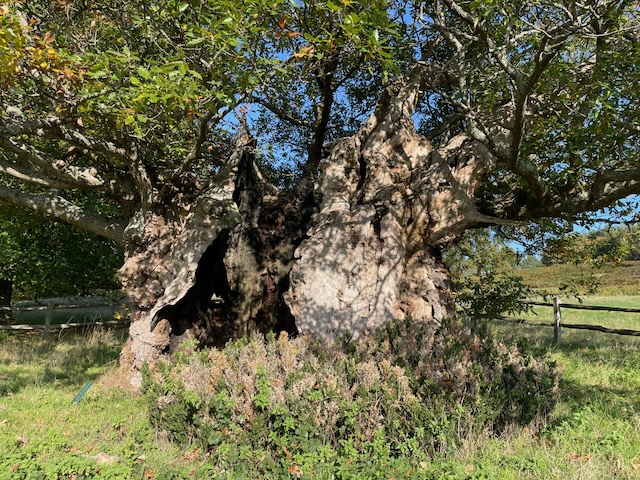
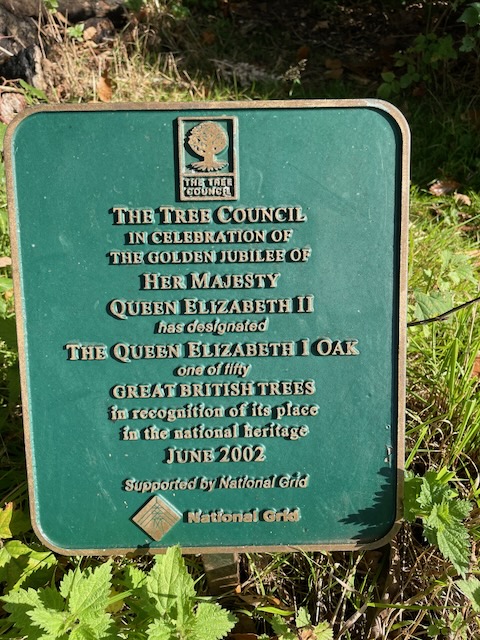
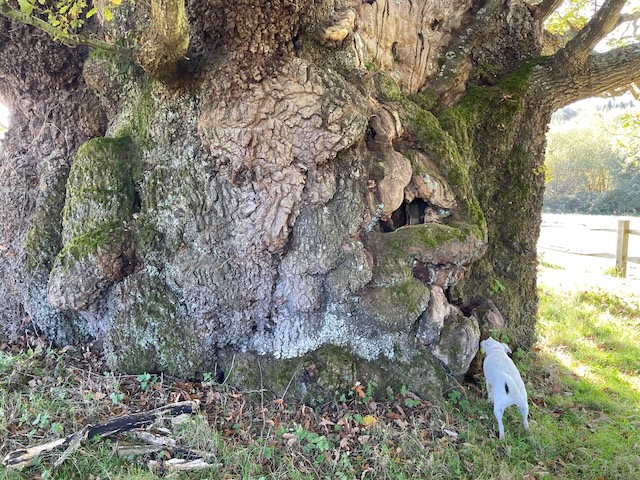
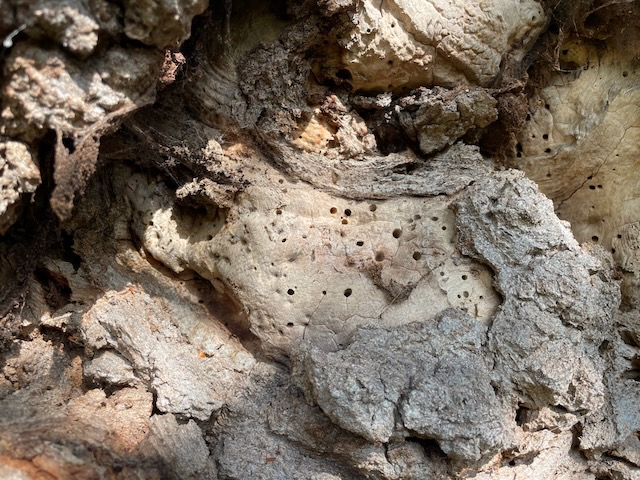
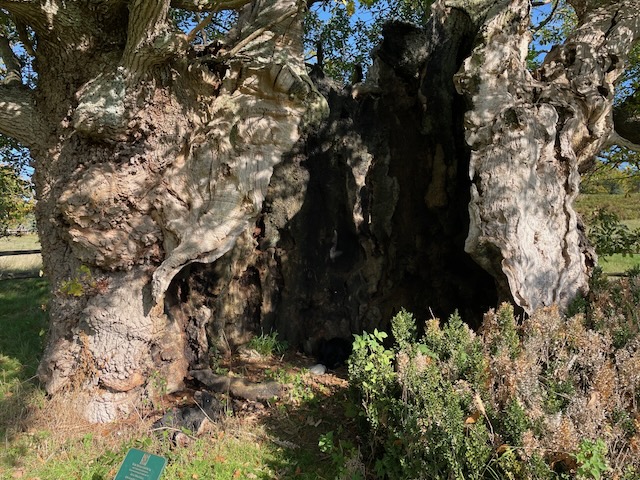
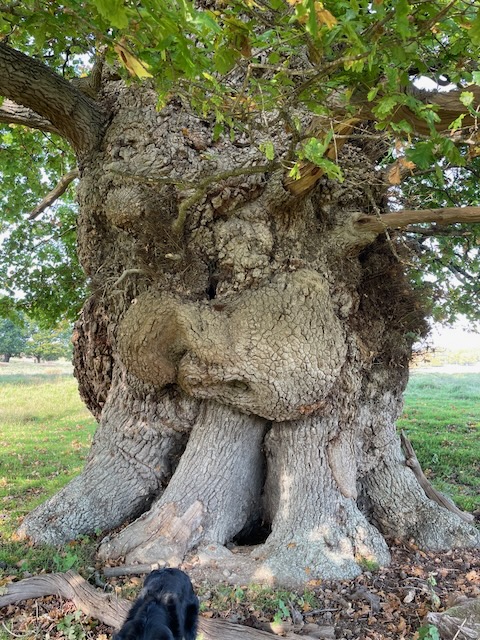
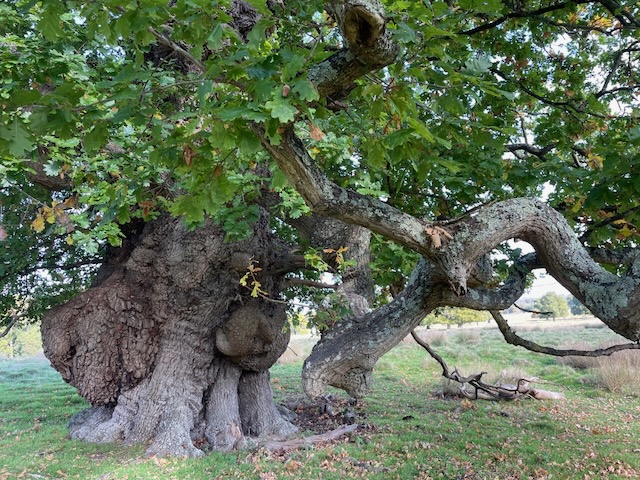
The Cawdry Eliz 1st oak was as squat and eccentric as I remembered the first ancient oak I saw, Judge Wymondham Oak. Like us people, species with great age, we loose height and gain girth. It was hollow inside. We measured it with our arms lengths, with an idea which we forgot later, to measure each arm length. Was it 6 of me and 8 of Richard? Wiki more accurately says it has a girth of 12.5–12.8 metres, I sketch it roughly finding that underside of epicormic growth hatched, and buttresses of feet at its base.
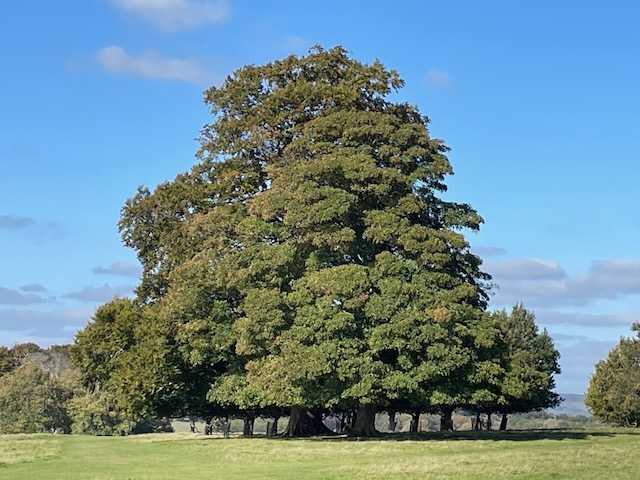
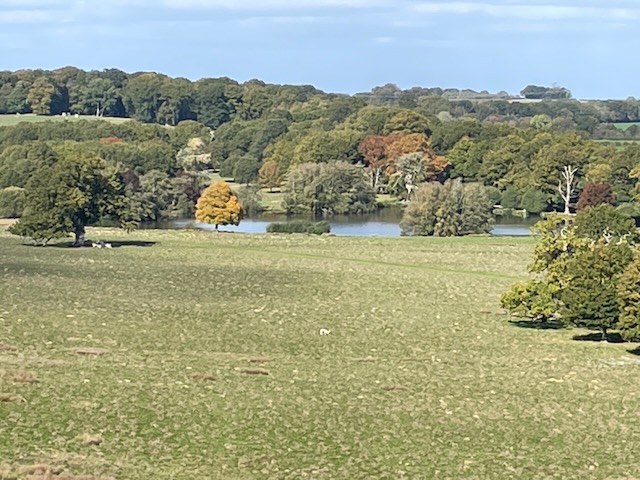
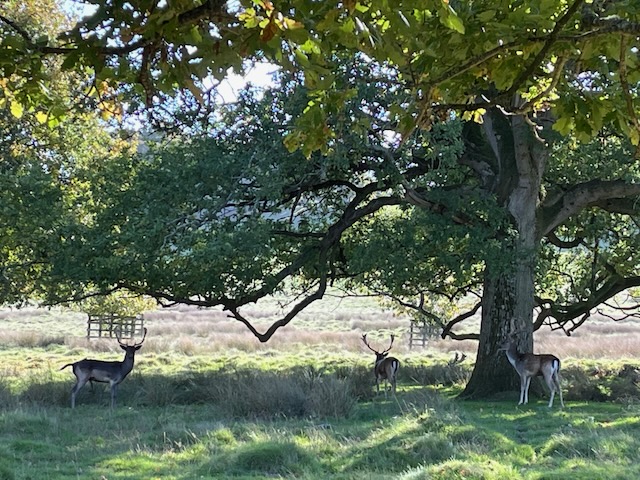
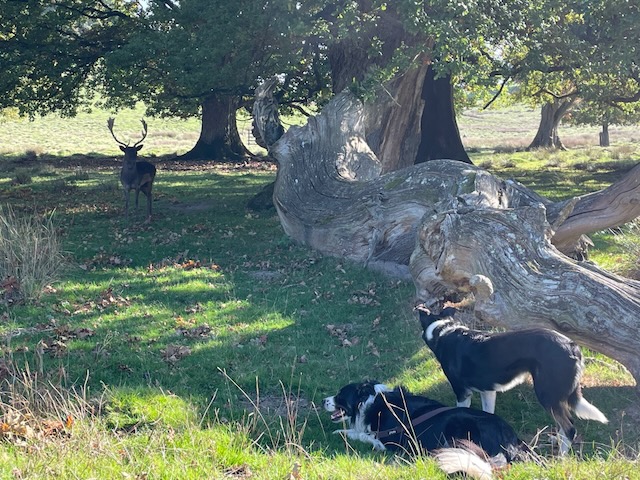
We entered Petworth, Richard’s familiar hunting ground, unusually via the front door, not something he will do again, for he had to prove his identity in order to be admitted as not general public. However once in, we walked across the Capability Brown landscape as it was intended, a view from the main house, across a gently rolling land, each curve a million wheel barrows of moved earth. Such hard graft. We saw the herd of deer clearly in the distance, but found to our surprise a collection of 8 male deer settled down in the grass. Richard managed to get some fine photographs of them. Groves of trees planted, often close together, beech, oak, lime, all with that tell tale line of deer munch height off the ground.
Weald & Downland
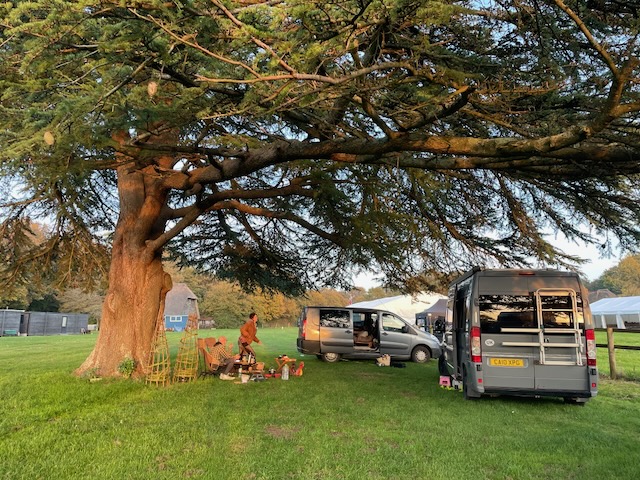
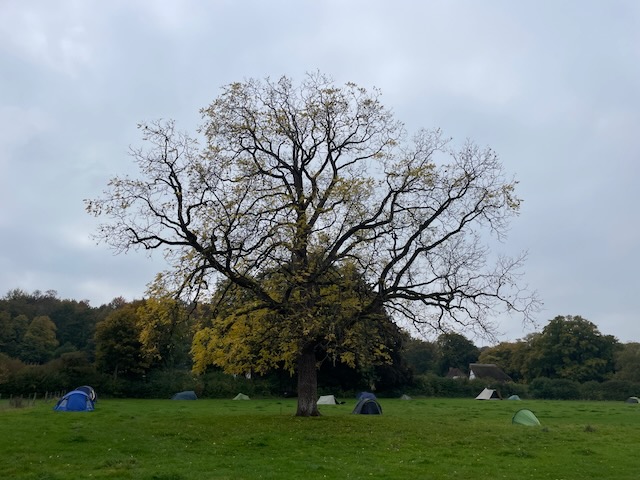
As it happened, Richard had lived in the village of Singleton for a good few years, and while he knew of this place, had never entered. It took a stranger from Suffolk for him to cross the threshold. We found a perfect camp, under a cedar of Lebanon tree, close to where they film the Repair Cafe, and the field where our events were based.
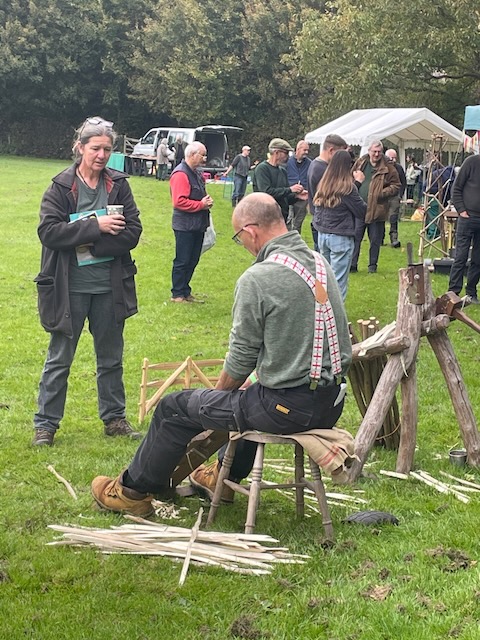
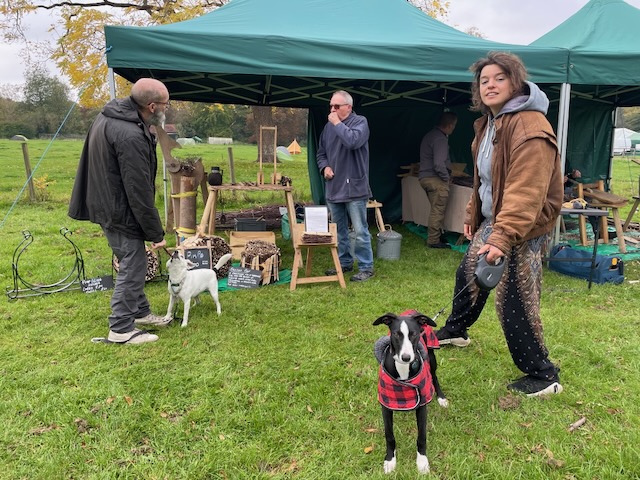
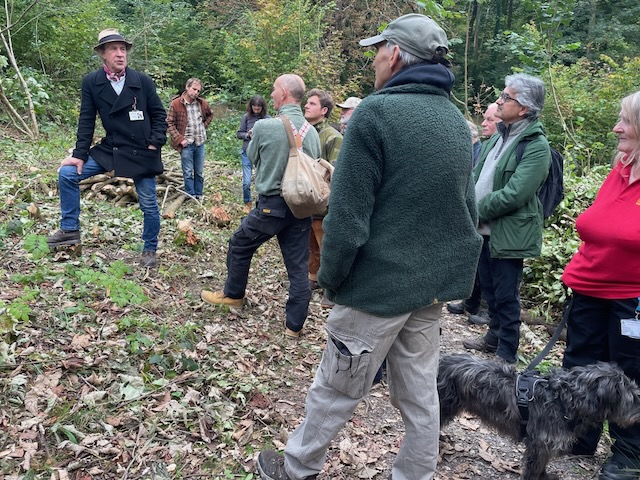
One hundred and forty of us gathered from around the UK on this scoop of southern down: lone workers, coppicers, charcoal makers, bodgers, fire creators, chestnut hurdlers.
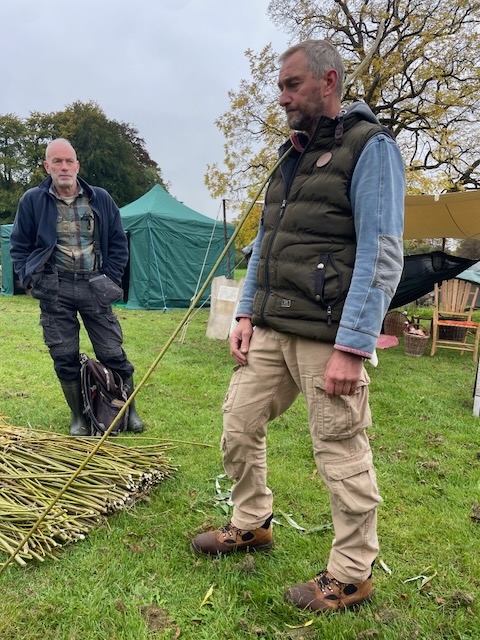
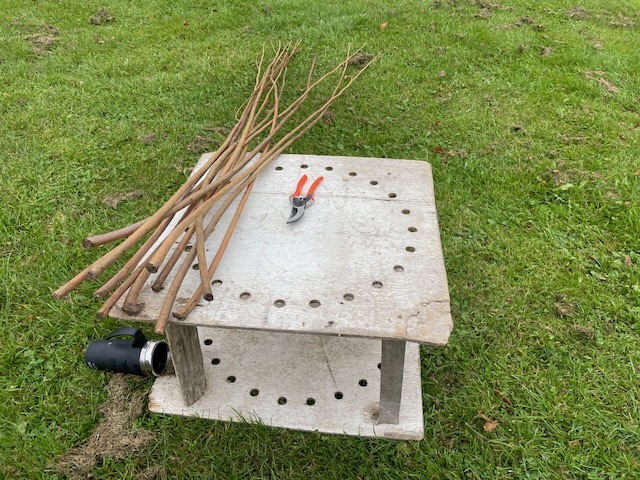
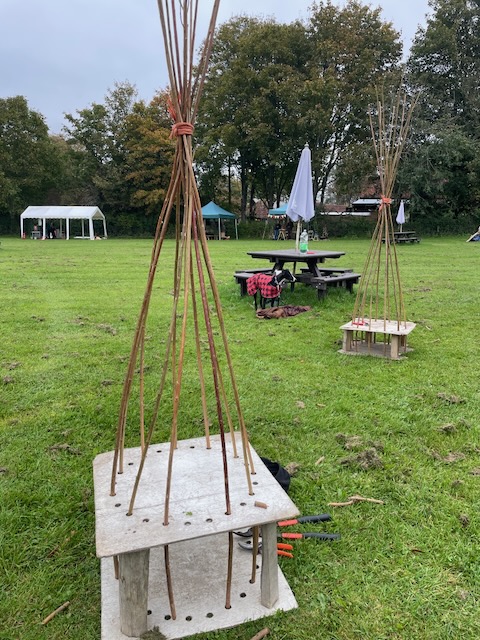
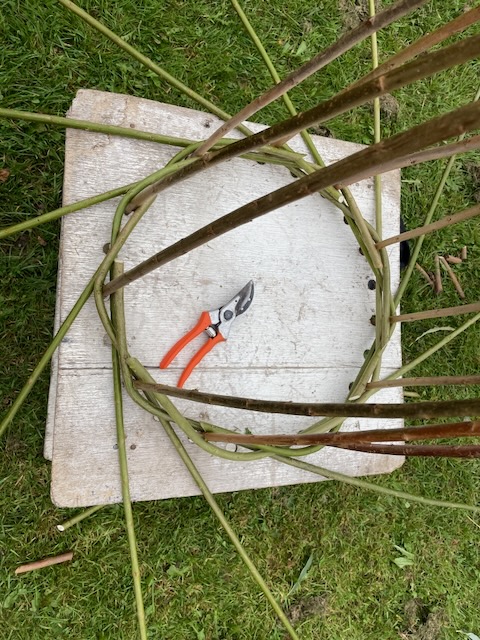
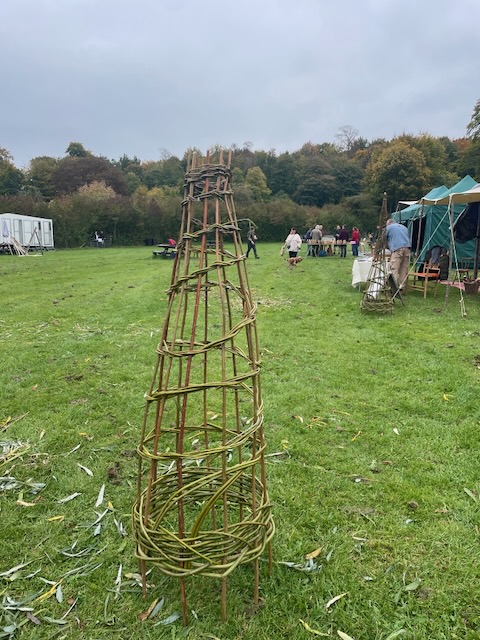
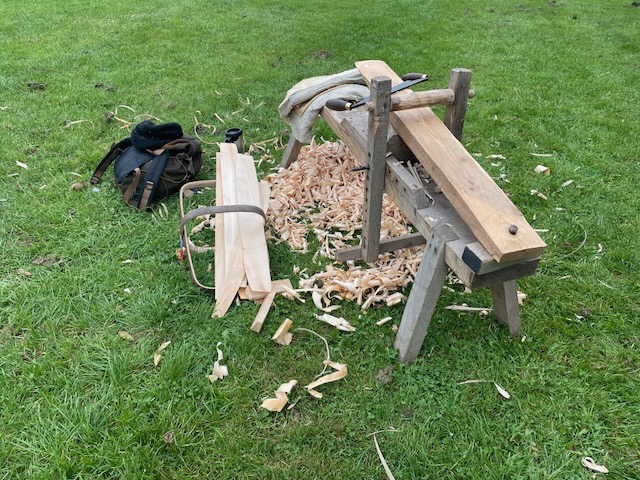
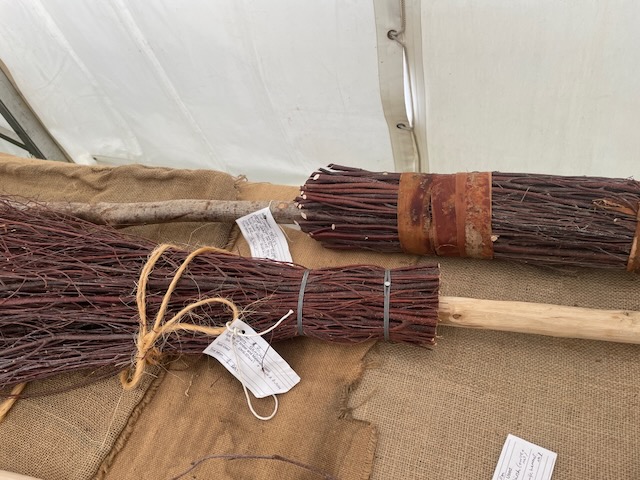
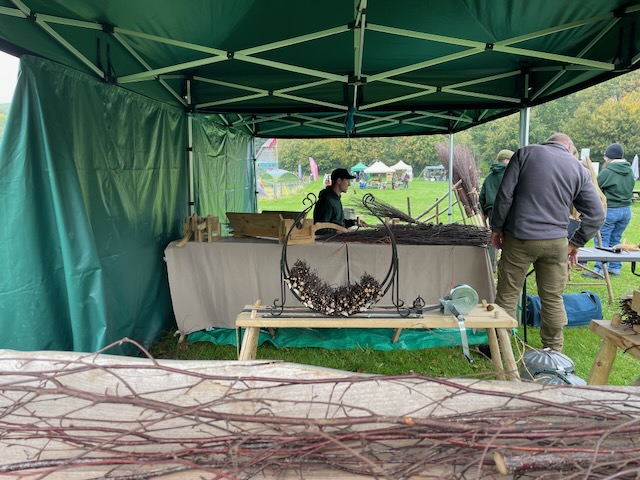
First we had work to do, a skill to learn. For me (luckily as I had not booked) it was the creation of a Willow Obelisk with John Waller “The Underwoodsman”. With 8 firm dried willow stems secured into a jig, we took the fresh willow, and in a unique fashion, did the French weave one way and then the other, to form and secure the base. From here, with two strands of live willow we wound it up the structure snake like, weaving in fresh willow as we ran out. Other courses included besom broom making, skinning and butchering a deer, stool making, blacksmithing, hedgelaying, trug making, spar making, walking sticks, biochar, pimps and faggots.
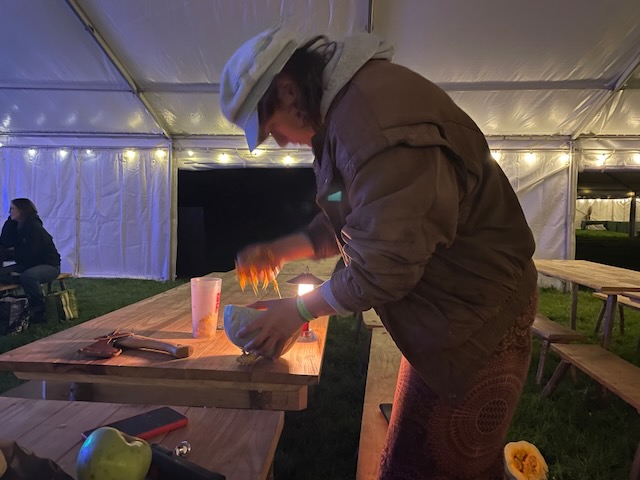
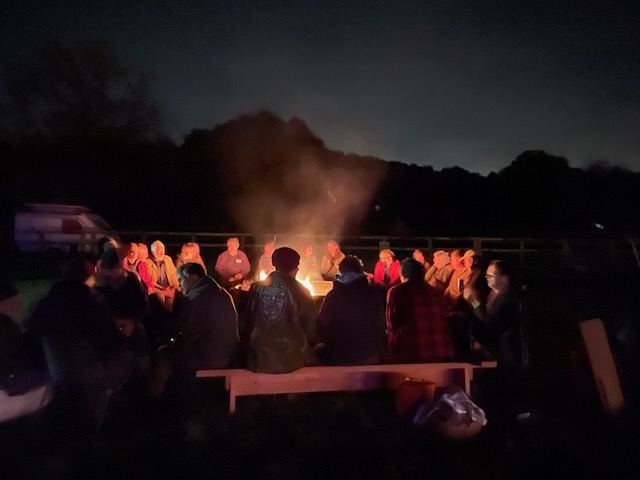
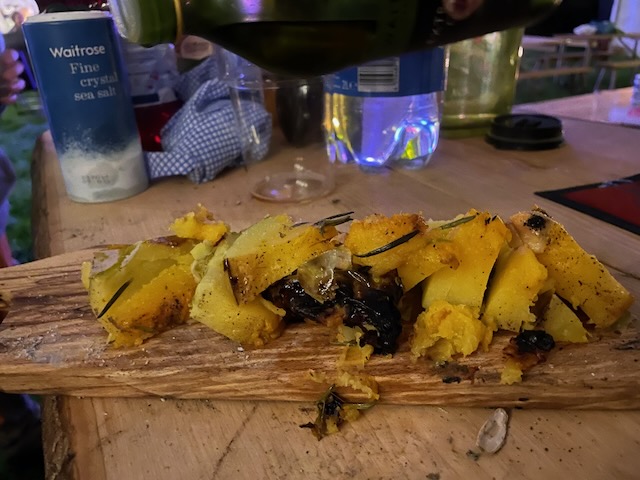
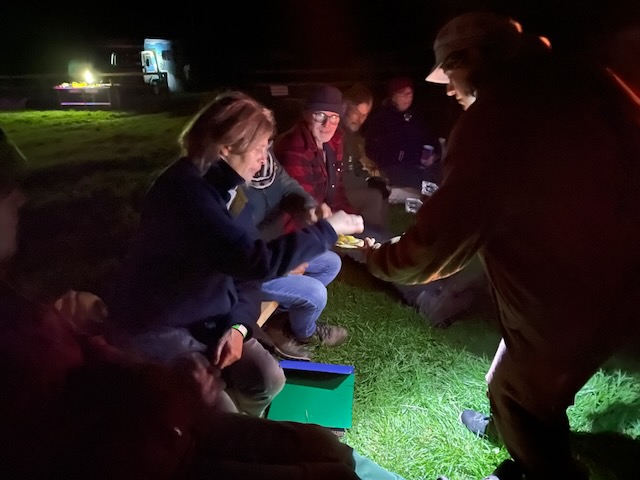
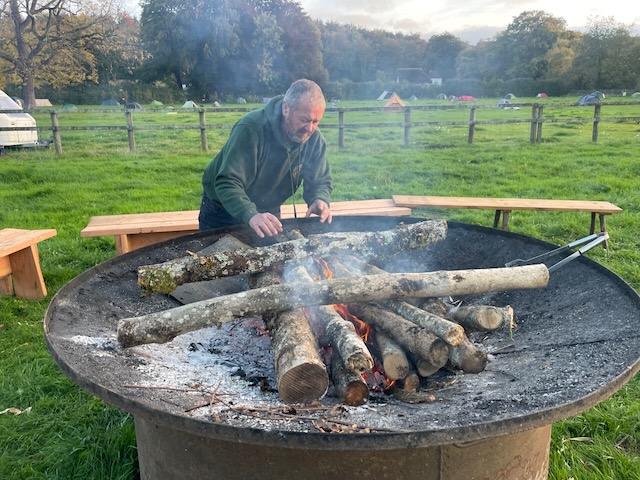
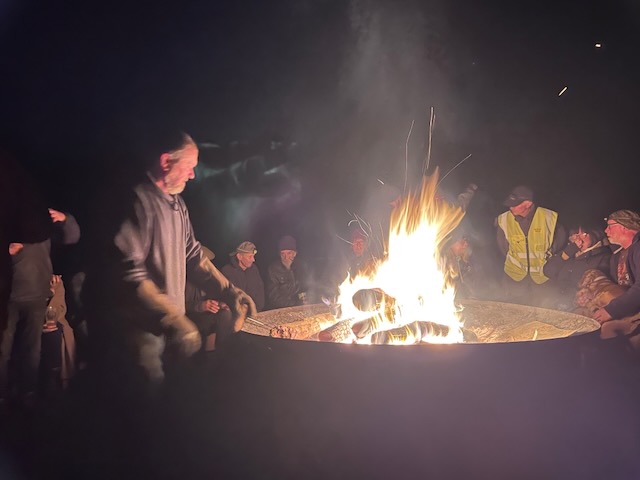
Fe, a fellow Suffolk forester, joined us later that day, and that evening entertained us with a suffolk squash: cutting with a machette, hand removal of pips, seasoned with garlic and fresh herbs of sage and rosemary, coated in olive oil before all segments double bound on foil, and cooked around the fire cauldron. After a good time, we unwrapped them, distributed freely and and found they were delicious.
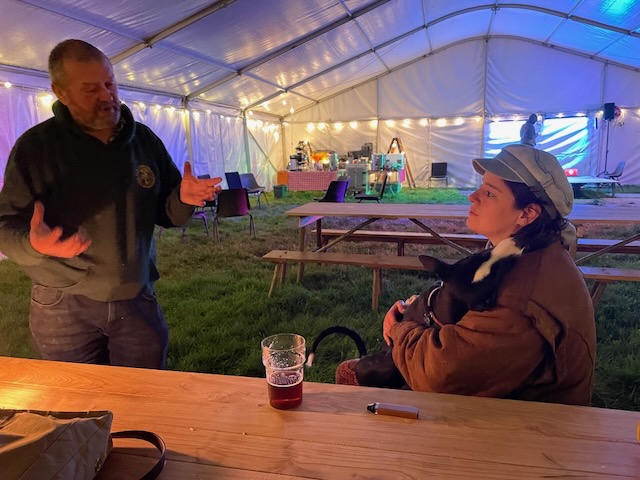
“Environmental Justice and Ancient Trees – Can people’s personal experiences of woodland and trees come to matter to the environmental sciences?”. Tone Walford Associate Professor, University College of London began with the relationship between knowledge and power. Foucault: we cannot talk about knowledge without power. To speak of knowledge to counter power is itself power. We talked about how difficult it is to communicate the knowledge of coppice/wood working, and therefor how it is undervalued it is conventionally. Examples included, people complaining of tree felling when it is healthy coppicing; river spirits killing fish, equals pollution killing fish. Finally we came to Romeo and Juliette, the two oaks analysed with the The LiDAR (Light Detection and Ranging) method (a remote sensing technology that uses pulsed laser light to measure distances and create detailed 3D models) This may be the link next stage is to convince conventional scientists that stories also matter. UCL link “We discuss how bringing together anthropologists, artists, forest ecologists, remote sensing specialists, and the UK’s Ancient Tree Forum, is helping to frame alternative modes of collecting, accessing, and sharing environmental data. “
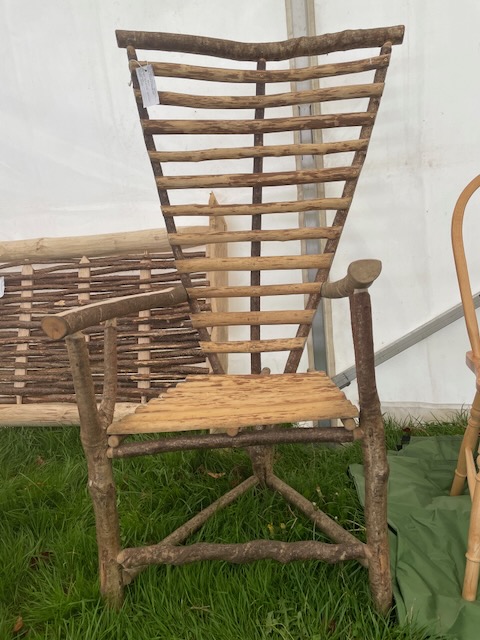
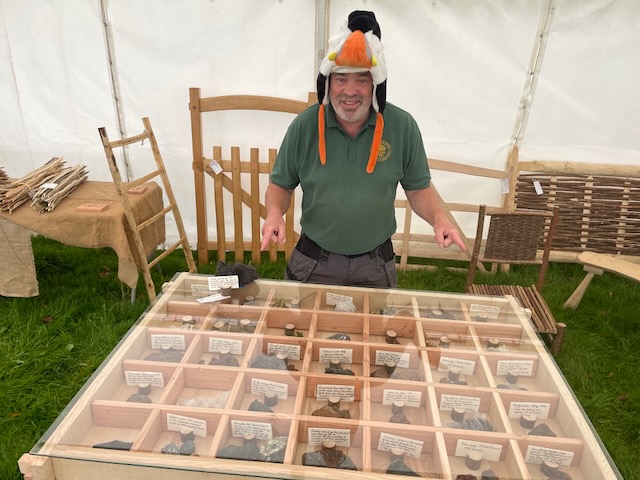
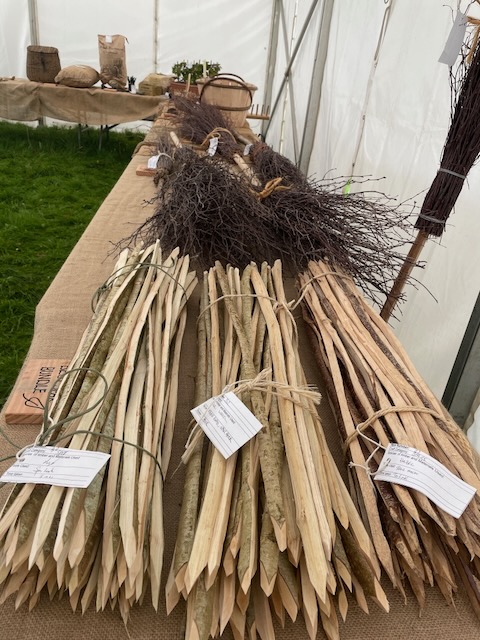
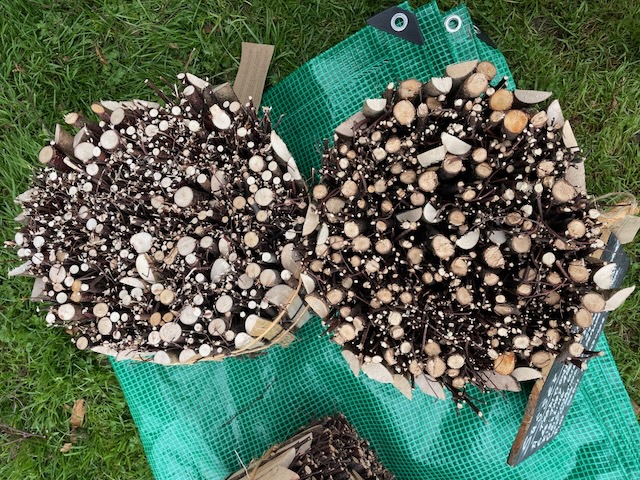
There were impressive wood crafted contributions – I was particularly taken with a 3 legged chair, inspired by a three pronged hazel I suspected, and indeed it was confirmed later by its creator JOHN. But I voted for the unique Icelandic collection of geological rocks in their wood compartments like an old printers tray. As a tour leader of children to Iceland we tried to persuade its creator, Ashly, to organise an NCFed Icelandic trip – not so much for trees of course. I met the Sussex Pimps, a guaranteed fire lighting batch of silverbirch and chestnut. Andy Basham confirmed his spar superiority by taking the National Society of Master Thatcher’s ‘Best bundle of spars’ award for the second year running. Quite an achievement!
Much discussion this day on how we frame our pleasure. “I haven’t met anyone today who has irritated me”. Defining from the negative.
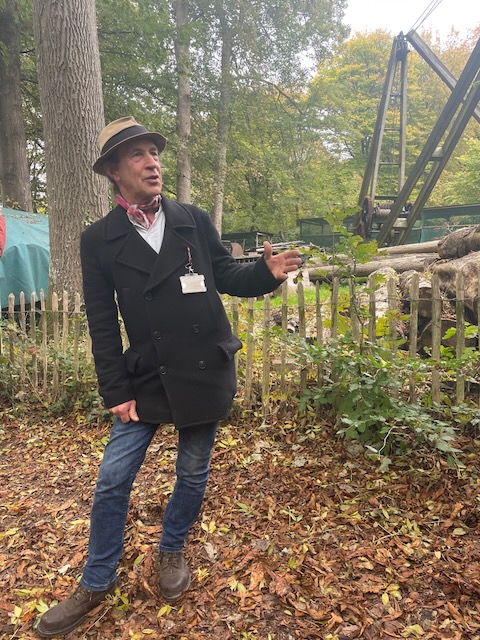
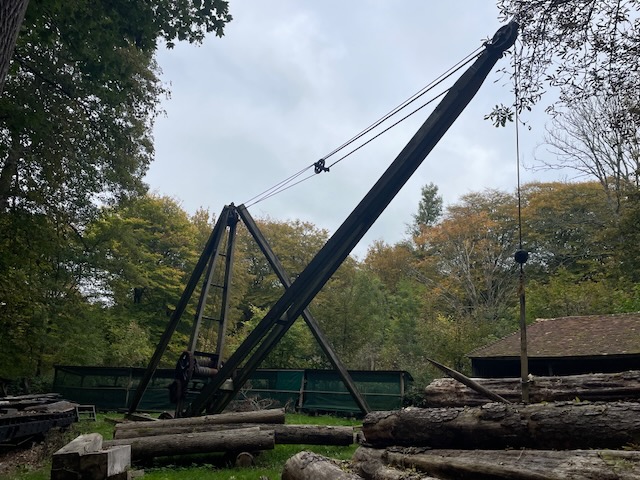
Finally, on Sunday, we looked up and out and explored where we were, with an excellent tour of the museum given by one of its dedicated volunteers, a man of style and substance. Please consider that the idea of this land being one big forest is not right. Here for example was pasture, until the 1850s when it was planted up with beech and larch. In 1890 Edward James father, who made his money in steel
Roy Armstrong, was a man concerned with social issues, and with a desire to extend educational opportunities into rural communities. He believed that an intimate knowledge of one’s own community led to a better understanding of the wider world. It was the destruction of medieval buildings to make way for Crawley New Town which was the first trigger setting in motion the creation of the Museum. In Surrey over 350 historic buildings were destroyed between 1951 and 1965. Threatened buildings were freely available.in 1967 Edward James offered Roy a section of his estate at West Dean where he had set up a foundation to nurture arts and crafts. More story here. Coppice was done here until 1930’s. Used to be oak on a 25 year cycle – major source of energy for the steel furnaces/smelting. The Weald was the centre of the arms industry. A resurgence of coppicing during WW1, as they found hazel perfect for trench building. The word coppice. C16 any piece of wood less than 24 inches was underwood, and free to gather. Greater than 24 inches was timber, and property of the land owner.
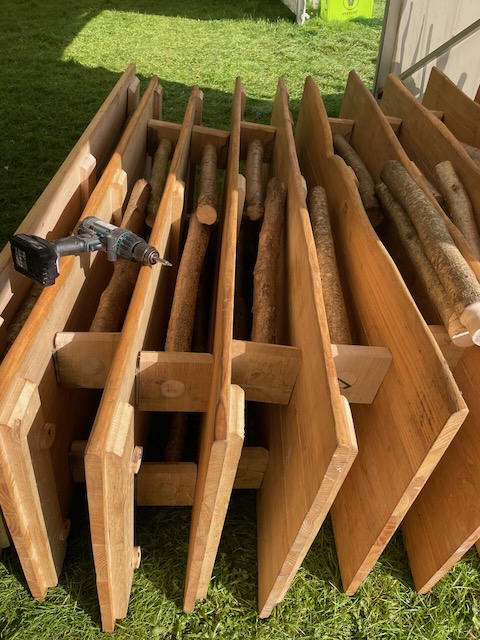
Excellent auction. “I’m a charcoal burner in a room full of wood twisters” the auctioner introduced himself. I failed to get the billhock i had my eye on.
Hoping for this gathering to Iceland, we packed up
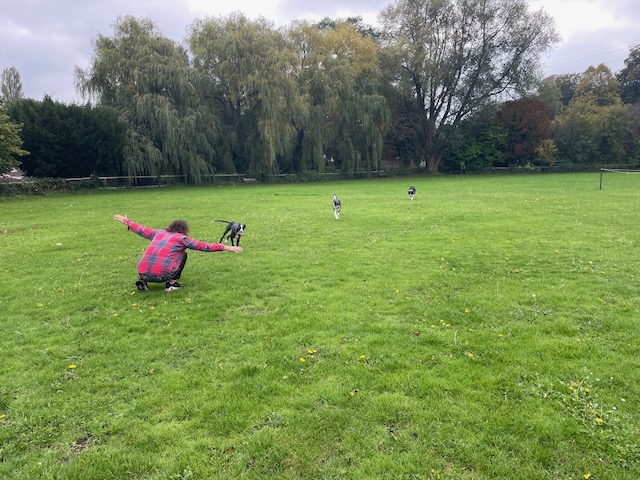
And opted for Richard’s choice, Kingley Vale. It was a good walk for the dogs who needed a stretch, across a field or two to the entrance of the wood, a National
Nature Reserve, a Special Area of Conservation and a Site of Special Scientific Interest. Normally seen in their own space, here the Yews are in a community of other yews, and so extraordinary to behold. They are said to be some of the oldest living things in Britain, officially 500 years old, some estimate them to be much, much older, possibly 2,000 years old. I am beginning to recognise the traits of an ancient Yew, merge of colours like mix of paint, cylinder shaped trunks, stretch marks, the great character, sturdy bases, enormous strength in outstretched branches, mat of roots like hairs. I quickly sketch a few, determined to return here one day.
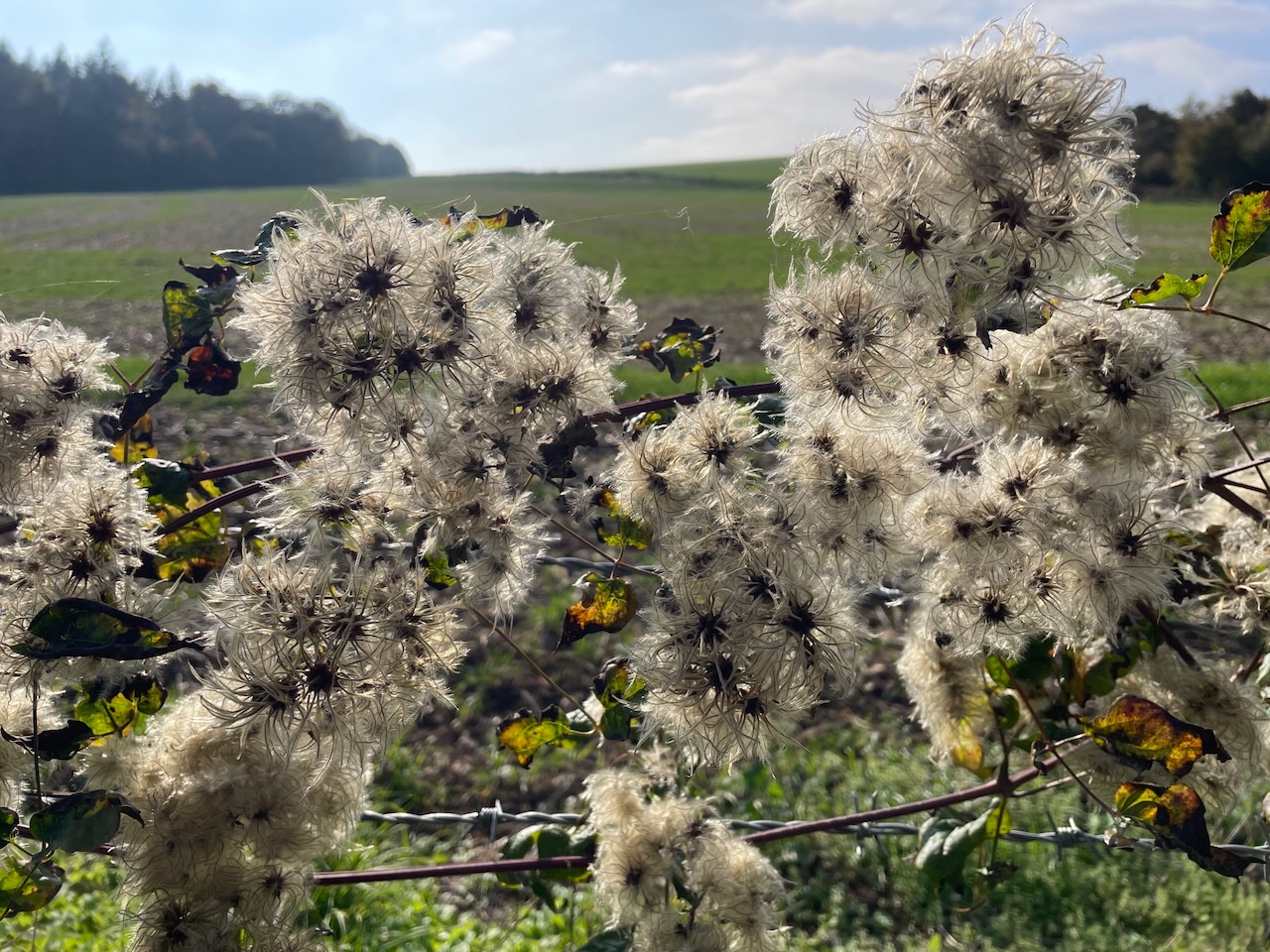
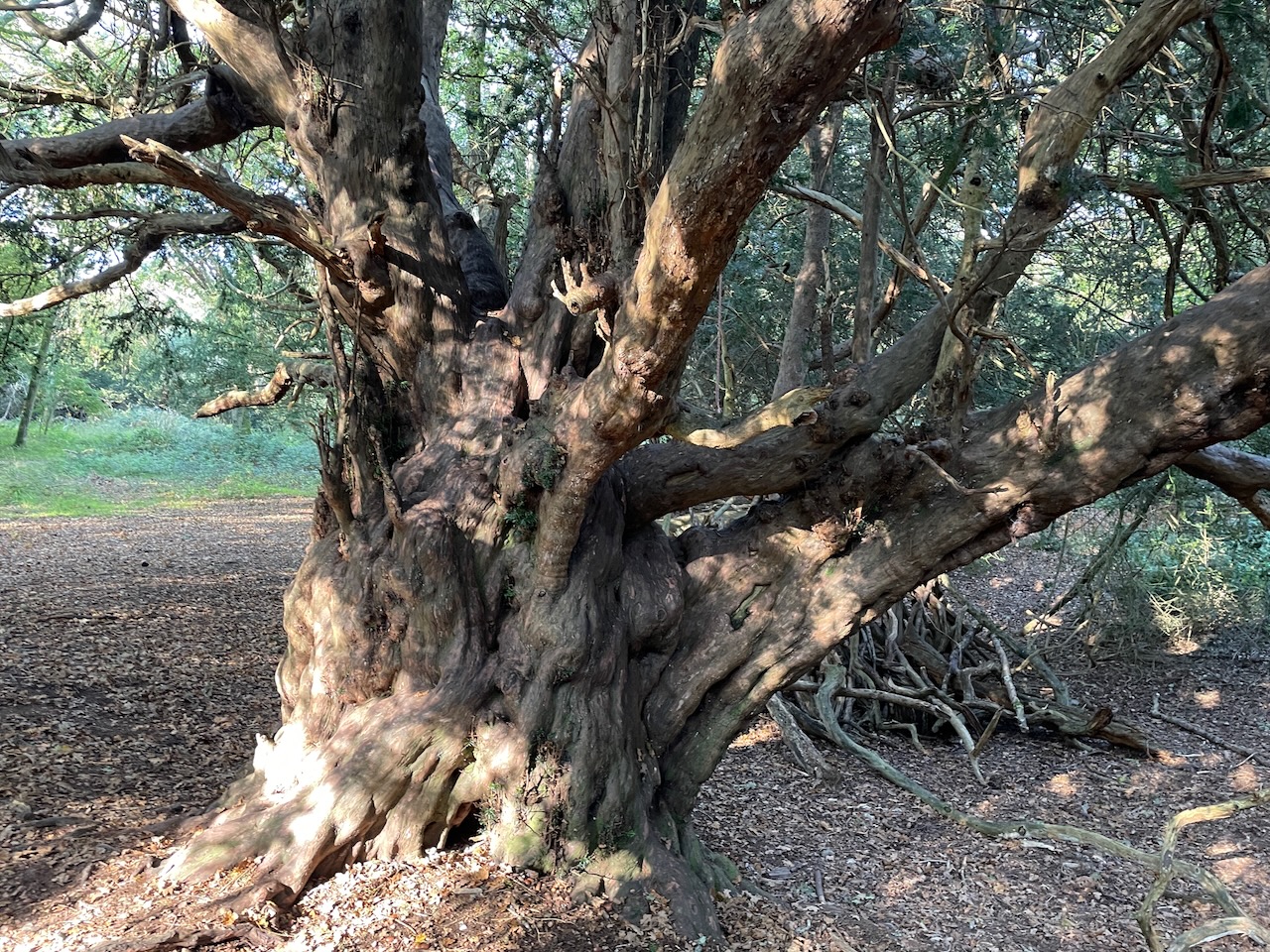
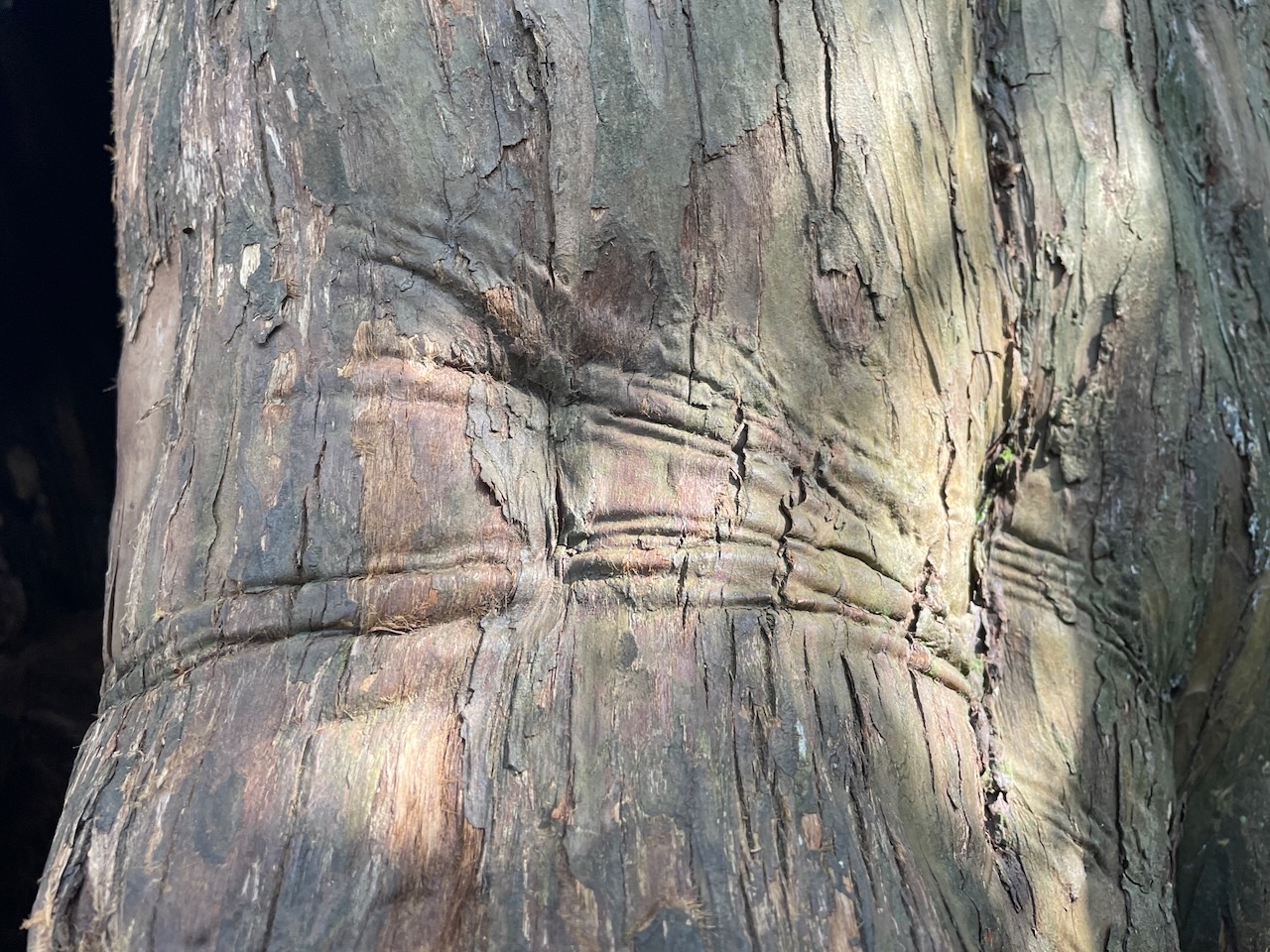
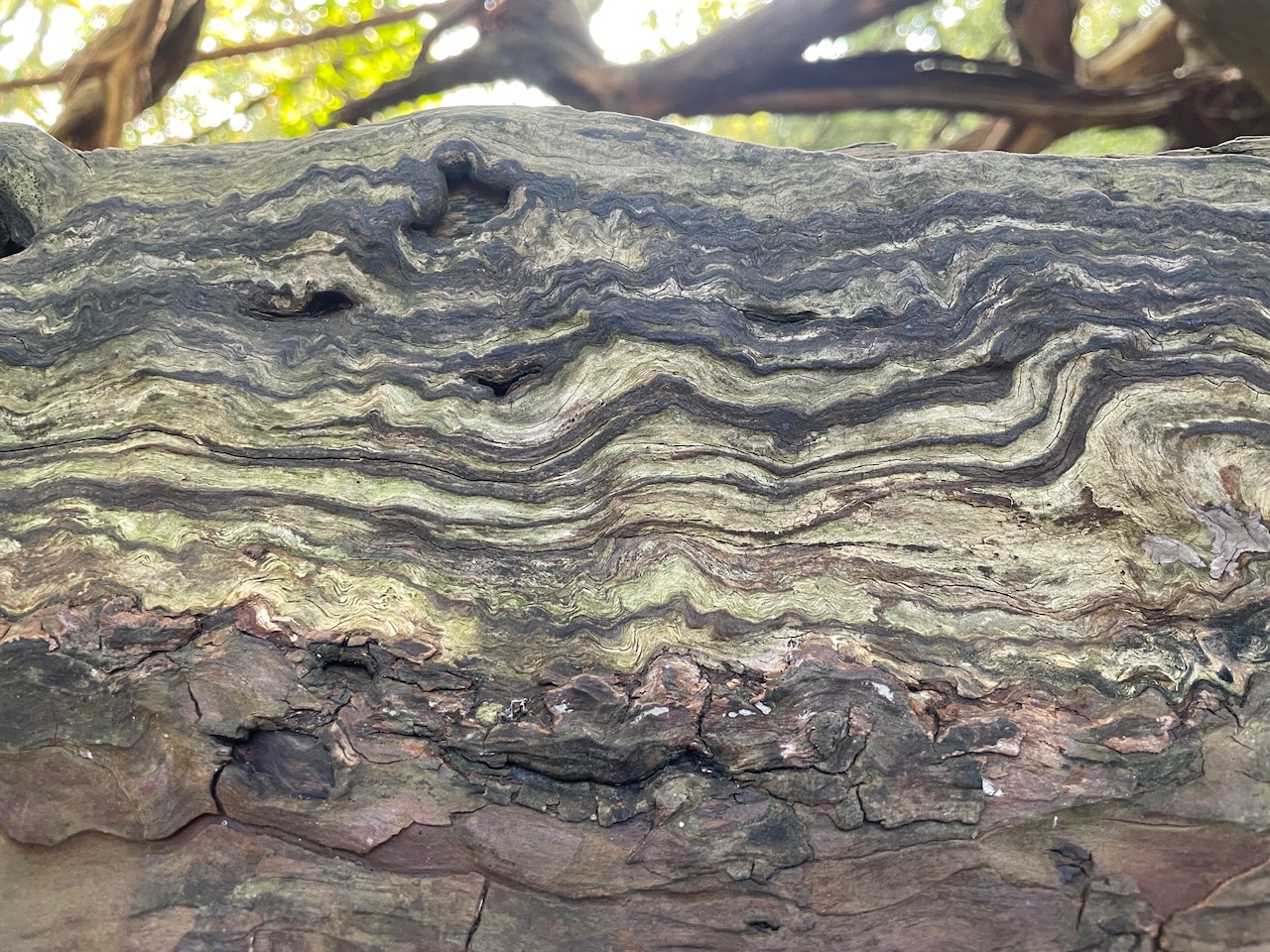
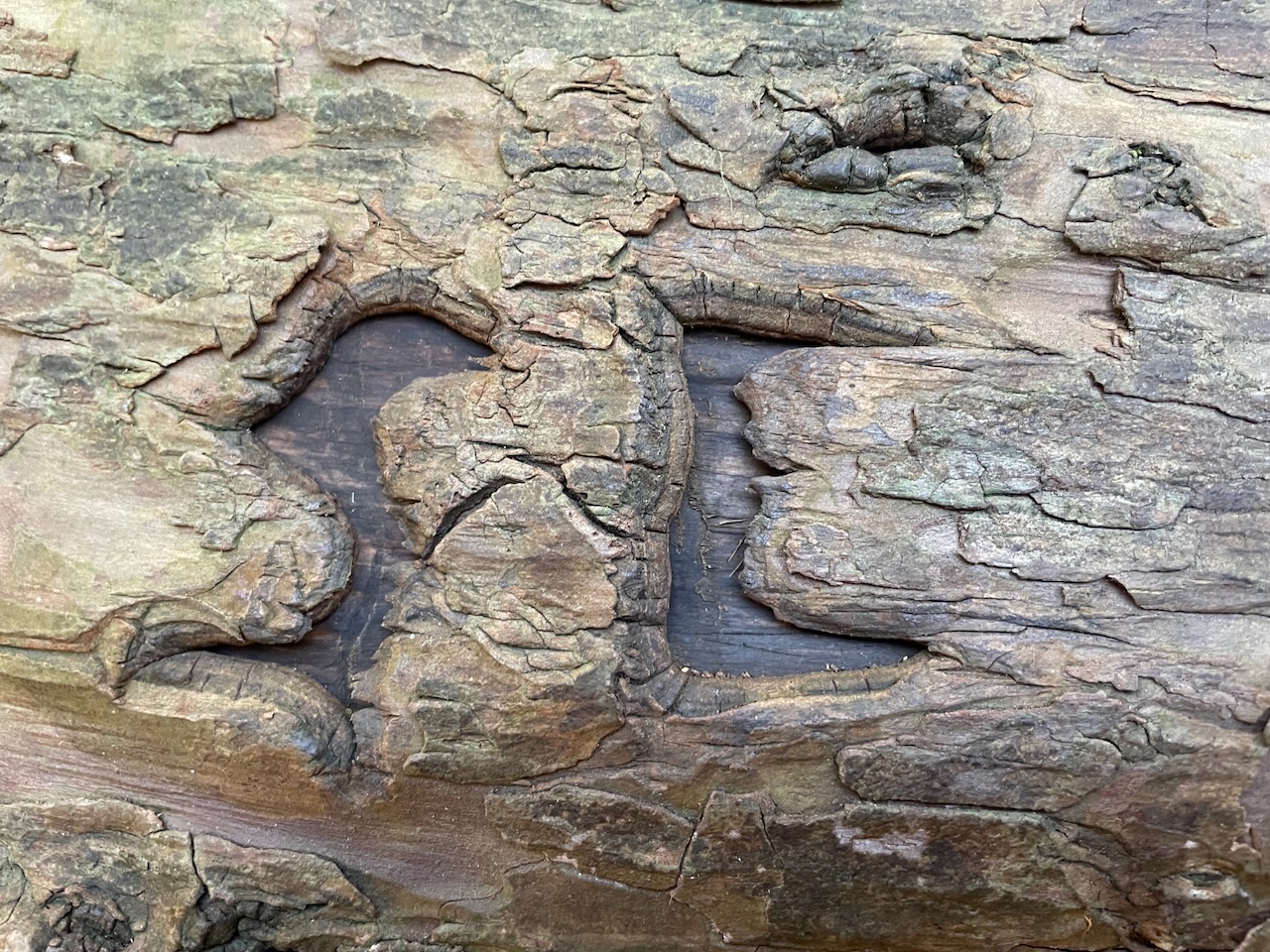
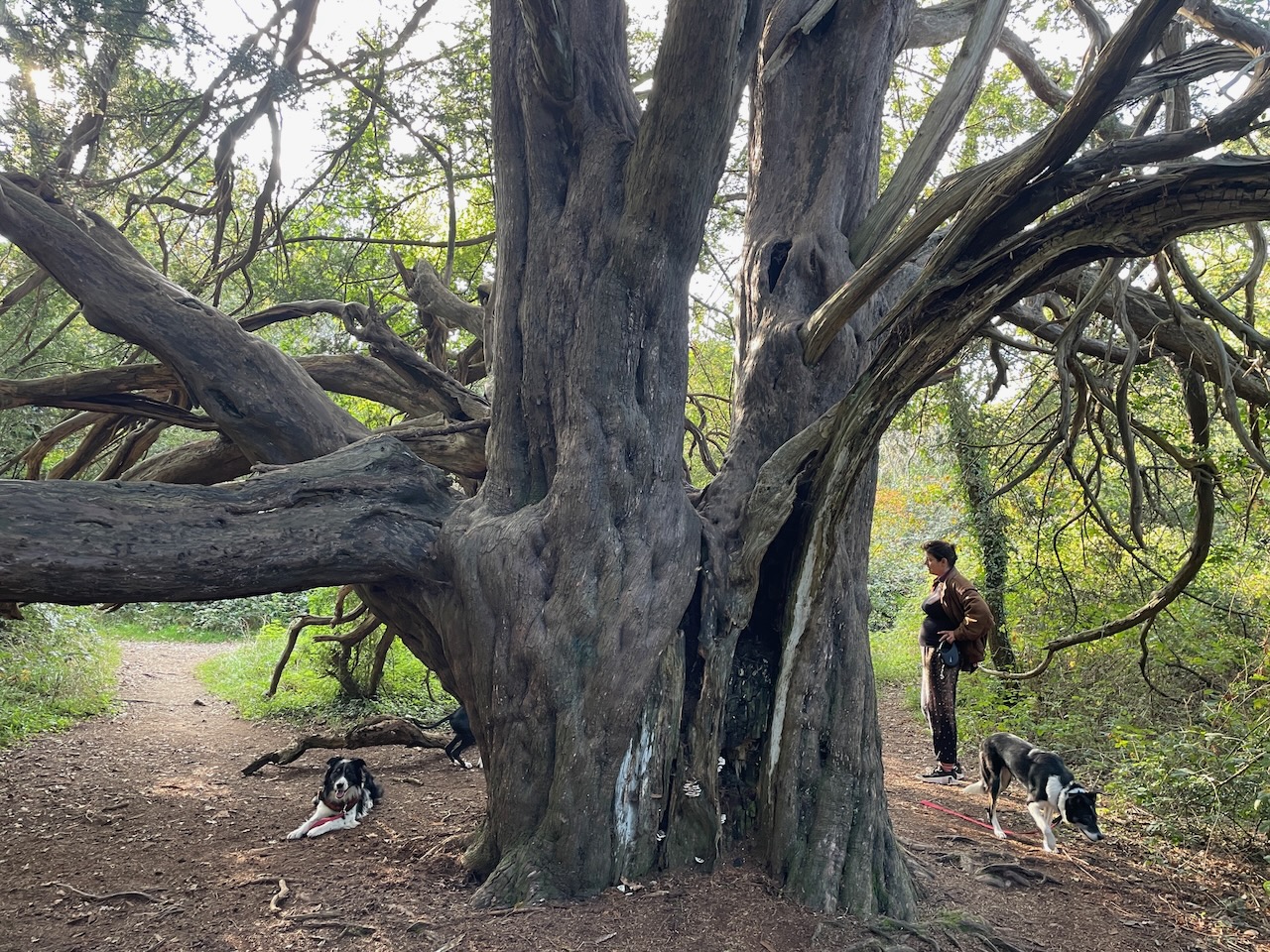
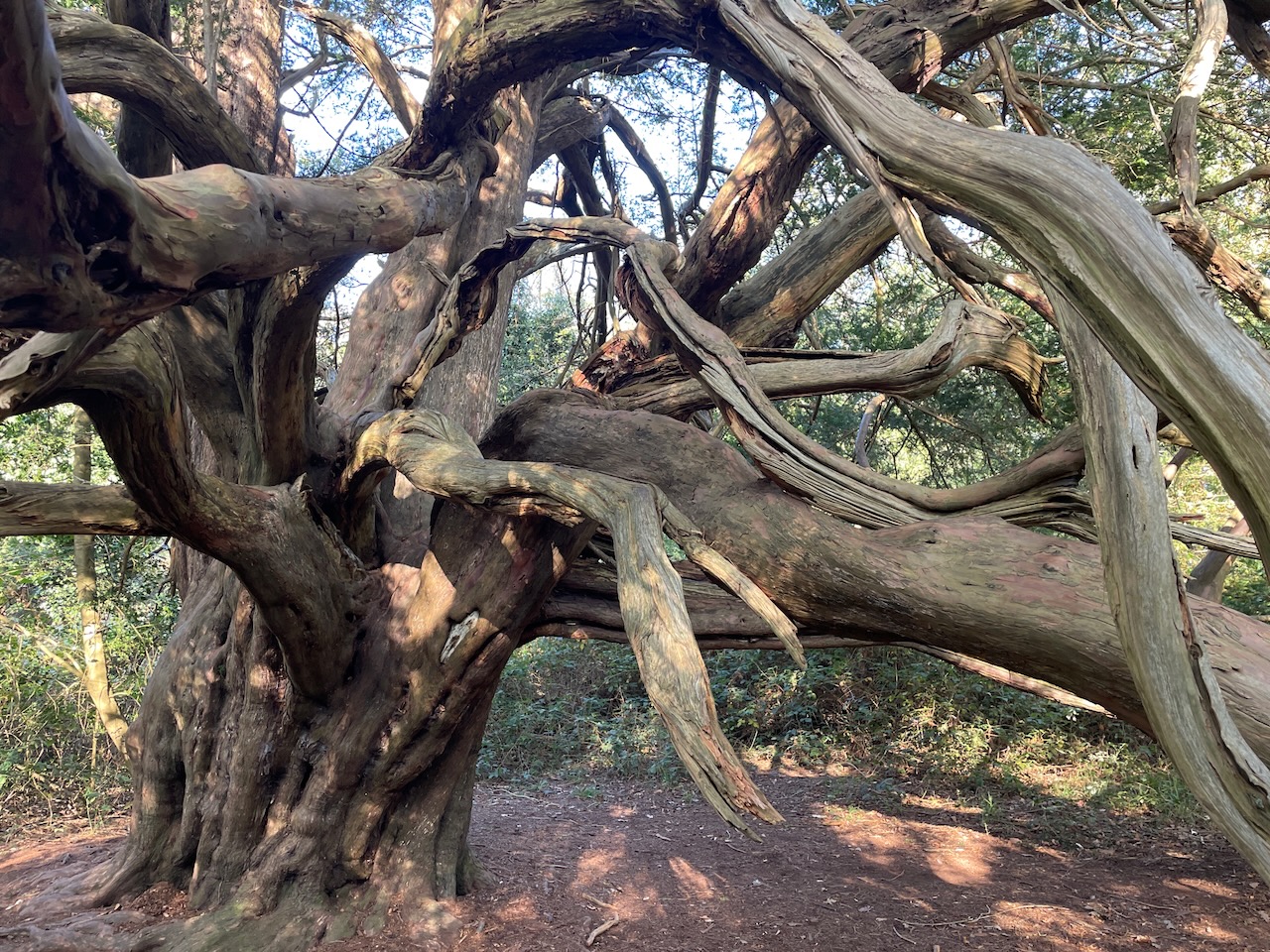
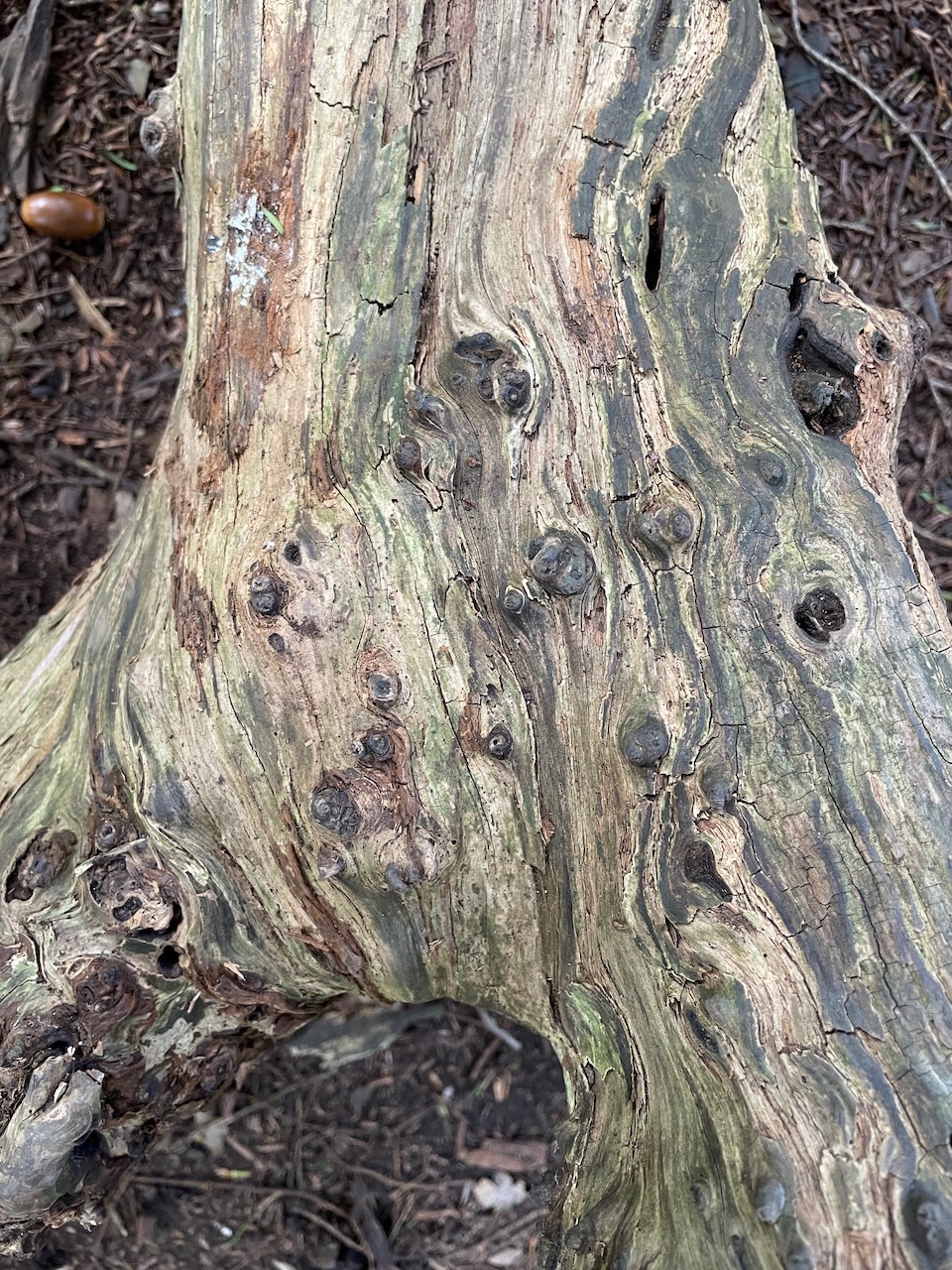
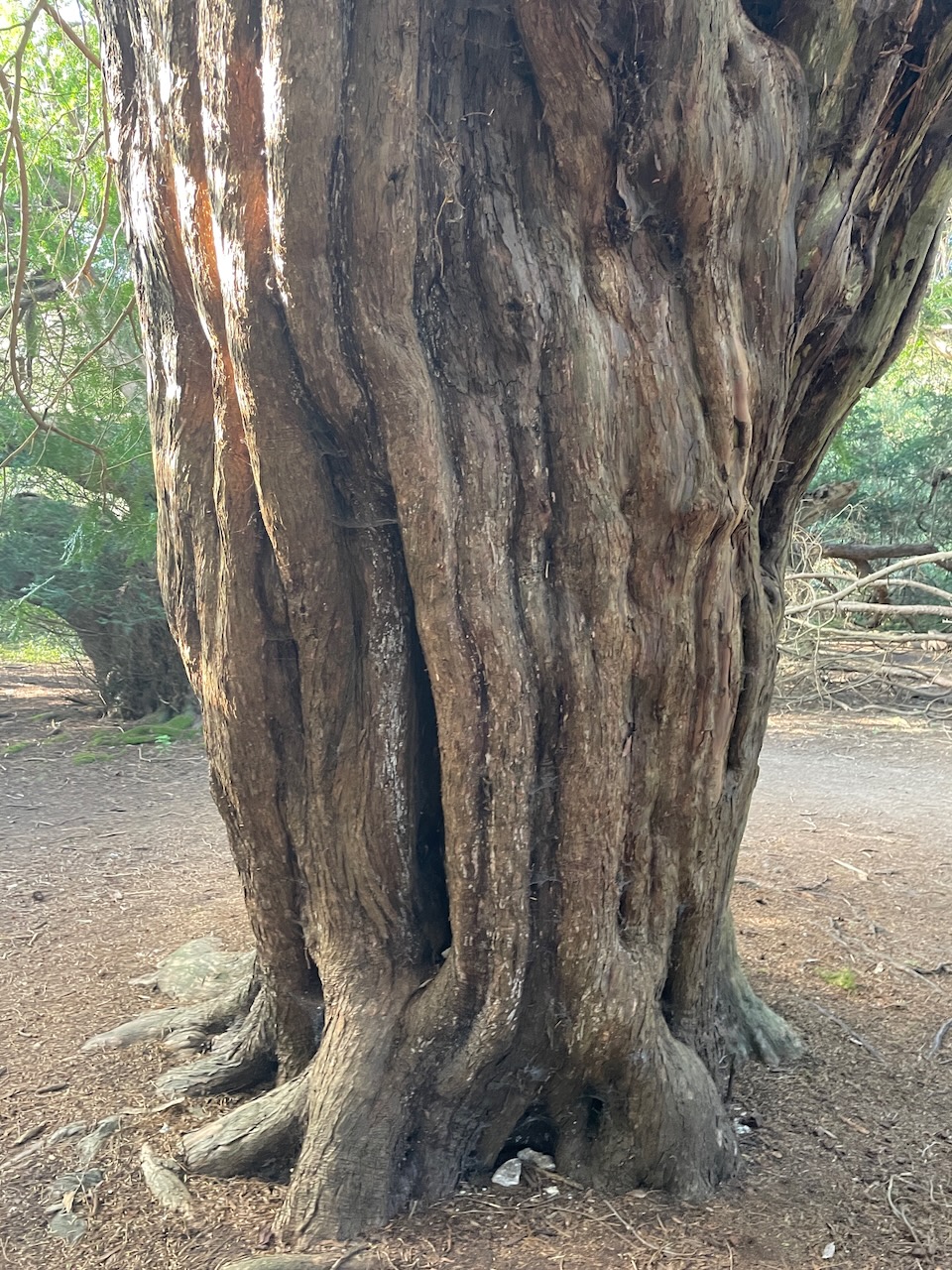
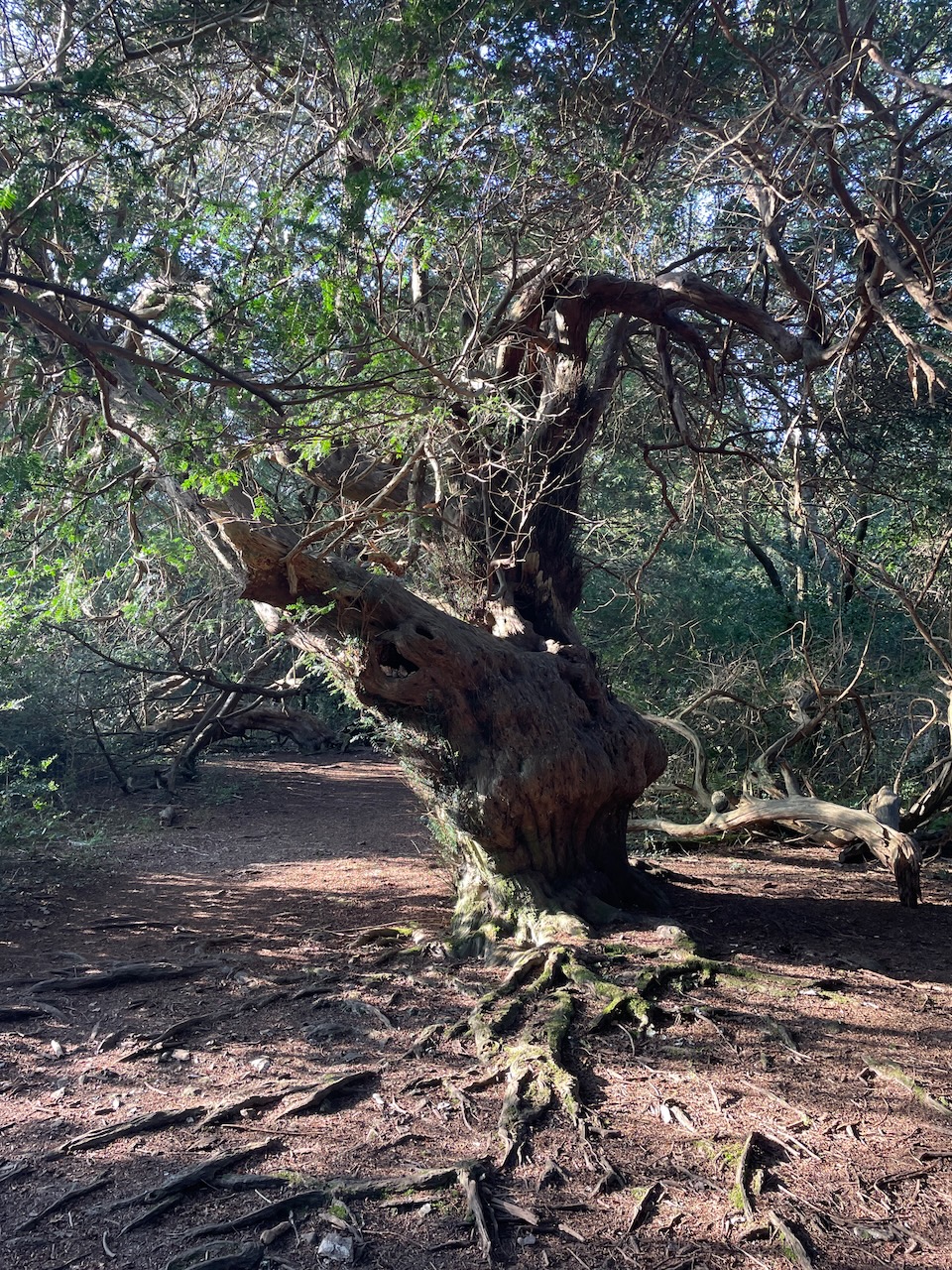
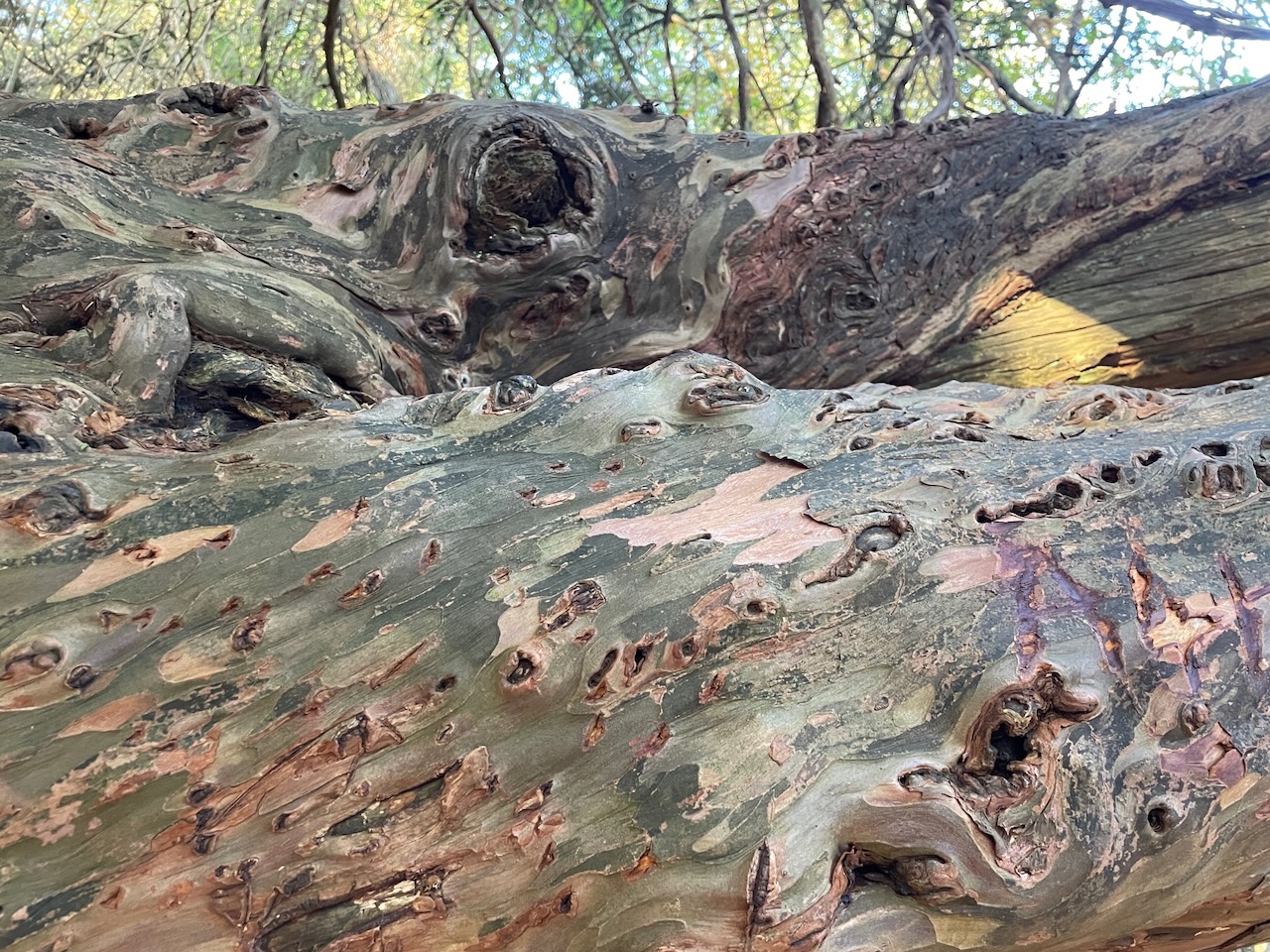
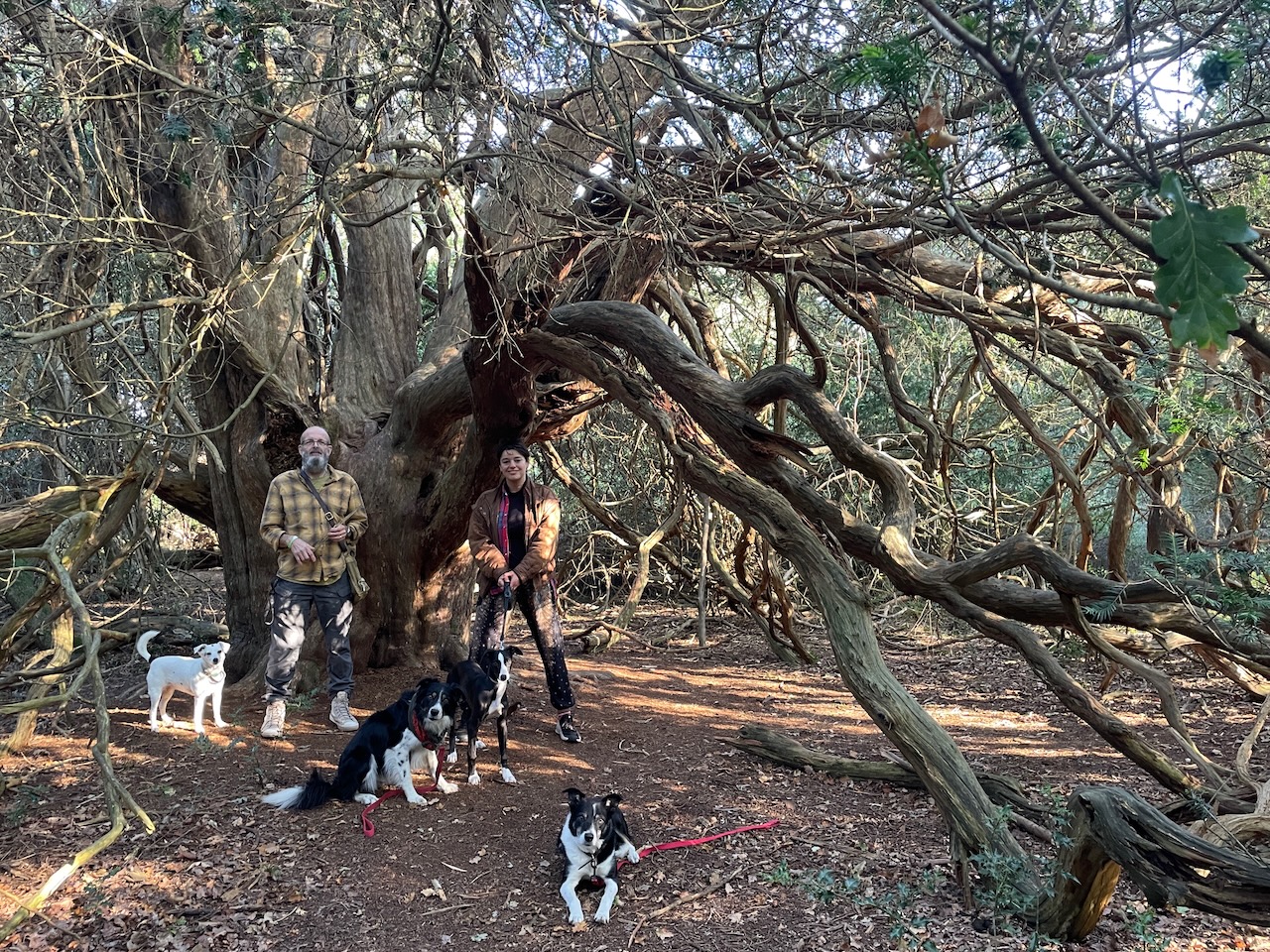
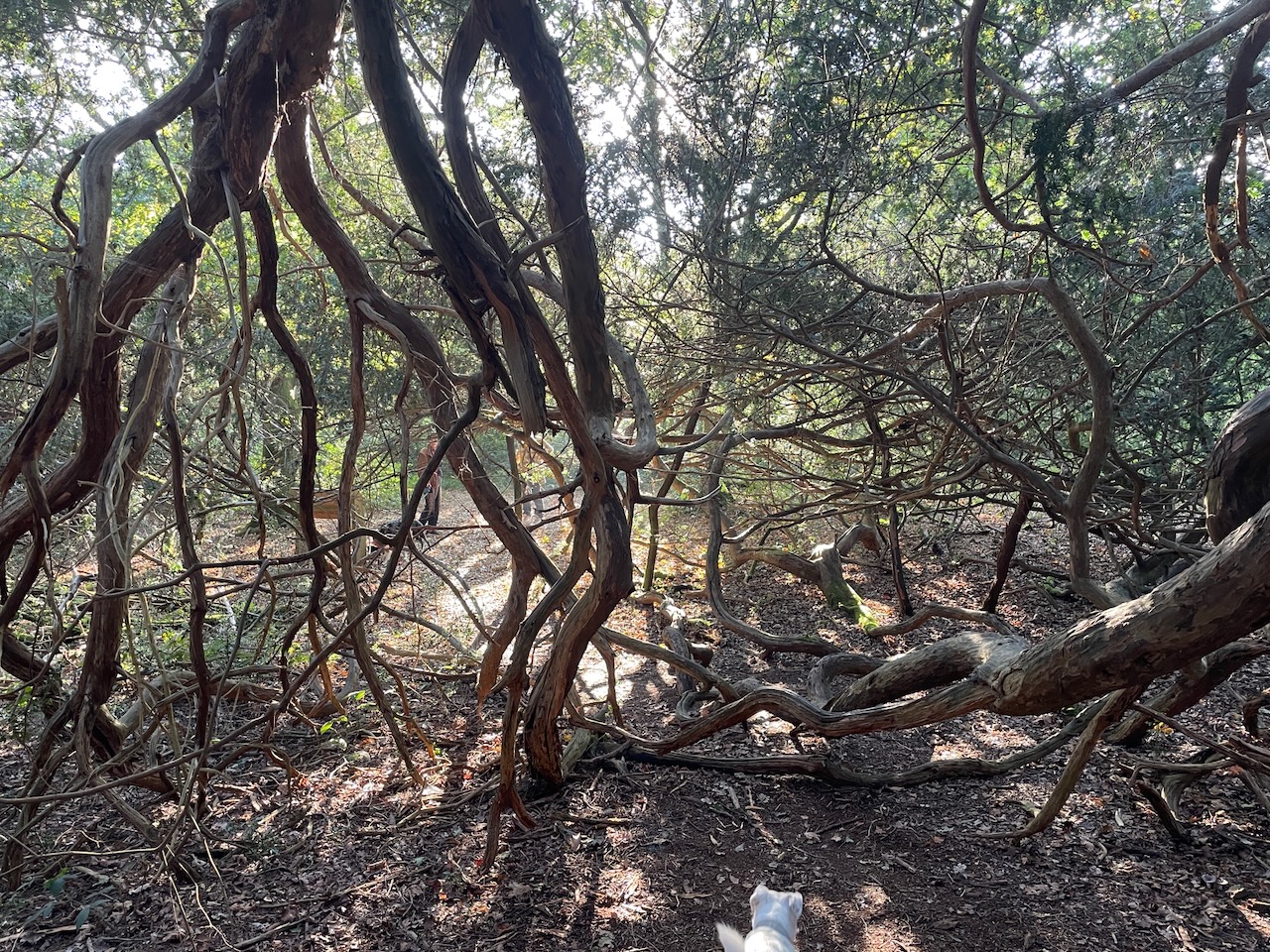
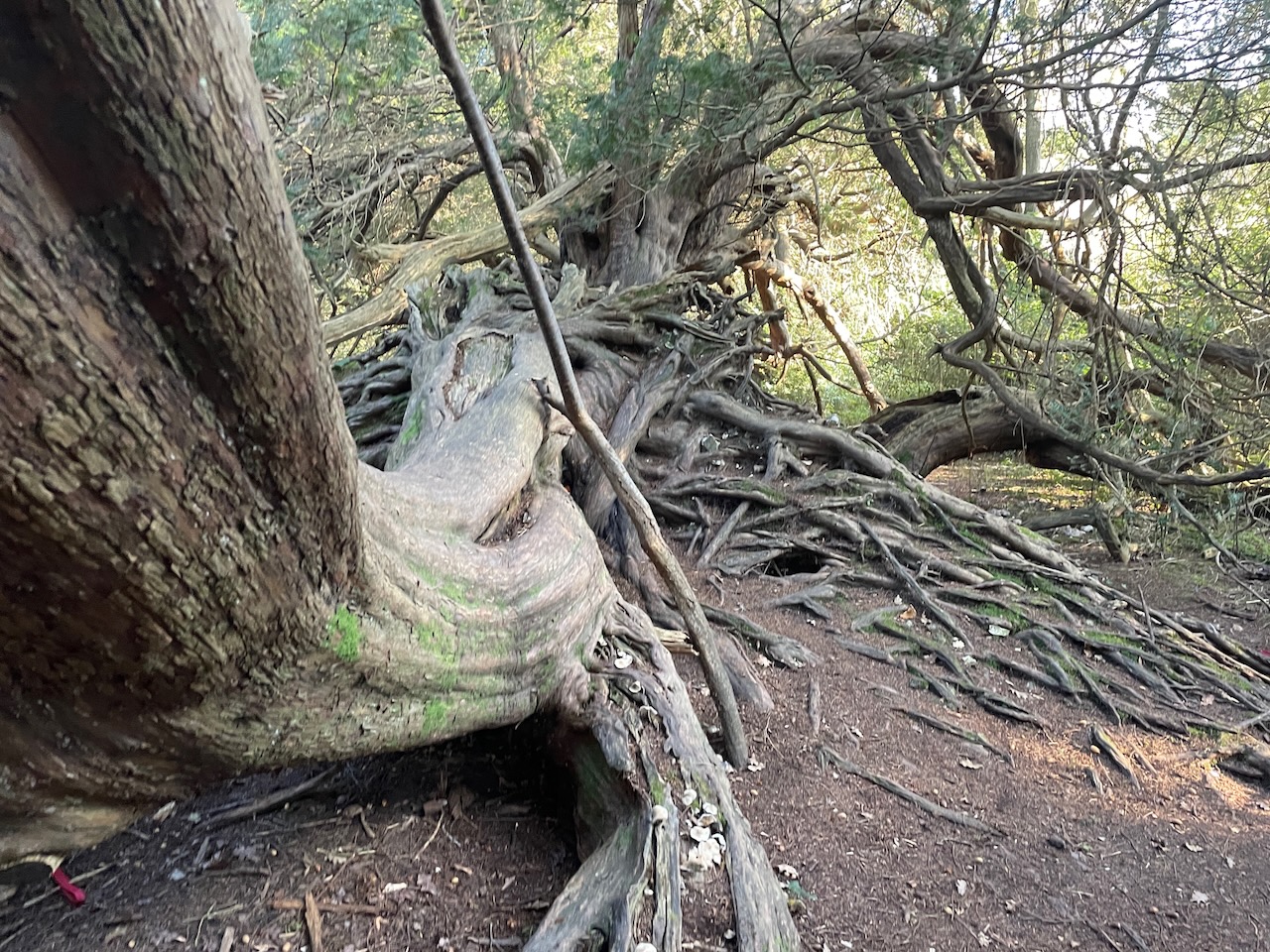

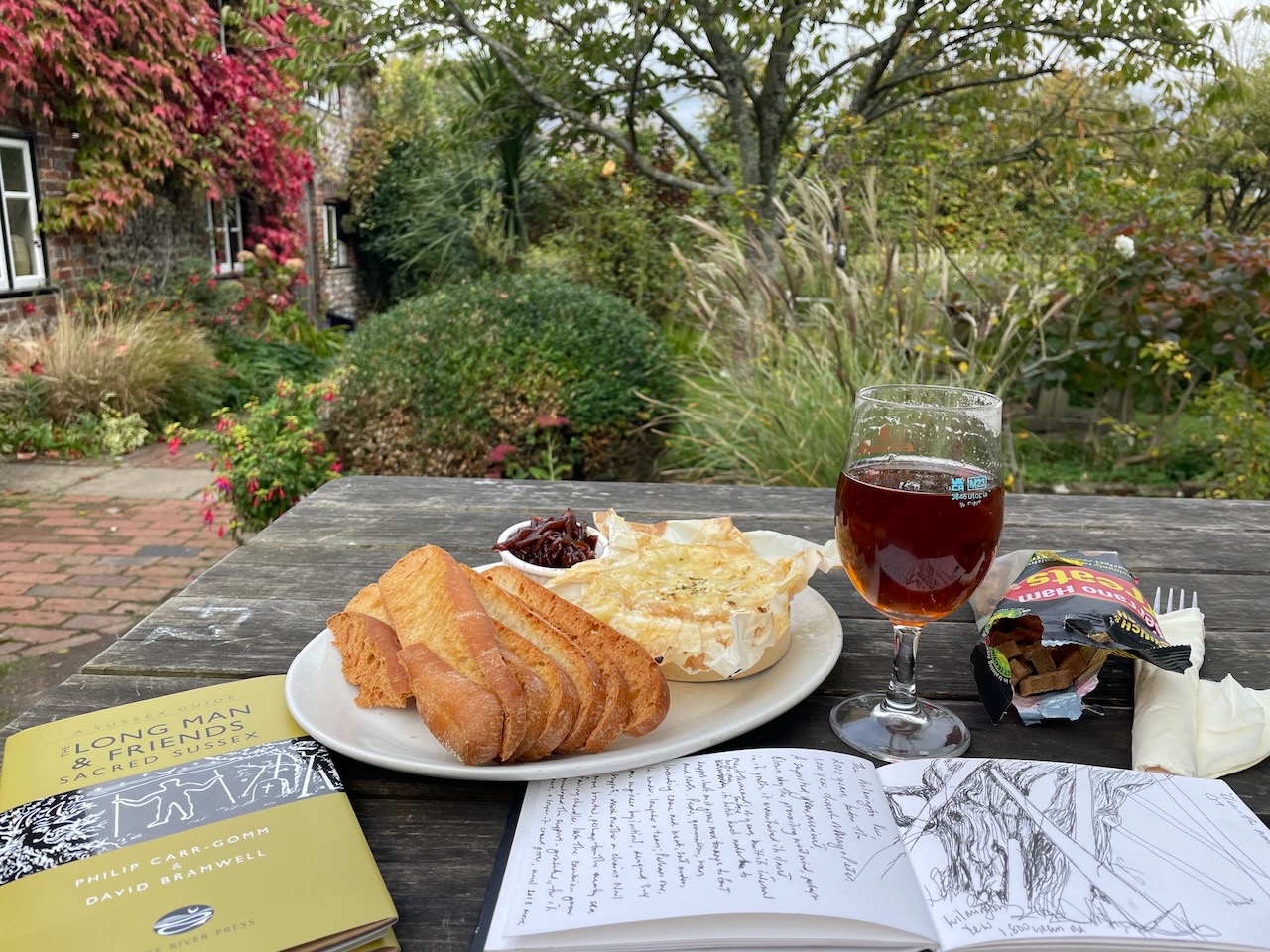
It was a sweet link to find, over dinner with Phillip and Stephanie Carr Gomm that Philip had written a book incorporating Kingley Vale, which speaks of it’s 2,000 year life and magical space. (They have such a fine relationship, of clear open look, enjoyment of each ohters words and company. This time in their life, engrossed with grandchildren)
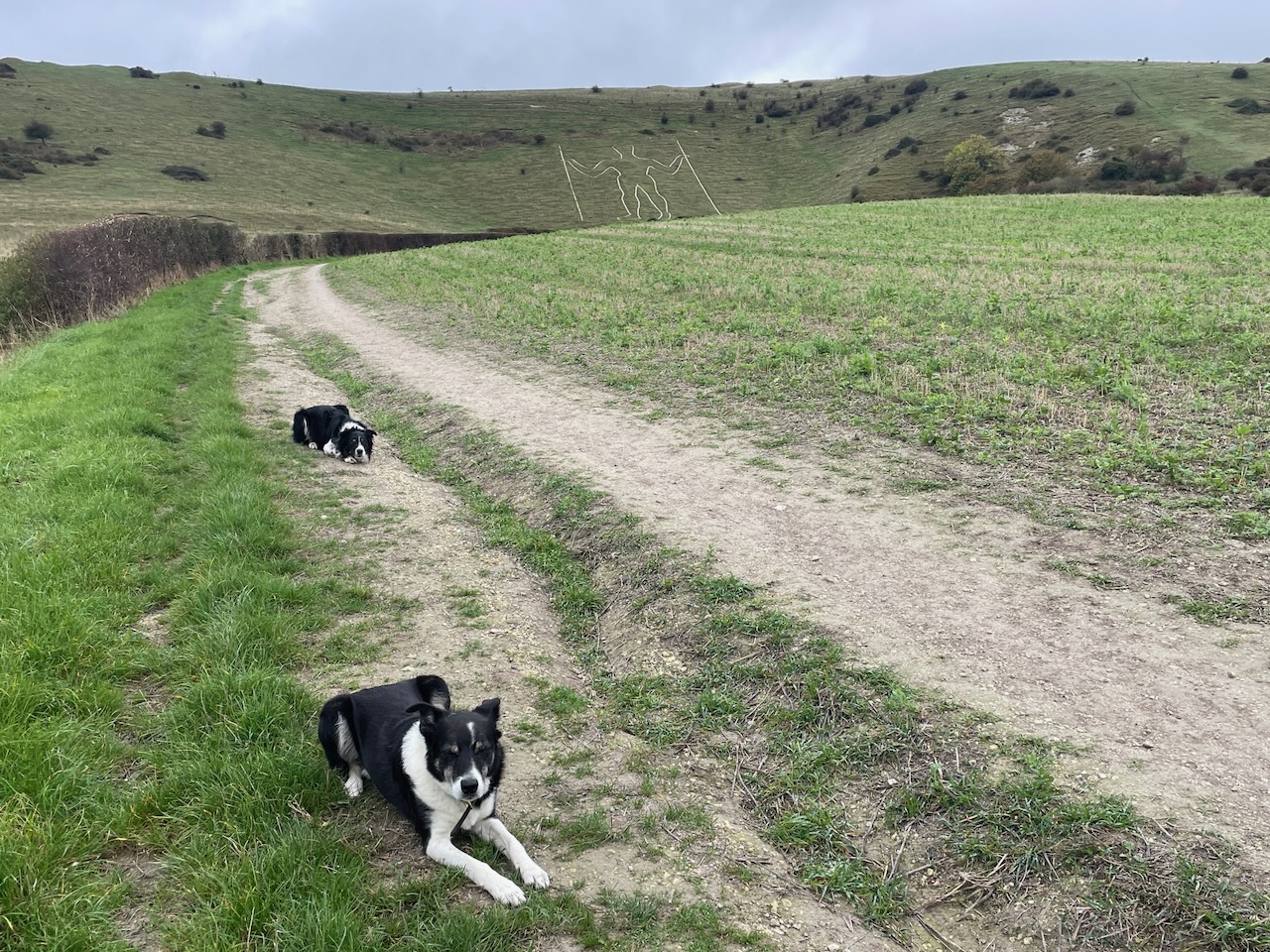
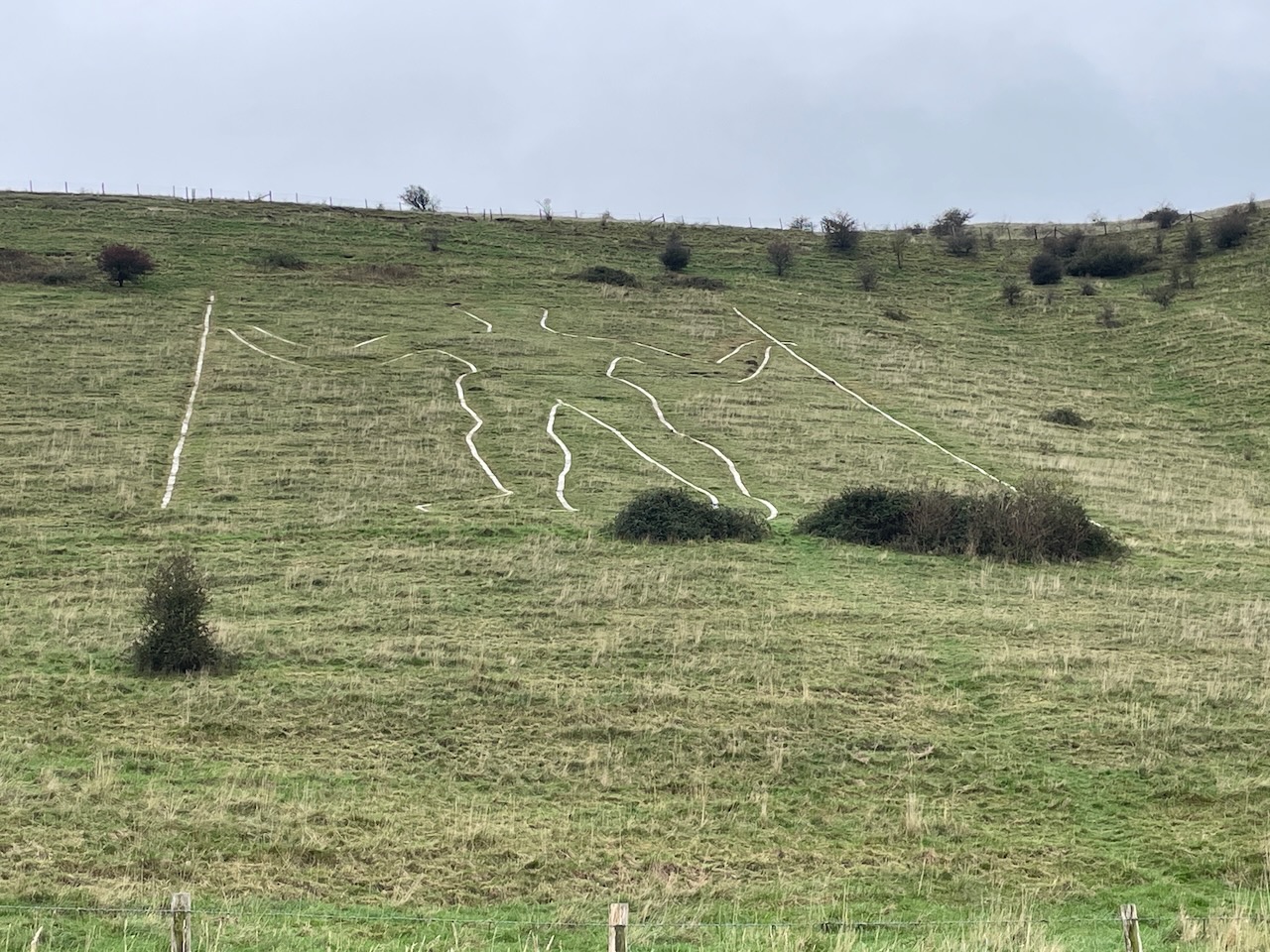
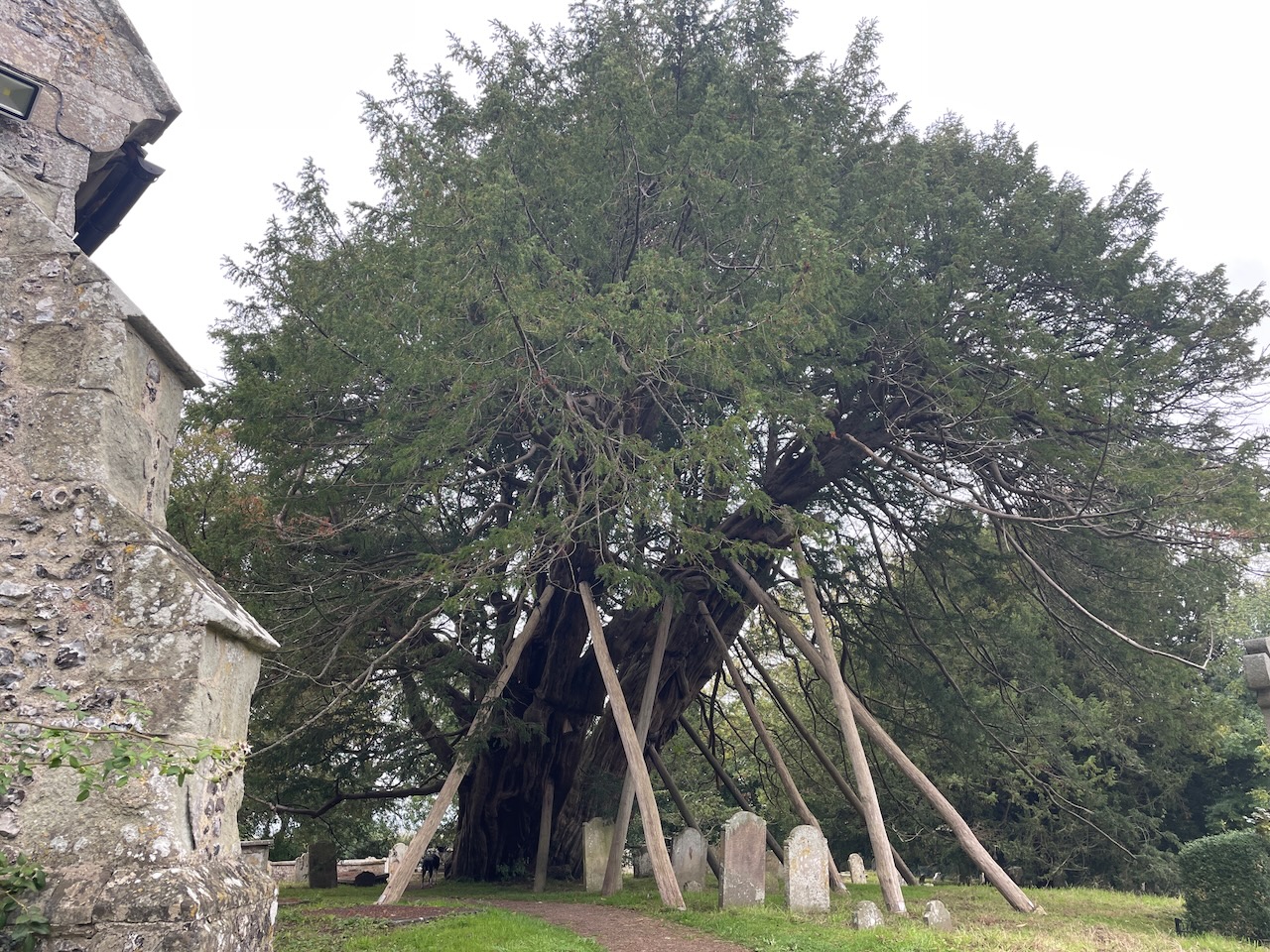
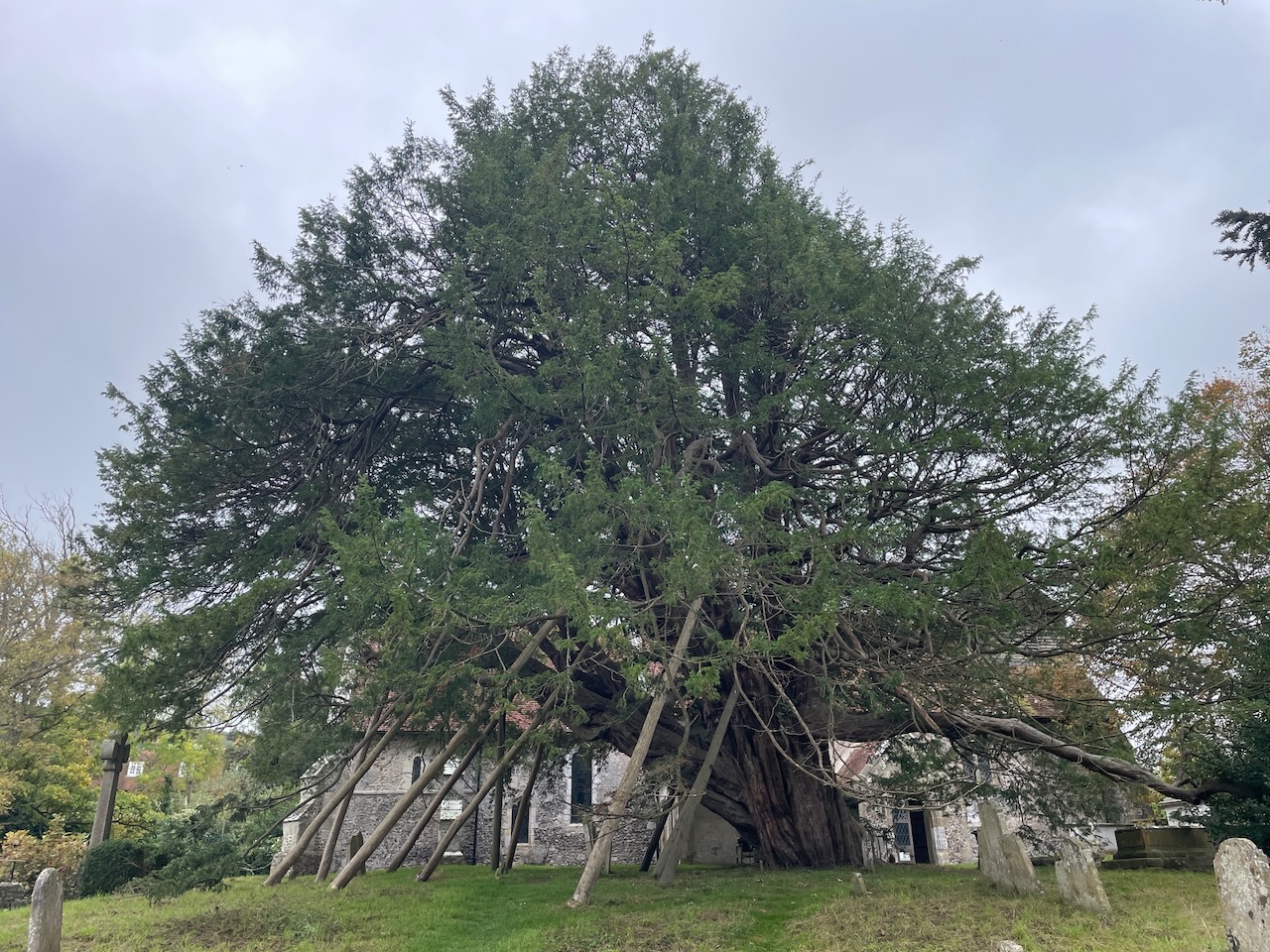
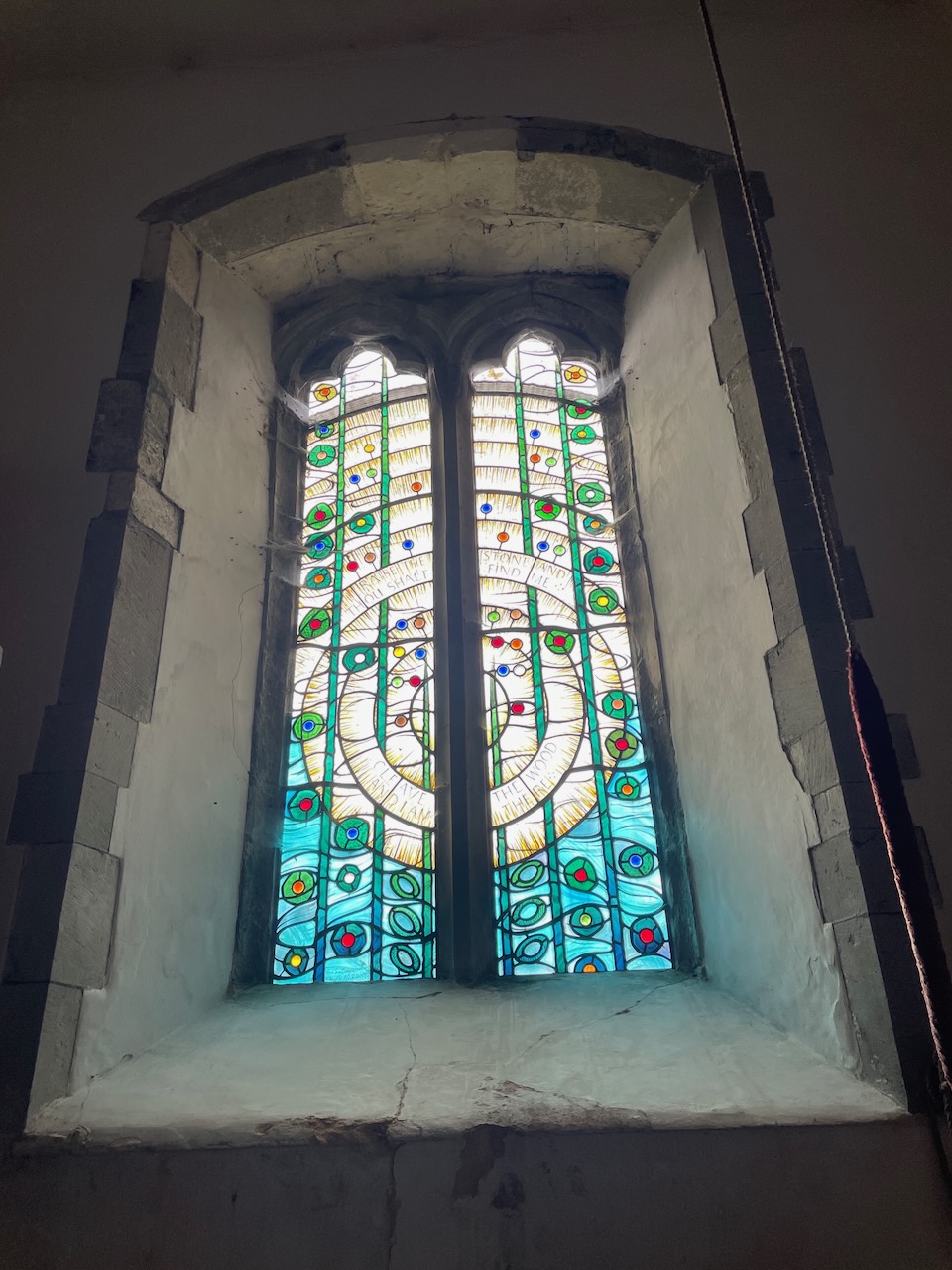
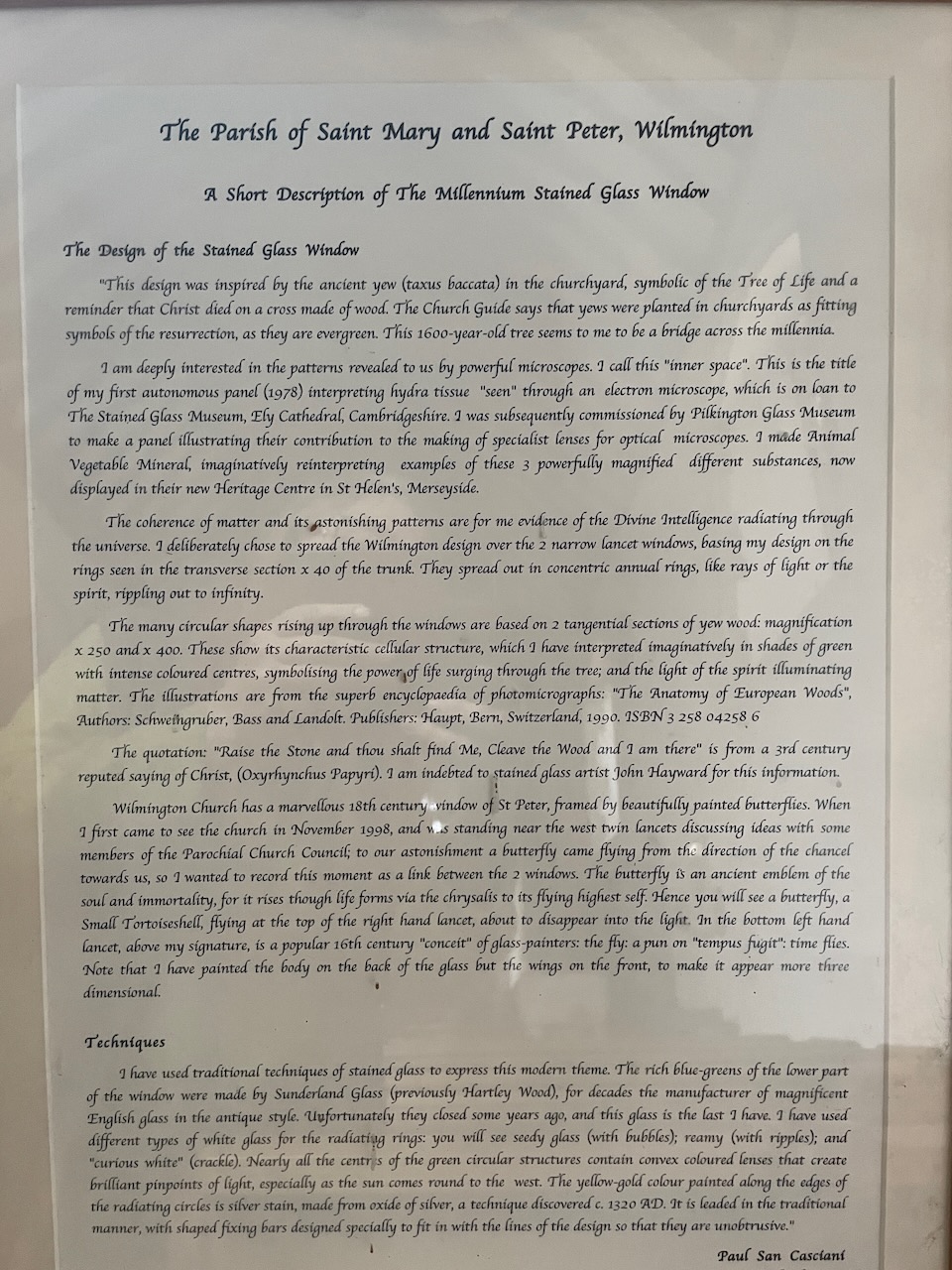
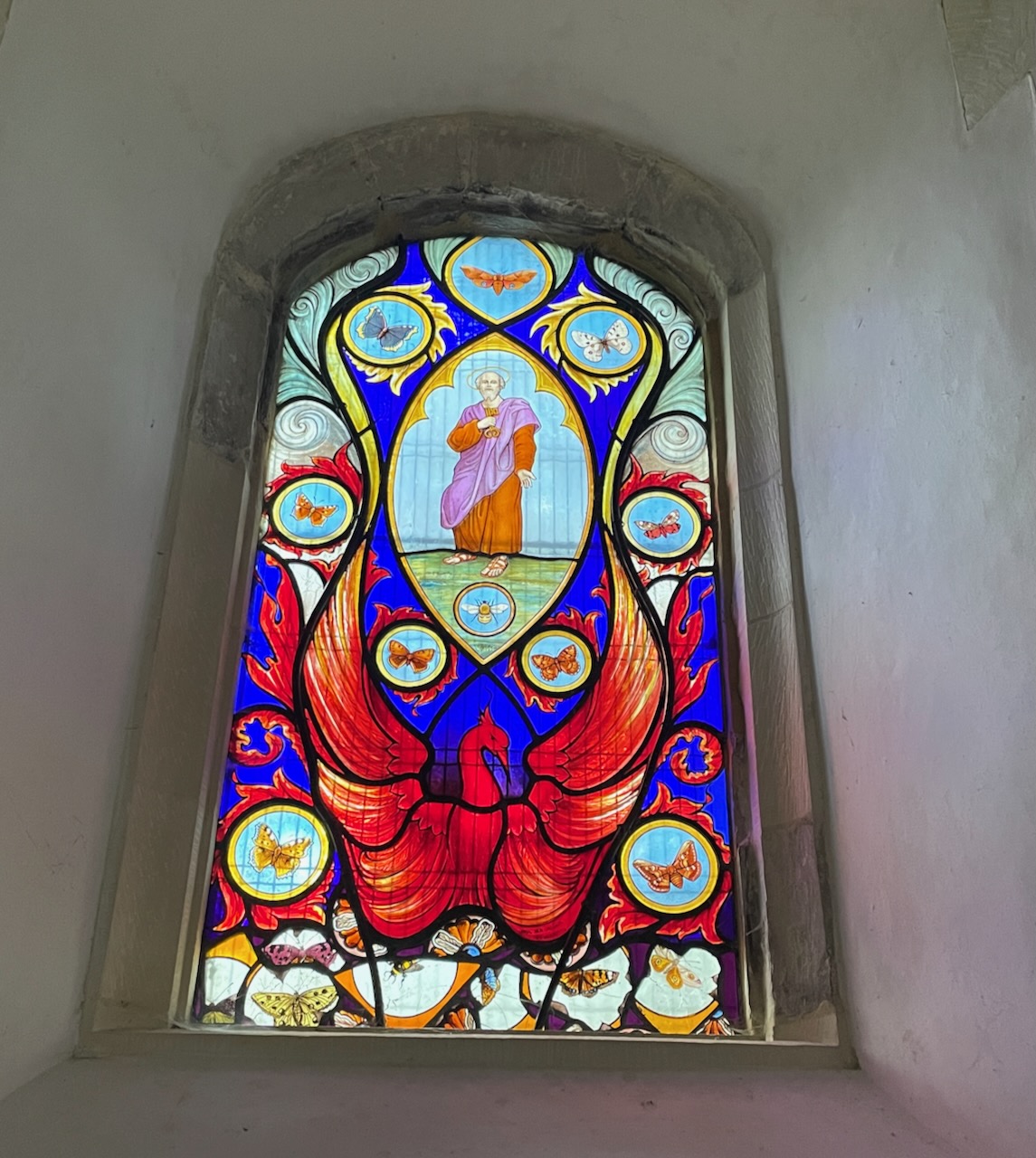
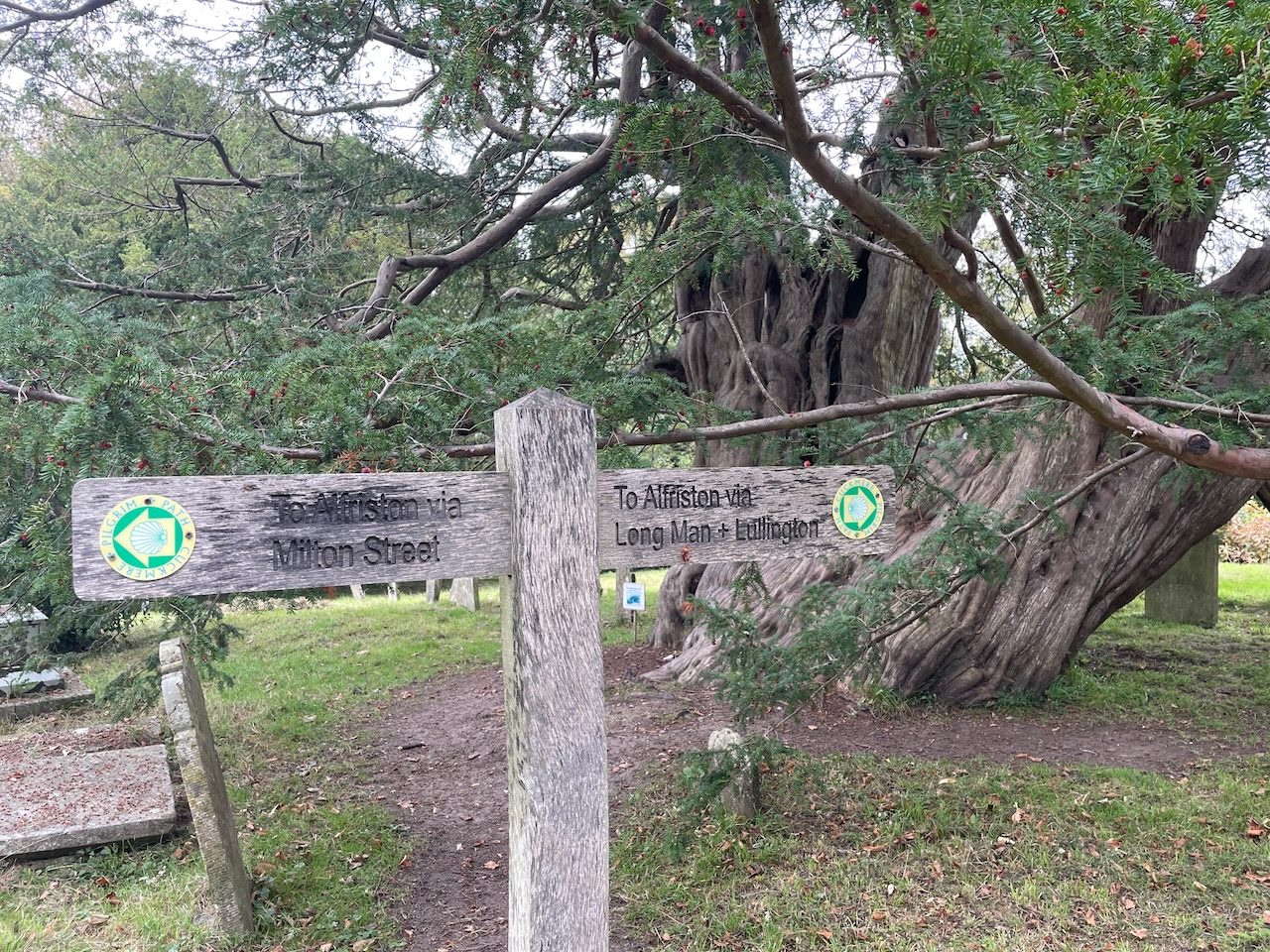
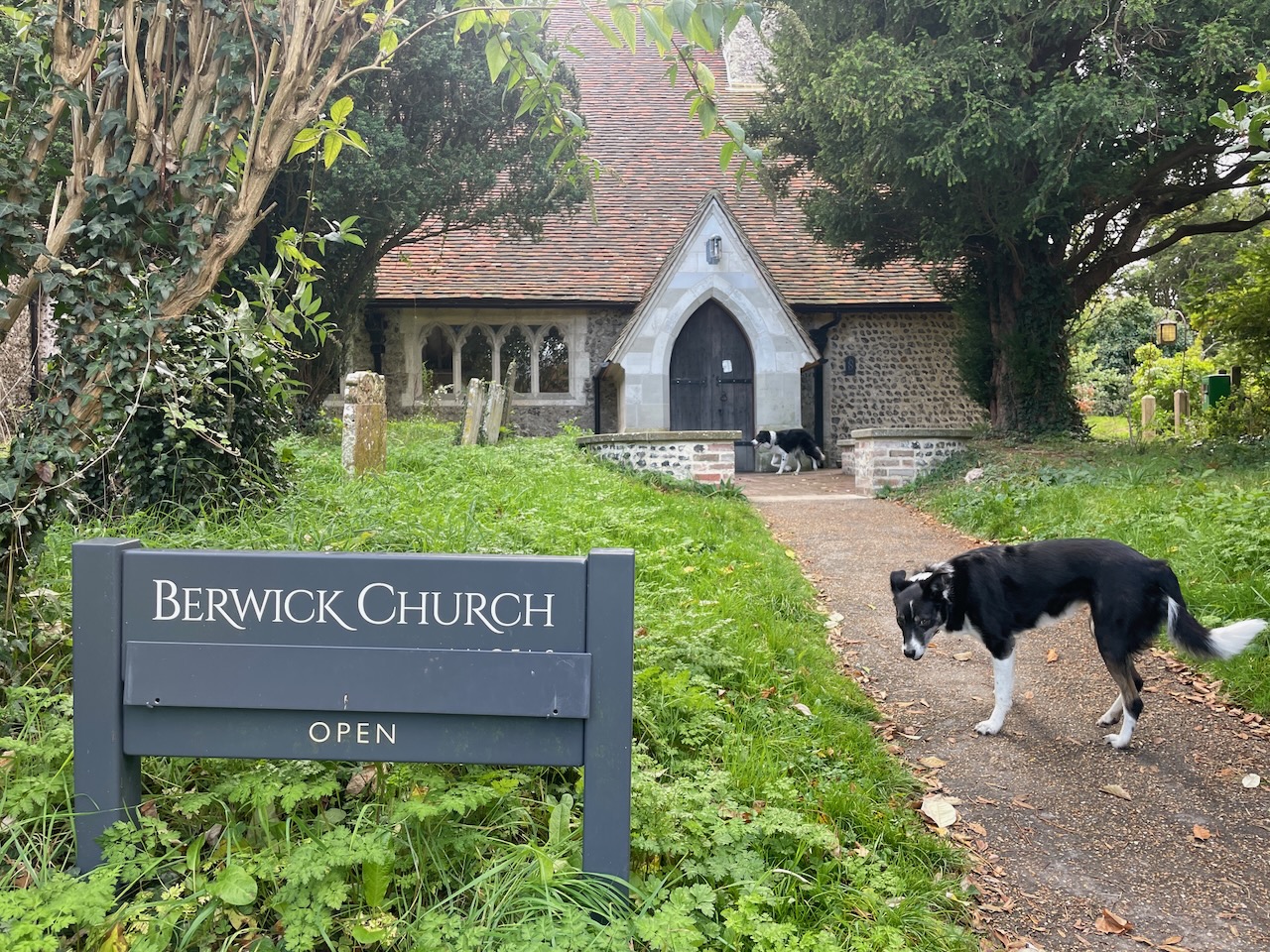
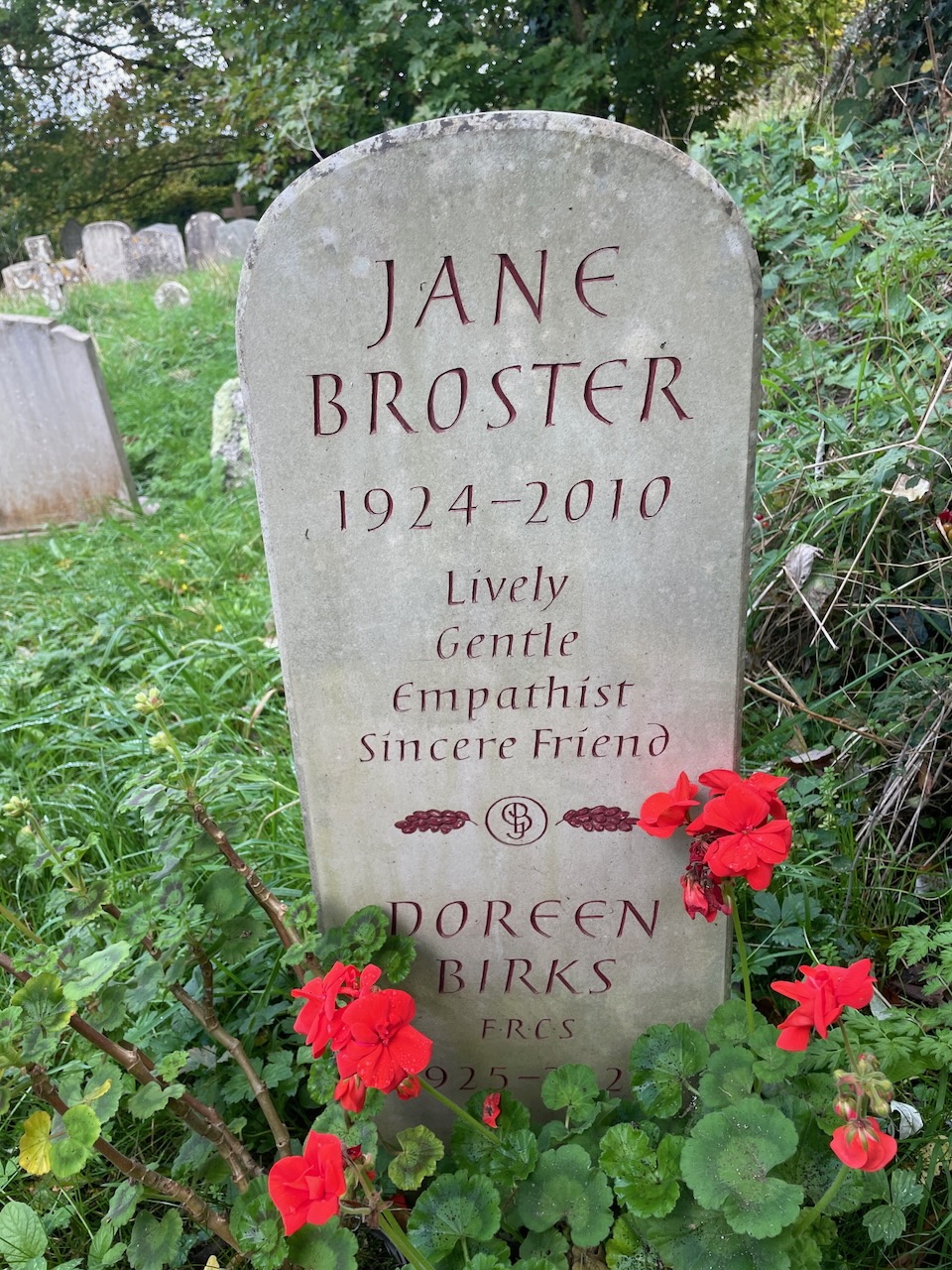
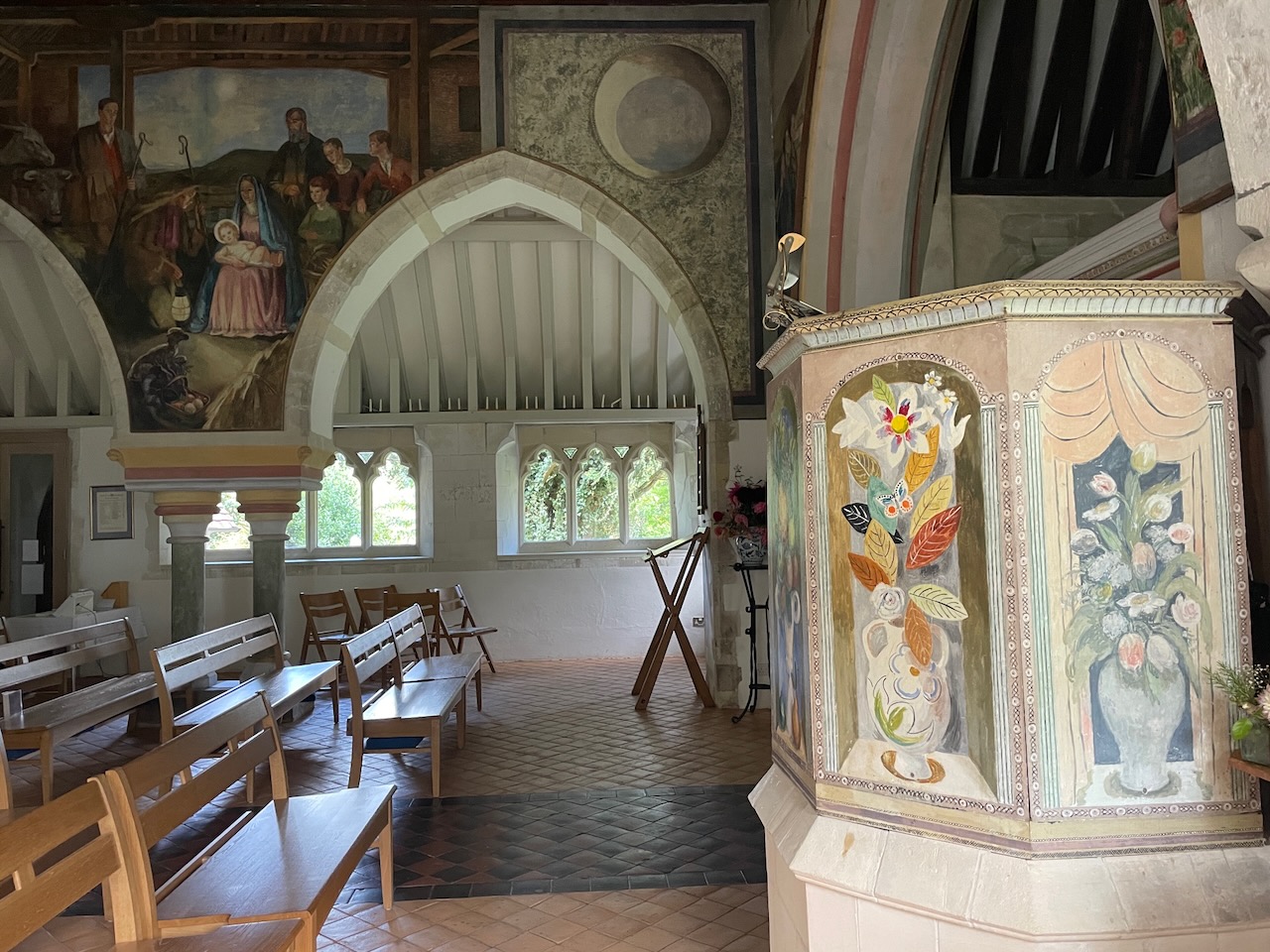
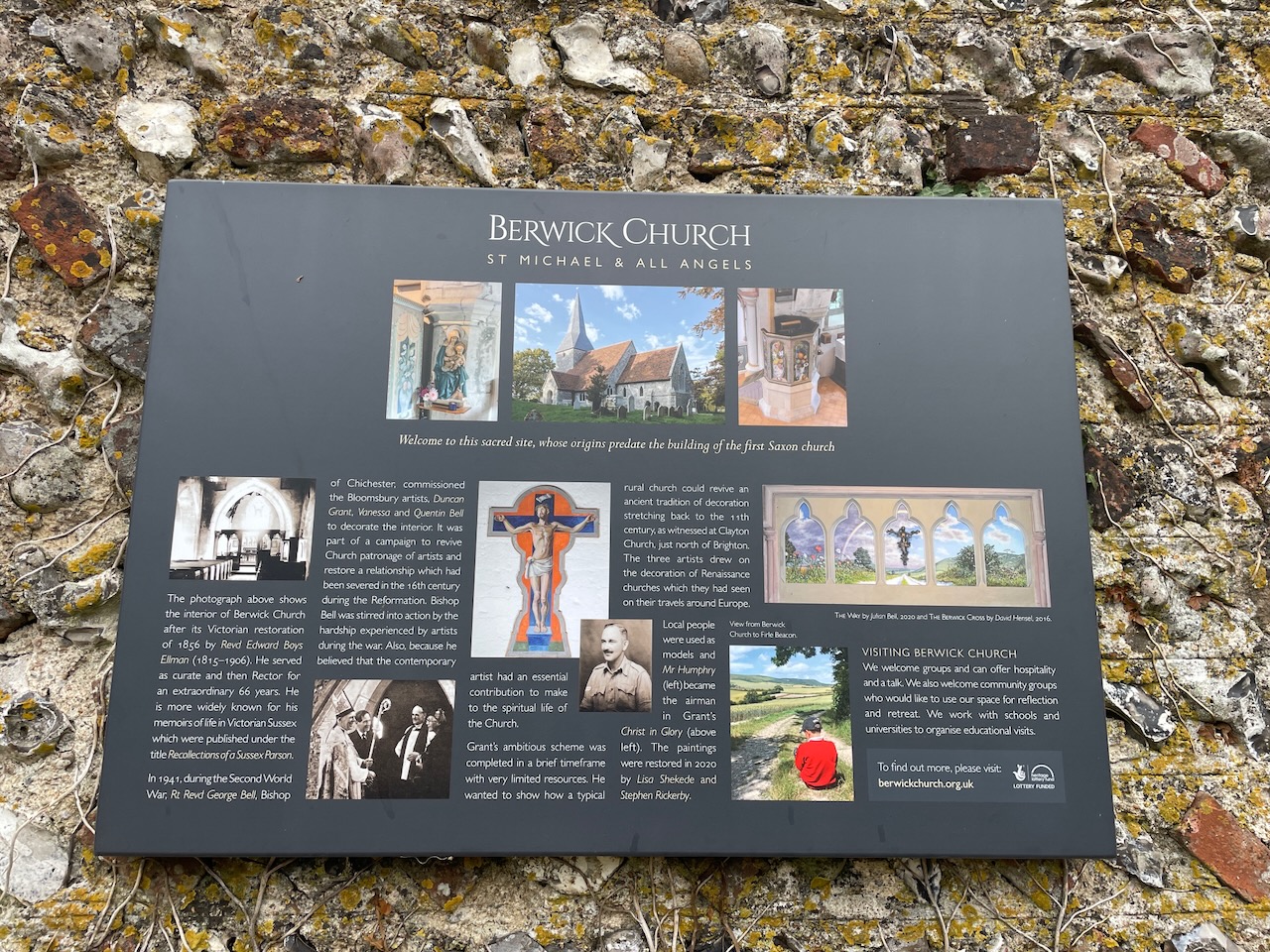
Now clearly on a quest for old yews, Philip guided me to my next stops: Wilmington yew, Long Man and Bewick church.
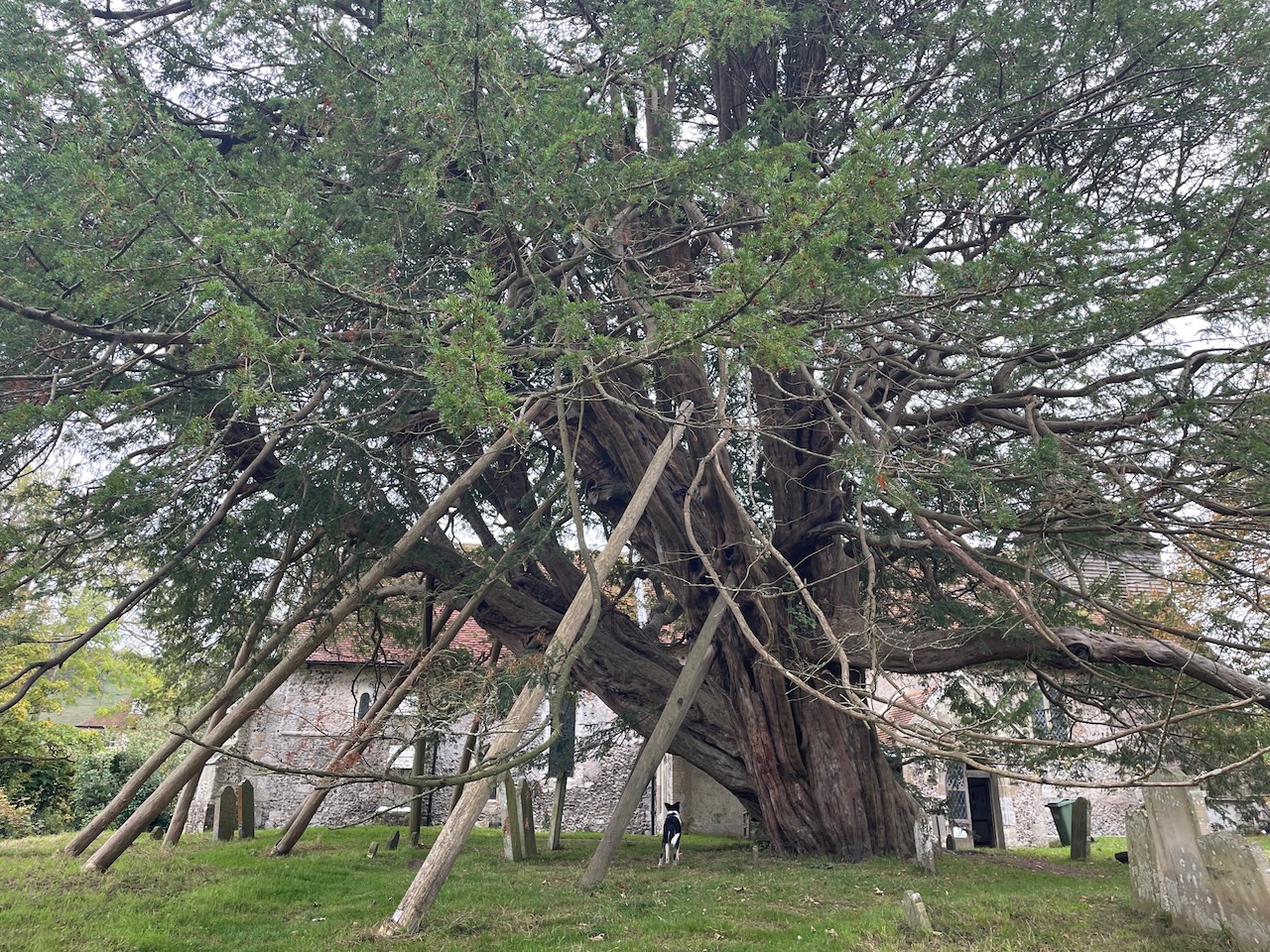
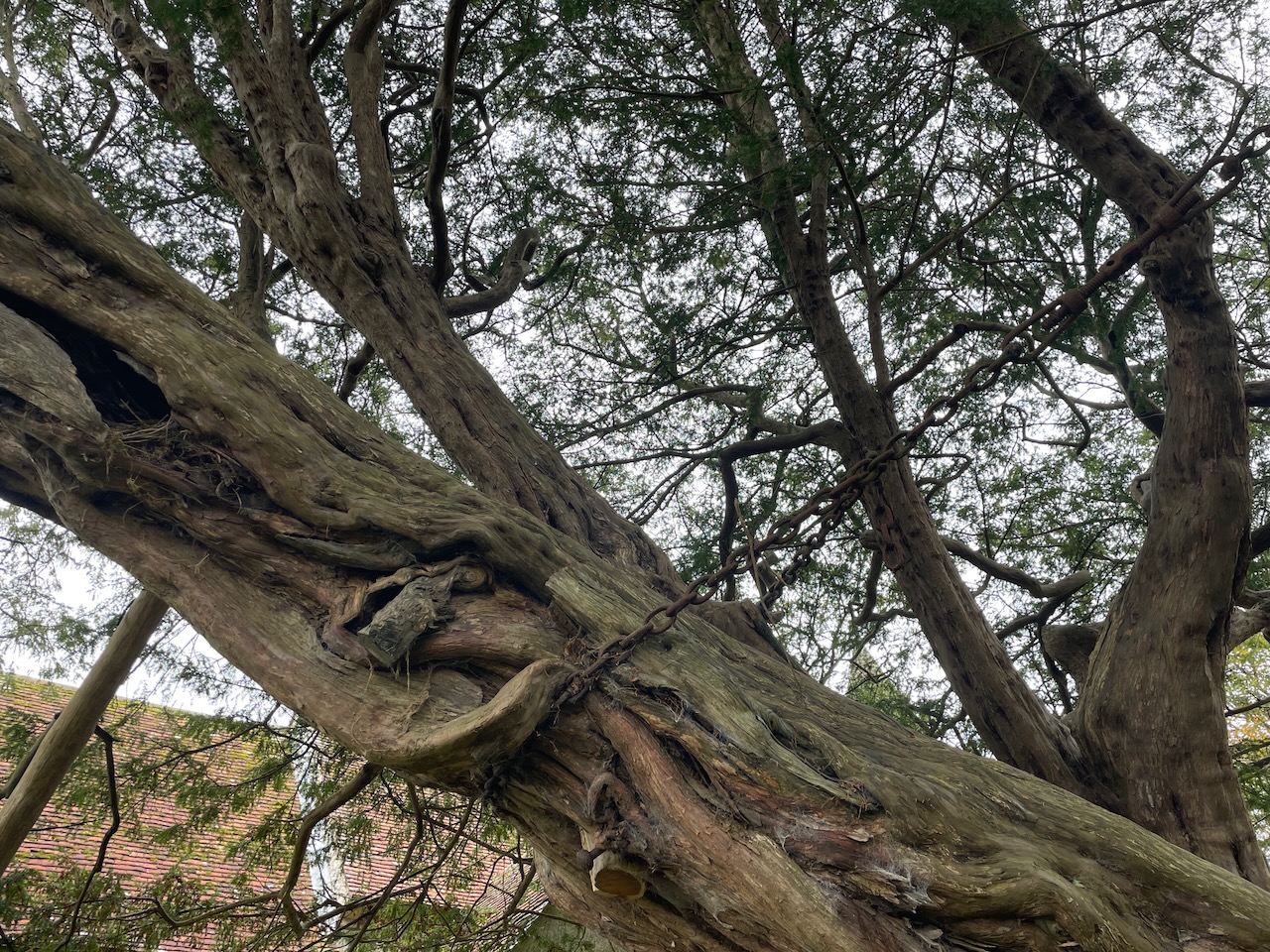
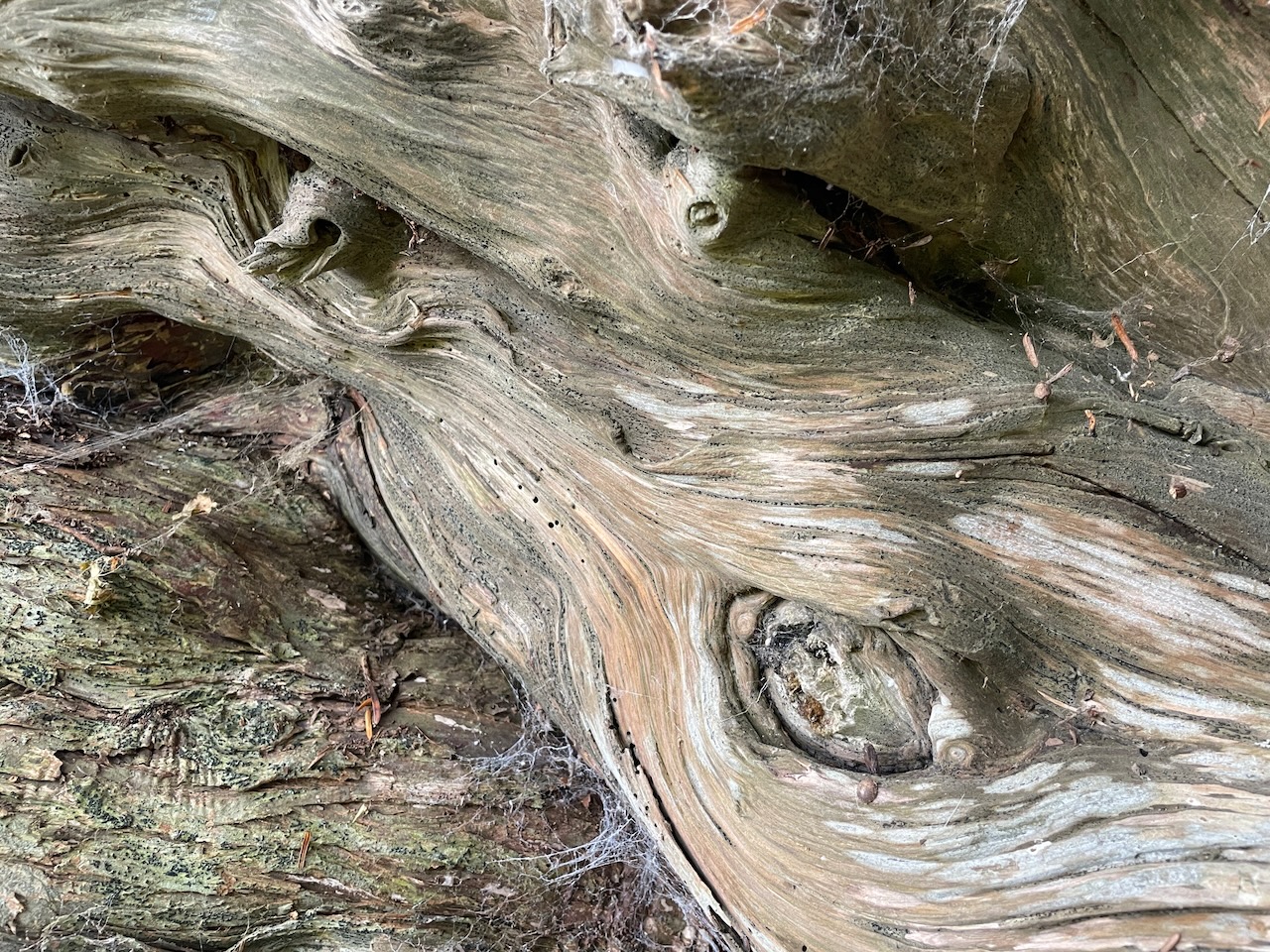
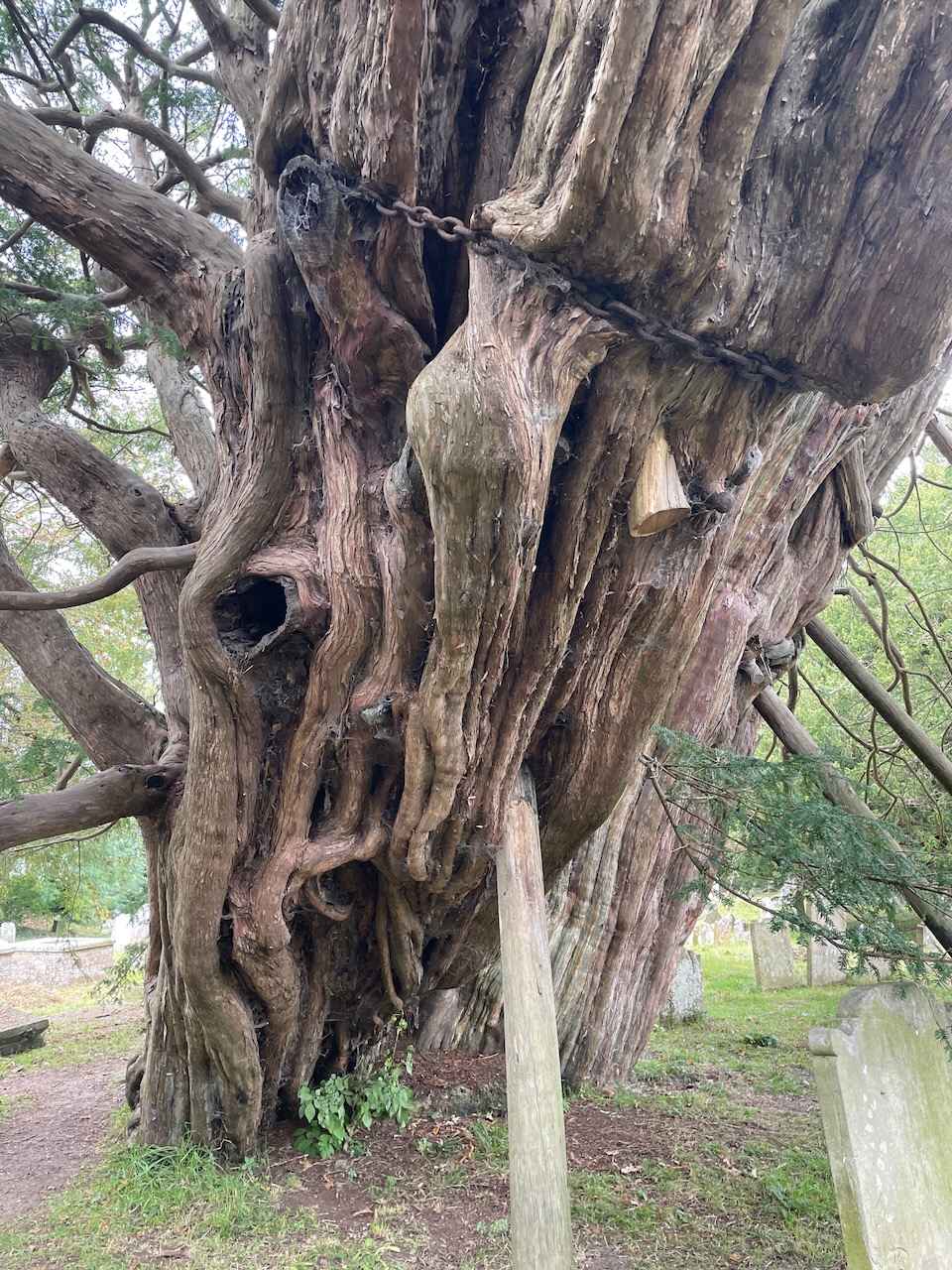
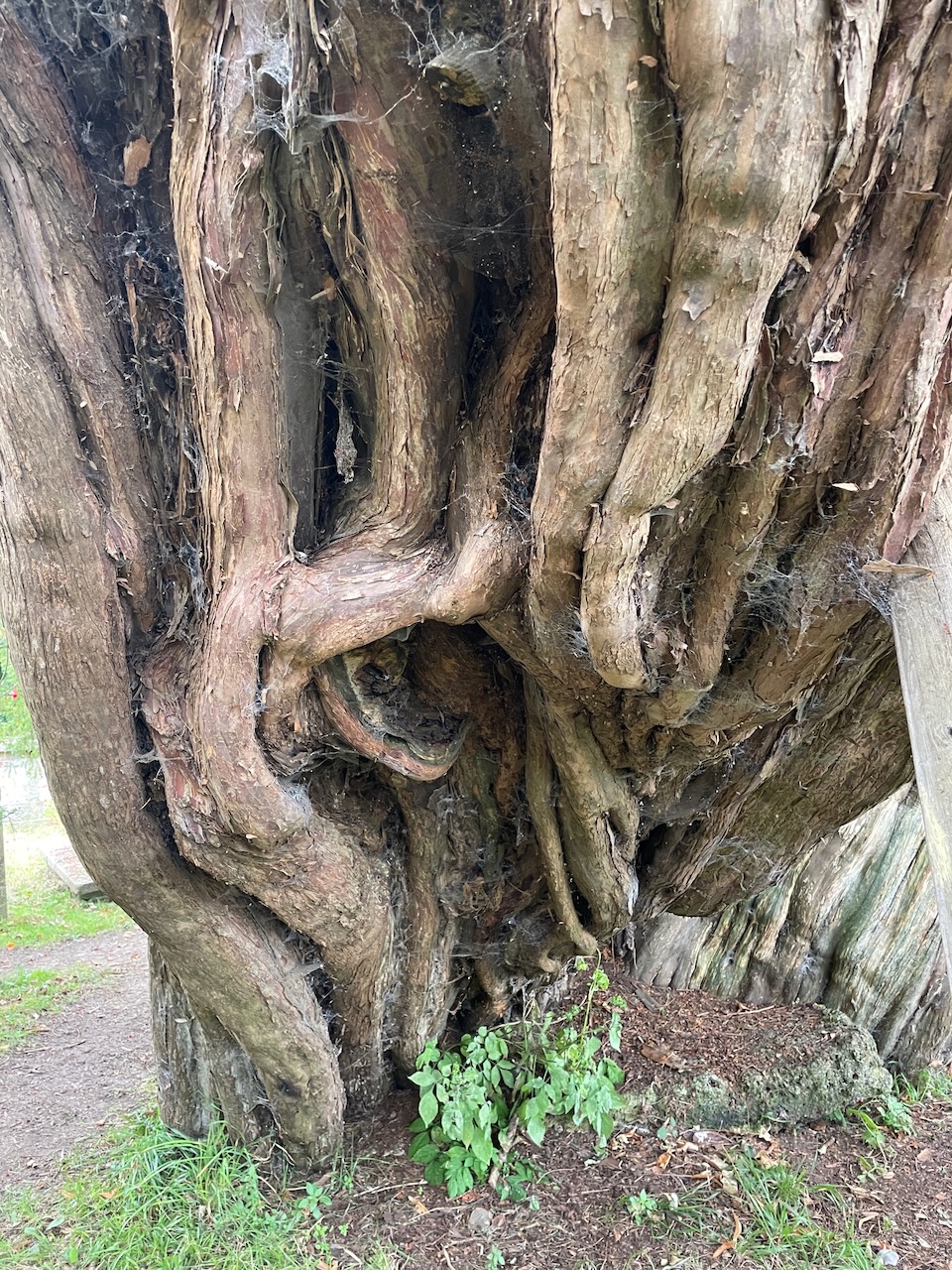
Wilmington Oak, its drama as much in the desire to support it, as in it’s great age and girth. Estaimated to be 1,800 years old. Blown by the prevailing west wind perhaps in its relative youth, it leans into the supports bequeathed to it over the century. It built its internal buttresses its surface hitch knots to support itself as it grew wood tonnage to the east and north. People, generations, wars, lovemaking came and went, sat under in wonder, laughter, tears. Perhaos one and engineer by instinct designed the first three to four supports. Another fastened a chain, perhaps known by the near by sea fairing chandler, with a more brutal nail. So the cambian grew, enveloped the support, grateful for it’s part and longer it could grow. In 2018 more were added. And I arrive here, 2025, in awe.