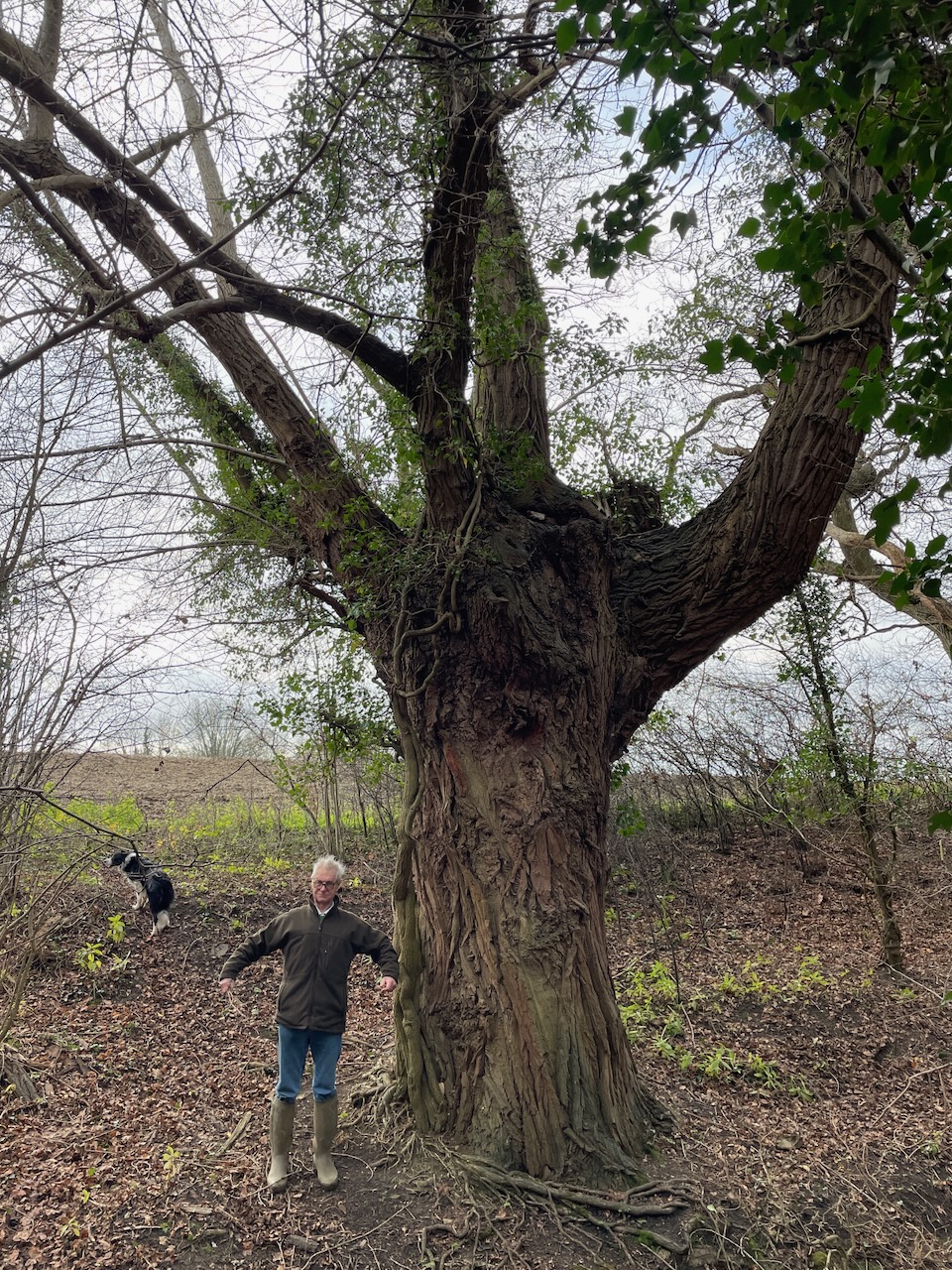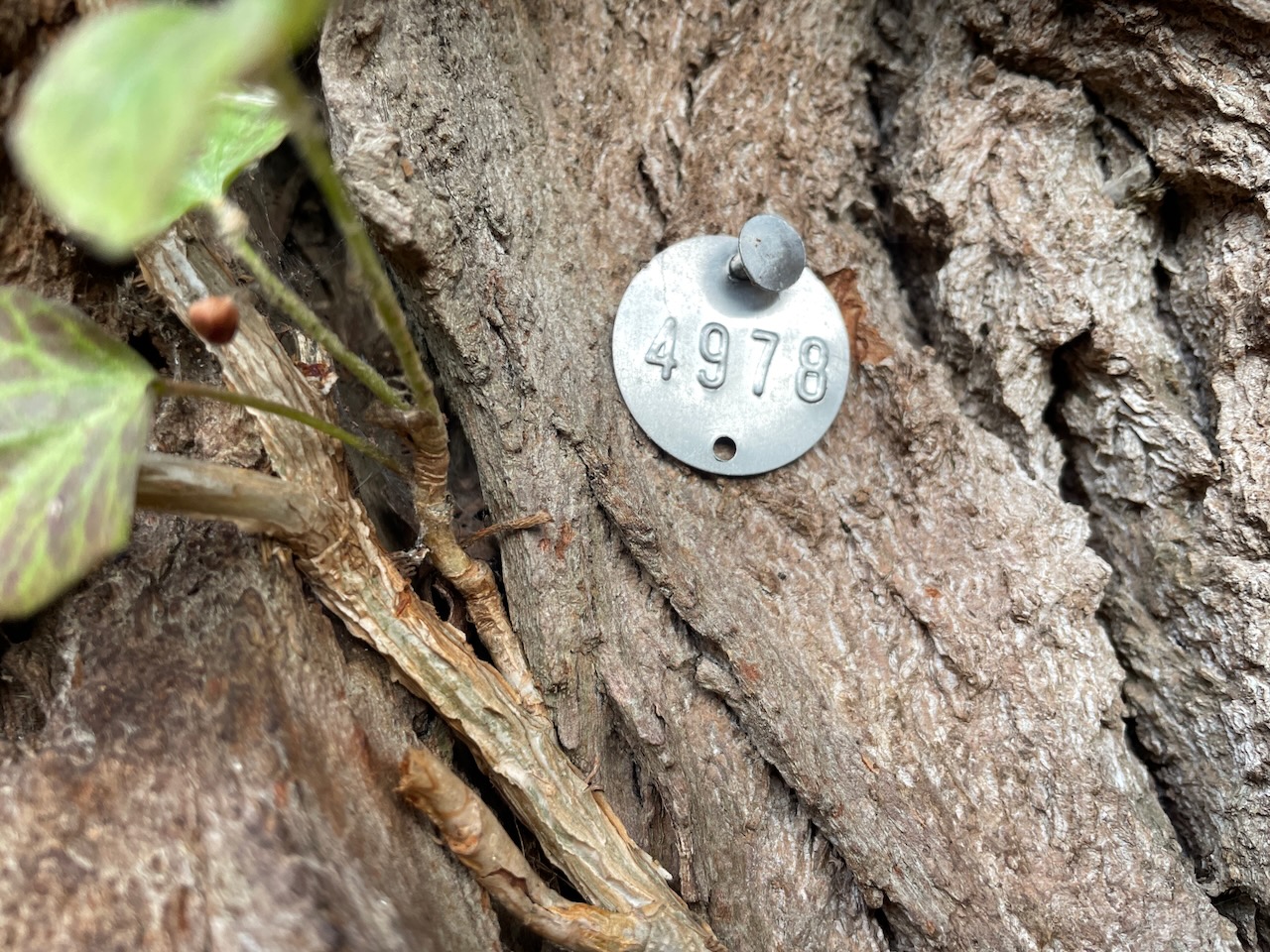
The World’s End Black Poplar is evidently a rare old pollard, remarkable because it is female and there were only 600 female recorded back in 2012 when my book ‘Heritage Trees’ (Jon Stokes) was written. This would be the 8th Heritage Tree from this book I am following. Staying at Maidens for Christmas it was tantalizingly close a mere 35 minutes away in Roydon.
Boxing day, Maidens Farm, Clive and I set out for Roydon, a village north of Harlow new town, through country side and towns such as Sawbridgeworth which astonished me with their strangeness to me – so little of this landmass I know. I am guessing that this land, now interrupted with Harlow, would have once been part of Epping forest, and runs into the Lee Valley, the valley which traditionally fed London with its water systems and canals and adjacent fertile land. I have walked some of it, and vaguely remember a desire to return one day. If not now, when?
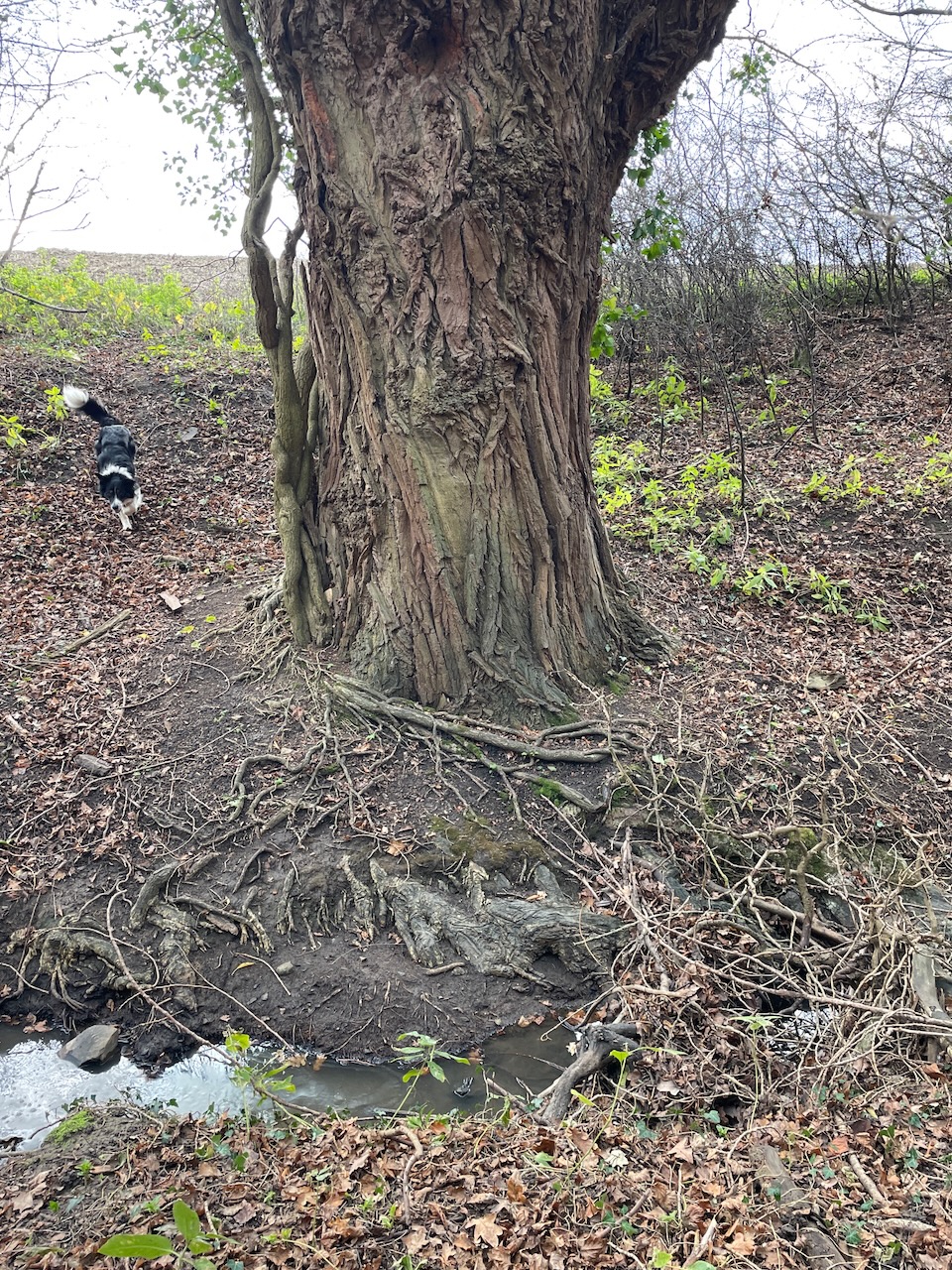
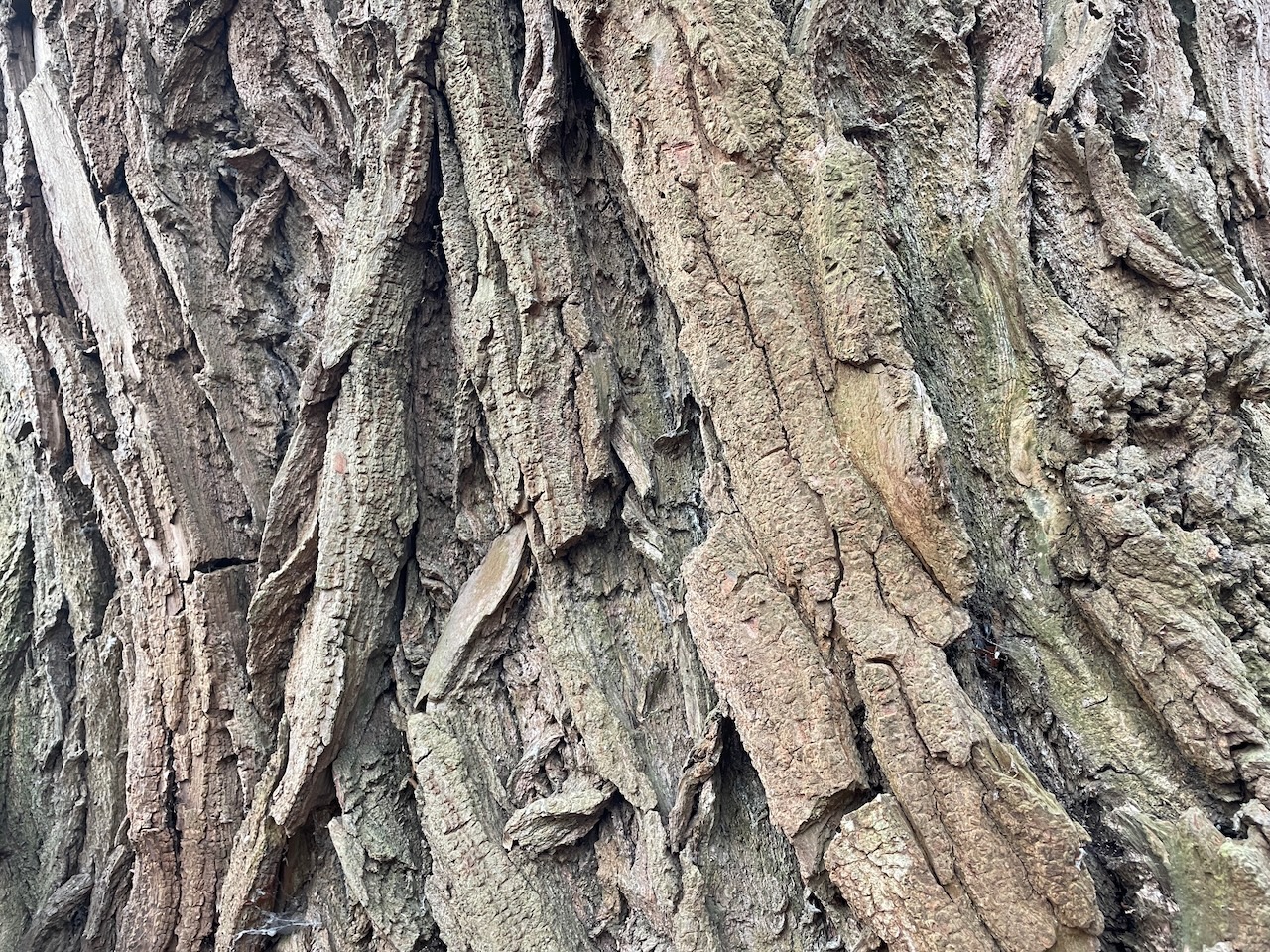
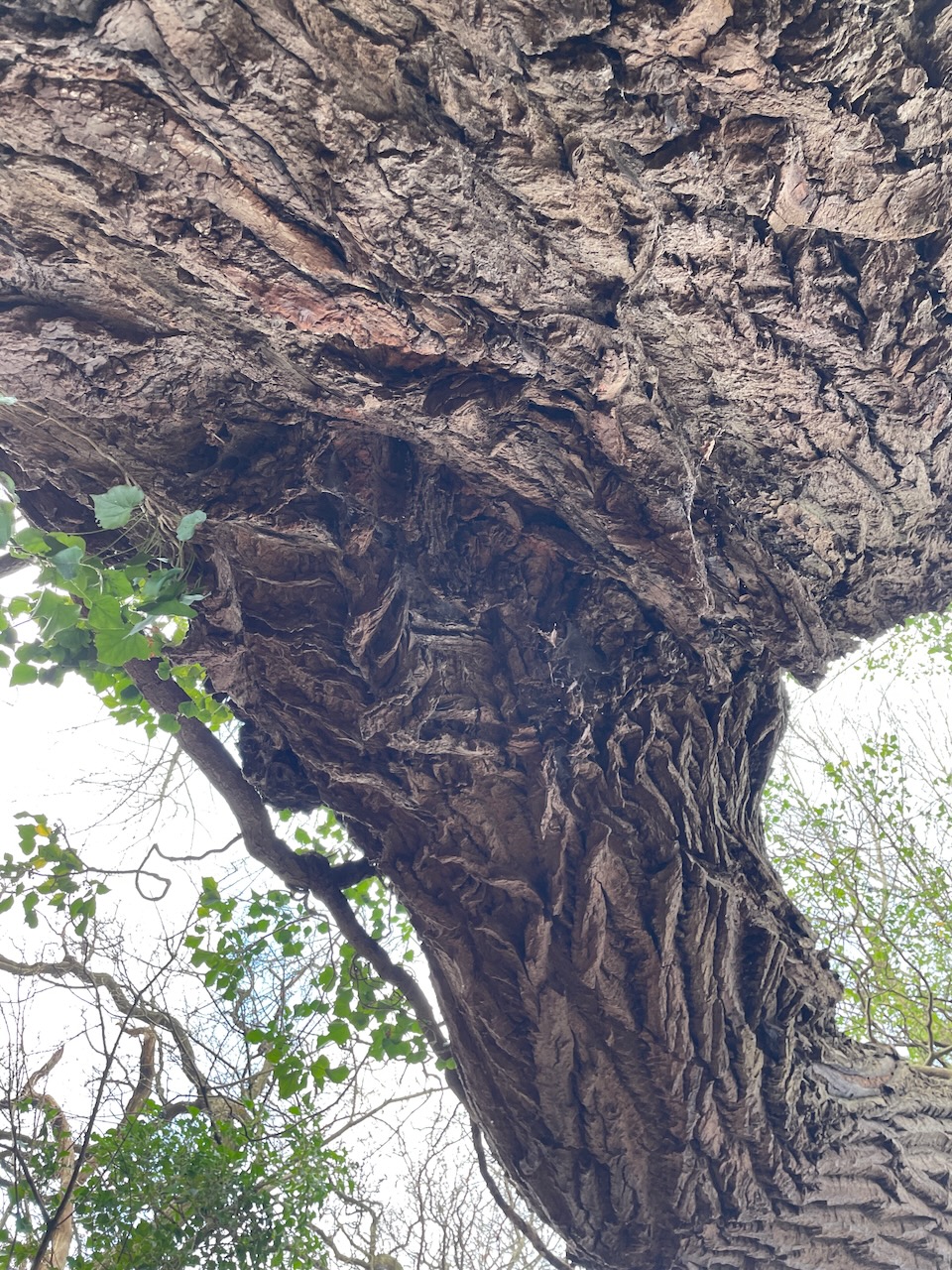
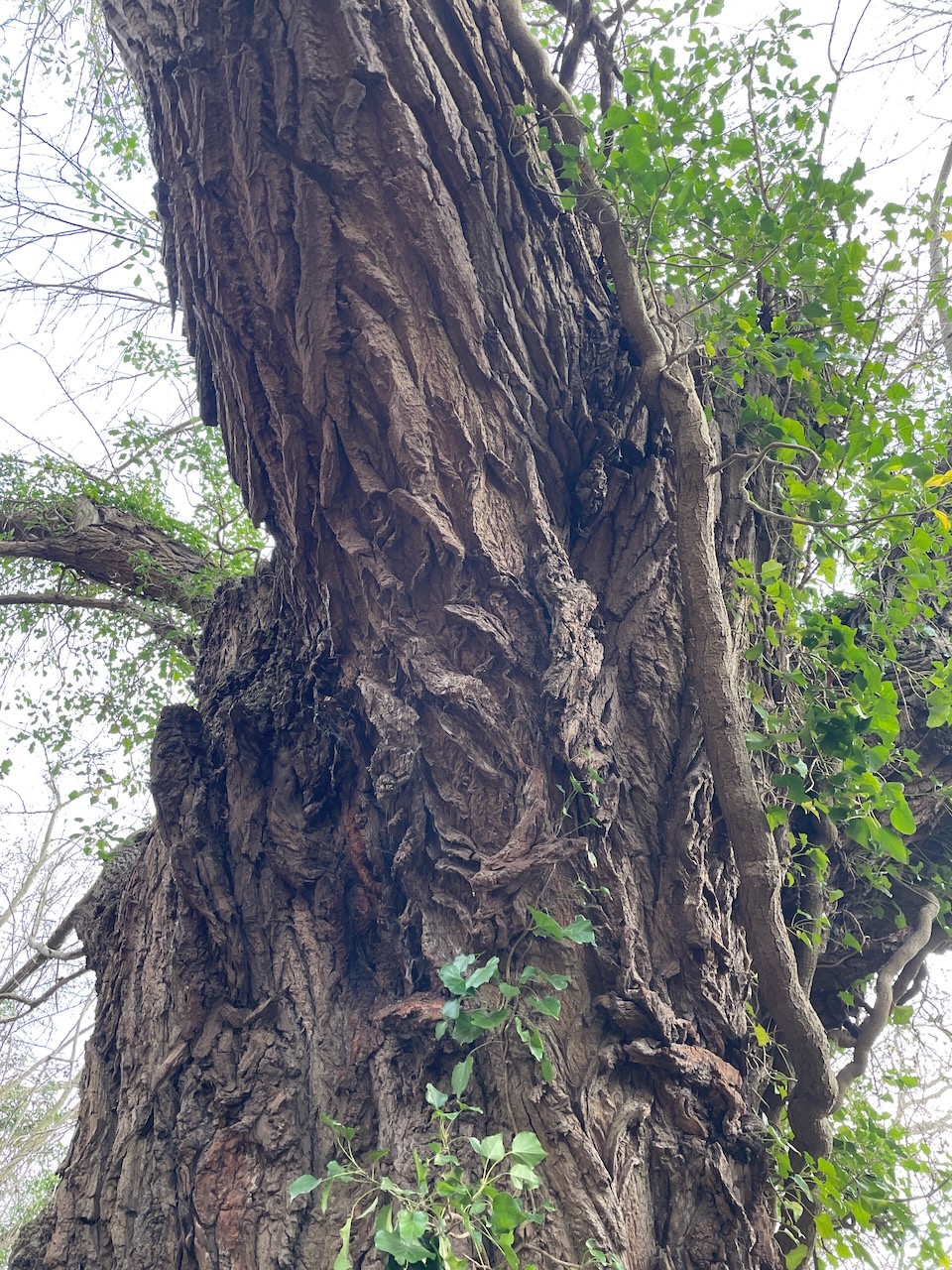
The wood itself is called World’s End, presumably because it was considered remote or at the edge of perhaps London or Epping civilization. We found the Poplar within a narrow strip of the remaining wood. It was almost indistinguishable, now naked, from the plenty of oaks around. We felt pleased to navigated exactly to it. It grows on the boarder of a stream which runs through the woods middle. A strong stem of ivy climbs up it, with roots searching out and benefiting from the water from the stream. Crossing the stream we got a more impressive visual of the old pollard. Strong deep bark fissures, folding where ancient branches may once have been, now healed over, a magnificent huge stem branching out from its side, it’s underarm a mass of bark cross hatching to secure the weight it carries.
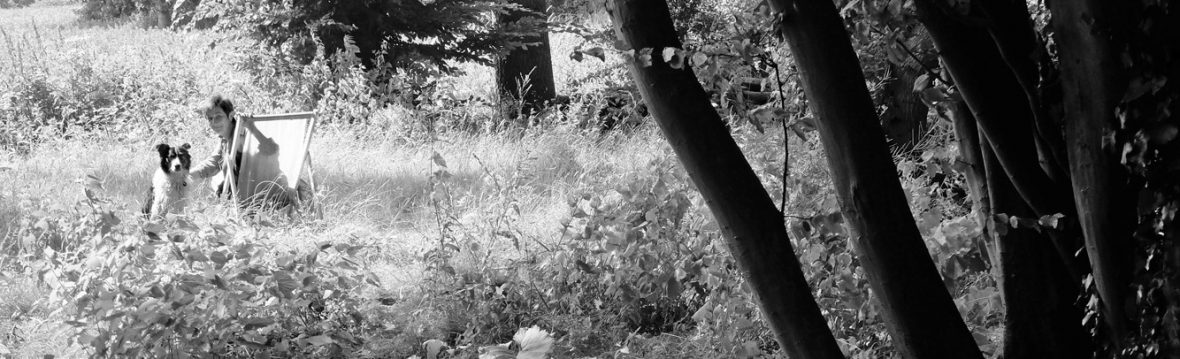
I did a brief sketch, while Clive found some cuttings from a near by seeded Black Poplar, which we will both try to grow.