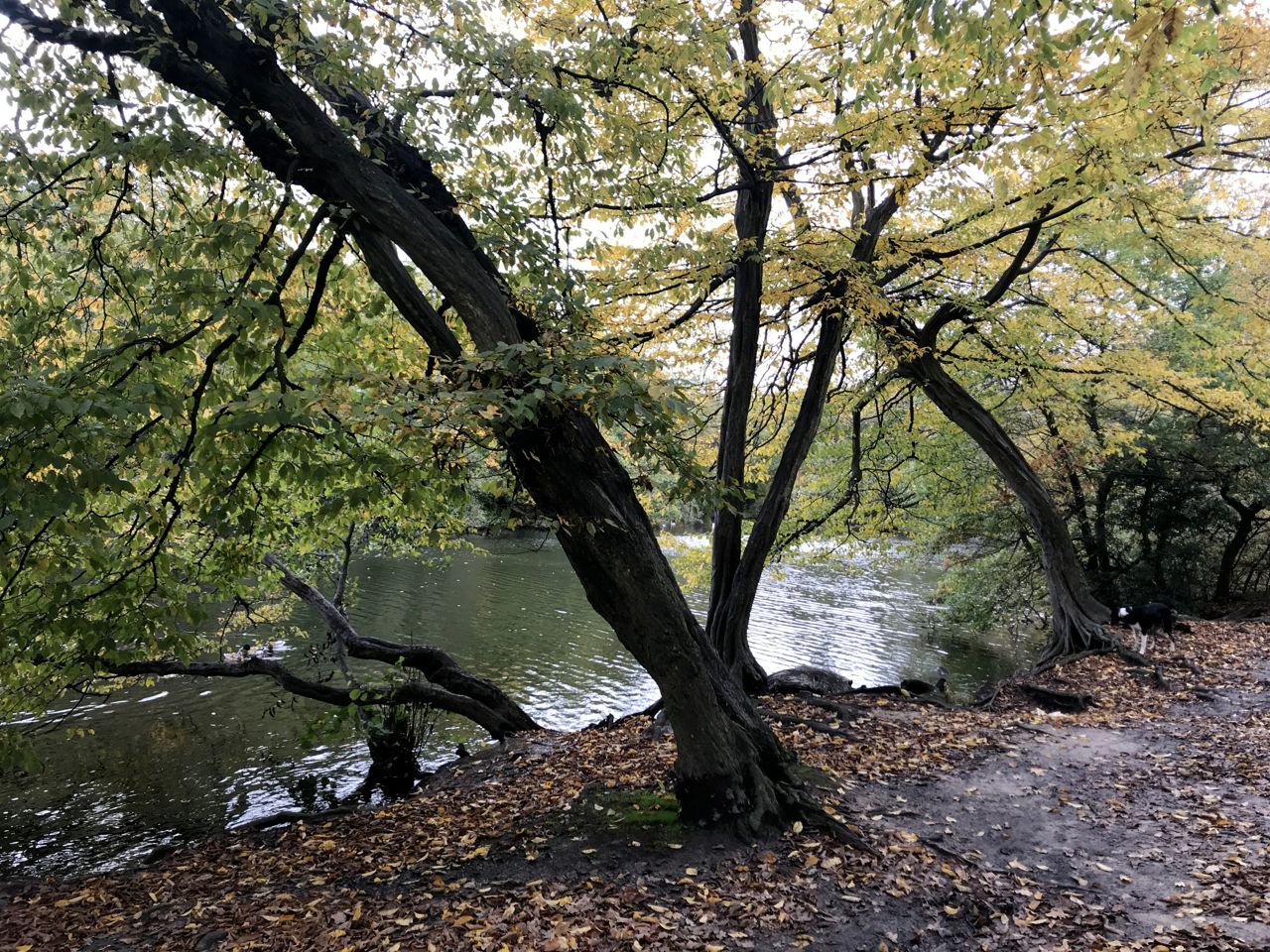
On a bucket list, and with the recent noticable deterioration of joints, if not now when gave an urgency. I’d returned to London to administer to a much improved Barry (double ‘ernia), and having spent all the first day in 3 zooms and far too long on computer screen, I was determined to walk out.
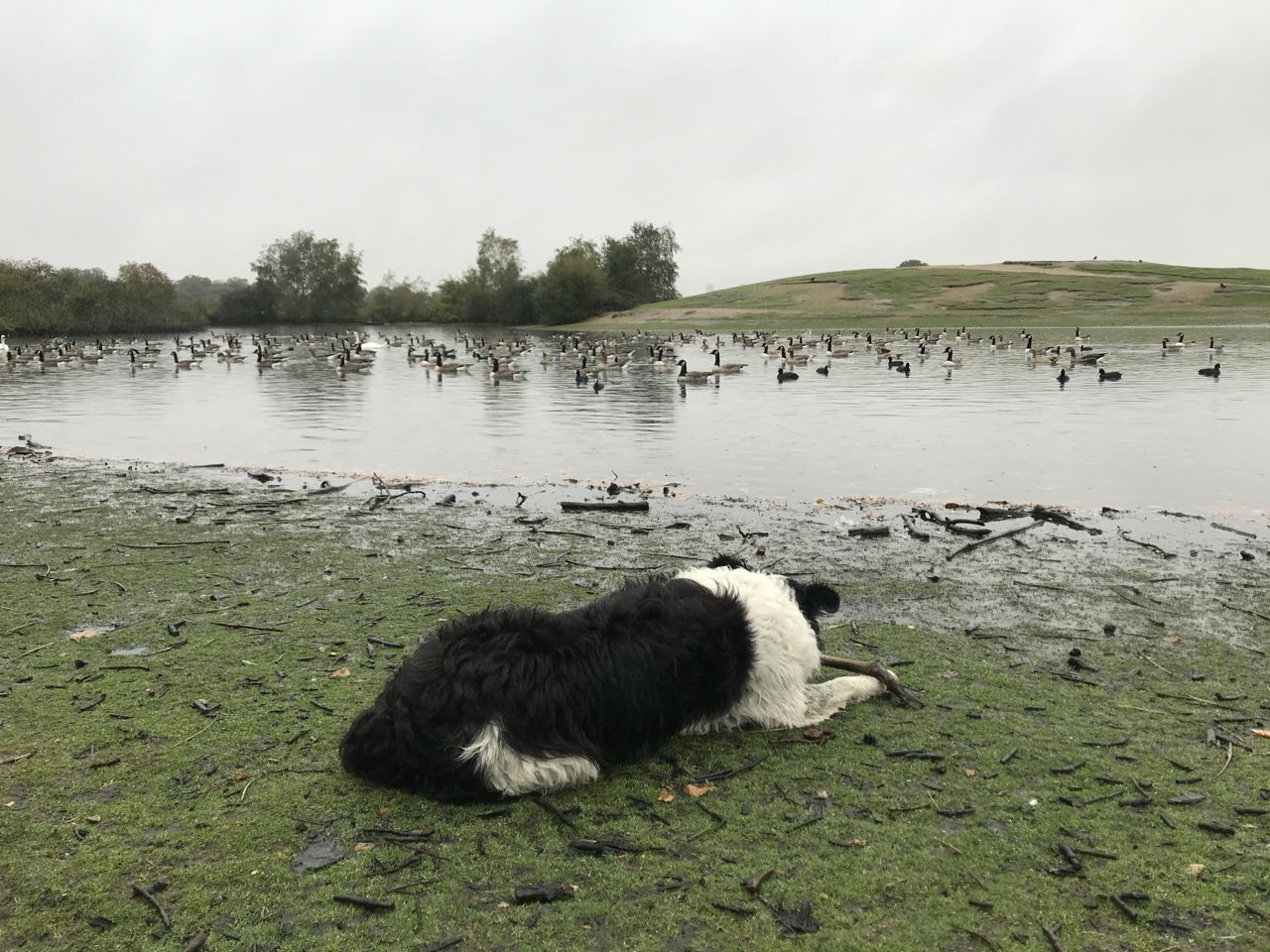
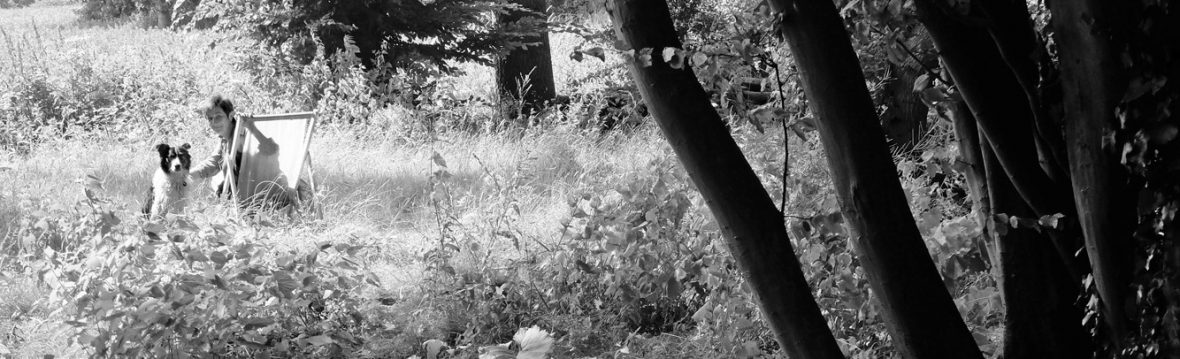
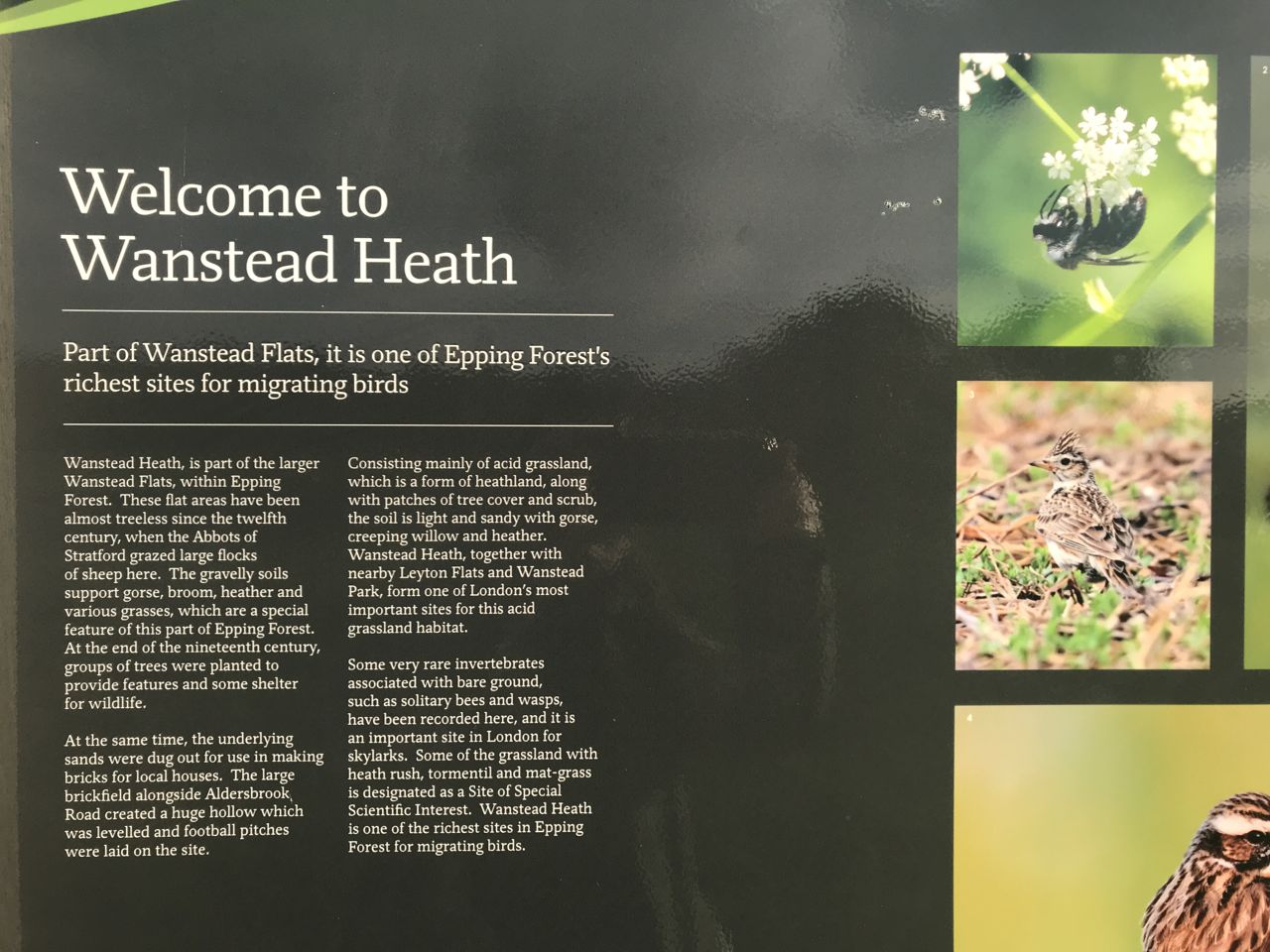
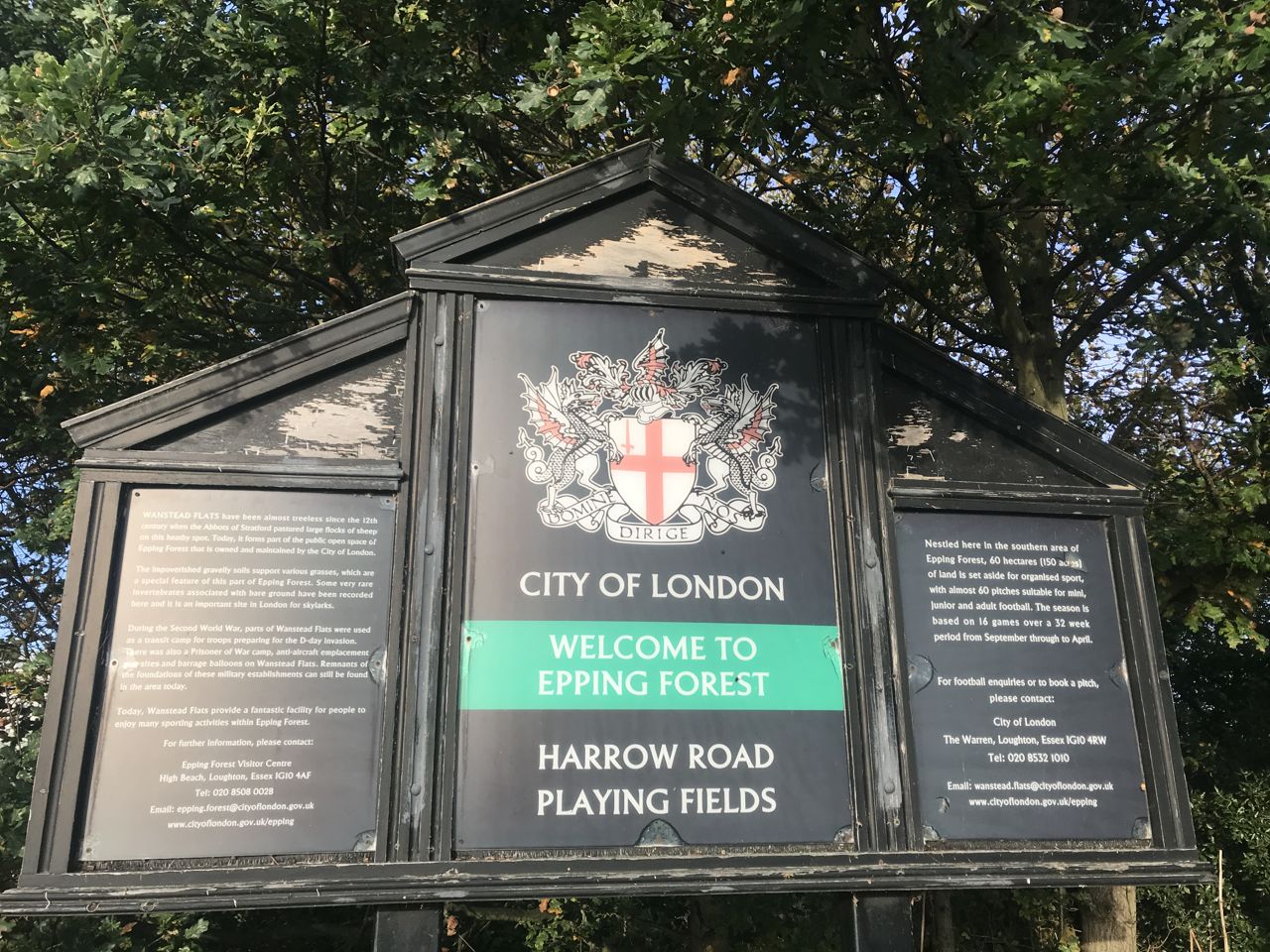
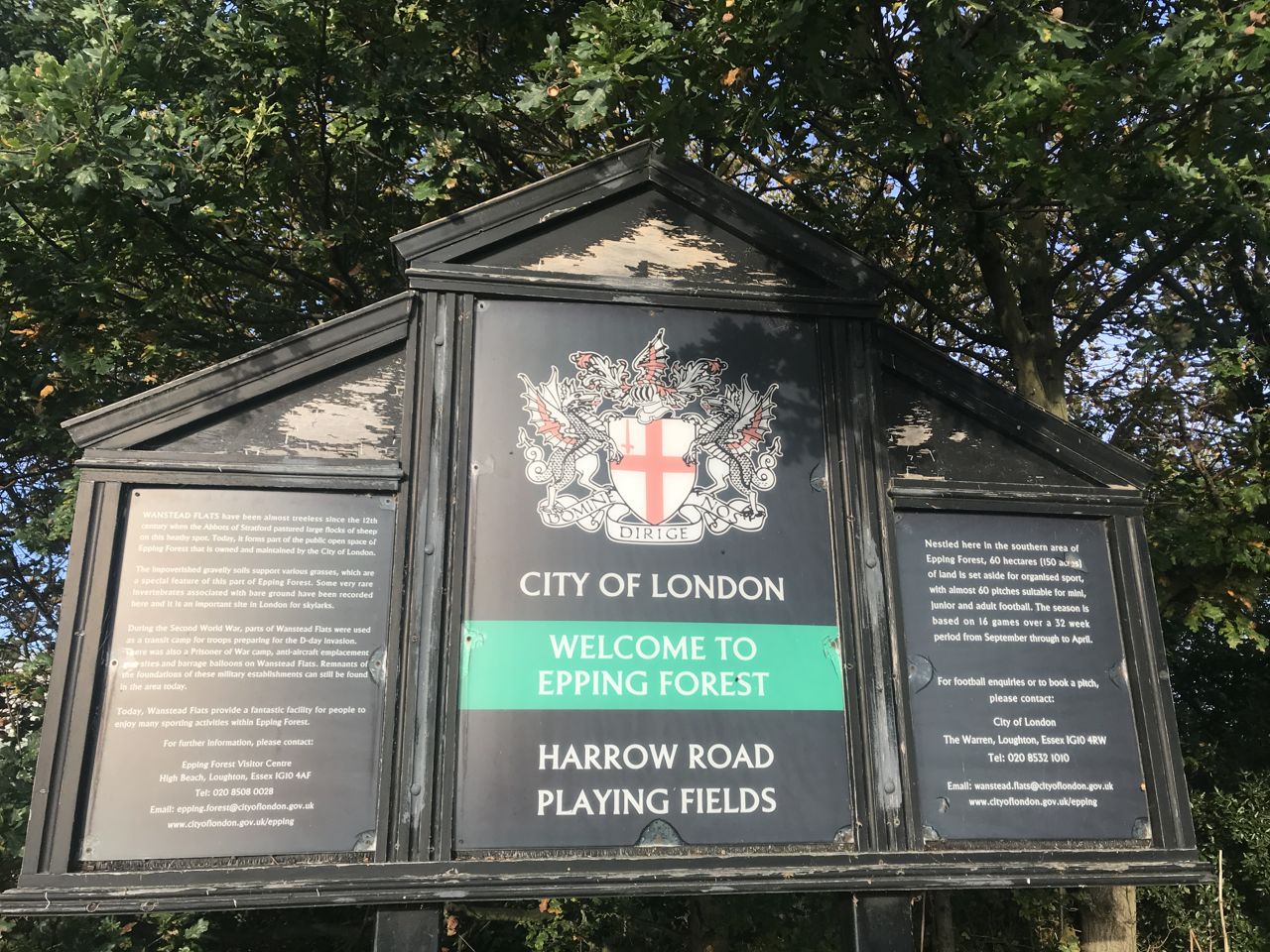
I could not have chosen a better day. The grey of yesterday (see photo above) left and blue skies backdroped the bronzing warm ochre yellow leaves of limes in lines along London streets. The sun shone. I looked out. Inhalled the scent of a morning bakery somewhere underneath some arches, birdsong, particularly crows sounded, a joy came into my heart. Starting at the familiar Wansted flats, after all these years I learned from a board observed for the first time, that these were always treeless and from the C12 century the lane was used for sheep grazing by the abbots of Stratford.
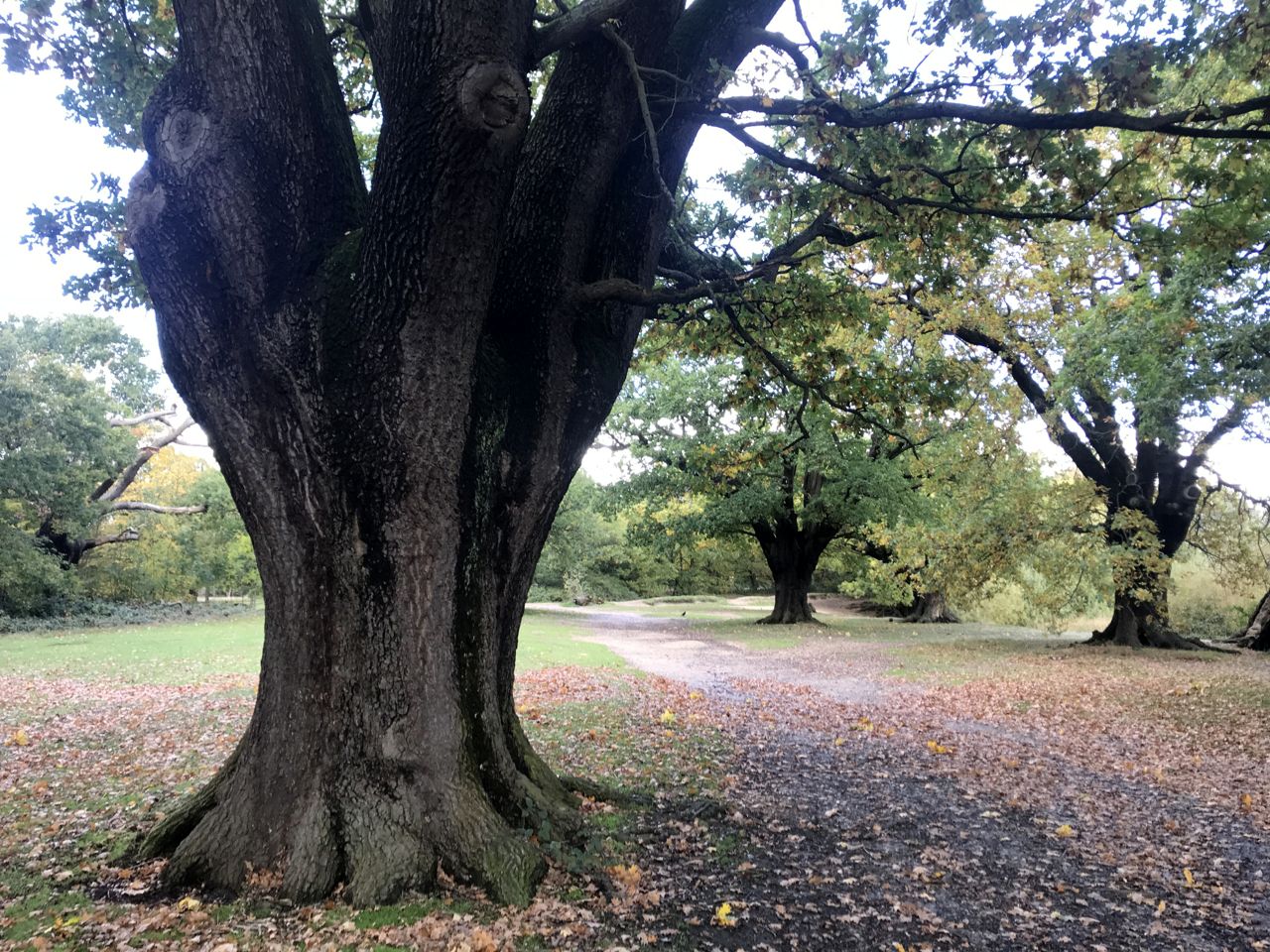
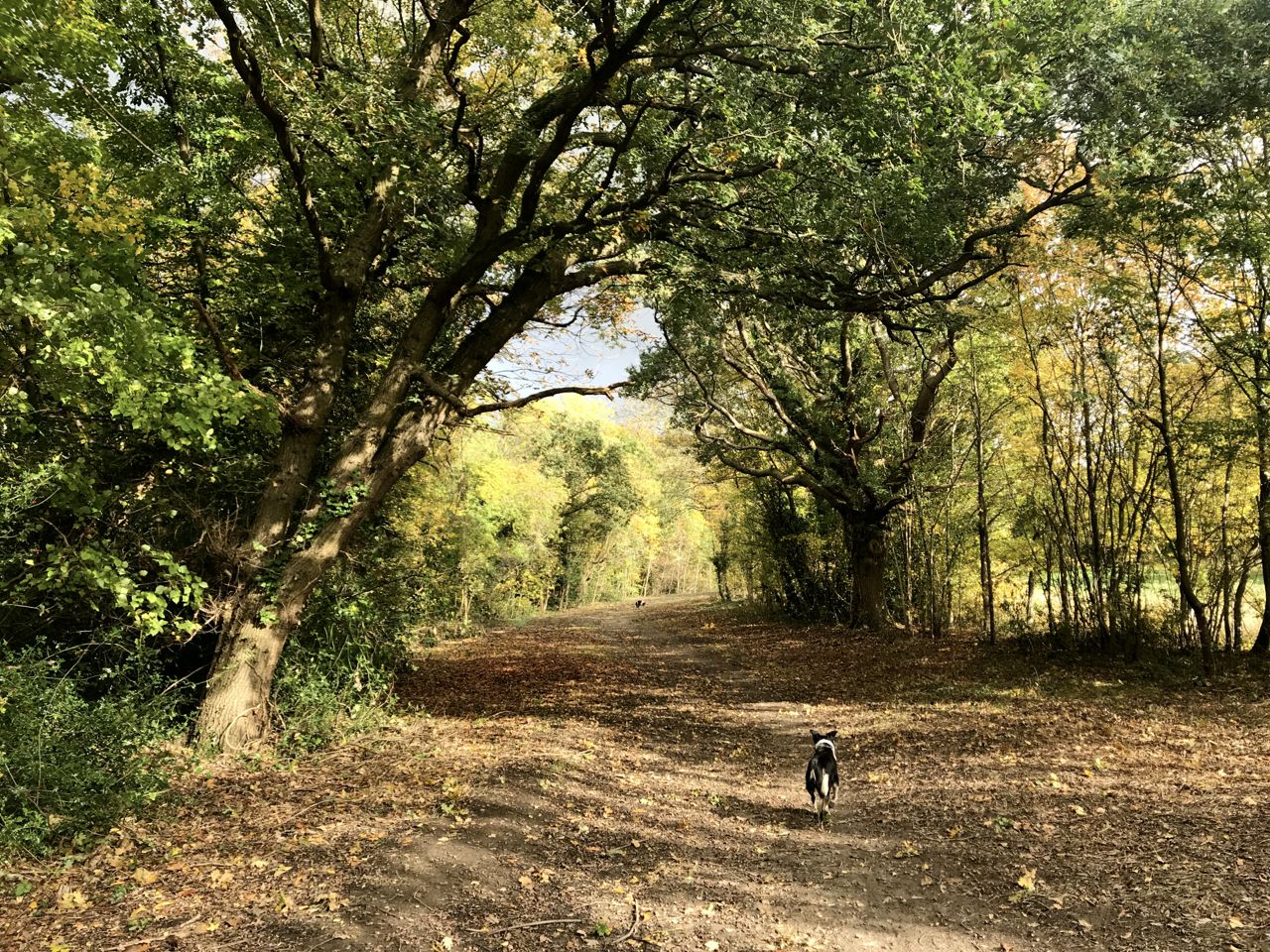
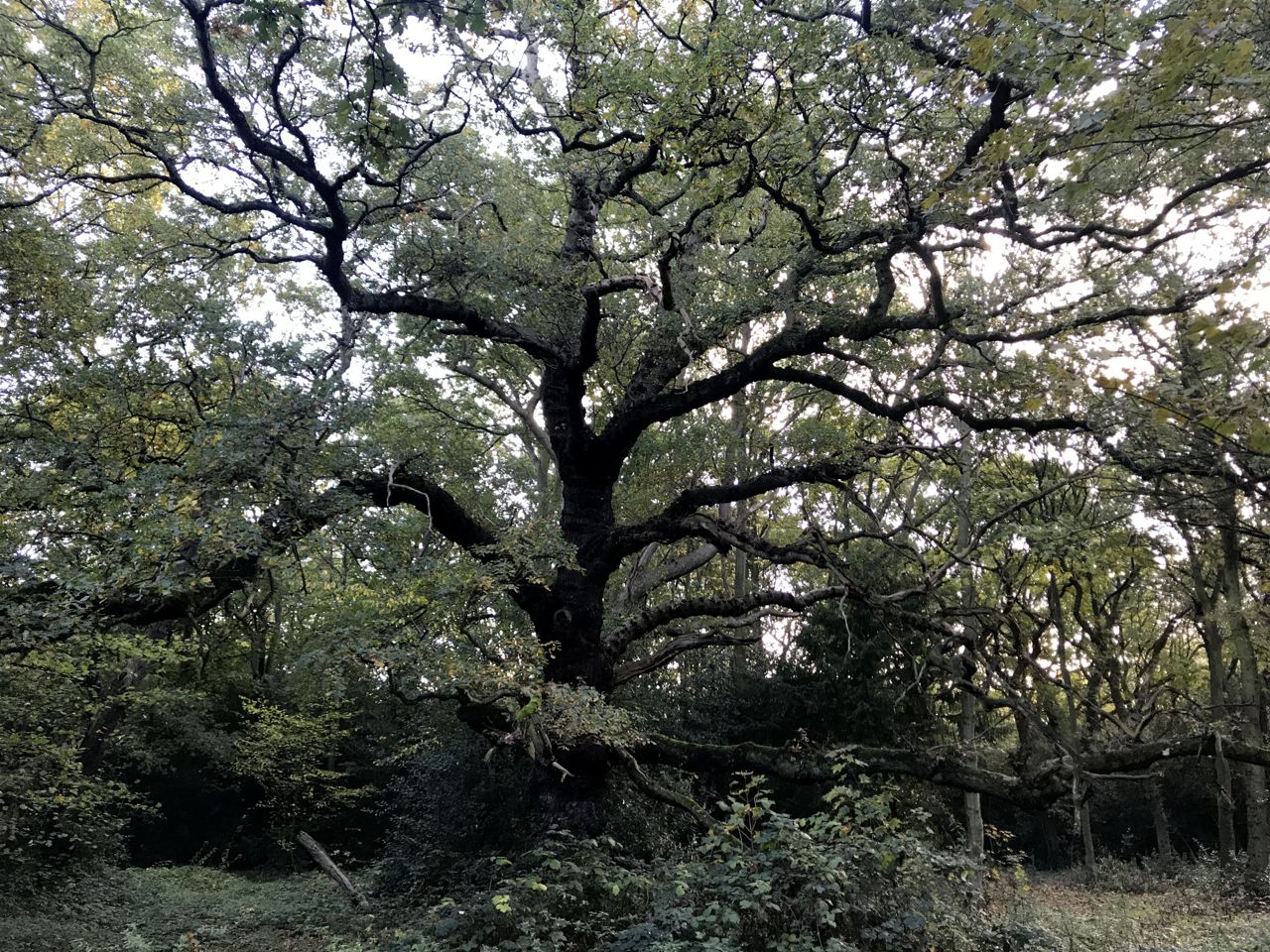
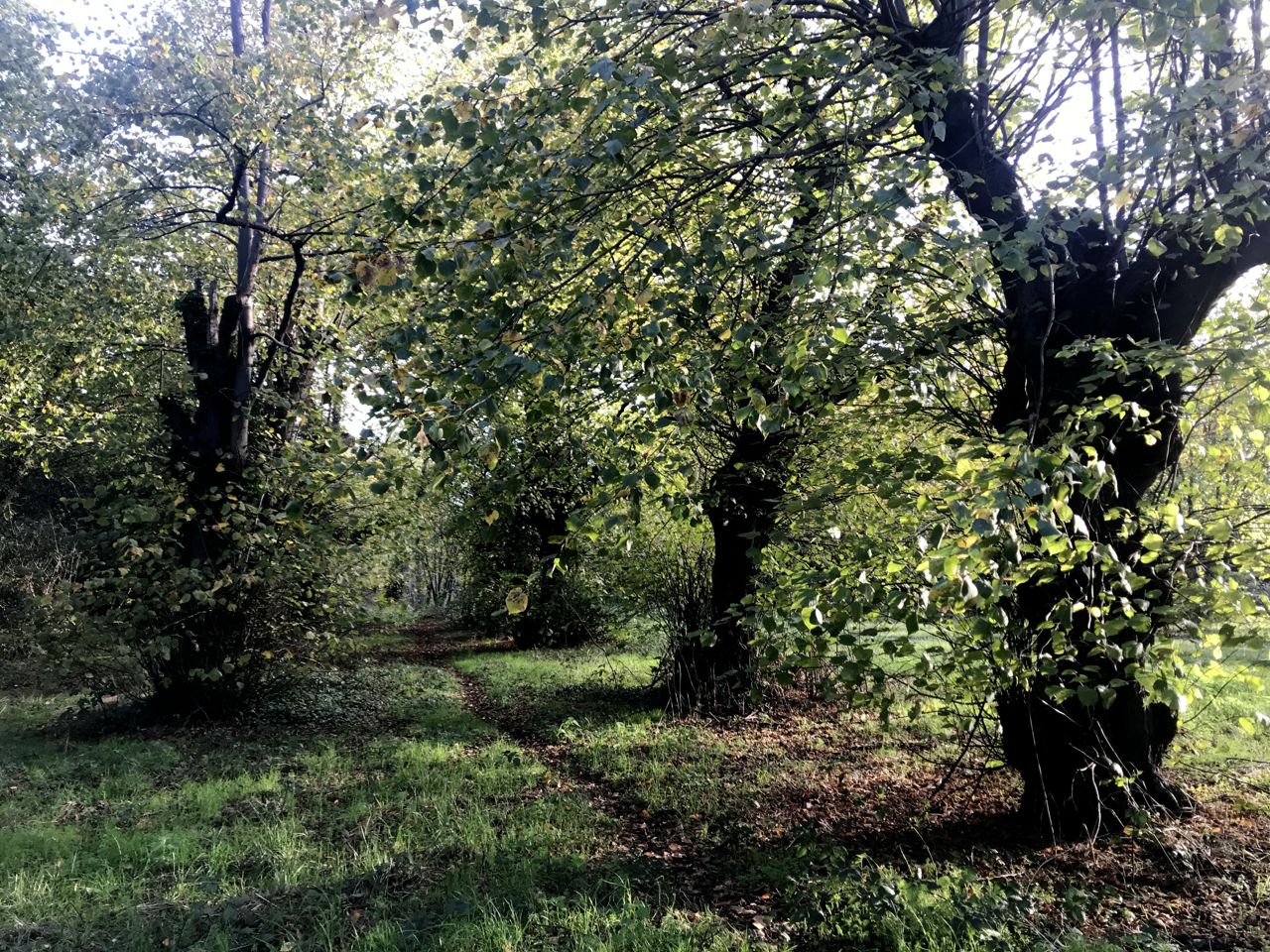
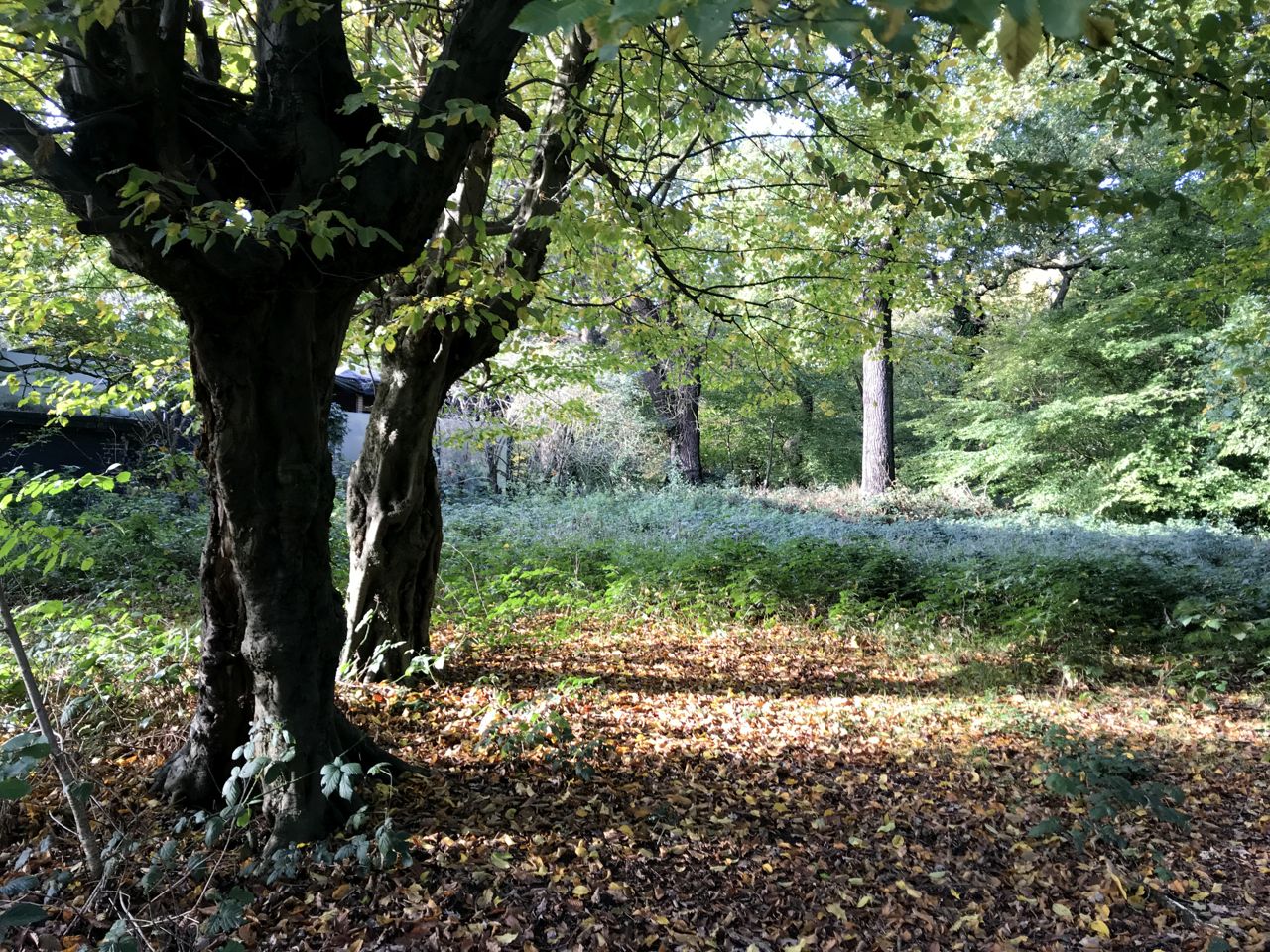
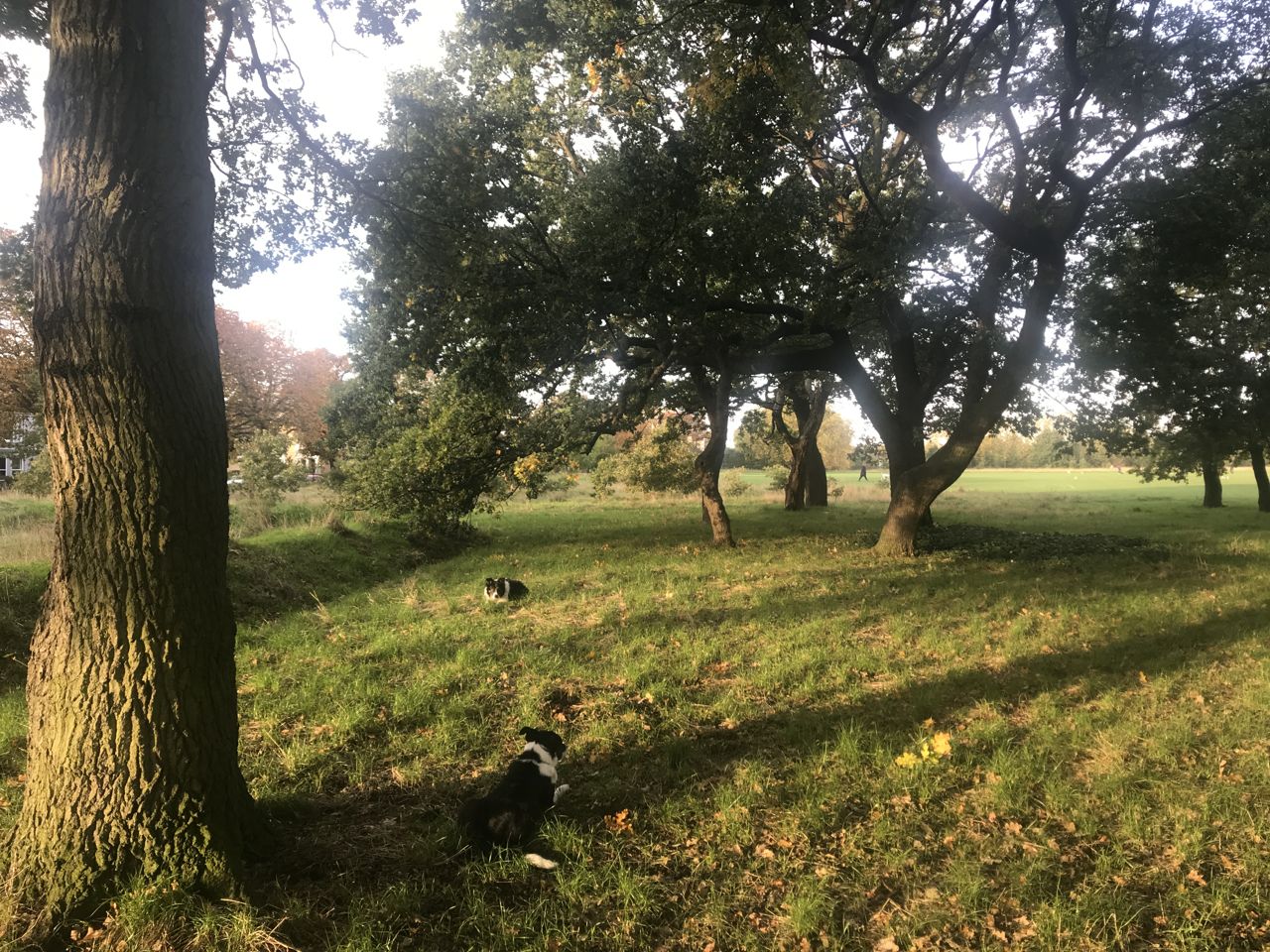
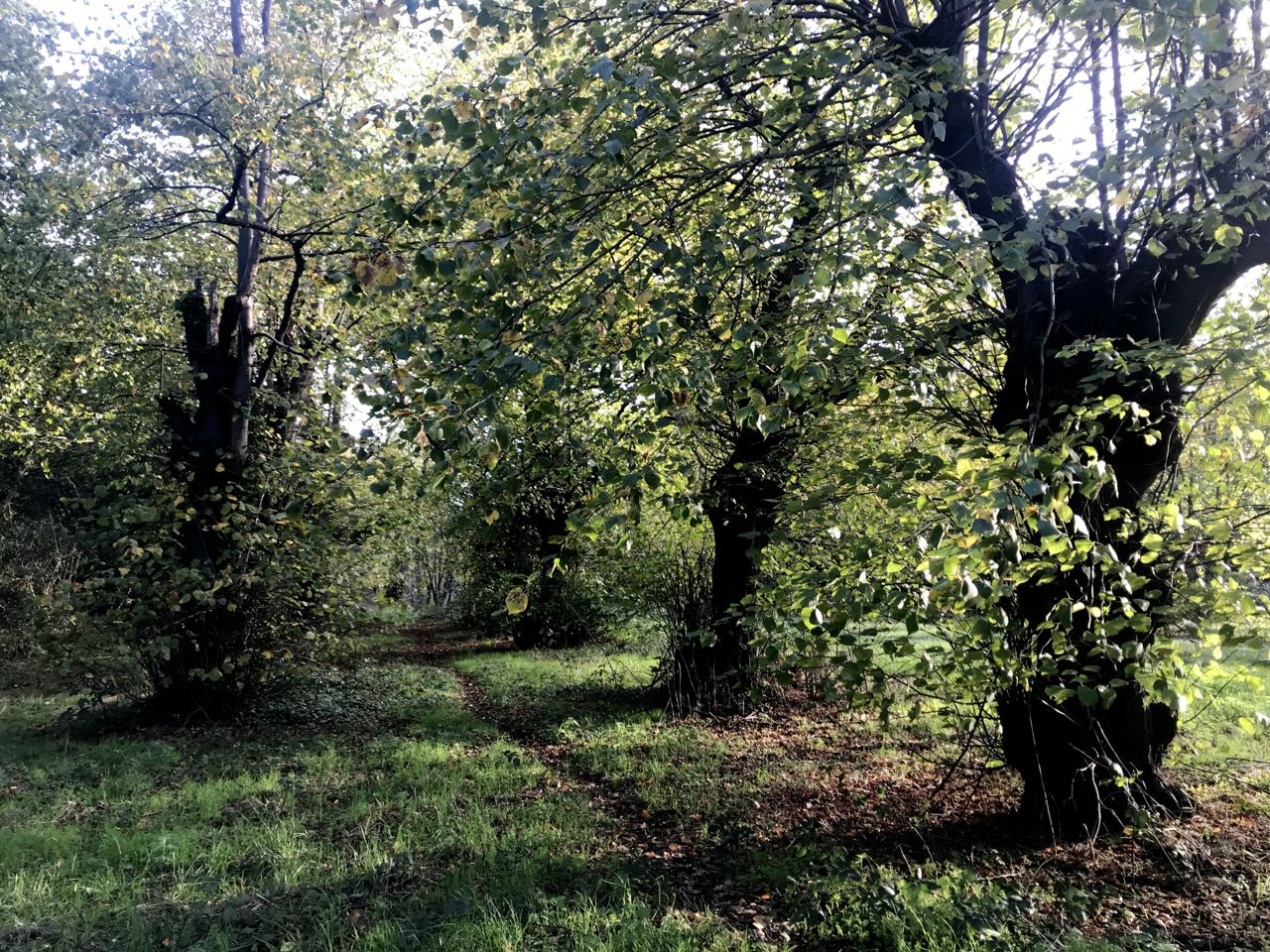
As soon as we didn’t turn right towards the water, the dogs knew we were on our adventure and they kept checking in for direction. We found our way easily into Bush wood (reccied reconnaissanced last time I was here), arriving behind the now familiar Quaker hall. Impressed again with the avenues of Limes, and generous oaks
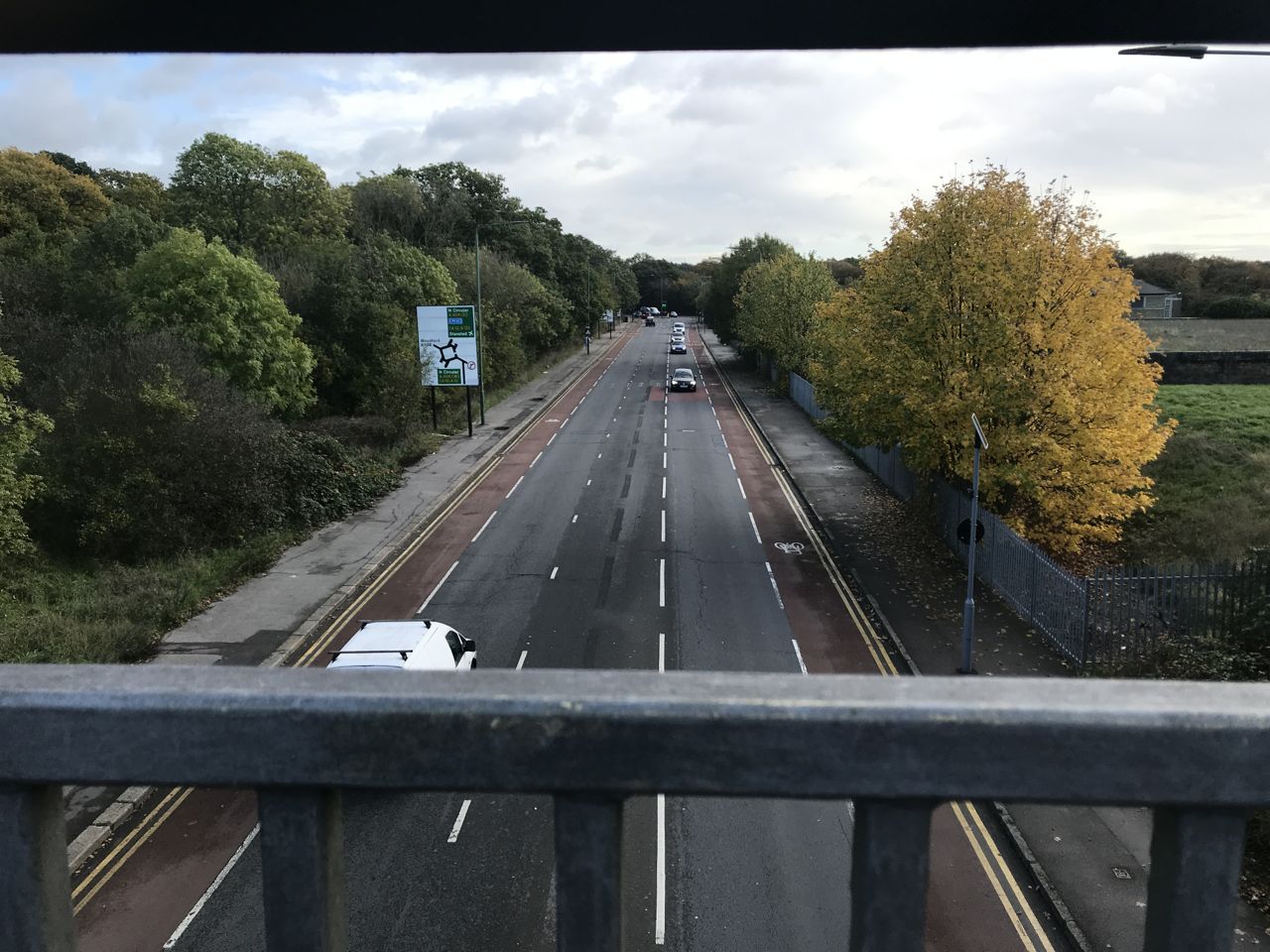
Coming out to the the gyratory system of Whipps cross, I saw a bicycle emerge from what must be an underpass, and I made my way to it. It was as we crossed the road, we came across the walking man.
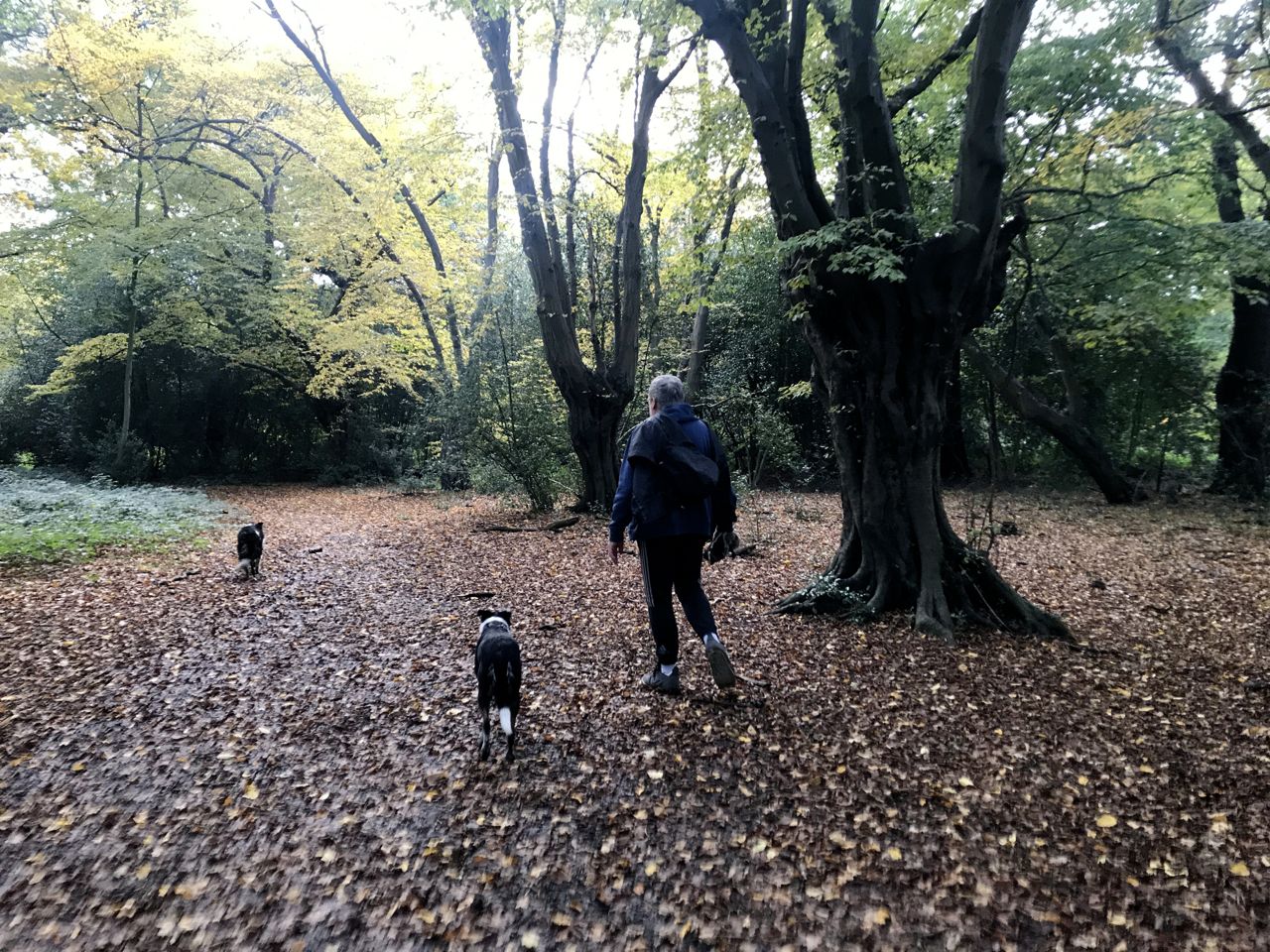
‘Excuse me, do you know the way to Chigwell’ he asked. I didn’t but showed him my phone map, which he showed little interest in, repeating he wanted to find the way to the edge of Epping forest. So am I, I said, with that mix of reserve and warmth, of wanting to walk alone to look out, but also not wanting to discourage the advent of a stranger. As we walked on at first he still kept stopping people, as he stopped me, to ask the way. But eventually he stopped, I noticed, as he began to trust my phone map and our direction. Our first conversation was about geography, how he preferred the diversity of the East End to the stuffiness of middle class South London.
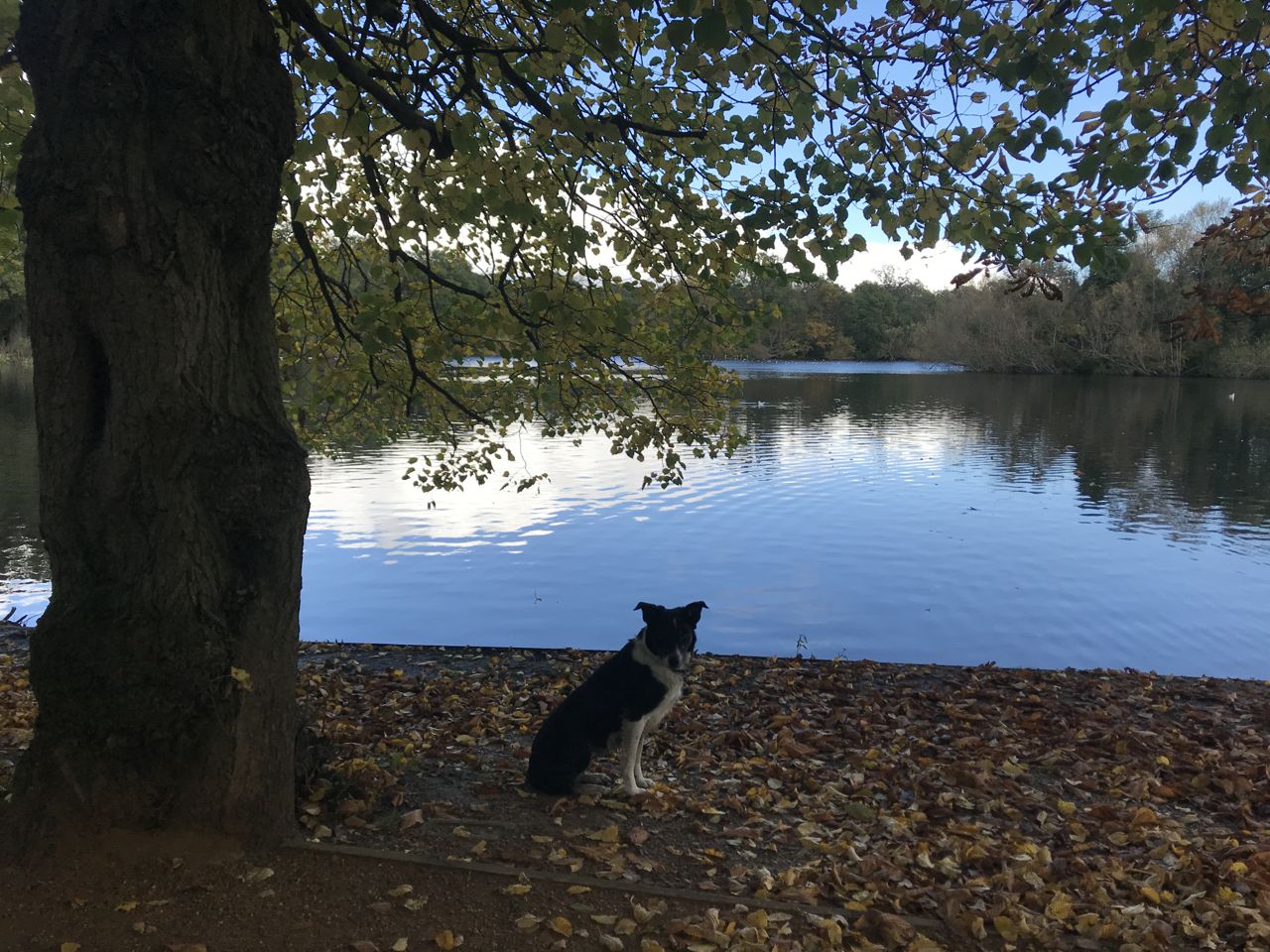
At Hollow Lakes (where Margarete used to swim, where there was once a Lido, where recently a murdered body was stashed) I thought we’d gone our separate ways, as Kali got hocked into a ball game and I had to extracate him. The walker, I assumed, had continued on ahead. But later he caught up with me.
‘I’m getting myself fit’ he often said. It was not until we crossed the North Circular, I found the story behind this which explained the atmosphere around this man. Meanwhile we discovered we were exactly the same age, both born in 1957, and, more pointedly, recently suffered the same pulmonary embolism. Only his had been more life threatening. It had been provoked by a terrible stress, from not only loosing all his money (he’d bought some land in the Caribbean, but it was a scam) but loosing trust in the system (the judges were as corrupt as the sharks). He’d collapsed, was hospitalised, and was paralyzed for months. That was in 2018. Today he’s walking up to 20k a day, and had spent much of this pandemic in the outside, in the woods.
‘People don’t realise how the trees heal. They give out oxygen, they give us air’, he said. ‘Its the 3rd thing – physically fit, healthy eating and FRESH AIR’. Starting life as a brick layer, then builder, he was always fit, then in his 20’s he took up cycling which gave him through his life an athletic fitness. It was not until the end, we exchanged our names. His was Brenden. Irish, he said. He came from a Irish family of 6 brothers and sisters, and a mother and father who never quarreled, and gave only love.
Before I knew what he did for a living, I asked him, and he must have asked me what I thought he did. ‘I thought you may have been a journalist’, I said, ‘because you are curious, and observant’. He liked that.
‘Yes, I could have been a journalist’, he said as if there was this possibility.
Our talking naturally distracted us from seeing what we were passing. At one point I found myself describing Varanasi and the death ritual there. But sometimes he walked a head in a silence, and I could see out.
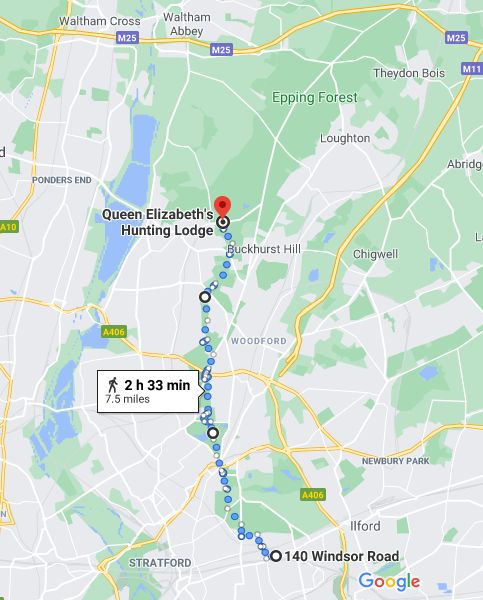
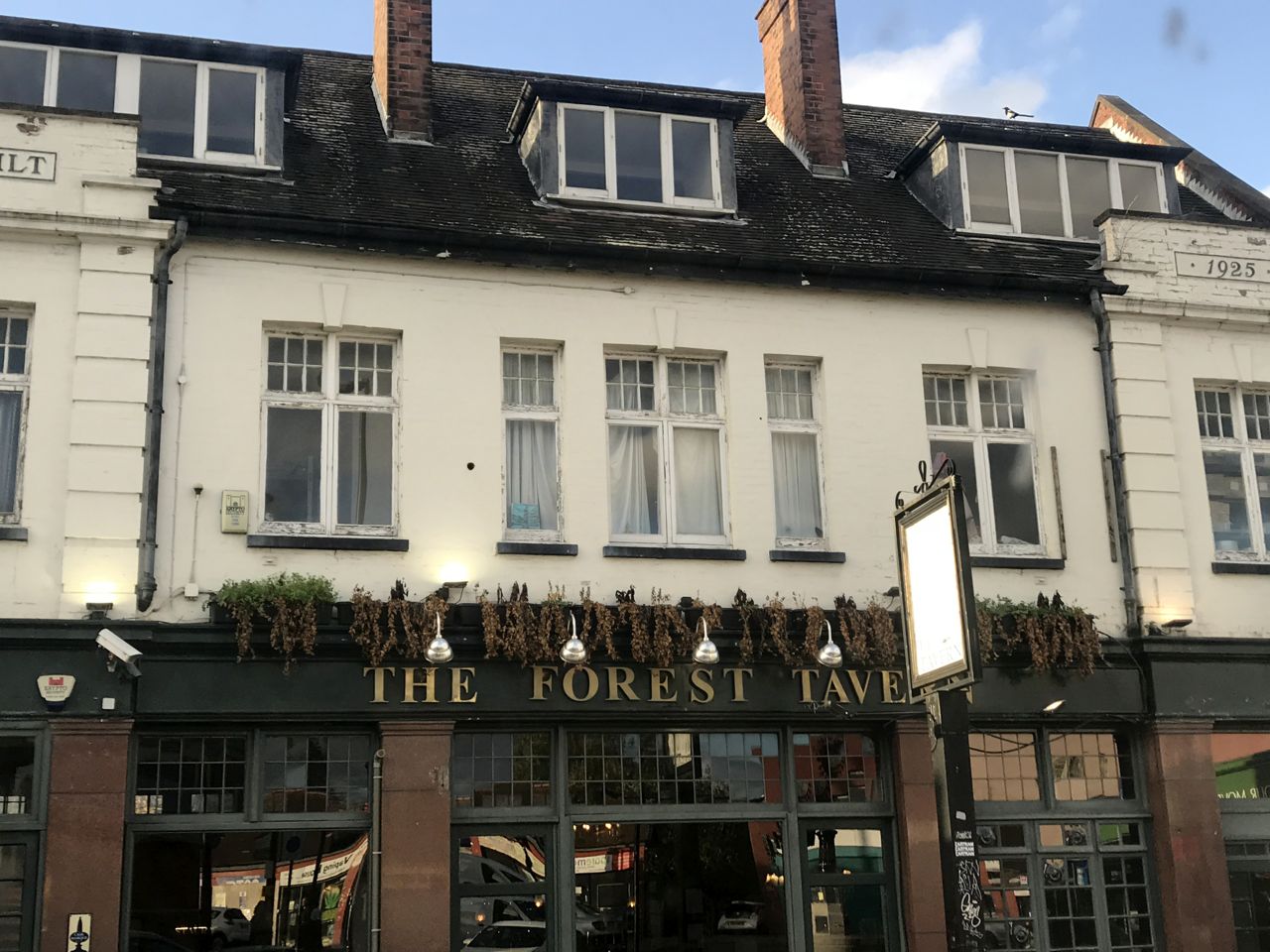
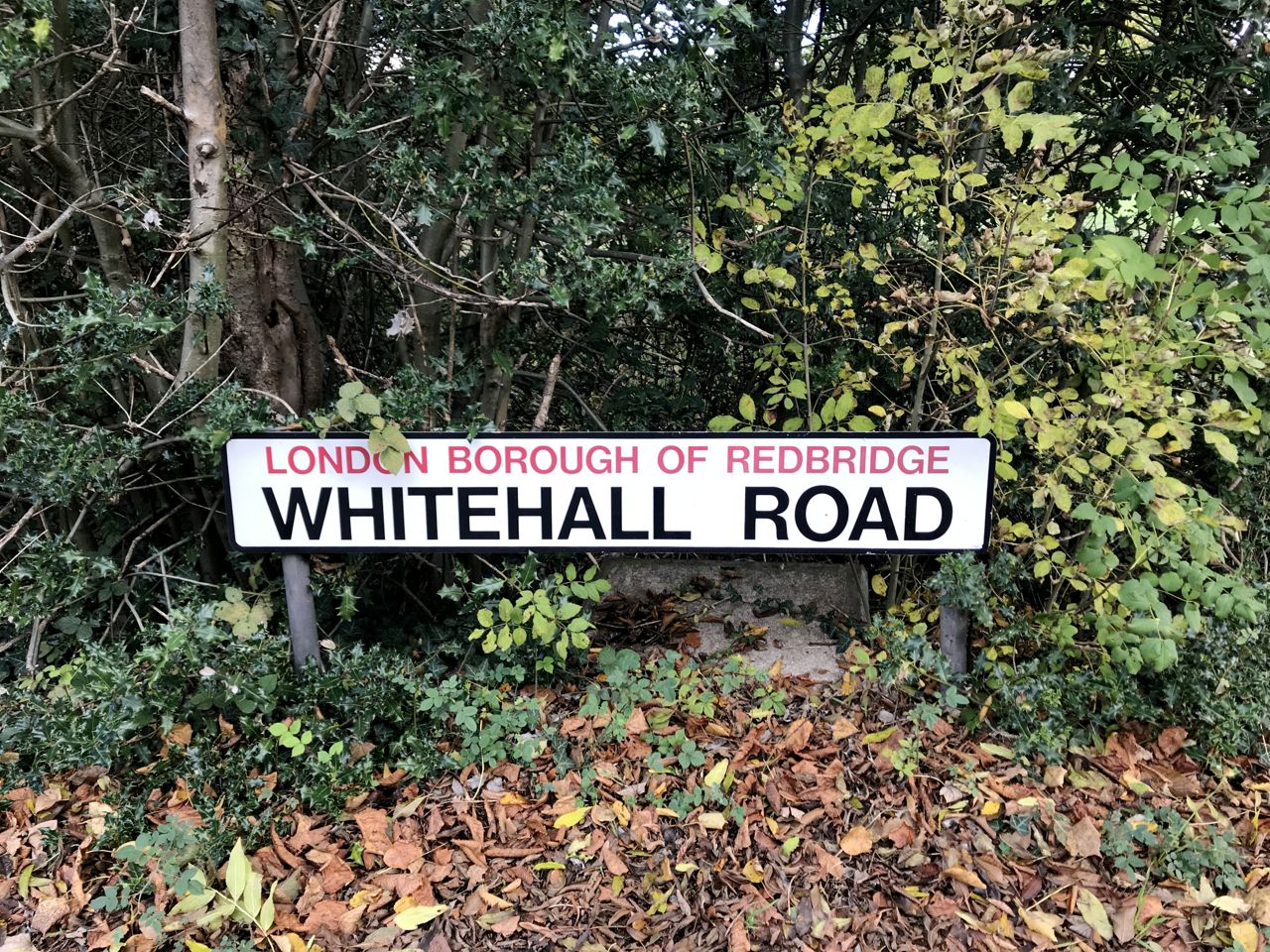
There was wood all the way, our route joining the patchwork of green wood that remained of what was once Epping forest all the way. Beginning at the Gate of the Forest, 121 Windor Road, there was an occassional oak that remained in a garden or a precious patch of common land. Starting from the great oak in Barry’s Garden.
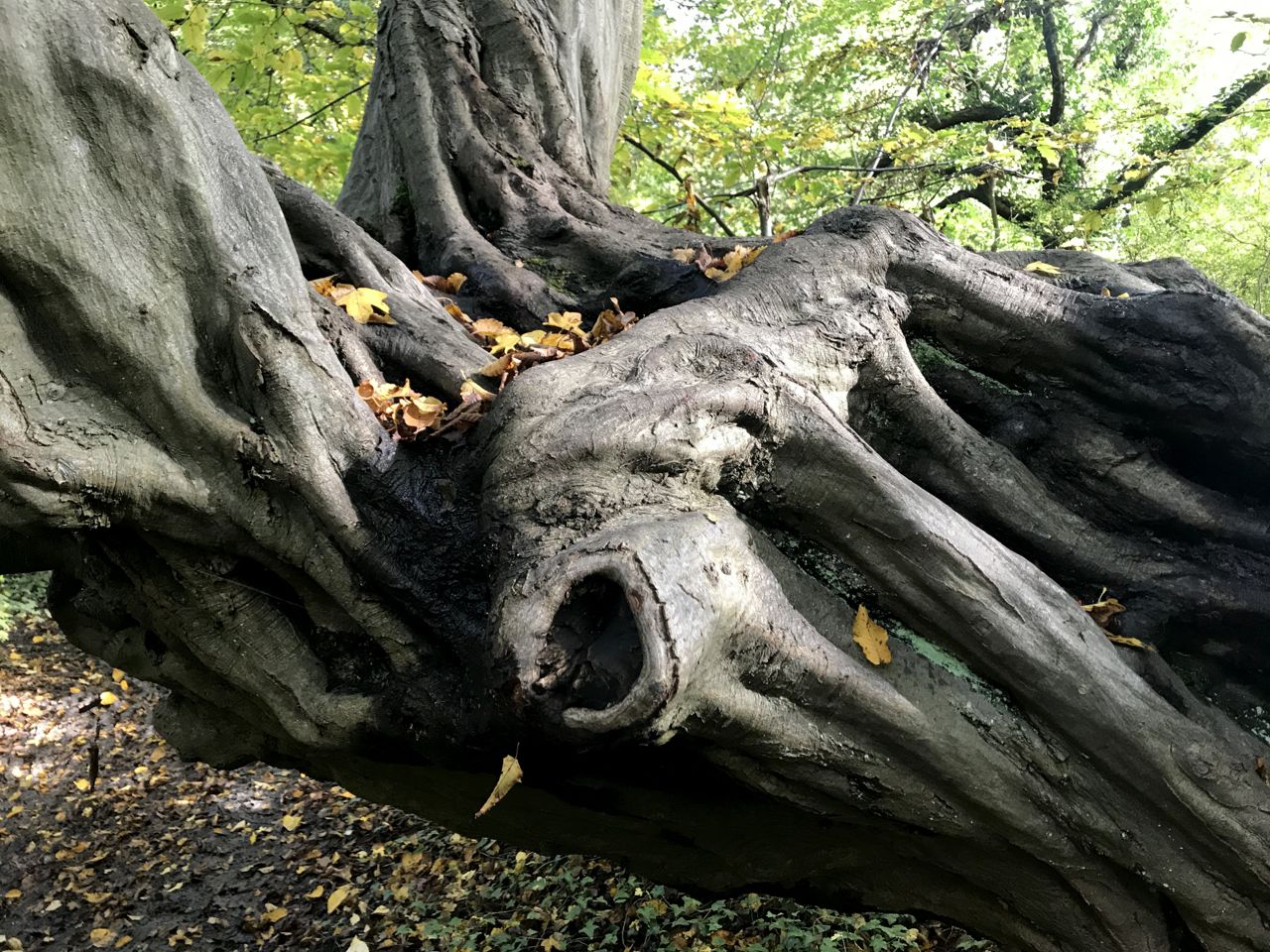
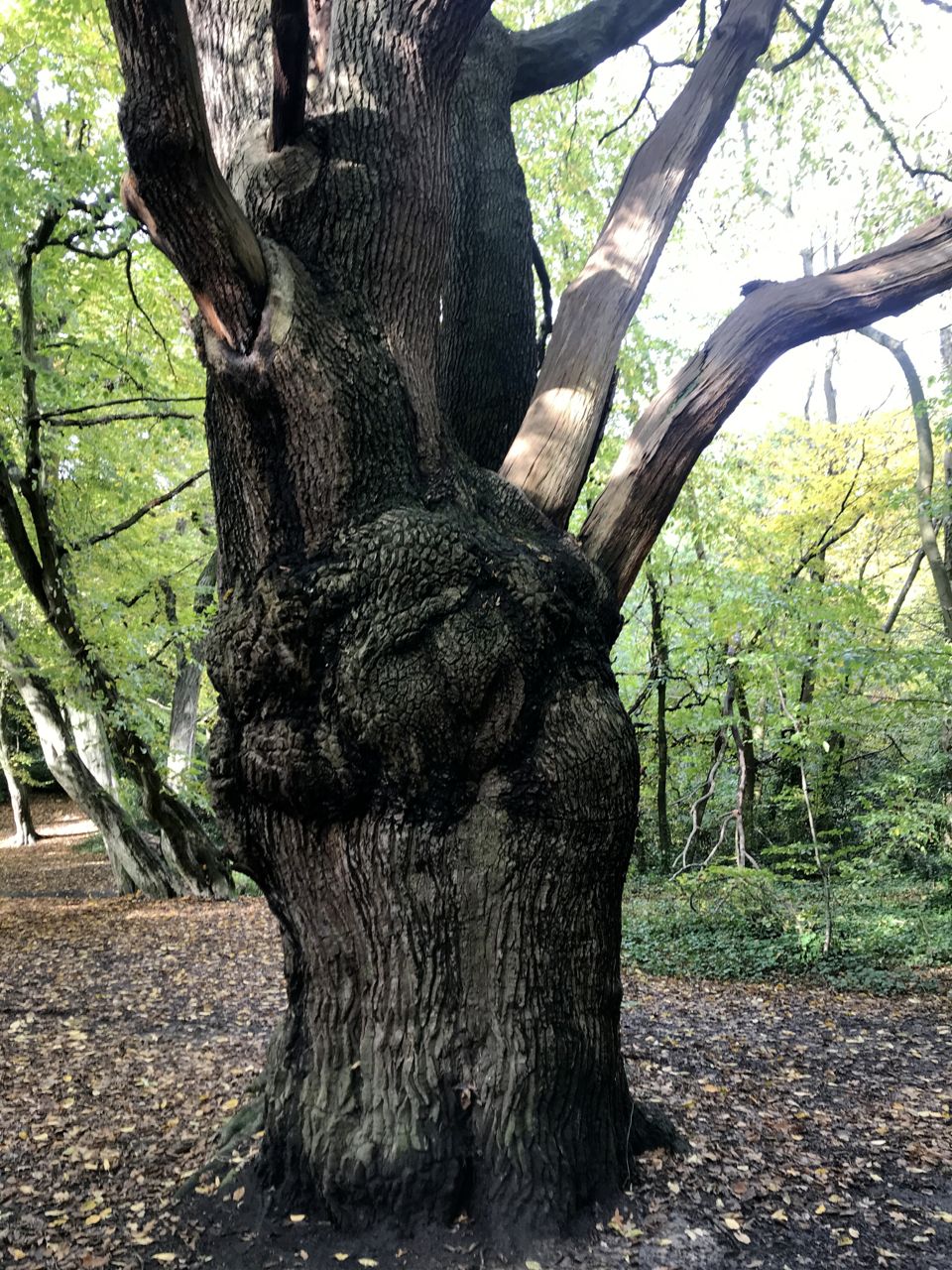
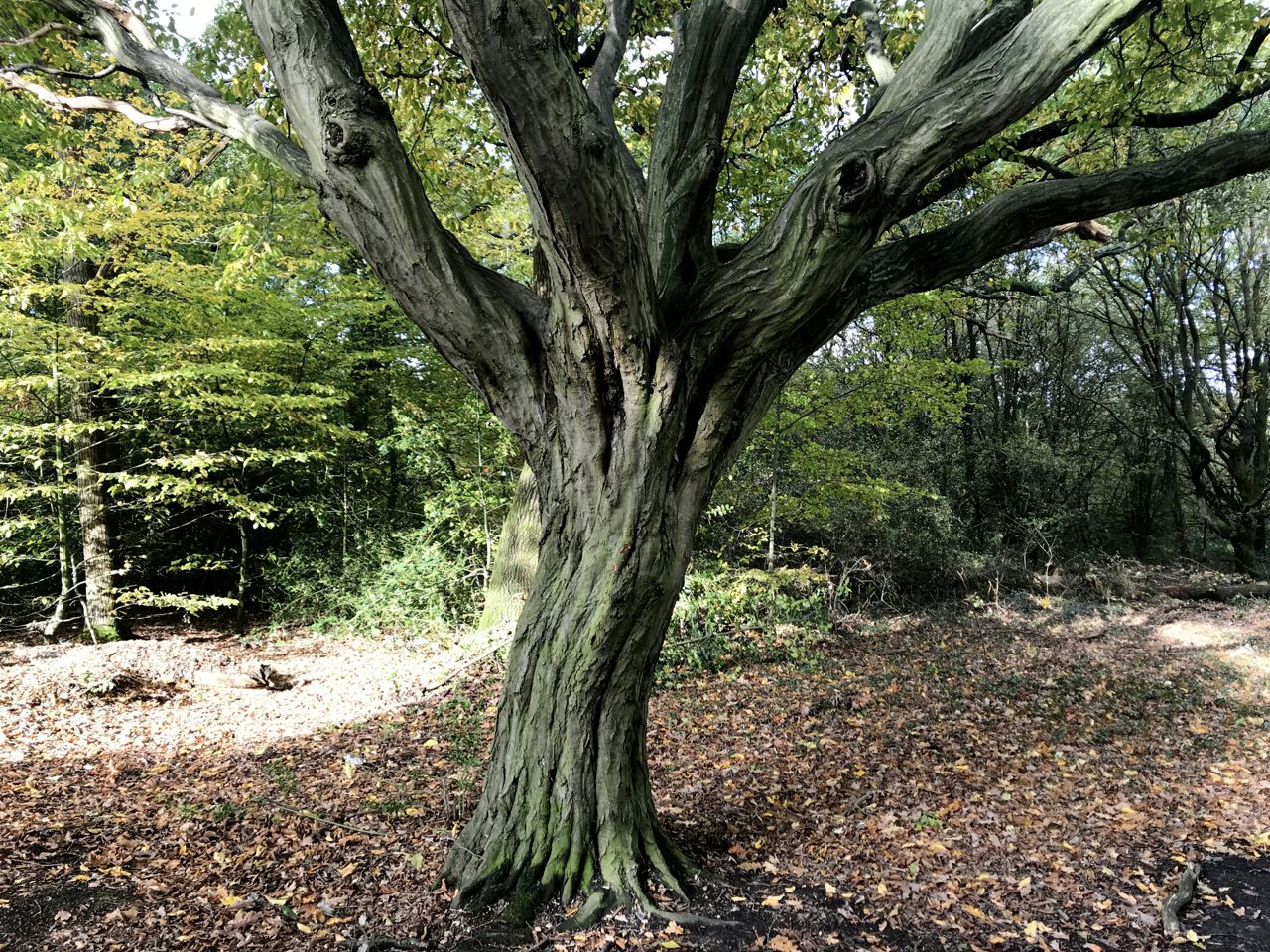
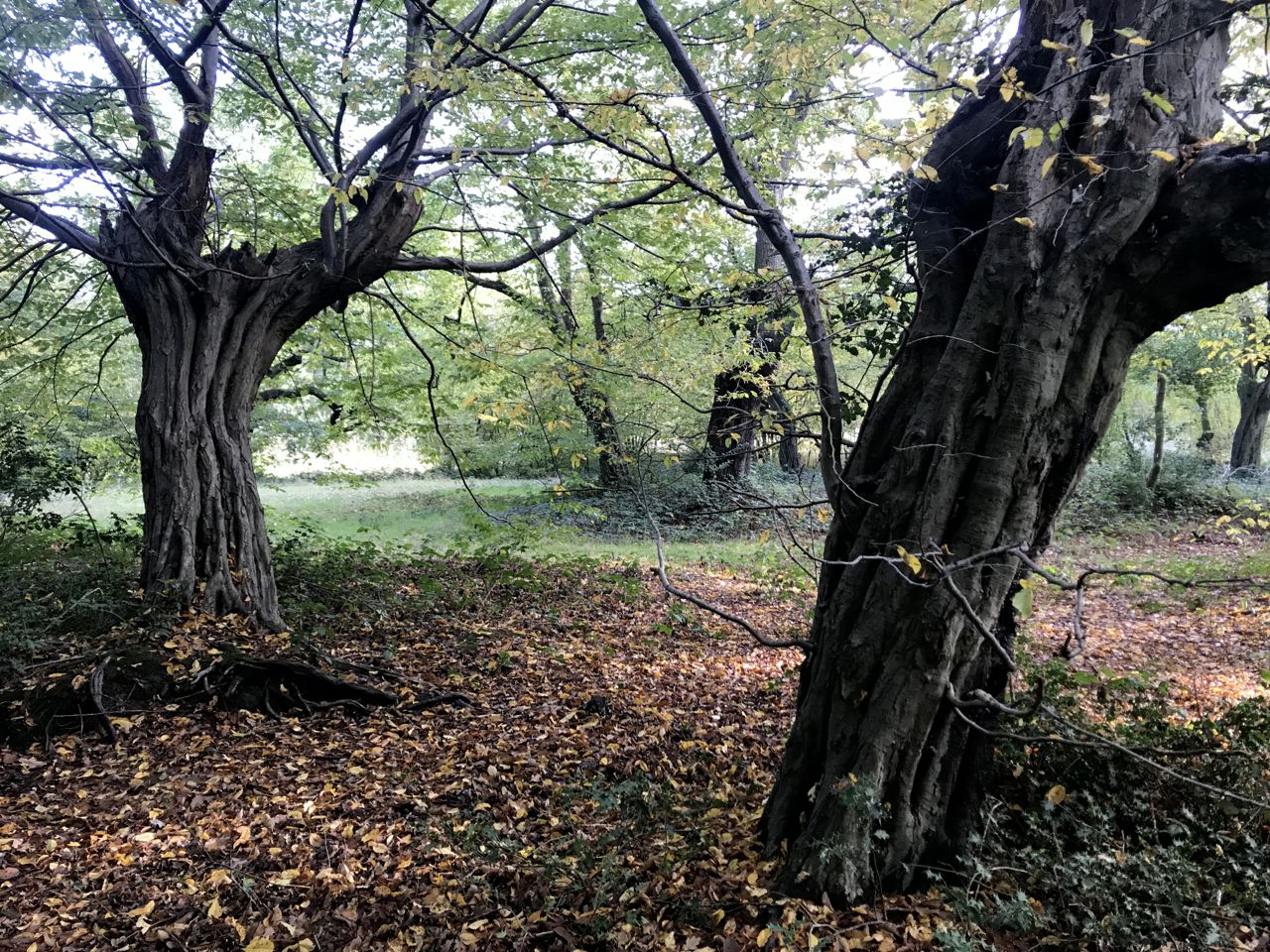
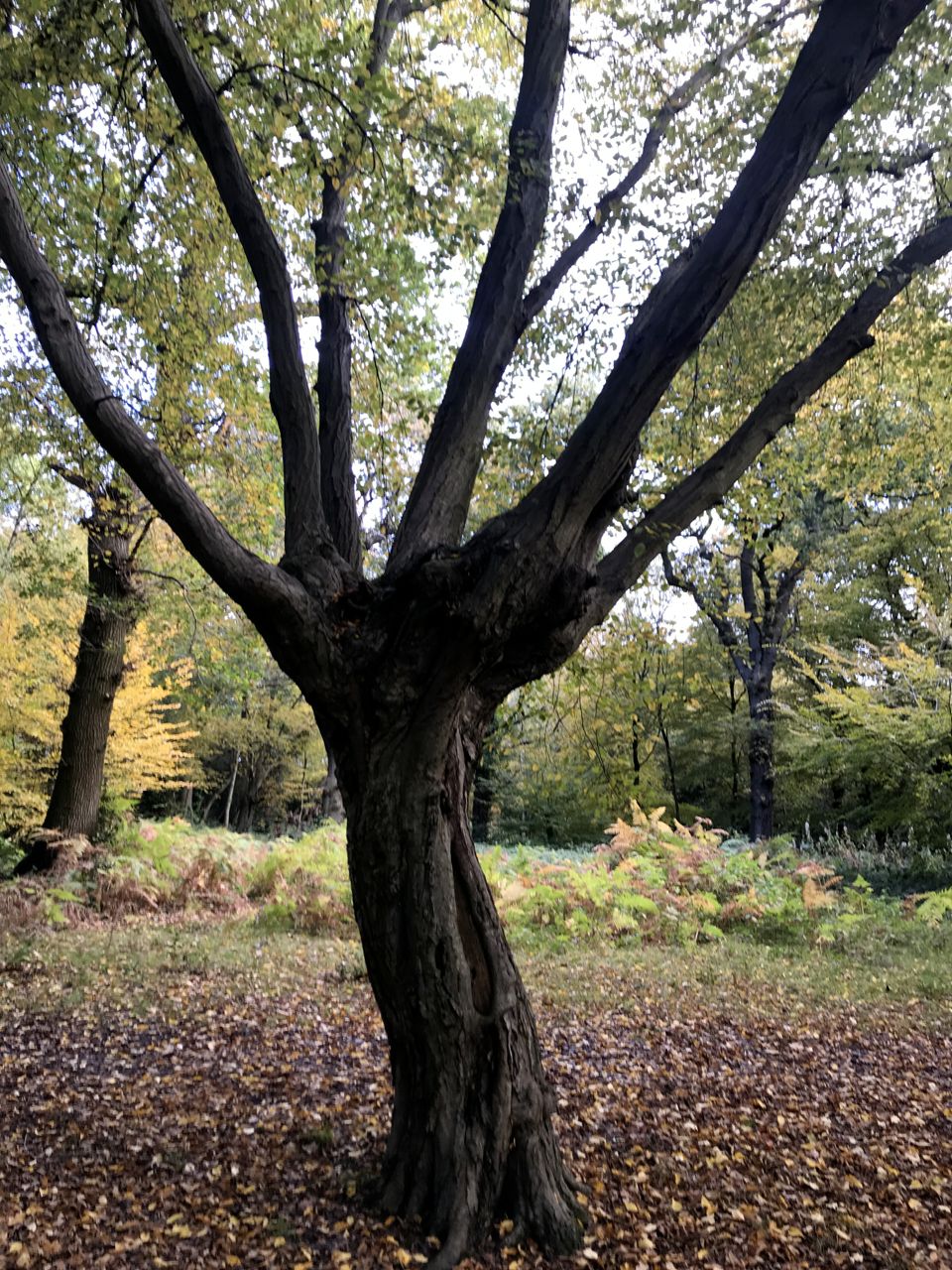
Hornbeam and Oak dominated, and I my gift to Brenden was the name for this sinew like tree, the Hornbeam, often pollarded, like a hand, I described. ‘Like a hand reaching out of the earth’, said Brenden.
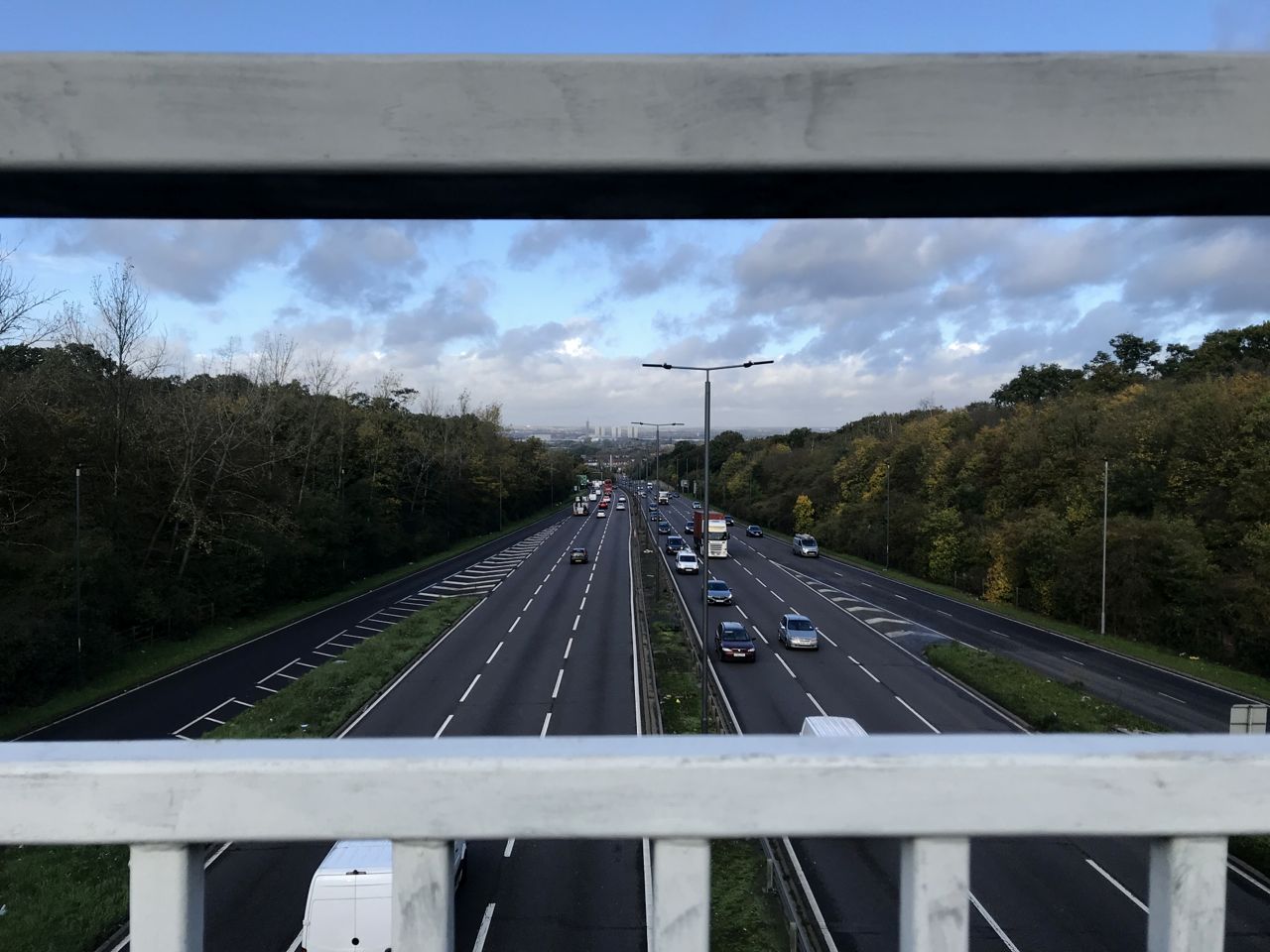
I was childishly excited to find the way that took us to the bridges over the huge roads, which otherwise would have been dead ends for us. The GPS map (introduced to me in Springe 3 years ago) was invaluable.
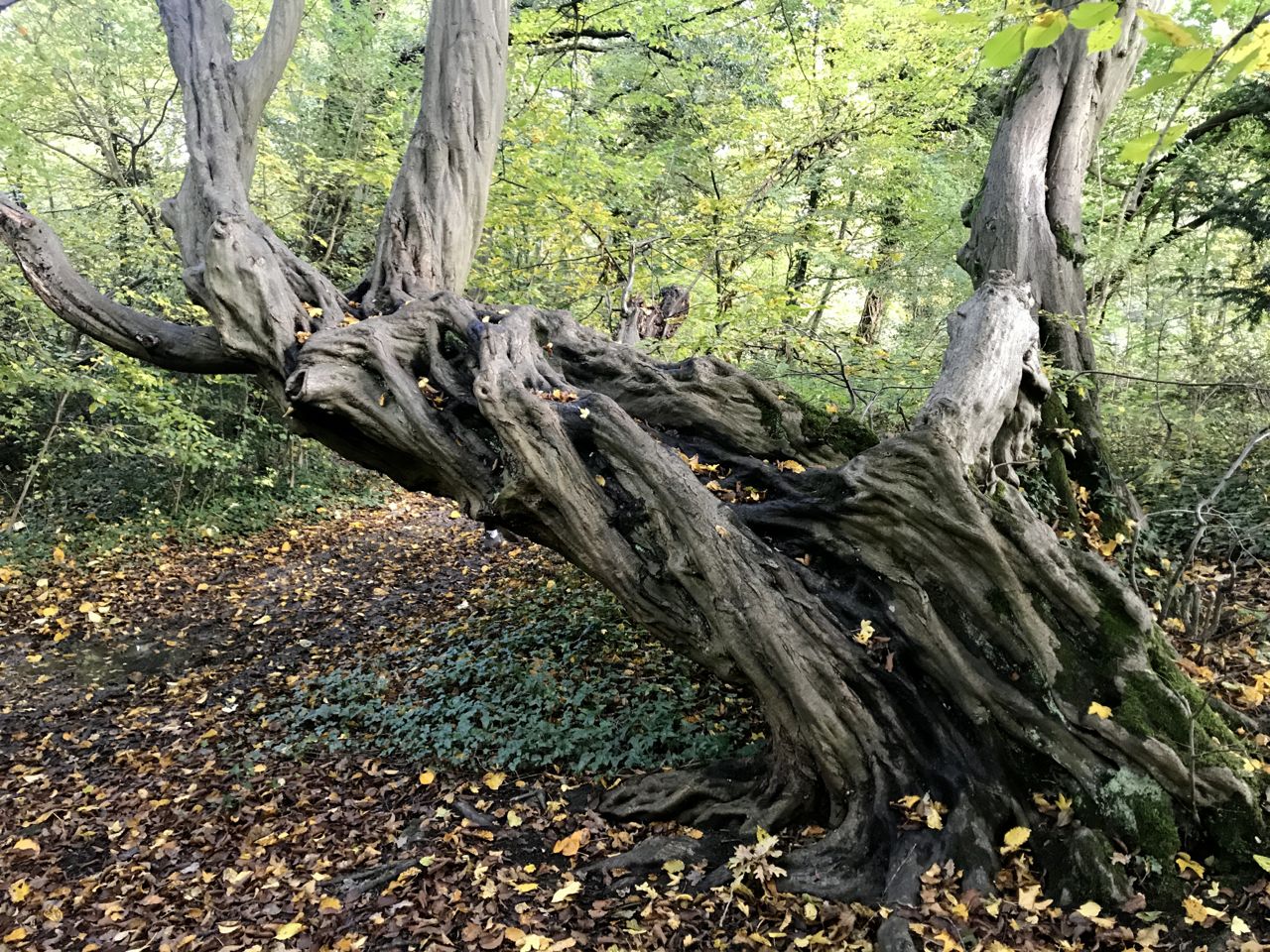
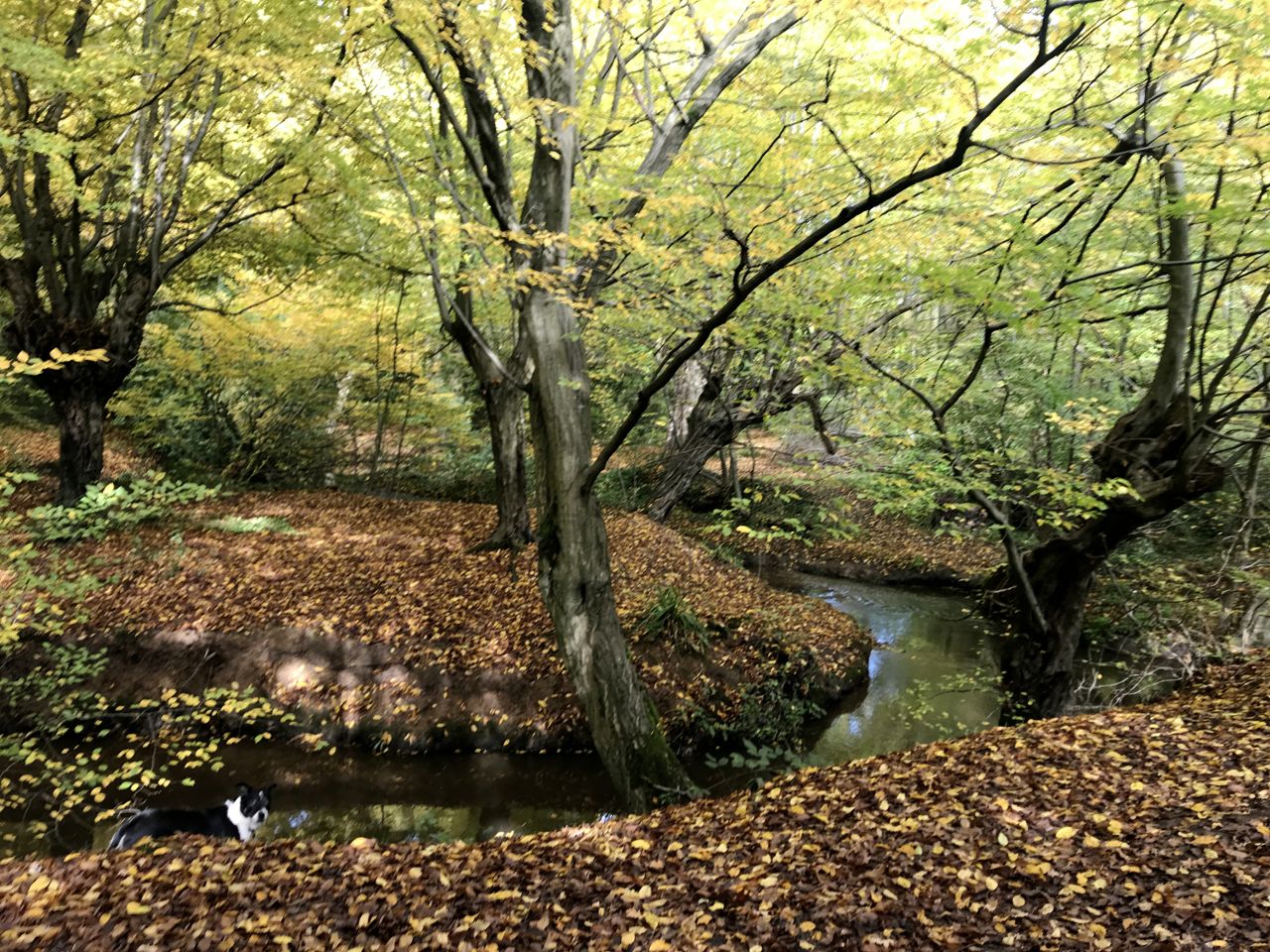
The most enchanting part of the walk was along the Chet river, a way Brendon showed me, which he’d found on other walks. It meandered twisted and turned, full of water these autumn days, old pollard horbeams leaned around the bends.
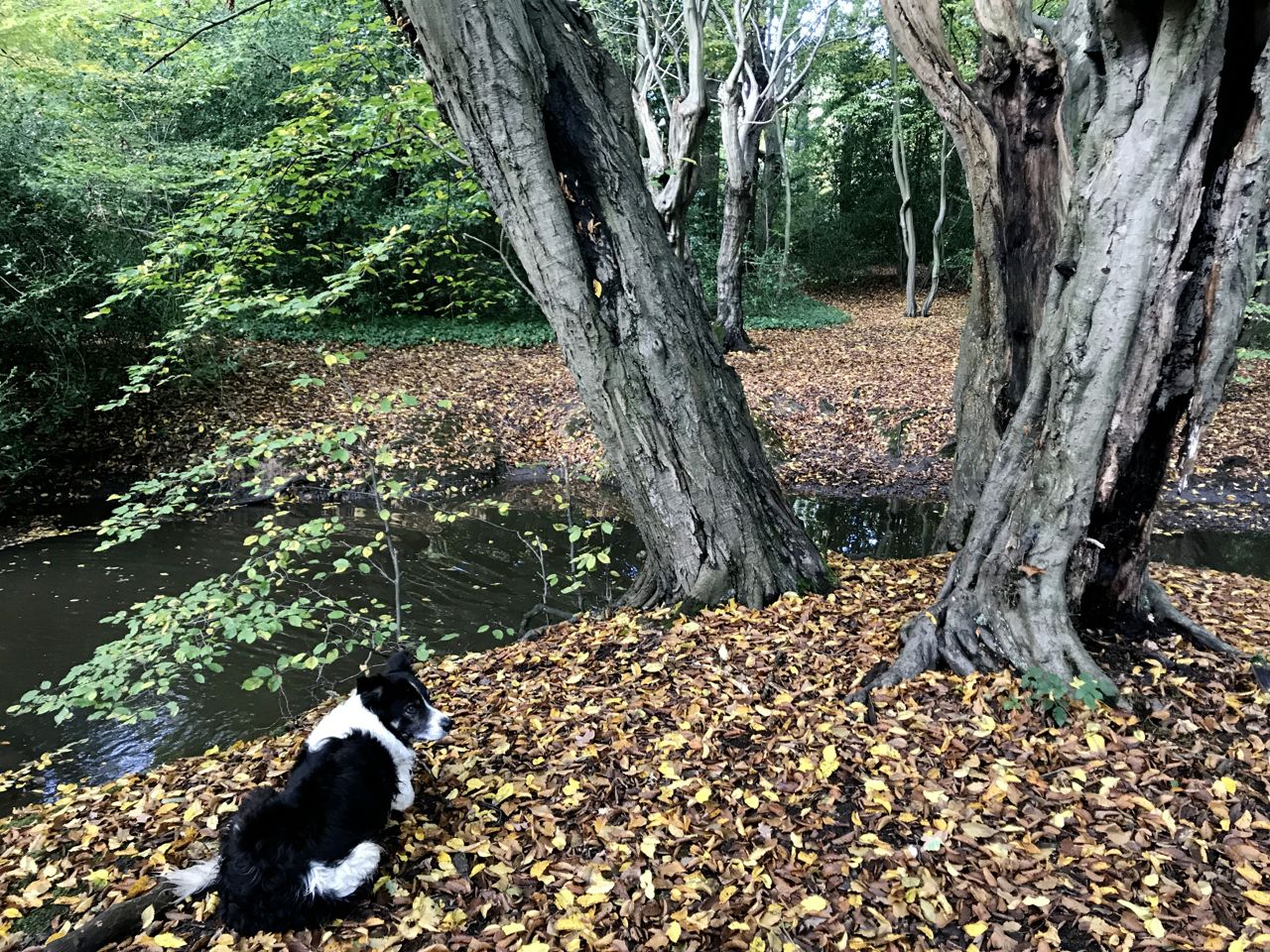
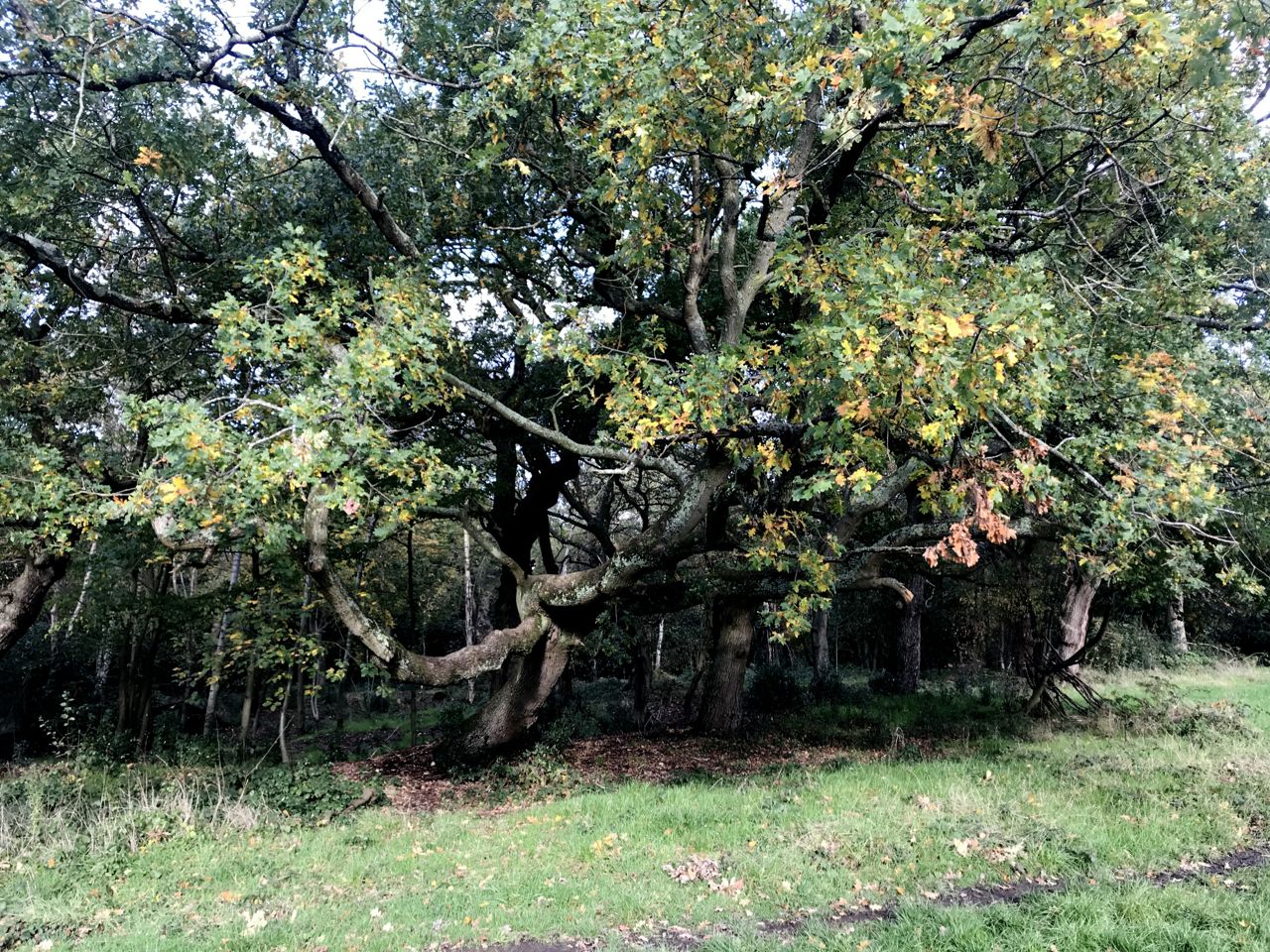
It was here I found the most beautiful hornbeam of the day, a twisting leaning grandfather of a hornbeam.
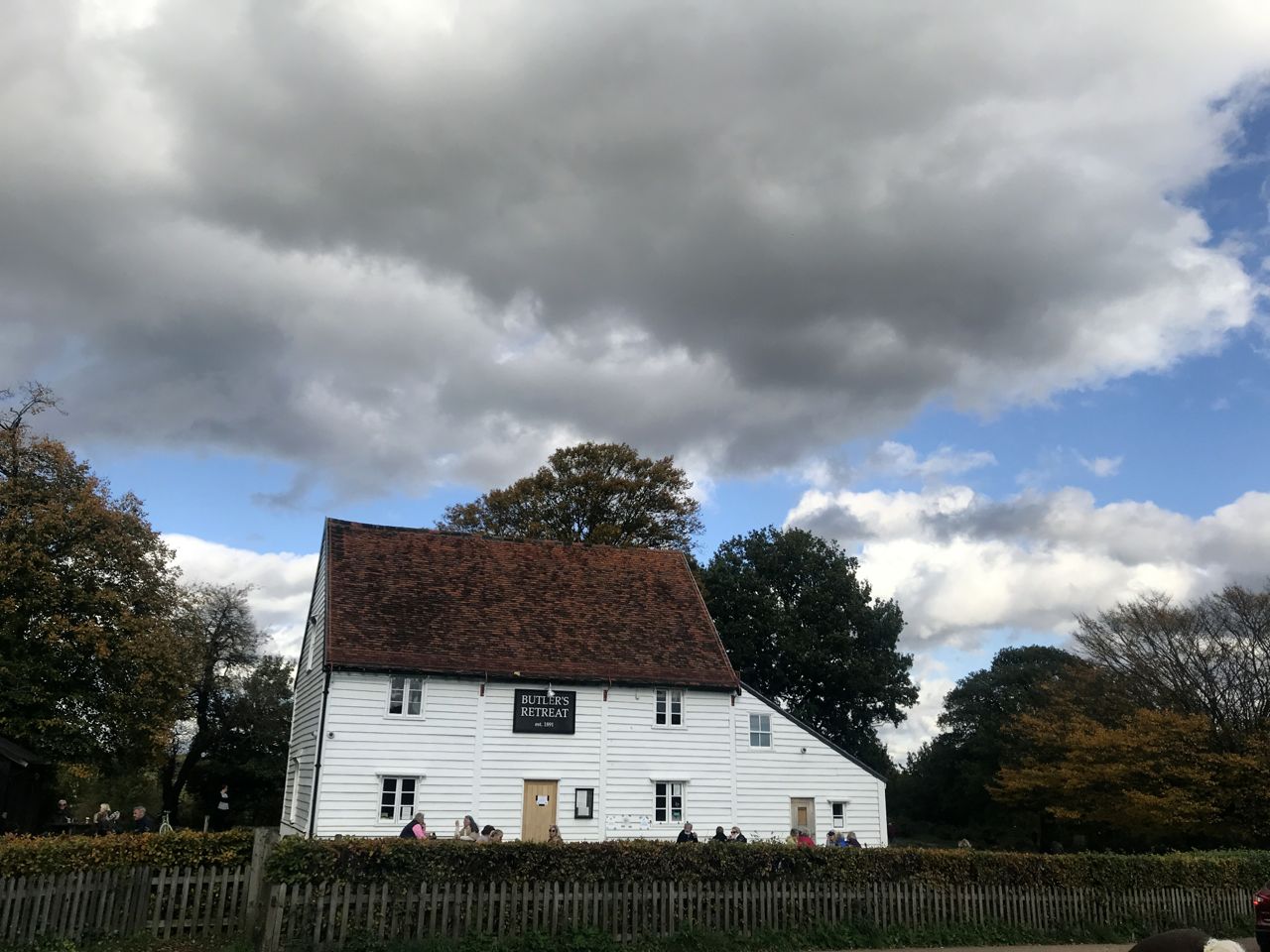
Across the edge of a golf club, we came to an opening in the wood. I was slowing up and tiring, and glad to reach the Buttlers Rest, the pub and my destination. ‘There’s a water fountain here’, he said, and here we drank our nectar of water before walking a few hundred yards more to Connaught water, a glorious stretch of water, an ornamental lake, named after the Duke of Connaught, the first Forest Ranger, popular today with families and middle class voices. We sat on a bench and ate our small snacks, he a banana and I a bag of crisps. I said I’d like to walk on from here through Epping next time. Call me, he said, if you want we can walk again.
He quoted his mother at the end. ‘Better step on the gas’ he said, as he crossed the road, to begin the journey to retrace his steps back to the Romford Road.
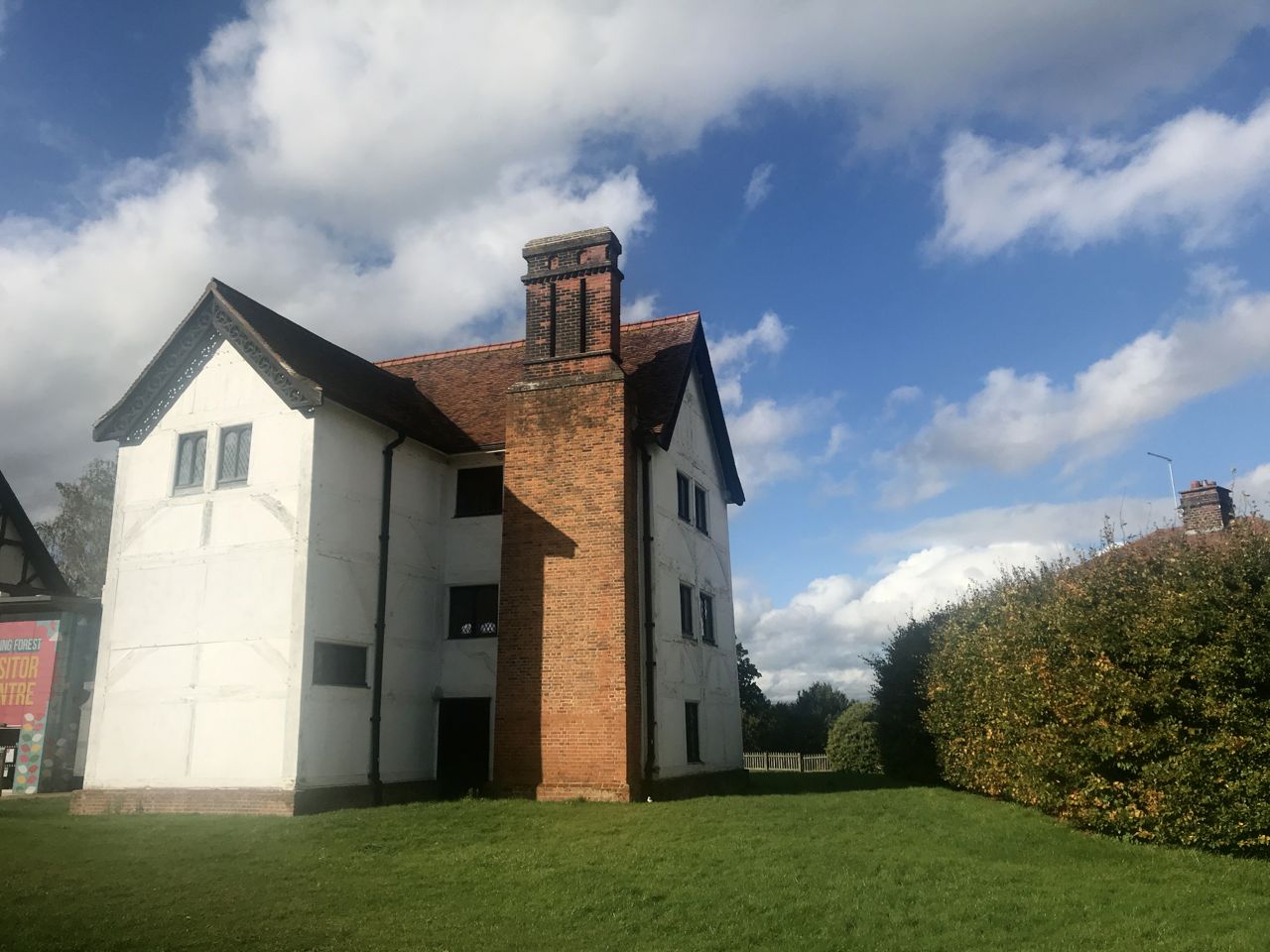
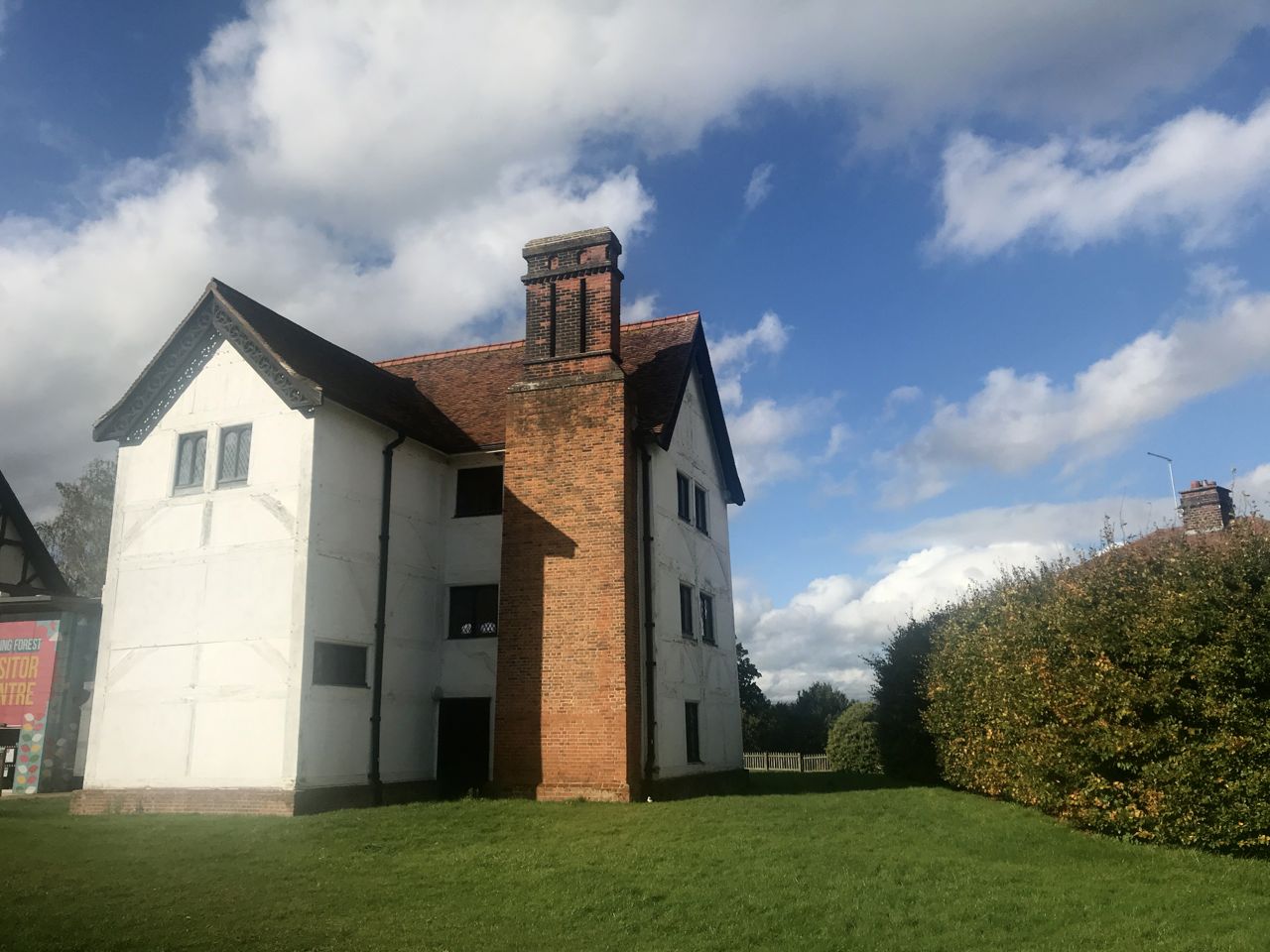
The dogs and I waited behind the Buttlers Rest, a woodclad pub, now COVID attired in glass and signage to say ORDER HERE, COLLECT HERE. It is beside the famous Queen Elizabeths Hunting Lodge, and one of the Epping Forests Information centres. When Epping was a hunting forest for the Tudors, Henry VIII commissioned a building known as Great Standing from which to view the chase at Chingford. Renovated for Queen Elizabeth, it stands still here, it’s tudor black beams unusually painted out in white, giving it a lighter airier feel.
As with today, there was continual challenge to the forest from people. Diputes between landowners who enclosed land and commoners who had grazing and cutting rights. One campaigner, Thomas Willingale (1799–1870), effectively provoked an effective injunction against further enclosures. in 1878 the Epping Forest Act was passed saving the forest from enclosure, and out of royal into the care of the City of London Corporation. The Crowns right to venison ended as was pollarding and the lopping rights- the campaign run so successfully by Thomas Willingale. Somewhere in Loughton is Lopping Hall with a bass relief depicting the story. This for another day.
Barry arrived in time for a coffee and cake, before we drove off back to Old Oak, via Morrisons.


