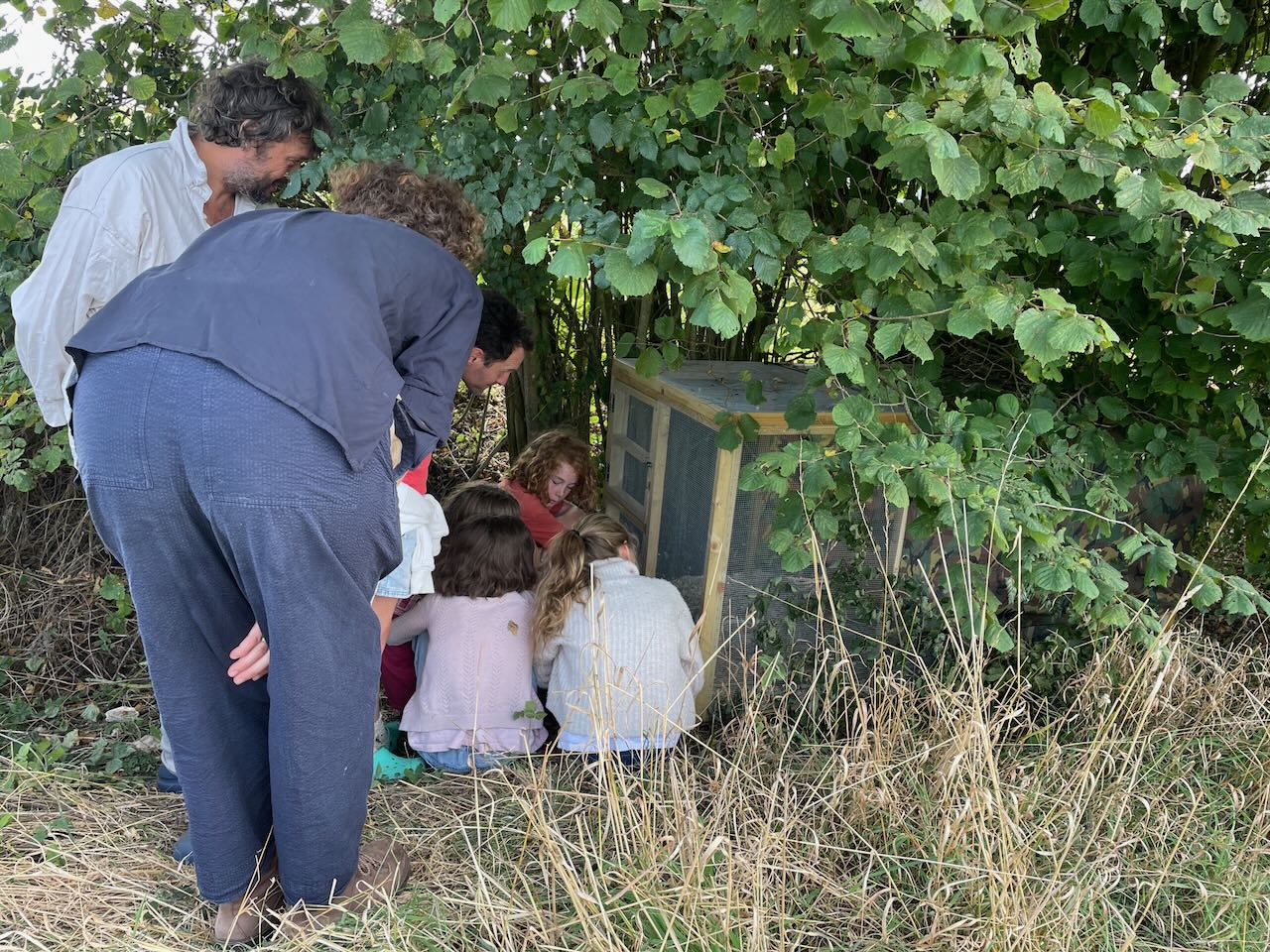
A joy of ‘owning’ land is others come. Unexpectedly L, who recently arrived to Holton, approached me to ask if he could release rescued stoats and weasels. His email address is stoatandweaselrescue@… He collects from far and wide from diverse stories of survival. He placed a cage on the east side of the land under the shade of the great oak, and put the weasels in the cage for a few days, before releasing, but returning each night with food for them, like a weaning process. The food is 2 day old male chicks which are easily available as only females are needed for our food market.
The polecats were rescued from Essex, their mother having disappeared (runover?) L collected them and kept them a few days in his backyard crate before installing a crate further down the field same east side. Here they are:
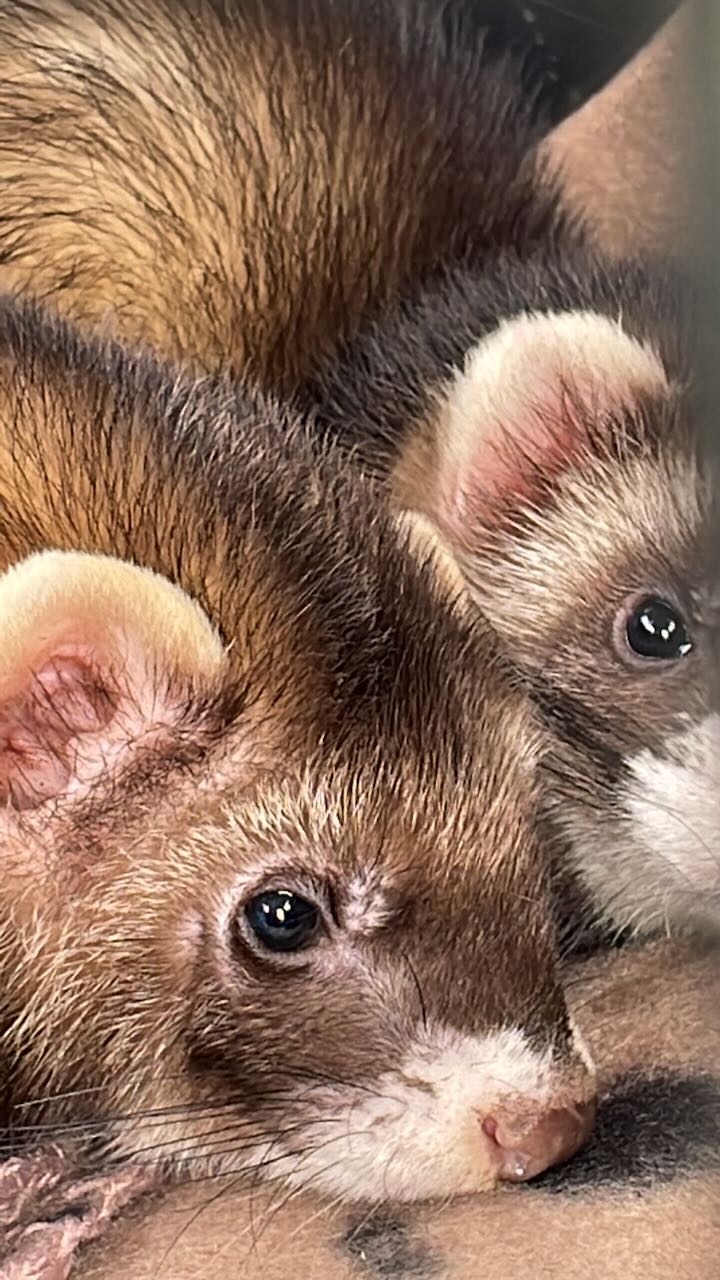

The (European) polecat, Mustela putorius, looks much like a ferret, and as its latin name implies has that musky scent. It is thought to be the sole ancestor of the ferret, which was domesticated more than 2,000 years ago for the purpose of hunting vermin. I posted on Facebook and received the anticipated diverse views. It has been historically viewed negatively, according to L effectively persecuted by gamekeepers as they hunt the lucrative business of pheasants for shooting. They became synonymous with promiscuity in early English literature! Polecats feed on rabbits, of which there are plenty on the land. Also small rodents (field mice etc), birds, amphibians and reptiles. Wiki: “It occasionally cripples its prey by piercing its brain with its teeth and stores it, still living, in its burrow for future consumption.” Hard to imagine such sweet faced animals being so tortuous.
Since posting, friends have tole me of a few sightings of polecats locally (Virginia, Wynd etc) and L caught a polecat on his mobile camera a short distance away, along with a bemused fox – who pray on polecats.